Wow, Wow, Wow
Stories from Our Safari Guide Charles
“Wow. Wow. Wow.”
That was the phrase Charles kept repeating whenever he talked about his wife.
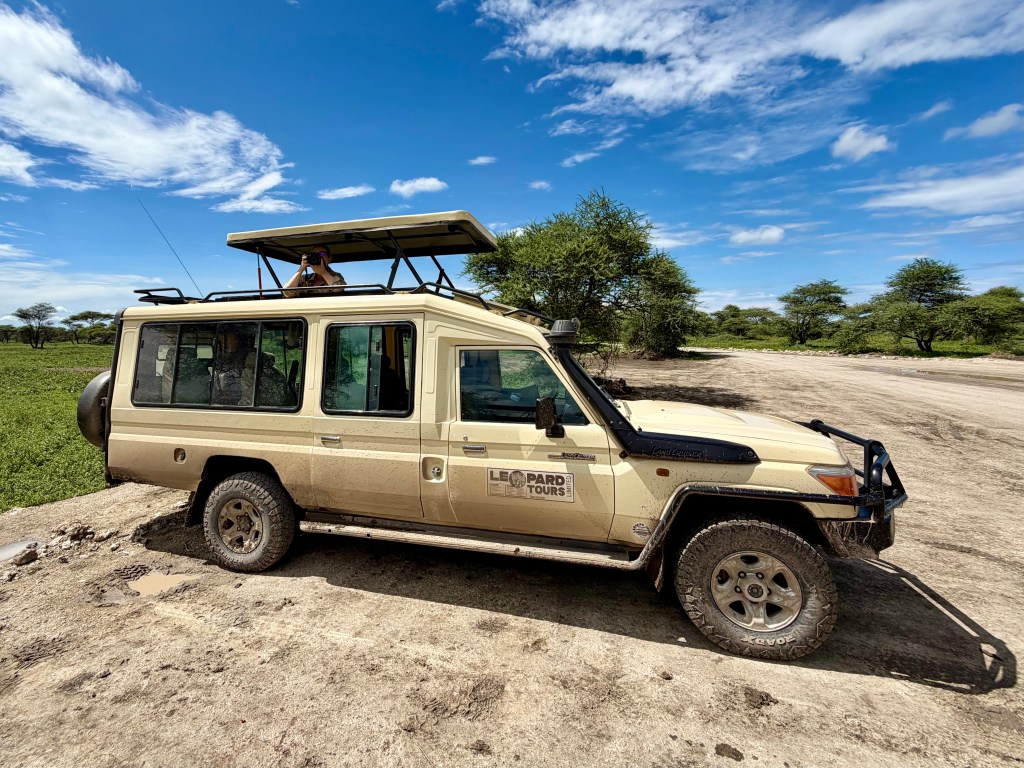
Charles was our safari guide for the week, and while he helped us find lions, elephants, cheetahs, and rhinos, some of the most memorable moments of the trip came from the stories he told while we drove across Tanzania’s vast landscapes.
Charles belonged to the Chaga tribe, one of the largest ethnic groups in Tanzania. The Chaga people traditionally live on the fertile slopes of Mount Kilimanjaro and are known for farming bananas and coffee. Many Chaga families place a strong emphasis on education and hard work, values Charles clearly carried with him.
He was a fantastic guide. Calm, knowledgeable, funny, and completely confident navigating roads that sometimes looked more like rough trails than anything resembling pavement.
But what made the long drives truly memorable were his stories.
The Story of Edith
One afternoon as we bounced along the dusty roads of the Serengeti, Charles began explaining how many couples in Tanzania meet.
At the market.
Not necessarily because they are shopping, but because markets are social places. People go to talk, to see friends, and to meet new people. Buying vegetables or spices might happen too, but that is often secondary.
“The markets are more social than money makers,” Charles explained.
That made me curious.
“So Charles,” I asked, “is that where you met your wife?”
He laughed.
“Oh no,” he said. “I have a story.”
And what a story it was.
Charles met Edith while he was attending university. Edith was studying to become a chef and worked serving food on campus.
Charles admitted he started going back again and again. Partly because the food was good. Partly because Edith was beautiful.
Soon everyone noticed.
Including Charles’s ecology professor.
According to Charles, the professor also had his eyes on Edith. When he realized Edith preferred Charles, things got complicated.
Charles took an important exam in the class and was shocked when he was told he had failed.
But Charles did not accept it quietly.
He asked to speak confidentially with the university headmaster. The exam was reviewed by others and the result was clear.
Charles had actually earned an A.
The professor had intentionally failed him.
The professor was forced to apologize.
Charles told the story smiling.
“And Edith,” he said, shaking his head slightly, “wow, wow, wow.”
Today they have three sons, ages eighteen, fifteen, and thirteen.
A Lesson for His Boys
One of Charles’s favorite parenting stories involved taking his sons to visit a Maasai village.
He wanted them to see how other boys their age lived.
The Maasai boys they met had no television, no video games, and far fewer possessions than Charles’s sons had grown up with.
After that visit, Charles told us, his boys suddenly seemed much more appreciative of what they had at home.
Charles spoke proudly about his three sons. His oldest wants to become a doctor, the middle hopes to be a lawyer, and the youngest has his sights set on joining the army.
Charles said he will support whichever path each of them chooses.
What matters most to him is simple.
He wants them to work hard and grow up to be good people.
Like many parents, Charles hopes education will open doors for them.
At the same time, he explained that in Tanzania the path after school is not always easy.
Getting a job as a college graduate can actually be difficult. Many positions require less formal education, and a university degree can sometimes make a candidate seem overqualified.
It was a reminder that education and opportunity do not always align the same way everywhere in the world.
Still, Charles clearly hopes his boys will aim high and find their own paths.
The Tribe Charles Said Was Even Smarter
At one point during our drives between parks, Charles started talking about the many tribes in Tanzania.
“There are more than one hundred tribes here,” he explained, “but of course the Chaga are the smartest.”
He paused for a moment.
“Well… maybe one.”
That got our attention.
Charles said there was another tribe he considered extremely intelligent and very successful in business.
The Haya people.
The Haya live in northwestern Tanzania near Lake Victoria and historically developed organized kingdoms and advanced farming techniques long before colonial times. Today many Haya families are active in business and trade, and Charles said some owners of luxury safari lodges come from that tribe.
“They are very smart people,” he said.
Then he smiled and quickly added,
“But Chaga still very good.”
Lions at the Lodge
One evening Charles reminded us how real the wildlife dangers can be in the Serengeti.
He told us about a time he had driven guests to a lodge for a game drive. While the guests were checking in, their luggage had been placed outside near the reception area.
As Charles waited nearby, a group of lions suddenly wandered toward the luggage area.
Not in the distance.
Right there near the lodge.
Charles and several other drivers quickly ran inside the building for safety while staff watched the lions from behind the doors.
Eventually the lions lost interest and wandered away.
Charles laughed while telling the story, but it was a powerful reminder.
In these parks, humans are the visitors.
The animals live there.
The Clickers
One day Charles mentioned a group he called the “clickers.”
He was referring to the Hadza people, a small hunter gatherer tribe that lives near Lake Eyasi in northern Tanzania.
The Hadza language contains distinctive clicking sounds, which is how they earned the nickname.
Unlike most modern societies, the Hadza still live largely by hunting wild animals and gathering fruits and roots. Some live in simple shelters or caves and maintain a lifestyle that closely resembles how humans lived thousands of years ago.
Charles joked that if we had time, we should watch the old movie The Gods Must Be Crazy, which features characters inspired by similar hunter gatherer cultures.
Buying a Home
During our drive back toward Arusha after the safari, Charles told us how he bought his home.
For years he had been renting and finally decided he was tired of paying money to someone else every month.
He found a property where the owner had gone bankrupt and needed to sell quickly.
Charles bought it.
About a month later the former owner came back with money and asked to buy the house back.
Charles laughed when telling us what happened next.
“I told him it was up to the boss,” he said.
Meaning his wife.
Edith had already decided she liked the house.
So the answer was no.
Later, as we drove through Arusha, Charles pointed out the road where he lived. The street was paved with tar, something that is not common in many neighborhoods.
It seemed like Charles and his family were doing just fine.
Soccer Night
One afternoon Charles received a phone call from his sons.
There was an important soccer match that evening and they wanted money to extend their television service so they could watch it.
In Tanzania many households use prepaid television services. Once the credit runs out, the signal simply turns off until more is purchased.
Charles explained that his family was divided into two camps.
Charles, his mother, and one son supported one team.
His wife and the other two boys supported the rival team.
One of his sons even asked Charles to place a small bet on the match.
Charles laughed when telling us this.
He agreed, but told his son that if he lost, he had better have the money to pay up.
Later that evening we saw motorcycles racing through town waving team flags in celebration.
It felt a little like World Cup fever.
The next morning we asked Charles how the match had ended.
He shook his head and smiled.
“It was a great game,” he said.
“But zero to zero.”
Words We Learned Along the Way
Over the course of the week, Charles also taught us a few Swahili words.
They quickly became part of our daily conversations.
Jambo meant hello.
Asante sana meant thank you very much.
Karibu sana meant you are very welcome.
And of course there was the phrase everyone recognizes.
Hakuna Matata.
No worries.
It turns out that phrase really is used in Tanzania, not just in The Lion King. Charles would laugh when we said it, but he seemed pleased that we were trying.
My Lion King references quickly became a running joke between us.
The first time we spotted a warthog wandering across the plains, I blurted out, “Look! Pumba!”
Charles laughed immediately.
He did not correct me either. He simply nodded and said, “Yes. Pumba.”
From that moment on, every time we saw another warthog I excitedly announced another Pumba sighting.
Charles would laugh.
My husband, on the other hand, mostly shook his head, clearly wondering how I kept spotting Pumbas and getting just as excited every single time.
Throughout our safari it often felt like characters from The Lion King were coming to life around us.
Simba and Mufasa in the lions we followed across the plains.
Pumba wandering through the grasslands.
Zazu in the colorful birds flying overhead.
Charles found the comparisons amusing and patiently tolerated my excitement every time another familiar character seemed to appear.
By the end of the week we found ourselves greeting lodge staff, thanking servers, and saying goodbye using the same words Charles had taught us.
They were small pieces of language, but they made us feel just a little more connected to the place we were visiting.
More Than Just a Guide
By the time our safari ended, Charles felt less like a guide and more like a friend who had shared a piece of his world with us.
He helped us find lions, elephants, rhinos, cheetahs, and countless other animals across Tanzania’s national parks.
But he also shared stories about family, culture, challenges, and everyday life in his country.
Those stories stayed with us just as much as the wildlife.
And whenever I think about Charles describing Edith, I picture him smiling ear to ear as he said it.
“Wow.
Wow.
Wow.”
Asante sana, Charles.
 Click, Wander & Savor