Maasai Warriors: Guardians of the Savannah
He stands tall, quiet and watchful.
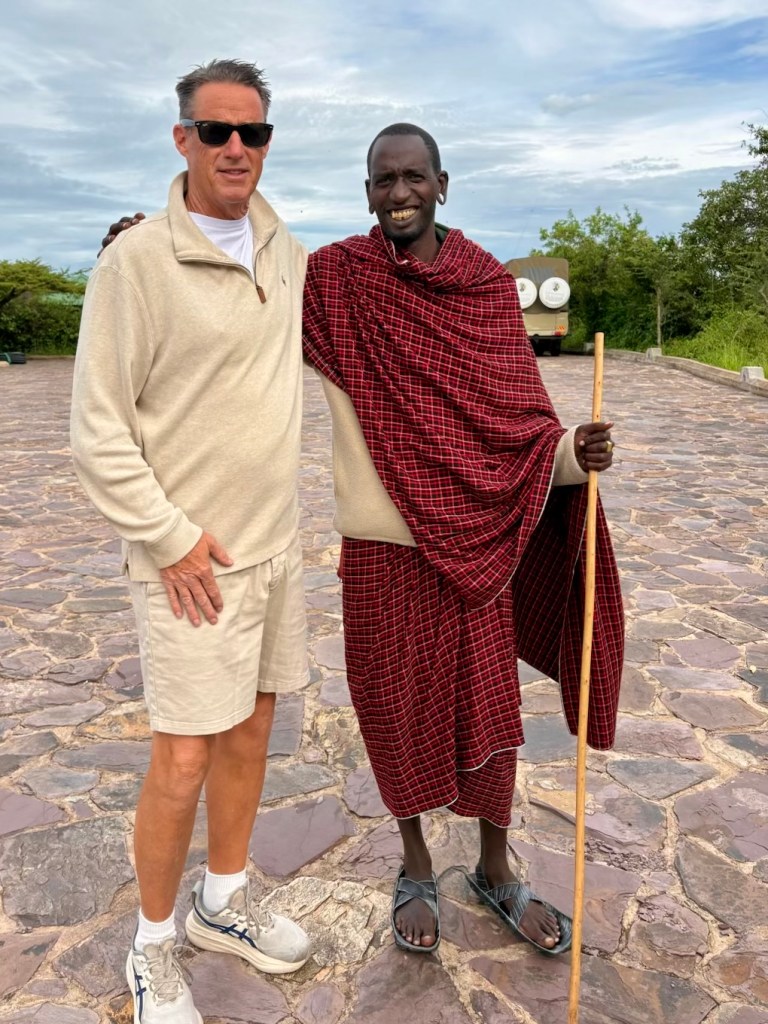
Dark chocolate skin stretched across lean, muscular limbs, wrapped in a bright red shuka cloth that moves softly in the wind. Simple leather sandals protect his feet. In his hand he carries a long metal spear.
There are no gates at our lodge.
The Serengeti is open wilderness, and animals move freely through it. So when guests walk from their rooms to the dining hall at night, Maasai warriors escort us.
Tonight it is raining.
As we walk along the muddy path, the warrior suddenly points to the ground. In the soft mud is a massive hoofprint.
Cape buffalo.
He says nothing else, but our guide Charles had already explained the significance earlier that day. Maasai warriors fear very little. Lions, they can scare away. Hyenas, no problem. Even leopards usually keep their distance.
But buffalo and elephants are different.
If those animals decide to attack, even a spear will not save them.
We continue walking quietly toward the warm lights of the dining hall.
I suddenly feel very aware of the wildness surrounding us.
Our First Welcome by the Maasai
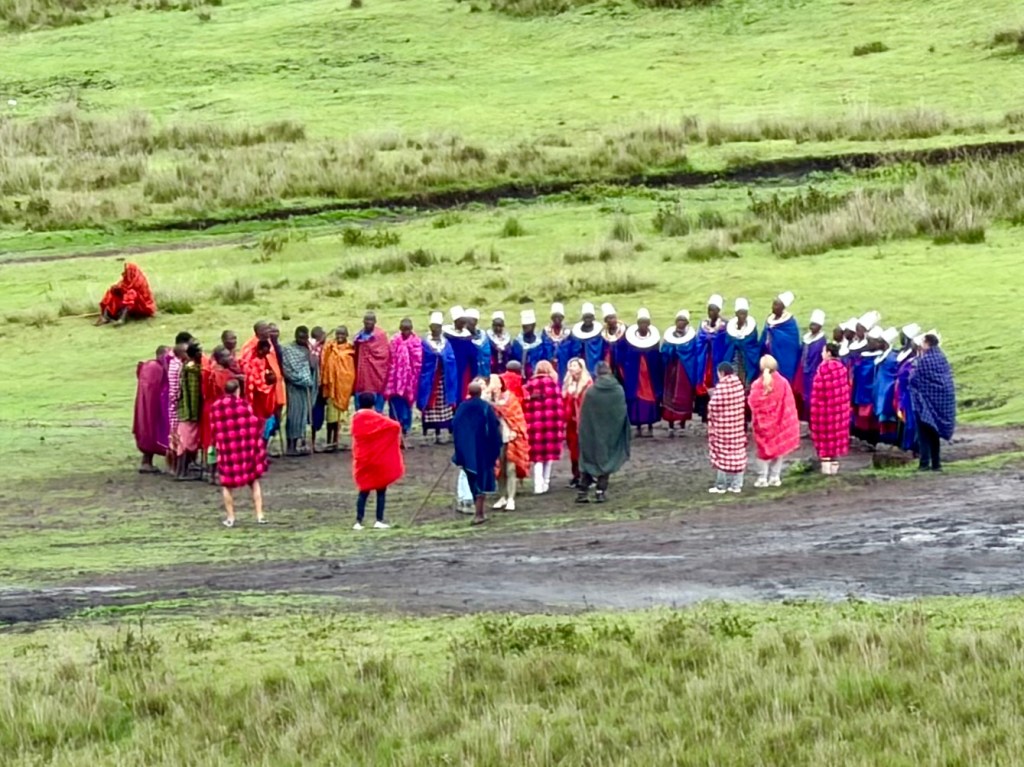
Our first encounter with the Maasai happened the moment we arrived at TNS Kimarishe Serengeti Lodge.
After hours of rough safari roads and what our guide Charles liked to call the “African massage”, our vehicle finally rolled to a stop at the lodge entrance.
Waiting there were five Maasai men and women dressed in traditional clothing.
Before I fully understood what was happening, one of the women approached me smiling warmly. She gently placed a beautiful handmade beaded necklace over my head and guided me toward the group.
Then she removed her own hat and placed it carefully on my head.
The group began singing, rhythmic and melodic, their voices rising and falling in a way that felt ancient.
Out of the corner of my eye I noticed another Maasai warrior leading my husband toward the group as well.
My first thought was not particularly noble.
Oh no.
Would he survive this moment without visibly panicking?
To his credit, he handled it beautifully.
Soon we were both standing among them as they sang and welcomed us to the lodge. It was joyful, slightly overwhelming, and completely unforgettable.
The Maasai People
The Maasai are one of East Africa’s most well known tribes, living primarily in northern Tanzania and southern Kenya.
Traditionally they are semi nomadic pastoralists, meaning their lives revolve around livestock. Cattle in particular are central to Maasai culture. Wealth, status, and survival have historically been measured in the number of cattle a family owns.
Today many Maasai continue this way of life, especially within the Ngorongoro Conservation Area, where they are still permitted to live alongside wildlife.
Unlike the national parks, where permanent human settlement is not allowed, Ngorongoro was designed as a multiple use area where both people and wildlife coexist.
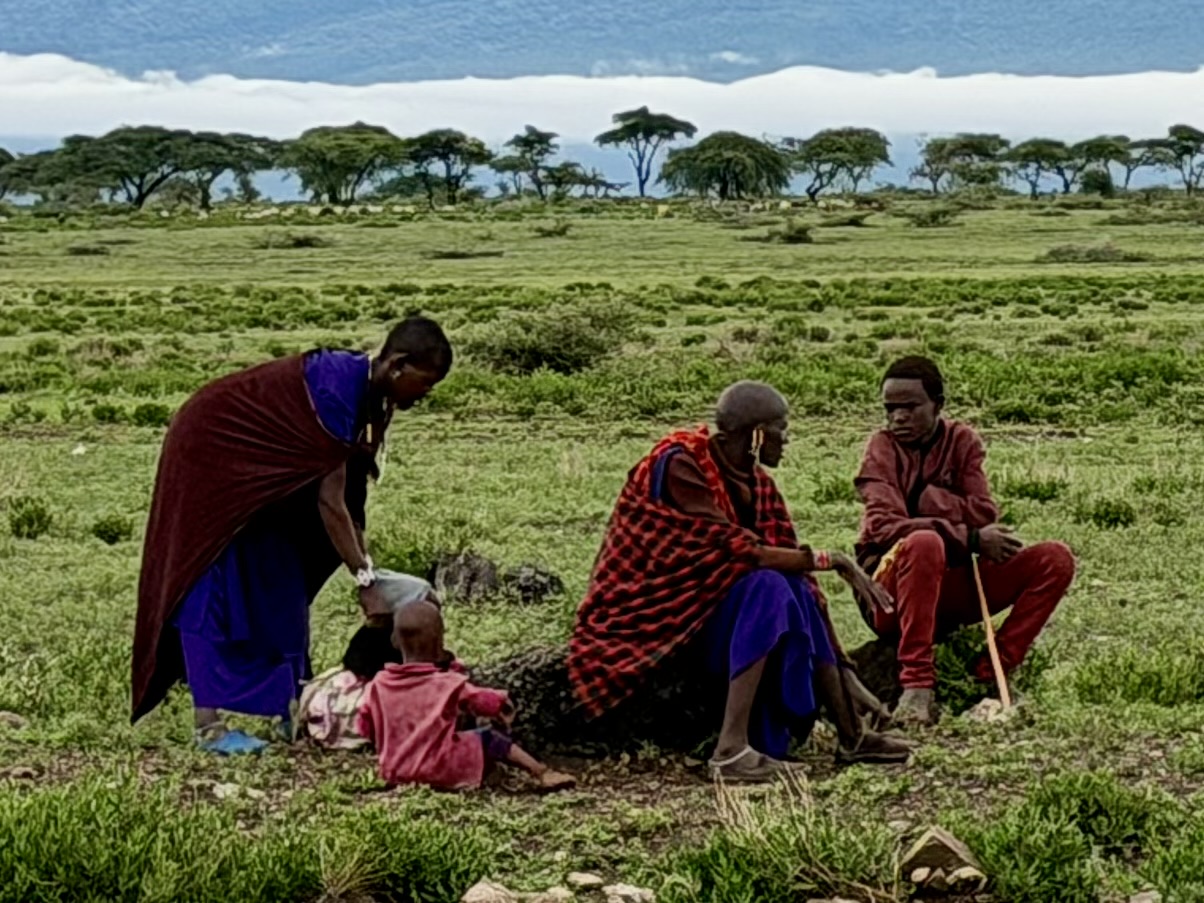
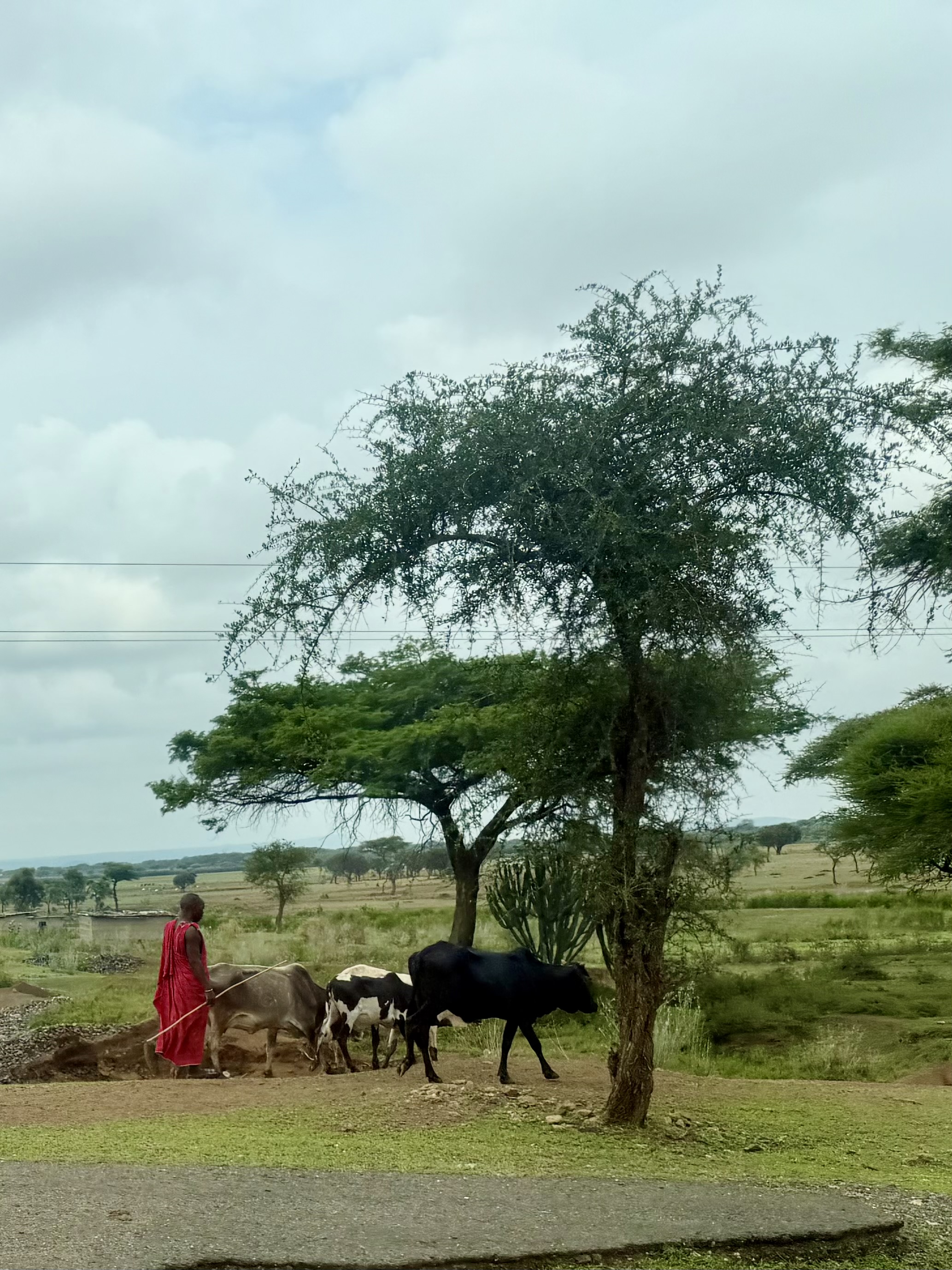
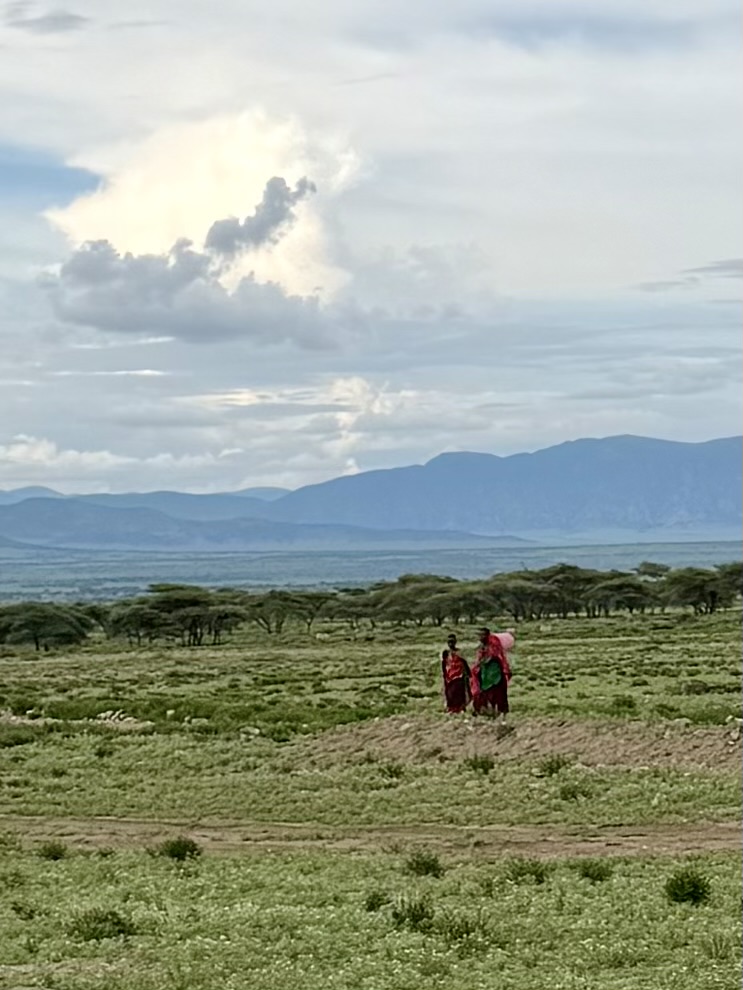
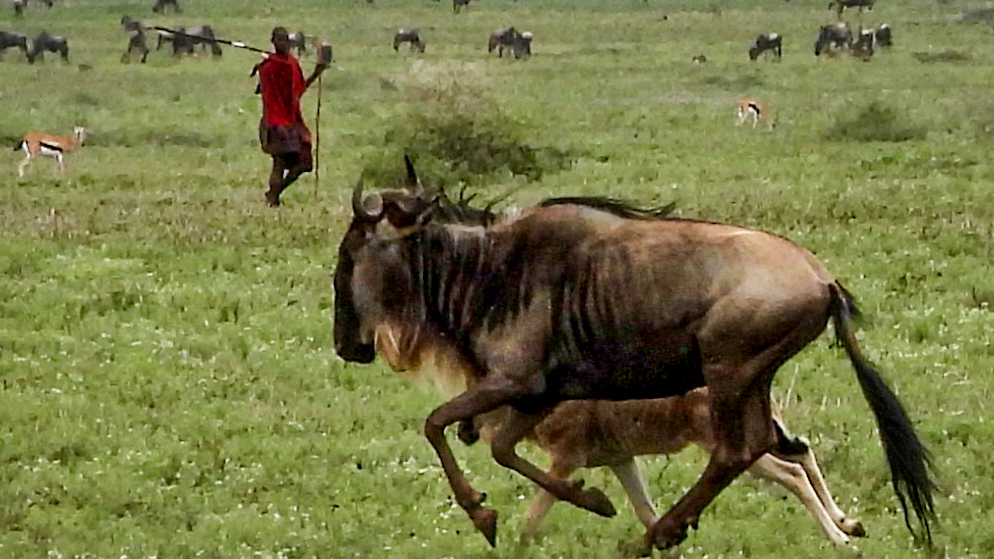
Driving through the region, we frequently saw Maasai men walking across the plains carrying spears while herding cattle, goats, or donkeys.
Life with Livestock
One afternoon as we drove across the Ngorongoro plains, we spotted a large truck parked off in the distance.
Charles explained what was happening.
The truck had come to purchase livestock.
Buyers drive out onto the plains and scan the herds, looking for strong, healthy animals. If they find one they like, they approach the Maasai herder and make an offer.
Nearby, cattle grazed calmly while goats wandered through the grass.
The Maasai man stood tall, spear in hand, watching over them.
Homes of Mud and Earth
Maasai homes are simple but remarkably effective.
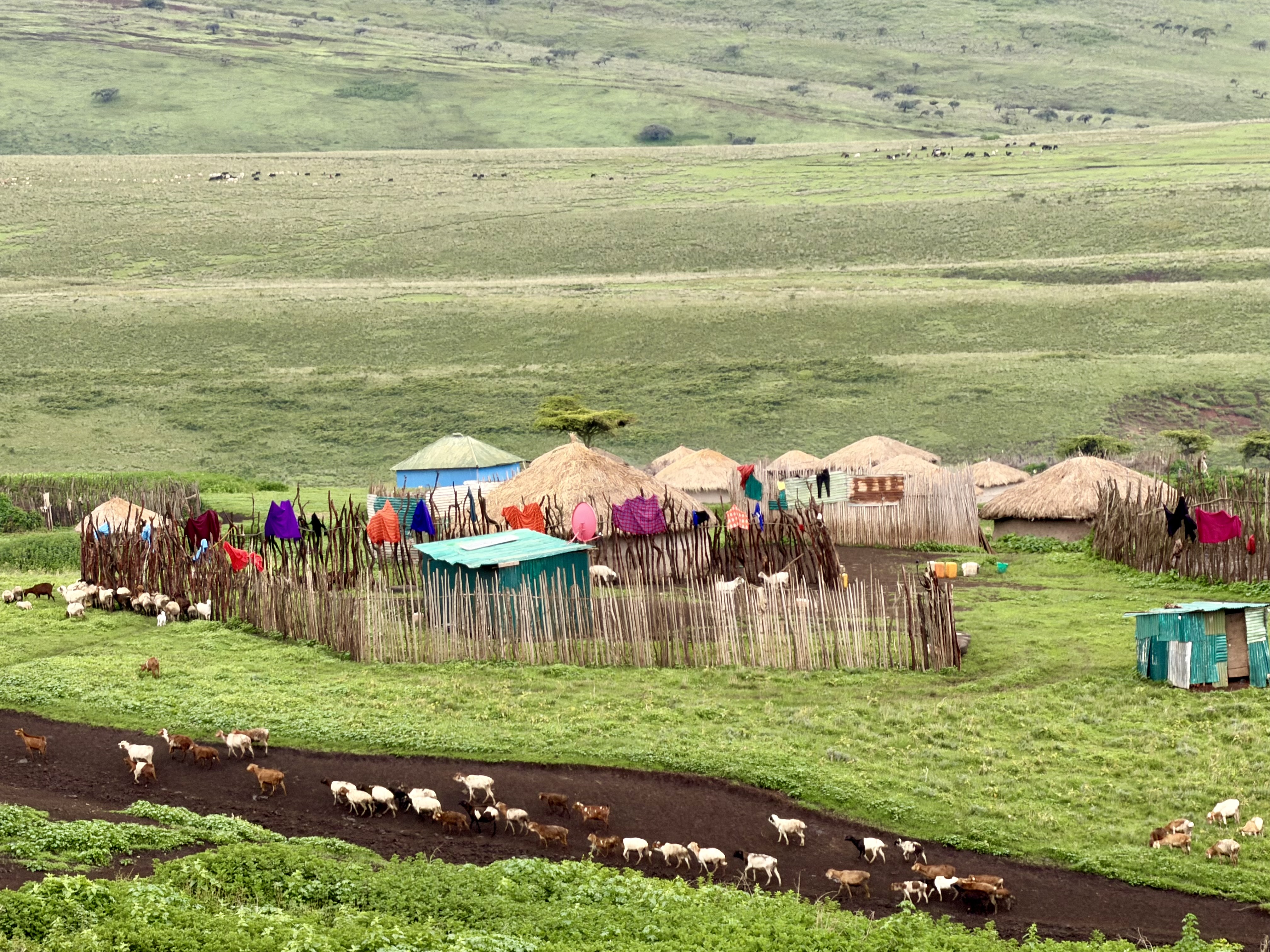
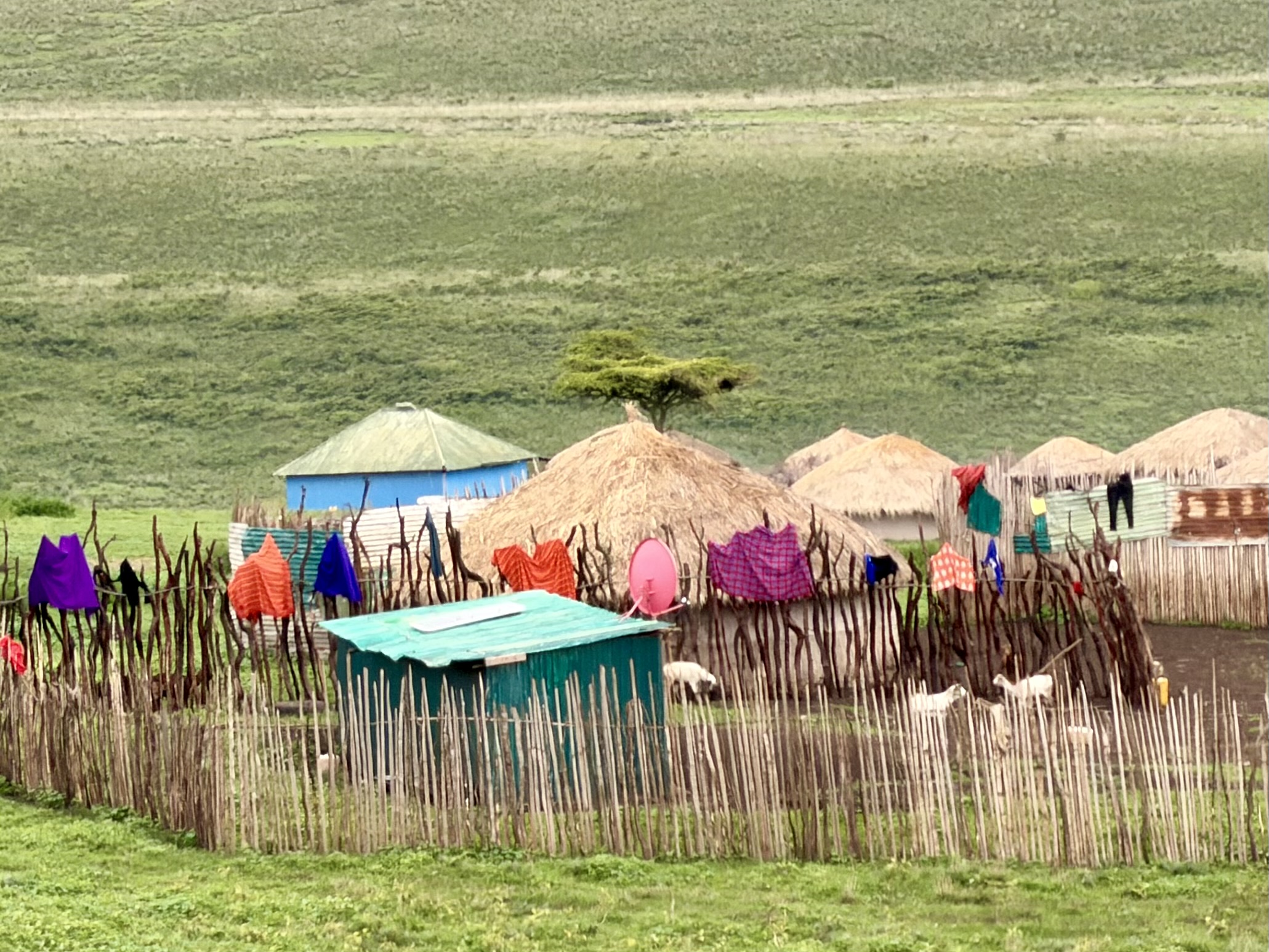
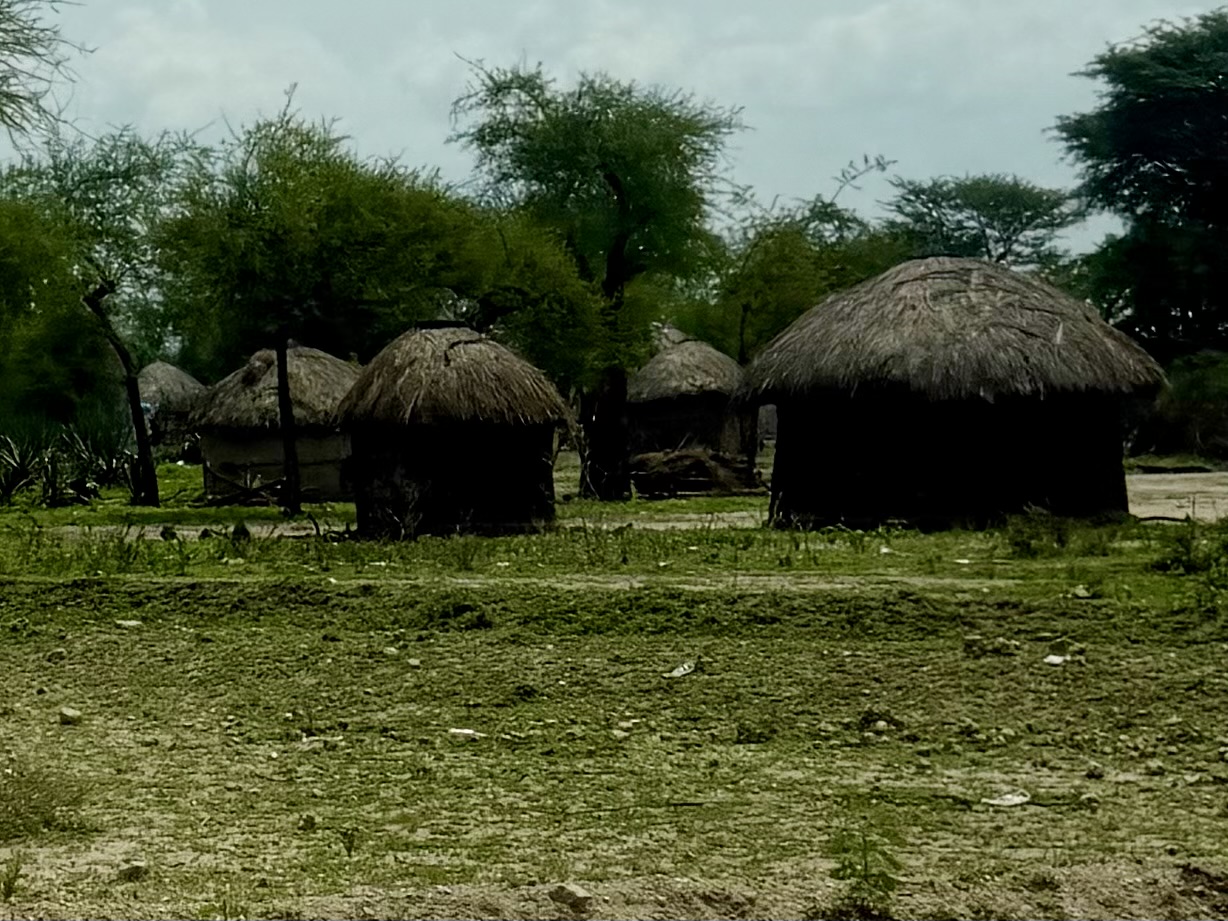
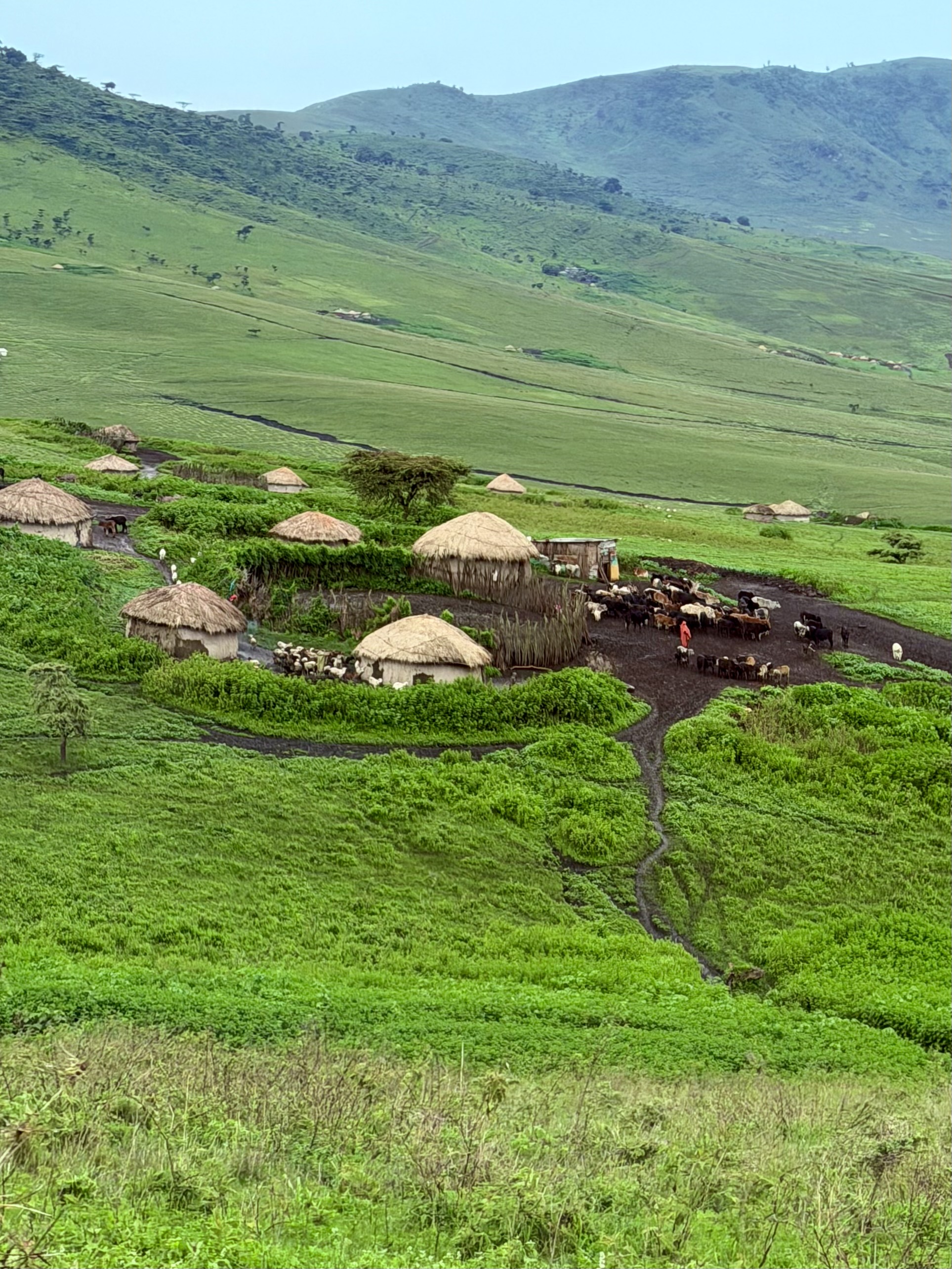
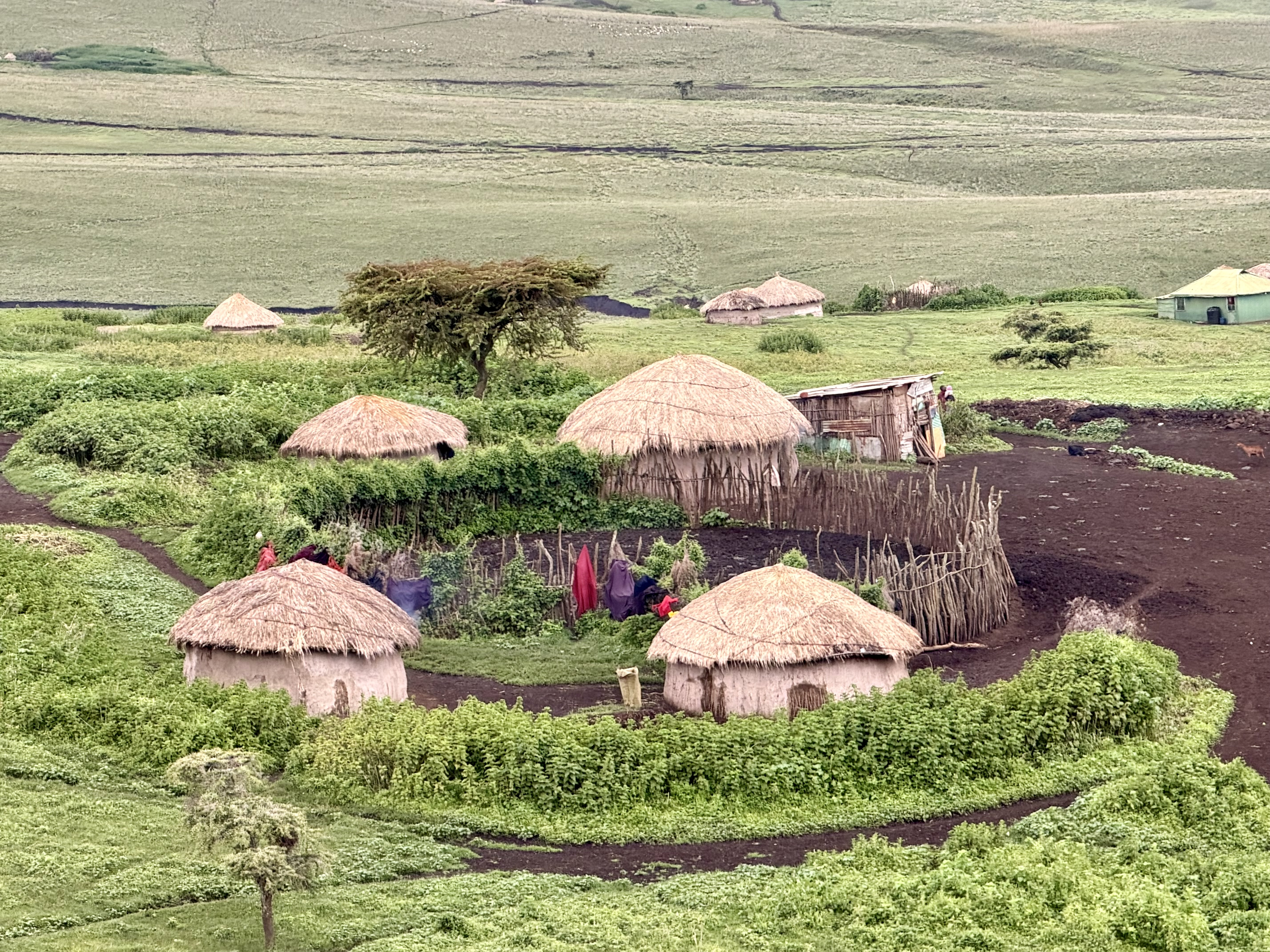
Known as enkangs, these small houses are traditionally built by the women using mud, sticks, grass, and cattle dung. The materials are packed tightly to form thick walls that protect against both heat and cold.
The homes are low and rounded, blending naturally into the landscape.
Entire villages are often arranged in circles, with homes forming a protective barrier around the livestock kept in the center at night.
From a distance we could see smoke rising from cooking fires while children moved between the homes.
Clothes hung outside drying on lines.
Even on rainy days like the morning we descended into Ngorongoro Crater.
Warriors in Training
Charles shared fascinating stories about Maasai traditions.
One of the most important is the transition from boyhood to warrior status.
When Maasai boys reach adolescence, they undergo circumcision as part of an initiation ceremony. Afterward, they enter a period where they live together as young warriors.
During this time they often wear black clothing and paint their faces black.
While driving through Ngorongoro we passed several groups of these young men walking along the road. Their faces were painted dark, their expressions serious.
We wondered quietly whether the dark paint was also meant to help hide the pain they had recently endured.
It marked the beginning of their transformation into warriors.
Polygamy and Family Life
Maasai society also traditionally practices polygamy.
A man may have multiple wives, and each wife typically builds and maintains her own home within the family compound.
One afternoon we passed a couple walking along a dusty road.
The man walked ahead confidently, carrying nothing but his spear.
Behind him, a woman followed carrying a heavy bundle of firewood across her shoulders.
Charles nodded toward them.
“Likely one of his wives,” he explained.
Honey by the Roadside
As we traveled across the Ngorongoro plains we occasionally saw Maasai women standing beside the road selling small jars.
Charles told us it was homemade honey.
The women harvest it locally and sell it to travelers passing through.
Their clothing was vibrant and beautiful, layers of red, blue, and purple cloth combined with intricate beadwork that shimmered in the sunlight.
Even against the vast green landscape, their colors stood out like living art.
Living Beside Wildlife
Perhaps the most remarkable thing about the Maasai is how closely they live alongside wildlife.
Lions, elephants, buffalo, hyenas, and leopards all roam the same landscapes where Maasai families herd their livestock and raise children.
In earlier centuries the Maasai were known as skilled hunters, but today they no longer hunt wild animals. Instead they rely primarily on their domesticated herds for food.
Their knowledge of the land and animals is deep, passed down through generations.
Even the simple act of walking guests to dinner through a dark Serengeti night carries with it centuries of experience.
A Quiet Respect
Our encounters with the Maasai were brief but powerful.
They were calm, confident, and deeply connected to the land.
Whether welcoming us with song at our lodge, herding cattle across the plains, or quietly escorting us through the darkness with spears in hand, they carried themselves with a quiet dignity that left a lasting impression.
Long after the safari vehicles, the lions, and the sweeping savannahs fade from memory, I suspect I will still remember that moment in the rain.
A warrior walking ahead of us.
A buffalo track in the mud.
And the understanding that in this part of the world, people and wilderness still live side by side.
 Click, Wander & Savor