
Africa Gives Free Massages – Our Tanzania Safari Experience Begins in Tarangire
When we first met our safari guide and driver Charles, he gave us a piece of advice that would become an inside joke for the rest of the trip.
“Africa gives free massages,” he said with a grin.
At the time we assumed he meant the relaxing nature of being surrounded by wildlife and open landscapes.
We were wrong.
He was talking about the roads.
Once we left the paved highways and entered the dirt tracks of Tanzania’s national parks and conservation areas, the Land Cruiser bounced, rattled, and vibrated across the terrain in ways that made it clear why Charles considered it a massage.
It was the kind you do not request but certainly remember.
Charles himself quickly became one of the most memorable parts of our safari experience. He was thoughtful, knowledgeable, and quietly funny. Over the week we learned he was from the Chaga tribe and had three sons, ages eighteen, fifteen, and thirteen. His oldest, David, dreams of becoming either a doctor, a lawyer, or joining the army.
Charles spoke proudly about his family and about changes he had made in his own life. He had once been a smoker and a drinker, but had given both up.
“My wife and sons like me more now,” he said simply.
Within the first hour we also realized we were in very capable hands. Charles knew the wildlife, the terrain, and the rhythms of the parks intimately. He was also an excellent driver, which turned out to be one of the most important skills a safari guide can have.
Safari Logistics and the “Check the Tire” Rule
Before we began our first game drive, Charles shared one more piece of practical safari wisdom.
“There are restrooms in the parks,” he explained, “but they are far apart.”
That seemed like useful information.
“If you need to go before we reach one,” he continued, “just tell me you think we should check the tire.”
At first I was confused.
Check the tire?
Charles smiled.
This was our code phrase. If one of us said it, he would start looking for a safe place to stop so we could step out of the vehicle for a quick bathroom break.
But there were rules.
We needed to be far from other vehicles because no one wants to become roadside entertainment.
More importantly, we had to be far from big cat territory.
Lions, leopards, and cheetahs were not the kind of audience anyone wanted for this particular situation.
Safari, it turns out, involves more practical planning than the glossy wildlife documentaries suggest.
Safari Vehicles and Our First Mechanical Surprise

Our safari vehicle was not technically a Jeep, as many people casually call them.
It was a modified Toyota Land Cruiser, the workhorse of African safaris.
The vehicle had been extended with additional seating and featured a pop up roof that lifted upward so we could stand and photograph wildlife while remaining safely inside the vehicle. It was perfectly designed for the rugged terrain of Tanzania’s parks.
It was also about to remind us that safari vehicles live a hard life.
Before we reached the entrance to Tarangire National Park, Charles pulled into a roadside stop so we could use the restroom and grab a quick coffee.
When we returned to the vehicle and climbed inside, Charles turned the key.
Nothing.
Not even the faint sound of the engine trying to start.
He tried again.
Still nothing.
Charles calmly stepped out and lifted the hood, inspecting the engine. A few minutes later another safari driver pulled up and the two of them began discussing the problem.
Then they opened the door to the second row of seats.
Just behind the passenger seat was a panel in the floor that lifted upward.
Underneath it sat the vehicle’s battery.
Somehow the cable had been jostled loose. We had not even hit the roughest roads yet.
Fortunately it was an easy fix. The cable was reconnected, the panel closed, and Charles climbed back into the driver’s seat.
This time the engine roared to life.
We laughed with relief and continued toward Tarangire.
Little did we know this would only be the first of several mechanical adventures our faithful Land Cruiser would face during the week.
Entering Tarangire National Park
Entering Tanzania’s national parks follows a familiar rhythm.
Vehicles stop at the entrance gate while guides handle paperwork and visitors stretch their legs or use the restrooms.
Once Charles completed the formalities, we climbed back into the Land Cruiser and rolled slowly through the park gate.
Within minutes Charles slowed the vehicle.
Along the side of the dirt road, moving with all the urgency of a Sunday afternoon stroll, was a leopard tortoise.

Its beautifully patterned shell caught the sunlight as it slowly made its way across the edge of the road, completely unconcerned with us or anything else around it.
It was not exactly the dramatic wildlife sighting most people imagine when they picture safari, but it felt like the perfect introduction.
Safari begins slowly.
Then Charles pointed out something I never would have noticed.
Douggie the Dung Beetle
Near the road, a dung beetle was pushing what appeared to be a perfectly round ball across the dirt.
The ball looked enormous compared to the beetle itself.
Charles explained that dung beetles roll these balls away from larger piles as both food and a place to lay eggs. The ball becomes their entire world for a while.
Watching this tiny creature push something many times its own size across uneven ground was surprisingly impressive.
We quickly named him Douggie the Dung Beetle.
Douggie pushed and pushed, navigating small ridges in the dirt road with heroic determination.
Then something unexpected happened.
Douggie climbed on top of the ball.
For a brief moment it looked like he might ride it like a circus performer balancing on a rolling log.
Unfortunately physics had other plans.
The ball began rolling faster.
Douggie lost control.
He tumbled off as the ball rolled steadily backward down the incline, eventually stopping almost exactly where he had started.
Douggie stood there for a moment.
I swear he looked frustrated.
In my mind I could almost hear a disappointed parent saying, “Next time, plan before pushing.”

Baobabs and Termite Cities
It would be a little while before we spotted larger wildlife, but the landscape itself was incredible.
Tarangire is famous for its baobab trees, enormous ancient giants with thick trunks and branches stretching outward like roots reaching toward the sky. Some are believed to be hundreds or even thousands of years old.

Charles explained that elephants sometimes strip the bark from baobabs during dry seasons to access moisture stored inside the trunks.
Scattered throughout the park were massive termite mounds, some taller than a person and shaped like sculpted towers.
Charles told us termite colonies create these structures as temperature controlled cities with ventilation systems regulating airflow underground.
Standing among baobabs and termite cities felt like entering a completely different world.


Wildlife Begins to Appear
As we moved deeper into Tarangire, the wildlife slowly began revealing itself.
Our first sighting was a group of zebras, but they were far in the distance. Even with my zoom lens I could not capture the close up photograph I had imagined.
I started wondering if this was what safari would be like.
Would the animals always remain just out of reach?
It turns out safari often begins exactly this way.
You glimpse something far away, then your guide slowly works closer until suddenly the animals are right in front of you.
Soon we began seeing elephants, large families moving slowly through the brush. My husband had secretly feared elephants ever since watching a television show called When Elephants Attack, so I was relieved when he did not jump out of his seat and attempt to flee the vehicle.


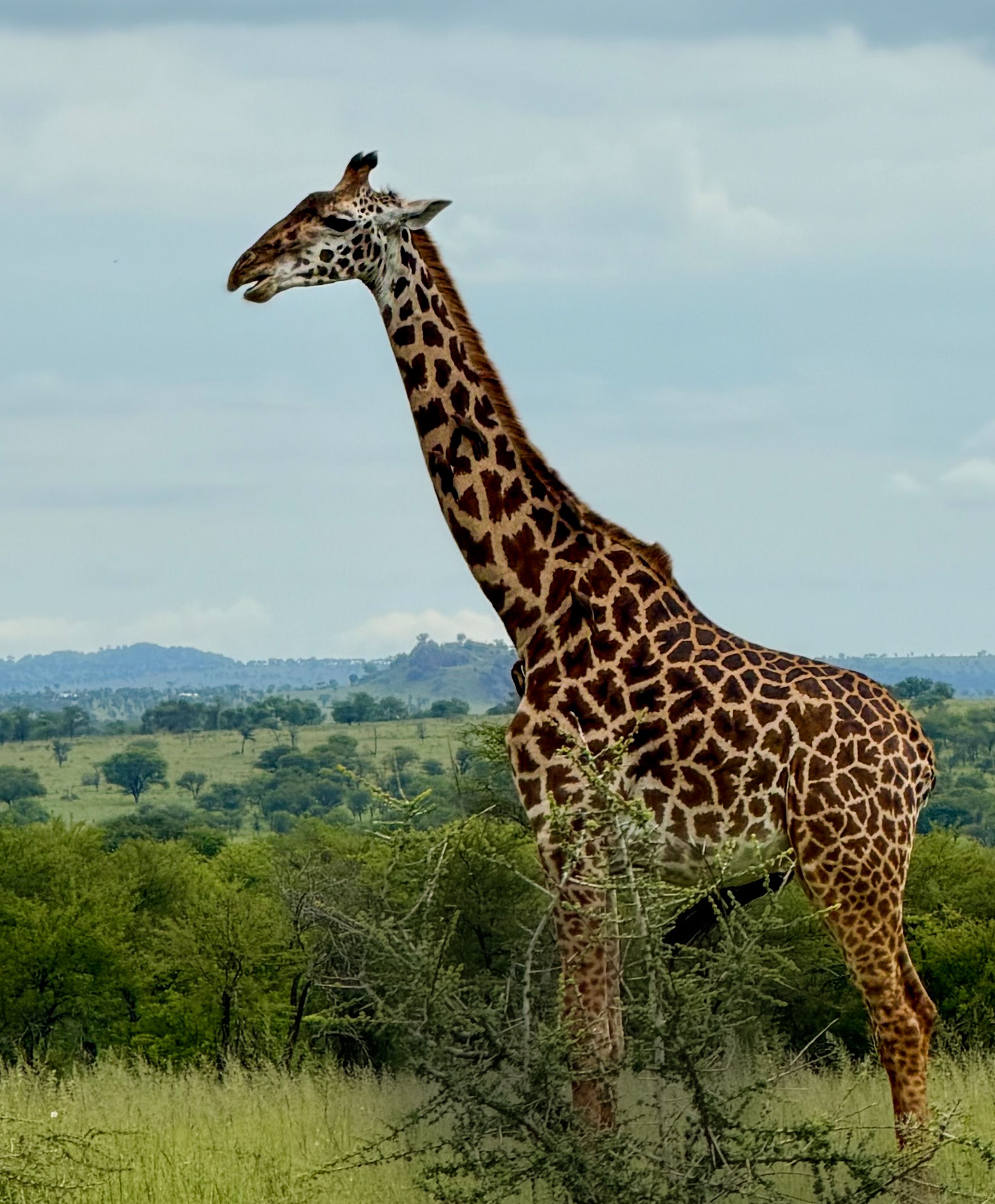
We also spotted giraffes, their impossibly long necks rising above the acacia trees as they moved gracefully across the landscape.
Lunch With the Monkeys
Around midday Charles pulled into a picnic area where we could open our lunch boxes.
Almost immediately I noticed movement in the trees.
A grey vervet monkey climbed into a branch nearby and made himself comfortable, curling between two limbs and promptly falling asleep.


But several other monkeys lingered nearby watching us carefully.
Charles explained something that made me laugh.
“They are not bothering us because I am here,” he said.
He explained that local drivers never feed monkeys and will shoo them away. But tourists sometimes react with excitement and occasionally share food despite park rules.
In other words, the monkeys know exactly who to target.
Sure enough, we watched a young monkey quietly grab a banana from a nearby table and sprint for a tree.
At another table a tourist screamed as a monkey tried to jump onto their picnic bench.
Meanwhile I happily snapped photos, grateful the monkeys seemed content to leave us alone.


The Birds of Tarangire
Tarangire’s birdlife was spectacular.
Charles seemed able to identify every bird instantly.
One of my favorites was the superb starling, a beautiful bird with iridescent blue and green wings, a glossy black head, and a chestnut breast separated by a crisp white band. In sunlight the feathers shimmered.

We also saw lilac breasted rollers, widely considered one of the most beautiful birds in Africa. Their feathers combine turquoise, lilac, blue, and green in a remarkable display of color.
Another striking bird was the grey crowned crane, tall and elegant with a distinctive golden crown of feathers.

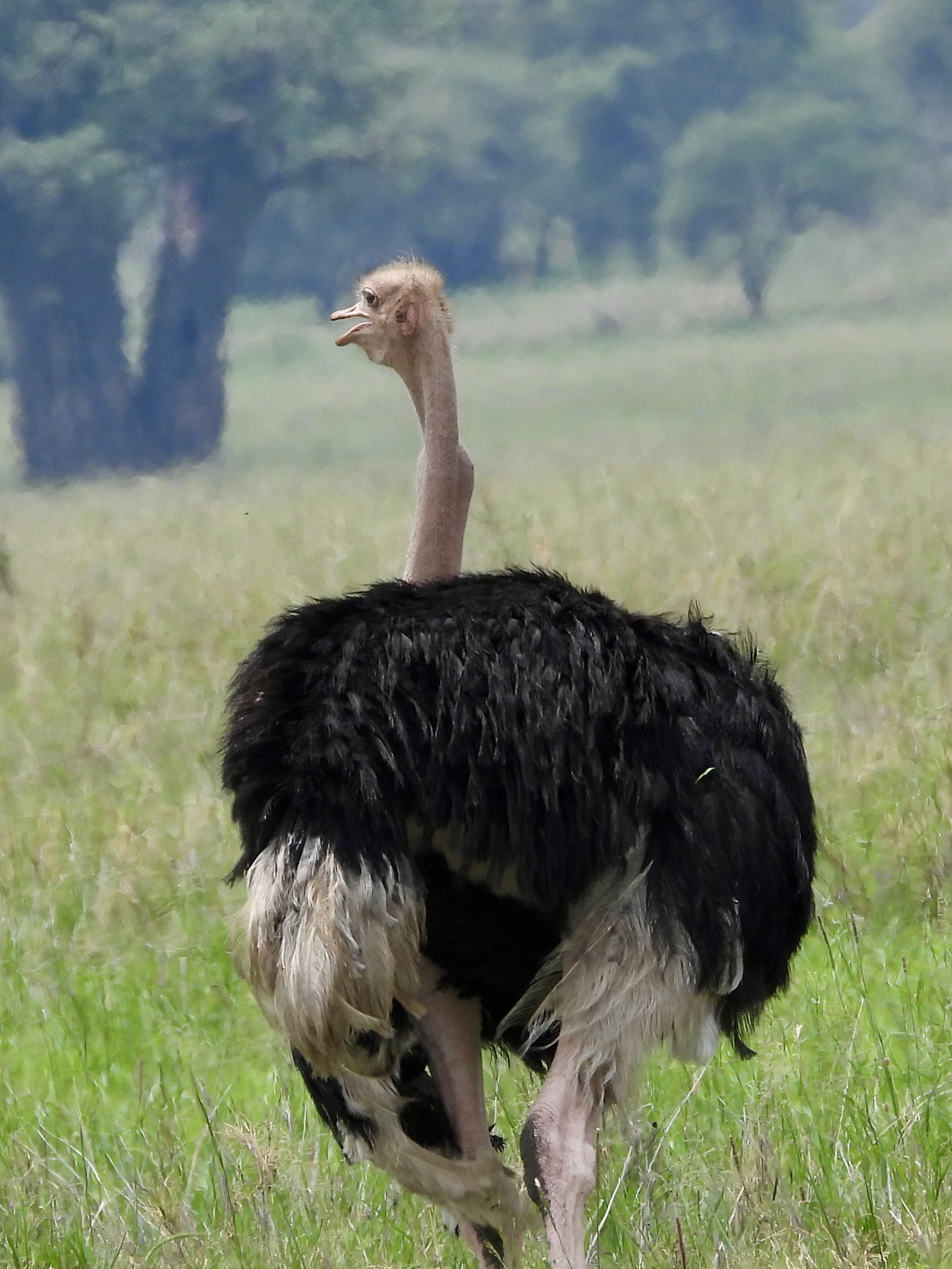
And of course, it wouldn’t be an African safari without seeing ostriches!

Between the birds and the mammals, Tarangire already felt alive with wildlife.


Still, one thought kept crossing my mind.
When would we see cats?
Here Kitty Kitty
I had quietly told my husband something earlier.
Every time we spotted a big cat, I would not say anything out loud, but inside my head I would be thinking:
Here kitty kitty kitty.
He thinks I am nuts.
He may not be wrong.
Then that afternoon Charles turned off the main dirt road and followed faint tire tracks through the grass.
Ahead we saw several safari vehicles gathered together.
That is always a good sign.
As we approached, I saw them.
My first lions.
Two lionesses rested in the grass. Their golden coats blended perfectly with the dry landscape.
Charles stopped the vehicle.
One lioness stood and walked past us.
She passed within ten feet of my open window.
Ten feet.
No barrier. No fence.
Just a lion walking past our vehicle like it owned the road.
Which of course it did.


Baboons on the Road
As the sun began sinking lower in the sky, we left the park and drove toward Lake Manyara where we would spend the night at Escarpment Luxury Lodge.
Along the road we suddenly encountered a group of baboons.
And not just strolling across the road.
One particularly enthusiastic male was very clearly in the middle of mating with a female.
Yes.
Baboon sex.
We paused and watched for a moment.
Free animal entertainment, I suppose.

As we continued down the road we noticed something else.
Baboons were everywhere. Along the roadside, in the trees, scattered through the brush.
Entire families moved through the area.
It was a wild and slightly chaotic end to our first safari day.
Tomorrow we would head deeper into Tanzania.
And the adventure was only just beginning.


Through Ngorongoro and Into the Great Migration
The next stage of our safari would take us through one of the most famous wildlife landscapes on Earth.
We entered the Ngorongoro Conservation Area and began making our way toward the Ndutu region, an area known for hosting one of nature’s most extraordinary spectacles.
The Great Migration.
I had seen photos and documentaries before, but nothing prepares you for seeing it in person.
As we drove along the open plains, the landscape stretched endlessly in every direction. And everywhere we looked there were animals.
Not dozens.
Not hundreds.
Thousands.
Then tens of thousands.
Wildebeest covered the African plains in every direction. They clustered together, grazed, moved slowly across the grasslands, and called out in low grunts that carried across the wind.


Charles estimated that over one million wildebeest move through Tanzania during the migration, and standing there it was easy to believe.
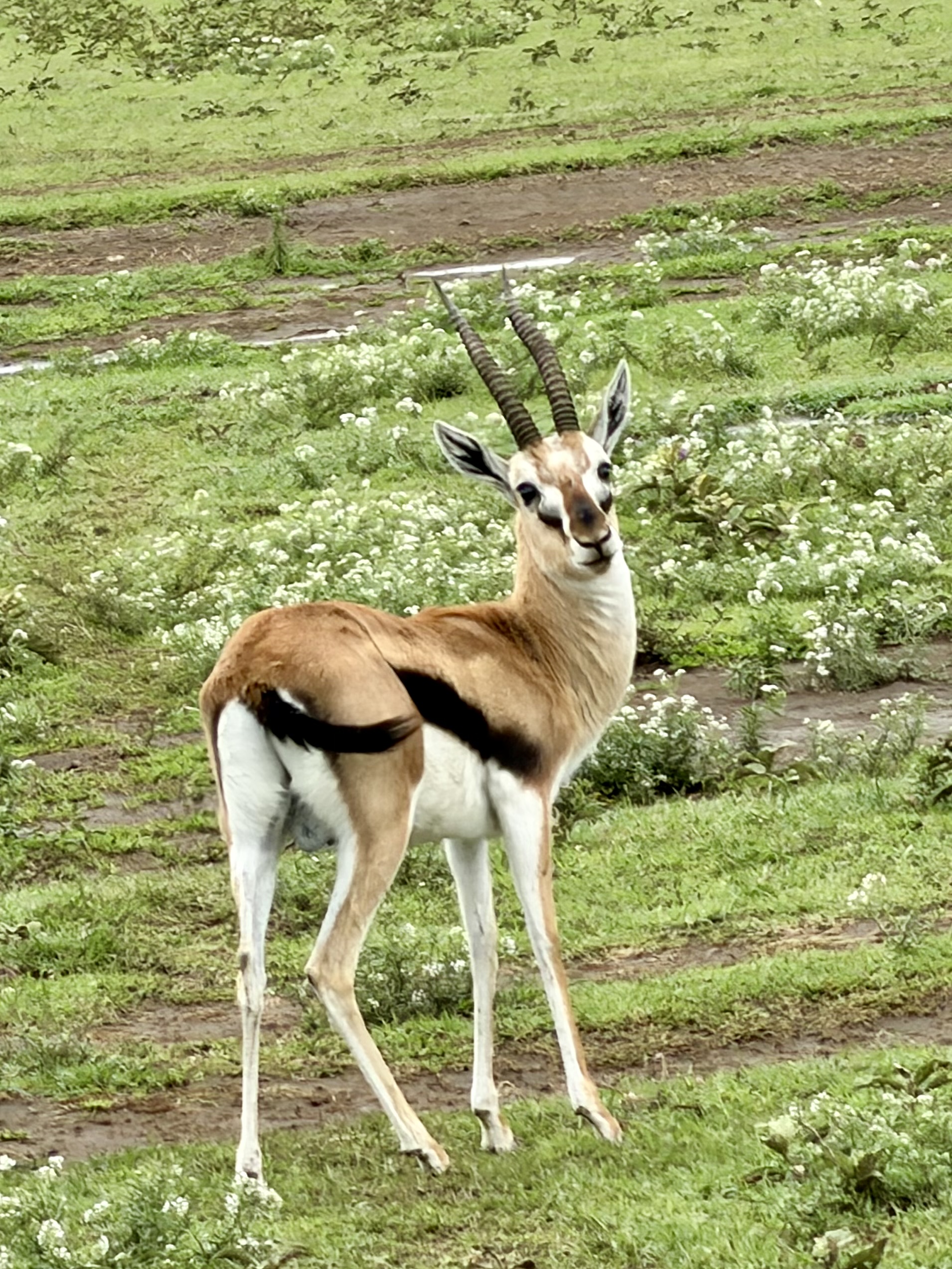
Mixed among them were zebras and gazelles, including Thomson’s gazelles and Grant’s gazelles, moving together across the grasslands.
The scale of it was almost impossible to process.
Getting to Know the Wildebeest
Up close, wildebeest are fascinating animals.
From a distance they can look a bit like cows, but their features are much more unusual.
Their heads are long and heavy with thick curved horns that sweep upward and outward before curling inward in a shape that resembles a wide W.
Adult males have longer darker hair hanging beneath their chins that almost looks like a beard. Their bodies are muscular and built for endurance across the plains.
The calves are lighter brown and more cowlike in appearance, often sticking close to their mothers for protection.

Wildebeest spend much of their lives grazing on grasses across the savannah. Their migration follows the seasonal rains that bring new grass growth.
Unfortunately for them, wildebeest are also a major food source for Africa’s predators. Lions, hyenas, and crocodiles all hunt them. Calves are especially vulnerable during migration season.
Despite these dangers, the migration continues year after year in one of the oldest natural cycles on the planet.
First Sightings in the Ngorongoro Crater
As we drove along the rim of Ngorongoro Crater, we spotted our first wildebeest inside the crater.
Just like our first zebras back in Tarangire, they were far away.
I remember thinking the same anxious thought.
Would we ever get close enough for good photos?
Where were the massive herds I had seen in documentaries?
Once again I was worrying too soon.
Soon enough we saw them everywhere.
Herds stretching across the plains.
Calves walking beside their mothers.
Lines of animals slowly migrating across the landscape as if guided by some ancient instinct.
The migration was real, and we were right in the middle of it.
A Surprise in Ndutu
While exploring the Ndutu region before continuing toward the Serengeti, we were treated to a special surprise.
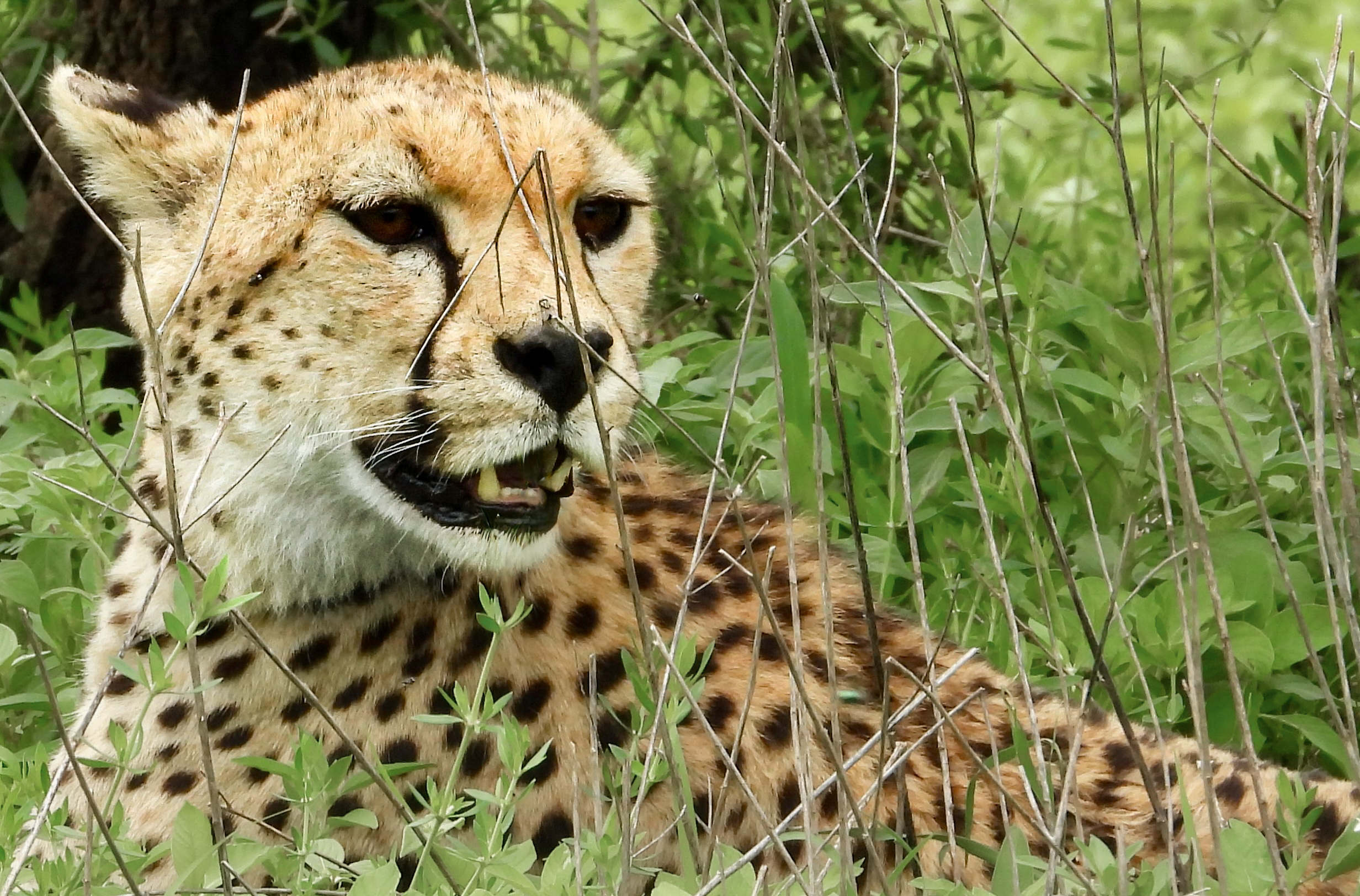
Cheetahs.
At first we could only see one resting near a tree.
Then it stood.

For several quiet moments we admired its sleek and powerful body. Cheetahs are built for speed in a way no other big cat is. Their long legs and slender frames are designed for explosive acceleration across open plains.
Later, as we passed through the same area again on our way toward the Serengeti, the cheetah was still there.
And this time we saw two companions nearby.

One thing we quickly learned is that big cats often stay in the same place during the heat of the day when they are less active. Guides share sightings over radio, allowing vehicles to return to animals spotted earlier.
The one exception seemed to be the leopard, which earned its reputation as Africa’s most elusive big cat.
Crossing Into the Serengeti
After finishing our Ngorongoro game drive, it was time to continue toward the Serengeti.
At one point we stopped along the road to take photos.
Behind us stood the sign welcoming visitors to the Ngorongoro Conservation Area.
In front of us stood the sign for Serengeti National Park.
I remember standing there thinking how surreal it felt.
I could not believe I was about to enter the Serengeti.
Even after crossing into the park we continued seeing wildebeest and zebras scattered across the plains before the landscape slowly changed.
Eventually the animals thinned out and the scenery opened into sweeping savannah grasslands, rolling fields of tall grass glowing in the sunlight. Some patches of grass shimmered with reddish tones in the afternoon light.
It was beautiful and peaceful.
But the weather had another surprise waiting for us.
The River Crossing
Although it was not raining where we were, we soon discovered it had been raining heavily somewhere upstream.
As we approached a long line of safari vehicles stopped along the road, something unusual was happening.
Charles initially wondered if it might be a convoy or some special event.
Instead we discovered that a river had flooded across the road we needed to take to reach our lodge.
Dozens of safari vehicles were gathered along the banks, waiting to see when it would be safe to cross.
We stepped out of the vehicle with the others to observe the situation. Charles guided us carefully to the side of the road where the grass was short.
The other side had tall grass.
He cautioned us not to walk there.
Tall grass, he explained, is a favorite hiding place for big cats. It is also home to some of the most dangerous snakes in Africa.
We stayed exactly where he told us.
Through radio communication the guides learned that vehicles leaving the Serengeti would cross first since they had farther distances to travel before reaching the park exits before curfew.
As vehicles began coming through the water, we watched closely.
Some passengers looked thrilled.
Others looked completely stunned.
Finally it was our turn.
My husband and I stood up through the pop up safari roof so we could watch.
The water was moving quickly across the road.
The vehicle ahead rolled sharply to the right, then leaned heavily to the left as it climbed over hidden rocks beneath the water.
Then suddenly the front dropped into a deeper section of the river.
Moments later it climbed up the opposite bank and drove out.
Charles followed the same path.
Our Land Cruiser tipped and rolled as the tires worked their way through the current and uneven stones. At one point the vehicle leaned far enough that I wondered if we might tip completely over.
But Charles never hesitated.
He kept the vehicle steady and moving forward.
Within seconds we climbed the far bank and out of the river.
I was not scared. By this point I trusted Charles completely. With more than twenty years of experience, he would not attempt a crossing he believed was unsafe.
Still, I was very happy when we reached solid ground again.
And even happier when I replayed the video on my phone.
What an adventure.
Racing the Sunset
After the crossing there was no time left to search for animals.
We needed to reach our lodge before dark.
Charles did not want to risk encountering more flooded roads after sunset.
Even so, night began falling before we arrived.
And somehow the road got even worse.
The dirt track turned into uneven ruts filled with rocks before eventually transforming into something that resembled cobblestones, although it looked like a road that had survived an earthquake.
The road climbed steeply upward.
Charles downshifted the vehicle and engaged four wheel drive as we slowly climbed the hill.
Finally, lights appeared ahead.
We had arrived at TNS Kimarishe Serengeti Lodge.
Our first lodge had been wonderful.
But this one was even better.
And we would be staying here for the next two nights, deep in the heart of the Serengeti.
A Serengeti Welcome
Just when we thought the adventure for the day was over, another surprise awaited us.
Standing outside the lodge entrance were five Maasai men and women dressed in traditional clothing, their bright red garments standing out against the Serengeti landscape.
As soon as we stepped out of the vehicle, they began singing.
Their voices rose and fell in rhythmic harmony as they clapped and stepped in unison.
Before I fully understood what was happening, one of the women approached me smiling.
She gently placed a handmade beaded necklace over my head and took my hand, guiding me toward the center of the group.
Then she removed the hat from her own head and placed it on mine.
Suddenly I was part of the welcome ceremony.
As they sang around me, I noticed one of the Maasai men leading my husband toward the group.
Oh no, I thought.
My husband is a good sport, but spontaneous public participation is not exactly his favorite activity.
To his credit, he handled it well.
He smiled politely and did his best to follow along as the group continued singing and clapping around us.
It was joyful, slightly overwhelming, and completely unforgettable.
And just like that, we had officially arrived in the Serengeti.
Tomorrow we would wake up in one of the most legendary wildlife landscapes on Earth.
And the real Serengeti adventure was about to begin.
Chasing Cats Across the Serengeti
The first part of our morning game drive was busy.
We saw an incredible amount of wildlife, though much of the time was spent chasing big cat sightings reported over the radio between safari guides.
One of those sightings was a leopard.
The elusive leopard never allowed us to get very close. We could see it high in a tree from a distance, its spotted coat blending perfectly with the branches. Even with my zoom lens it was difficult to capture a great photograph.
Still, I was thrilled.
Leopards are notoriously hard to spot, and simply being able to say I had seen one felt like an accomplishment.
Later that morning we arrived at another location where a leopard had been seen earlier.
Unfortunately we were a little too late.
Another safari group had watched the leopard carry a baby wildebeest up into an acacia tree where it had begun eating its meal. By the time we arrived the leopard had already disappeared.
But the evidence remained.
Hanging from the tree was the small body of the wildebeest calf, limp among the branches. We could clearly make out its head and one small hoof.
It was a stark reminder of the realities of life on the savannah.
For every predator we admired, there was always a prey animal that had not been so lucky.
The Giraffe Gymnast
Not all of our sightings were quite so dramatic.
At one point we watched a giraffe drinking from a small pool of water, and it turned out to be one of the most entertaining moments of the morning.
To drink, giraffes must spread their long legs wide apart and lower their enormous necks down toward the ground. The pose looks almost like an awkward split.
This particular giraffe stretched its legs as far apart as possible before bending down to reach the water.
When it lifted its head back up, water dripped slowly from its mouth, falling back into the puddle below.
It looked both graceful and ridiculous at the same time.


Nature’s Tiny Helpers
Another interesting sight involved the relationship between giraffes and a small bird called the oxpecker.
Several of these birds perched along the backs and necks of giraffes as the animals moved slowly through the grasslands.
Charles explained that oxpeckers feed on insects and parasites that live in the giraffes’ hides.
The birds get a meal.
The giraffes get relief from pests.
It is one of the many small symbiotic relationships that quietly keep the ecosystem functioning.

Pumba on the Plains
At another point we spotted a group of warthogs moving through the grass.
Of course, in my mind they were immediately renamed Pumba.
The warthogs trotted along with their tails sticking straight up in the air like little antennae as they moved among zebras, gazelles, and impalas grazing peacefully nearby.
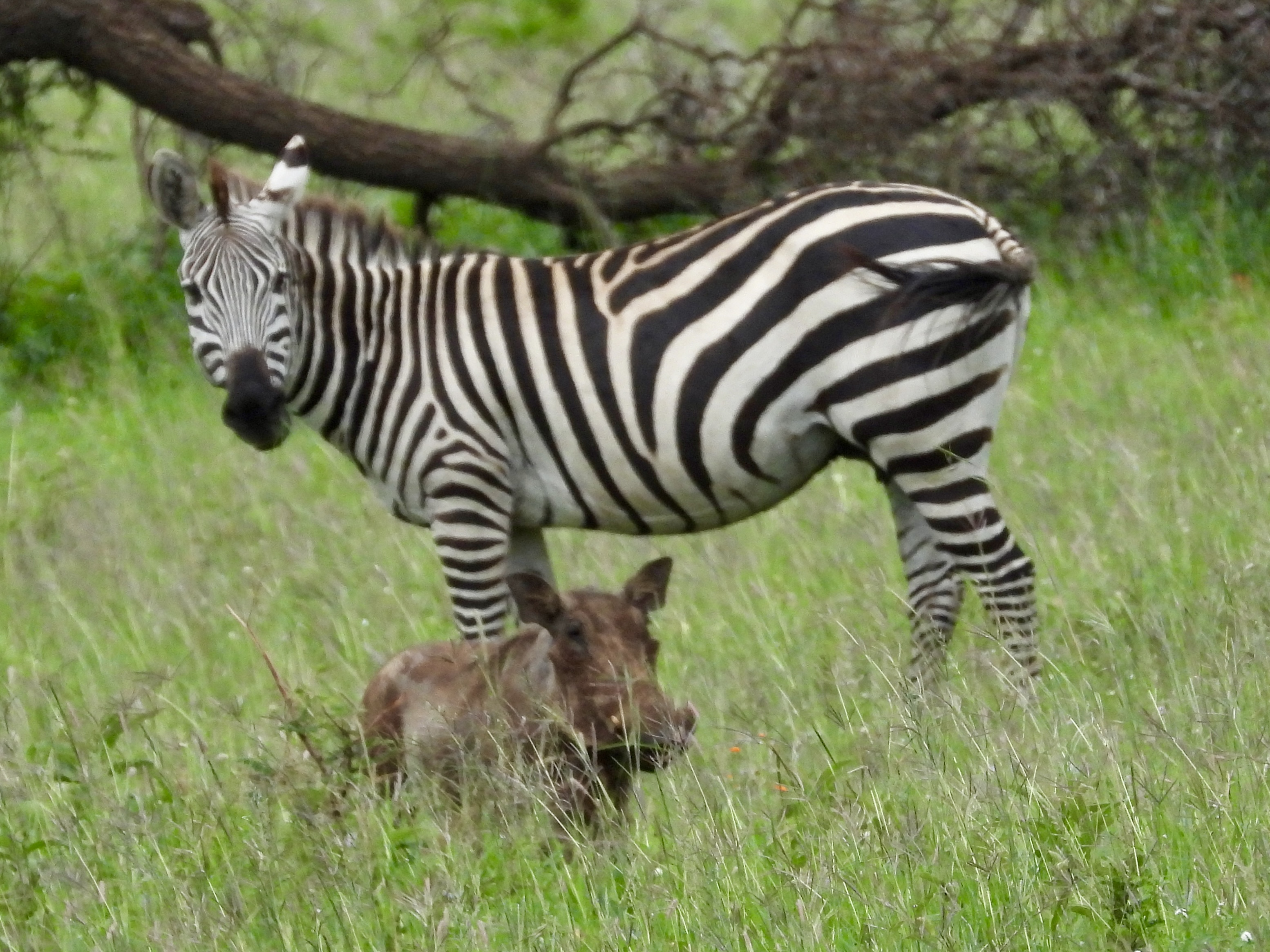
Seeing animals from different species sharing the same space so comfortably was one of the things that made the Serengeti feel so unique.
The entire ecosystem seemed to operate in a kind of loose harmony.
A Good Day for Lions
And then there were the lions.
It turned out to be a very good day for lion sightings.
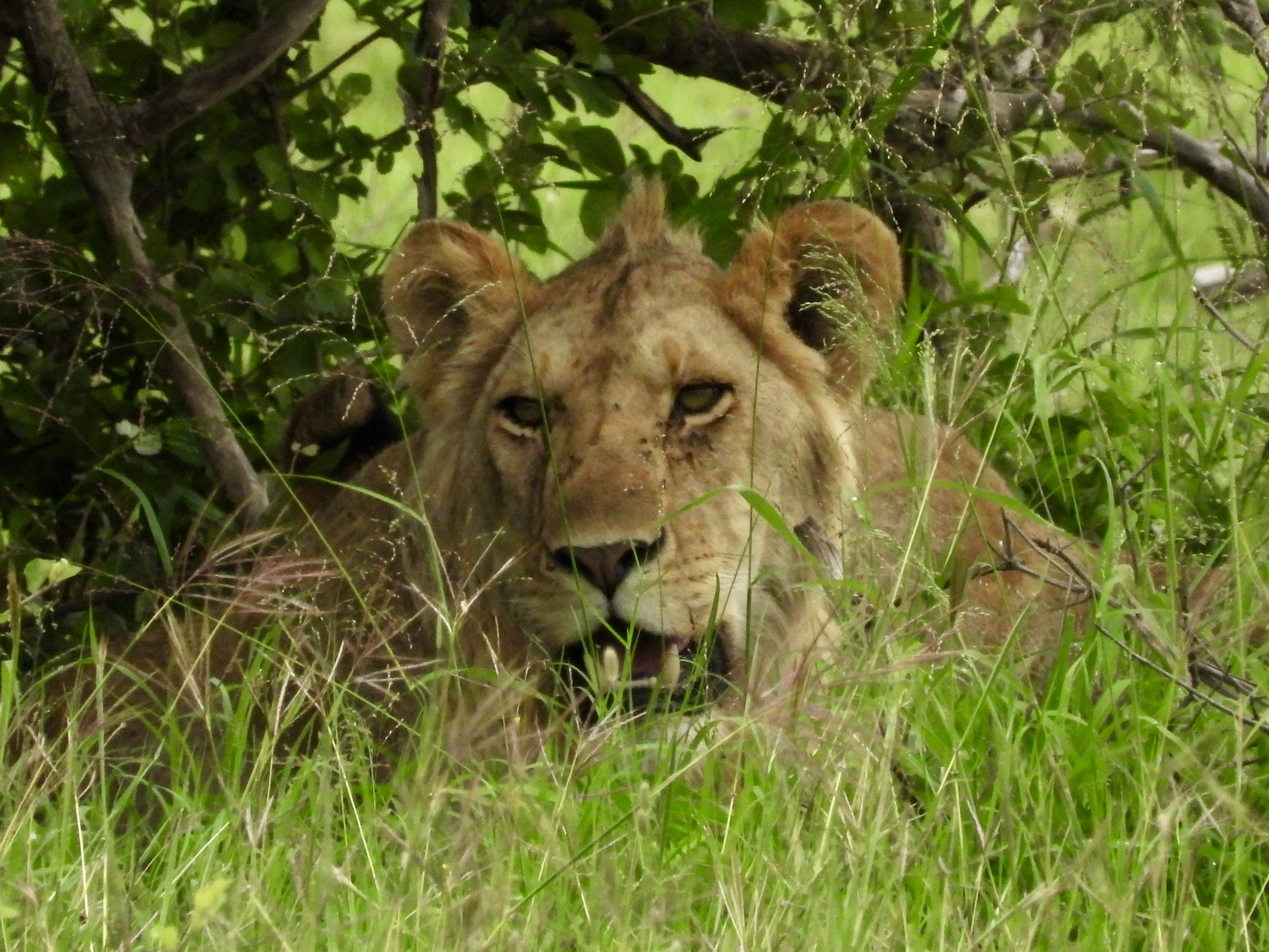
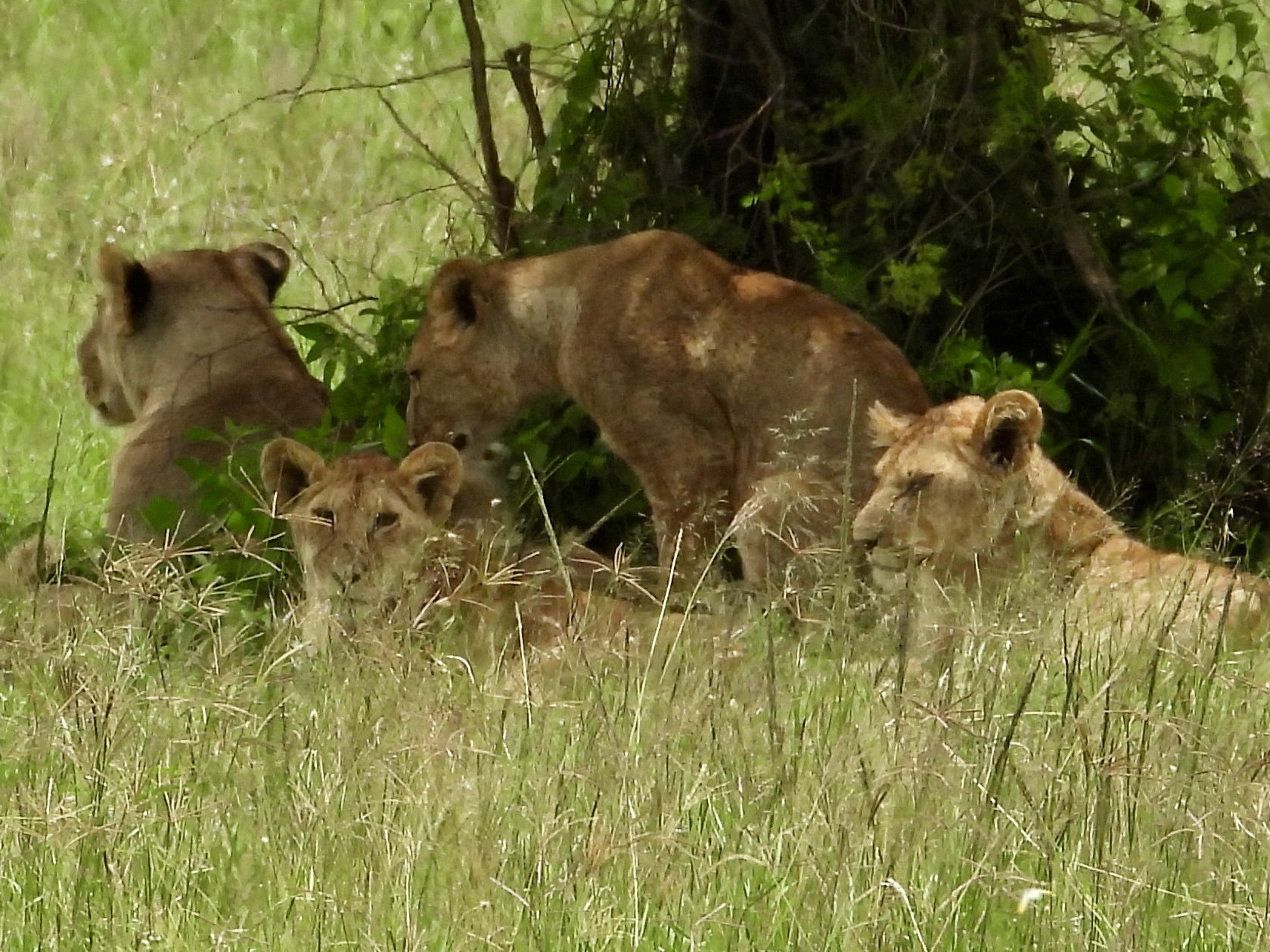
At one stop we watched a pride resting in the grass. From a distance they looked like scattered golden shapes blending into the savannah, but through the zoom lens the details became clearer.
Several young males were part of the group.
Their manes had not fully grown yet, but tufts of hair were beginning to appear along the tops of their heads and around their necks. They were in that awkward teenage stage between cub and full grown king.
In another area we encountered a different pride lounging beneath the shade of a tree.
I kept scanning the group hoping to spot the unmistakable presence of Mufasa himself, the dominant male.
But no such luck.
Still, I felt incredibly fortunate.
Seeing multiple lion prides in one day was something many safari visitors never experience.
Even without the king of the pride, it had already been an unforgettable morning in the Serengeti.

Lunch Conversations, Hippo Shopping Malls, and a Serengeti Sunset
When we returned to the lodge for lunch, Aloyce was there to greet and serve us.
He asked my husband if he could ask him a very important question after lunch — something important for him and his family.
My husband was skeptical.
After our time in Egypt, he immediately went from liking Aloyce to bracing himself for what he assumed would be a request for money. The mood shifted quickly from relaxed to guarded.
He couldn’t have been more wrong.
After we finished eating, Aloyce explained that he is a father. His son is about a year and a half old. He said he had noticed we mentioned our grown daughters and felt we were experienced parents.
He wanted to know what is most important to teach your children so they grow up to be good and successful people.
My husband thought about it and answered simply.
Hard work.
Honesty.
And being a kind person.
I agreed.
We were impressed with this young man. His question had nothing to do with money. It was about fatherhood.
It also made us reflect on how different life must be here.
While I had been a working parent, I still went home to my children every evening. Aloyce worked at a lodge hours from any town. Staff members stay at the lodge for long stretches and only return home on their days off to see their families.
He wasn’t alone in this. All the staff did the same, including our guide Charles.
Later I asked Charles about it. He told me it can be tough being away from family so much, but he said something that stayed with me.
It is harder not to have work and to wonder if you can get by.
Perspective is everything.
The Hippo Shopping Mall
After lunch we headed back out for our afternoon game drive.
Charles promised to take us somewhere special.
He called it the hippo shopping mall.
Earlier we had spotted hippos from a distance — just eyes and ears poking above the water’s surface in a river. But we hadn’t seen them up close.
This time was different.
And Charles was absolutely right.
When we arrived at the riverbank we saw two large pods of hippos packed together in the water.
Every few seconds one would rise up and open its enormous mouth wide — unbelievably wide — just like the plastic hippos in the board game Hungry Hungry Hippos.

The sounds were unforgettable.
Snorts.
Grunts.
Deep rumbling bellows.
It was like some prehistoric orchestra echoing across the water.
Just a few yards away a crocodile lounged casually on the grassy bank overlooking the river, as if this chaotic hippo gathering was just another normal afternoon.

The entire scene felt surreal.
What fascinated me most about hippos is how deceptive they are.
They’re herbivores, which sounds harmless. But they are actually one of the most dangerous animals in Africa.
They can’t see very well, but they are extremely territorial and aggressive. If they charge, they will absolutely kill you.
They just won’t eat you afterward.
The Weaver Bird Architect
As we continued driving, Charles pointed out something small but incredible.
A bright yellow weaver bird was building its nest.
At first it looked like a small woven basket hanging from a branch. But when we watched closely we realized the bird was still working on it.
Using long reeds and grass strands, the bird carefully wove them together with its beak.
And when I say wove, I mean literally wove.
The structure looked like something a human artisan might make — intricate loops and knots forming a perfectly shaped hanging nest.
It was astonishing to watch such detailed craftsmanship created by a creature weighing only a few ounces.

Hyenas in the Distance
Later on the drive we also spotted hyenas moving across the plains.
They were far off in the distance, but their distinctive shape was unmistakable — sloped backs and that strange, almost awkward gait.
Even from far away they had an eerie presence.
A Serengeti Sunset
But the true highlight of the afternoon came at the end of the drive.
Sunset.
The Serengeti began to glow with deep gold and orange light.
Acacia trees stood like silhouettes against the sky. Low clouds stretched across the horizon as if they were somehow attached to the savannah itself.
It looked exactly like the opening scene of The Lion King.
That quintessential African landscape.
Endless grasslands.
Flat-topped acacia trees.
A massive glowing sun dropping slowly toward the horizon.
The sky shifted through layers of color — amber, gold, burnt orange, and soft pink.
Everything felt still.
Quiet.
Timeless.
We sat in the safari vehicle watching the sun slowly sink toward the horizon, soaking in a view that felt almost unreal.
It was one of those moments where you realize no photograph, no video, and no story can quite capture what it actually feels like to be there.
But you try anyway.
Because it’s simply too beautiful not to share.


A Rainstorm, Black Cotton Soil, and a Final Serengeti Surprise
The next morning we woke early.
It was time to leave the Serengeti and make our way back toward Ngorongoro, where we would spend the night before descending into the Ngorongoro Crater the following morning.
I was feeling a little sad.
The people working at the lodge had been so kind, and Aloyce had clearly grown on us too. It’s funny how quickly you can form connections with people when you are far from home and sharing such a unique experience.
We packed up and climbed back into the safari truck for the drive out of the Serengeti.
But before leaving, there would be one more game drive.
And what a morning it was.
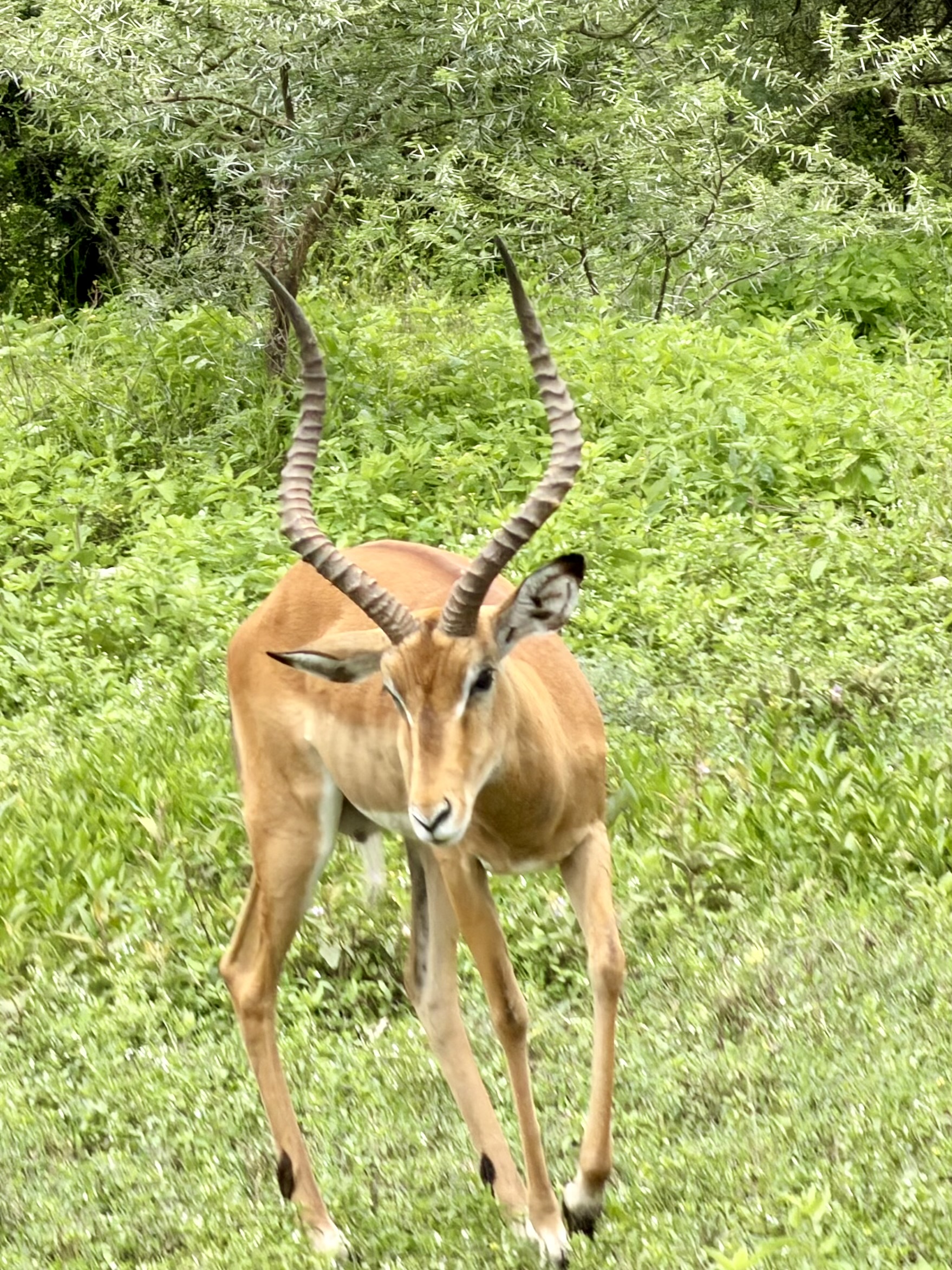
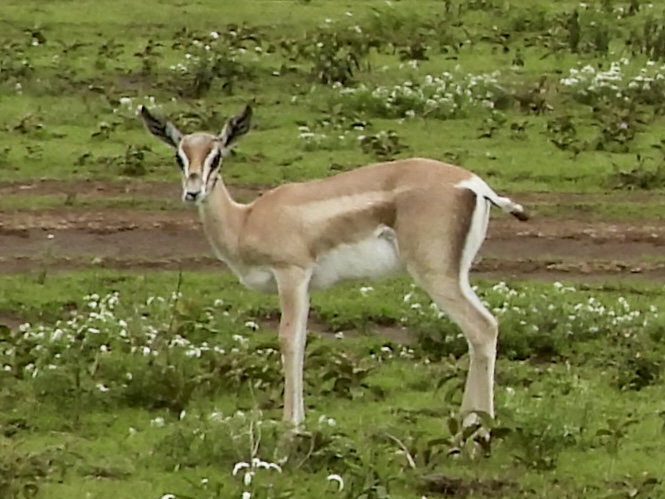
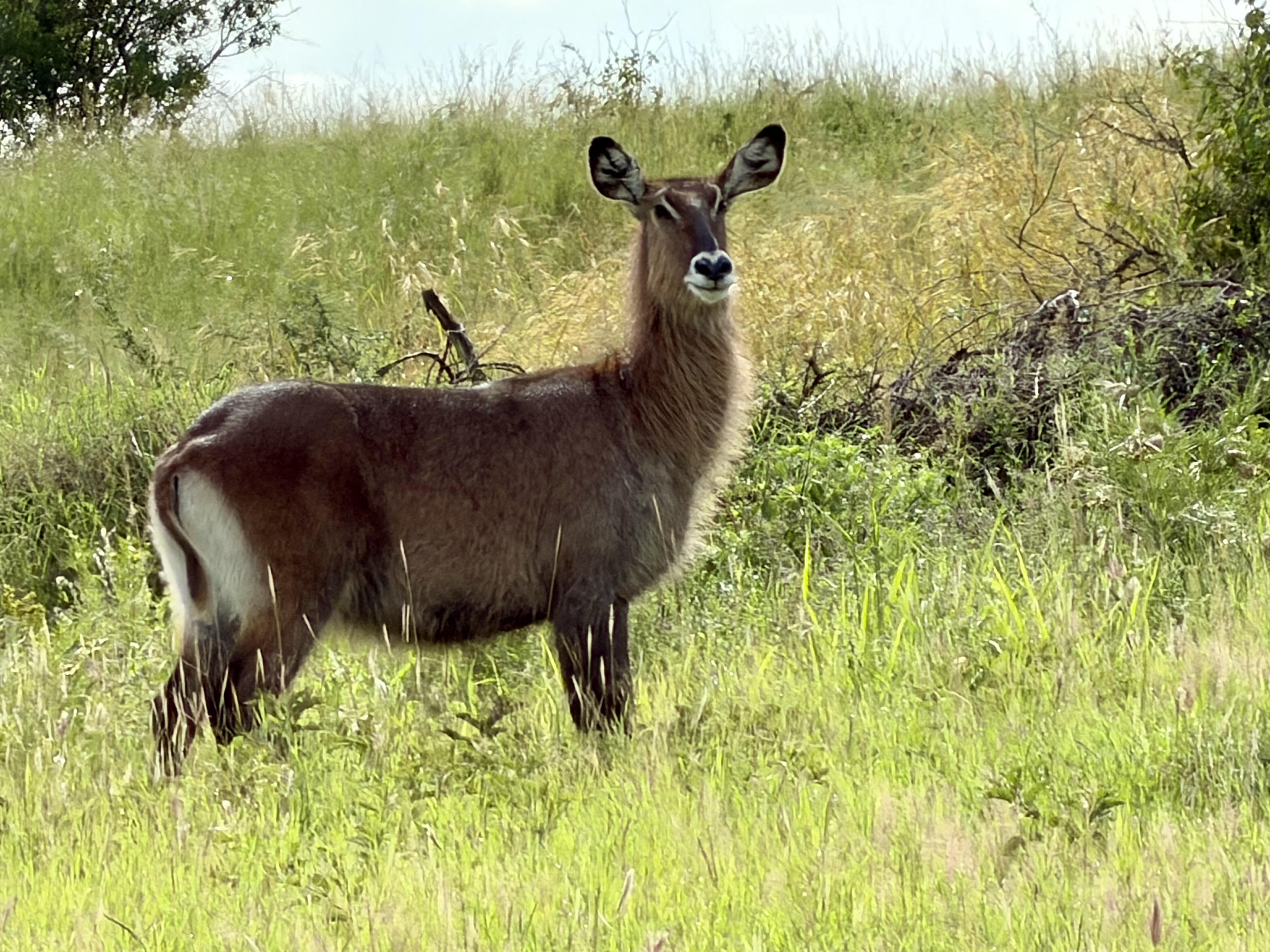
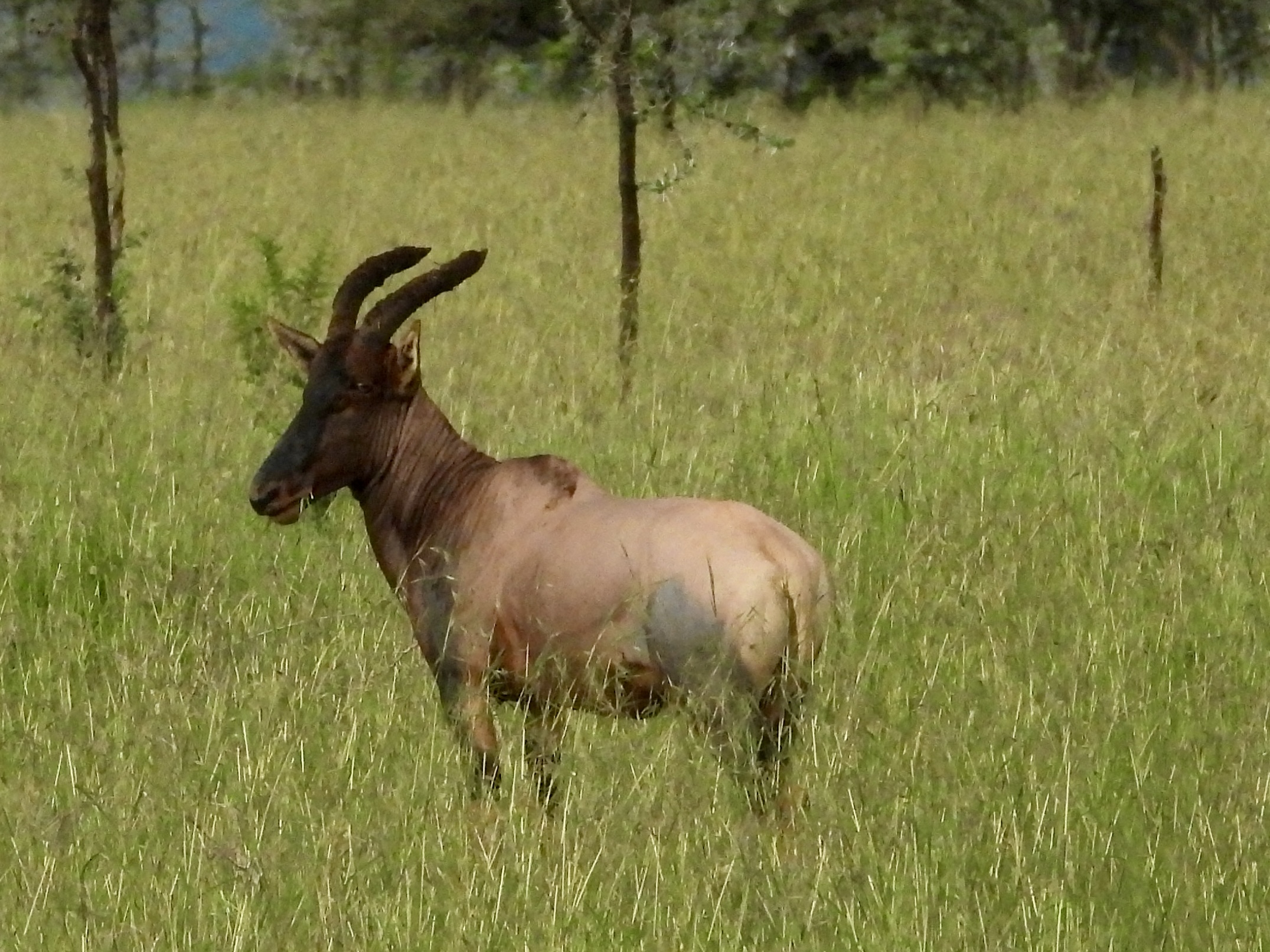
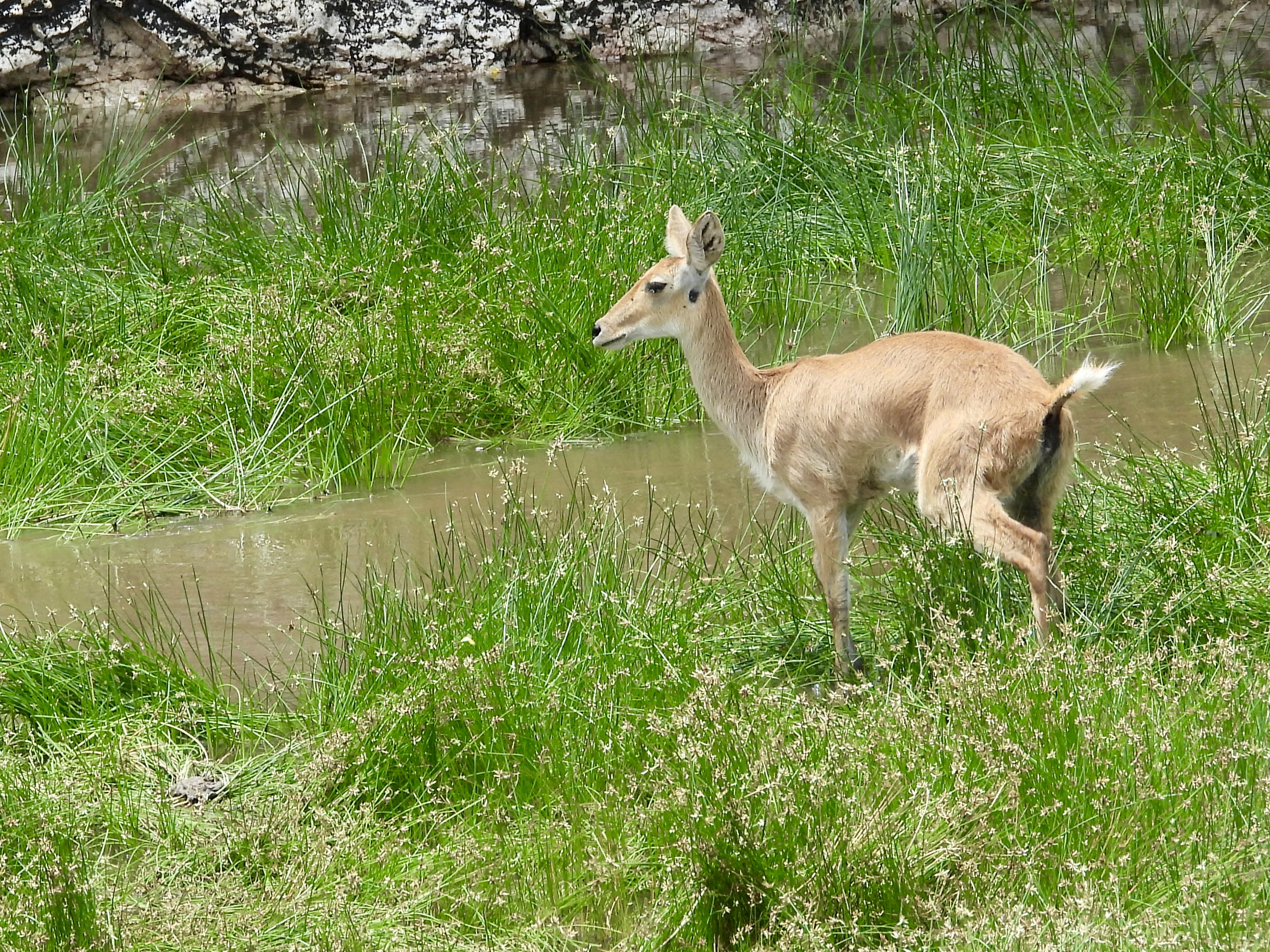
We continued spotting animals everywhere — gazelles, impalas, tiny dik-diks darting through the grass, and in the distance a waterbuck grazing behind a group of gazelles and impalas.

The Serengeti never seemed to run out of life.
We were just getting ready to pull over for a picnic lunch when the clouds began to darken.
Charles looked up at the sky and suggested we stop quickly for the restroom but wait to eat later in the vehicle.
He explained that there was a stretch of black cotton soil ahead.
When dry, it’s manageable.
When wet, it turns into thick, sticky mud that can trap vehicles for hours.
“You don’t want to be on that section of road when the rain starts,” he told us.
We trusted him immediately.
As luck would have it, just as we reached that section of road, the sky opened.
Huge drops of rain suddenly began pouring down on us.
There was no time to stop.
The roof of the safari vehicle was still open, but Charles knew we had to get through the black cotton soil before the road became impassable.
I quickly grabbed my raincoat and safari hat and pulled them on while shoving my camera safely into my backpack to keep it out of the rain.
At that moment Charles downshifted and gunned the engine.
We plunged straight into the black cotton soil.
The truck began slipping and sliding.
The wheels spun wildly as mud sprayed everywhere. The vehicle lurched and tipped while Charles fought to keep it moving forward.
I was certain we were going to get stuck.
And out here, getting stuck could mean waiting hours before another vehicle came along to help.
Just as I thought we were done for, the tires suddenly caught something solid beneath the mud.
Traction.
The truck lurched forward and clawed its way through the last stretch of black soil.
Seconds later we were back on firmer ground.
And that’s when I smelled it.
A faint but unmistakable scent of something like burning oil.
At the same moment the battery light flashed red on the dashboard.
Charles glanced down, then muttered a word we had never heard from him before.
“Shit.”
He immediately pressed harder on the gas.
If there was a problem developing, we needed to get off the smaller track and back onto what passed for the Serengeti highway as quickly as possible.
Eventually we reached the main road, which despite its name still looked more like a rustic campground road than a highway.
We found a safe place to stop, backed into a small side track that wasn’t muddy, and opened our lunch boxes to refuel before continuing on.
After lunch we climbed back into the vehicle and continued toward the Serengeti exit and the road that would lead us back to Ngorongoro.
The rain had passed and the landscape looked fresh and bright again, the grass glistening where the storm had rolled through.
Then something unexpected happened.
Out of nowhere I spotted movement in the grass to our right.
“Lion!” I screamed.
Charles had already driven past, but he immediately slammed on the brakes.
Then he slowly backed the vehicle up along the road.
It was the one time on the entire trip that I spotted the animal before Charles did, and I was ridiculously proud of myself.
And there he was.
A lone male lion walking majestically through the grass alongside the road.
It felt like we had finally found Mufasa, the King of the Lions.


Charles slowly backed the vehicle along the road so we could move with him as he walked.
He looked younger than some of the other males we had seen. Charles pointed out that you could tell because his nose was still pink.
As lions mature, their noses gradually turn black.
I remember thinking in that moment that I already felt completely fulfilled by what we had seen.
Surely the day couldn’t get better.
But the Serengeti had one more surprise waiting for us.
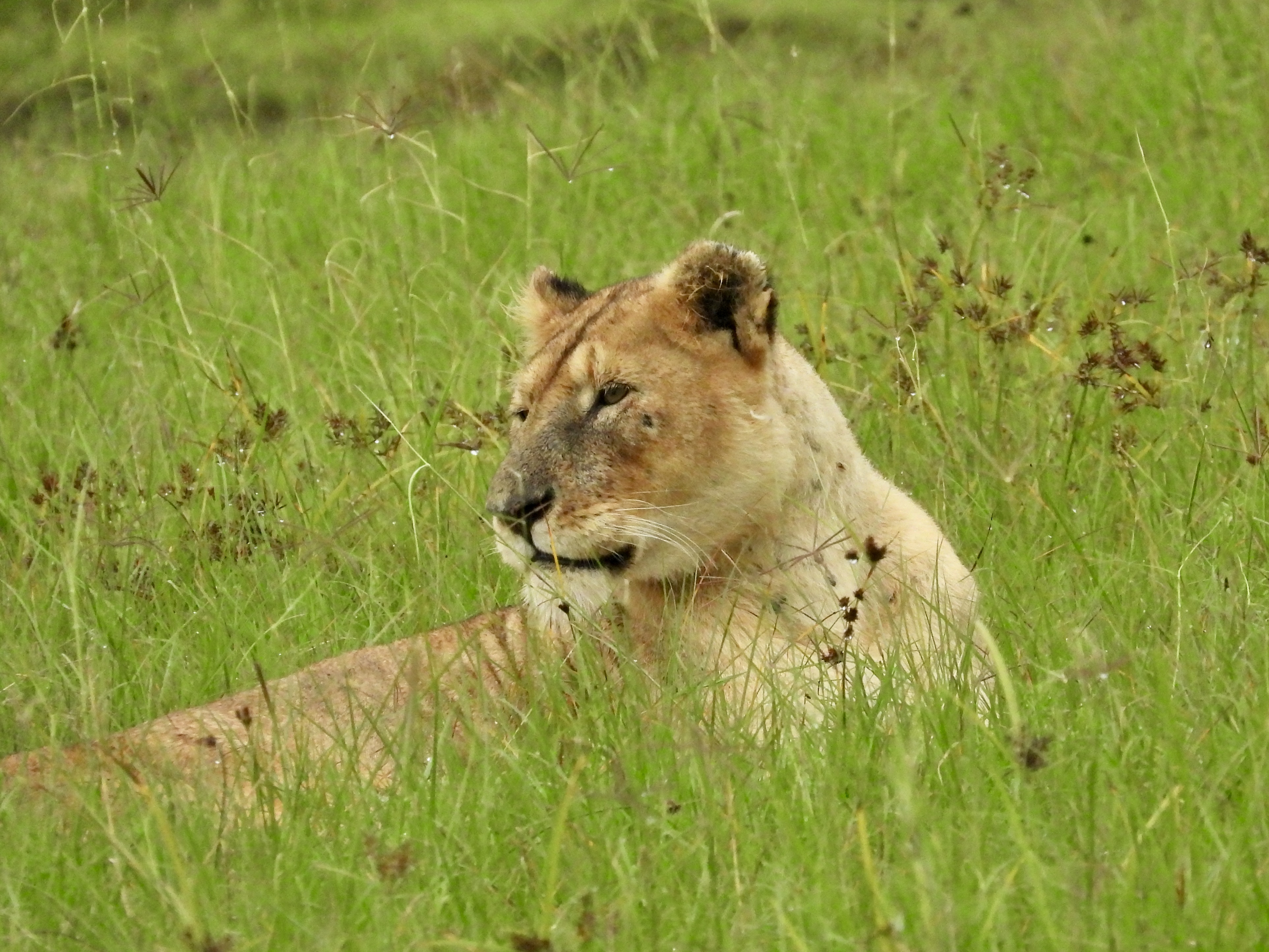
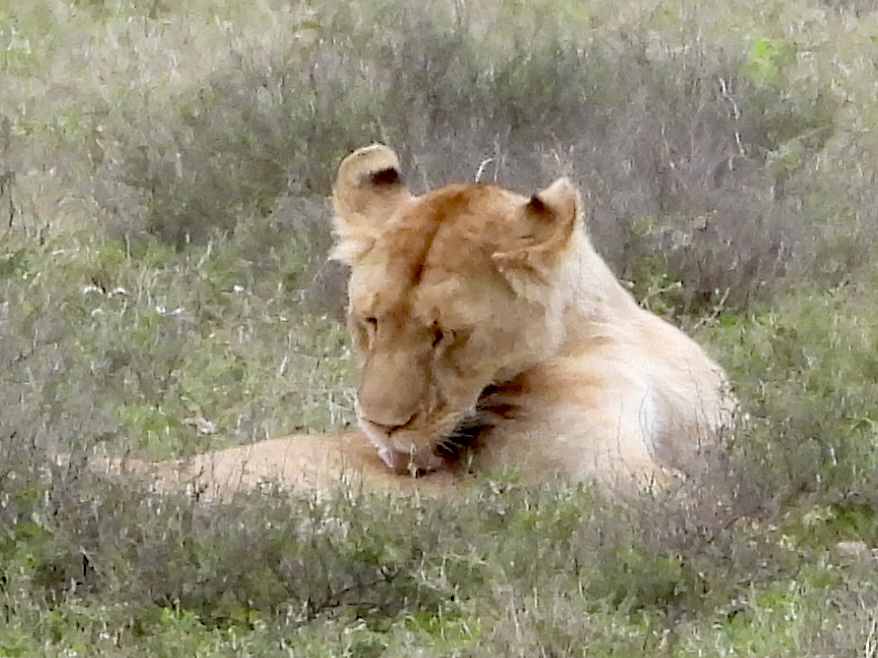
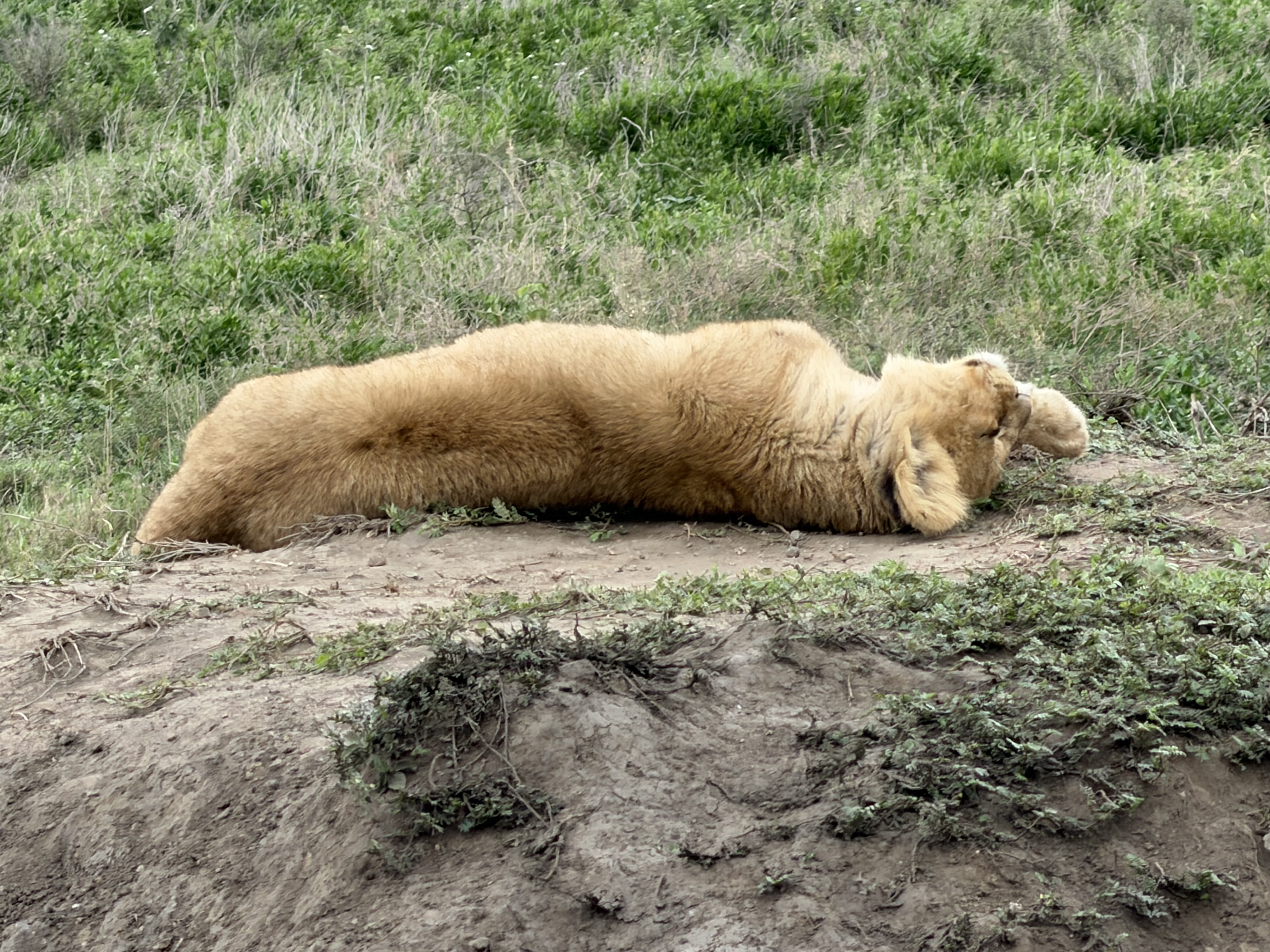
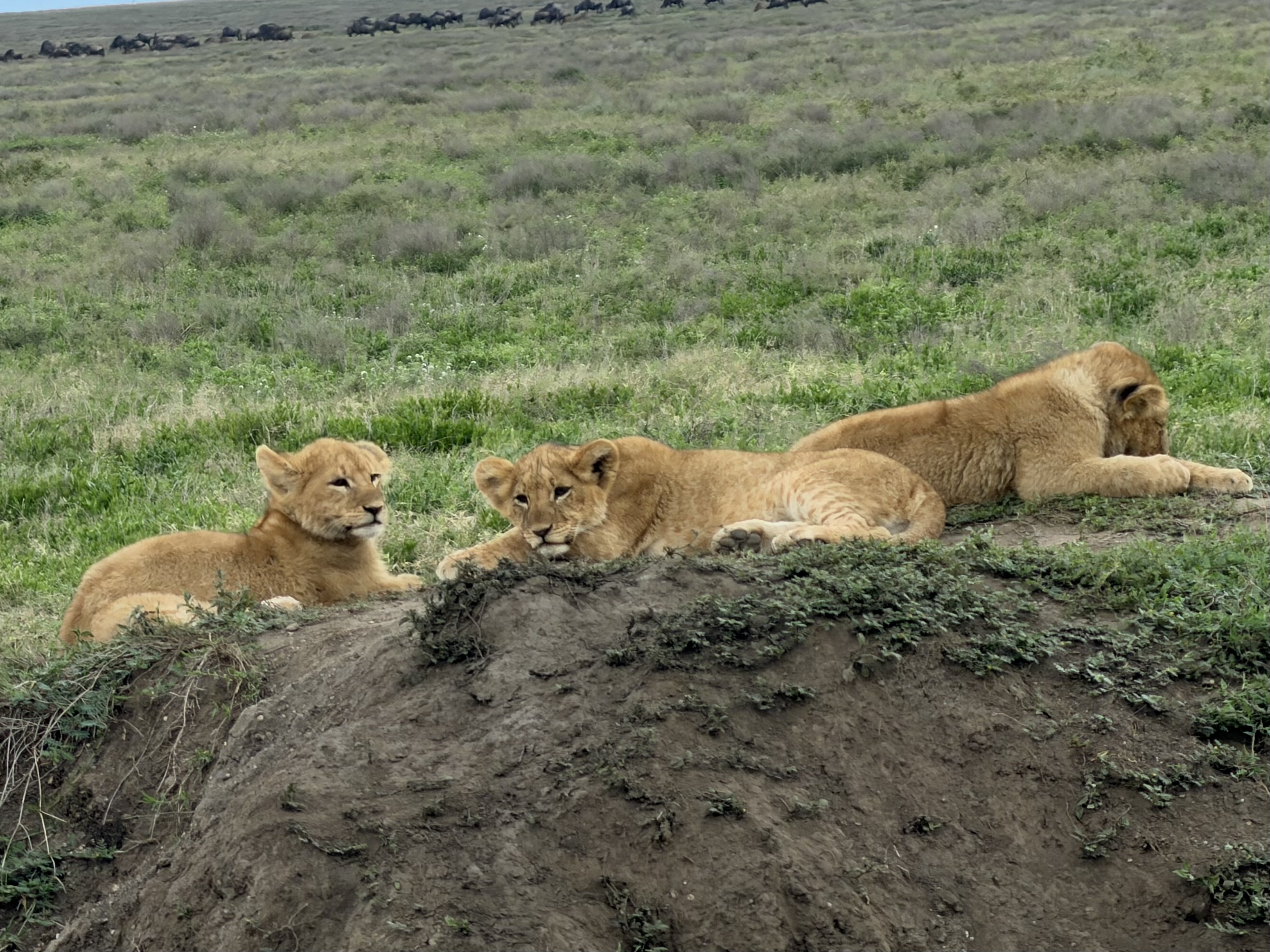
Not long before reaching the park exit we came upon another group of lions.
A mother and three cubs.
The mother was resting in the grass at the base of a small mound.
The three cubs were perched on top of the mound above her, looking out across the savannah.
One cub let out a huge yawn and I managed to catch it in a photograph.

Another cub stretched and climbed down the mound to get closer to its mother.
It was one of those quiet moments that felt almost intimate, as if we were witnessing a private family scene in the wild.
Just amazing.
Eventually we left the Serengeti behind and began the long drive back toward Ngorongoro.
To reach our lodge we would climb to the rim of the crater and drive around to the other side, where we would spend the night before descending into the crater the following morning.





A Slight Delay Before Our Final Adventure
The morning of our last game drive we woke early, packed our bags, and headed to reception to check out before beginning our descent into the Ngorongoro Crater.
We were scheduled to leave at 7:00 a.m.
As we arrived at reception, however, the staff handed us a message from Charles.
We would be a little delayed this morning.
Charles was outside changing a flat tire.
Apparently the Serengeti had decided to leave us with one final adventure before the trip was over.
Descending Into Ngorongoro: Rain, Rhinos, and a Crater Full of Life

Our final safari morning began early. We checked out of the lodge before sunrise, still a little sleepy but excited for one last adventure. Today we would descend into the Ngorongoro Crater, one of the most remarkable wildlife areas in Africa.
Charles arrived shortly after we reached reception with a bit of news — we would be delayed slightly. While we were finishing breakfast, he had been outside changing a flat tire. By this point, vehicle surprises had almost become part of the adventure. Our trusty safari vehicle had carried us across rough roads, mud, and river crossings all week, and Africa had clearly put it through its paces.
Once we loaded up and started driving, the road climbed along the rim of the crater. The air was cool and damp and clouds hung low over the landscape. When we reached the rim and looked down, the view stopped us in our tracks.
The crater stretched out below like a massive natural bowl. Green plains covered the floor, broken up by small lakes and darker patches of forest. Even from the rim we could see animals scattered across the grasslands.
Charles explained that Ngorongoro was formed millions of years ago when a giant volcano collapsed in on itself, creating one of the largest intact volcanic calderas in the world. Today it acts like a natural wildlife sanctuary. Animals move in and out, but many live their entire lives inside the crater.
We began the long descent down the winding road carved into the crater wall. The rain had made the road slick and muddy, and mist clung to the vegetation as we dropped lower and lower.
As we reached the crater floor, the fog lifted and the wildlife came into view.
And there was a lot of it.
Unlike parts of the Serengeti where animals can be spread across enormous distances, the crater felt almost concentrated. Everywhere we looked there was movement.
Zebras grazed beside wildebeest. Gazelles darted across the grass. Buffalo stood in dark clusters like armored tanks.
And the rain continued to fall.
A Crater Full of Wildlife
Once we reached the crater floor, the sightings started almost immediately.
One of the first animals we encountered was a Cape buffalo, standing solidly in the grass with the heavy confidence of something that knows very few animals dare challenge it. These massive animals are part of the Big Five, and it’s easy to understand why. Their thick horns curve outward and then inward across their foreheads, forming a powerful shield.

Nearby we saw a wildebeest, its dark coat soaked from the rain. Water dripped from the long beard hanging from its chin as it stared at us with that slightly puzzled expression that wildebeest always seem to wear.

Warthogs appeared next, trotting through shallow water with their tails sticking straight up like little antennae. Watching them hurry along instantly reminded me of Pumba from The Lion King, and I couldn’t help smiling as they marched across the wet grass.


We also got our first up close look at hyenas, a personal favorite for Charles.


At another stop we saw something more dramatic unfolding. A jackal had caught a bird and was eating it right there in the open grass. Safaris are beautiful, but they are also raw reminders of the food chain. For every graceful gazelle we admire, there is a predator somewhere relying on it for survival.
Charles simply said, “This is nature.”

Birds of the Crater
While the large mammals often steal the spotlight, the crater is also home to incredible birdlife.
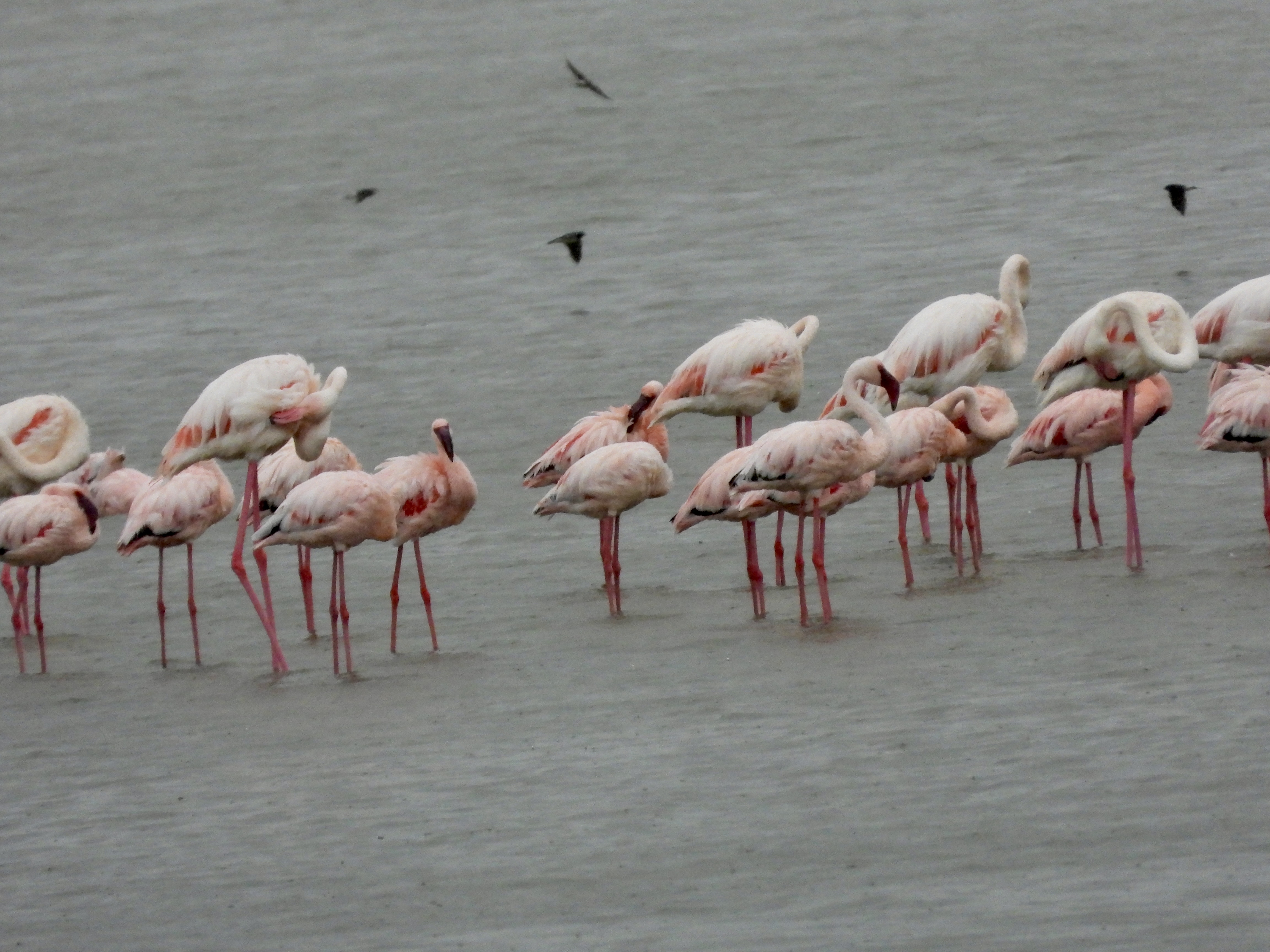
We spotted flamingos gathered near one of the shallow lakes, their pink bodies creating a striking contrast against the gray water and green grasslands. They moved gracefully through the shallows feeding in the mineral-rich waters.
Elegant cranes stepped carefully through the wet grass, their long legs and distinctive crowns making them easy to spot even from a distance.
One of the most memorable birds we saw was an owl perched low to the ground, its heart-shaped face staring back at us with wide, curious eyes.
But my personal favorite bird we saw in the crater was the yellow-billed stork. With its bright yellow bill and beautiful pink-tinted wings, it stood out immediately against the green landscape. As it moved through the shallow water searching for food, its wings caught the light in a way that made the pink coloring even more striking. It was one of those birds that made me stop and watch for a while.

Birdlife in the crater adds an entirely different dimension to the experience. It’s easy to get caught up chasing lions and elephants, but some of the most beautiful wildlife moments come from slowing down and noticing the details.



Completing the Big Five: The Black Rhino
As incredible as the morning had already been, there was still one animal I quietly hoped we might see.
The black rhinoceros.
Rhinos are increasingly rare throughout Africa due to decades of poaching, and sightings are never guaranteed. Charles had mentioned earlier in the trip that if we were lucky, the crater would give us our best chance.
Then suddenly he slowed the vehicle.
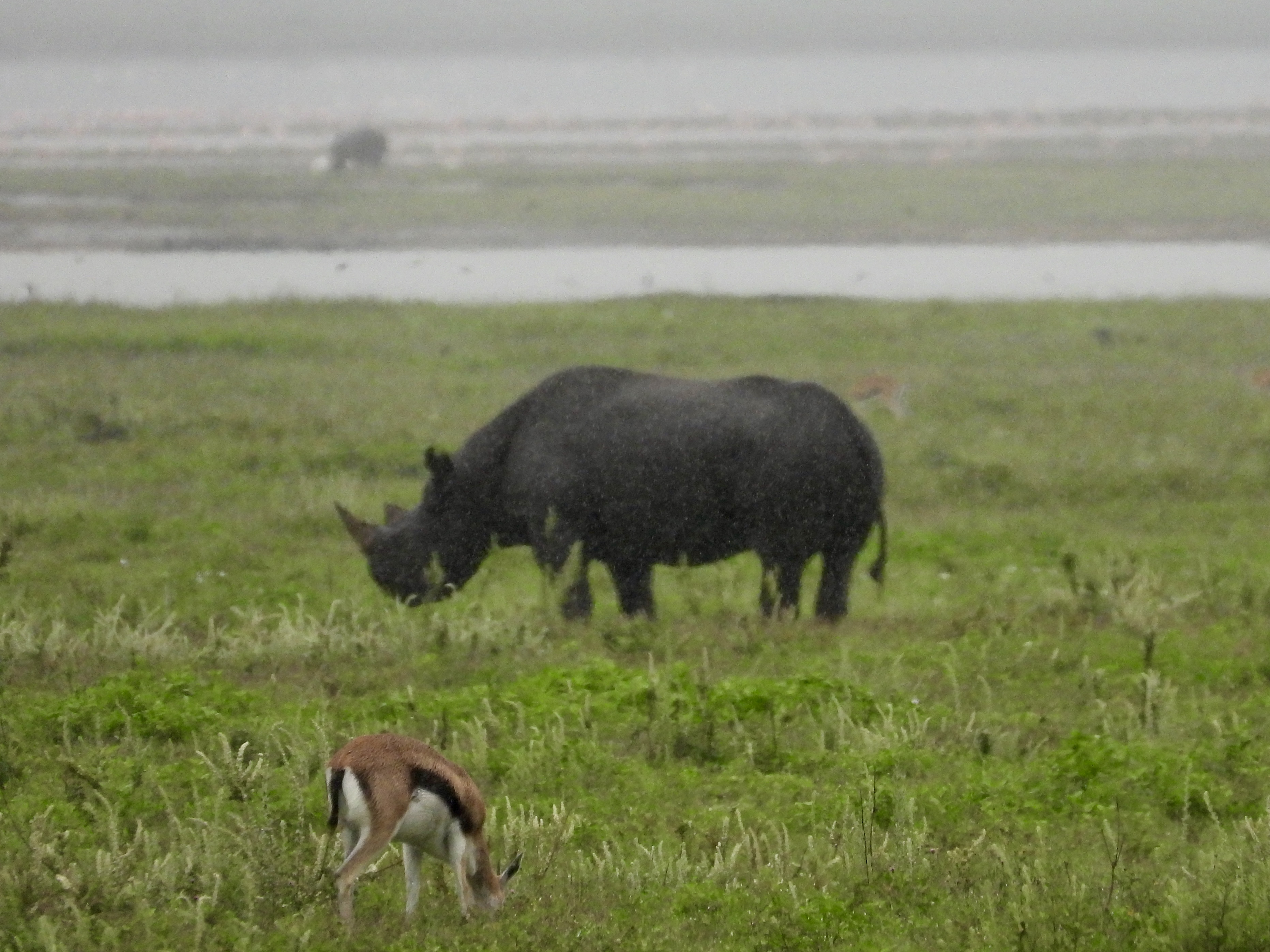
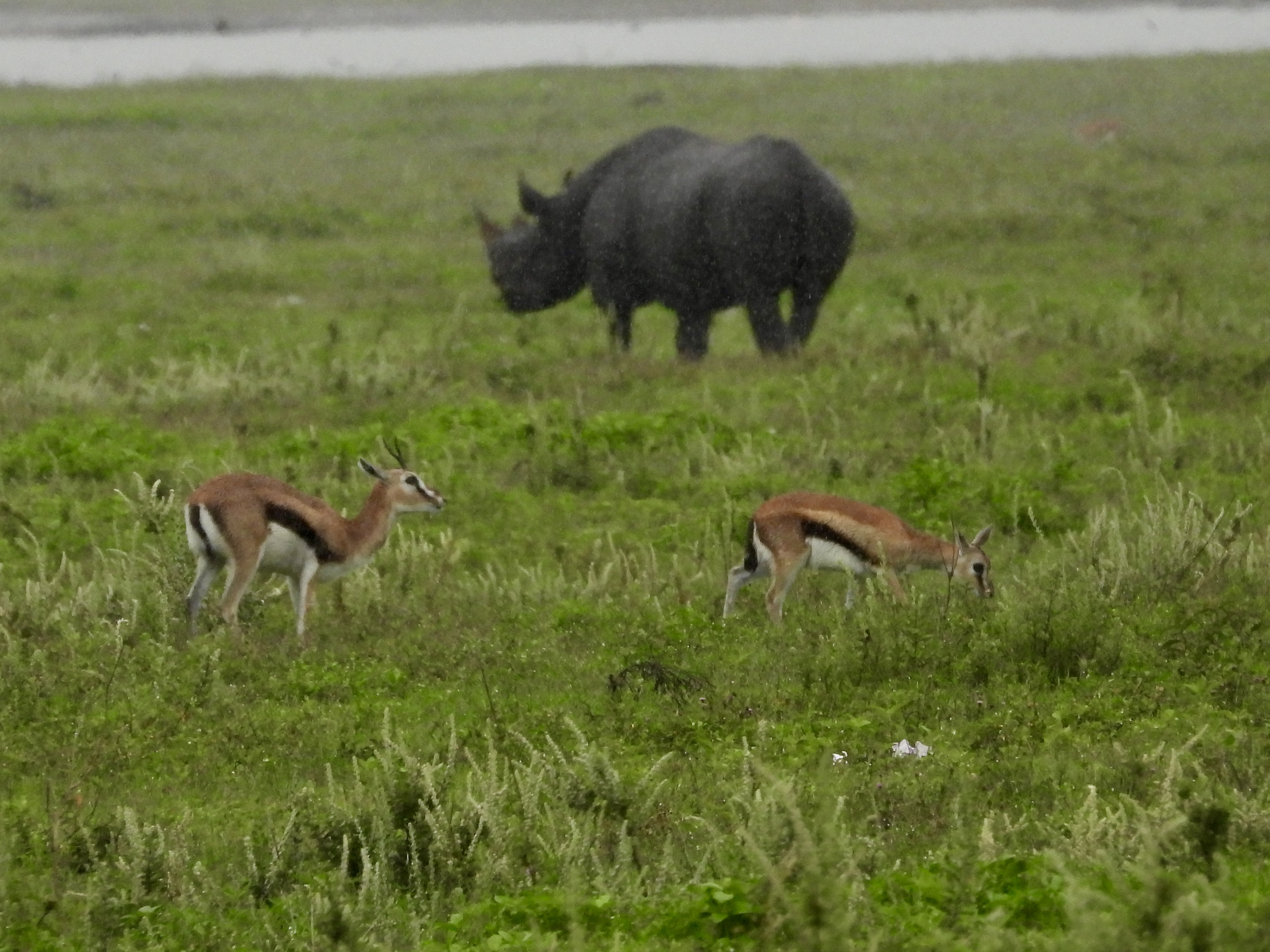
In the distance, moving slowly through the grass, was a large gray shape.
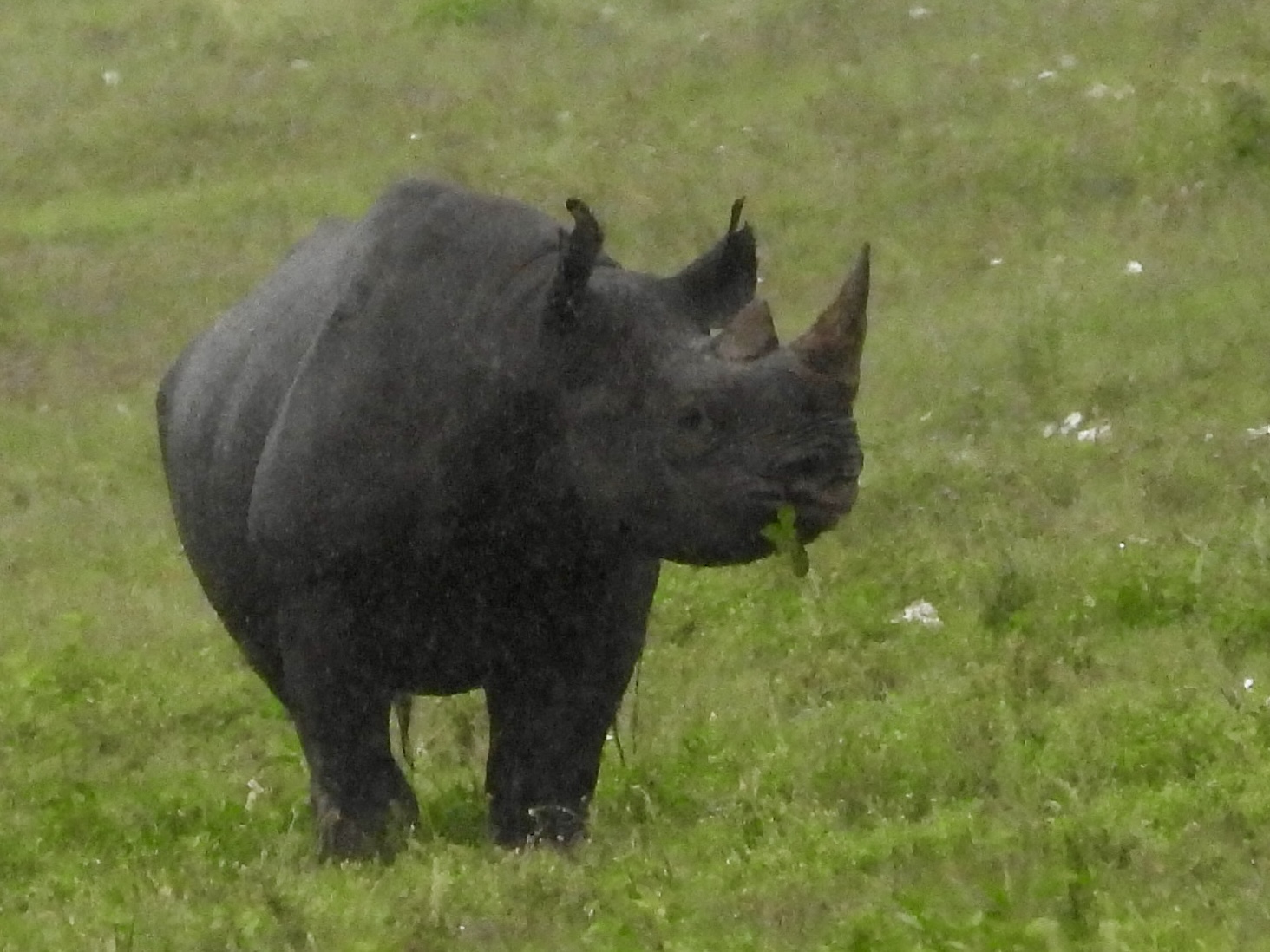
“Rhino,” Charles said.
We all lifted our cameras.
Even from far away it was unmistakable — a thick, powerful body with the distinctive horn extending forward from its face. Despite the name, black rhinos are actually gray like most rhinos; the name refers to the shape of their lip rather than their color.
We watched quietly as it moved through the grass grazing.
Seeing it felt special. Not just because it completed our Big Five sightings, but because animals like this are becoming harder and harder to see in the wild.
For a few quiet minutes we simply watched.

Lions in the Rain
Just when we thought the morning couldn’t get any more interesting, Charles spotted lions.
And these lions weren’t just resting.
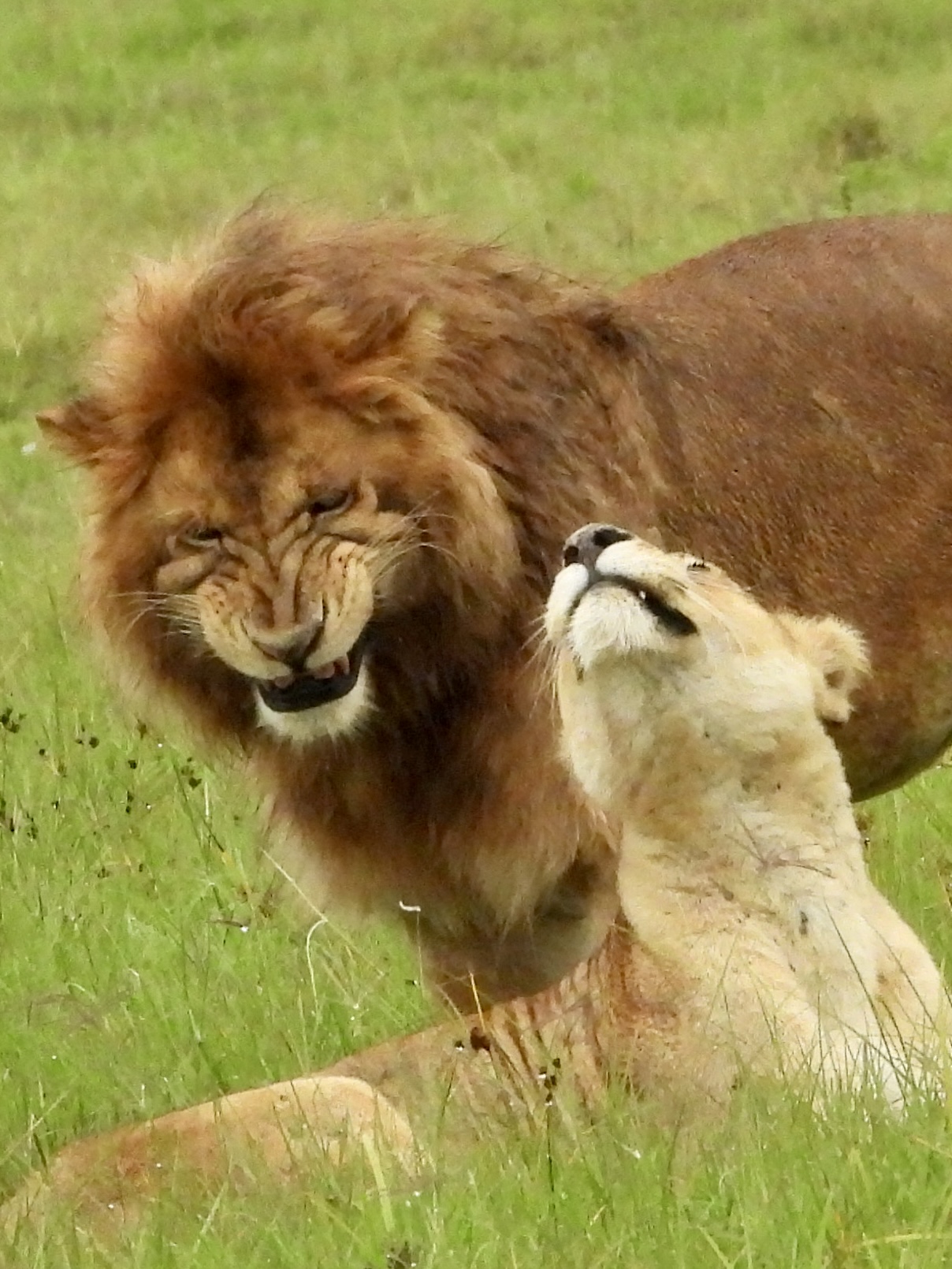
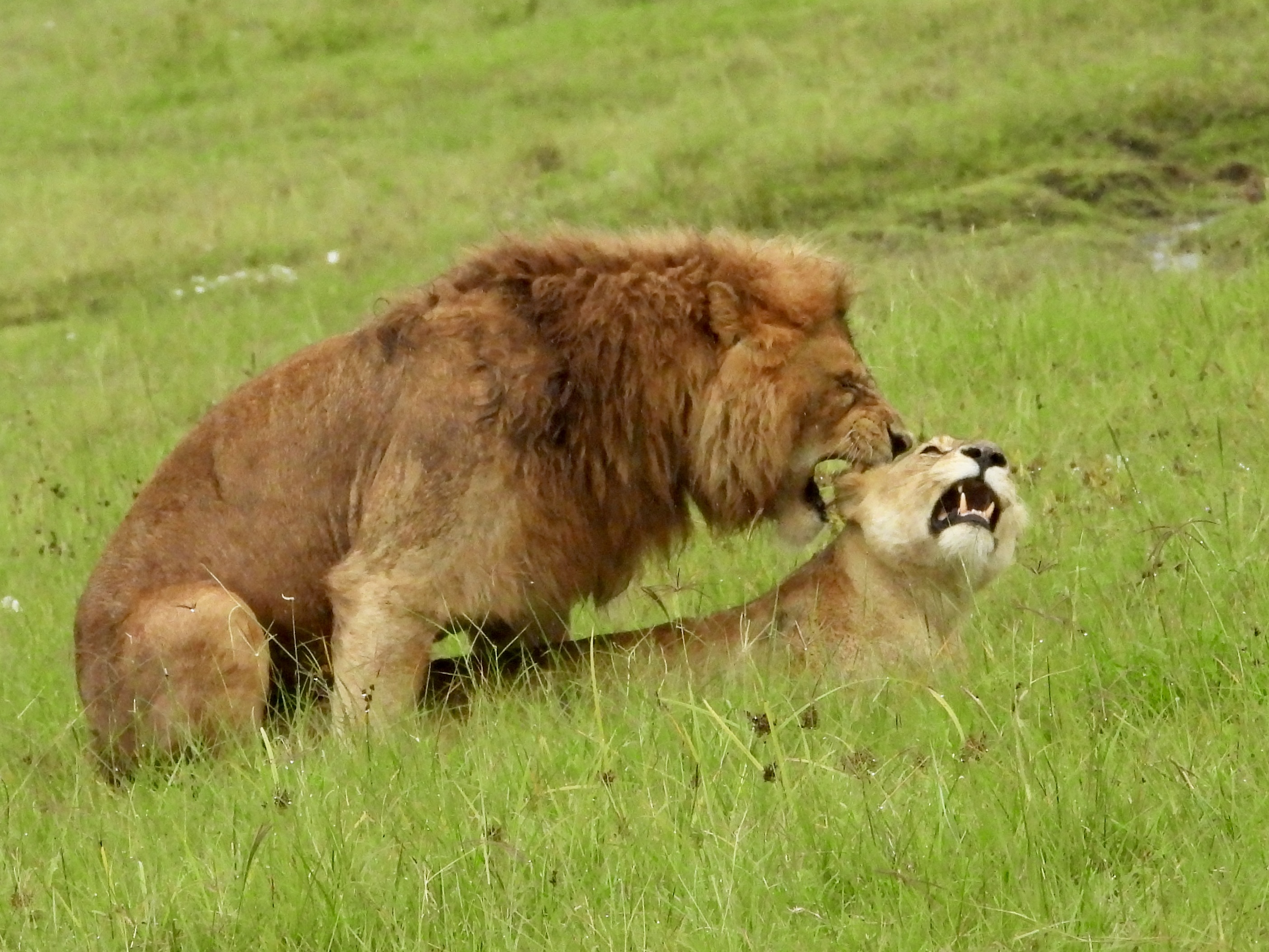
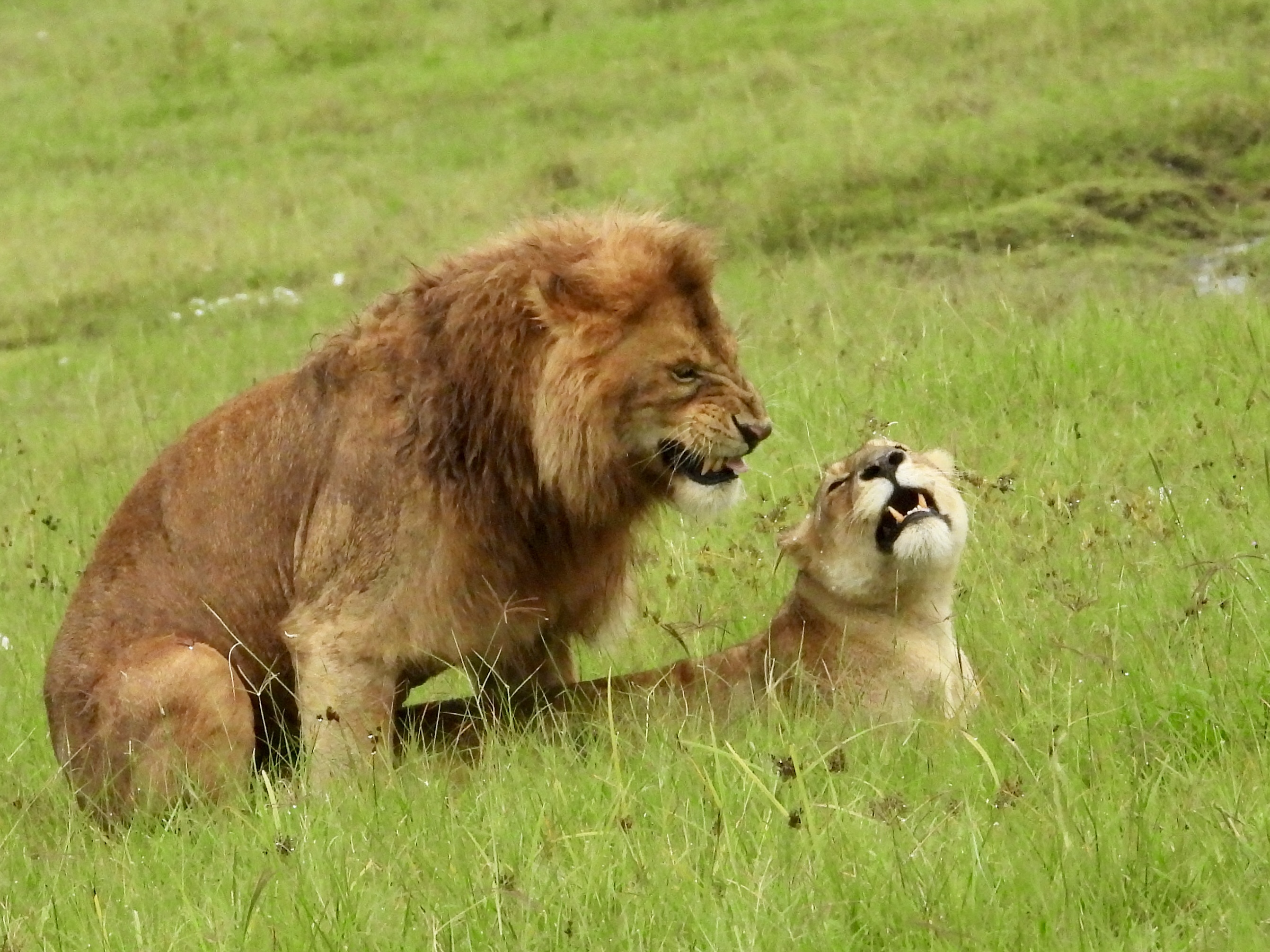
They were mating.
Anyone who has watched wildlife documentaries knows that lion mating behavior is… dramatic. The male mounts the female briefly, and almost immediately she responds with a loud snarl and swipe before the two separate again. Then, after a short break, the process repeats. It can happen dozens of times a day while the pair bonds and ensures conception.
We watched as the male approached again, the lioness tolerating him for only a moment before the predictable growl and swipe followed. It was fascinating, a little awkward, and completely wild all at the same time.
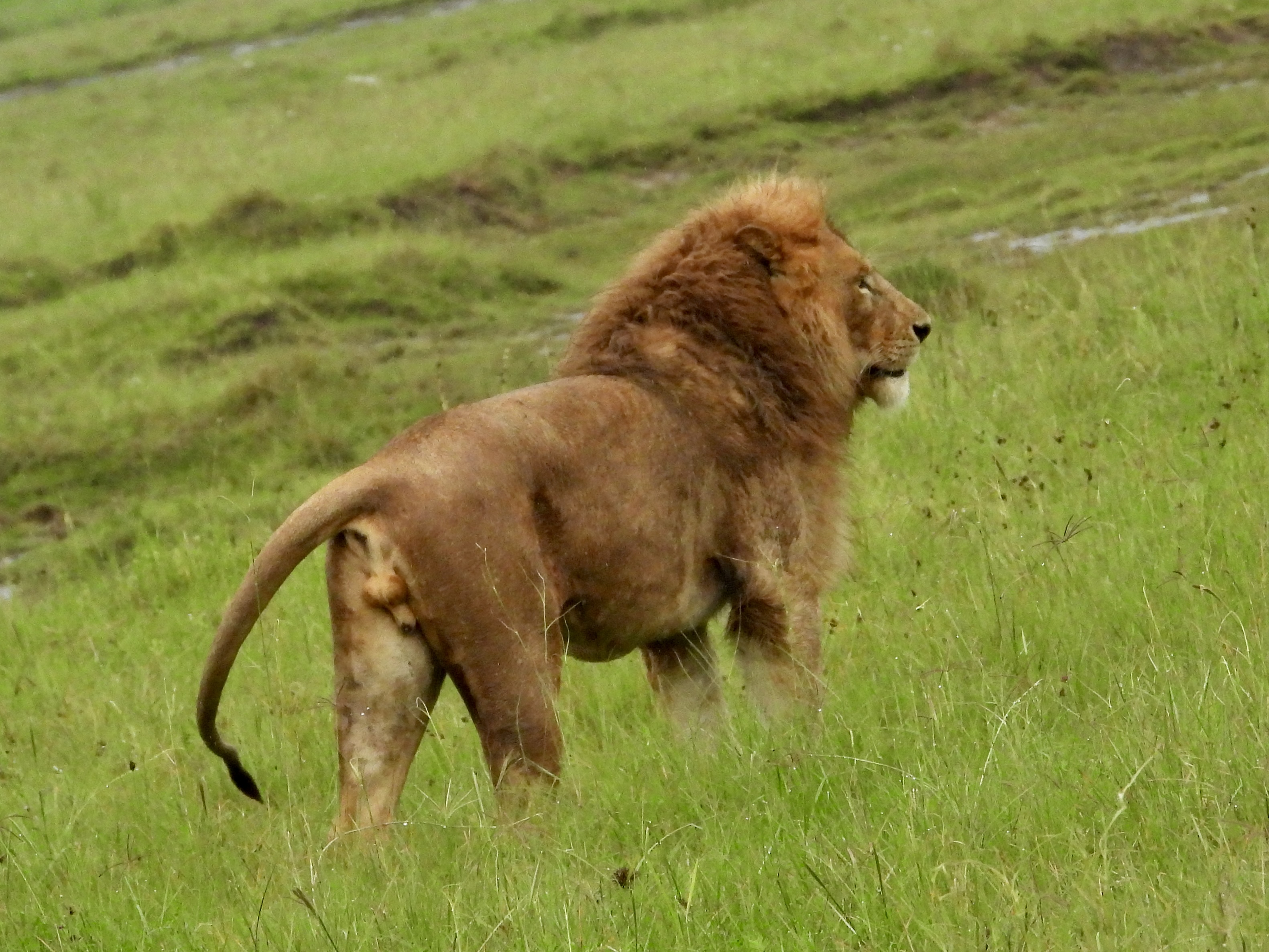
This male was clearly a mature king. Charles pointed out that his nose was fully black, a sign of maturity in male lions. He was also noticeably larger and more powerful than the male we had seen walking along the road in the Serengeti the day before. His thick mane was dark and heavy, and even standing still he looked imposing.
At one point he rose to his feet, rain clinging to his mane, surveying the landscape as if reminding everyone nearby exactly who ruled this part of the crater.
Watching lions in the rain, deep inside one of the most extraordinary landscapes on earth, felt like something out of a nature documentary — except we were there, only yards away.

One Last Lesson in the Hunt
Before leaving the crater and beginning the long drive back to Arusha — where we would spend one final night before our flight home — Charles stopped the vehicle one more time.
Off in the distance we could see shapes moving through the grass.
I raised my camera and switched to my telephoto lens to get a better look. Slowly the scene came into focus.
There were two lionesses and several cubs.
The cubs lingered together slightly behind while the lionesses moved apart, slowly spreading out across the grass. At first it looked random, but Charles quickly explained what we were watching.
They were hunting.
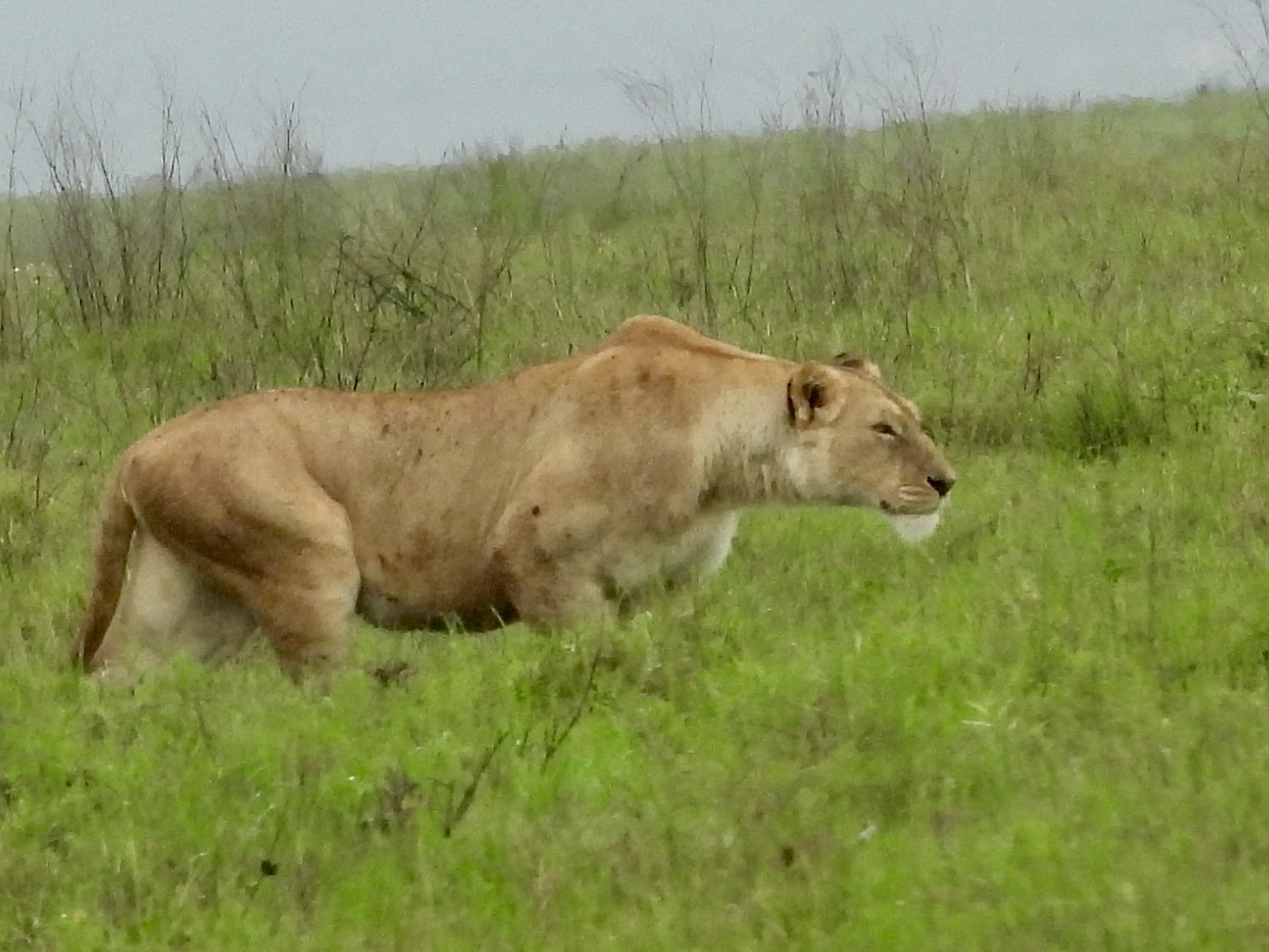
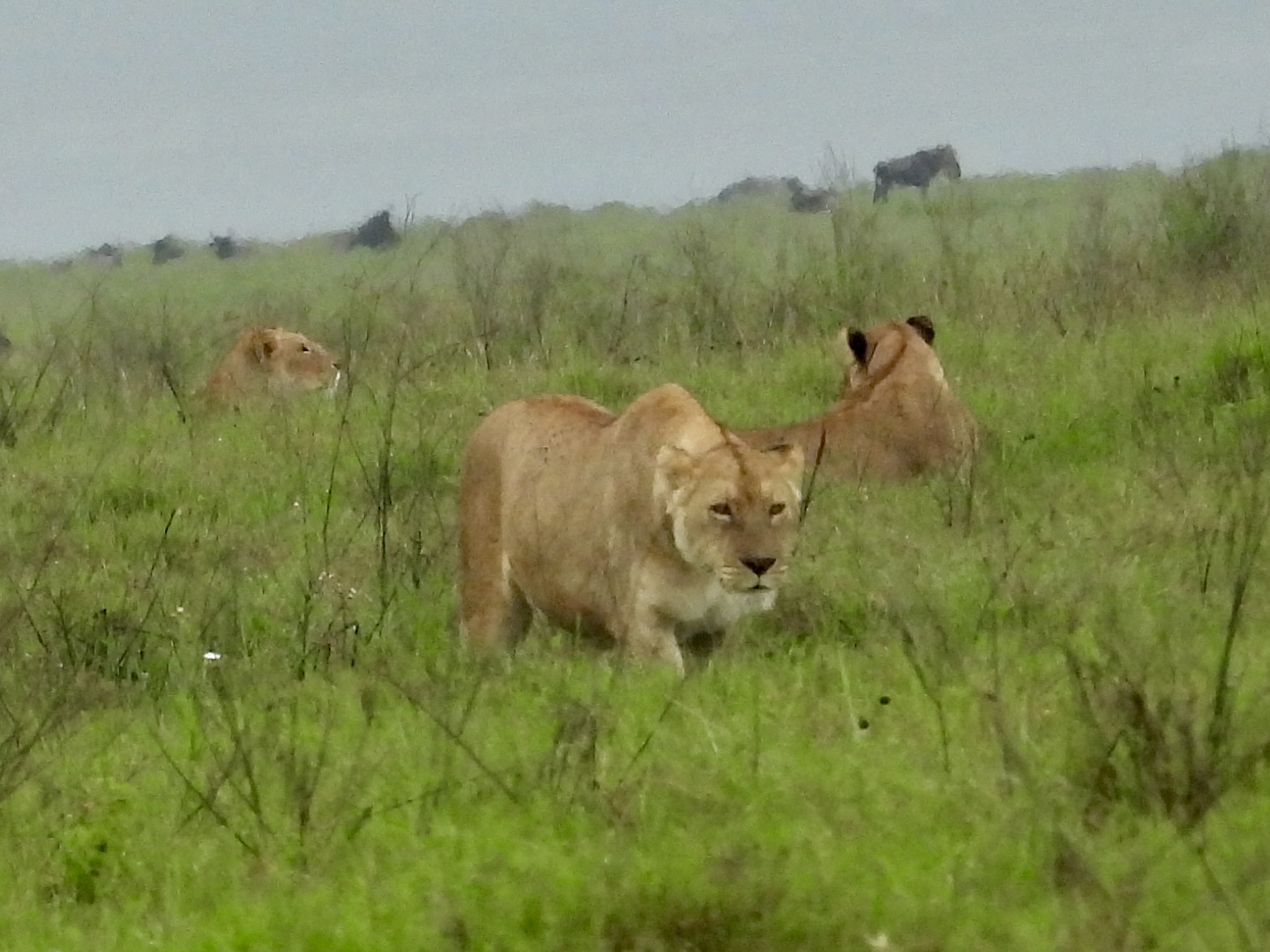
In the distance a group of wildebeest grazed peacefully, completely unaware of what might be unfolding.
Charles explained that lionesses often work together using a simple but effective strategy. One lioness circles wide to one side, positioning herself where the prey cannot easily see her. The second lioness approaches from another angle, slowly applying pressure. When the moment is right, the first lioness drives the prey forward — often straight toward the second lion waiting in ambush.
It was incredible to watch the setup unfold in real time.
Unfortunately, we didn’t have the luxury of waiting long enough to see how the hunt would end. Our drive back to Arusha was long, and we still had to climb out of the crater and continue across the countryside.
But even without witnessing the final chase, the moment was unforgettable.
Watching those lionesses patiently setting up their strategy — while the cubs waited nearby — felt like one last glimpse into the raw rhythm of life on the African plains.
Simply amazing.
While I was sad to leave nature and these incredible animals behind, I was grateful our safari vehicle had carried us safely through the week without a true breakdown. And after days of bouncing along dirt tracks, river crossings, and muddy crater roads, I have to admit I was a little tired of the famous “African massage.” As unforgettable as the adventure had been, the thought of smooth pavement on the drive back to Arusha suddenly sounded pretty wonderful.