Arrival in Arusha: Gateway to the Wild

After Egypt’s temples, tombs, and thousands of years of recorded history, Tanzania felt different immediately. Not ancient; not preserved behind stone walls. This was living history. Moving, working, breathing life unfolding in real time.
We arrived in Arusha, a city of just under 700,000 people and the unofficial starting point for two very different adventures. Nearly everyone visitor here is either preparing to climb Mount Kilimanjaro or heading out on safari.
We were firmly in the second group.
Rather than rest at the hotel after long travel days, we hired a local guide to introduce us to the city. I wanted context before animals. I wanted to understand daily life before driving into landscapes often described only through wildlife documentaries.
And from the moment we stepped into the streets, I realized Arusha would not be something you simply observe. You feel it.
First Impressions: Movement Everywhere
The roads pulsed with motion.
Motorcycles weaved confidently between buses and cars. Tuk tuks darted through openings that didn’t appear large enough to exist. Vendors stood beside the road selling fruit, tools, clothing, or whatever they could carry that day.
The main streets were paved, but just beyond them the ground shifted quickly into red and brown earth. Looking down side streets revealed dirt paths, open storefronts, and daily life unfolding outdoors.
Goats wandered freely past hardware shops. Small roadside stands displayed clothing and household goods under corrugated metal roofs. Chickens moved through wire enclosures beside homes and businesses that blended together without clear boundaries.
Nothing felt staged.
Everything felt functional.
And everywhere we looked, people were working.
Women walked steadily along the roads balancing bags, baskets, or bundles effortlessly on their heads, their posture perfectly upright as traffic moved around them. It was both ordinary and extraordinary at the same time, a quiet display of strength and rhythm learned through necessity.
I noticed poverty, yes. But what stood out more was energy. People greeted each other. Conversations happened constantly. Smiles appeared easily.
Like Egypt, everyone wanted to sell me something.
Unlike Egypt, it felt softer. Less urgent. More trusting if that makes sense.
The Tanzanite Experience
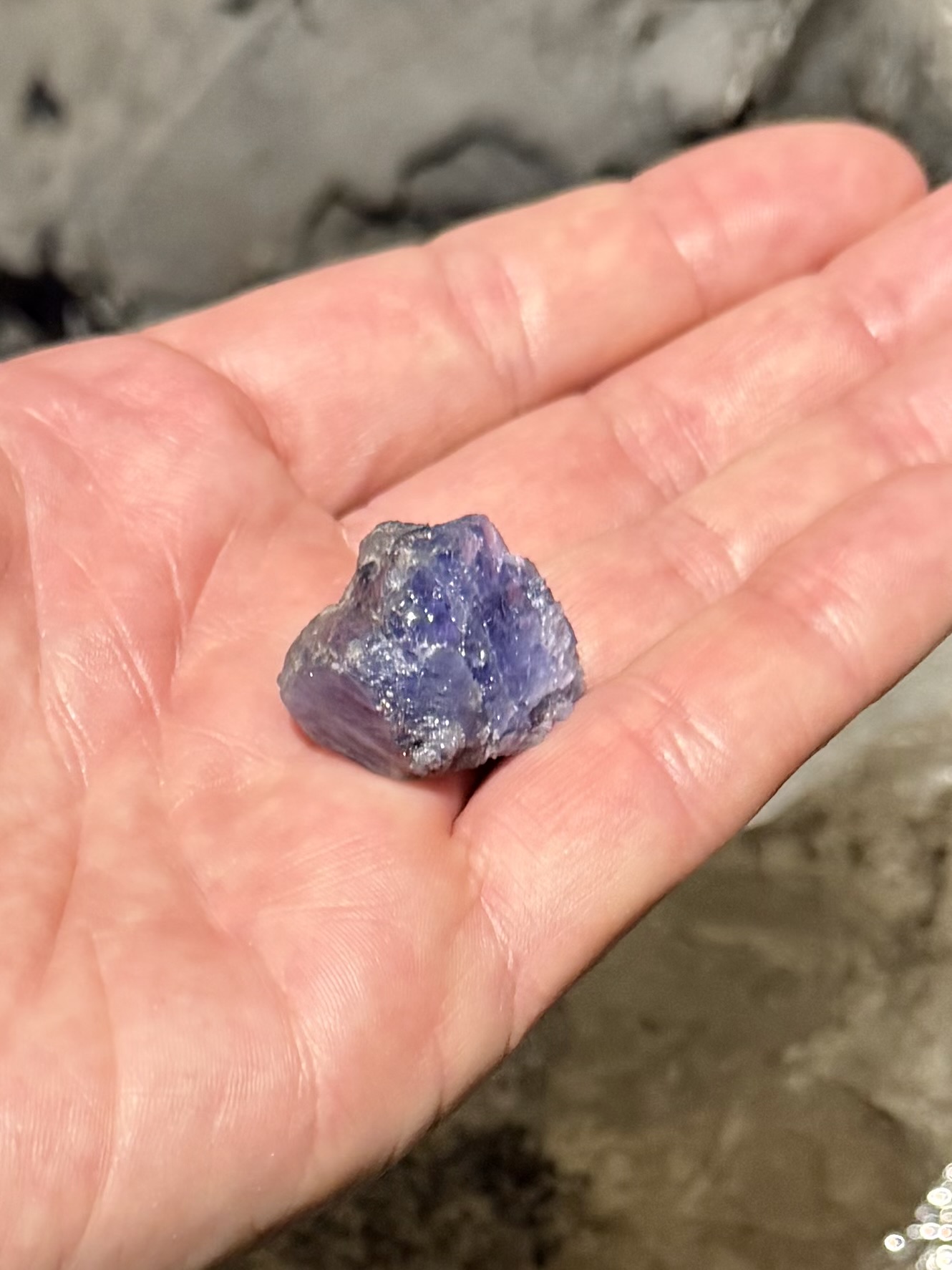
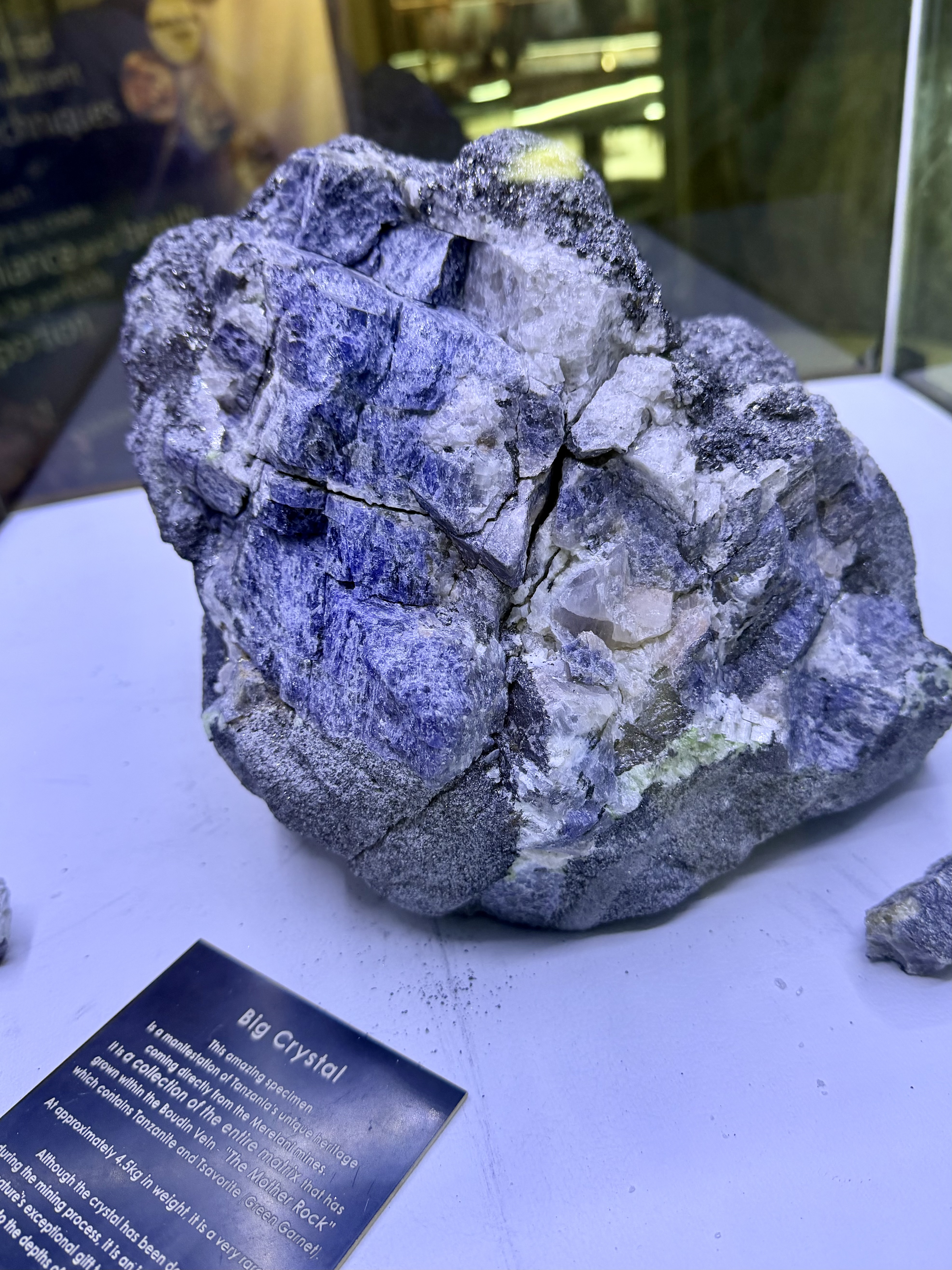
Our first stop was The Tanzanite Experience, where we learned about one of the rarest gemstones in the world.
Tanzanite is found only in a small region near Mount Kilimanjaro. Nowhere else on earth.
Inside, exhibits explained how the stone forms deep underground and how miners extract it under challenging conditions. We learned how quality is judged using the familiar Four C’s: color, clarity, cut, and carat weight.
The deeper blue and violet tones are the most prized, created through natural heat and geological pressure over millions of years.
Holding a finished stone after learning how difficult it is to obtain changed how I viewed jewelry entirely. What looks small behind glass represents enormous labor, risk, and patience.
It was our first lesson in Tanzania. Beauty here is rarely effortless.
The Clock Tower: A Symbolic Center
We stopped briefly at Arusha’s clock tower, often described as the midpoint between Cairo and Cape Town.
The structure itself is modest, standing quietly amid traffic circles and passing vehicles, yet symbolically powerful. Travelers moving north or south across Africa have passed through this region for generations.
Standing there, it felt like a transition point in our own journey as well. Egypt had been about understanding the past. Tanzania was about stepping fully into the present.

Markets, Colors, and Everyday Life
From there we entered an open market, and the sensory shift was immediate.
Vegetables stacked in uneven pyramids. Fruits arranged in overflowing baskets. Spices piled in colors that looked almost unreal. Deep reds, bright yellows, earthy greens, and warm browns filled metal bowls and woven containers.
The air carried layers of scent. Fresh produce, earth, spices, and smoke drifting from nearby cooking stalls.
We purchased Tanzanian coffee beans and additional spices, unable to resist bringing some of these smells home with us.
And then we found the bananas.
Tiny bananas. Smaller than any I had ever seen.
I am not a banana person – never have been, but curiosity won.
They were incredibly sweet, almost honey-like, and completely unlike the bananas at home. I had to admit defeat. Tanzania had converted me.


Tuk Tuks and Travel Fatigue

My husband was feeling the weight of travel – long flights, time changes, and constant movement had caught up with him.
He enjoyed his first tuk tuk ride, laughing initially at the chaos and closeness of traffic, but soon admitted he was overwhelmed and exhausted.
We dropped him back at the hotel so he could rest while I continued exploring with our guide.
It turned out to be one of my favorite decisions of the trip.
The Maasai Arts and Curios Market


We took another tuk tuk to the Maasai Arts and Curios Market, a vibrant maze of stalls filled with carvings, textiles, jewelry, and handmade goods.
The moment I stepped inside, greetings echoed from every direction.
“Jambo! Jambo!”
Vendors smiled and invited me into their stalls, encouraging me to look at their work. Unlike aggressive selling I had experienced elsewhere, this felt conversational. Warm. Almost communal.
After a while, I learned to slow down and wait until something genuinely caught my eye rather than entering every stall.
Eventually, a small wooden mask stopped me. Carved to represent a Maasai warrior, it carried both strength and artistry without feeling overly polished. It felt authentic.
I bought it as a reminder of this first day.
I was very aware I was the only white face in the market and clearly a target for sales, yet I never felt uncomfortable. Many vendors spoke English alongside Swahili, and even when I declined to purchase, they smiled and responded with:
“Karibu sana.”
You are very welcome.
Or simply:
“Hakuna Matata.”
No worries.
A City of Contrasts

Driving through Arusha afterward, I watched daily life unfold through the window.
Small storefronts displayed goods under open roofs. Livestock moved beside traffic. People carried bundles home on foot. A woman walked confidently down the street balancing a large sack on her head as vehicles passed beside her.
The soil everywhere was a rich red brown, dust rising lightly with each passing motorcycle. Roads shifted quickly from paved to dirt, from organized to improvised.
It was busy. Loud. Imperfect.
And completely alive.
I found myself taking everything in quietly, noticing both hardship and happiness existing side by side. People worked hard here. Very hard. Yet laughter and friendliness seemed constant.
Arusha did not try to impress visitors.
It simply existed.
And that honesty made it unforgettable.


Looking Ahead
As evening approached, we returned to the hotel knowing that tomorrow the journey would change completely.
The roads, markets, and city sounds would give way to open landscapes and wildlife.
Arusha was not the safari.
It was the introduction. The grounding moment that reminded us that before historical sites and iconic landscapes, there are always people, communities, and stories shaping the places we travel through.
And with that understanding, we were finally ready to head into the wild.