Seville: A Fiesta of Color, Culture, and Resilience
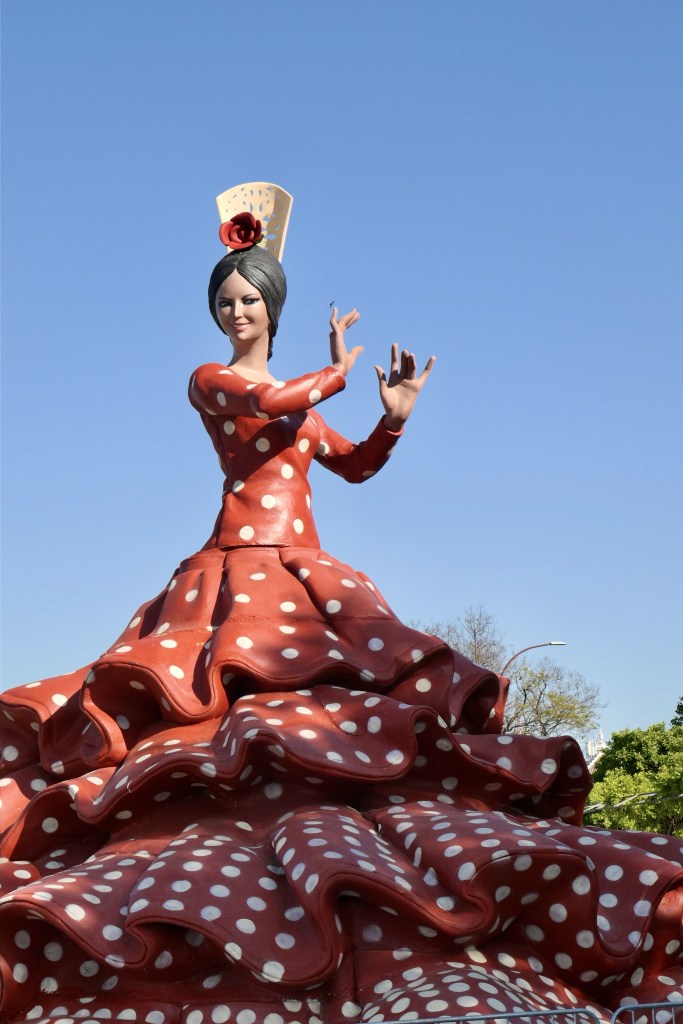
After a week winding our way through Portugal, we drove into Seville and dropped our rental car at the bus station – our final stop before catching the high-speed train to Barcelona. What we didn’t anticipate was just how lively Seville would be on a Sunday afternoon. Uber after Uber passed us by, all full. Horse-drawn carriages clattered past, the women inside dressed to perfection in vibrant flamenco-style dresses, many with flowers in their hair and glasses of champagne in hand. My husband assumed they were heading to church—until I pointed out the champagne.

Feria de Abril de Sevilla
It turned out we had arrived right in the middle of Feria de Abril, Seville’s most beloved festival. Originating in 1847 as a livestock fair, it evolved into a week-long (and sometimes longer) celebration of Andalusian culture. Locals and visitors alike gather in hundreds of “casetas” (colorful striped tents) where families, companies, and friends dance sevillanas, enjoy tapas, and sip sherry or rebujito (sherry mixed with lemon-lime soda). During the day, horse parades fill the streets, and by night the fairgrounds glow with thousands of lights. It’s a scene of elegance, music, and joy—a living postcard of Spanish tradition.
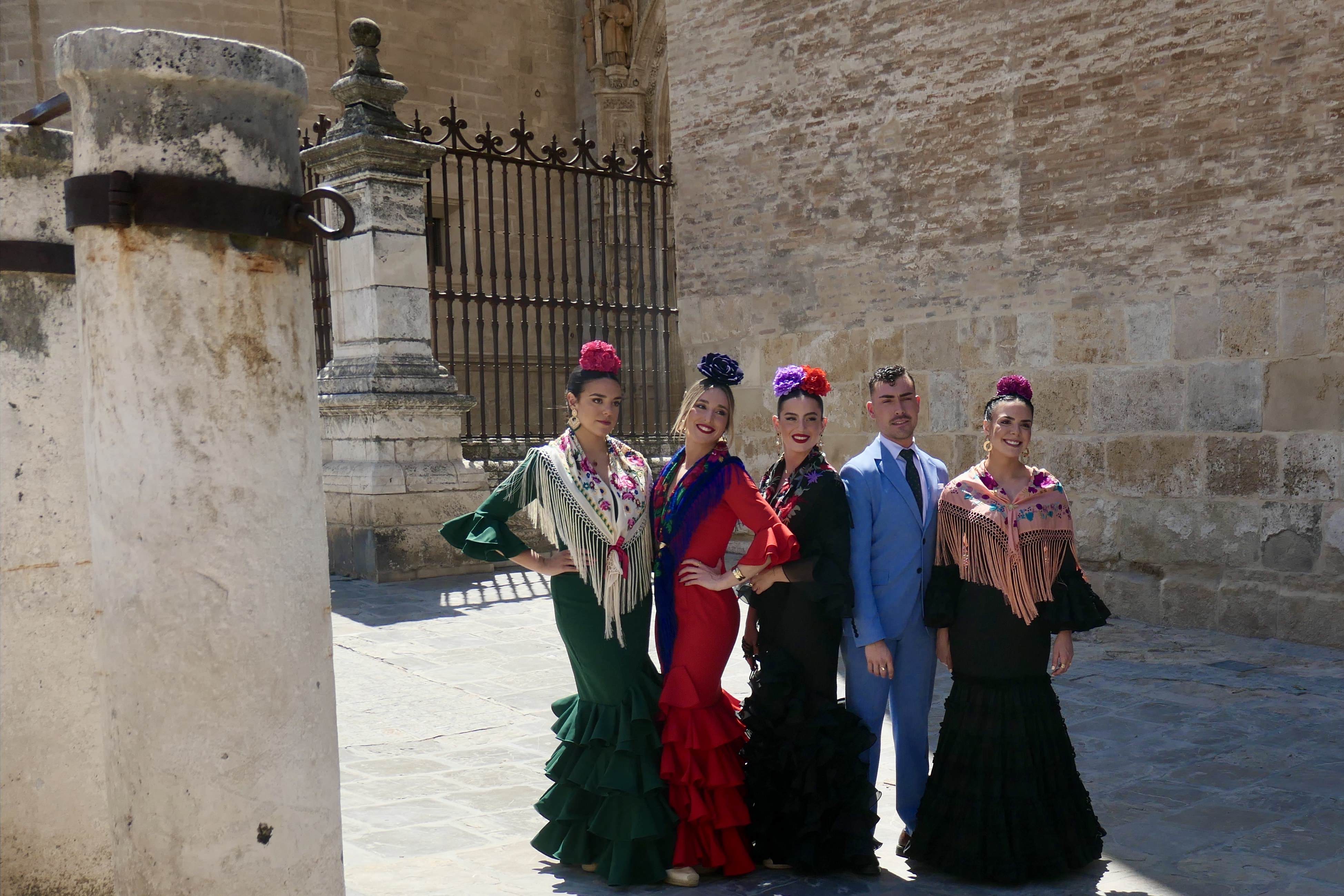
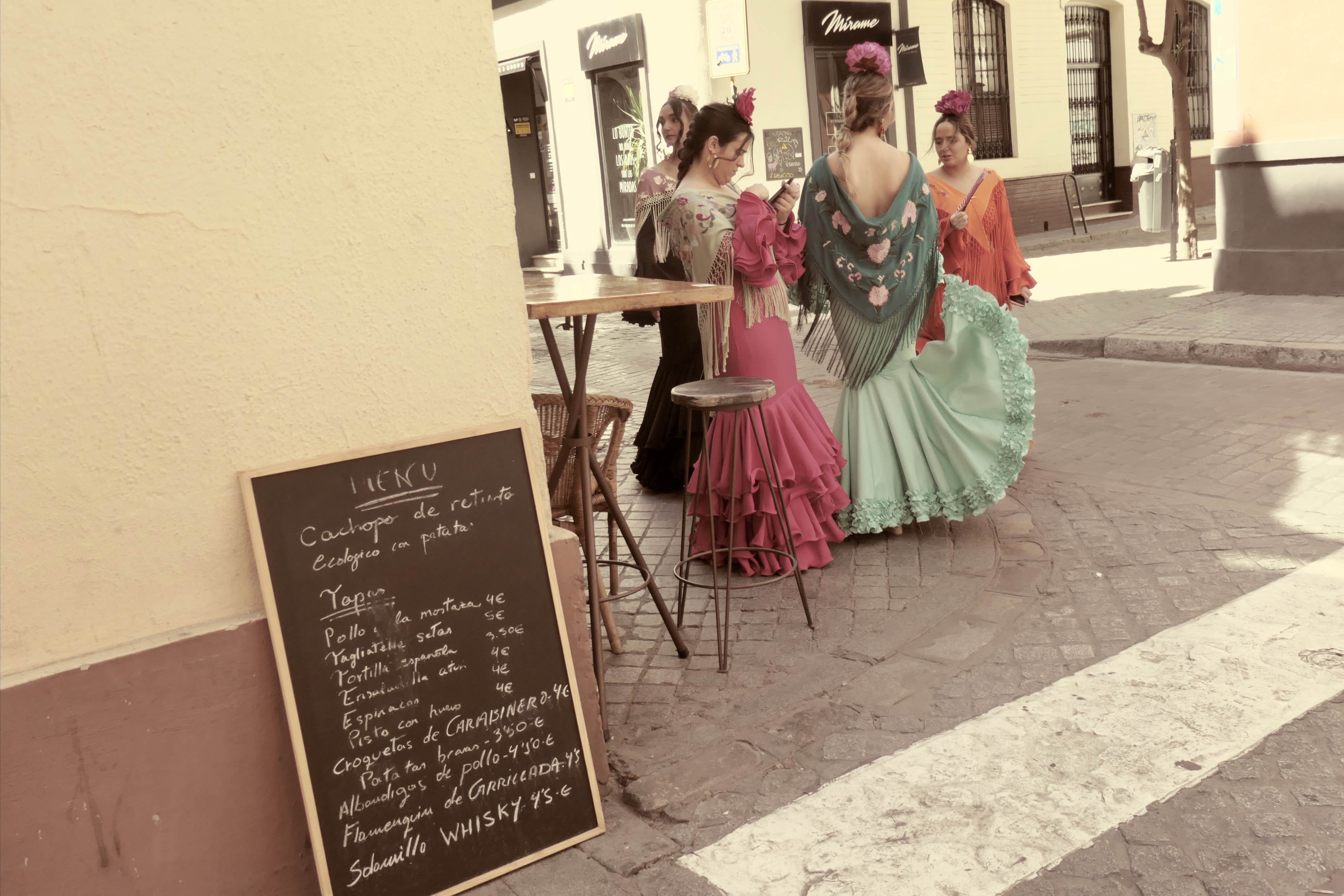
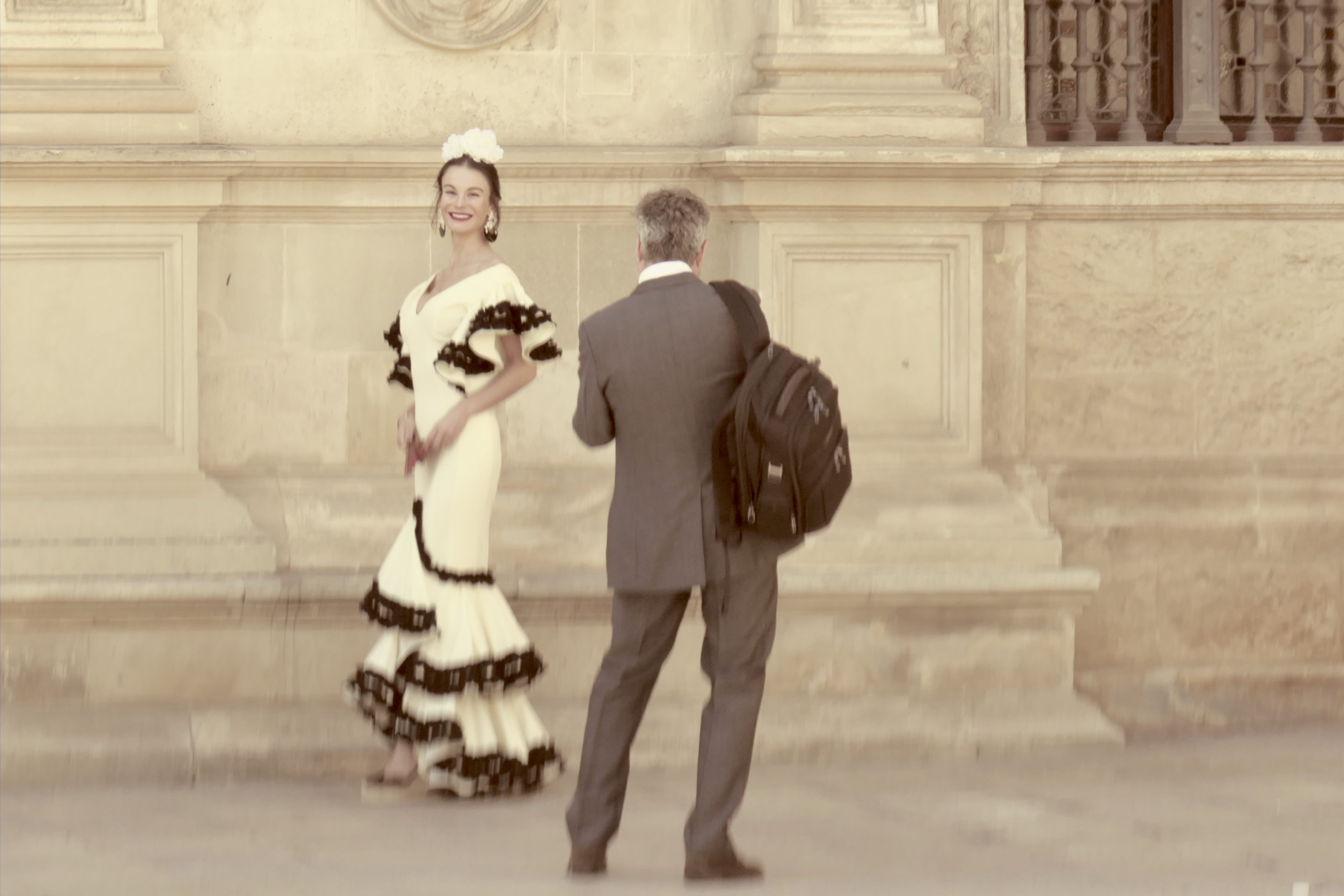
Everywhere we turned, women were dressed in vibrant flamenco-style dresses—ruffled, fitted, and radiating color—while men wore traditional suits and wide-brimmed hats. The energy was contagious. Even the horses seemed to join the celebration, adorned with bright red, yellow, and navy pom-poms, jangling bells, and polished leather harnesses.
One in particular looked like he was having the time of his life—grinning wide for the camera as if to say, “¡Bienvenidos a Sevilla!”
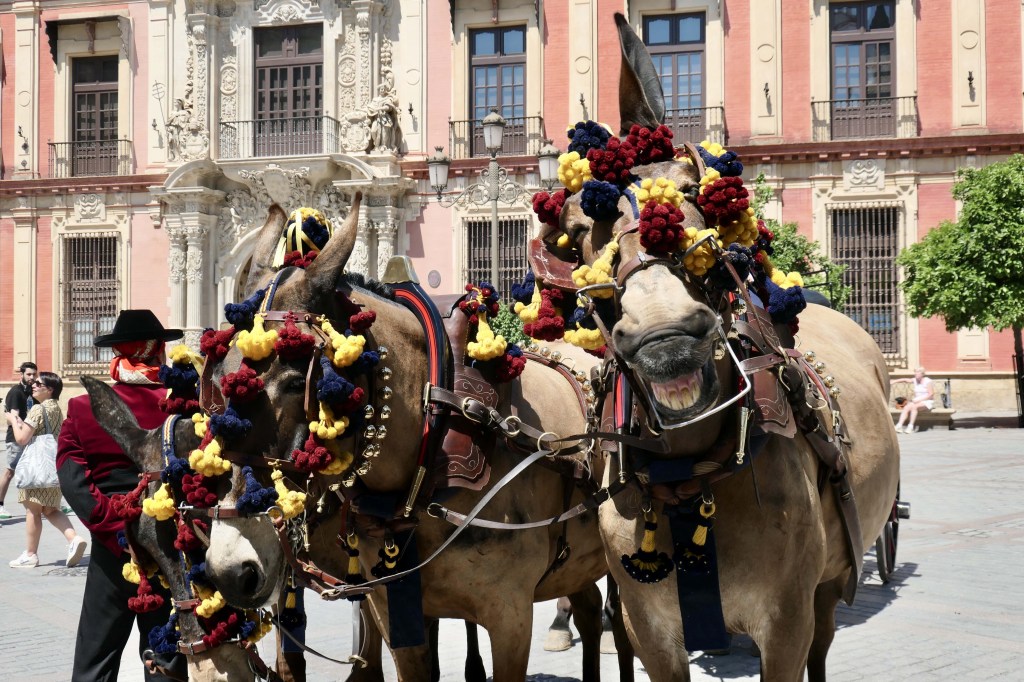
Even the horses seemed to join the celebration—this one couldn’t stop smiling during Feria de Abril!
A Scenic (and Slightly Chaotic) Arrival
When we finally got an Uber, my husband—who’d been practicing his Spanish all through Portugal forgetting the native language is Portuguese, suddenly forgot every word. After some awkward exchanges, we learned our driver couldn’t take us all the way to the hotel because of street closures for Feria. We rolled our suitcases over cobblestones through narrow alleys where GPS lost its signal more than once. After a bit of wandering (and a lot of laughing), we finally found our stay: Hotel Casa 1800 Sevilla.
Hotel Casa 1800 Sevilla
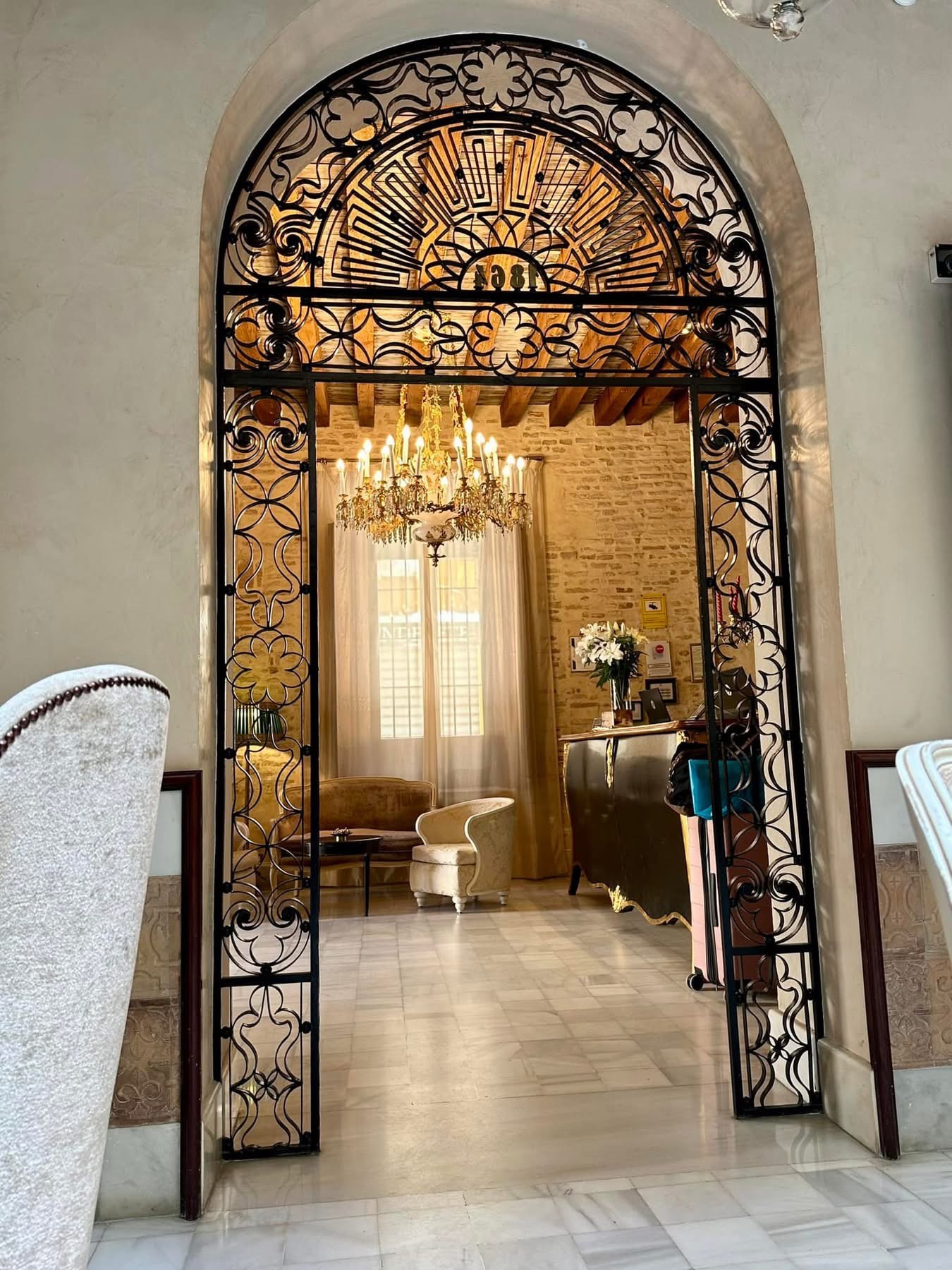
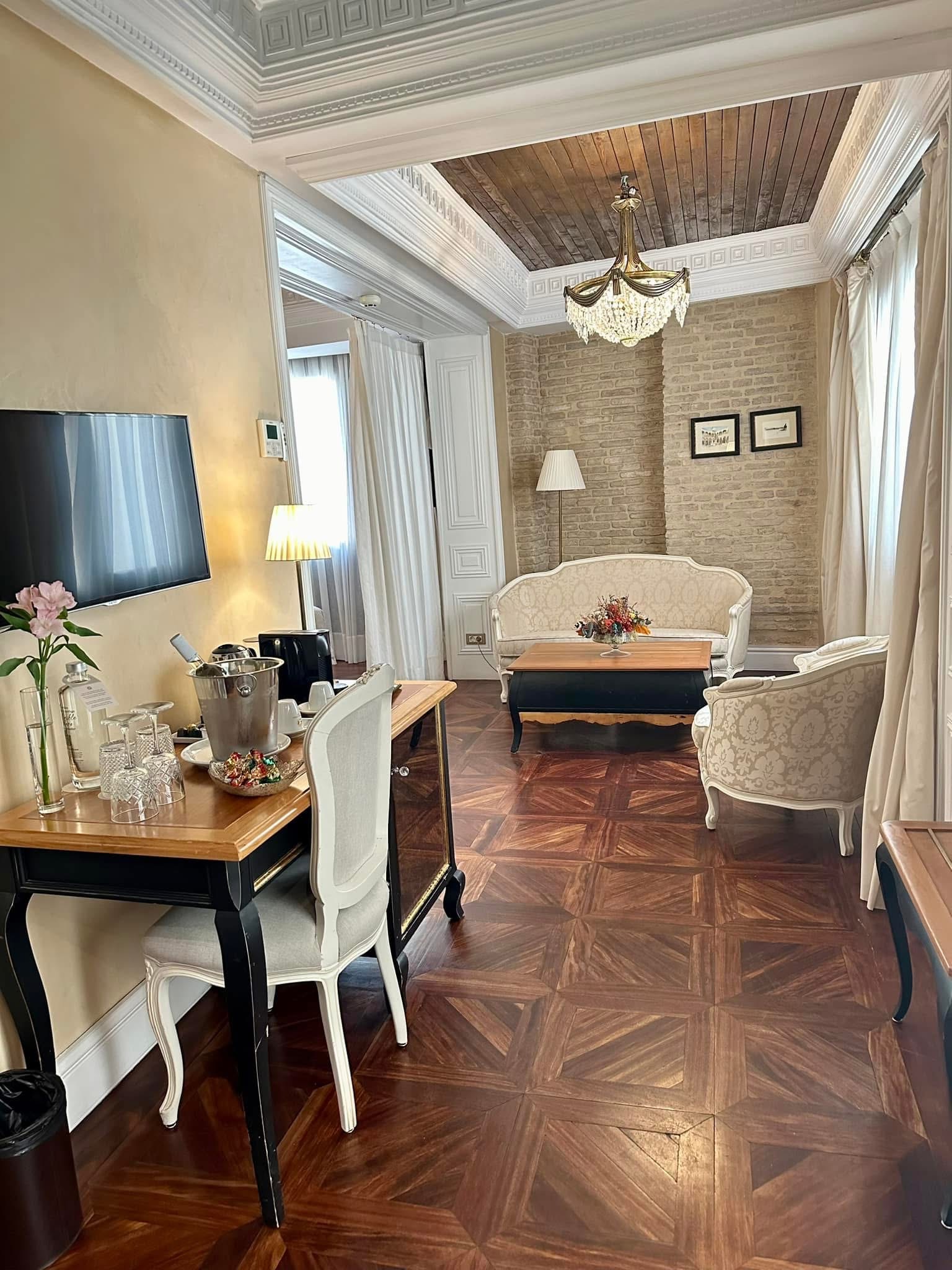
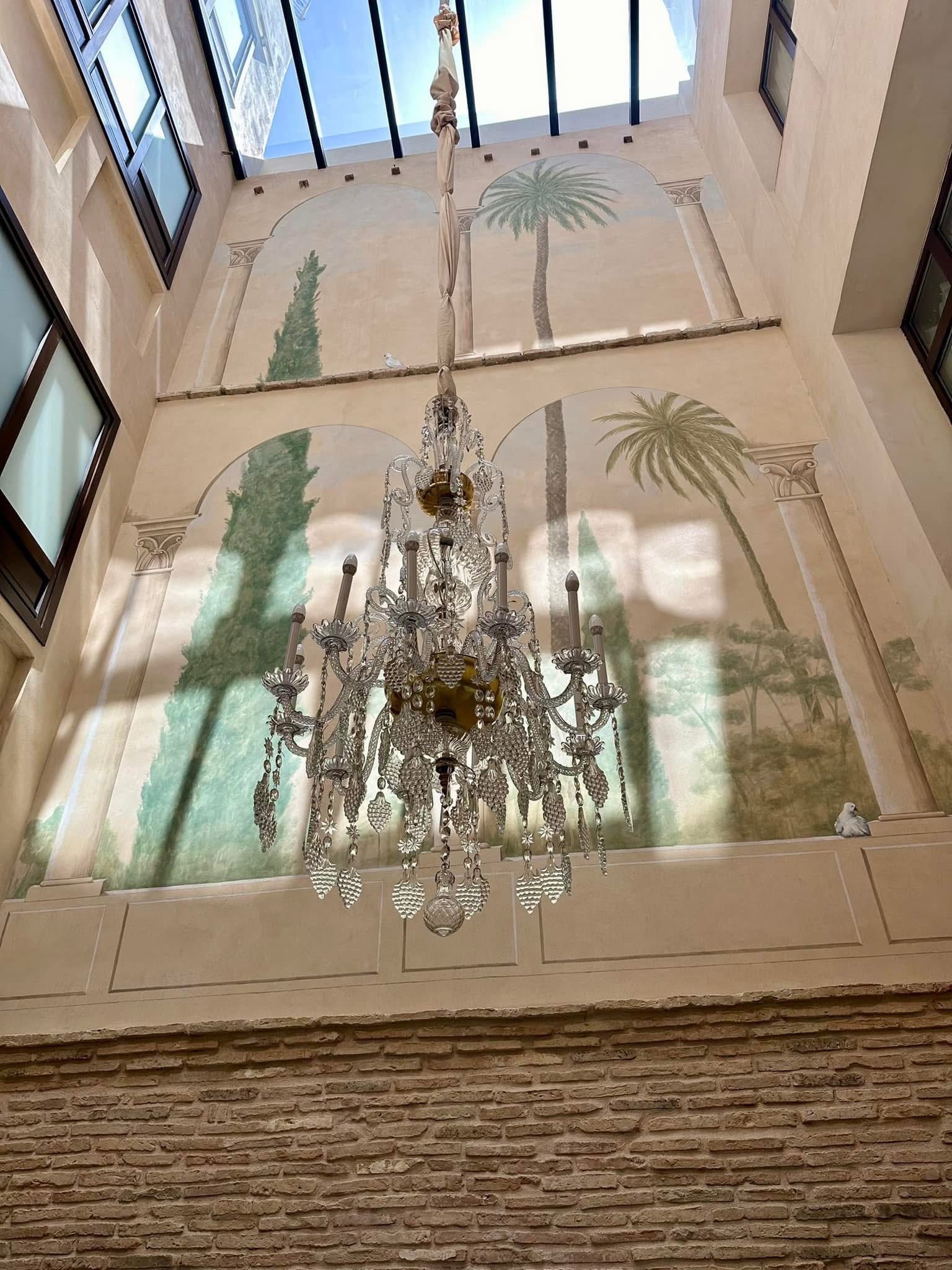

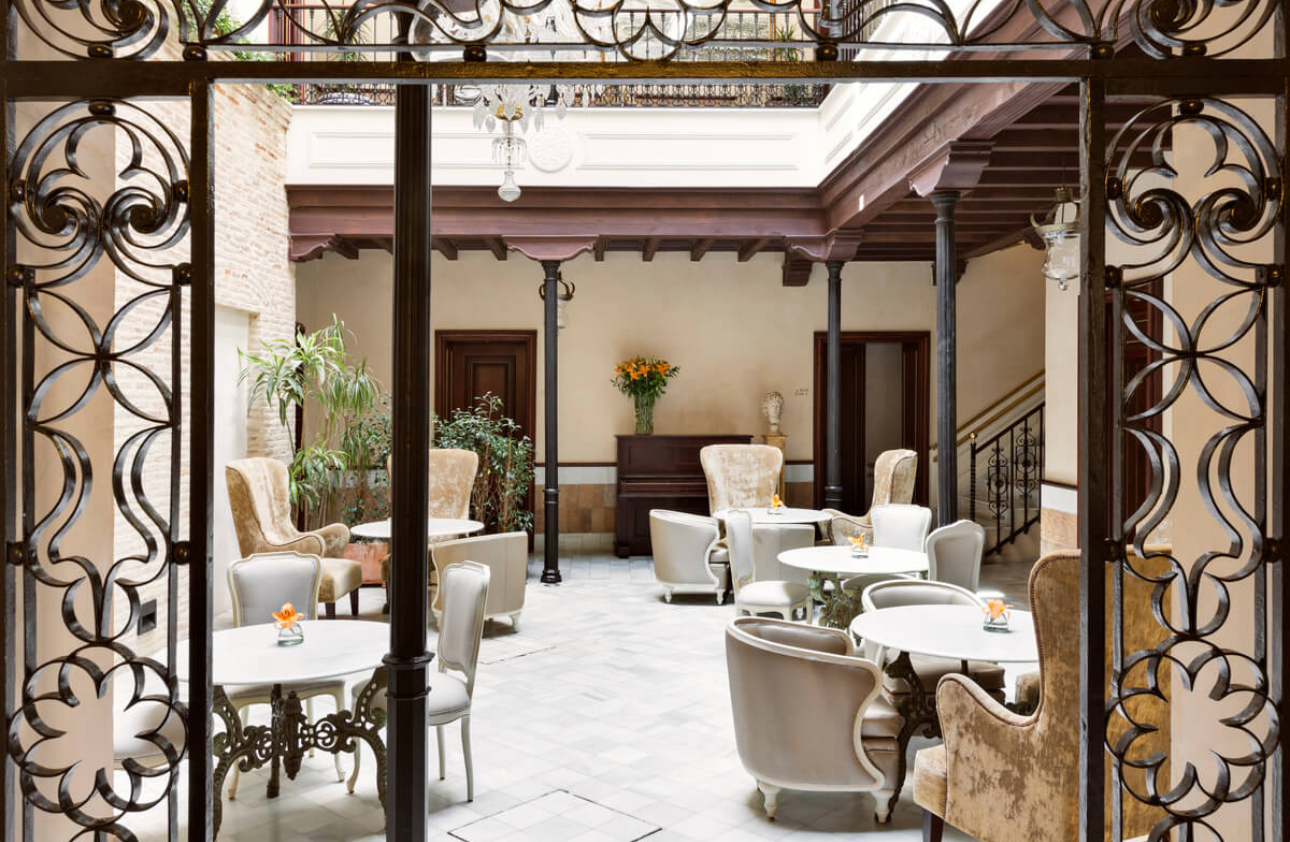
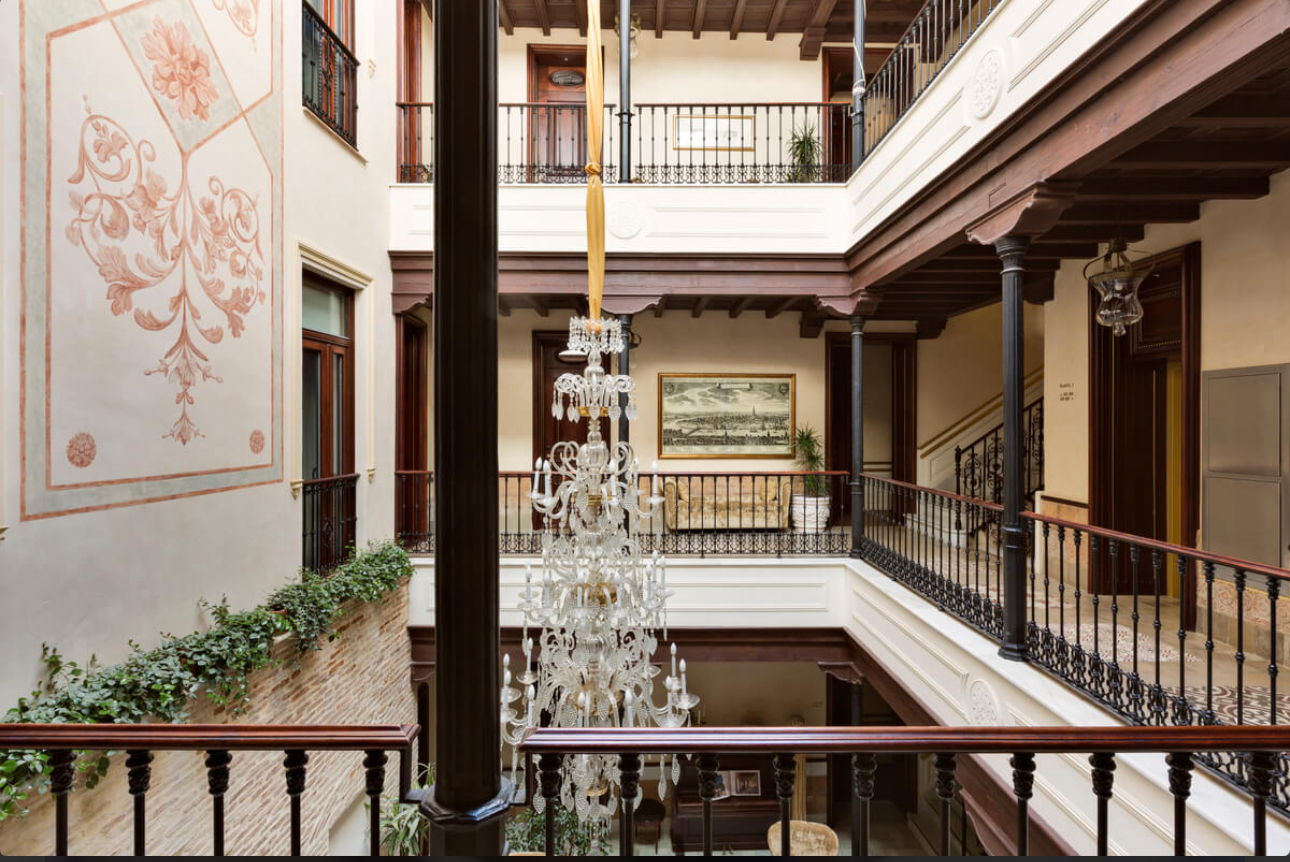
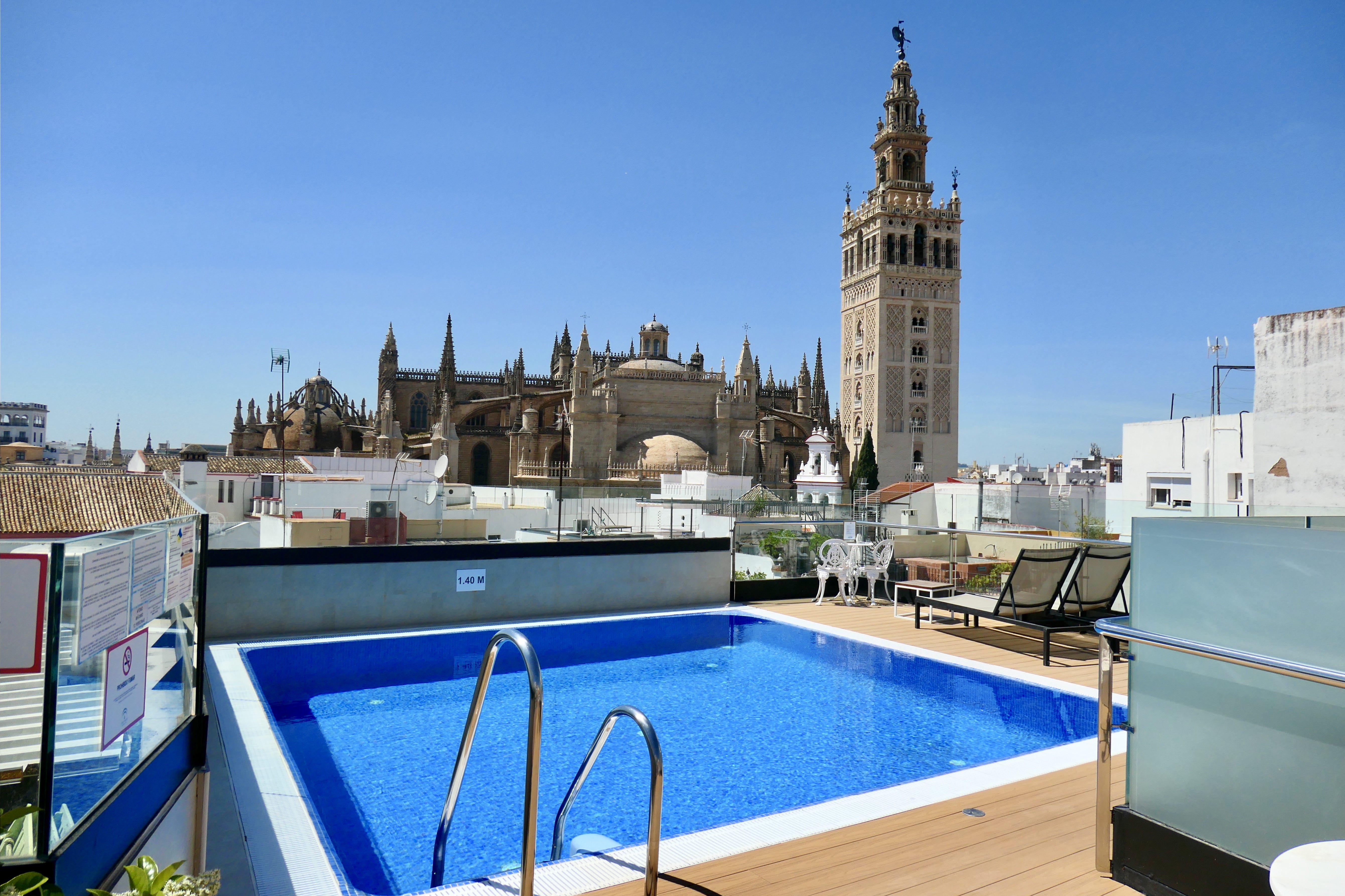
This boutique gem sits in the heart of the old city, just steps from the Cathedral of Seville and La Giralda Tower. The hotel is housed in a meticulously restored 19th-century mansion that once belonged to a noble family. It combines the charm of its original architecture—arched courtyards, wrought-iron balconies, hand-painted tiles—with the comfort of modern luxury. Our room had its own private jacuzzi terrace overlooking terracotta rooftops, and the rooftop pool offered a breathtaking view of the Cathedral de Sevilla, especially magical at sunset.
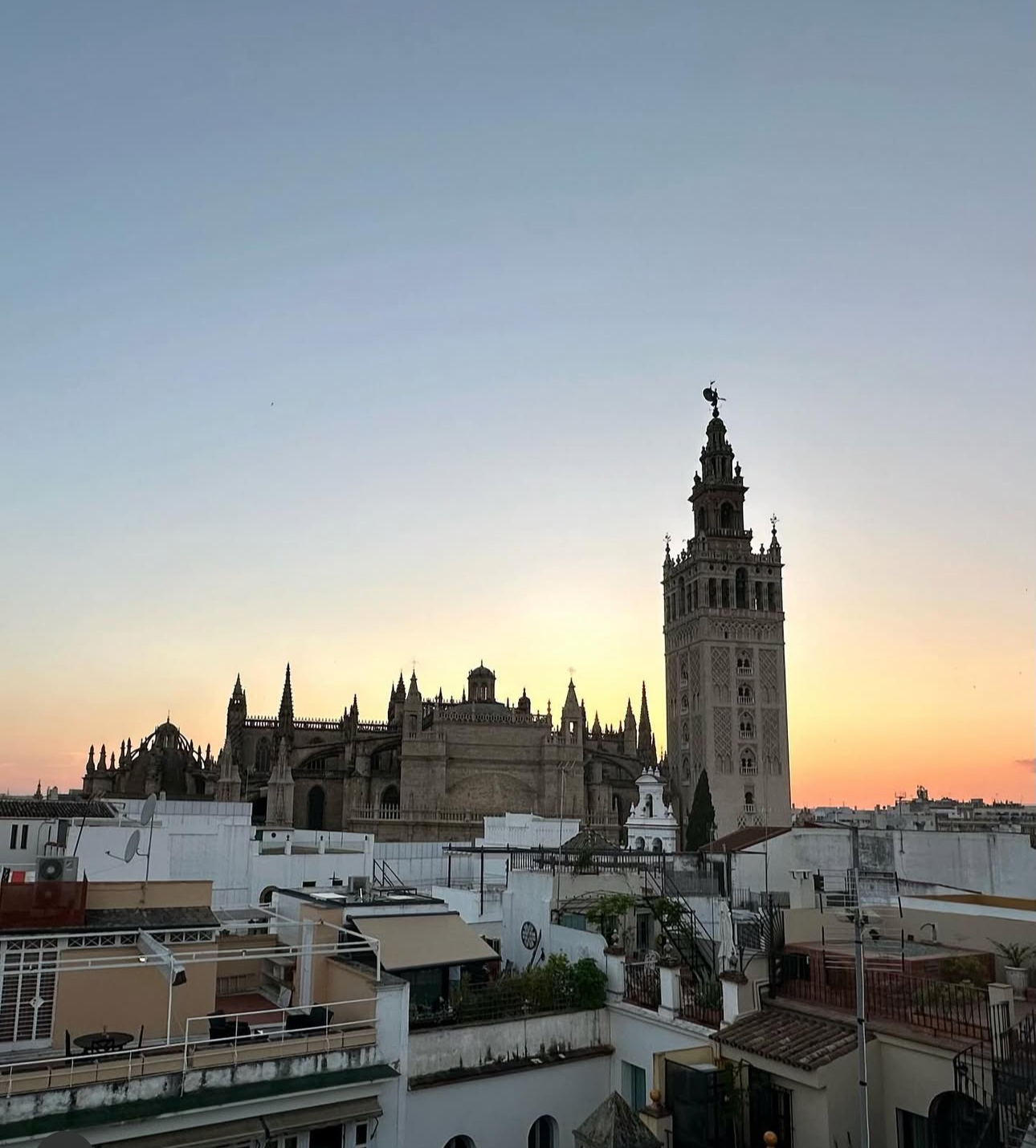
A friend of our daughter’s, who studied abroad in Seville, had recommended this hotel after her parents stayed there, and it did not disappoint.
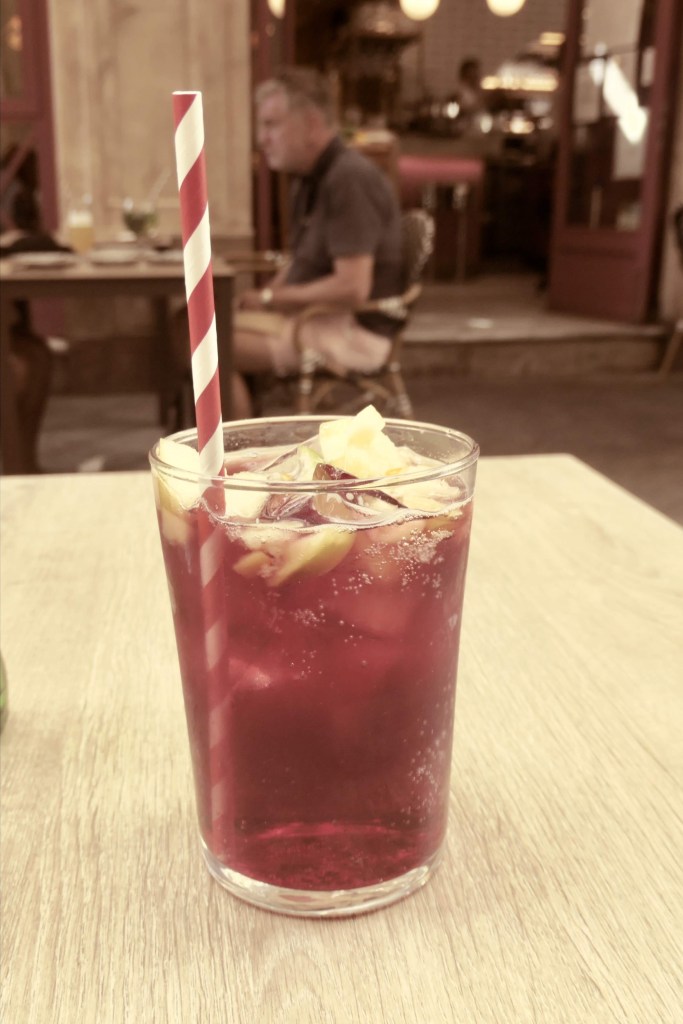
That first afternoon, we had no agenda. We wandered the city’s sun-drenched lanes and stopped at an outdoor café for drinks – in refreshing for my husband, a sangria for me. I don’t know if it was the magic of Seville or a secret ingredient, but the sangria tasted better here than anywhere else I’ve ever tried. My husband was still recovering from an illness picked up in Lisbon, so it felt wonderful to sit in the warmth, sip something fruity and cold, and watch the rhythm of Seville unfold before us.
A Rough Start to a Big Day
The next morning, we were set for an all-day private tour—but I woke up “can’t-leave-the-bathroom” kind of sick. My husband, now feeling better, went to find a pharmacy. Despite the big neon green cross sign practically next door, he returned empty-handed. I gathered my strength, dragged myself off the cool tiles of the bathroom floor, and with fingers crossed and my husband by my side for support, headed next door to the pharmacy. With a mix of broken English and sympathetic nods, the pharmacist handed me a packet of medicine and hydration tablets. Whatever she gave me worked miracles—far better than Pepto-Bismol. A little tired, achy, but determined, I joined our guide and refusing to miss a single sight.
Our Seville Tour
Centro Histórico de Sevilla
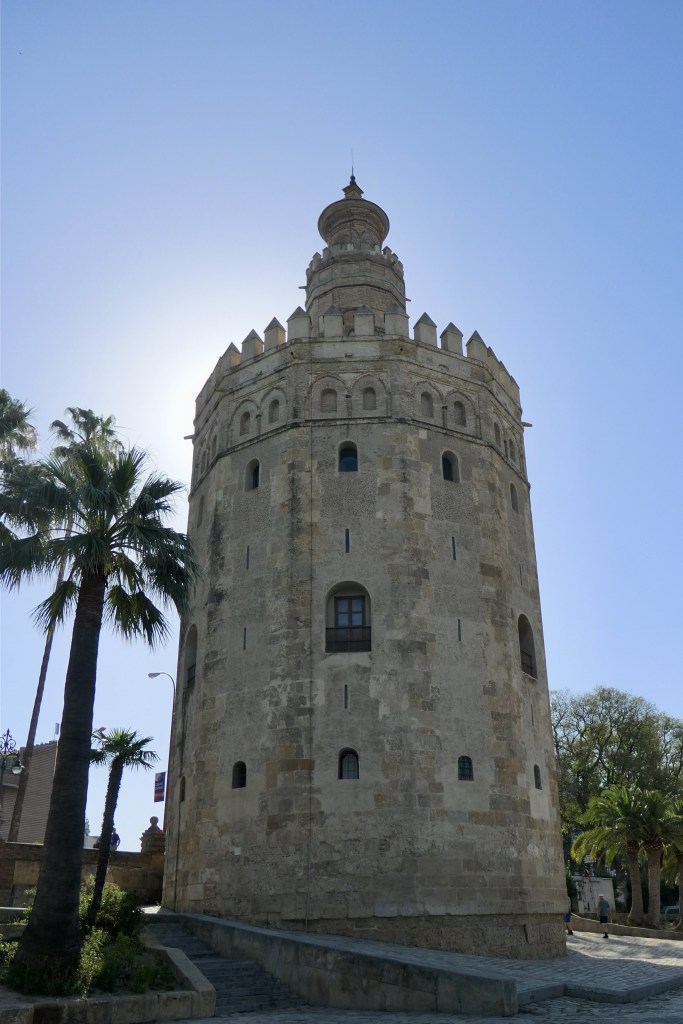
We began by exploring Seville’s historic heart—a maze of narrow streets, shaded squares, and centuries of stories. Our guide pointed out the former Tobacco Factory, immortalized in Bizet’s Carmen; the Torre del Oro (Golden Tower), built in the 13th century to guard the Guadalquivir River; and the elegant Hotel Alfonso XIII, a masterpiece from the 1929 Ibero-American Exposition. Every corner felt like stepping back in time, with ornate balconies dripping in flowers and the distant hum of flamenco guitars.
Barrio Santa Cruz
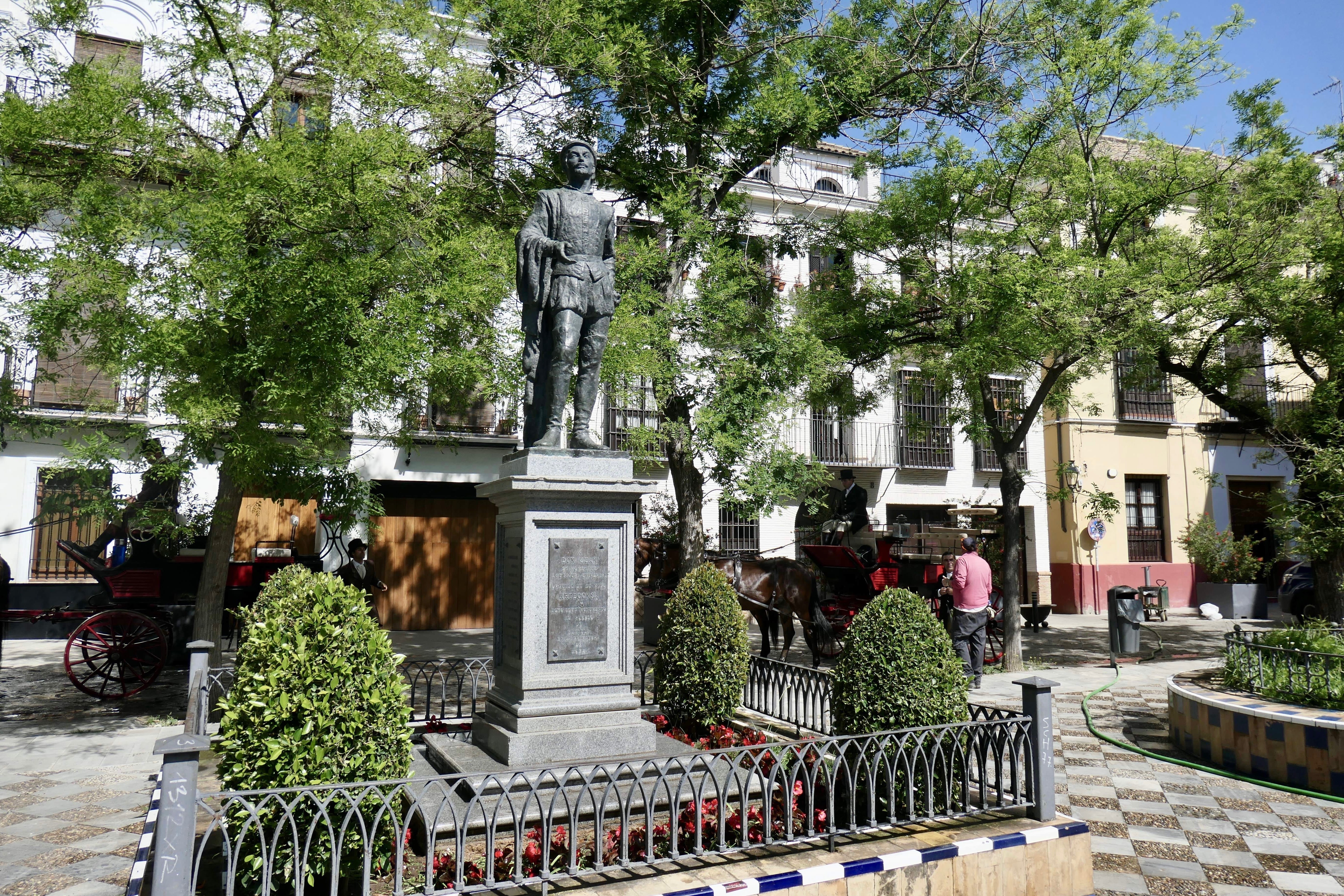
Next came Barrio Santa Cruz, once the Jewish quarter and now one of Seville’s most enchanting neighborhoods. Whitewashed walls, hidden courtyards, and narrow lanes told the layered history of cultures that once coexisted here. Our guide shared tales of Don Juan, the legendary seducer said to have lived in this very district—a romantic myth woven into the soul of Seville.

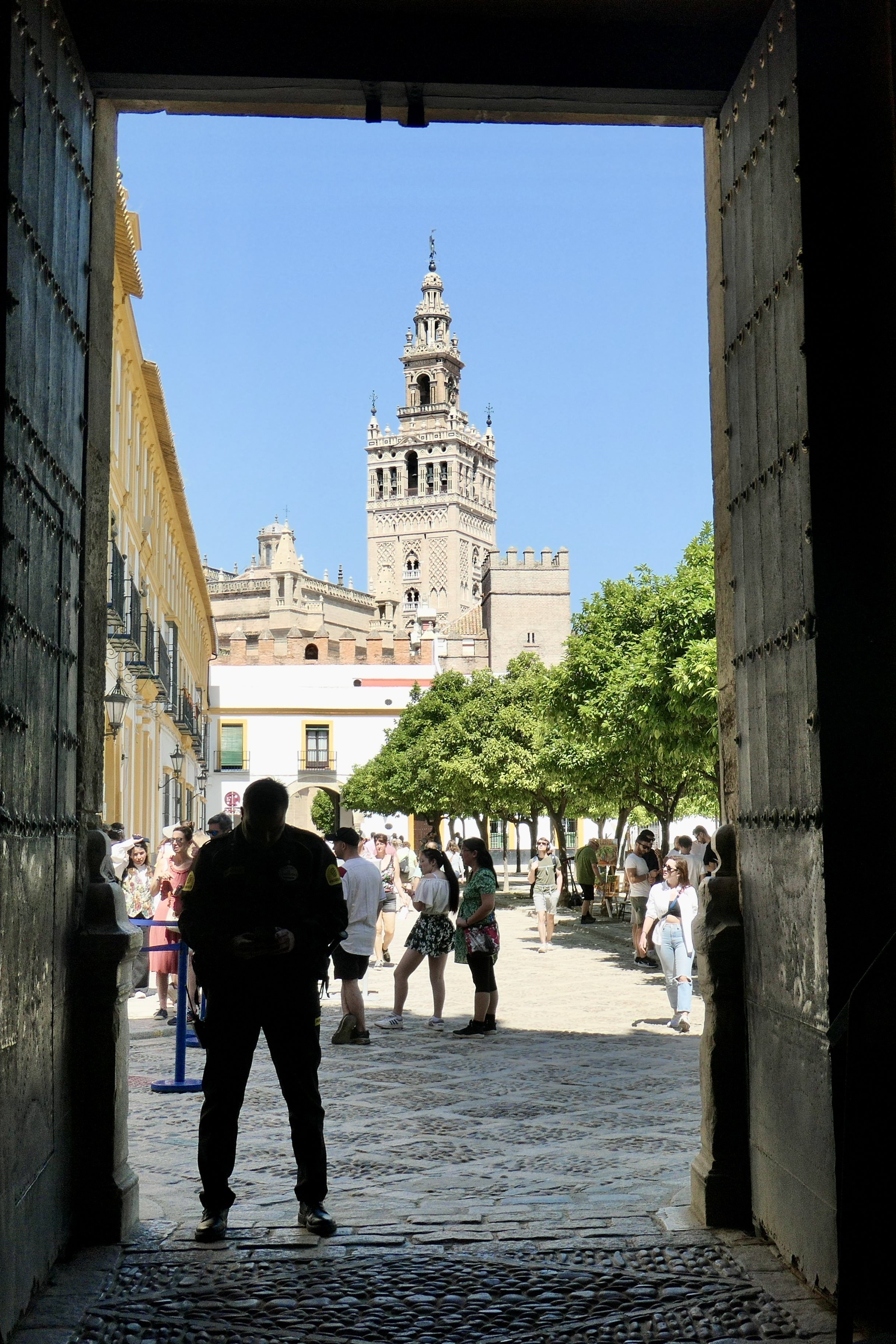
Catedral de Sevilla and La Giralda
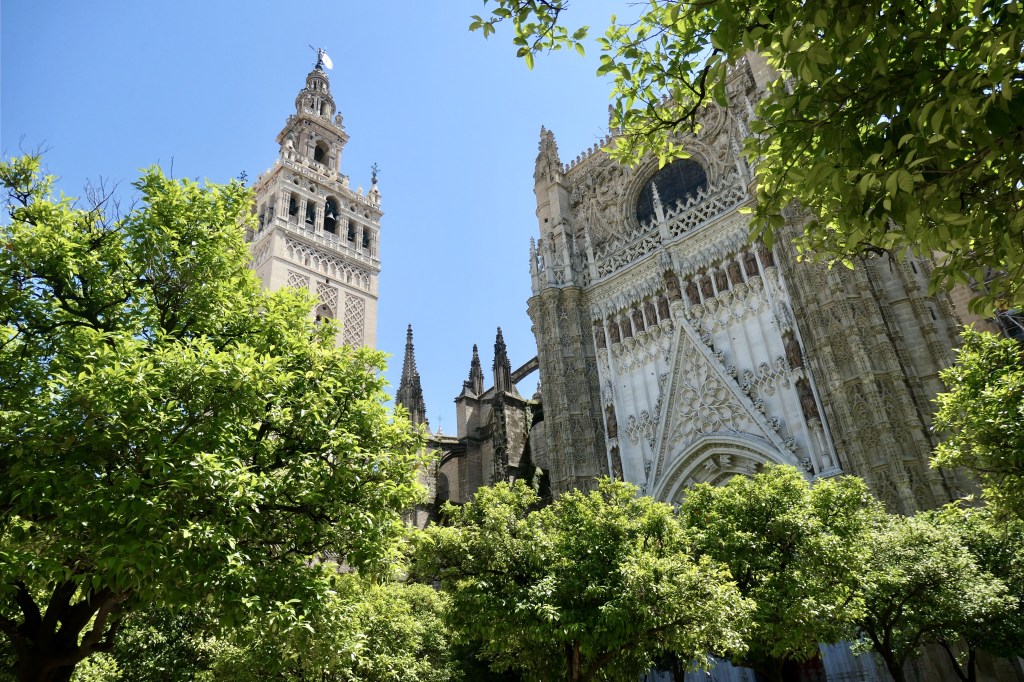
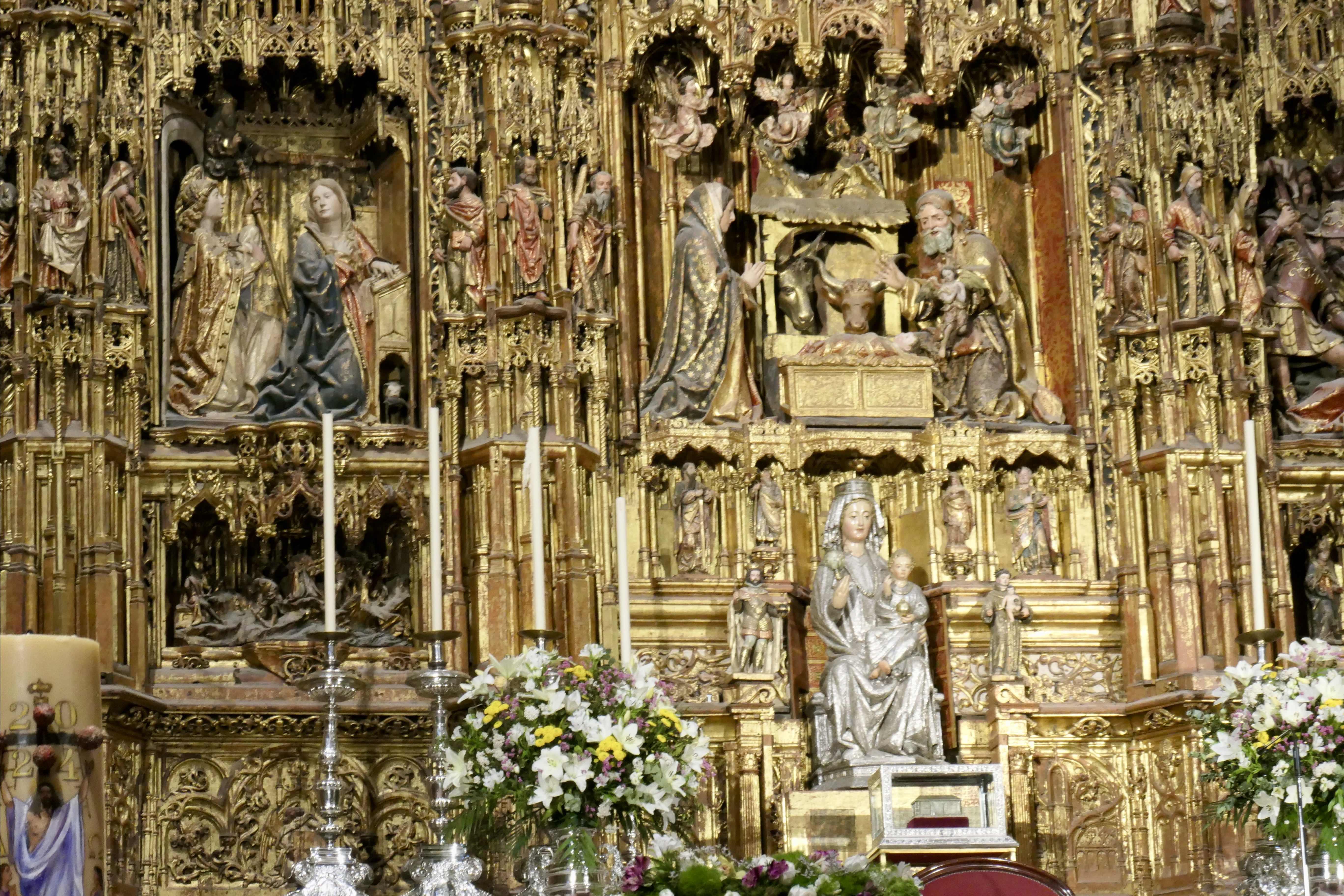
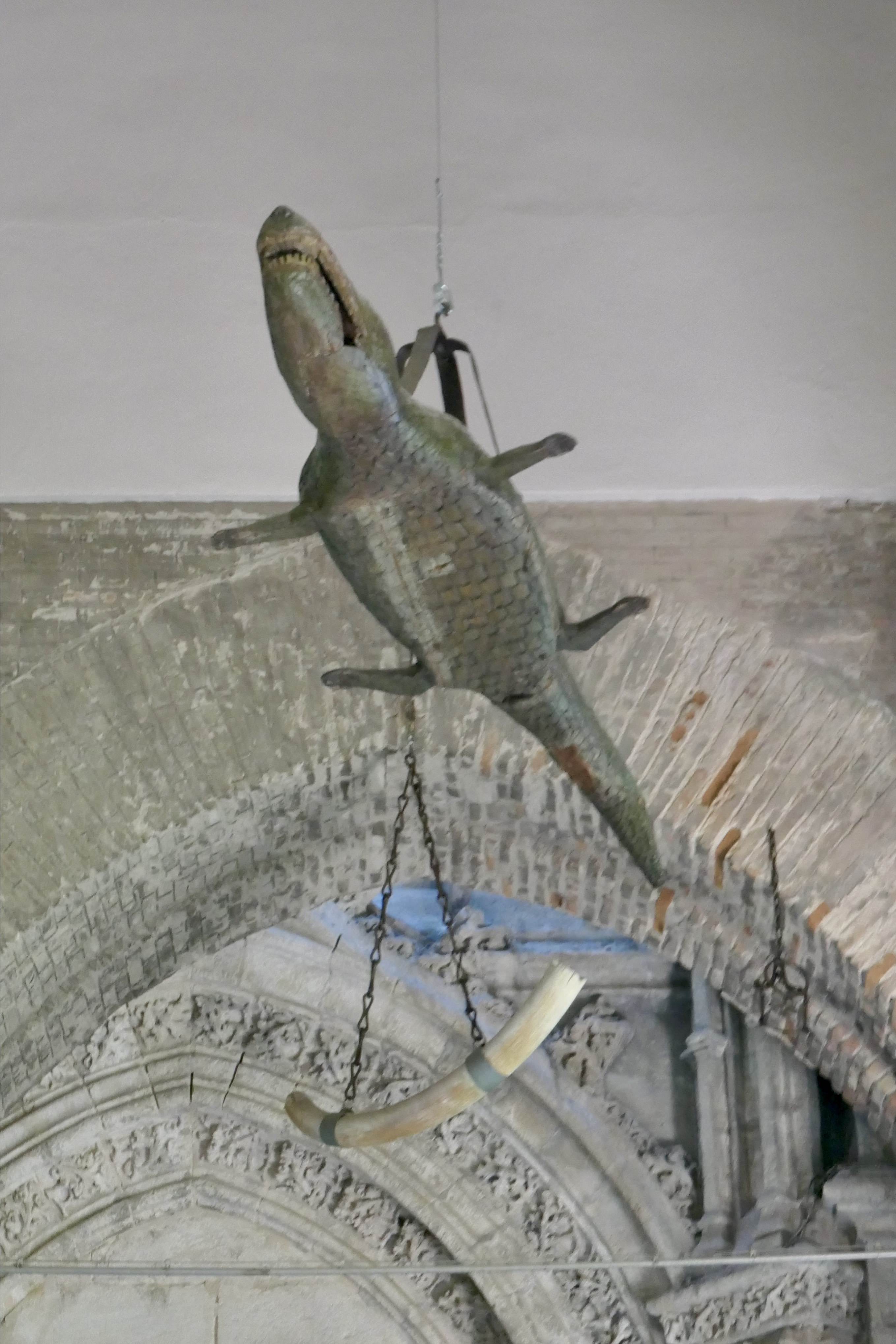
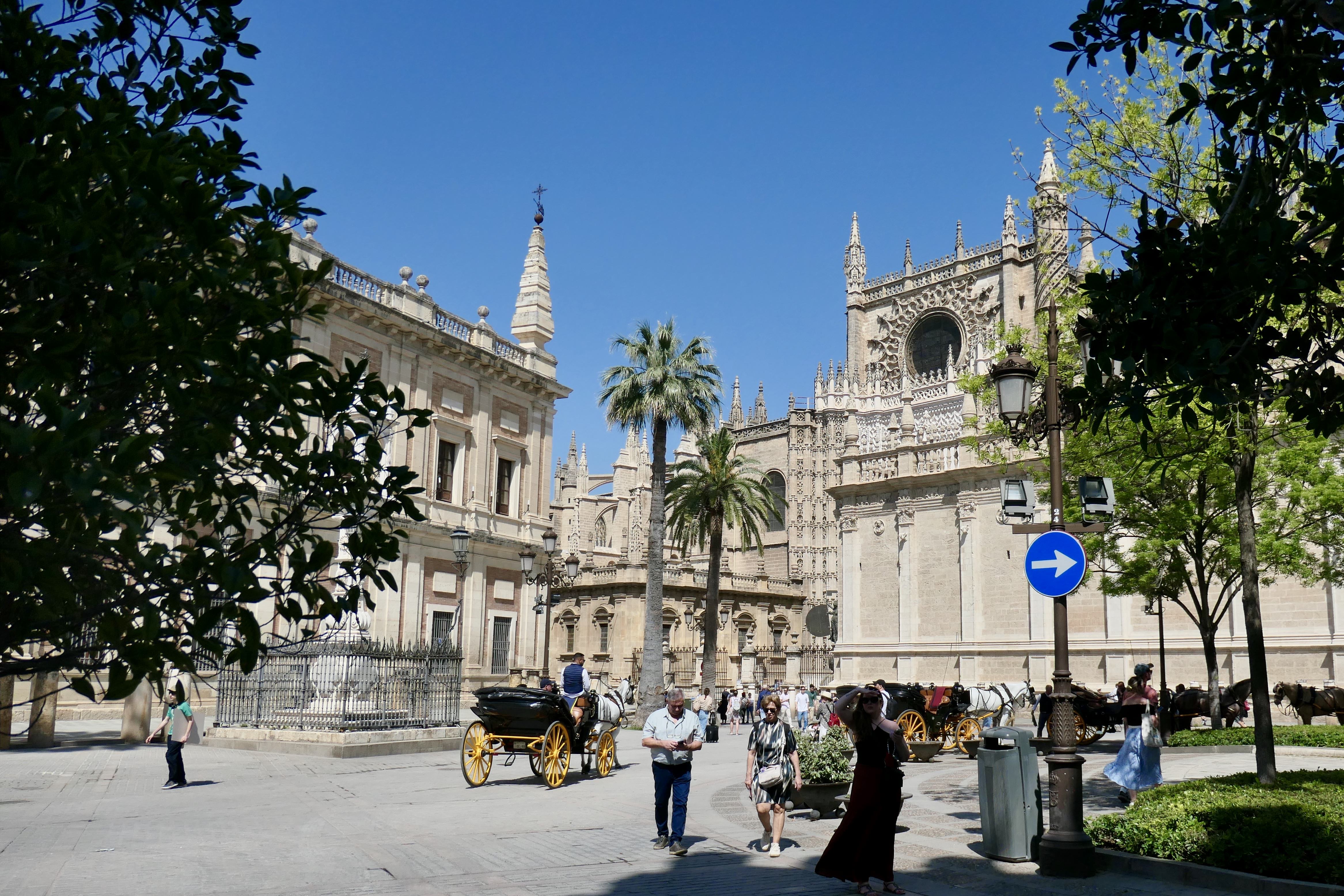
The Catedral de Sevilla, officially Catedral de Santa María de la Sede, is one of the largest Gothic cathedrals in the world. Built on the site of a former mosque, its scale and grandeur are breathtaking. Inside rests the tomb of Christopher Columbus, a name we all learned in elementary school. Standing before it, I felt a surprising wave of awe—as the words we all memorized as children popped into my head:
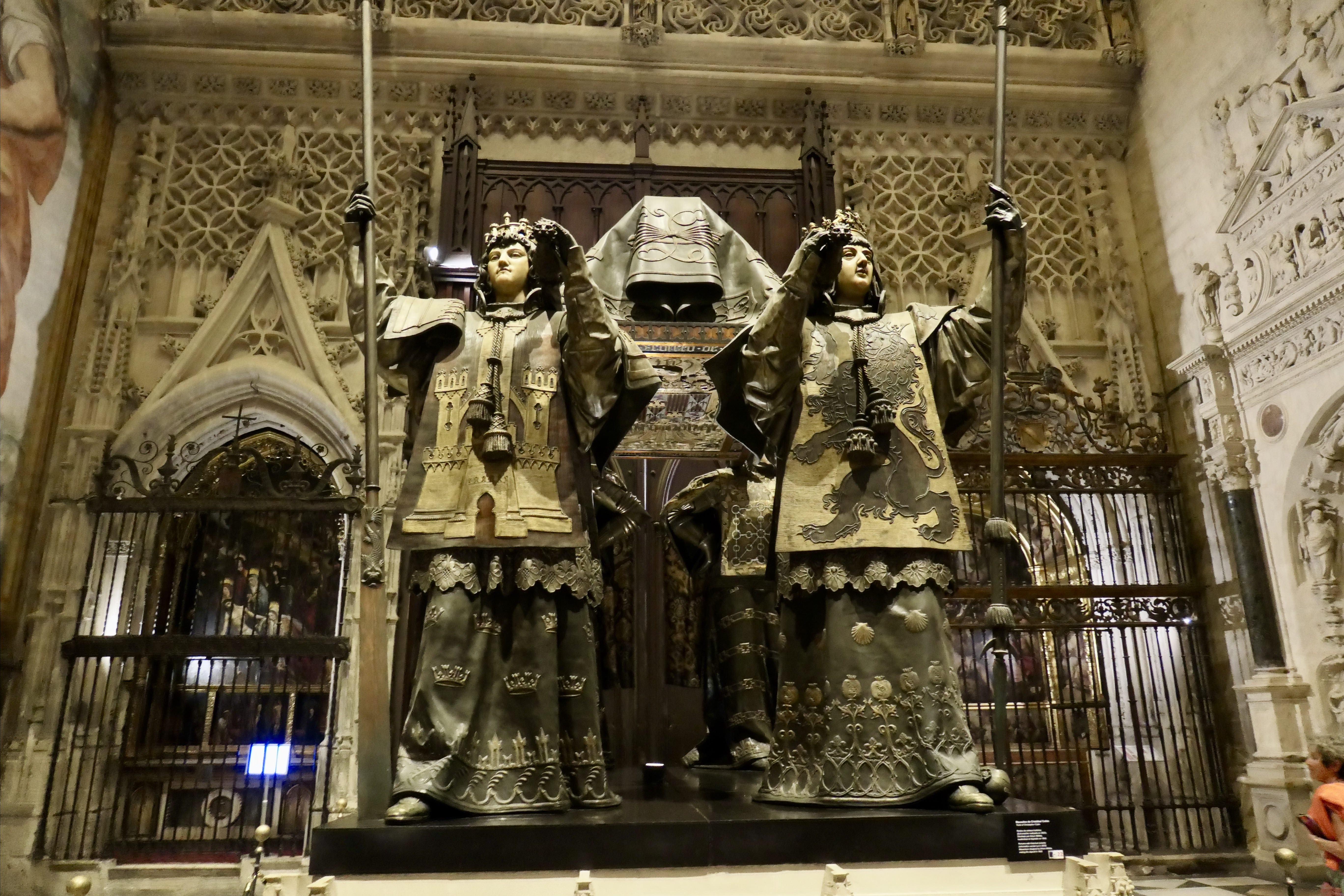
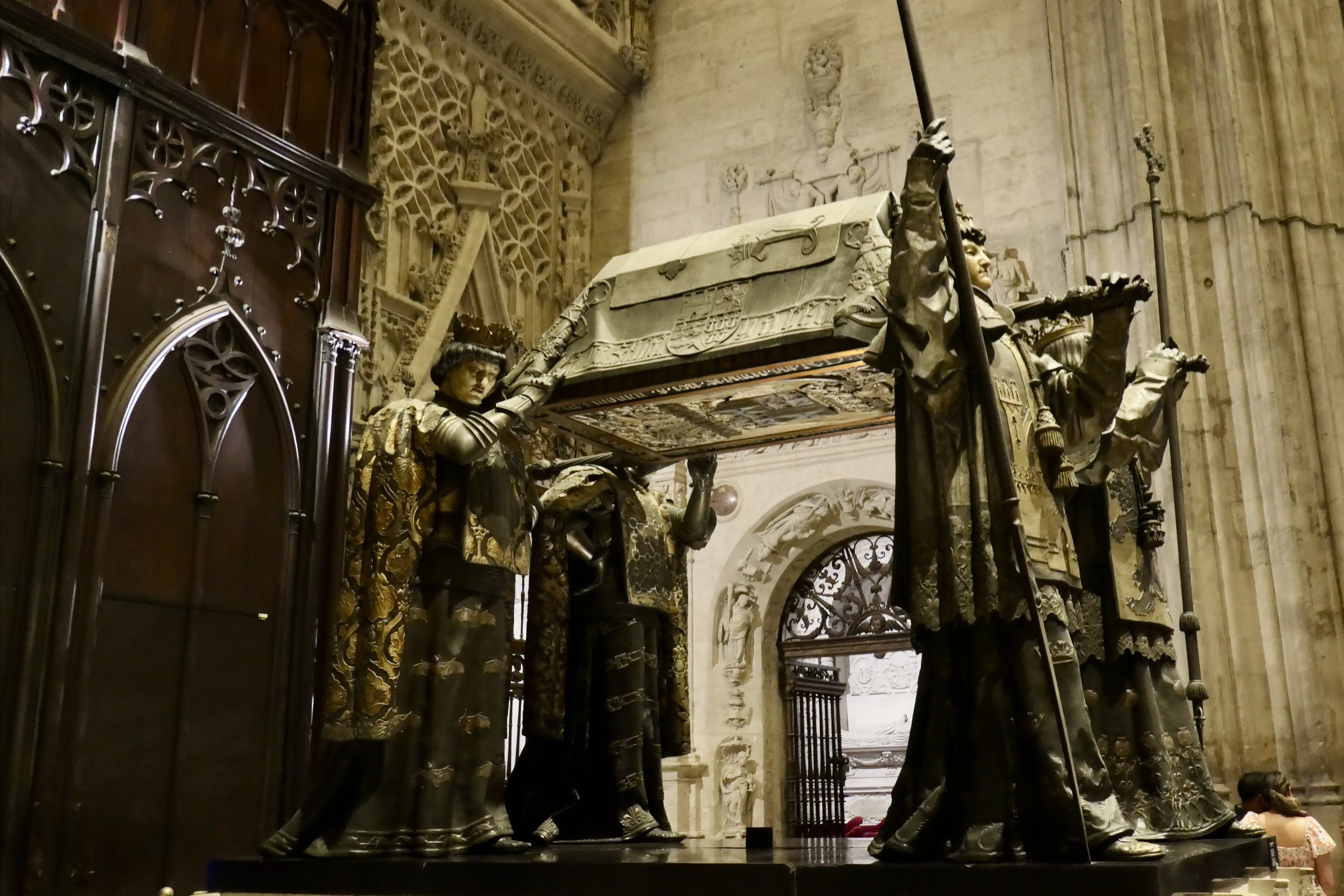
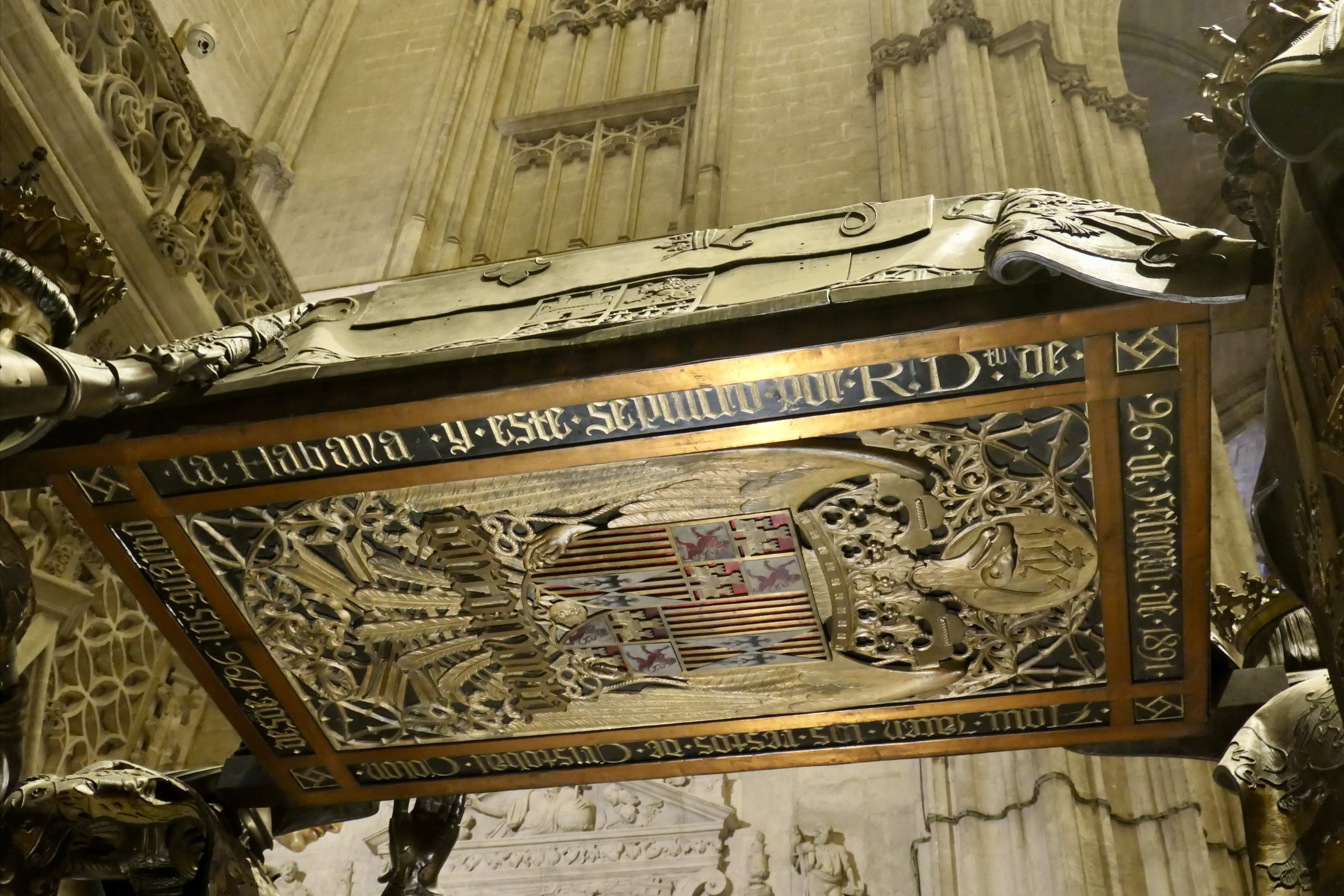
“In fourteen hundred and ninety-two, Columbus sailed the ocean blue.”
It was a moment that bridged history and memory—one of those travel experiences that makes you stop and truly feel where you are.
We climbed La Giralda, the cathedral’s iconic bell tower that once served as a minaret—its ramped ascent designed so that guards could ride horses to the top. From there, the panoramic view over Seville’s rooftops was unforgettable.


Real Alcázar de Sevilla
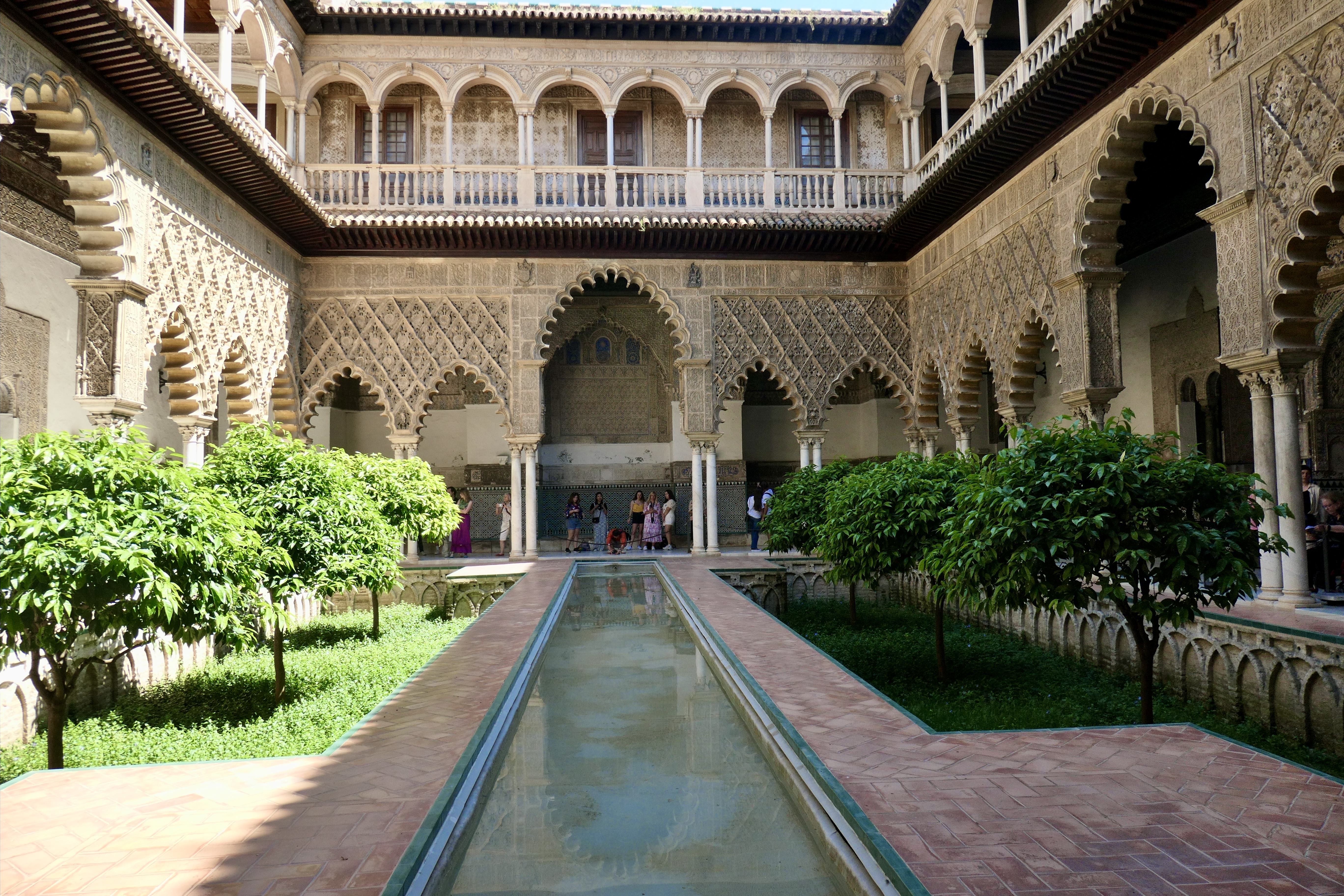
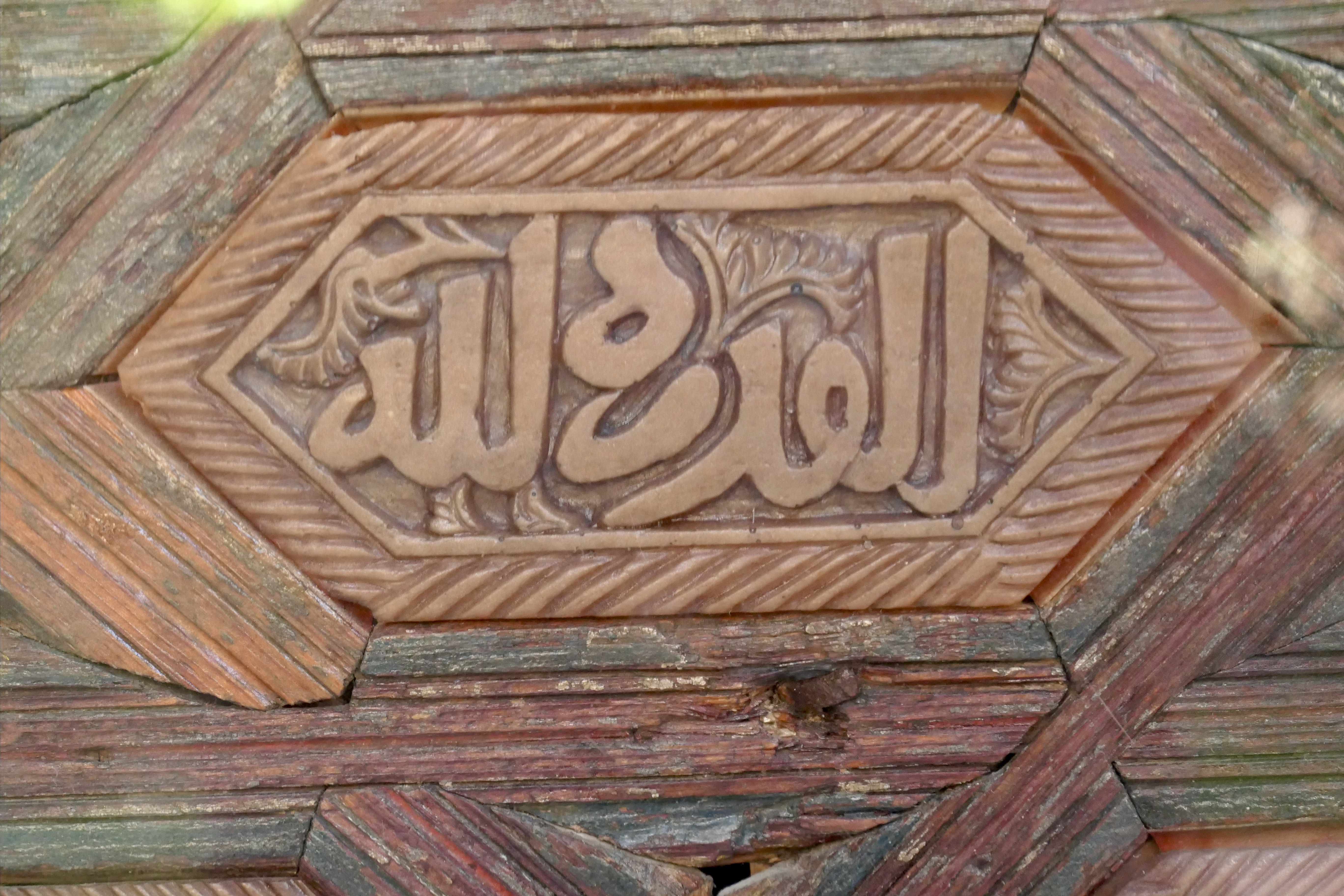
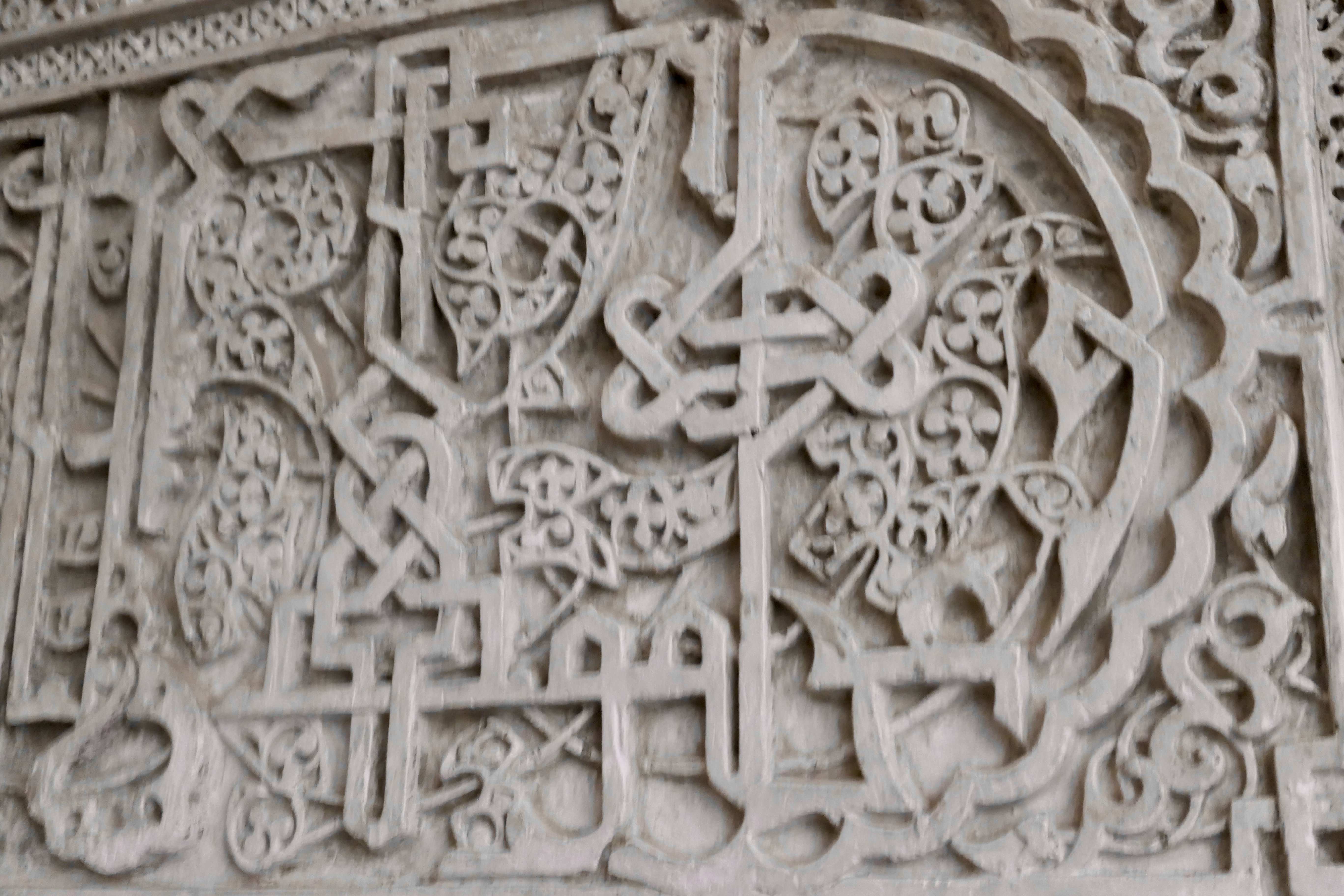
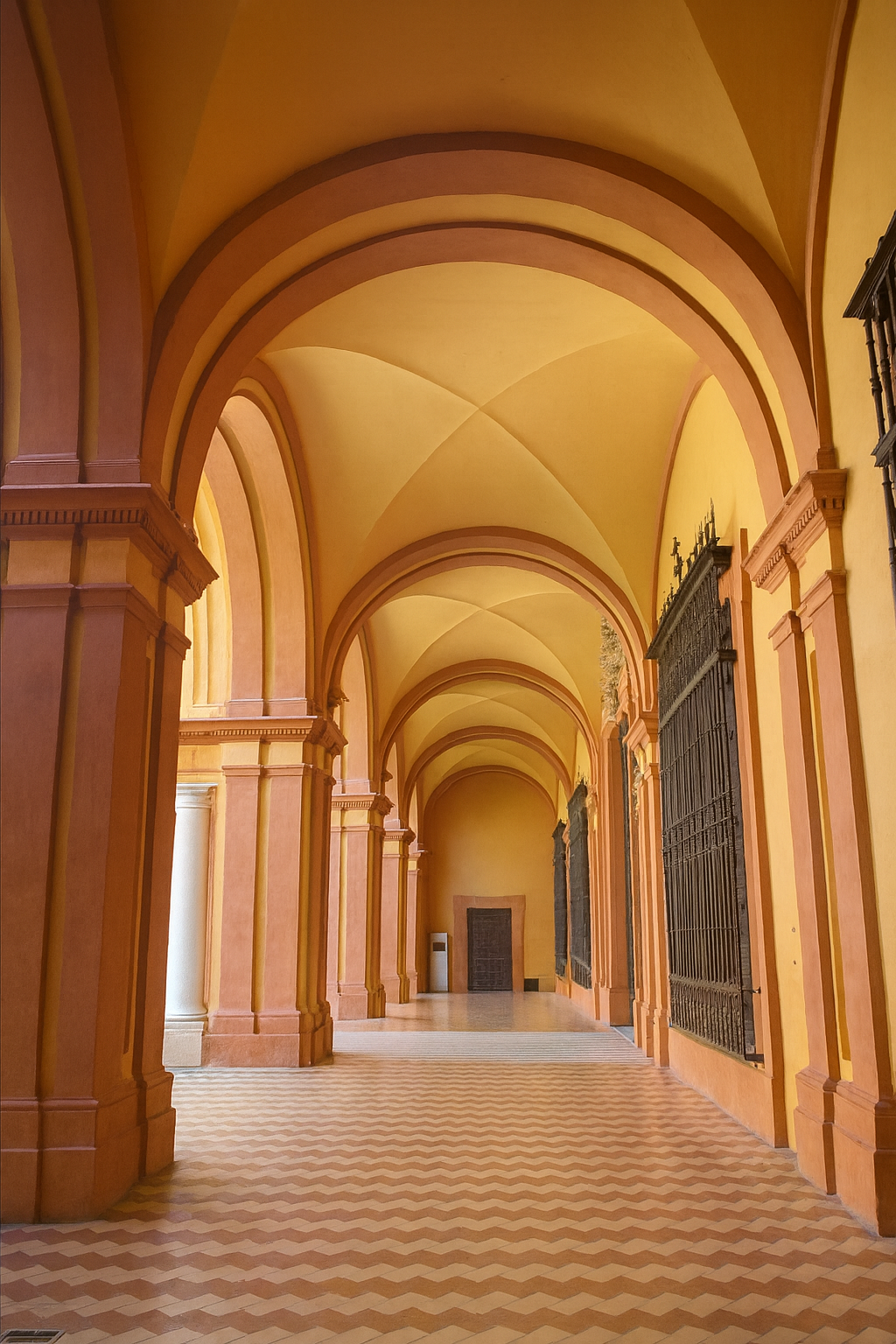
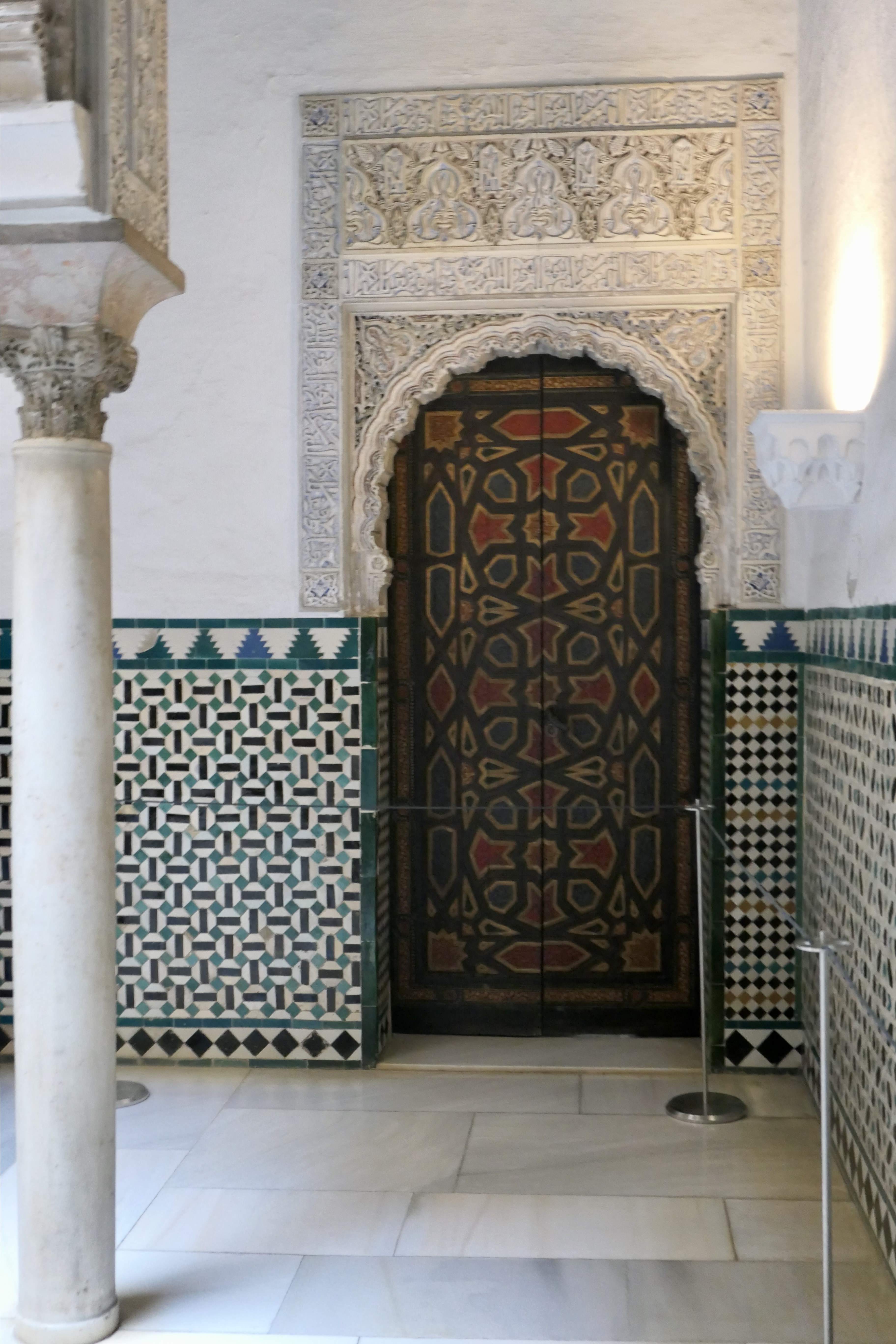
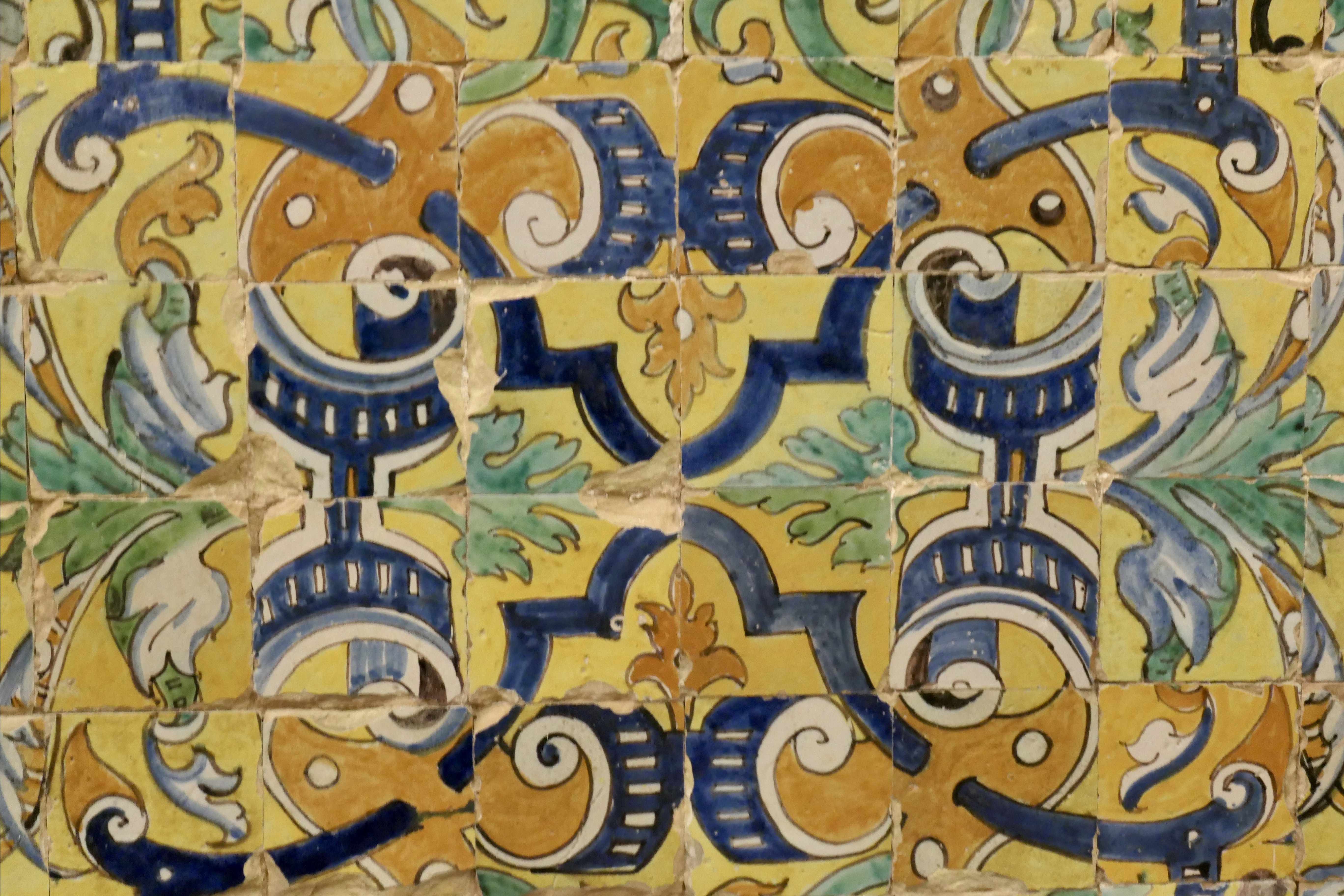
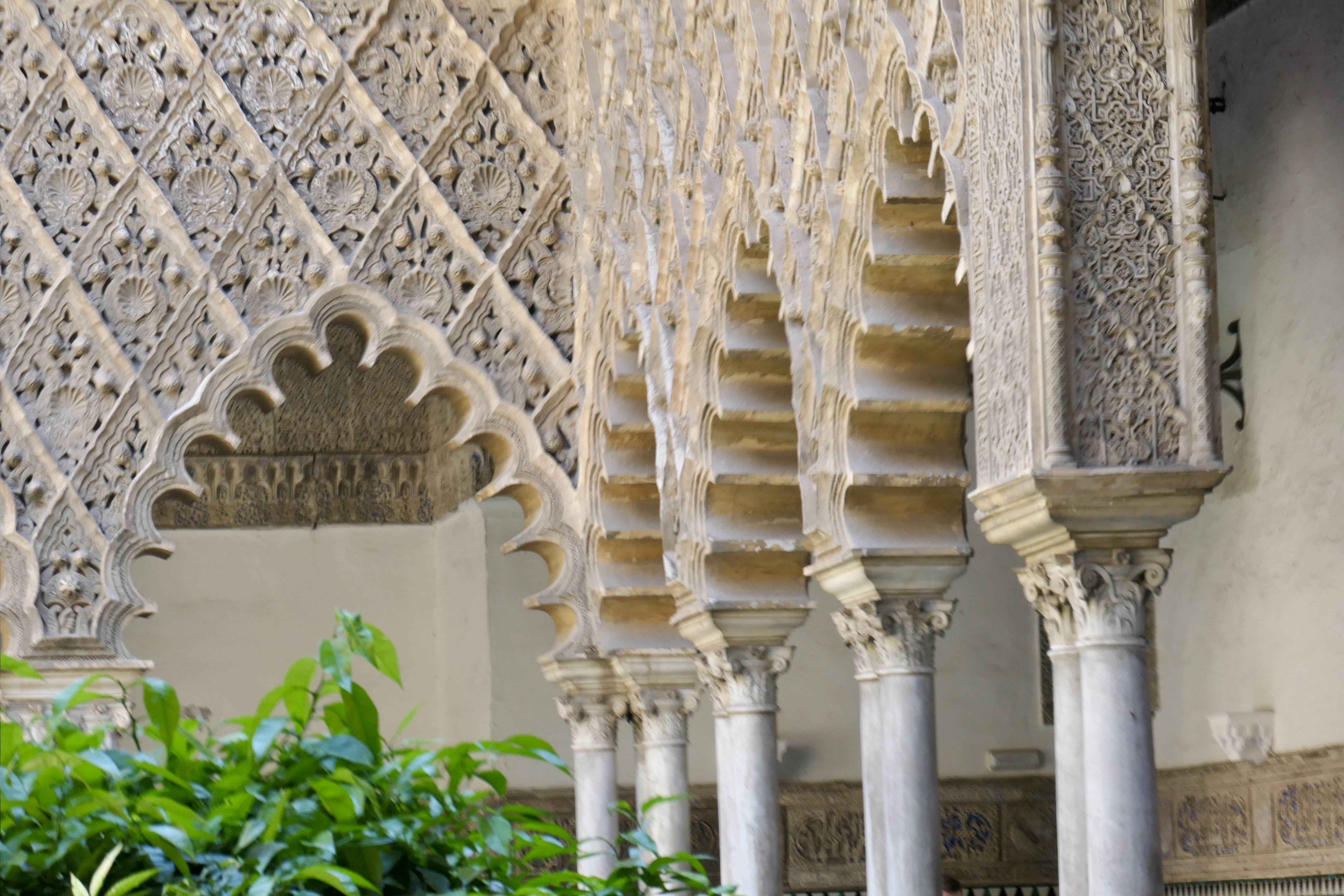
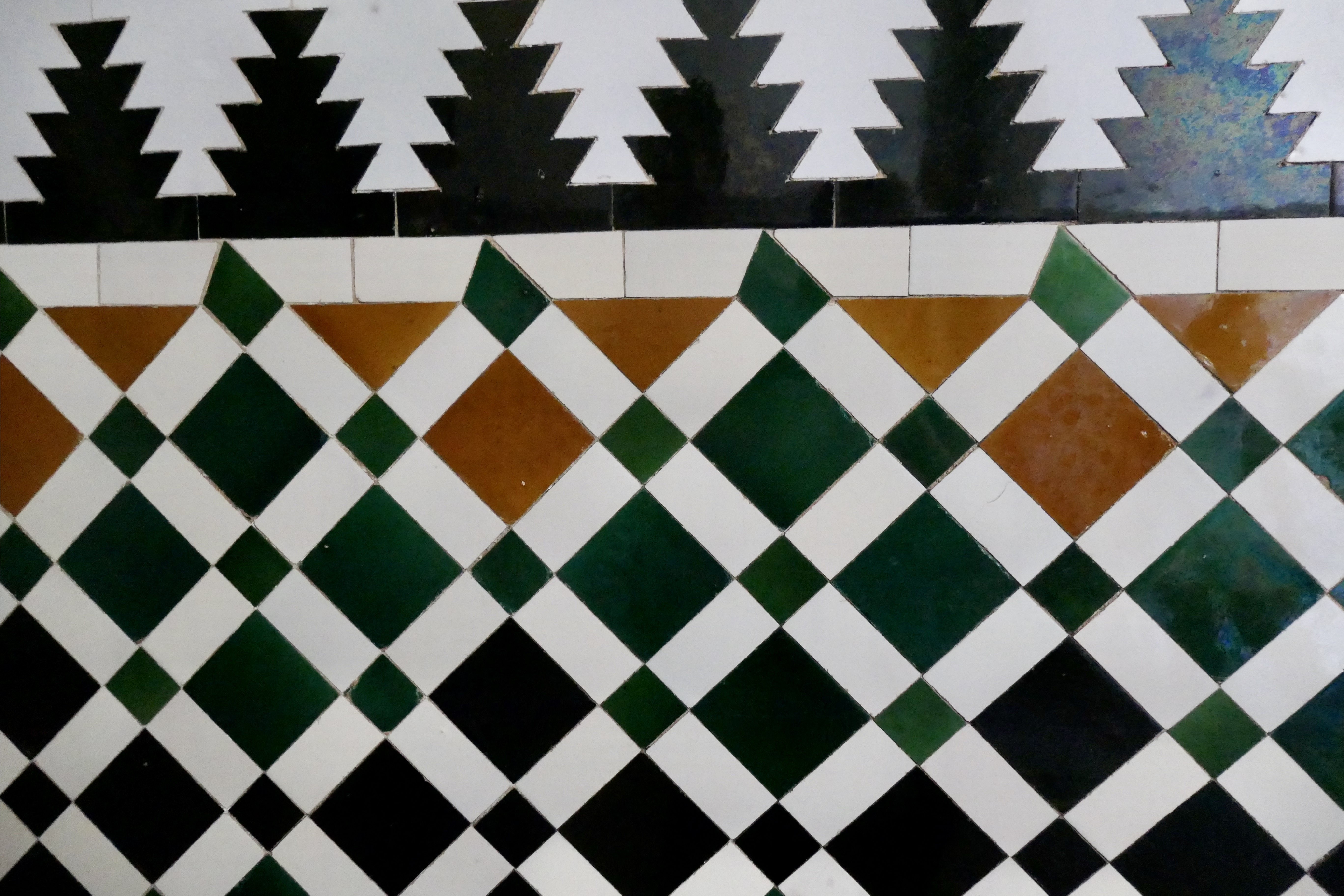
A short walk away is the Real Alcázar, a royal palace originally built by Moorish kings in the 10th century and still used today by Spain’s royal family. Its intricate Mudejar architecture, mosaics, and lush gardens are simply mesmerizing. Parts of Game of Thrones were filmed here, capturing its dreamlike beauty. Even through my fog of fatigue, I couldn’t stop marveling at the ornate arches, cool courtyards, and the sound of fountains echoing through ancient halls.


Plaza de España & Parque de María Luisa
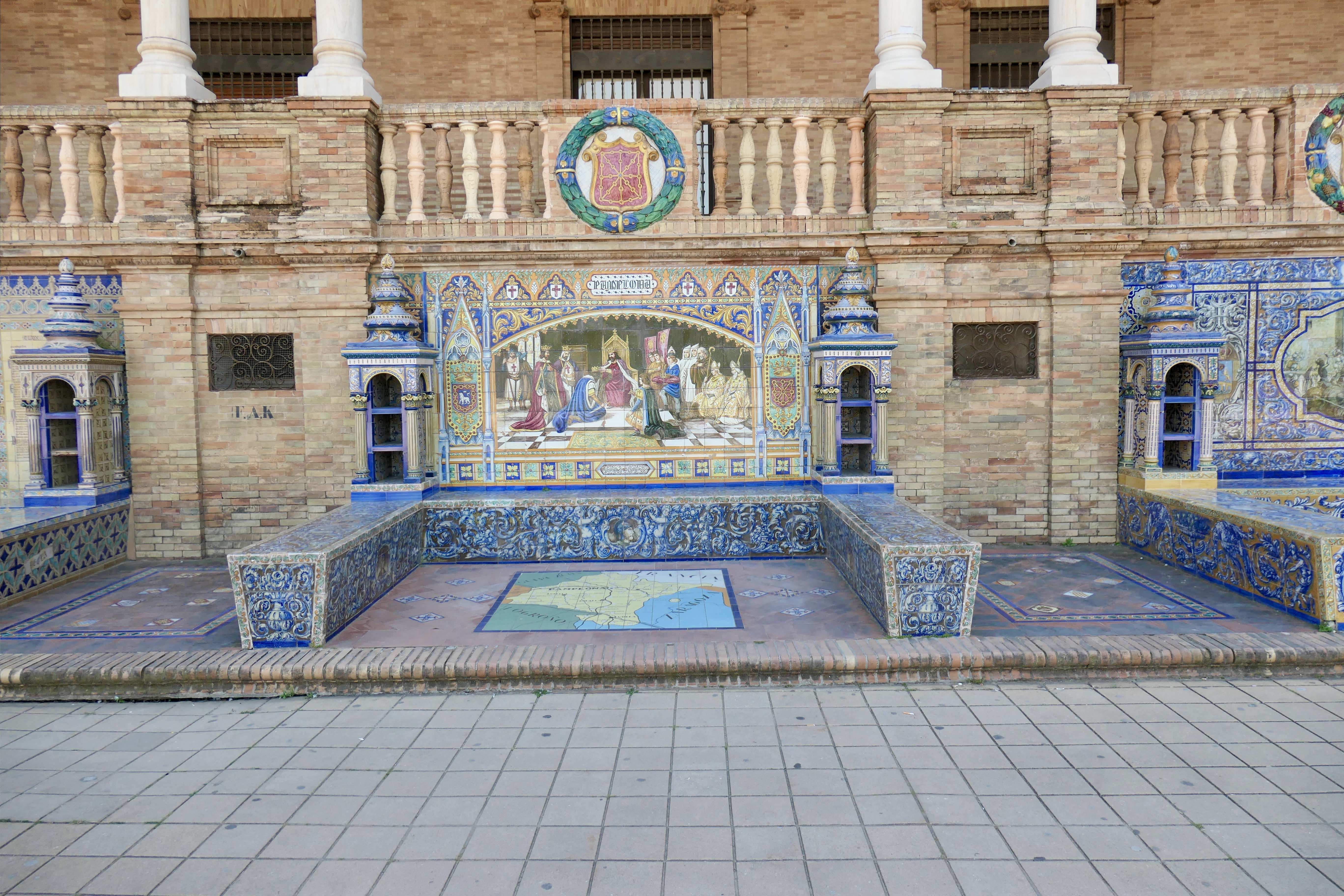
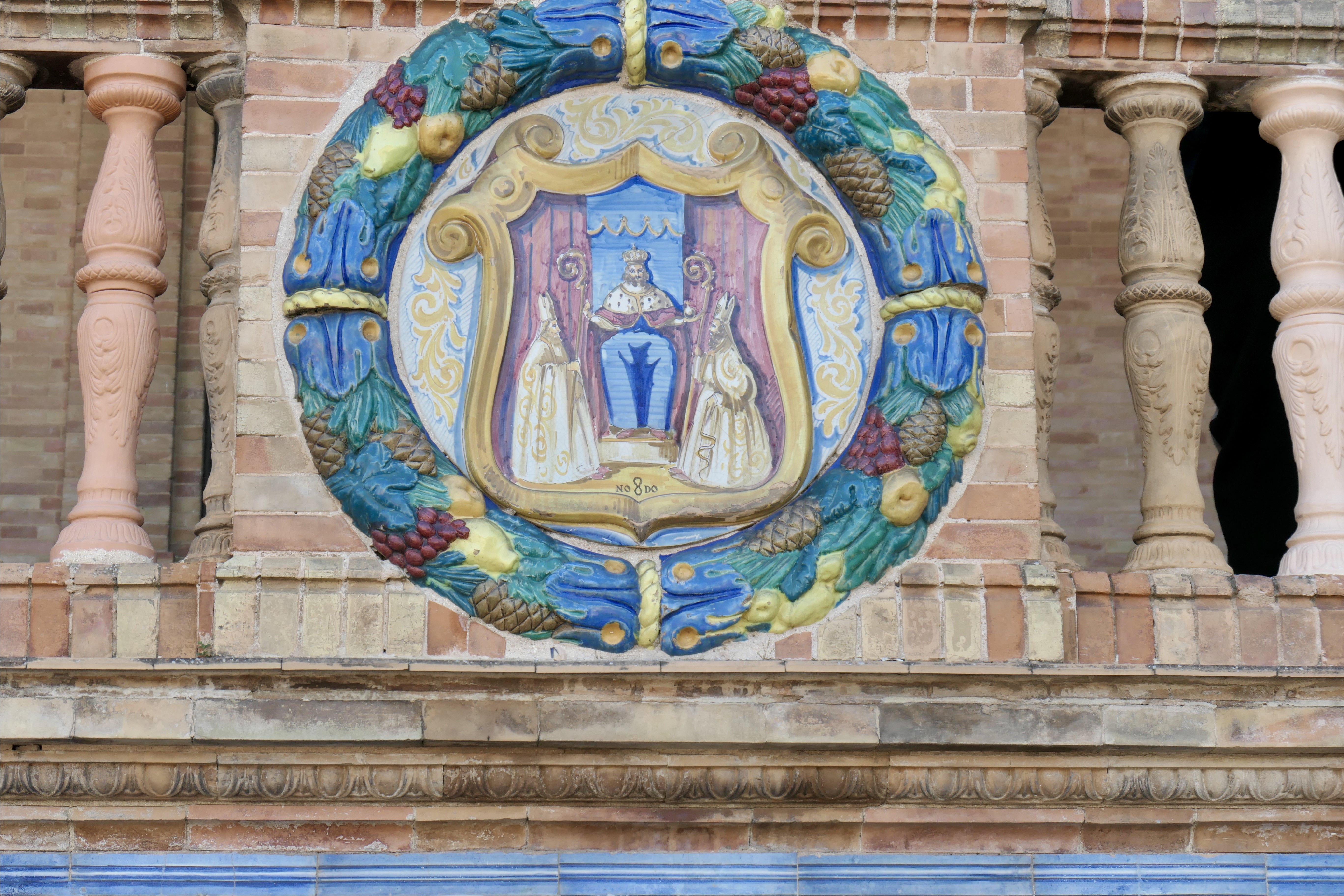
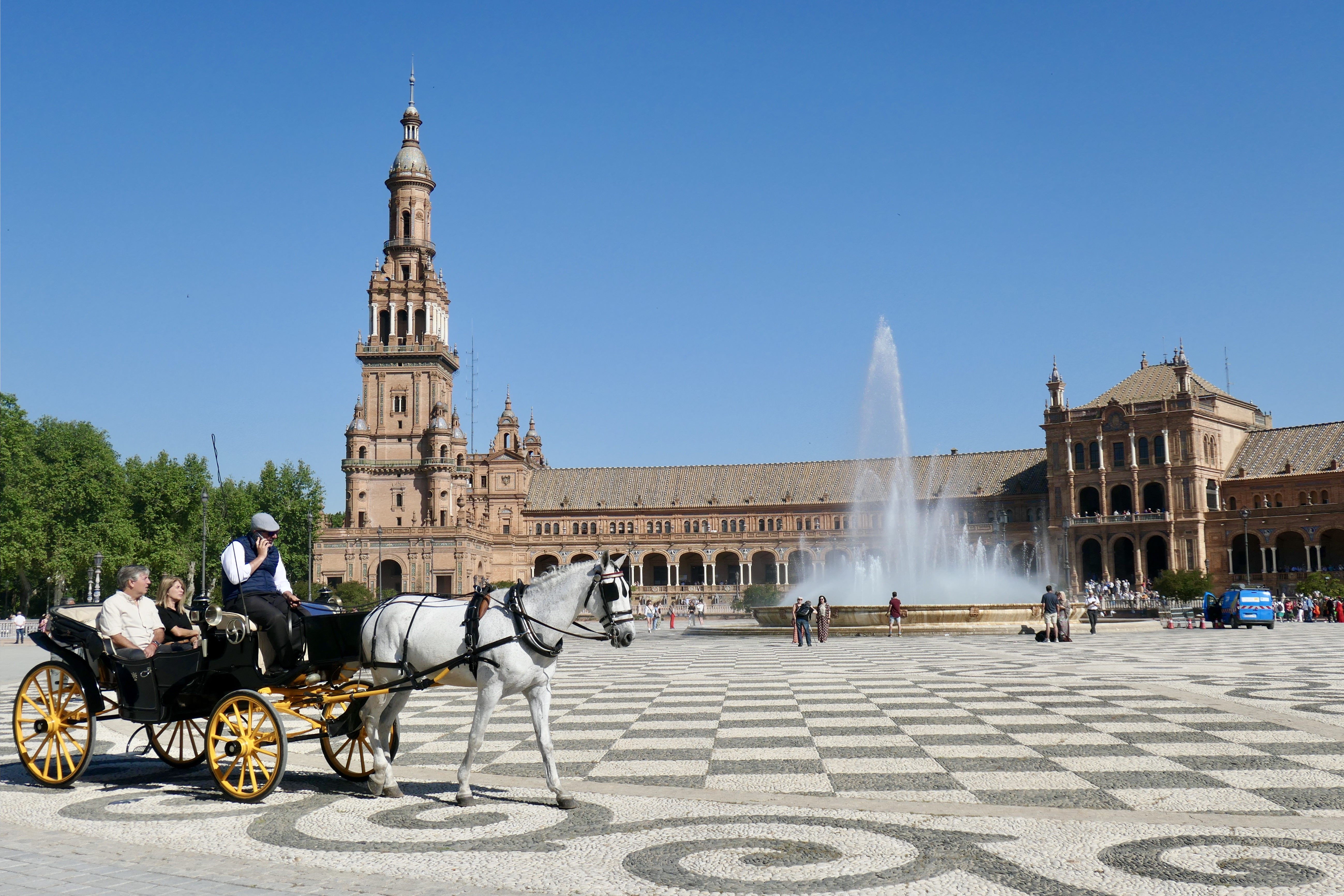
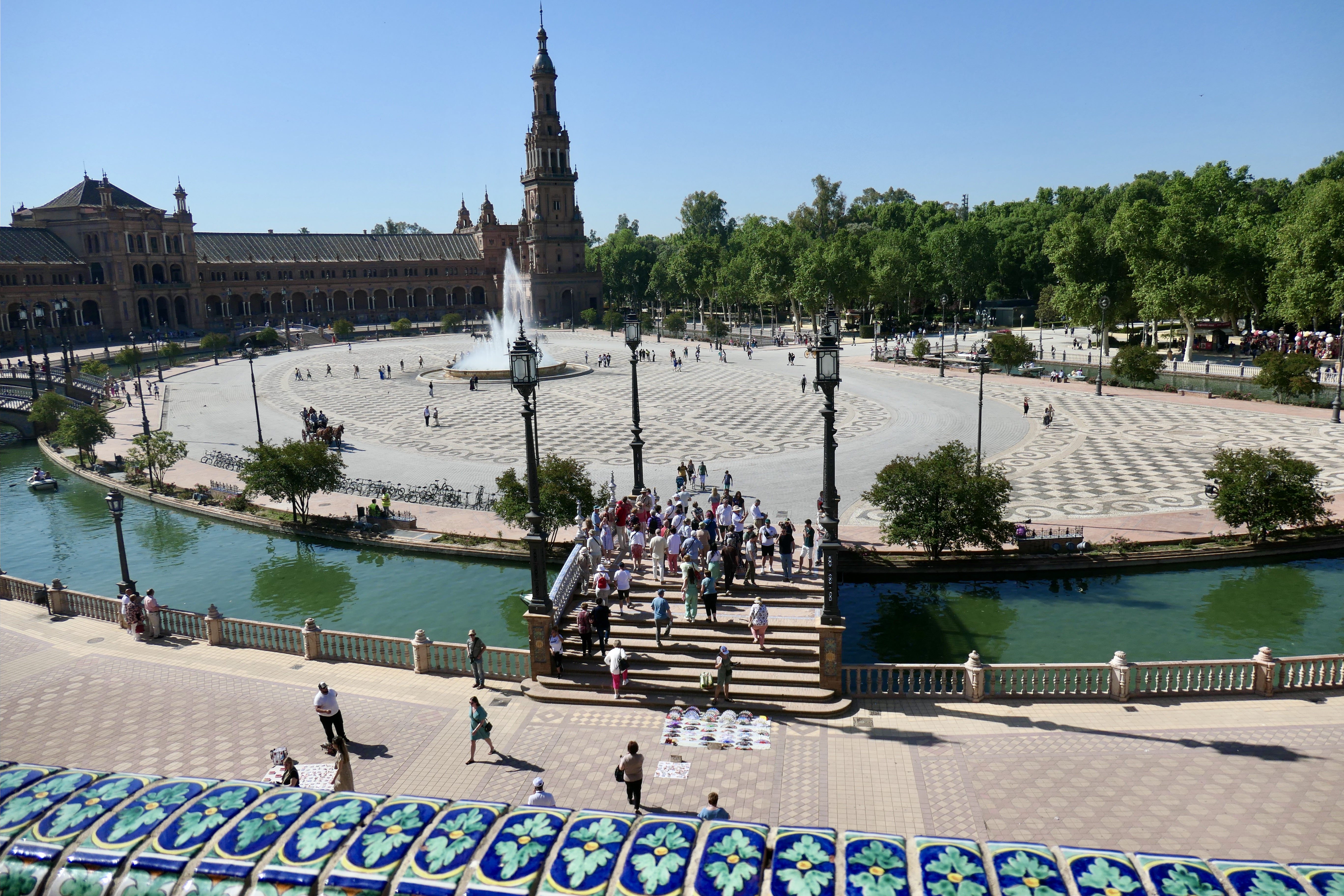
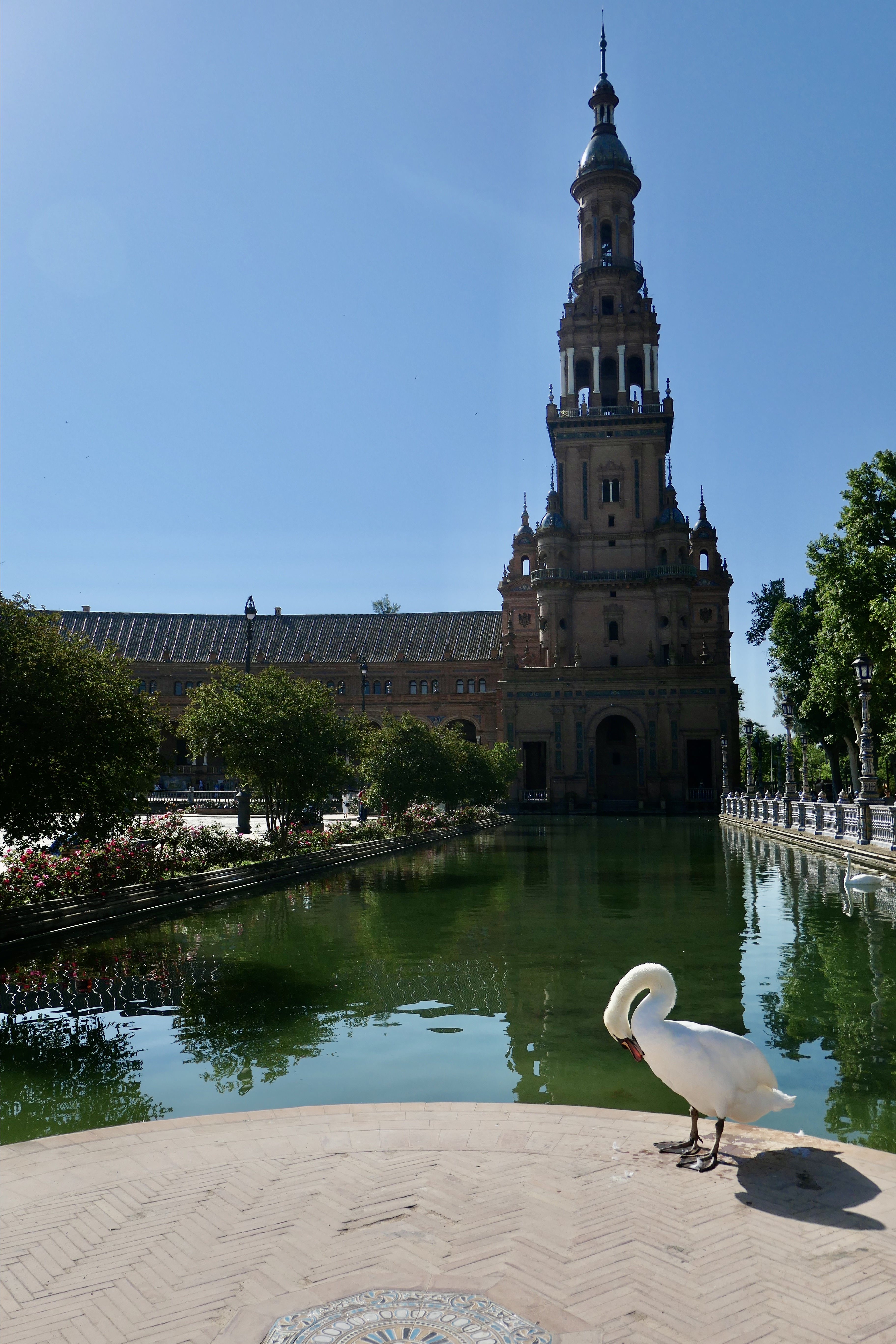
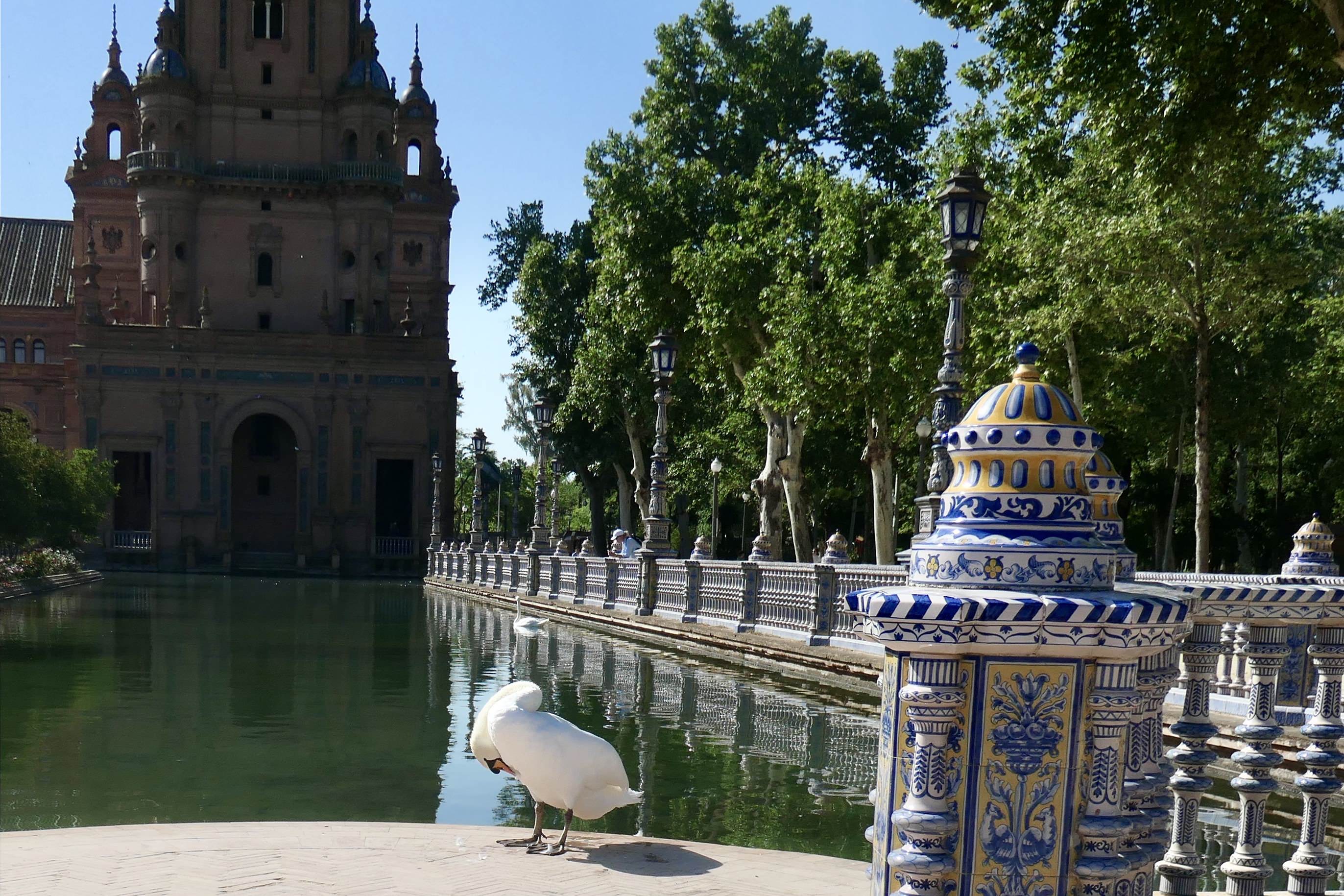
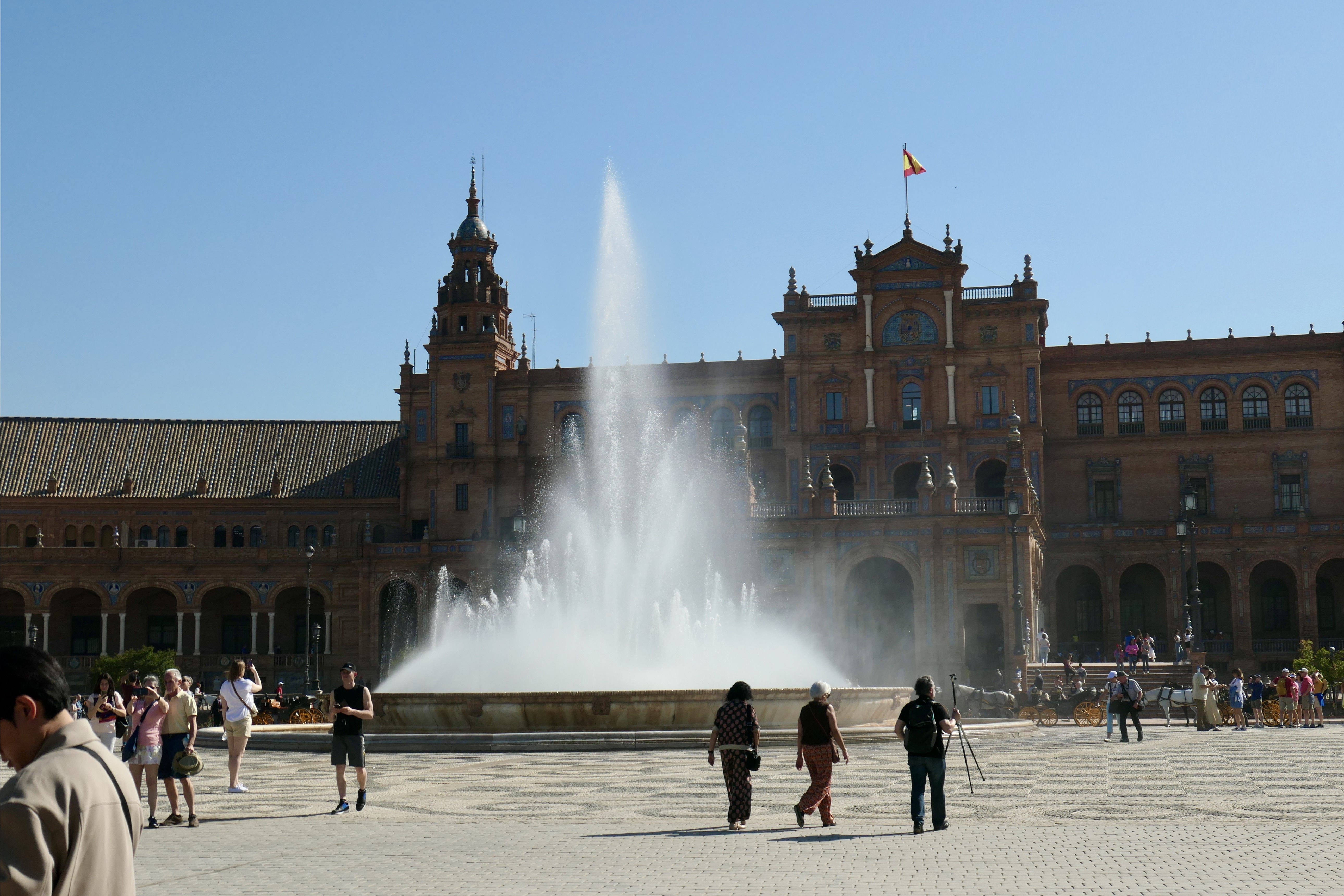
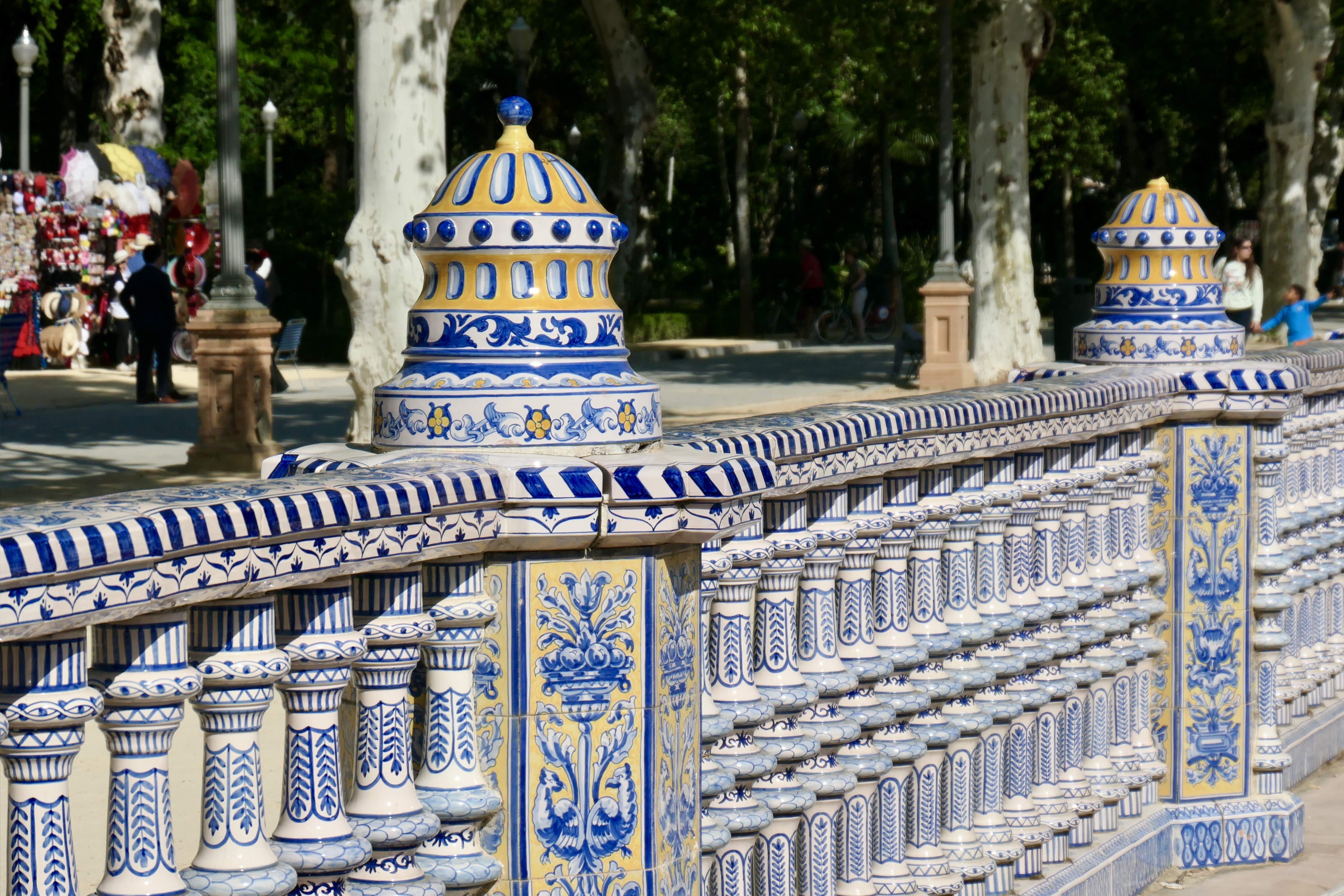
Later, we visited the sweeping Plaza de España, built for the 1929 Exposition. It’s a semicircular masterpiece of brick, marble, and tile—each tiled alcove representing a different province of Spain. The site has cinematic fame, appearing in Star Wars: Attack of the Clones and Lawrence of Arabia. Adjacent lies Parque de María Luisa, Seville’s green heart, gifted to the city by the Duchess of Montpensier. Horse carriages and families filled the shaded paths, a welcome respite from the Andalusian sun.



Lunch at Taberna Belmonte
By lunchtime, we stopped at Taberna Belmonte, a classic Sevillian tavern known for its tapas and local wines. My stomach, however, had other plans—bread was all I could manage. I did take a sip of orange wine, made from Seville’s famously bitter oranges, but couldn’t finish it. The city’s orange trees, which line nearly every street, are more ornamental than edible, but their blossoms perfume the air each spring. Locals use the fruit to make marmalade, liqueurs, and this unique amber-colored wine that tastes faintly sweet, tangy, and floral.
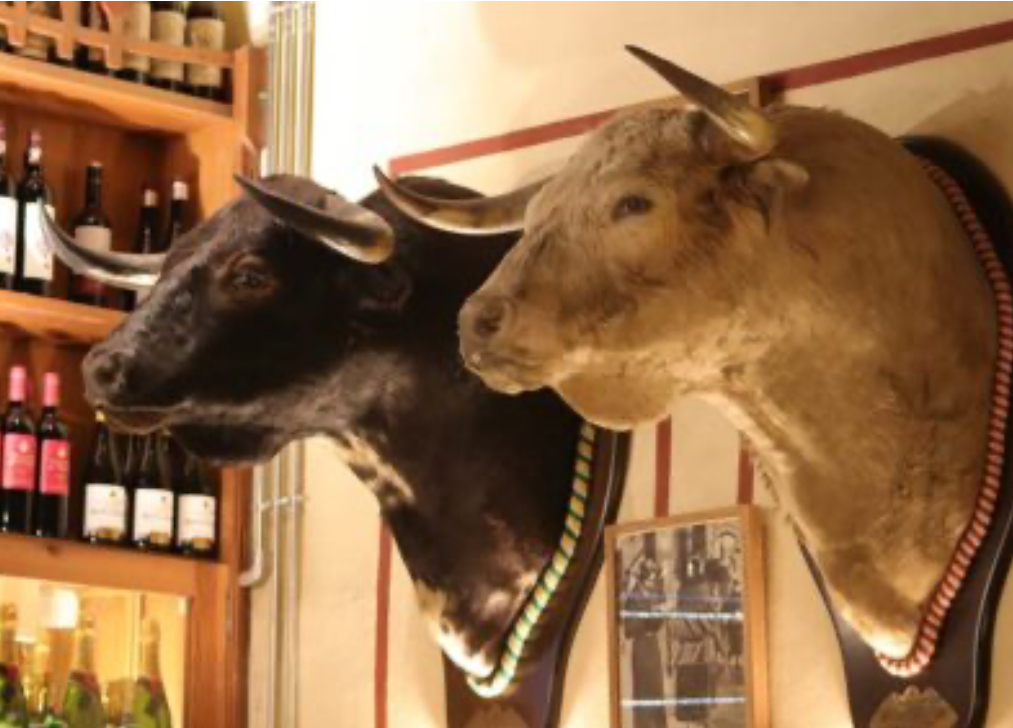
My husband, who is not usually adventurous with food, surprised me by following our guide’s recommendation and ordering exactly what I would have chosen had my stomach been up for it—rabo de toro (oxtail stew), a slow-cooked Andalusian specialty he later described as “rich, tender, and perfect.” We sat under dark wooden beams at a table that felt like a piece of history, surrounded by the tavern’s trophies of tradition. Massive bull heads adorned the walls, their glass eyes seeming to watch over every diner—a vivid reminder of Seville’s centuries-old ties to bullfighting.
Bullfighting in Seville
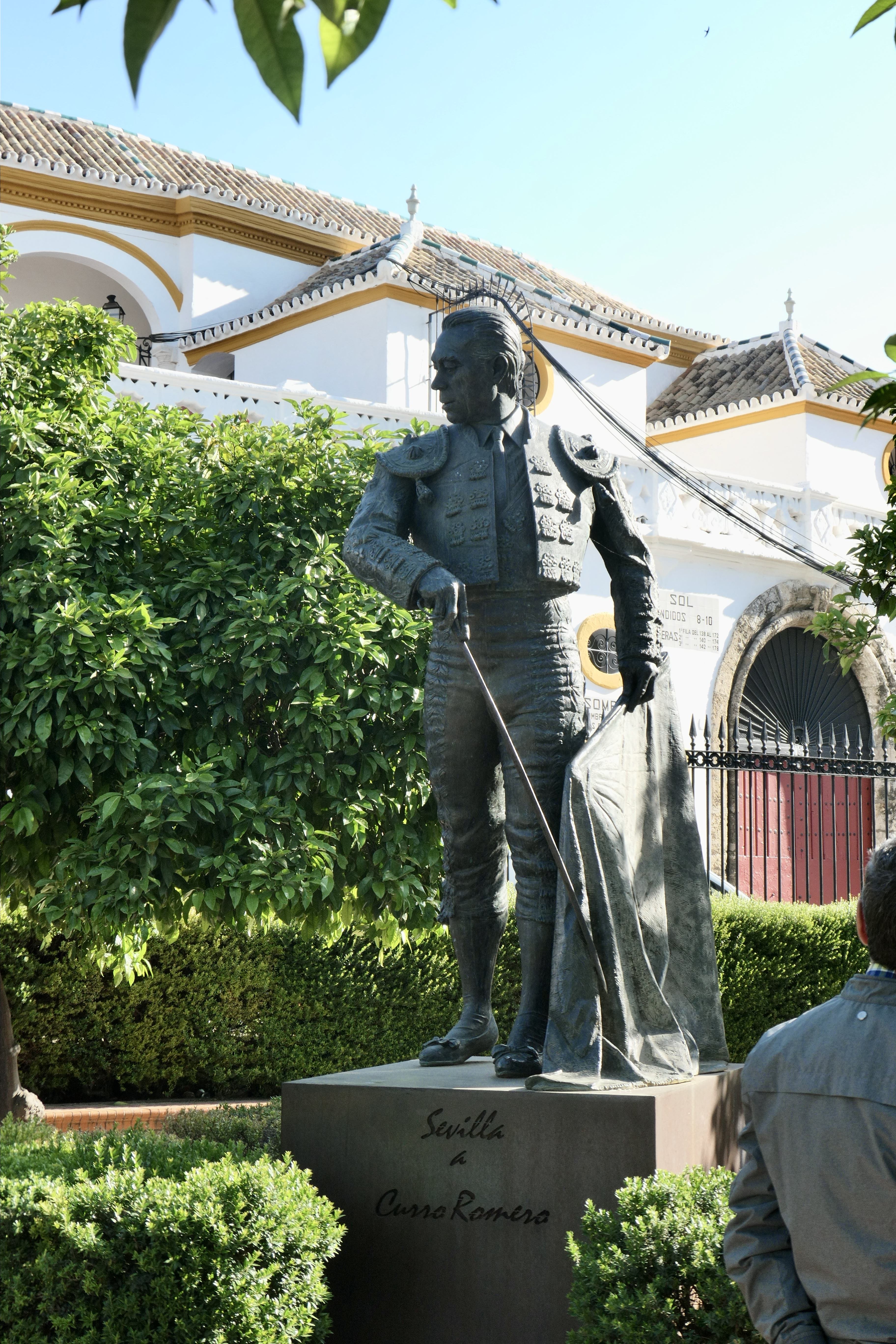
Although we didn’t have time to attend one, Seville remains one of the few cities in Spain where bullfighting still takes place. The Plaza de Toros de la Maestranza, with its white and yellow Baroque façade, is among the oldest bullrings in the country and deeply tied to local tradition. Whether one sees it as art or controversy, it’s an undeniable part of Andalusian heritage. For us, with only a short stay, we chose to appreciate the history rather than attend a fight.

Museo del Baile Flamenco (Skipped)
We’d planned to end the day at the Museo del Baile Flamenco, created by the celebrated dancer Cristina Hoyos. The museum showcases the origins and artistry of flamenco—the soulful dance born from Andalusian, Moorish, and Romani influences. There’s no better place to witness it than Seville, where every stomp and swirl feels like a heartbeat of the city. Unfortunately, the day’s heat and my stomach won the battle, so we had to skip the show—but it’s high on my list for our next visit.
Reflections on Seville
Even with a few health hiccups, Seville cast its spell on us. It’s a city that feels alive in every sense—its scent of orange blossoms, its music spilling from courtyards, its golden light bouncing off cathedral spires. There’s an energy here that’s both timeless and joyful, and by the time we boarded our train to Barcelona, I knew this would be a place I’d never forget.

 Click, Wander & Savor