A Scenic Drive from Porto to Lisbon: Stripes, Surf, and Stone Walls
After a few magical days in Porto, we hopped in our rental car and set off for Lisbon. We could have zipped down the A1 in two and a half hours, but we wanted something different — a slower route that let us explore the smaller towns and hidden gems along Portugal’s coast.
The drive felt wonderfully off the beaten path — stretches of open countryside, grassy expanses, and the occasional old farmhouse leaning in the breeze. The highways were immaculate (no potholes in sight — a rarity compared to home!). Everything went smoothly until our first stop for gas, which turned into a comedy of errors. Directions weren’t in English, the pump refused our card, and we stood there laughing at our own confusion — one of those little travel moments that becomes a favorite story later.
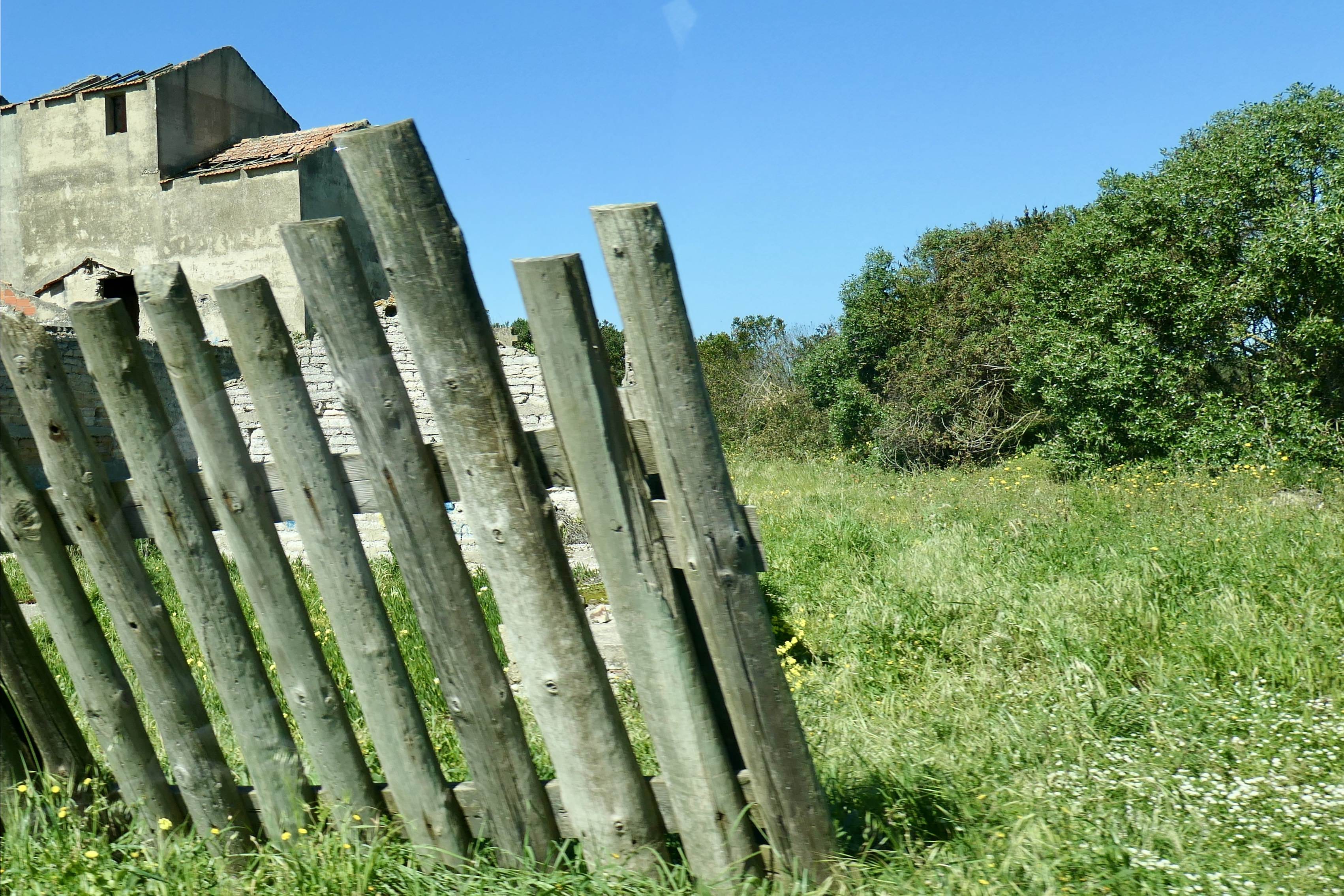
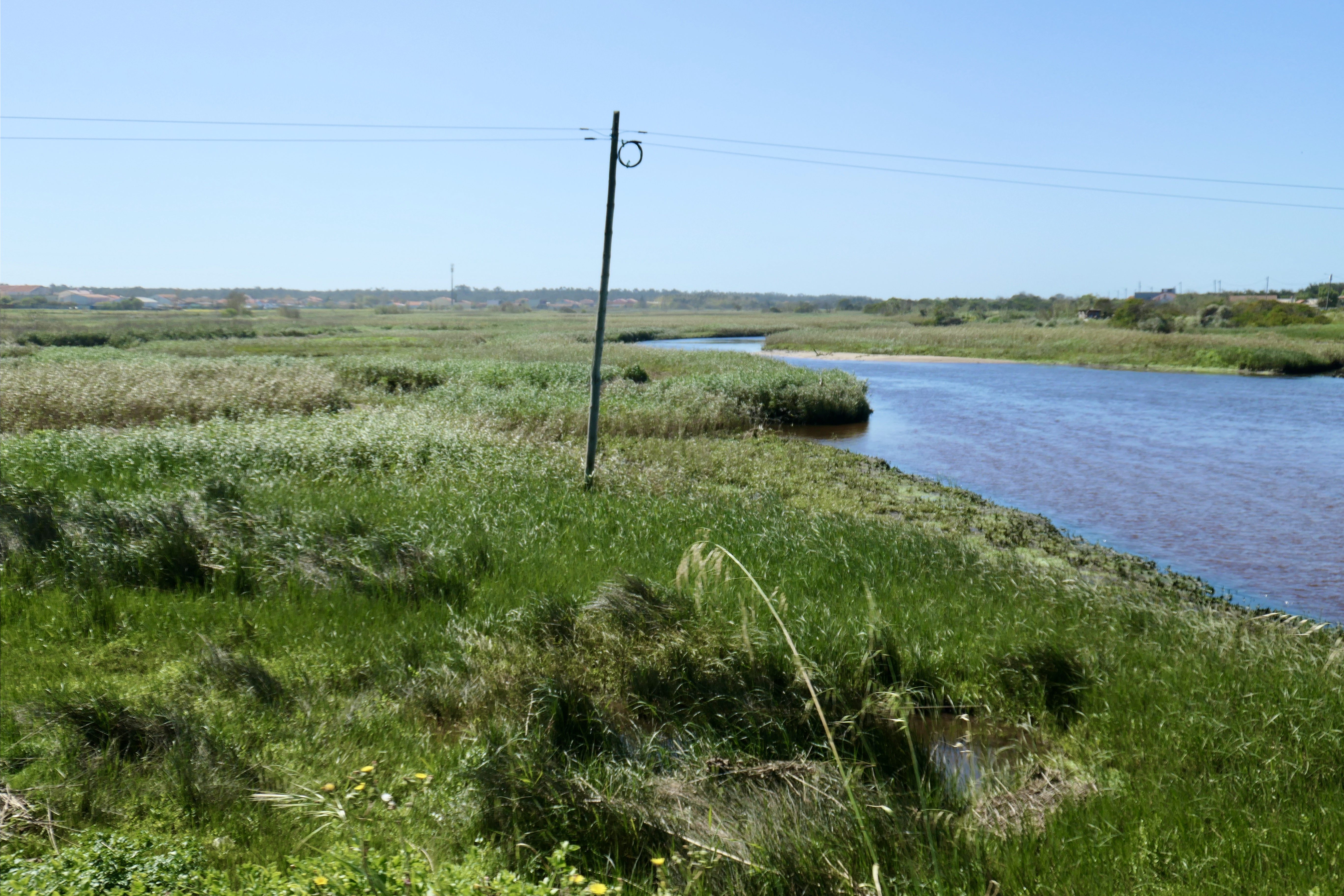
Portugal countryside just outside Costa Nova
Stop 1: Costa Nova – The Town of Stripes
The colorful striped “palheiros” of Costa Nova, painted in red, blue, yellow, and green hues along the quiet promenade.


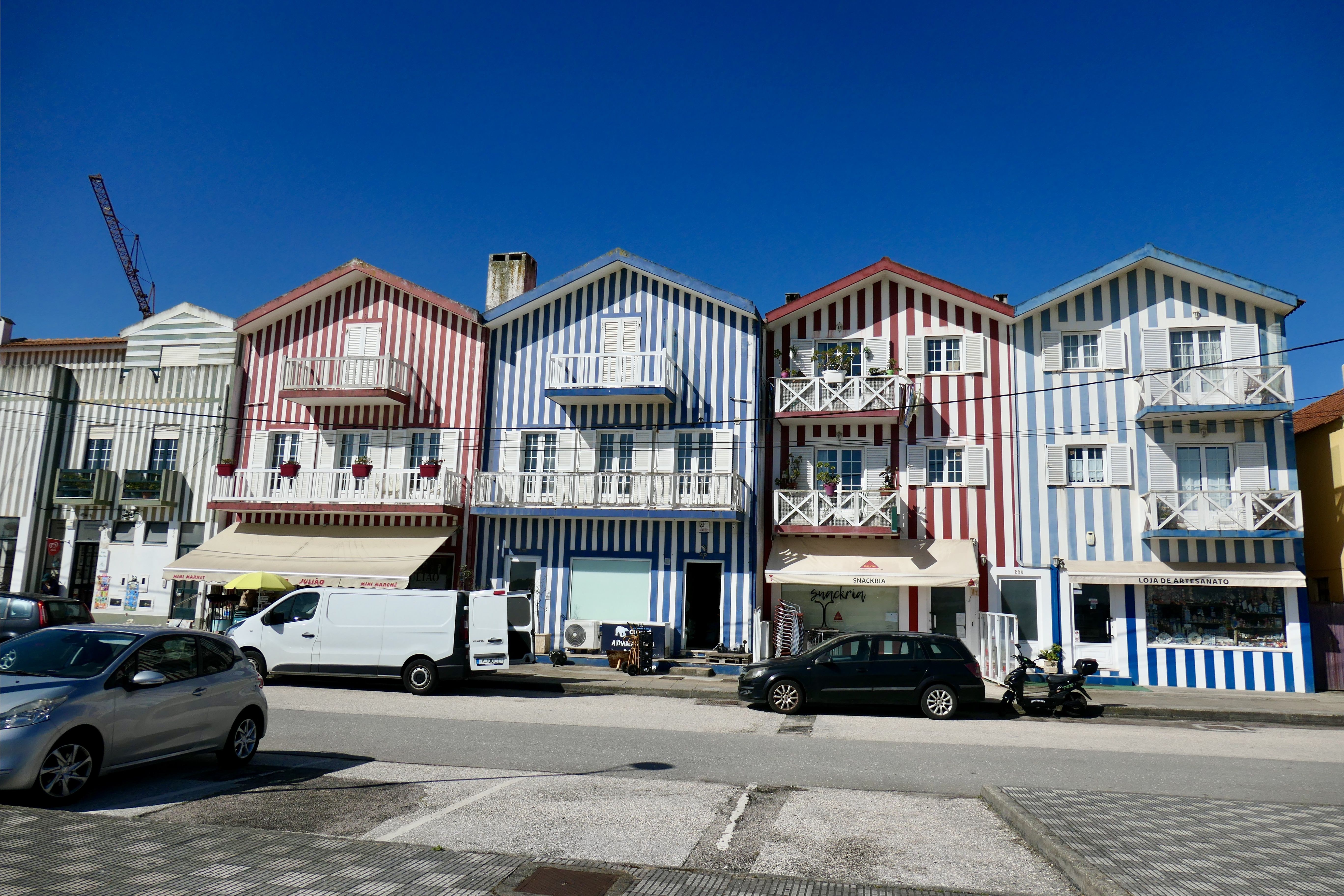

Colorful palheiros
Just south of Aveiro, the quiet seaside town of Costa Nova welcomed us with its famous palheiros — cheerful beach houses painted in candy-colored stripes. Once used by fishermen to store nets, these wooden houses became brightly painted over time, turning the town into one of Portugal’s most photogenic spots.
In April, it was blissfully quiet — a handful of locals, a salty breeze off the Atlantic, and the sound of seagulls echoing through empty streets. My husband thought I’d lost my mind detouring here just to find “striped houses,” but once we arrived, even he admitted it was worth it.
We wandered past the cottages, then followed a sandy path to the dunes.
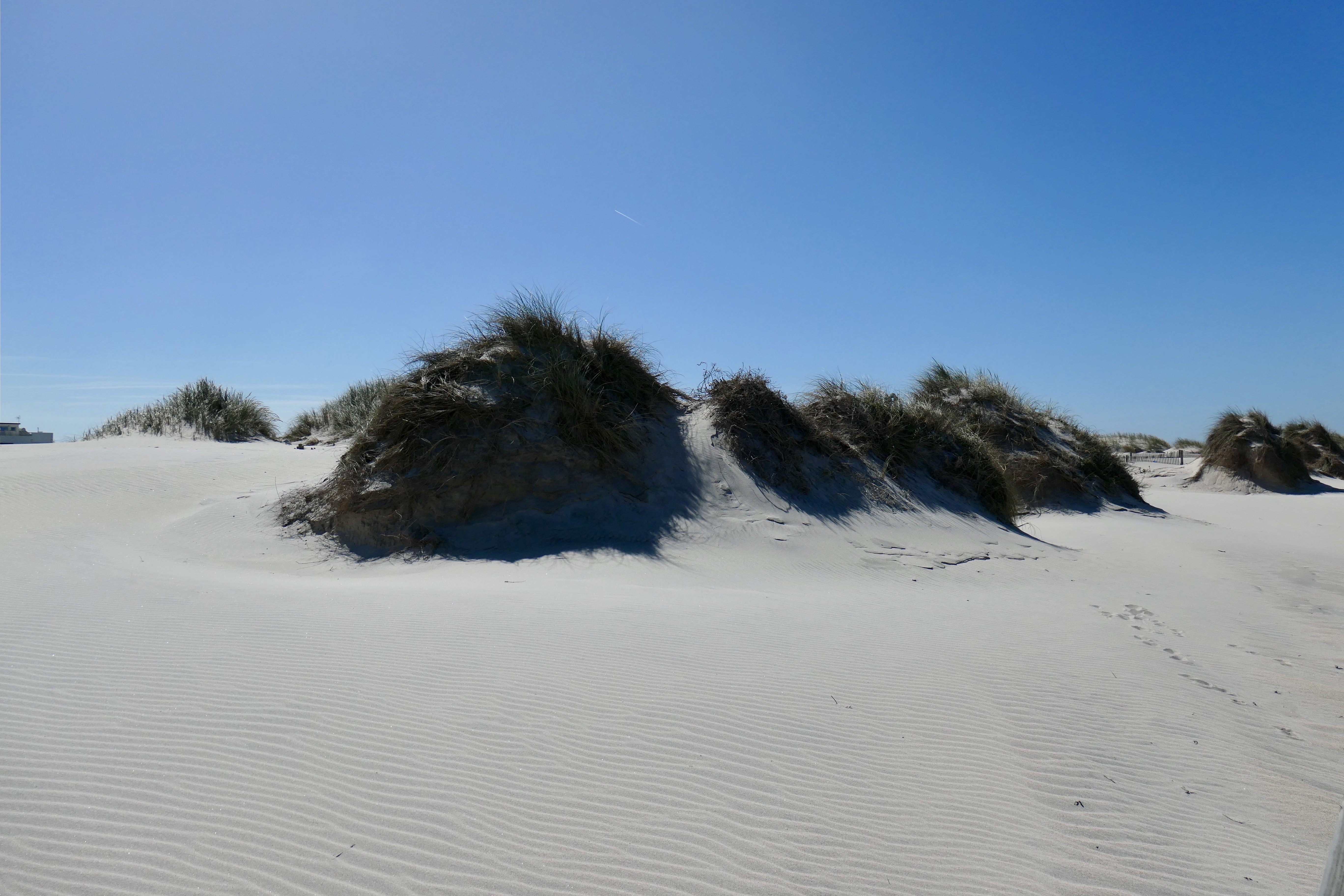
Wind-sculpted sand dunes leading to Costa Nova’s small seaside church
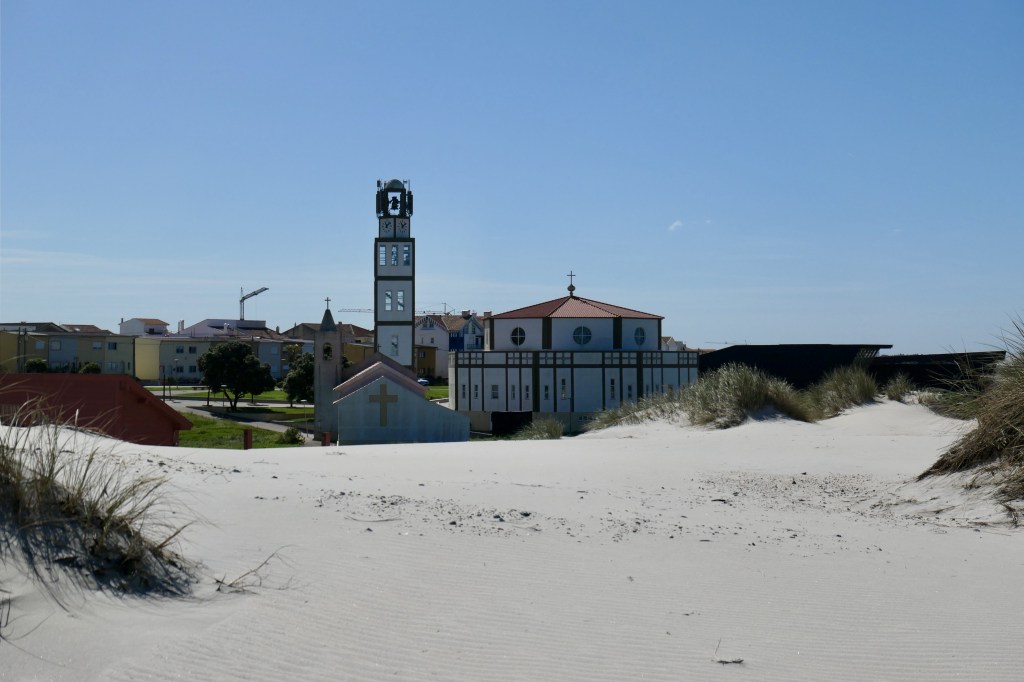
View back toward the modern church framed by dunes and blue sky
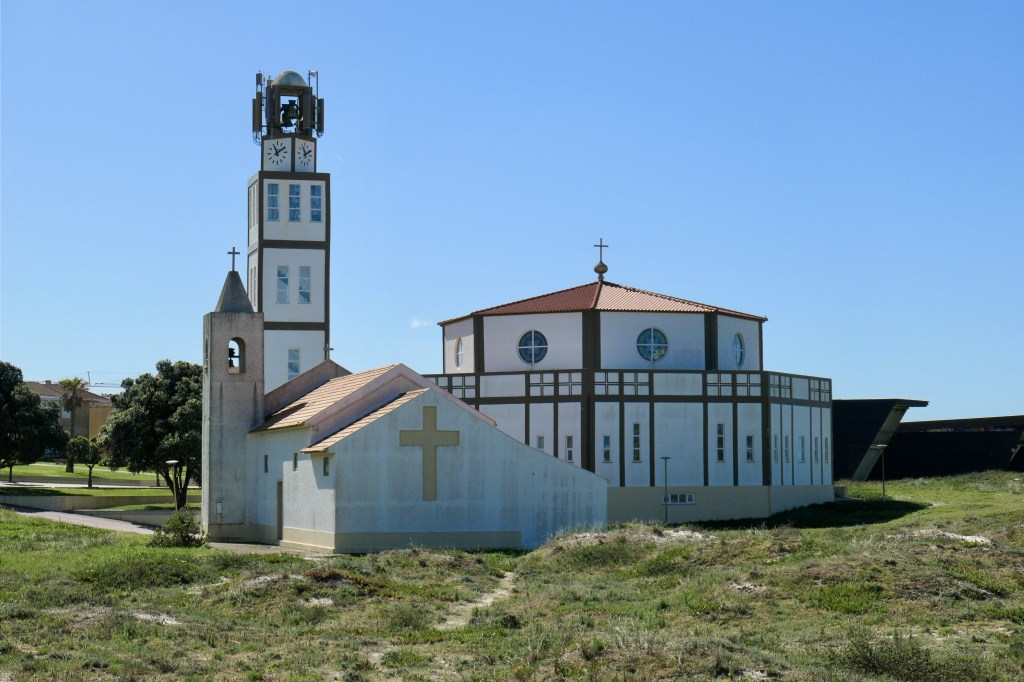
Igreja Matriz da Costa Nova
The beach felt almost untouched — just wind patterns in the sand and the church bell tower peeking above the dunes, its cross catching the afternoon light.
Stop 2: Nazaré – The Town of Giant Waves
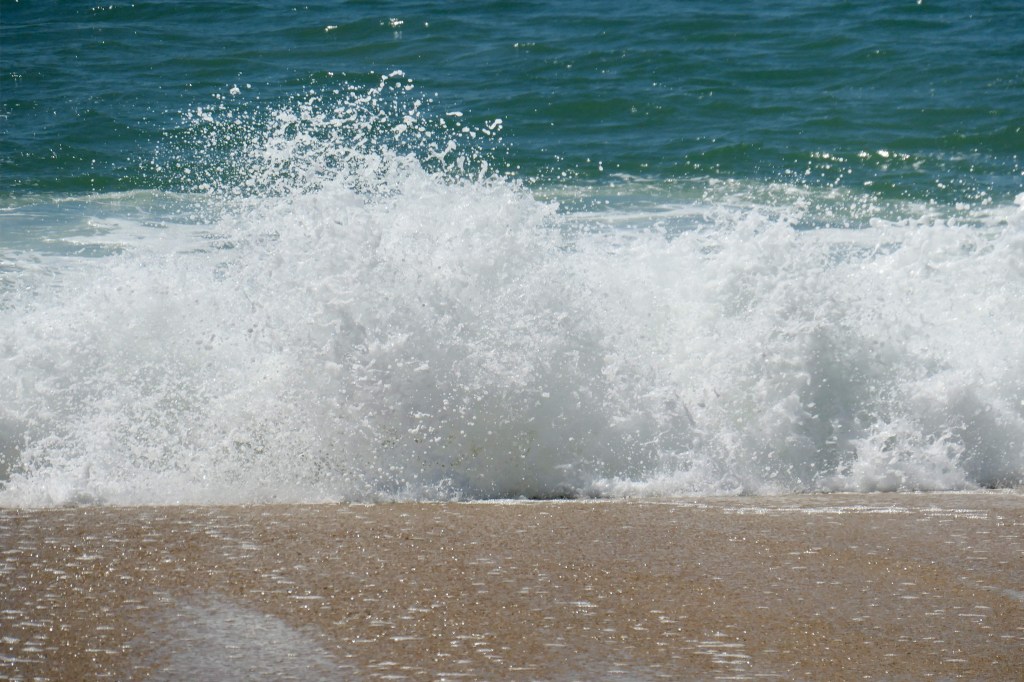
Powerful Atlantic surf rolling onto Nazaré’s wide golden beach
From Costa Nova, we continued south to Nazaré, a fishing village turned surf capital famous for some of the largest waves on Earth. The record breakers — occasionally topping 80 feet — form thanks to the Nazaré Canyon, a deep submarine gorge that funnels Atlantic energy directly toward the shore.
In April, the sea was gentler, but the waves still thundered with power.
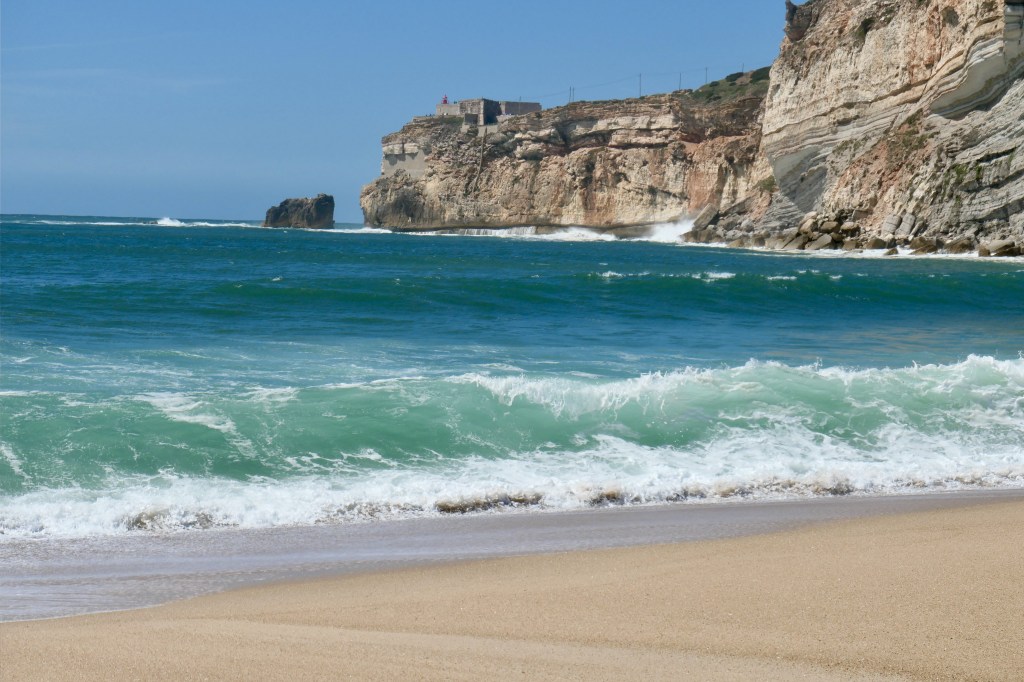
View toward the cliff topped by the red-roofed Forte de São Miguel Arcanjo lighthouse.
We didn’t take the Nazaré Funicular, but it’s impossible to miss — two small blue cars shuttling up and down the steep hillside. Built in 1889, it connects the beachfront district of Praia da Nazaré with the clifftop neighborhood of Sítio, climbing a 42-percent grade in just a few minutes. The ride offers sweeping views of the town and the Atlantic, ending near the Sanctuary of Our Lady of Nazaré, a pilgrimage site tied to a 12th-century legend in which the Virgin Mary saved a nobleman and his horse from plunging over the cliffs.
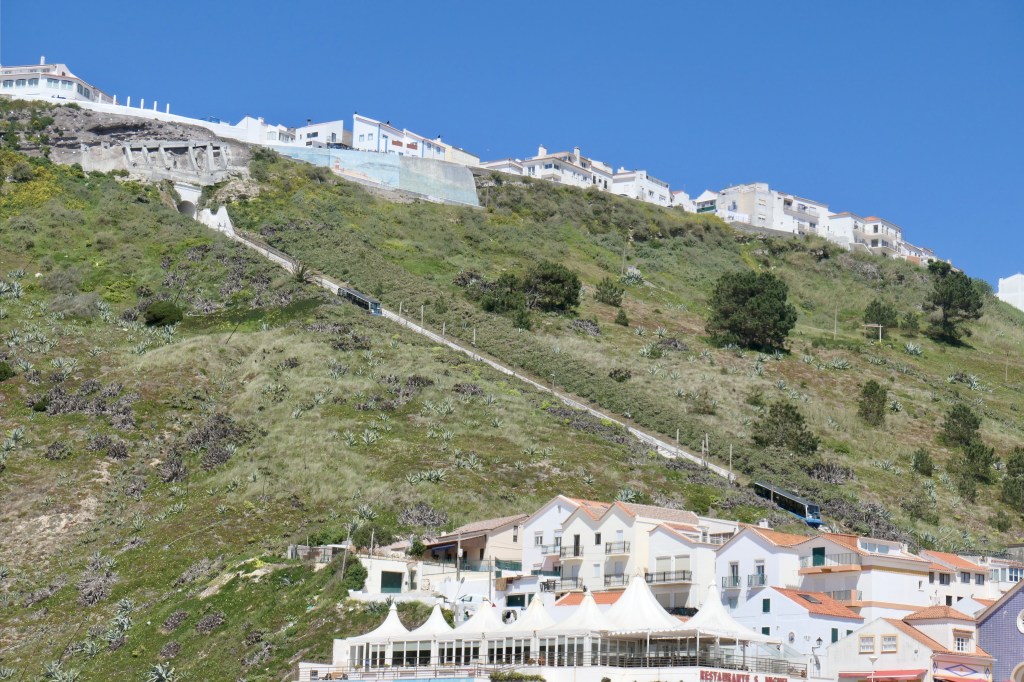
The funicular line climbing the hillside between Praia da Nazaré and Sítio.
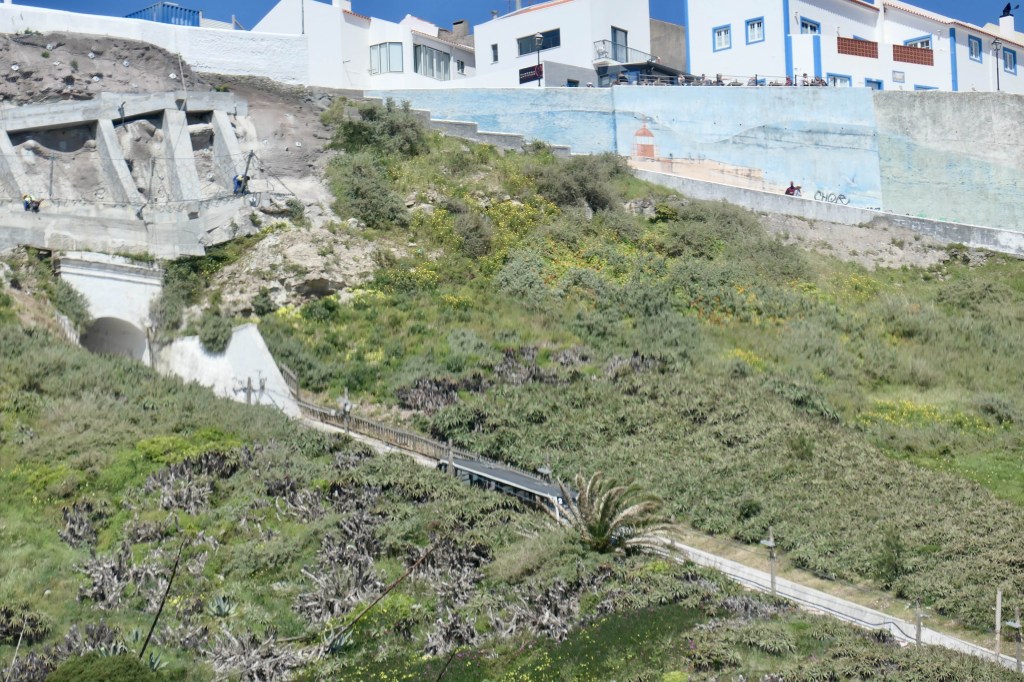
Closer view of the upper tunnel where the funicular disappears into the cliff.
We stopped for lunch instead at Restaurante Tabernassa, just steps from the beach.
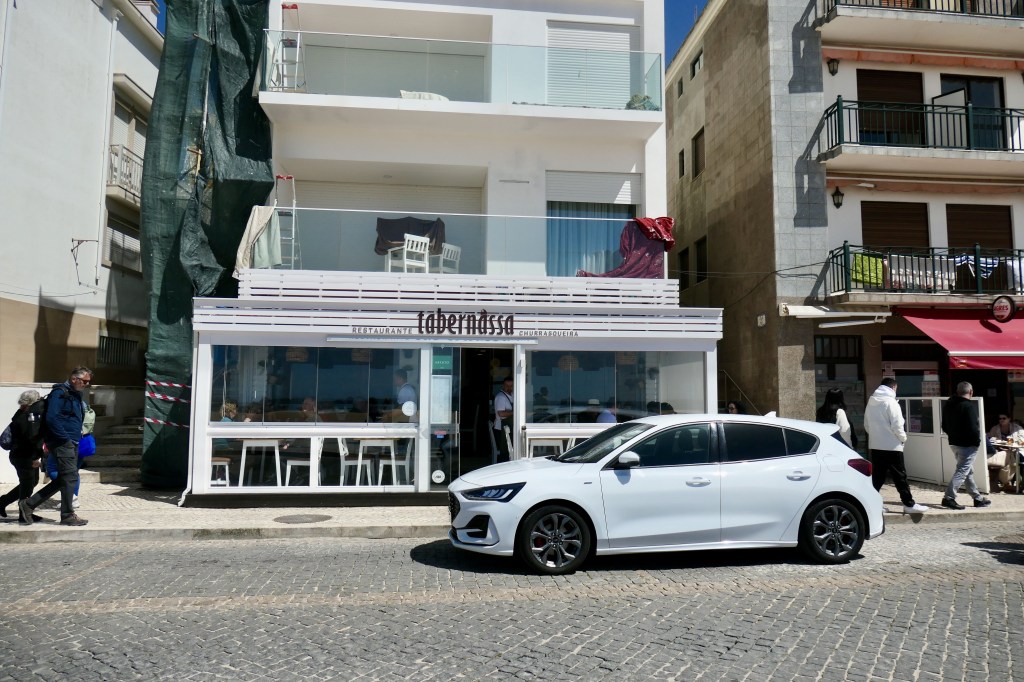
Facade of Restaurante Tabernassa near Praia da Nazaré
The setting was casual but the food was excellent — freshly grilled fish, crisp fries, and refreshing ice water. It was one of those simple meals that perfectly fit its surroundings: sun on our faces, salt in the air, and the Atlantic stretching endlessly ahead.
Stop 3 – Obidos – A Medieval Gem
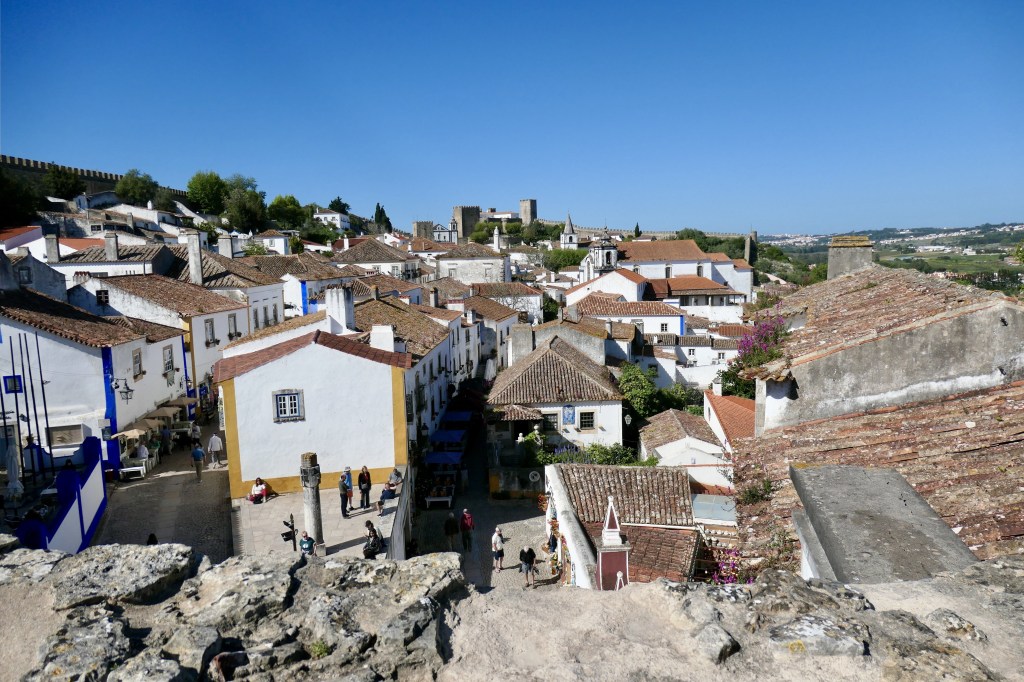
Looking across the rooftops of Óbidos toward its castle and surrounding walls
Our final stop before Lisbon was Óbidos, a storybook-perfect walled village that dates back to Roman times and was gifted by King Dinis to his queen in the 13th century — earning it the nickname “the Village of Queens.”
Passing through the stone archway felt like stepping back in time.

Entering Óbidos through one of its arched medieval gates
We wandered cobblestone lanes between whitewashed houses trimmed in blue and yellow, the castle rising above.
Inside small shops, bottles of Ginjinha d’Óbidos lined the shelves — a cherry liqueur traditionally served in a chocolate cup.



Glass jugs of ginjinha steeping with cherries inside local shops
We’d visited Dubrovnik before, but Óbidos felt like its quieter cousin — intimate, easy to explore, and endlessly photogenic. Next time, I’d love to stay overnight at one of the bed-and-breakfasts inside the medieval walls, to experience the calm once the day-trippers leave and the lanterns glow against stone streets.
Final Reflections
Driving from Porto to Lisbon gave us freedom to stop wherever curiosity led — from windswept dunes and fishing villages to fortress towns frozen in time. It was an easy and scenic journey, with smooth highways and little traffic in April.
Each stop — Costa Nova, Nazaré, and Óbidos — revealed a different side of Portugal: color, coastline, and culture. By the time we reached Lisbon that evening, it felt like we’d already explored half the country’s soul along the way.
Planning Your Trip
If you’d like to follow the same path, the drive covers roughly 310 kilometers (190 miles).
- Costa Nova – about 1 hour south of Porto via the A1 and A25.
- Nazaré – 2 hours farther along the A17, hugging the coast.
- Óbidos – 45 minutes inland via IC9 before continuing to Lisbon.
Each town has easy parking and is perfect for a few hours of wandering.
 Click, Wander & Savor