A Day in Volos
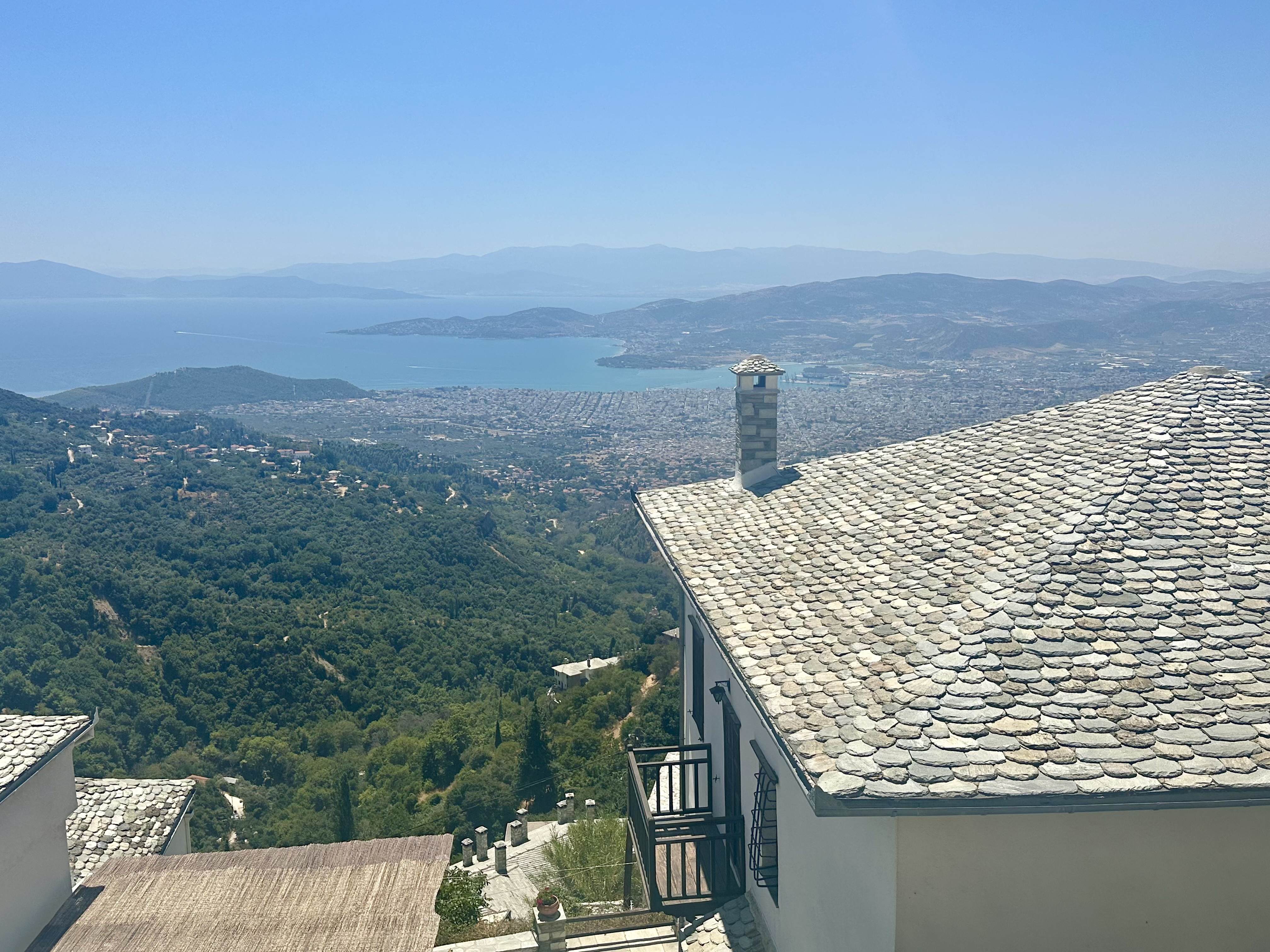
From Athens we boarded a cruise ship for Volos — our first stop before heading for some of the world-renowned Greek islands. Volos is a coastal city in Thessaly, in central Greece, nestled at the foot of Mt Pelion and along the Pagasitic Gulf. It blends maritime life, mountain air, and mythic history.
Morning in Volos: Bakeries, Harbor, and Quiet Beauty
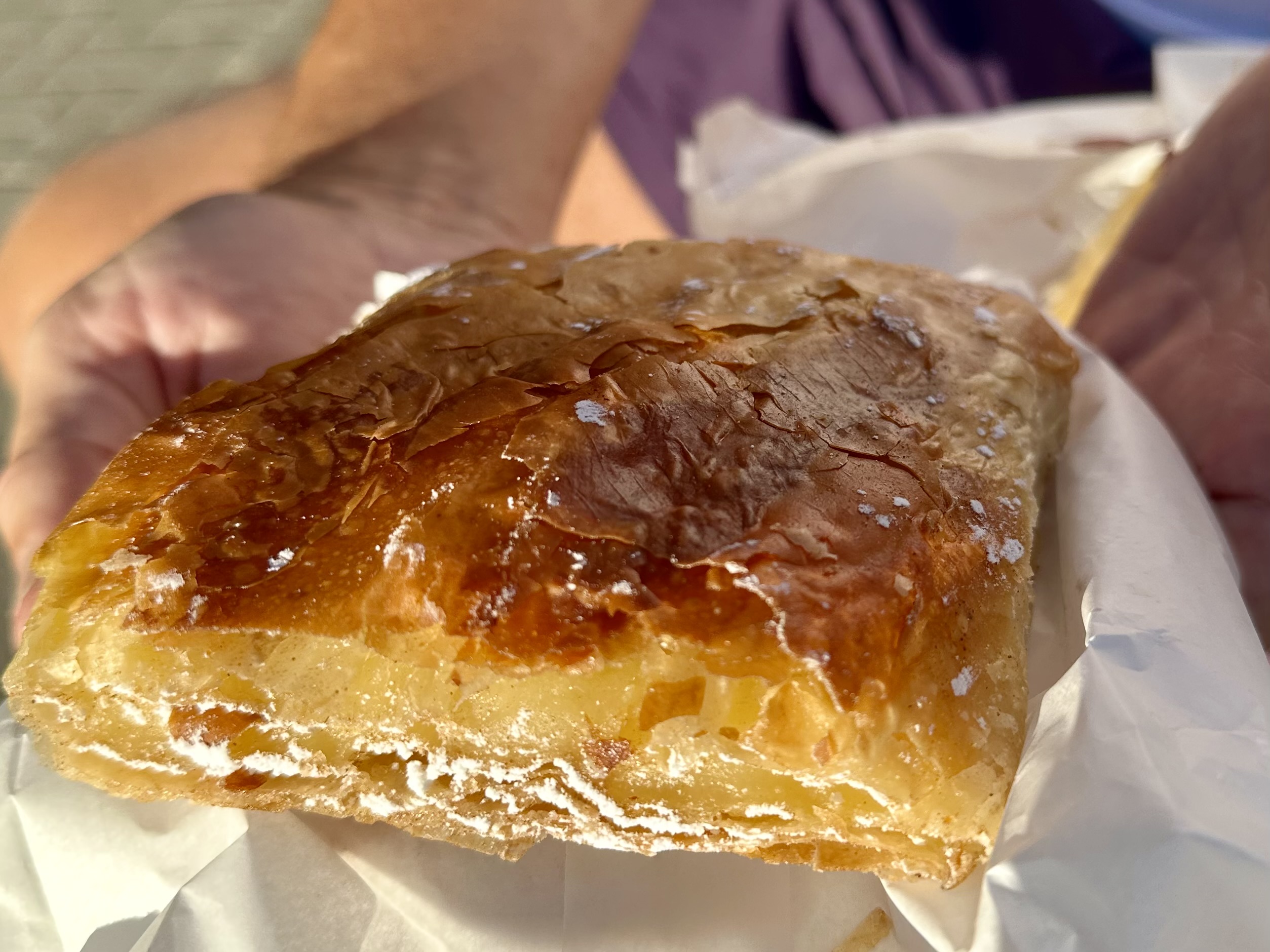
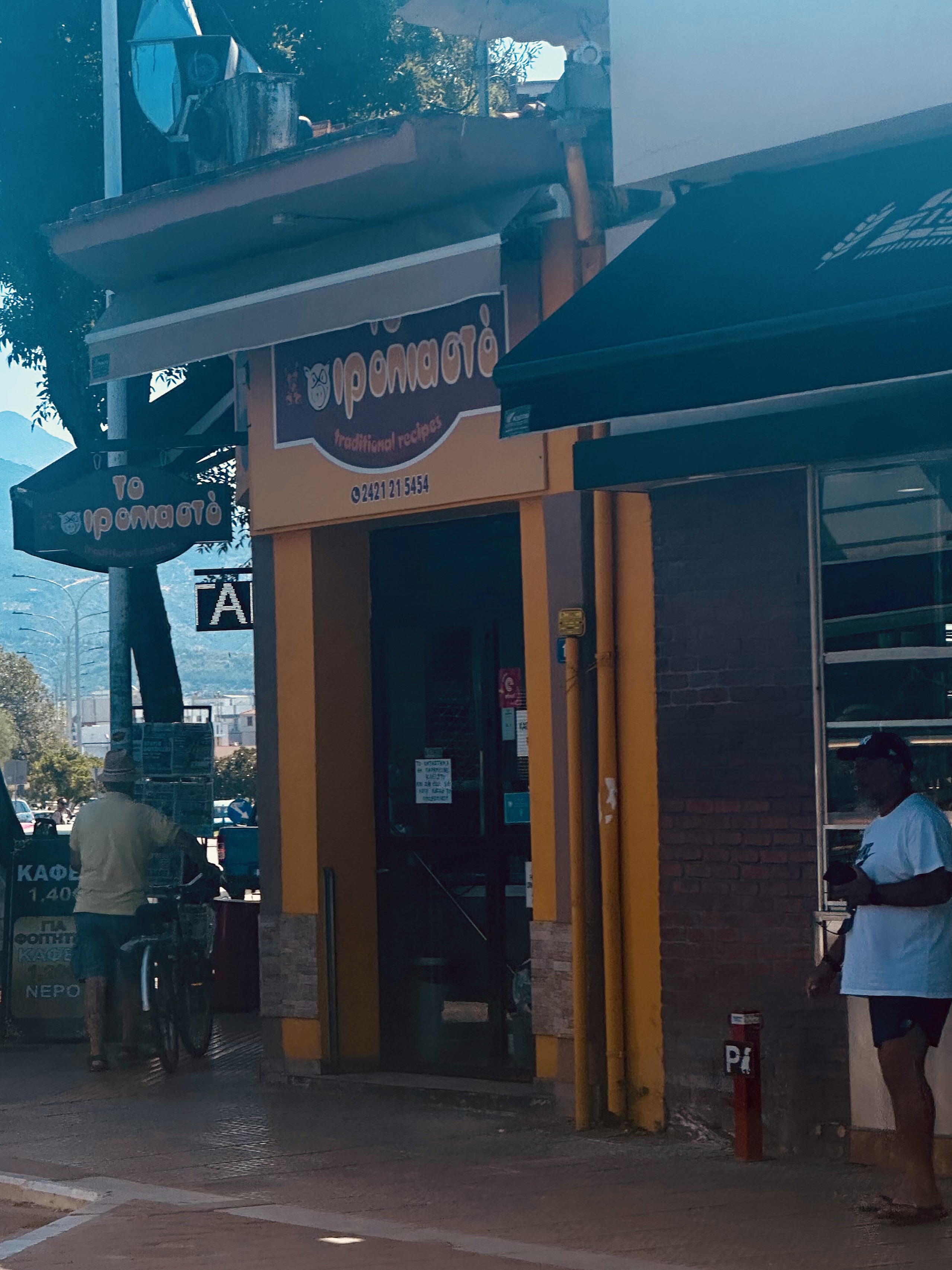
We arrived in Volos early, eager to soak up something local. I’d scoped out Palaios Fournos bakery: our first stop. We ordered bougatsa (flaky, sweet/custardy filling) and strong Greek coffee. We found a park bench, unwrapped the pastry, and watched Volos wake up.
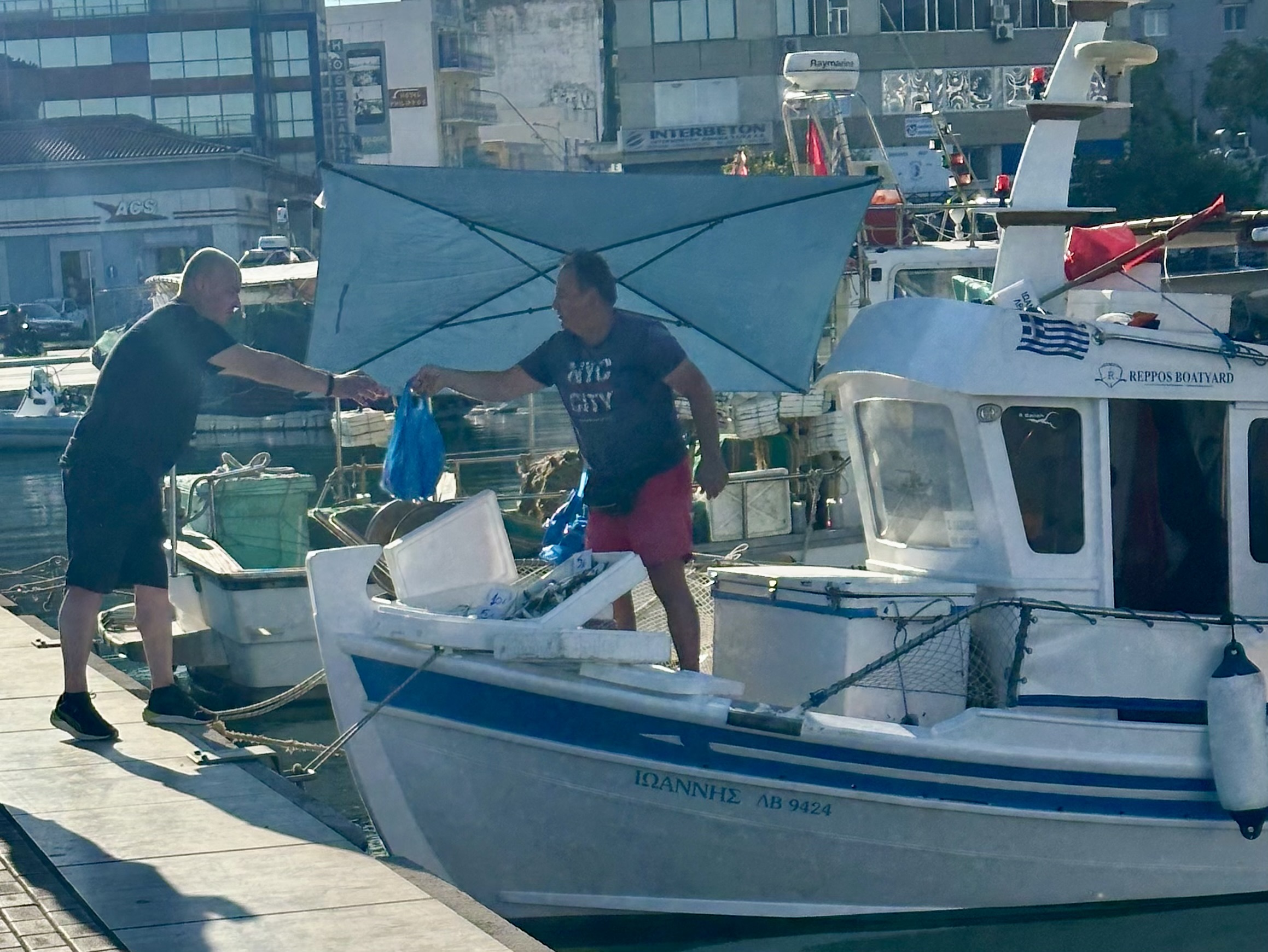
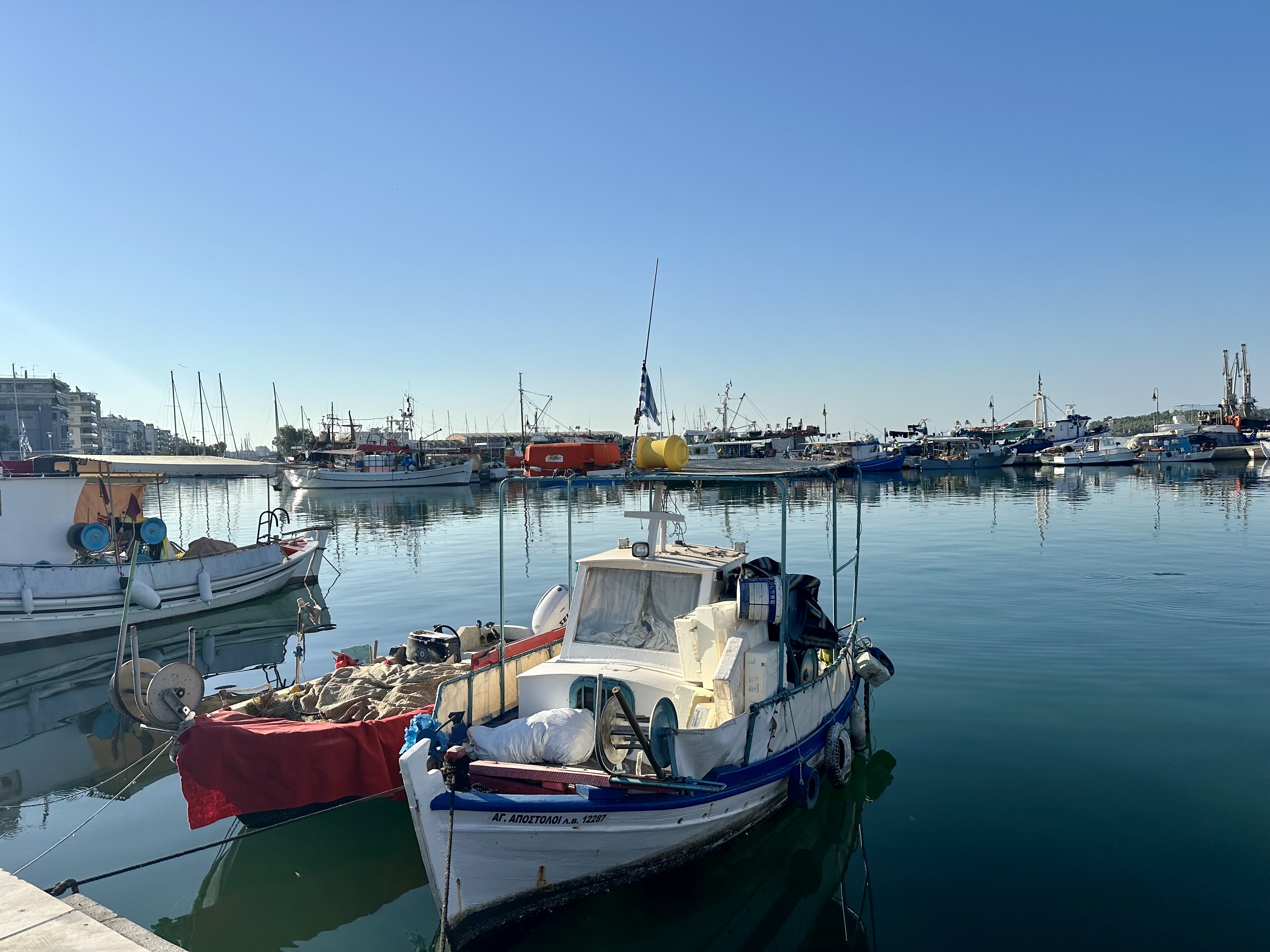
After breakfast we wandered toward the harbor. Fishermen had just pulled in; small boats showed off the day’s catch, nets draped, fish shimmering and for sale – it doesn’t get much fresher than that!. We strolled by the water, breathed in salt air and sea breeze.

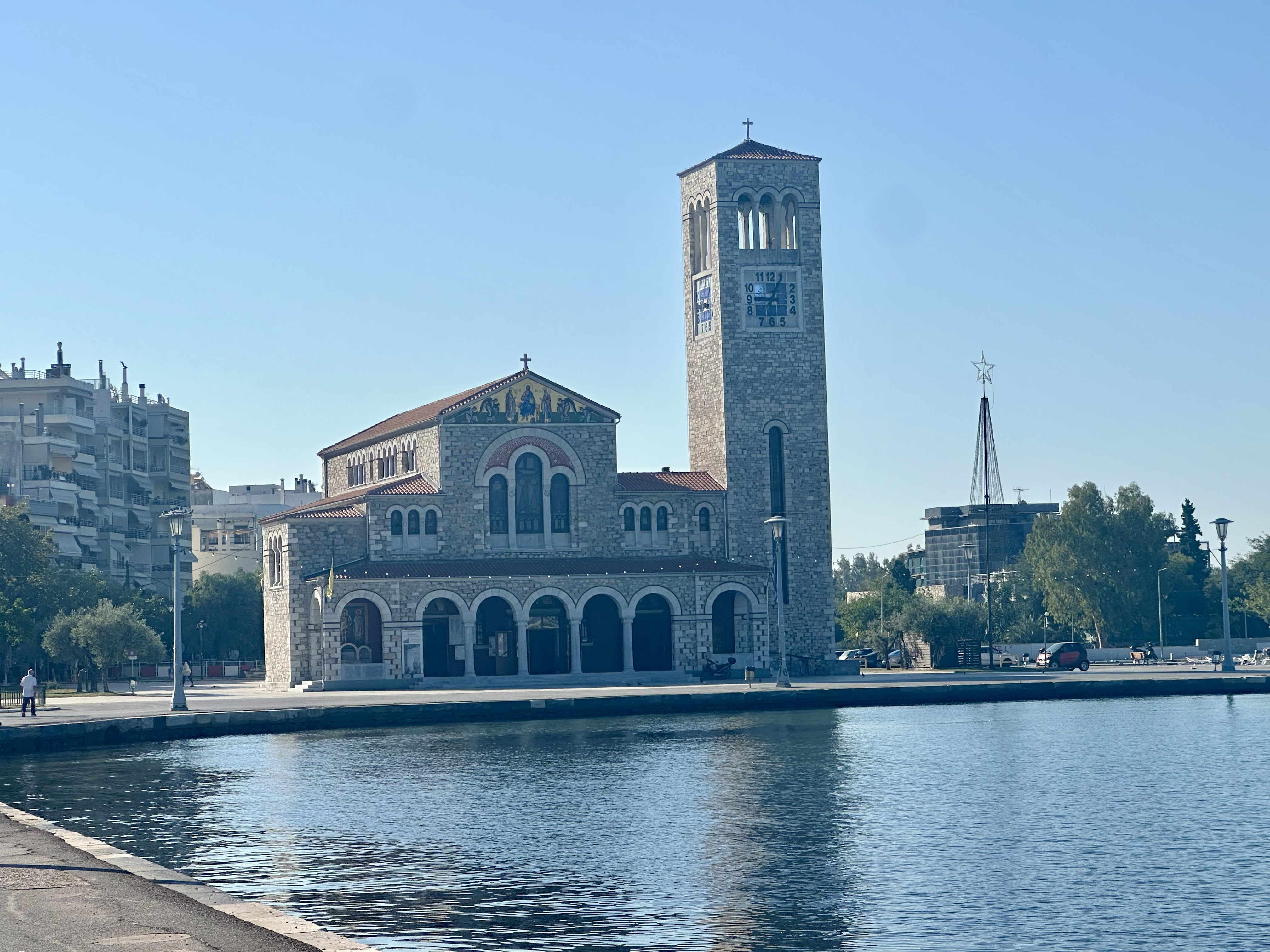
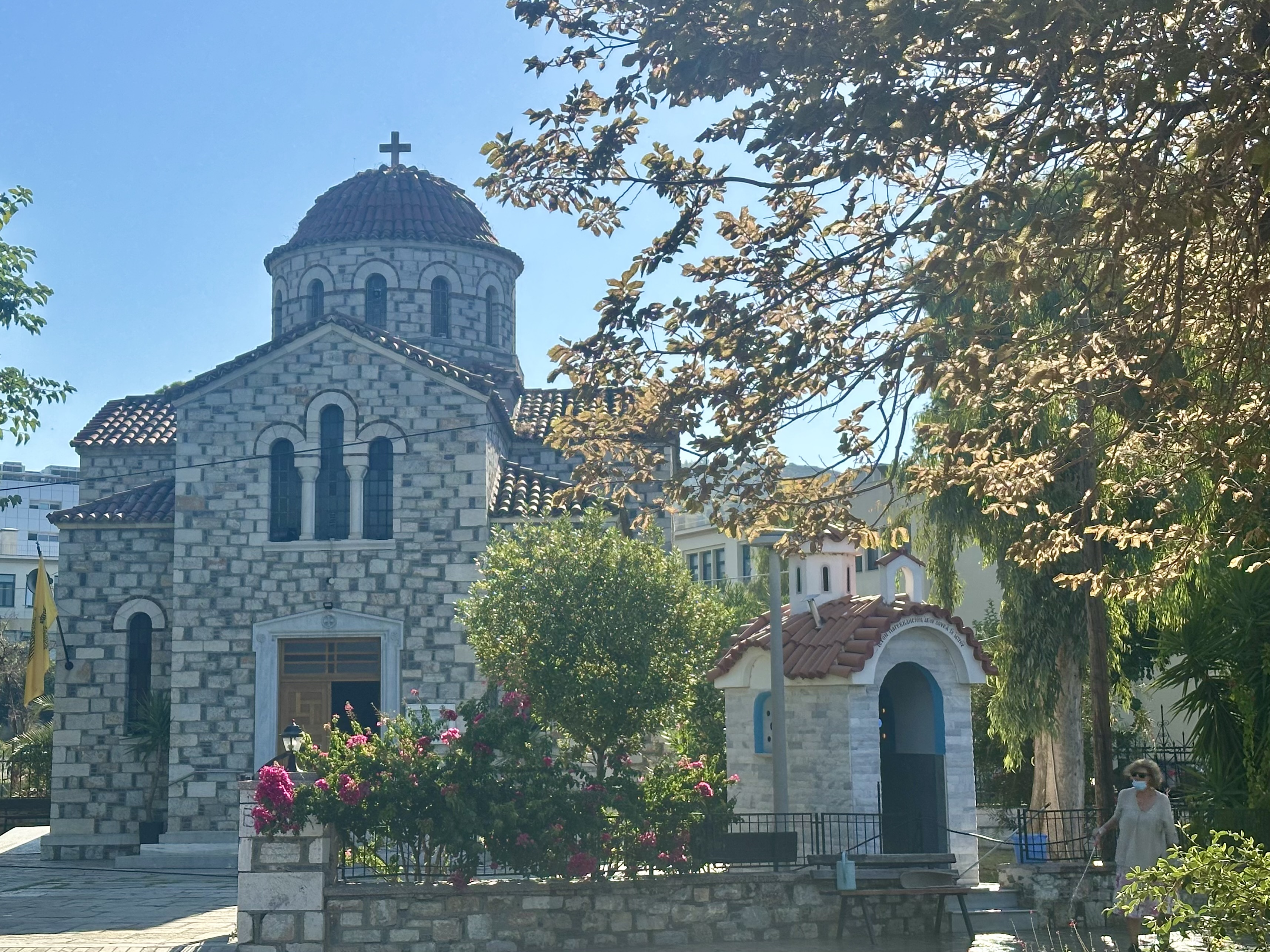
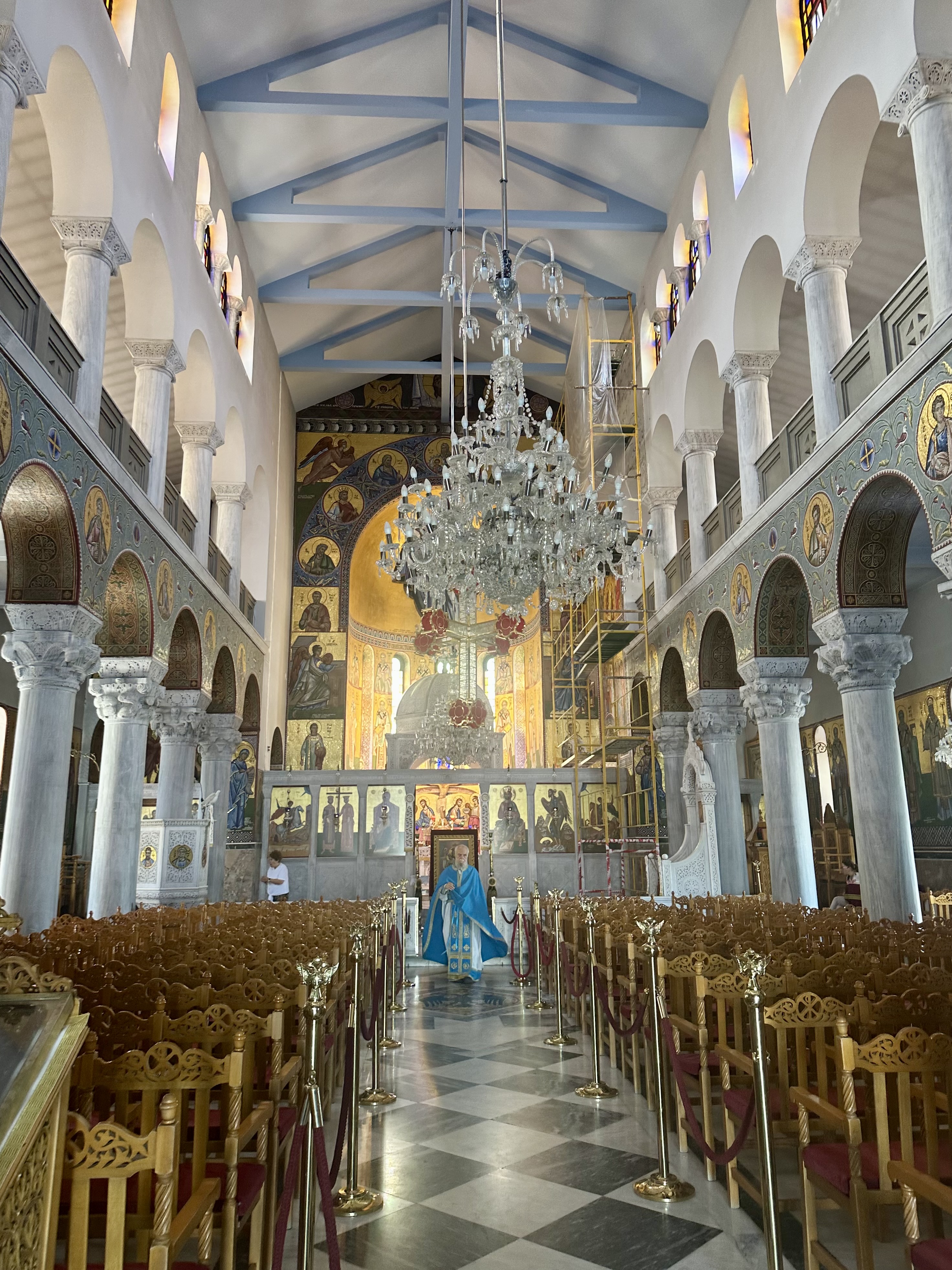
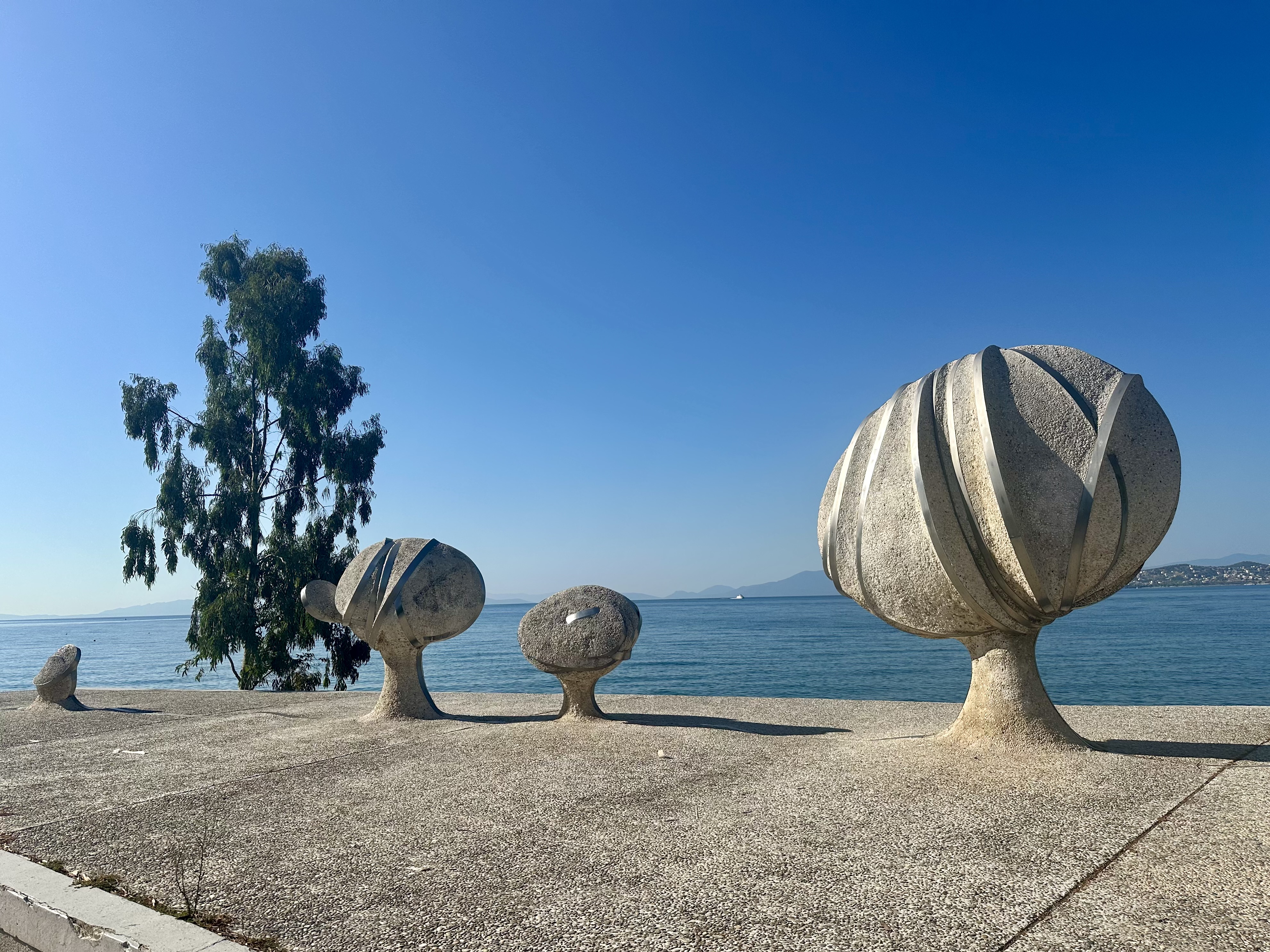
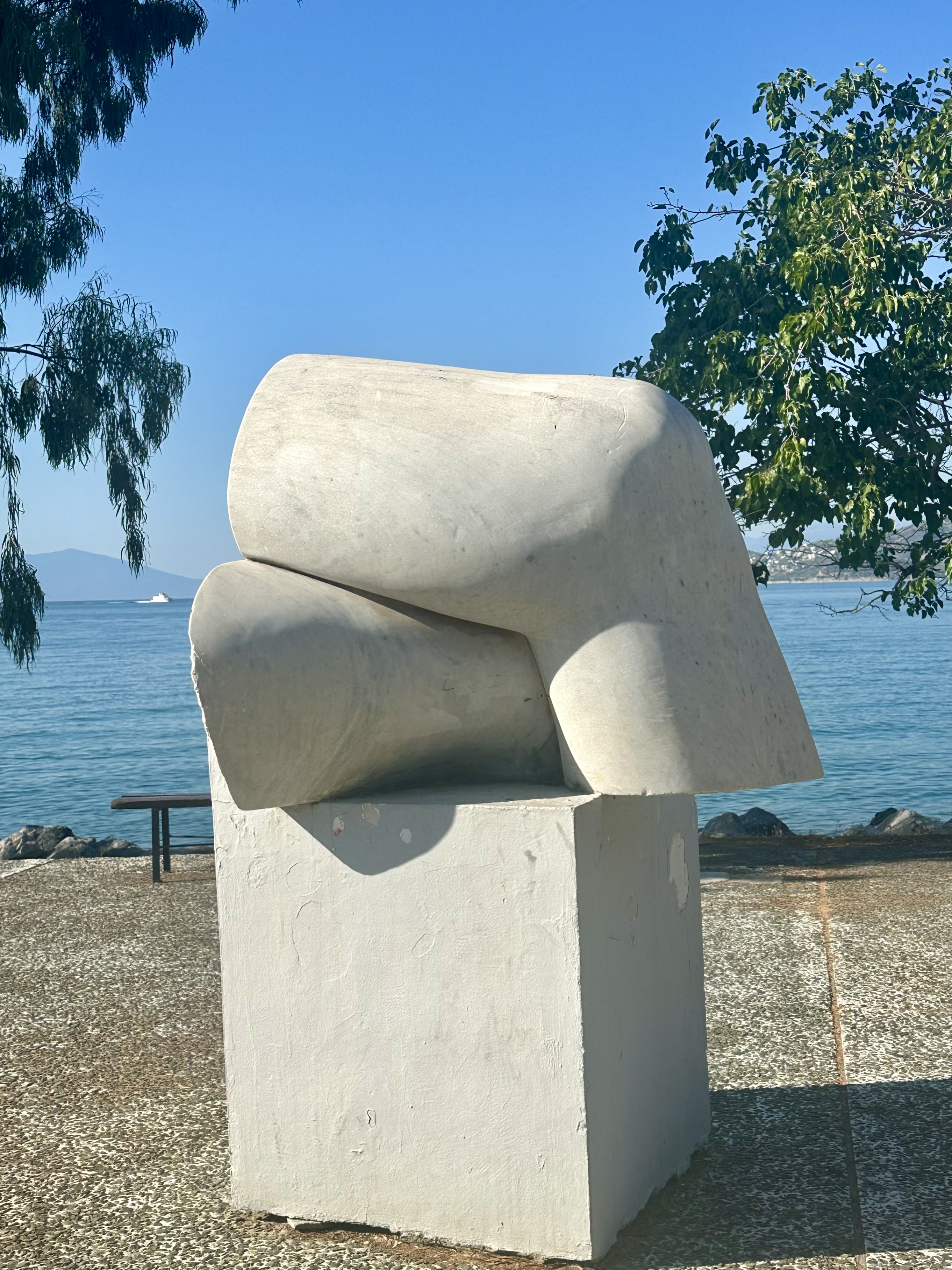
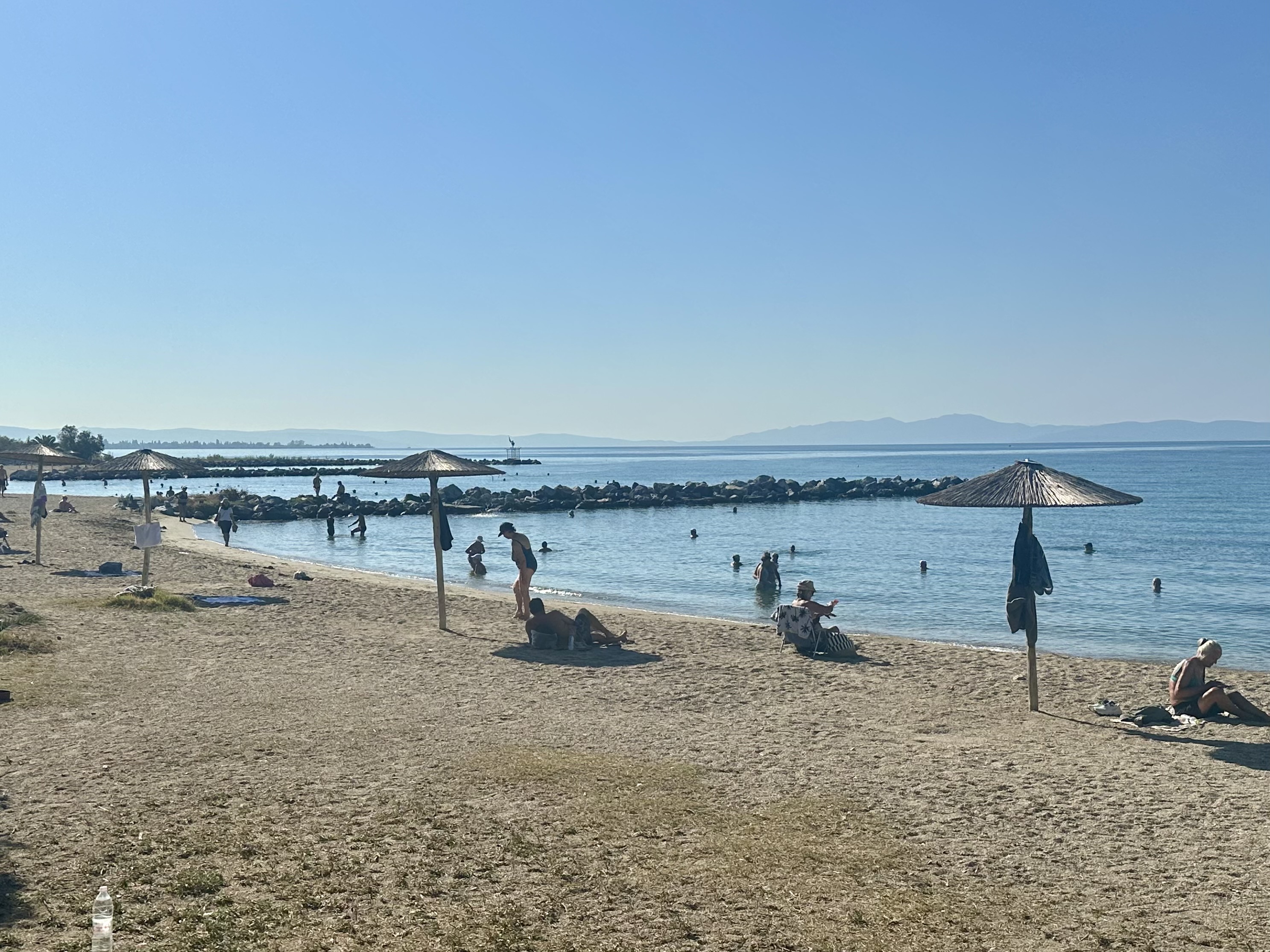
Next we visited the Church of Saints Constantine and Helena, a calm refuge in the early sun. Around the corner, we came across sculptures of Philolaos, adding a touch of modern art among old stones. We walked to Anavros Park: a quaint beachside park, trees, lawn, waves lapping, people walking, kids playing; a peaceful place to rest before more travel.
Afternoon: Up Mt Pelion — Makrinitsa First, Then Portaria
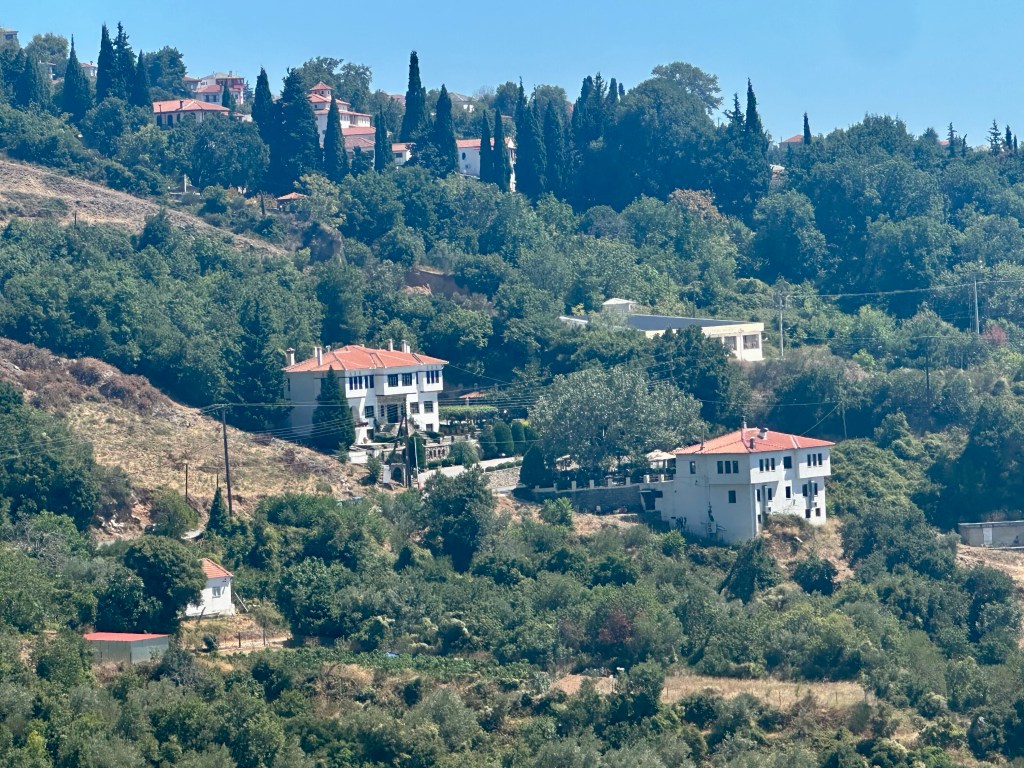
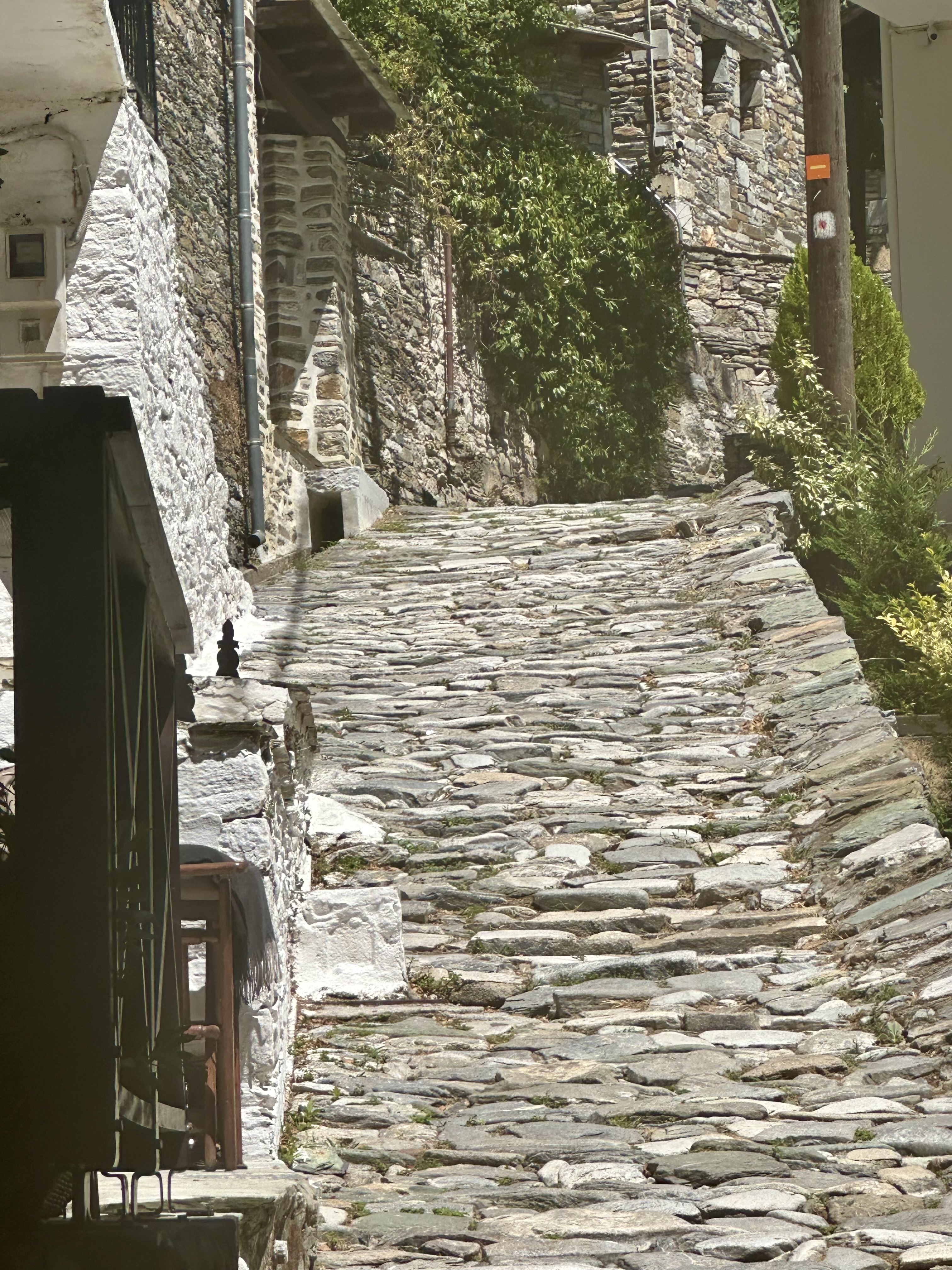
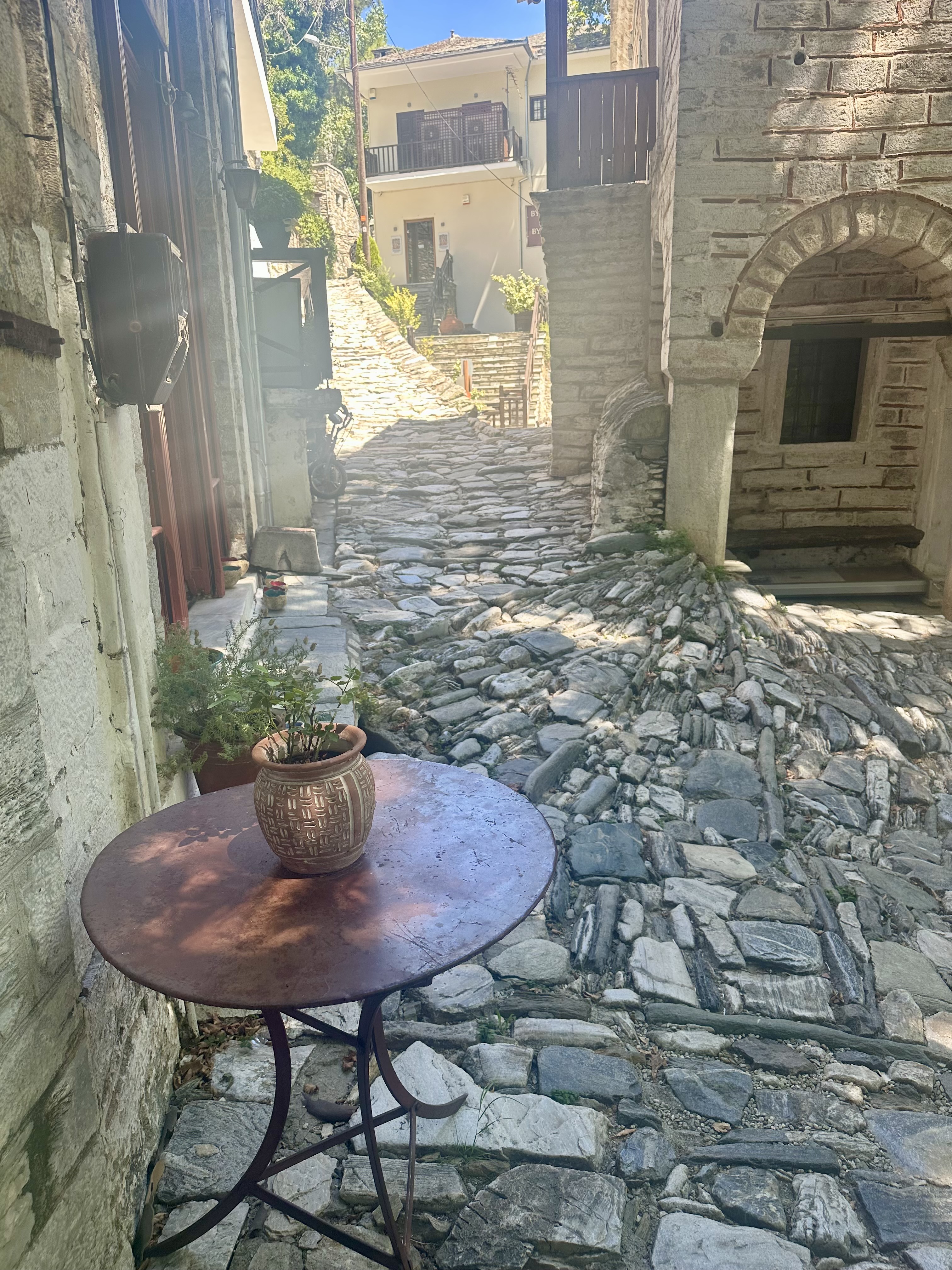
In the afternoon we joined the Villages of Mt Pelion Excursion. Our first stop up the mountain was Makrinitsa, often called the “Balcony of Pelion.” Perched on the slopes, its stone mansions, cobbled paths, shady plane-trees, and fountains make you feel as if time has paused.
In the heart of Makrinitsa is a sweet little square, anchored by the Church of Saint John the Baptist (Saint Ioannis Prodromos), built in 1806. We stopped there first after the winding climb up, and the quiet power of that place struck me: carved stone reliefs, ornate doors, an old gallery beneath wooden balconies, and inside, icons painted by Iakovos and Pantazis, their colors softened by time.
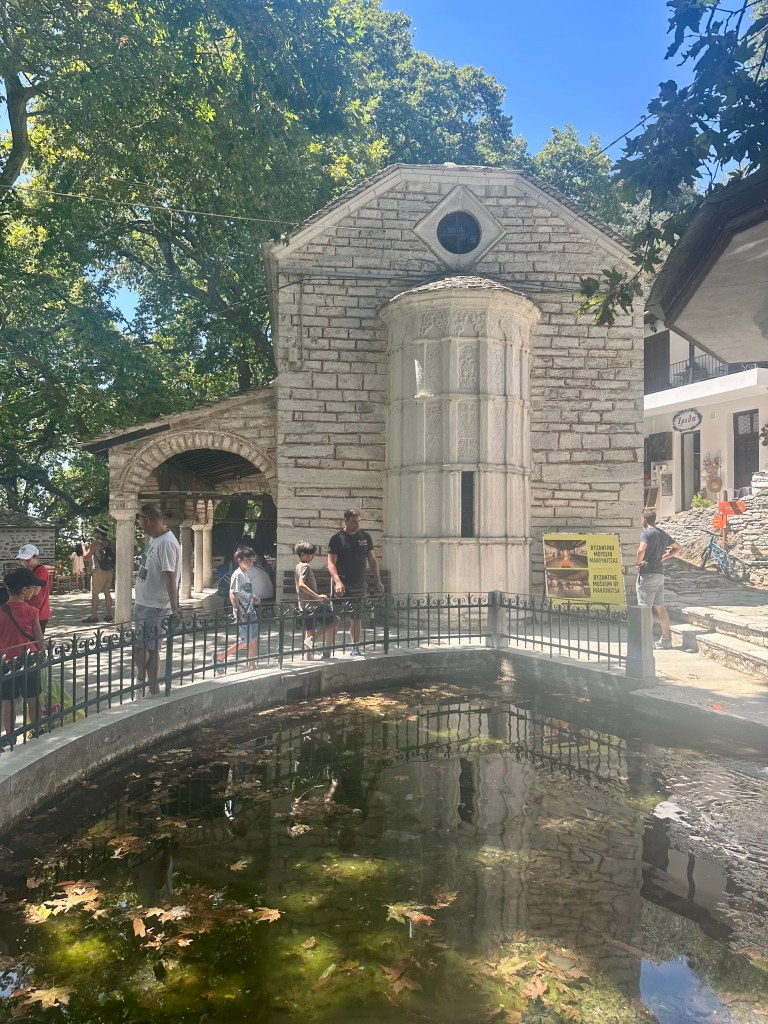
Next to it, the Fountain of the Lions (1809) sends cold spring water through lion heads into a little basin — people come to fill water bottles, splash their faces, or just lean over and listen to the water spill. The square is shaded by ancient plane trees — perfect for resting, sipping coffee, or just watching local life drift by.
Standing there, I could imagine locals from two centuries ago gathering at the same fountain, listening to church bells, children at play, the scent of wood smoke in the air. It felt timeless — and it was a moment of “this is why we travel.”
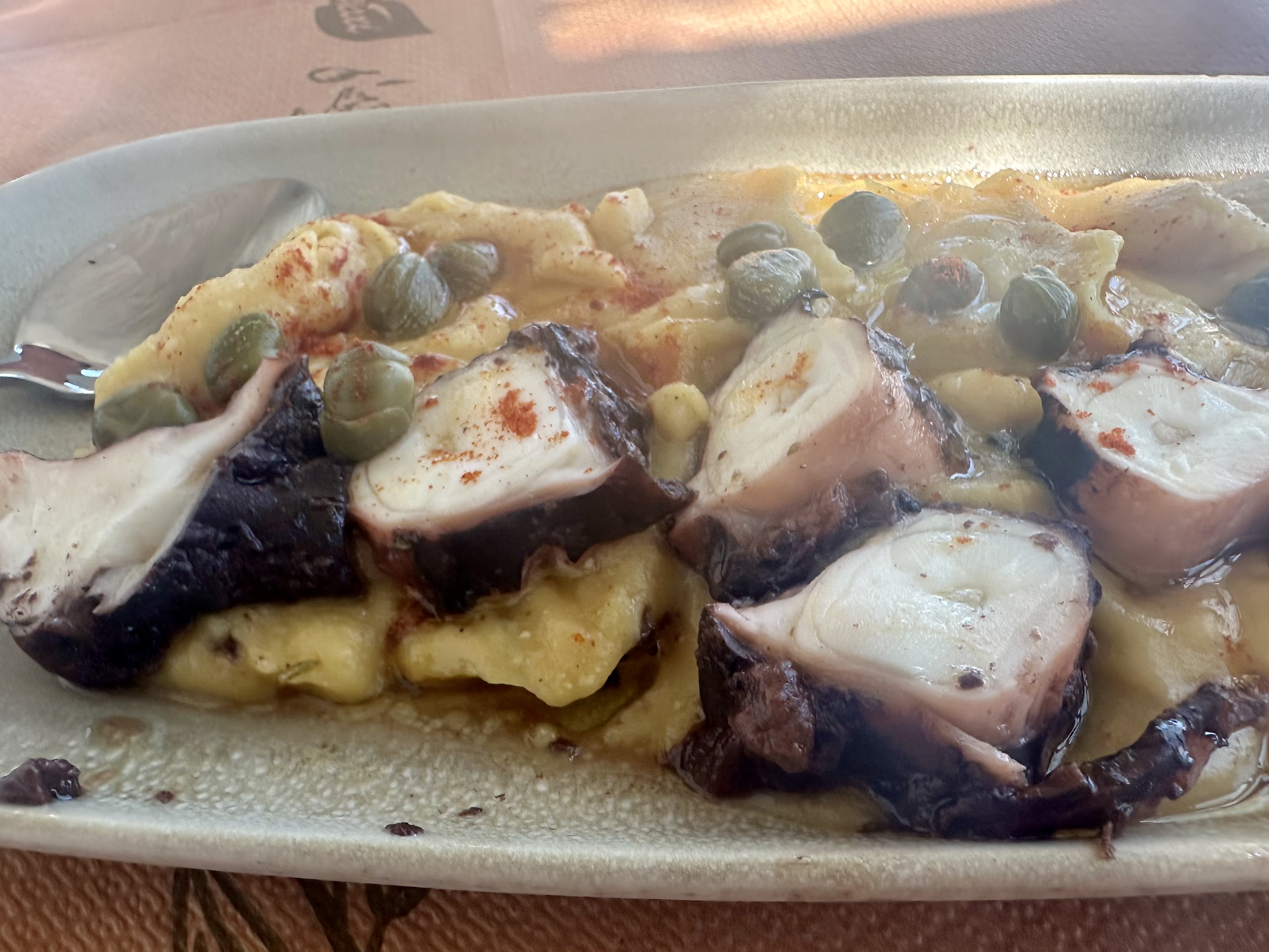
In Makrinitsa we had lunch at Arismari Restaurant. It was charming with a stone-house feel and lovely view over Volos and the Pagasitic Gulf. It felt cozy: just the right amount of rustic, with touches of elegance. I had the octopus with favs (those creamy fava beans Greece is known for) and it was one of those meals where you taste the sea, the mountain herbs, olive oil — simple but unforgettable.
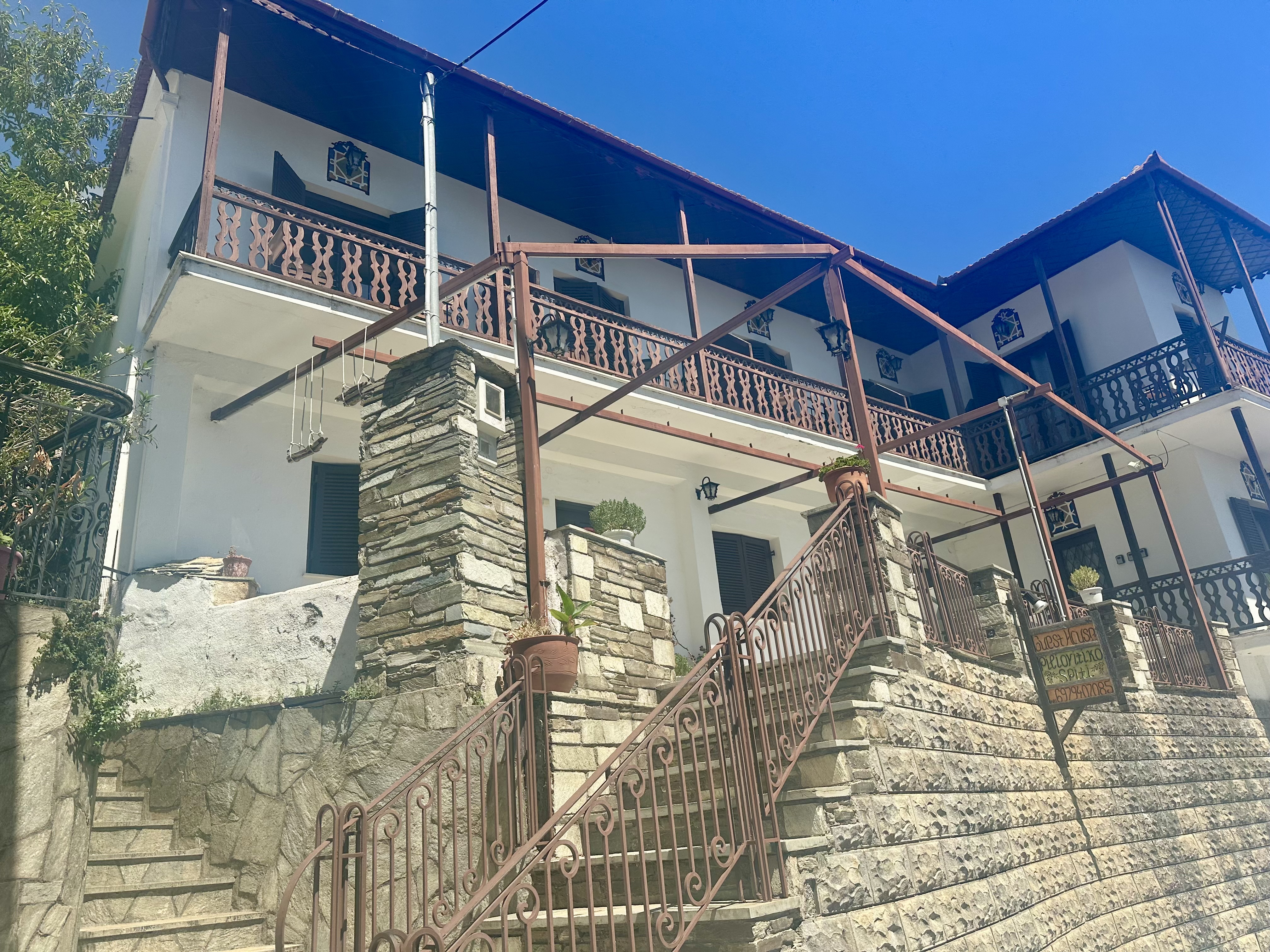
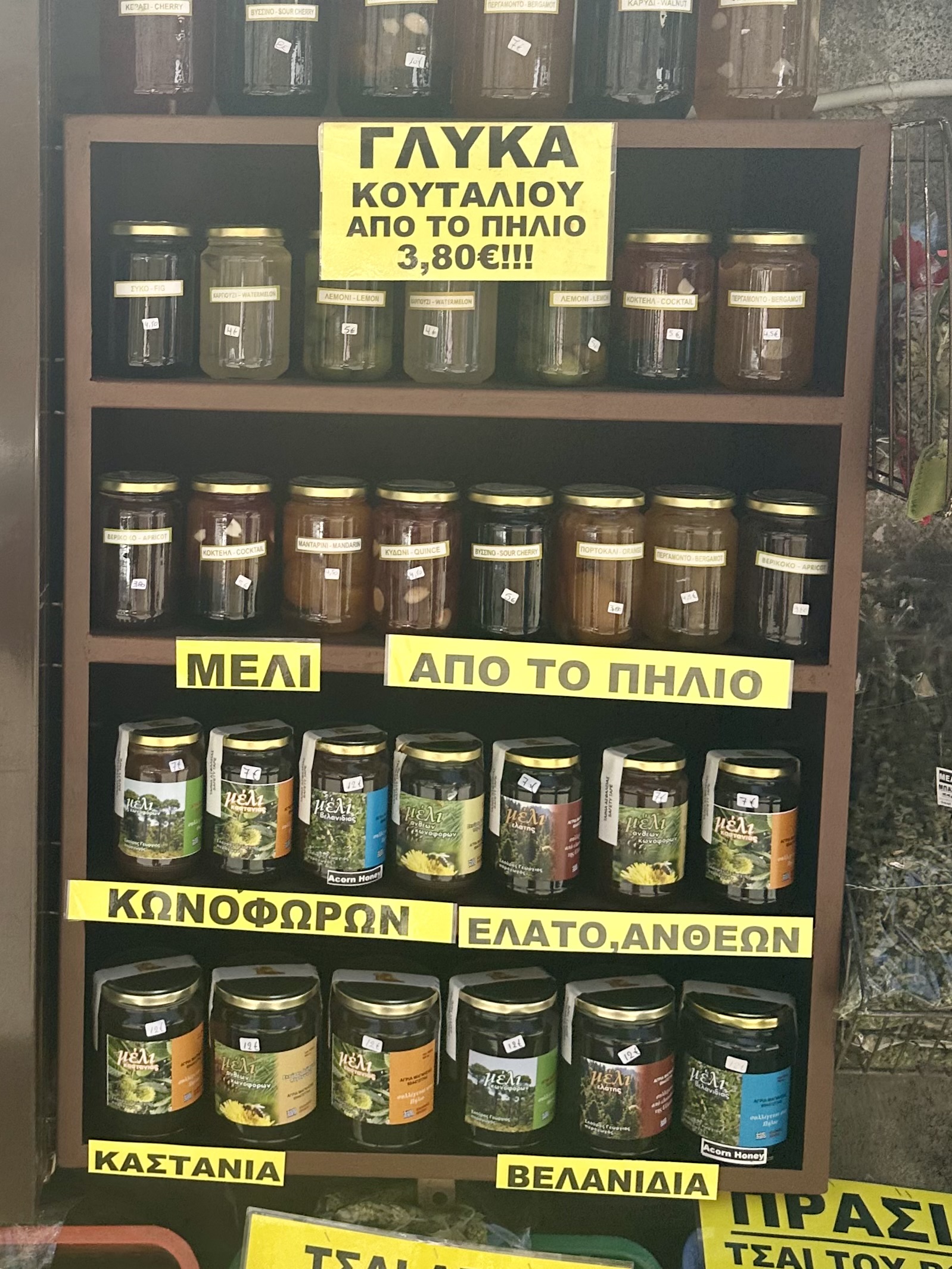
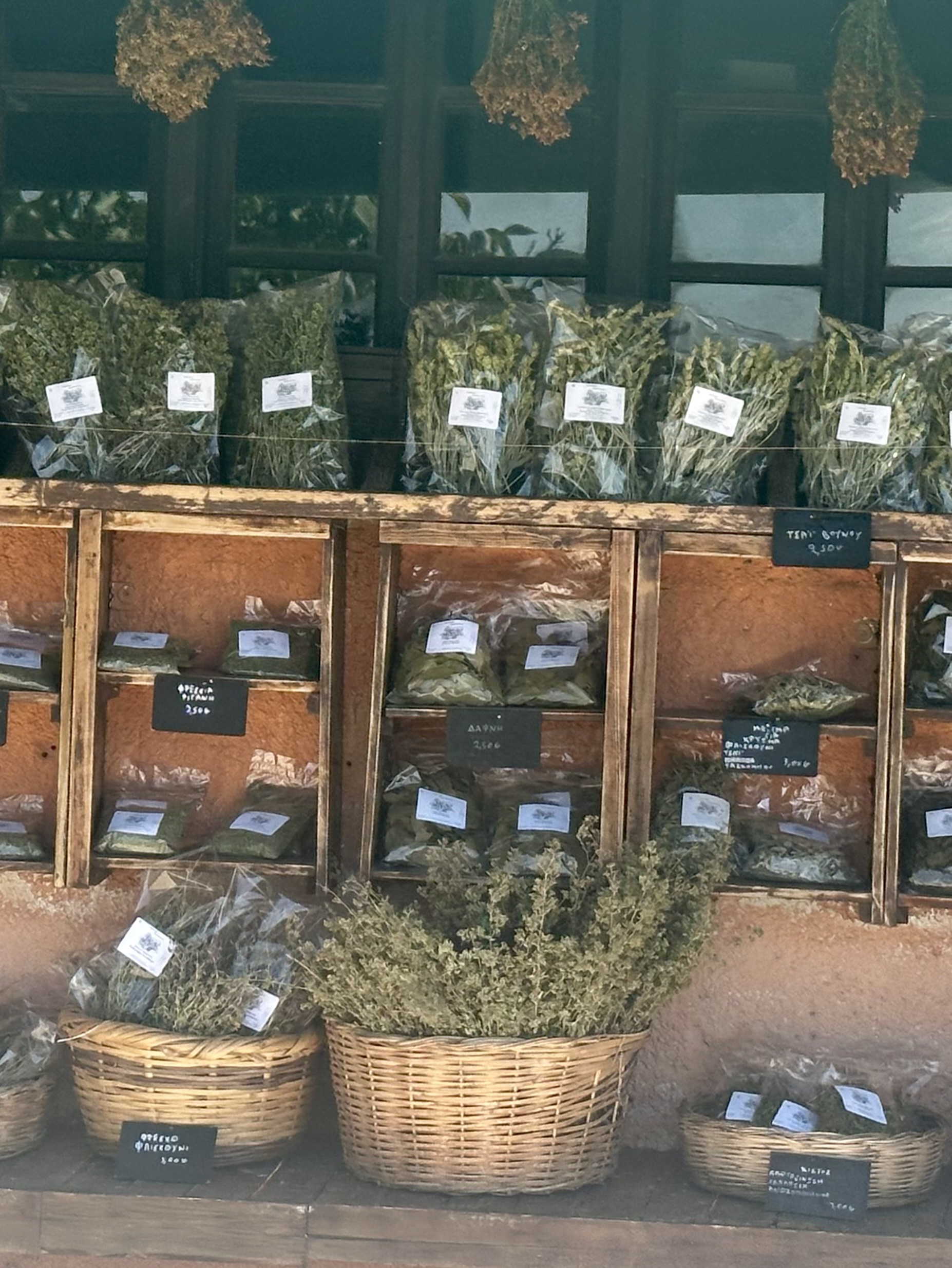
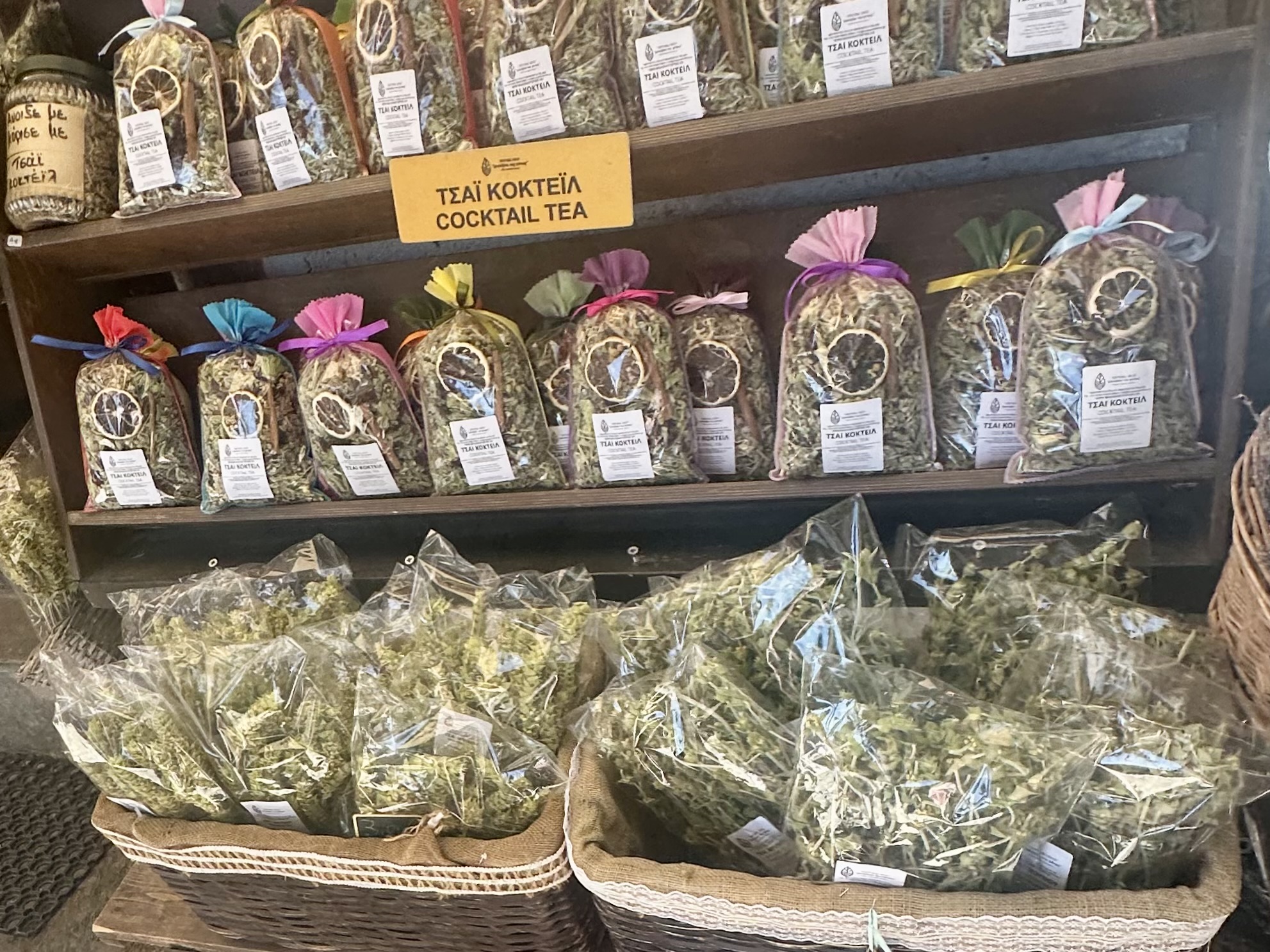
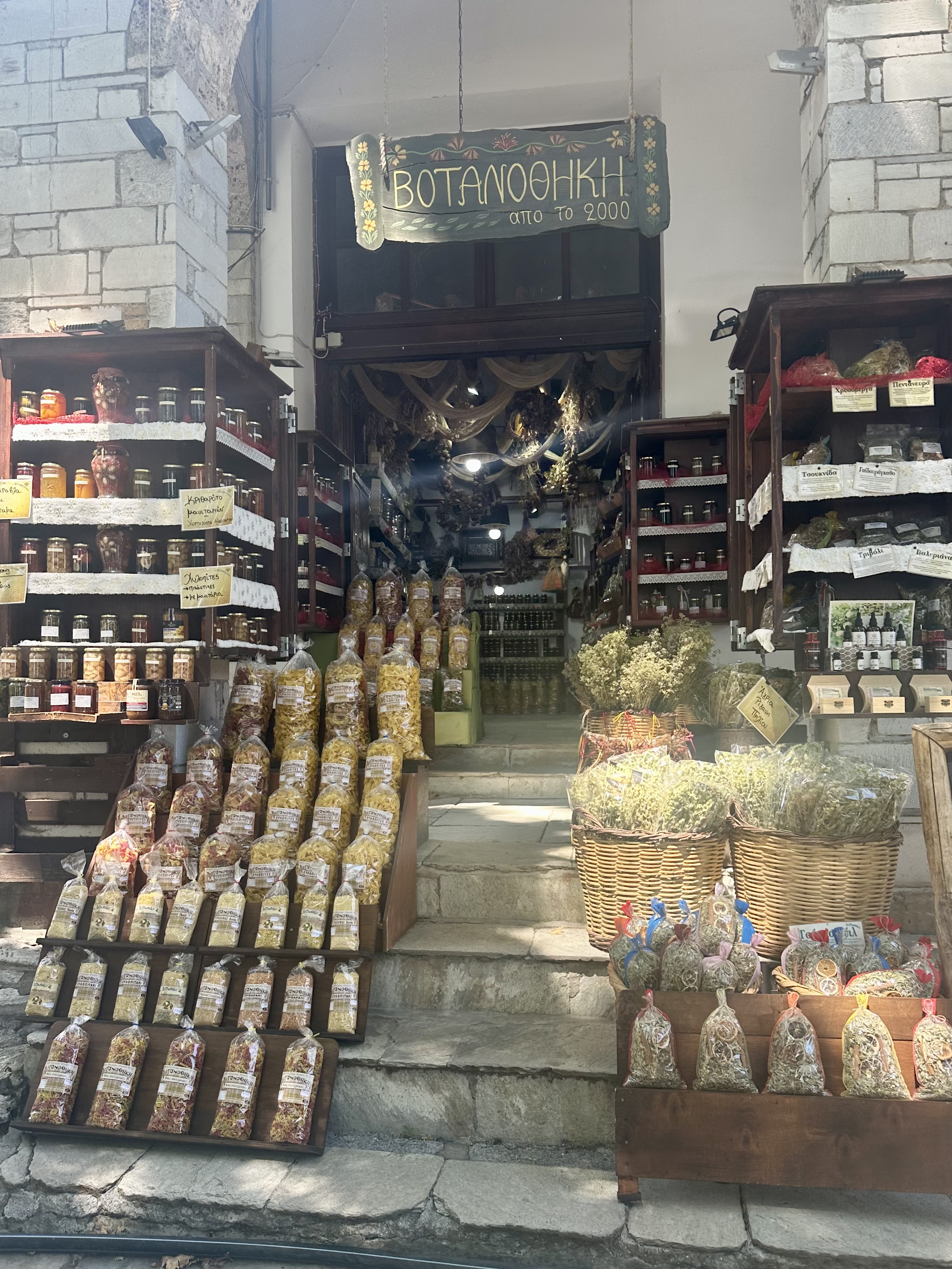
After lunch, we took note of the traditional Pelion architecture: slate roofs, wooden balconies, stone walls and winding paths as we wandered through shops carrying local crafts, jams, spices, small ceramics, objects that feel rooted in place. We picked up a local spice rub before boarding the bus to go further up the mountain to Portaria.
The village of Portaria is said to be the mythical home of the centaurs. The centaurs were creatures from Greek mythology with the upper body of a human and the lower body and legs of a horse. The entire Mt. Pelion region is known as the “Mountain of the Centaurs”.

Myth, Mountains, & Magic: Mt Pelion Legends
Mt Pelion isn’t just beautiful — it’s drenched in mythology. Here are some fun myths:
Peleus: The mountain takes its name from King Peleus, a hero of Thessaly, father of Achilles.
Chiron the Centaur: Pelion was known as the home of Chiron, the wise centaur who tutored many heroes (Jason, Achilles, Asclepius). The idea of a monstrous beast is softened in Chiron — half-man, half-horse, but deeply wise. Pelion’s forests were said to be where he taught and healed.
The Wedding of Peleus and Thetis: Myth says that the wedding of Peleus and the sea-goddess Thetis was celebrated on Mt Pelion. Gods attended. There’s an echo in the hills and the sea down below — you can feel how legends of gods and heroes might have imagined these slopes.
 Click, Wander & Savor