Luxor and the Nile: Following the River of the Pharaohs
If Cairo felt like an introduction to Egypt’s grandeur, Luxor felt like stepping directly into its heartbeat.
Our alarm came far earlier than either of us would have preferred. After a quiet dinner and much needed sleep, we packed before sunrise, still processing everything we had experienced in just one day. The pyramids, the desert air, a camel named Marnie, and centuries of history already blurred together in the best possible way.
Now we were heading south.
A short domestic flight carried us from Cairo to Luxor, once known as ancient Thebes, the religious capital of Egypt during the New Kingdom. From the air, the landscape transformed dramatically. Beige desert gave way to vibrant green farmland tracing the Nile’s path, a narrow ribbon of life surrounded by endless sand.
Landing in Luxor felt immediately different. Smaller, quieter, slower.
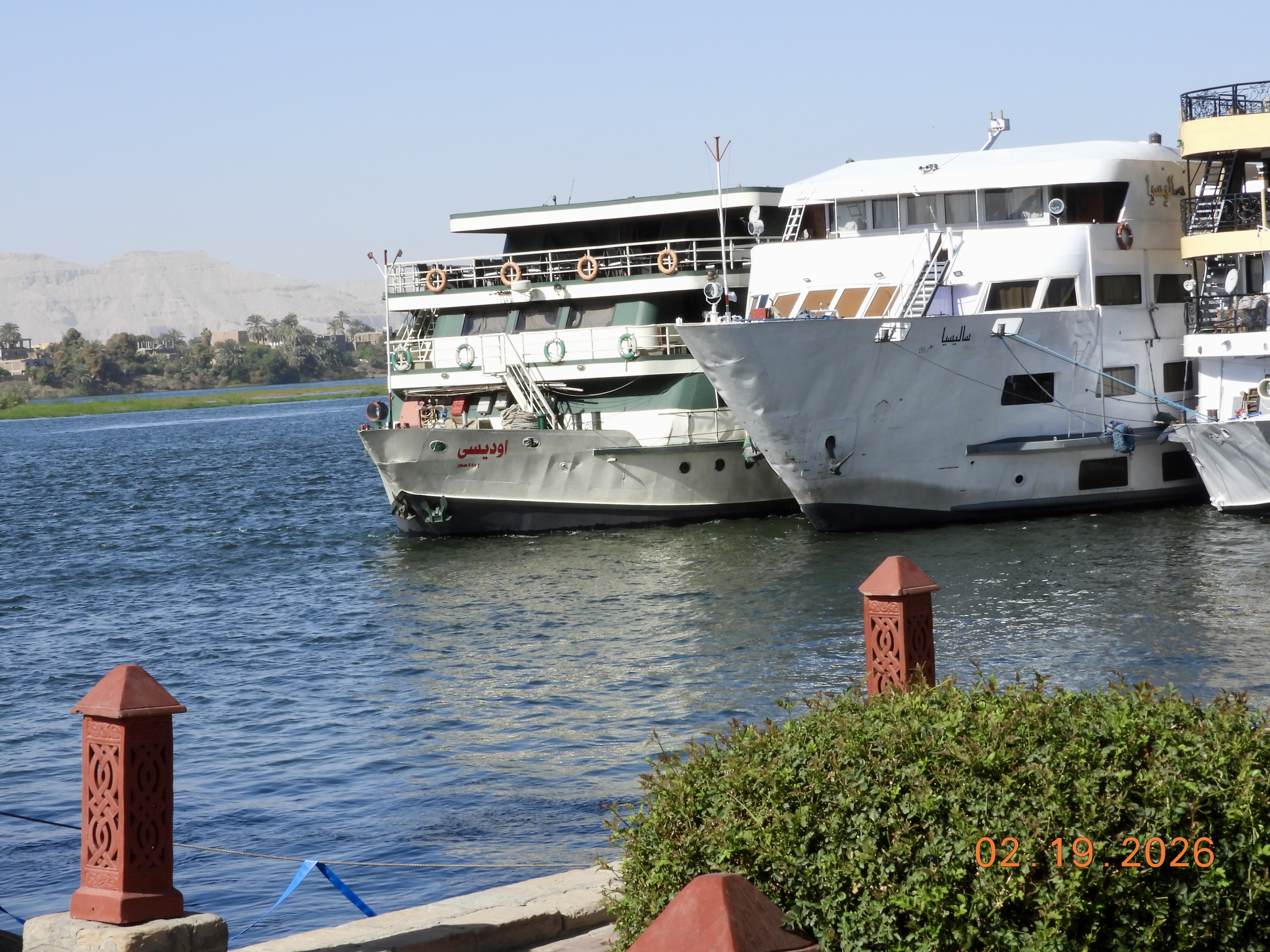
Our driver greeted us outside the airport, and soon we were on our way toward the river and our home for the next several days, the MS Salacia.
For part of the drive, we followed a paved road running parallel to a narrow canal or stream. On the opposite side sat a dirt road lined with sandstone homes that blended almost seamlessly into the surrounding desert landscape.
This was a completely different Egypt from Cairo.
Donkeys pulled carts beside cows and horses. Children played in the dirt outside modest homes while adults gathered in shaded doorways. Dust rose gently behind passing vehicles. The streets were unpaved, the buildings simple, and life unfolded at a slower, more practical rhythm. It was visibly poorer, raw and unfiltered, yet deeply human and quietly beautiful in its authenticity.
It felt like watching daily life rather than visiting a destination.
Then suddenly, the Nile appeared.
And beside it, our ship.
Boarding the MS Salacia
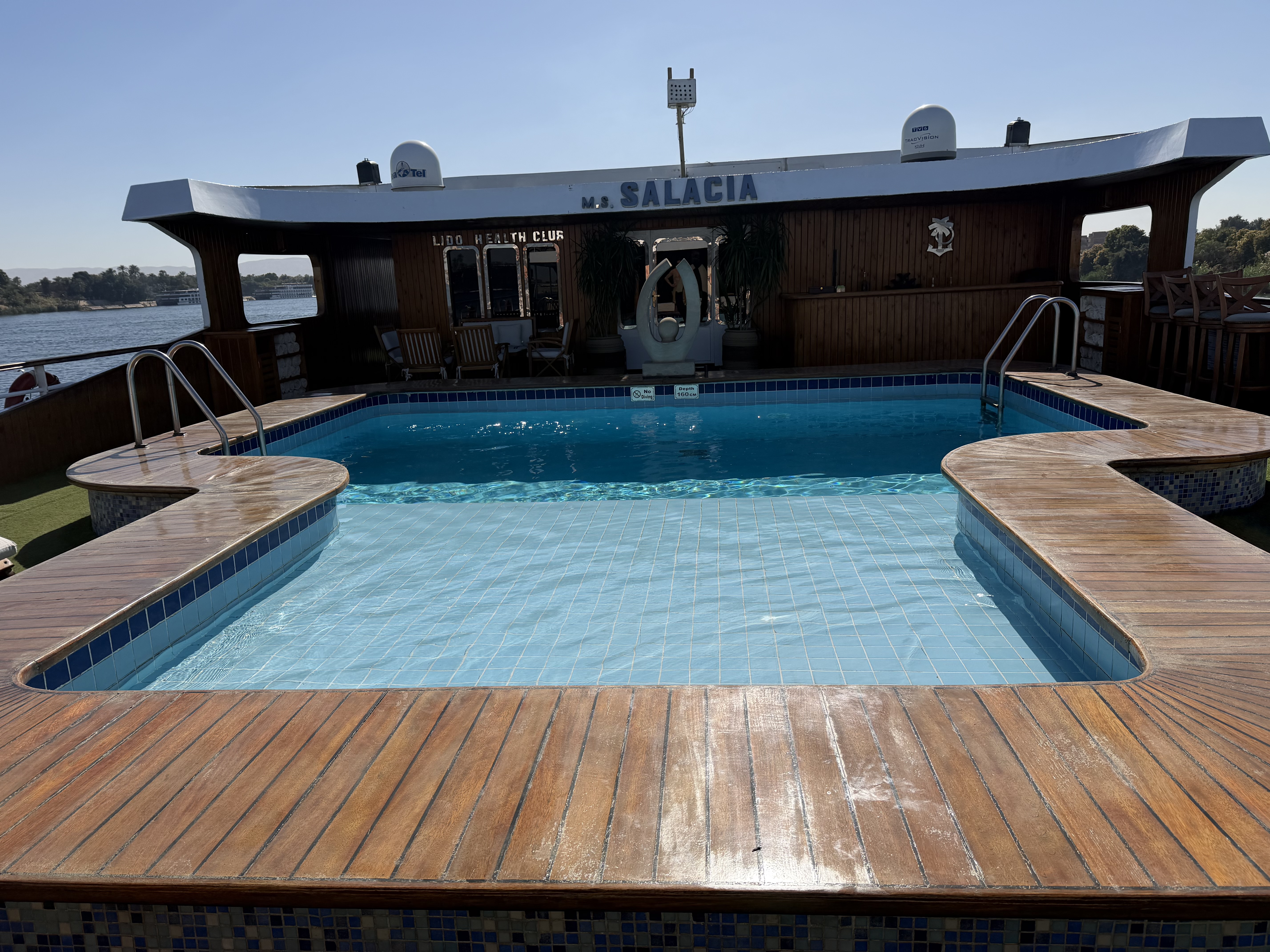
Stepping aboard the MS Salacia felt calm and welcoming after the drive. The polished interiors and relaxed atmosphere immediately signaled that this would be a very different pace of travel.
Soon after boarding, we met our tour guide for the week, Alaa, whose warmth and easy humor quickly set the tone for the days ahead. He gathered us together to review the schedule.
- 1:00 pm lunch onboard.
- 2:15 pm meet to depart for Karnak Temple and Luxor Temple.
- 7:15 pm meet again to return to Karnak for the Sound and Light Show.
Afterward, dinner would either remain open or be delivered to our rooms depending on timing.
Everything felt effortlessly organized, allowing us to focus entirely on experiencing Egypt.
Lunch and Meeting Our Nile “Family”
Lunch was served buffet style and was wonderful, fresh salads, warm Egyptian dishes, grilled meats, vegetables, breads, and desserts filled the dining room.
We were seated with four other English speaking travelers who we quickly learned would become our “family” for the week. Two women from Brisbane, Australia, full of humor and energy, and a couple from Pennsylvania whose easy conversation made introductions feel natural.
Within minutes we were exchanging travel stories and laughing together. Travel has a way of accelerating connection, especially in a place as extraordinary as Egypt.
By the end of lunch, we already felt like a group.
Karnak Temple: A City Built for the Gods
Shortly after lunch, we met Alaa and departed for Karnak Temple. My husband was not feeling well and chose to rest on the ship, so I joined our new companions and guide on my own.
Nothing prepares you for Karnak.
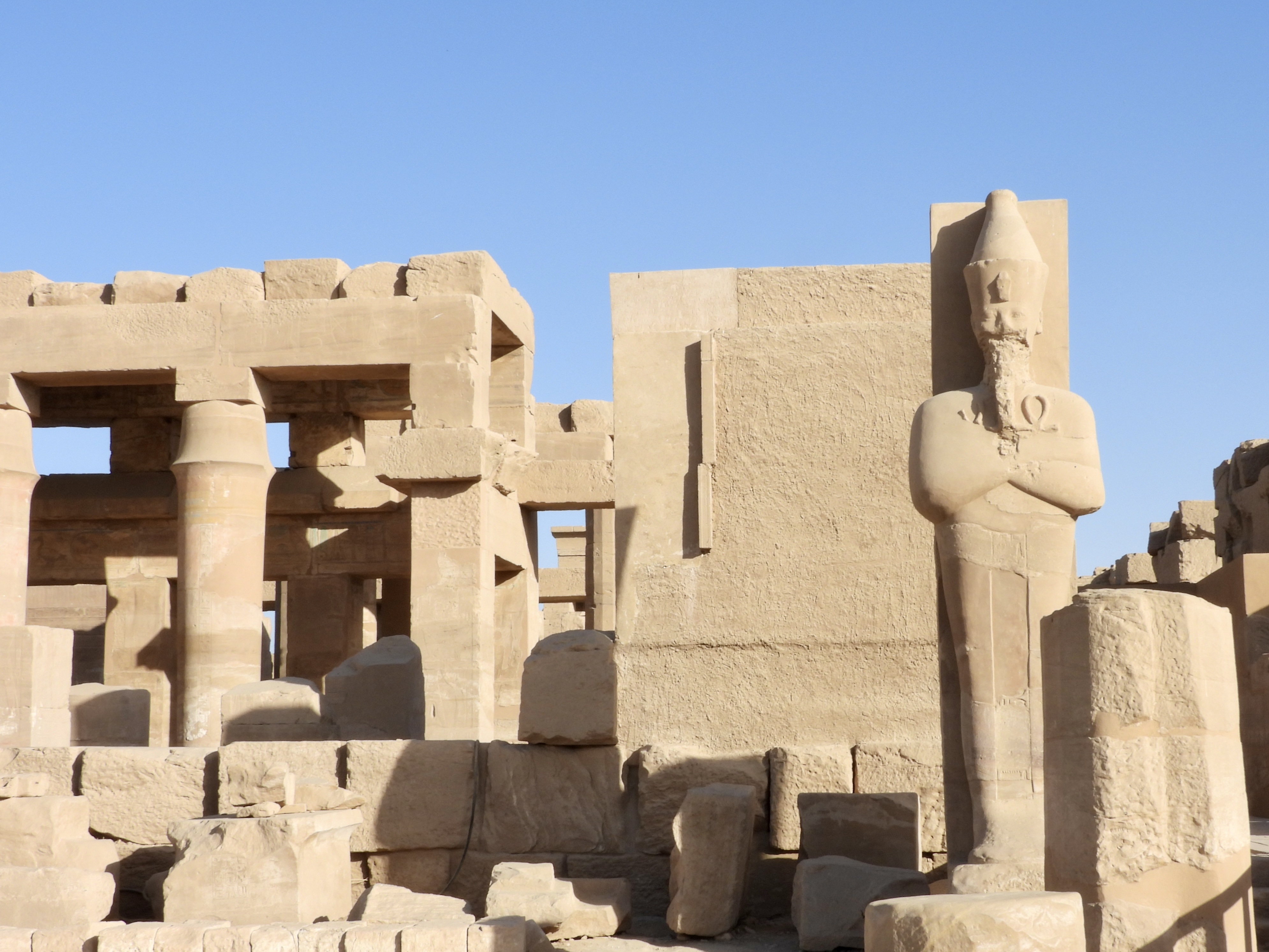
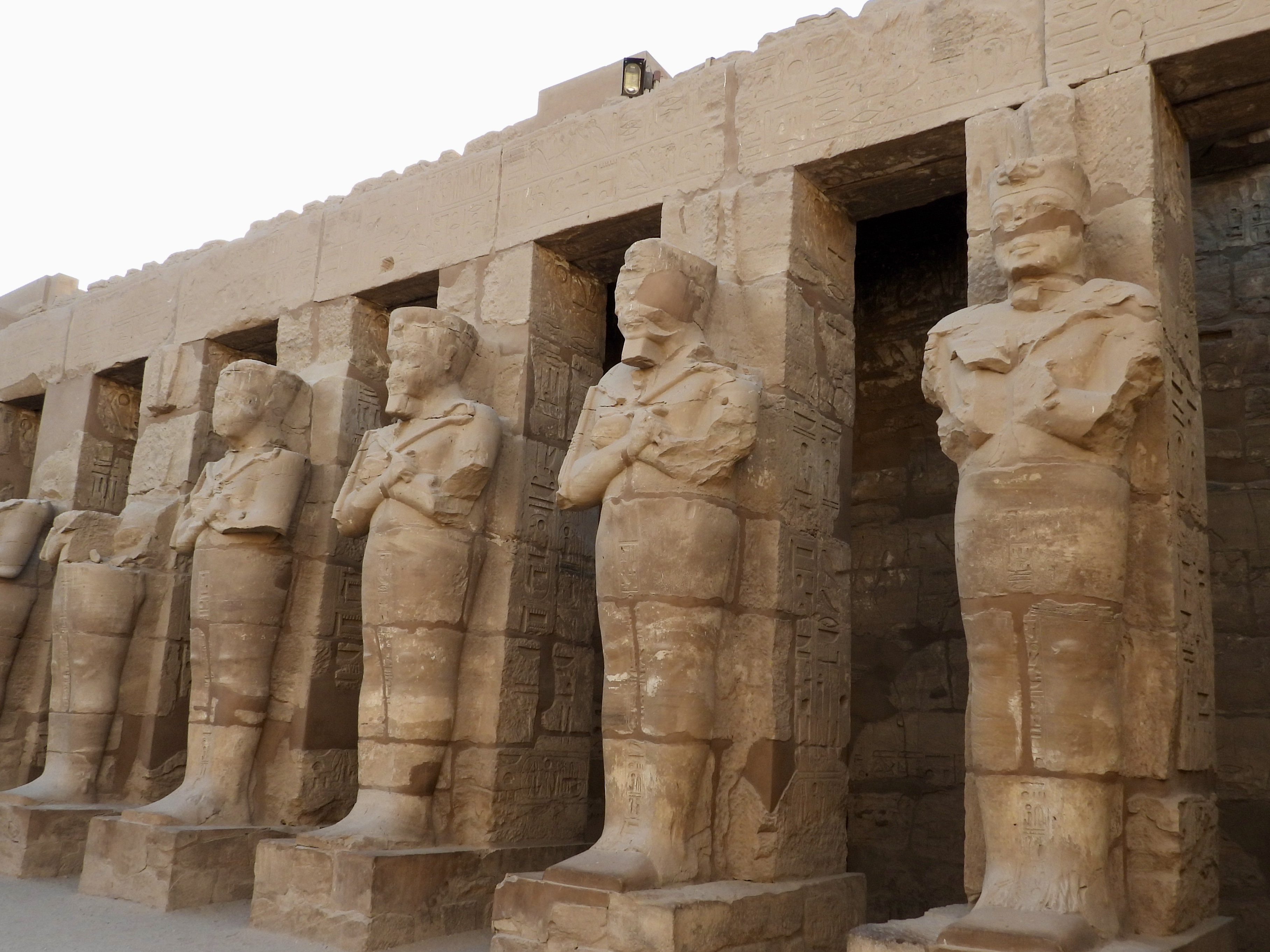
Calling it a temple almost feels misleading. It is an entire sacred city built and expanded over nearly two thousand years by successive pharaohs, each determined to leave their mark beside those who ruled before them. Dedicated primarily to Amun-Ra, Karnak became one of the most important religious centers in ancient Egypt.
The approach alone is unforgettable.
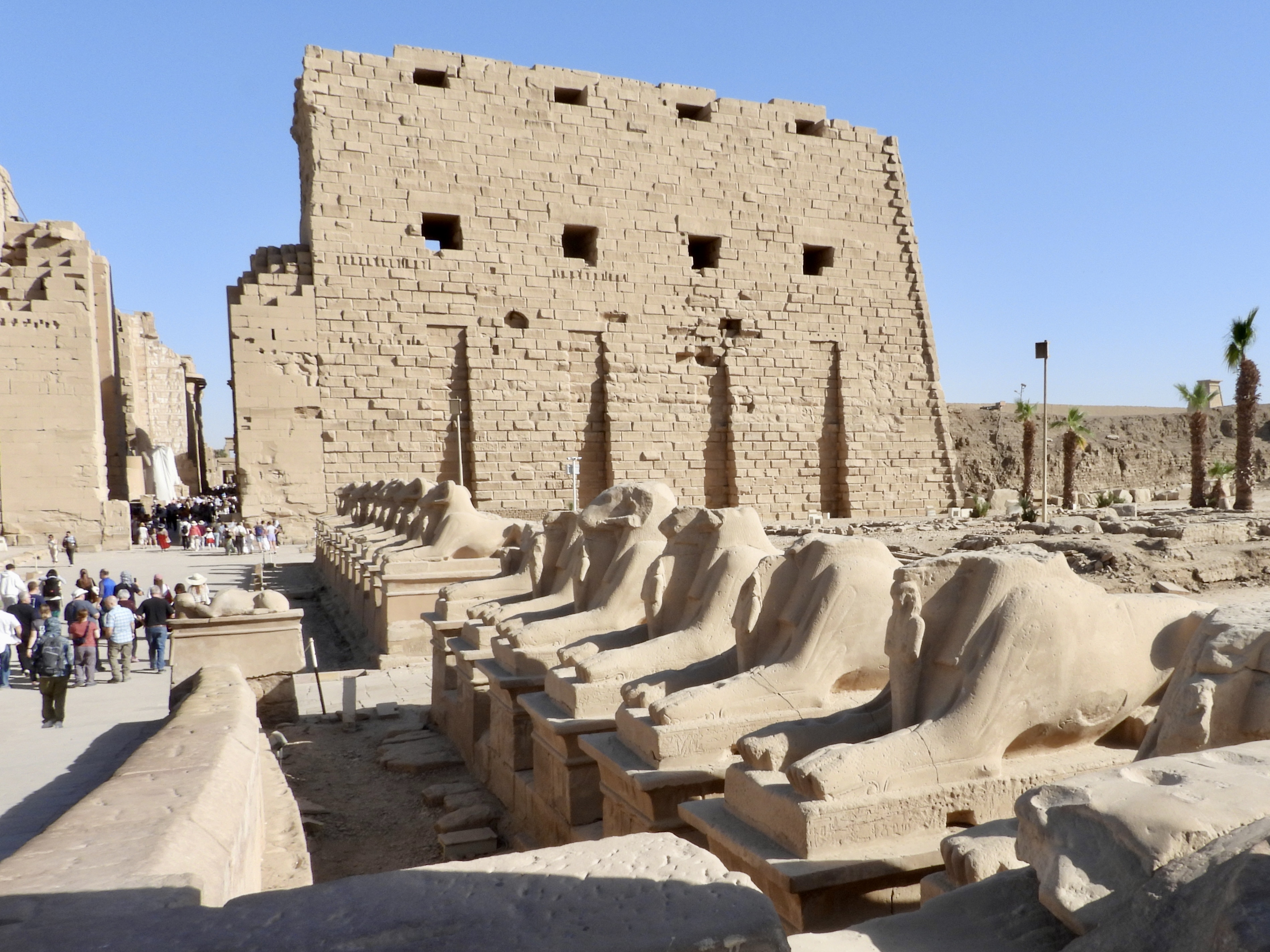
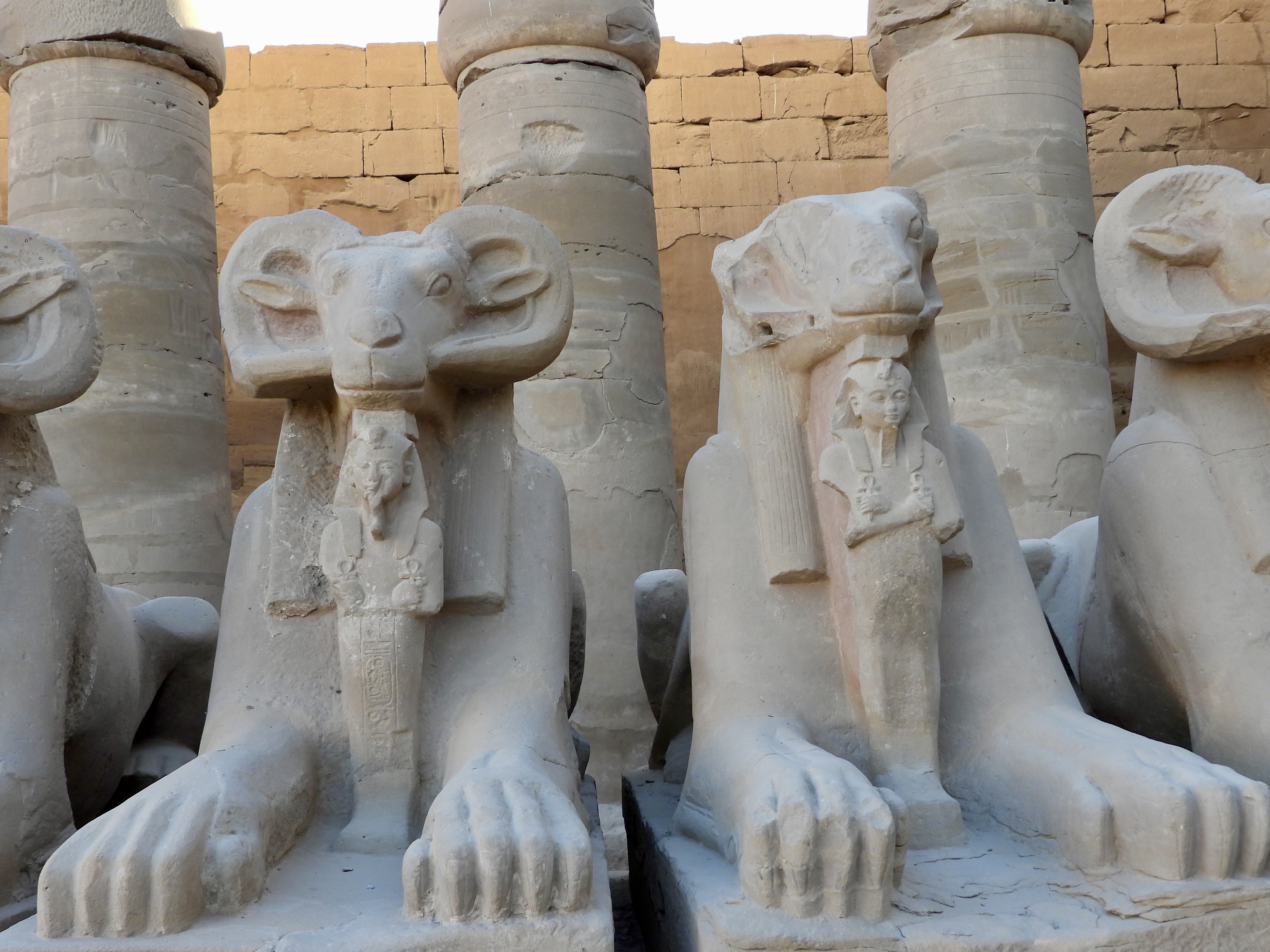
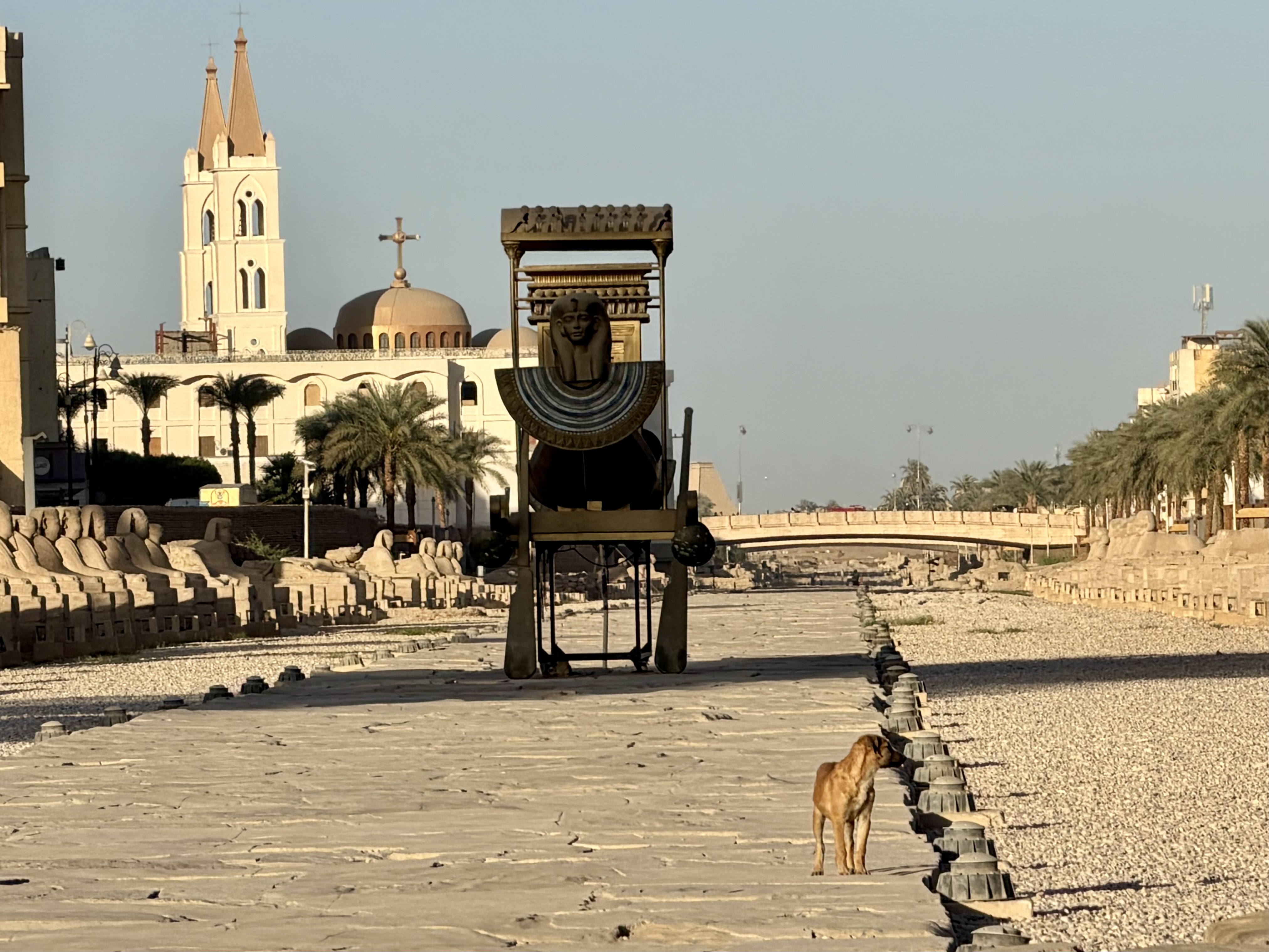
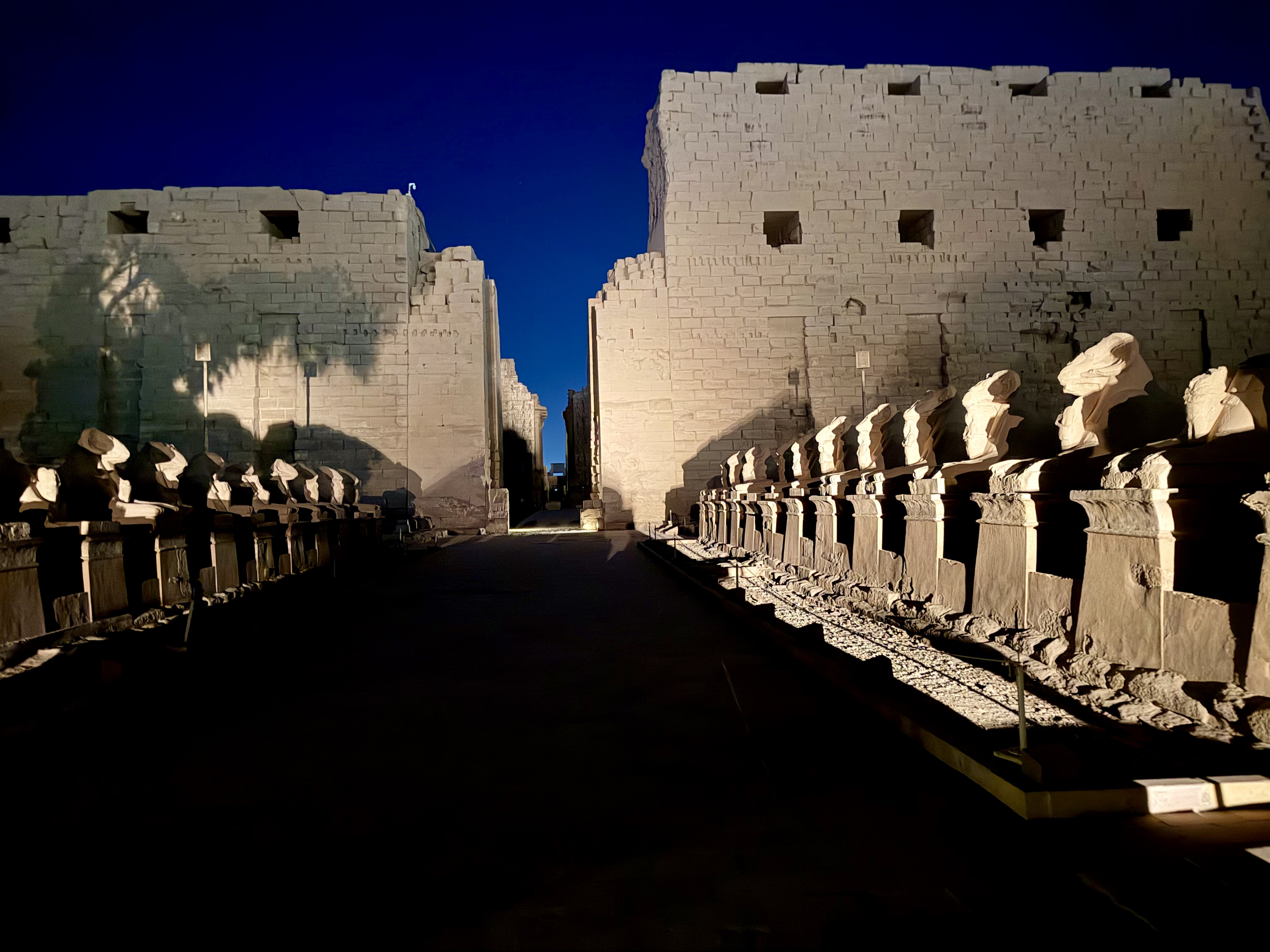
A long ceremonial avenue leads toward the entrance, lined with ram-headed sphinxes sacred to Amun. Each holds a small statue of a pharaoh between its front paws, symbolizing divine protection and the ruler’s connection to the gods. Walking between them felt like entering a space designed to humble visitors long before reaching the temple itself.
And then the columns.
The Great Hypostyle Hall stopped me completely.
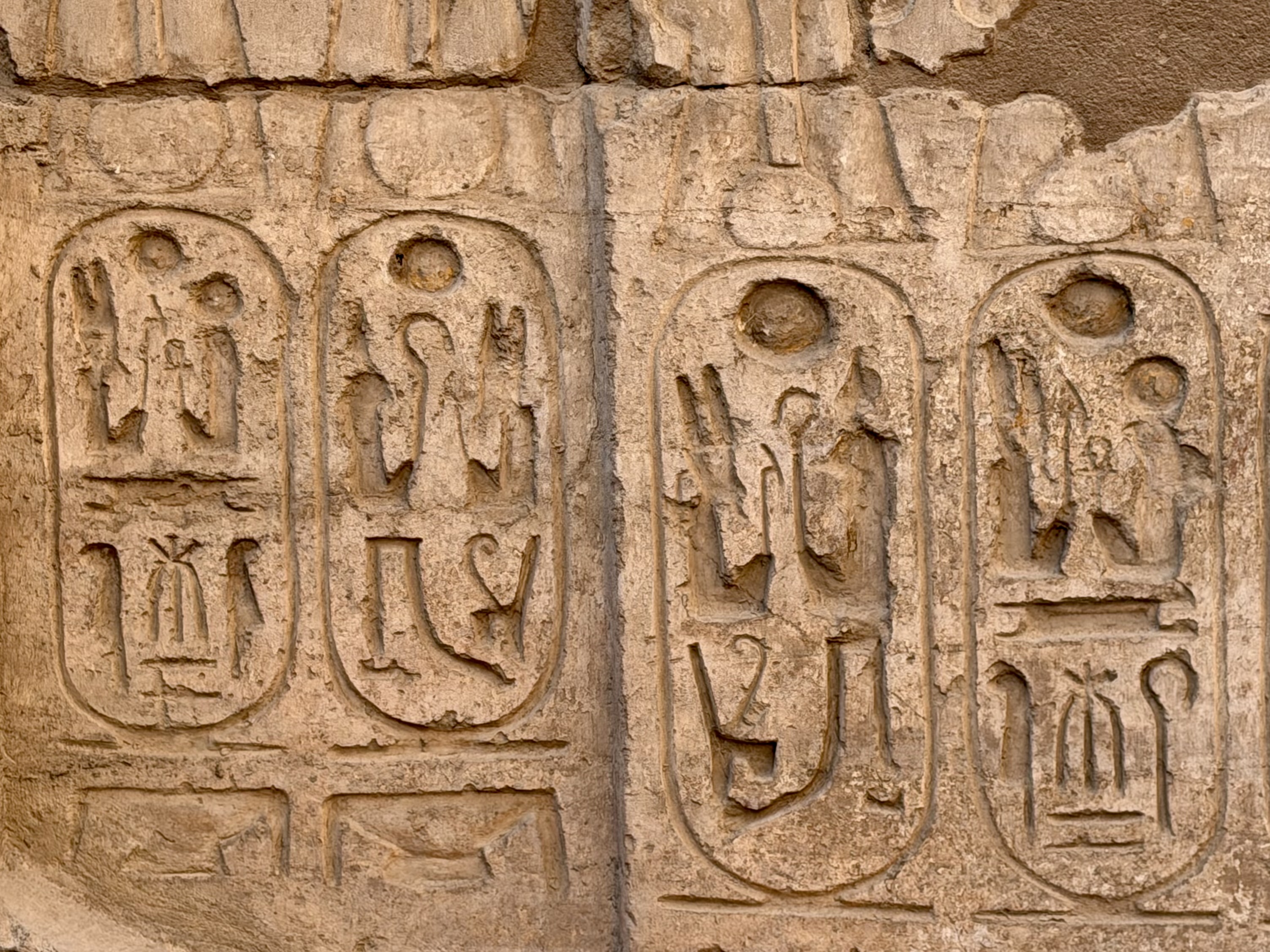
Towering stone columns rise in every direction like a forest carved from rock. Some reach nearly 70 feet high, their tops shaped like blooming papyrus plants. What amazed me most was the detail. Hieroglyphics covered nearly every surface, carved deeply into stone and still showing traces of original color, reds, blues, and ochres that somehow survived thousands of years.
Standing among them, I felt impossibly small.
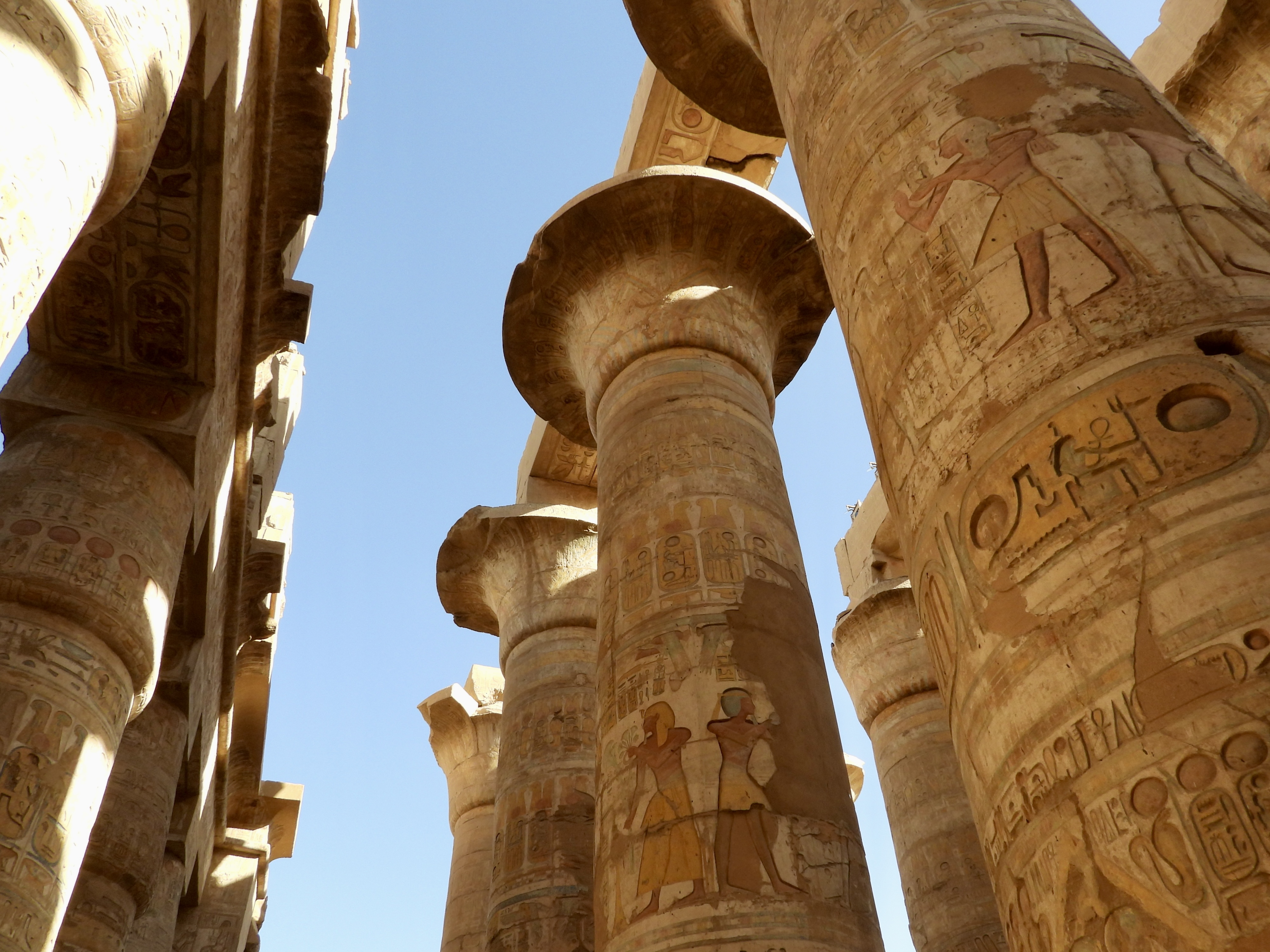
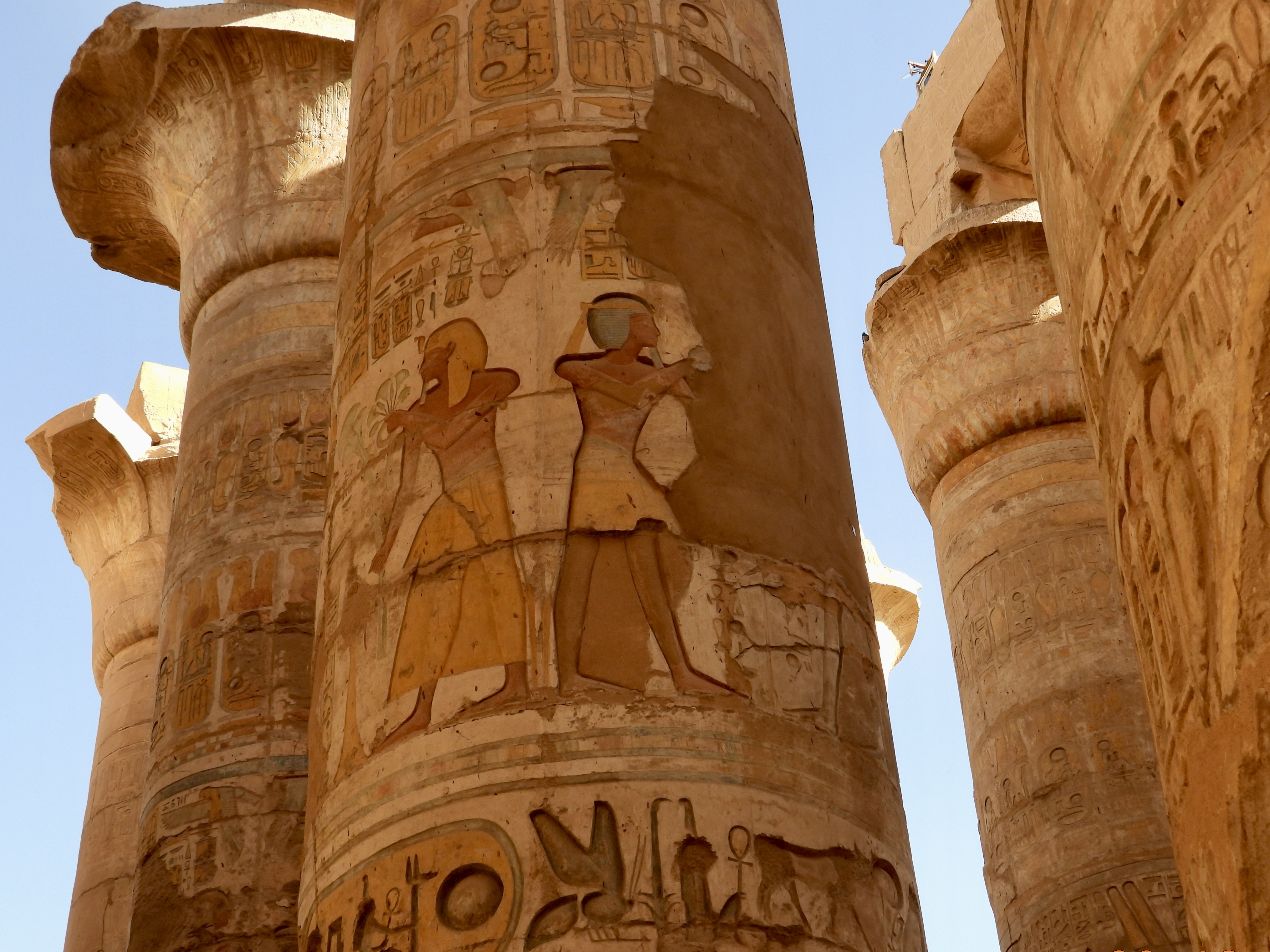
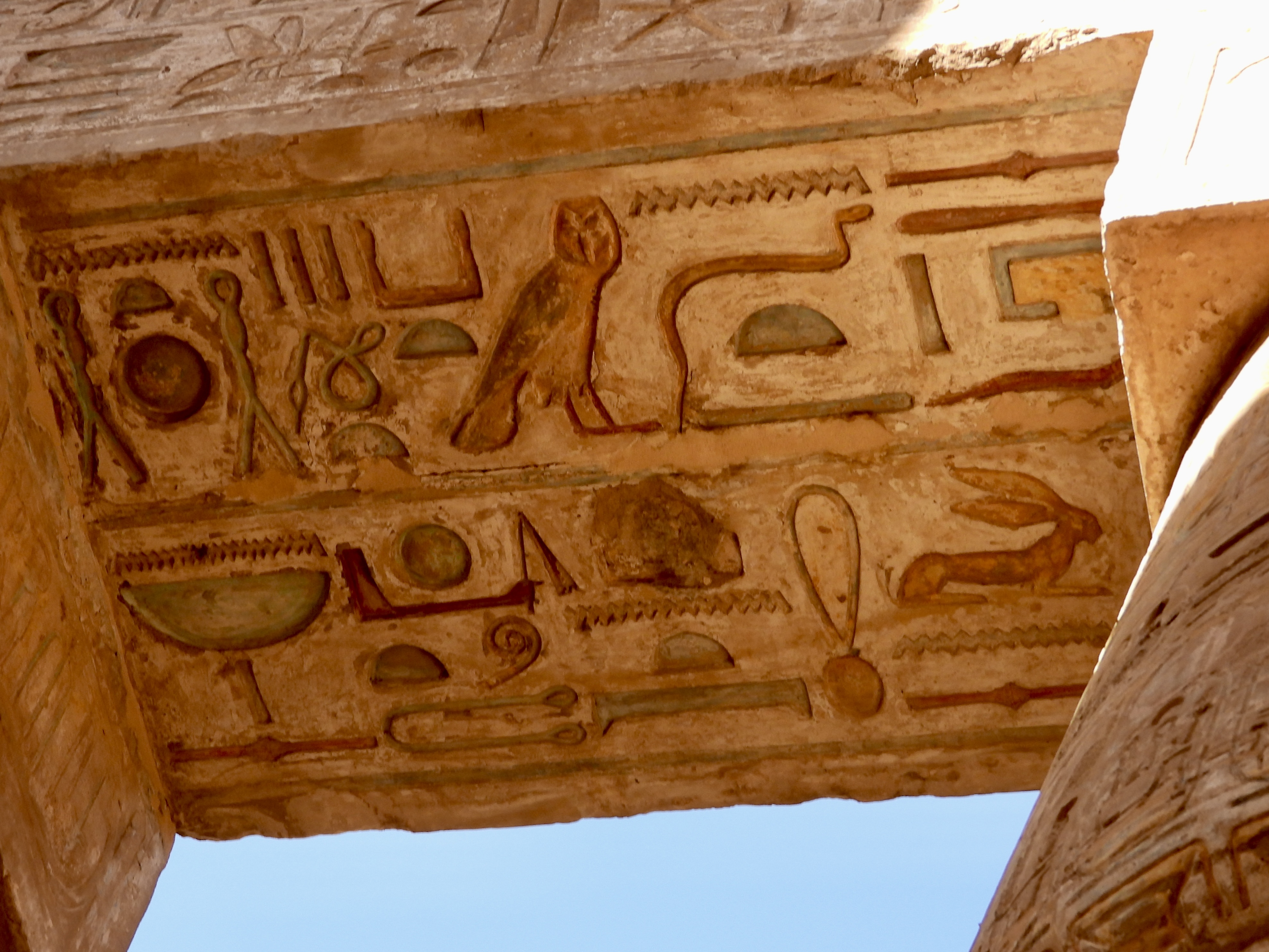
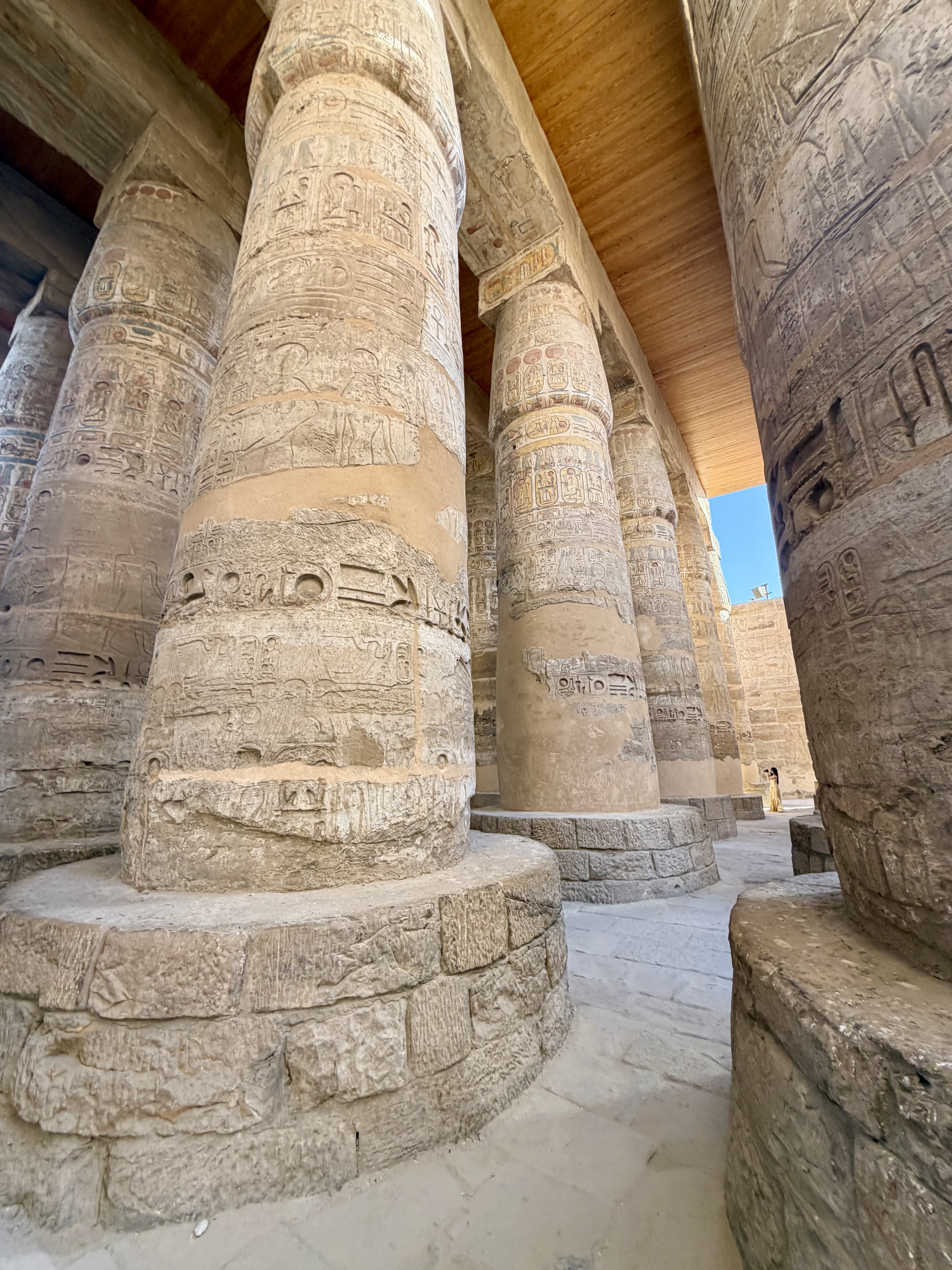
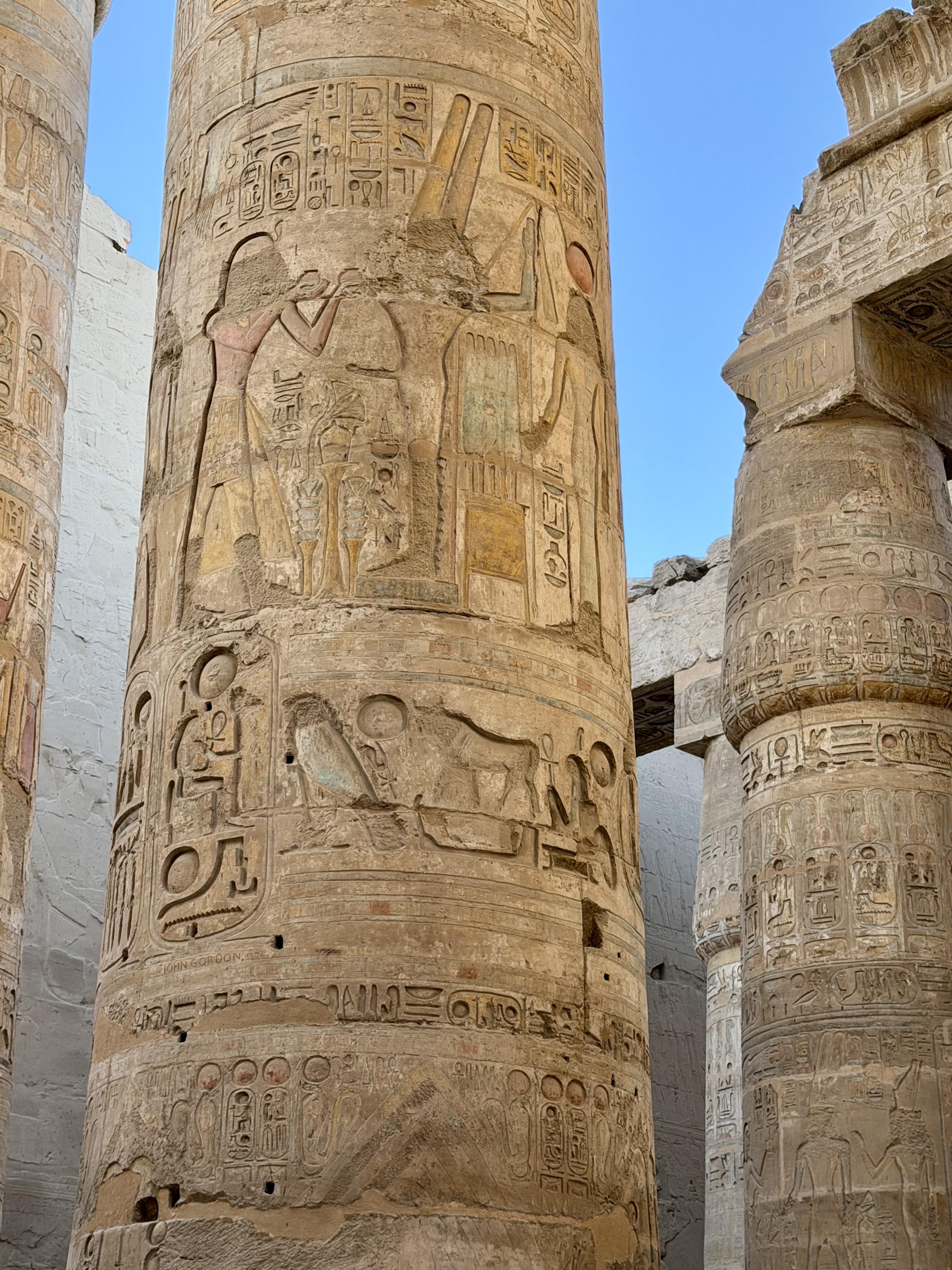
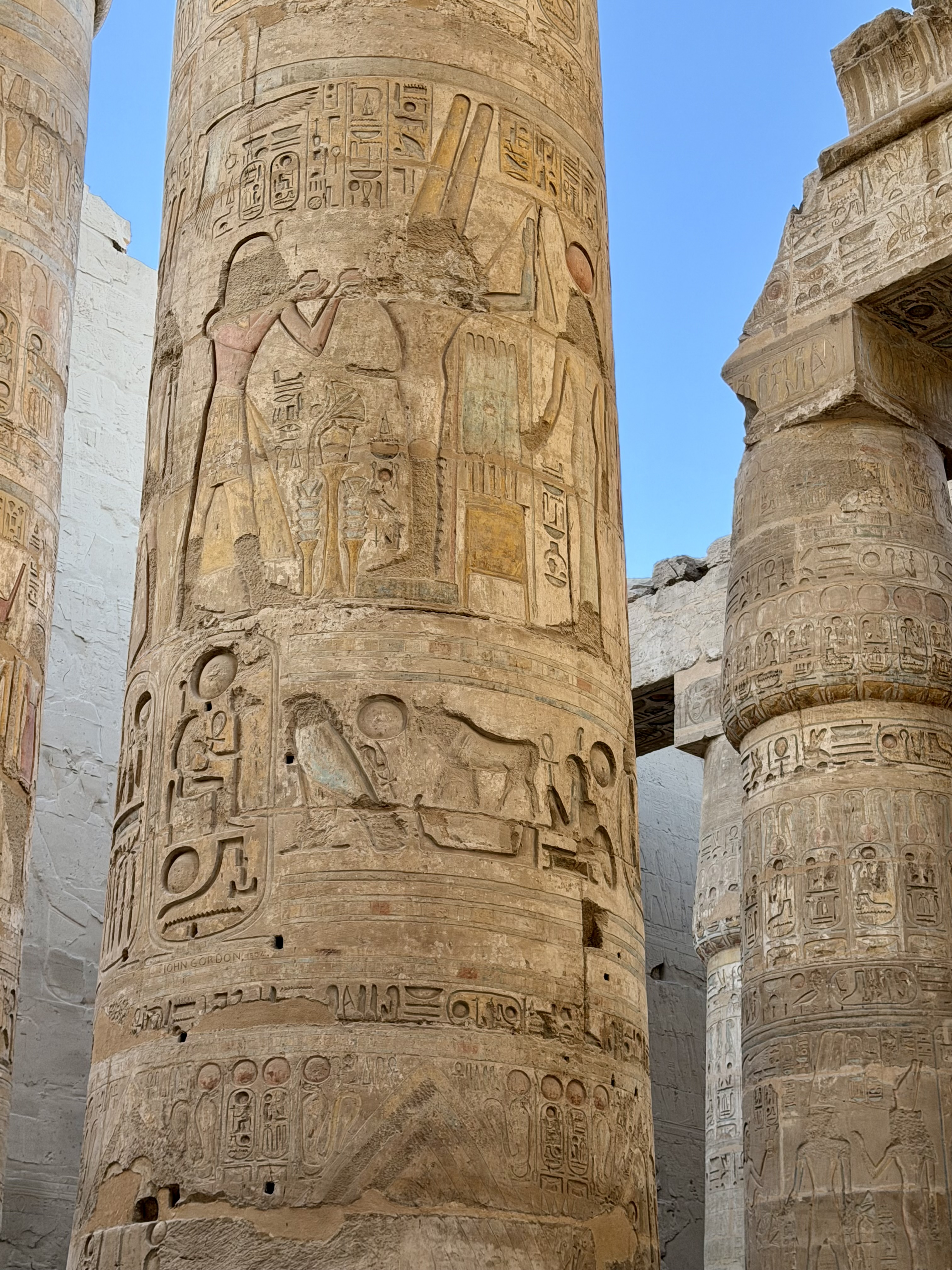
Alaa explained that temples were not public gathering spaces but sacred environments where priests performed rituals believed to maintain cosmic balance between gods and humanity. The overwhelming scale was intentional, meant to reflect divine power rather than human comfort.
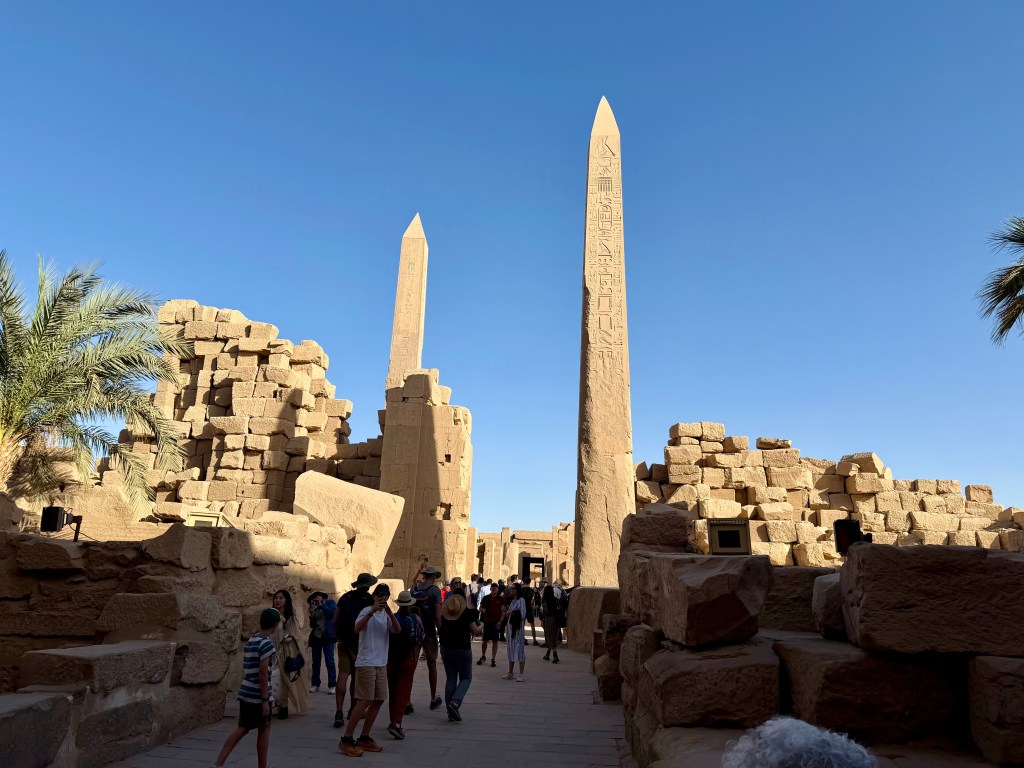
Every turn revealed another courtyard, obelisk, or carved wall telling stories of devotion and victory.
It was overwhelming in the best possible way.
Luxor Temple: Power in Stone
From Karnak we continued to Luxor Temple, once connected by a ceremonial avenue used during the Opet Festival, when statues of the gods traveled between temples to renew the pharaoh’s divine authority.
If Karnak feels vast and sprawling, Luxor Temple feels focused and monumental.
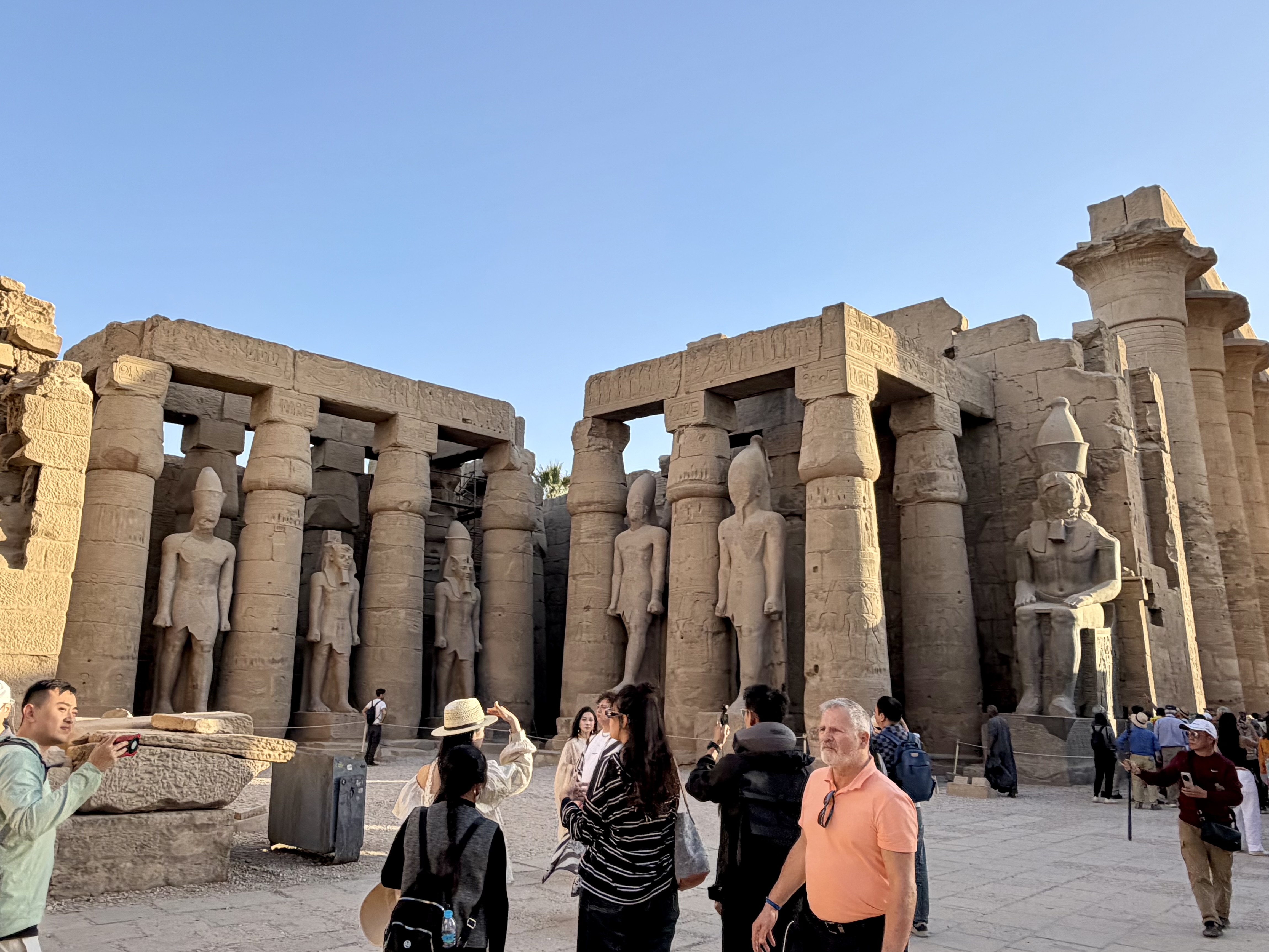
Massive seated statues of Ramses II guard the entrance, their scale almost impossible to grasp until standing beside them. Even weathered by time, they project calm strength, as if still watching over the city.
Built primarily by Amenhotep III and later expanded by Ramses II, Luxor Temple celebrated kingship itself, reinforcing the pharaoh’s role as intermediary between gods and people.
Inside, towering columns and carved walls depict royal ceremonies and offerings. Layers of history appear throughout the site, including Roman additions and a mosque later constructed within the complex, evidence of continuous spiritual significance across centuries.
What struck me most was how intact it felt.
Unlike ruins that feel distant, Luxor Temple still feels alive. The symmetry, scale, and artistry create an atmosphere that is both awe inspiring and peaceful.
Even without my husband beside me, I felt completely absorbed in the experience, sharing quiet amazement with our small group as Alaa brought the stories to life.
Ramadan Kareem
On the drive back, we experienced one of the most unexpected moments of the day.
Traffic slowed as a large Muslim man wearing a traditional galabeya and keffiyeh stepped into the road holding a long walking stick. He spoke loudly and quickly toward our vehicle, and for a moment I wondered if he was upset.
Then Alaa smiled and rolled down the window.
The man handed him two styrofoam containers.
As the sun was about to set, Muslims observing Ramadan were preparing for iftar, the evening meal that breaks the daily fast. Sharing food with others is a common act of generosity during this time.
Inside were fried dates, offered freely.
I am not normally a fan of dates, but in that moment it felt like a gift far beyond food. I accepted mine with a smile and joined everyone in saying, “Ramadan Kareem.”
A small moment, but one I will never forget.
Karnak Temple Sound and Light Show
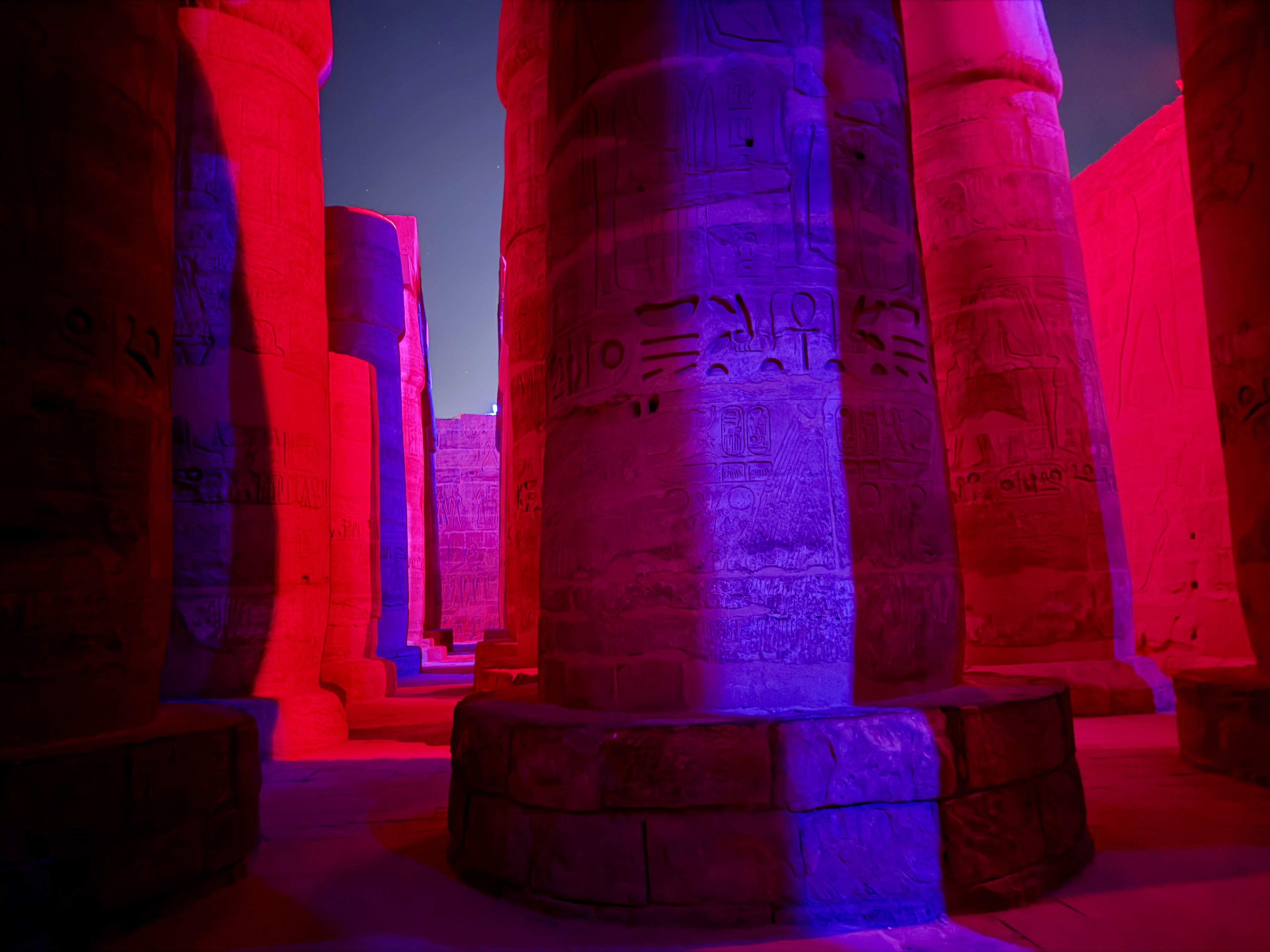
That evening, after a short rest back on the ship, we returned once again to Karnak Temple, this time for the Sound and Light Show. Visiting Karnak during the day had been overwhelming in scale and detail, but experiencing it at night transformed it entirely. The temple no longer felt like ruins. It felt alive.
We began standing near the entrance along the grand processional way lined with ram-headed sphinx statues, guardians representing the god Amun. Under the dark sky, dramatic lighting slowly illuminated the pathway ahead of us while deep, echoing narration filled the air. Voices representing ancient rulers introduced themselves as though speaking across thousands of years, telling the story of Karnak not as a monument, but as a living center of power, faith, and ceremony.
Rather than sitting in one place, the experience unfolded as a journey.
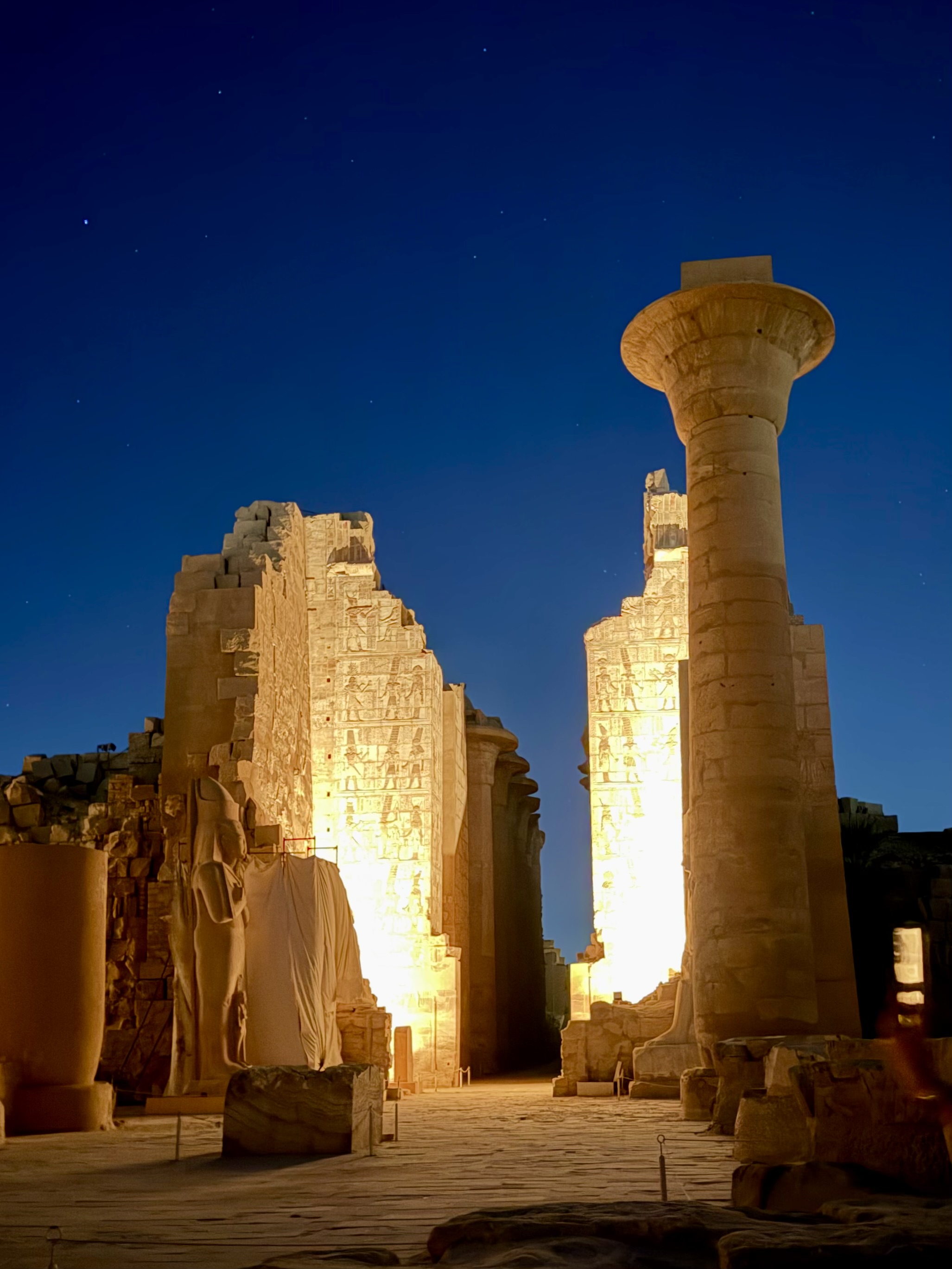
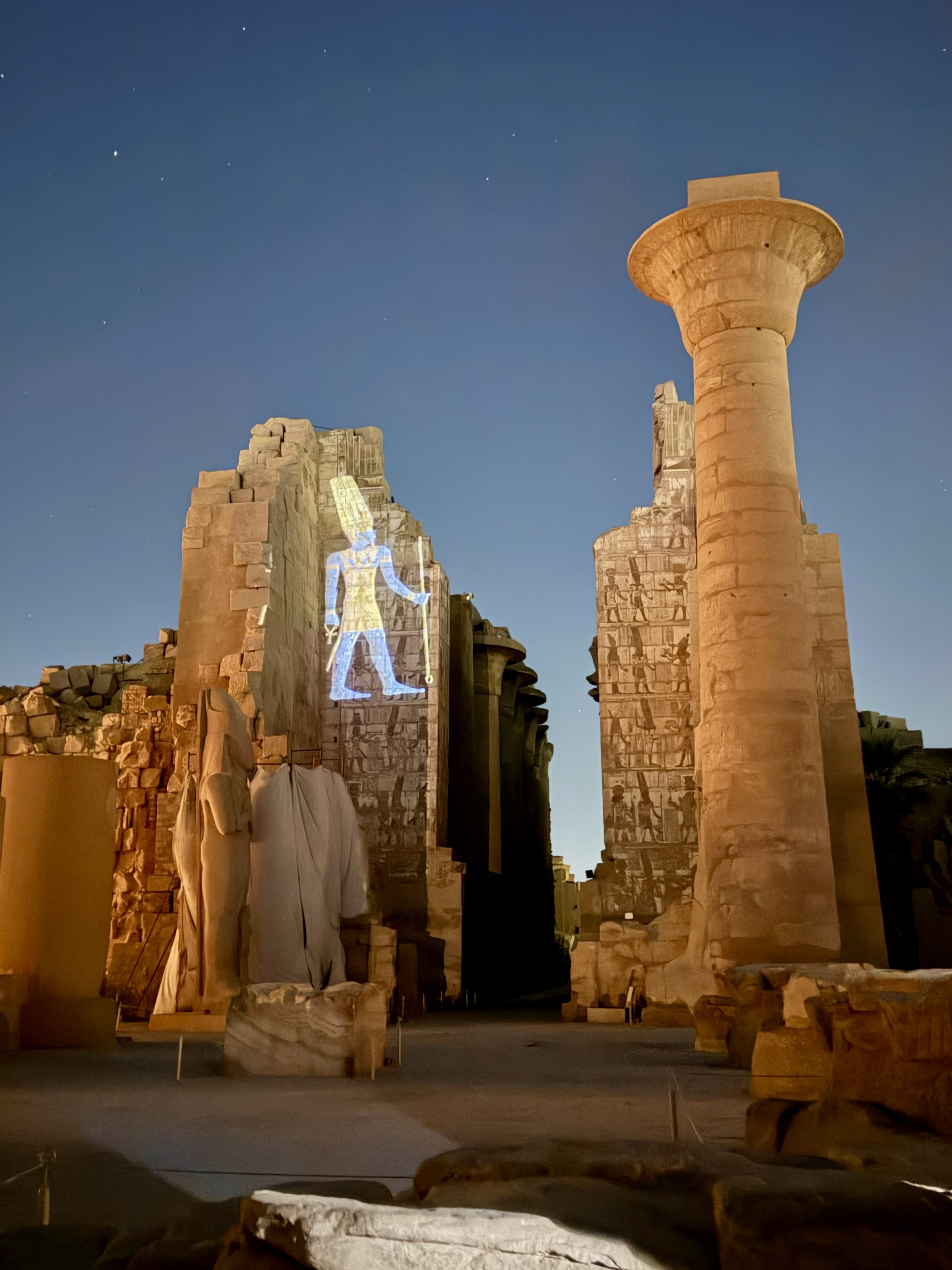
After the first portion of the story, we were guided deeper into the temple complex. With each transition, new sections emerged from darkness. Massive pylons appeared suddenly in golden light. Hieroglyph-covered walls glowed against the night sky. Shadows stretched across stone surfaces carved more than three millennia ago.
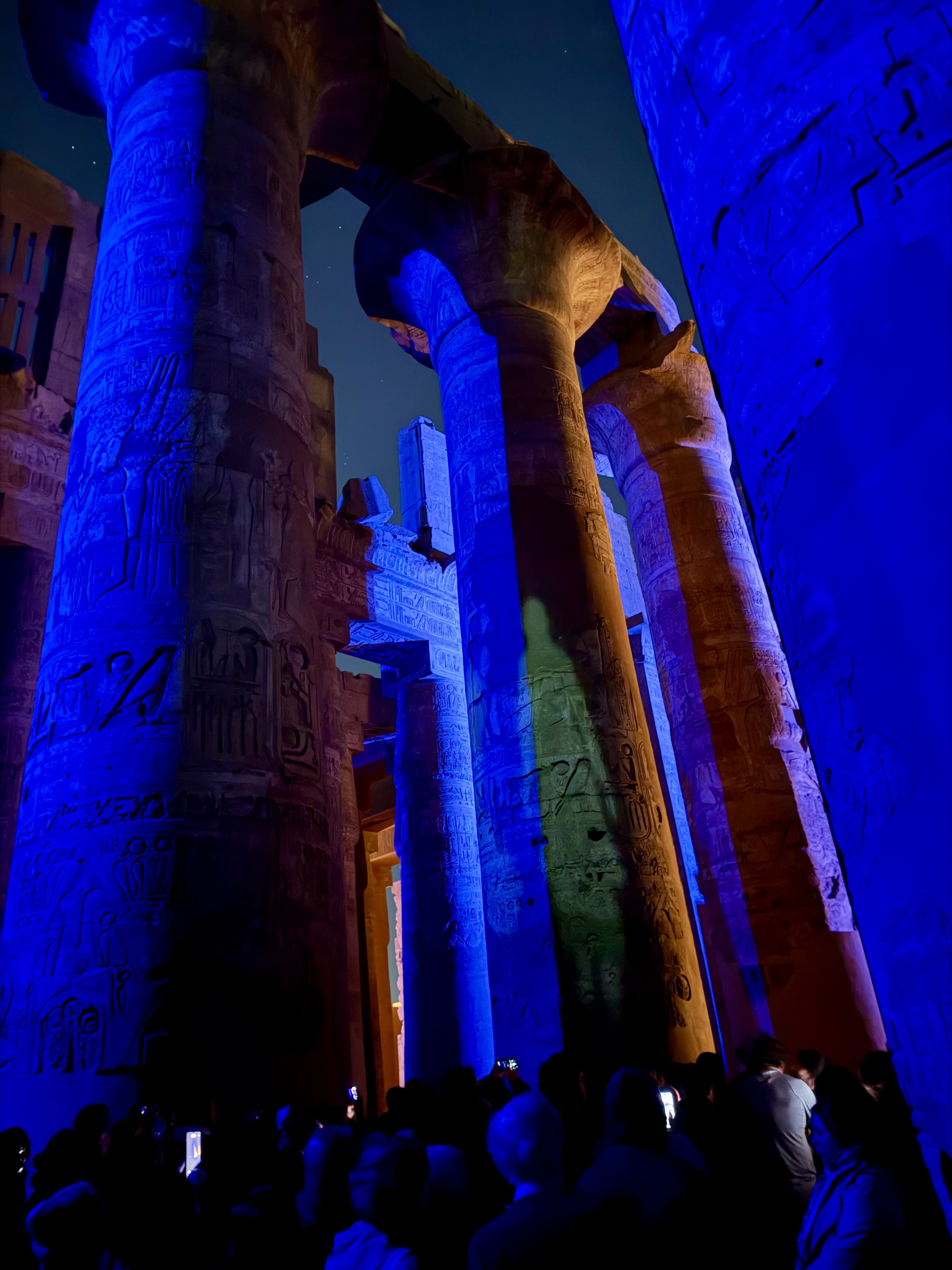
When we entered the Hypostyle Hall again, the moment stopped me completely.
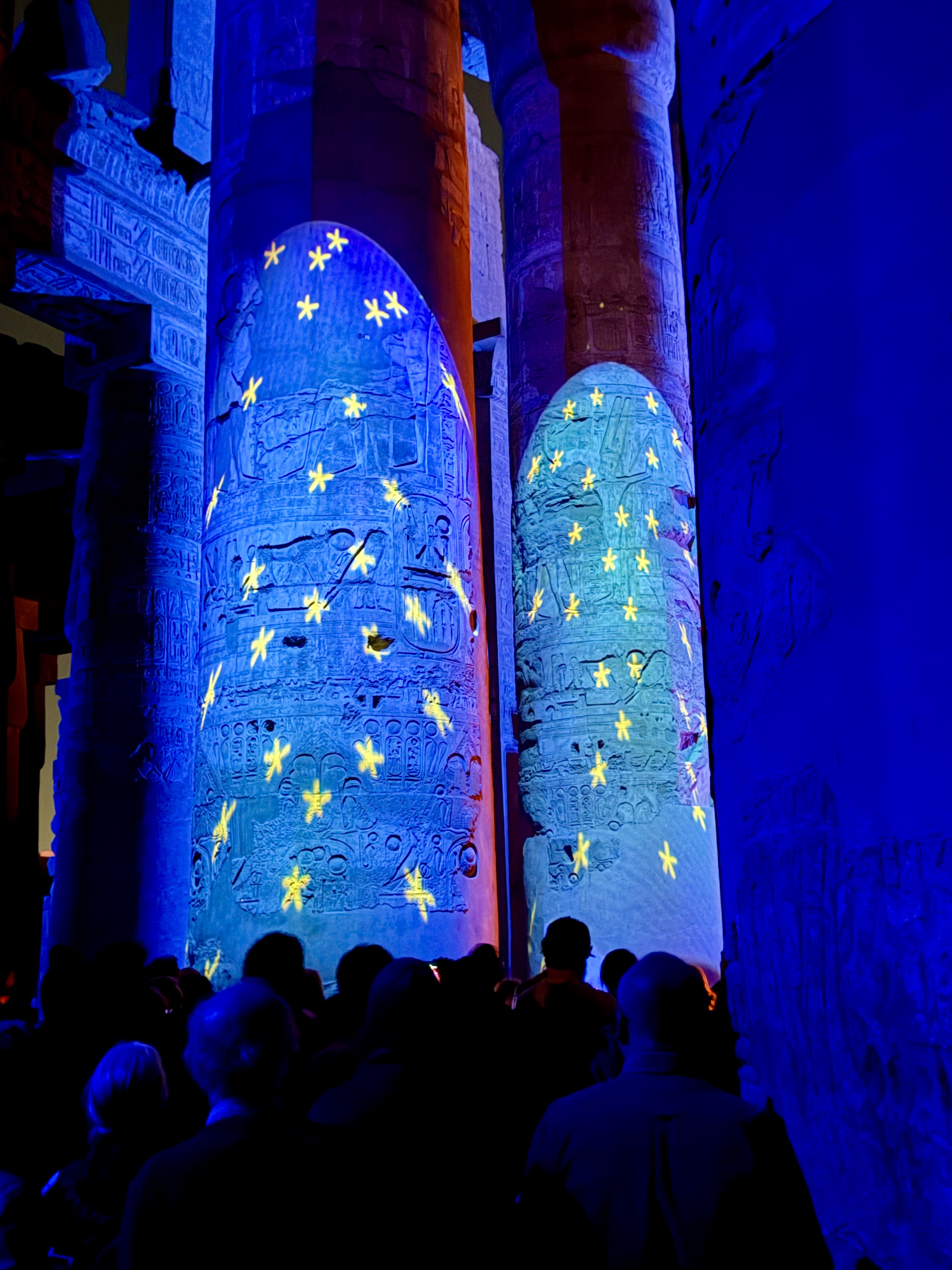
Lights rose slowly around us in a sweeping 180-degree arc, bathing the towering columns in shifting colors, reds, blues, and deep purples. During the day I had stared upward in awe at their height and detail. At night, surrounded by color and sound, the columns felt almost sacred. Hieroglyphs seemed to move as shadows passed across them, telling stories of offerings to the gods and victories meant to last forever.
The narration explained how Karnak was expanded over nearly two thousand years, each pharaoh adding new structures to honor Amun-Ra and reinforce the divine authority of kingship. Pharaohs were not simply rulers, they were intermediaries between humanity and the gods, responsible for maintaining cosmic balance. Standing there beneath the illuminated columns, it was easier to understand why such enormous effort was devoted to a single sacred space.
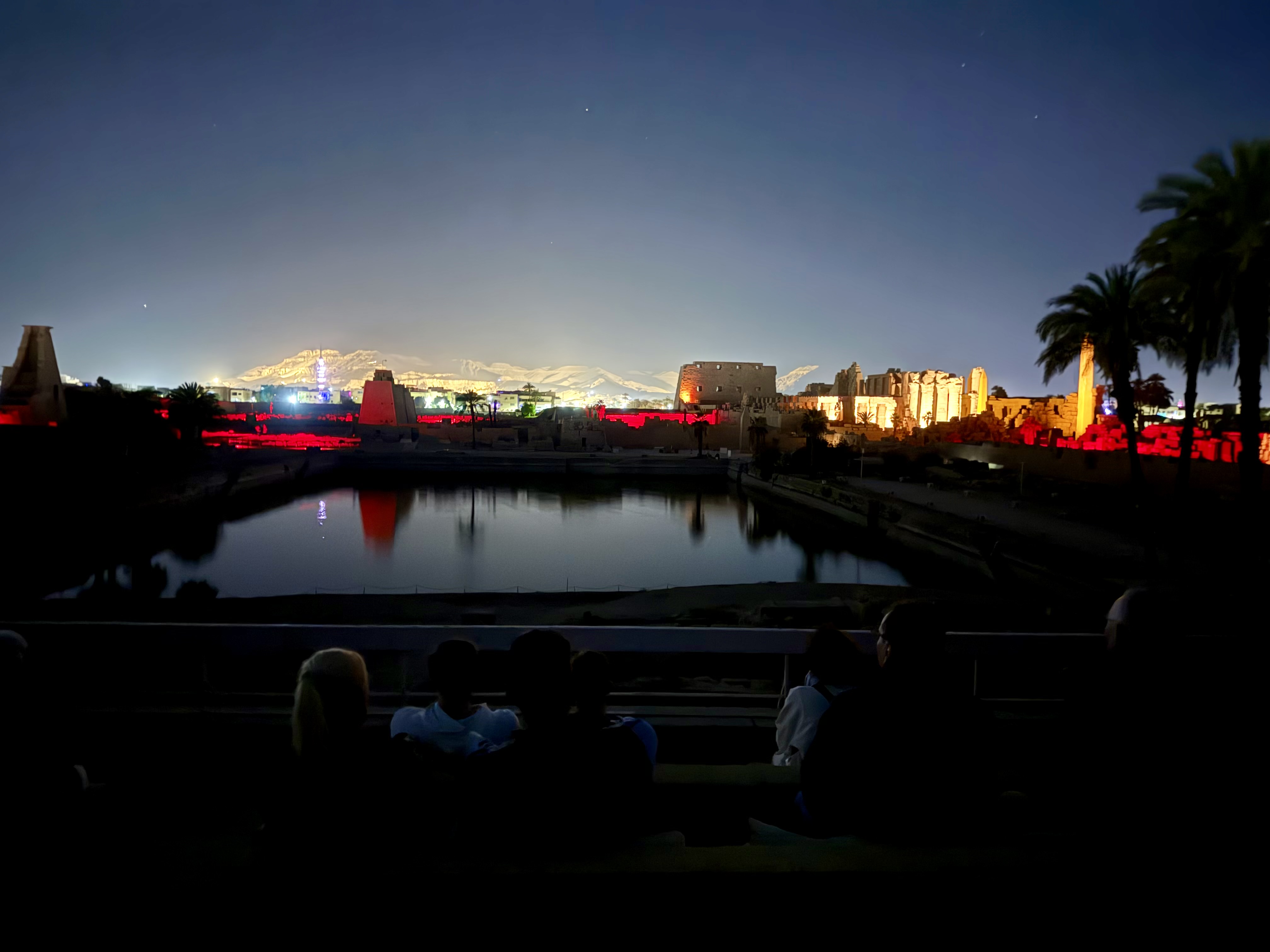
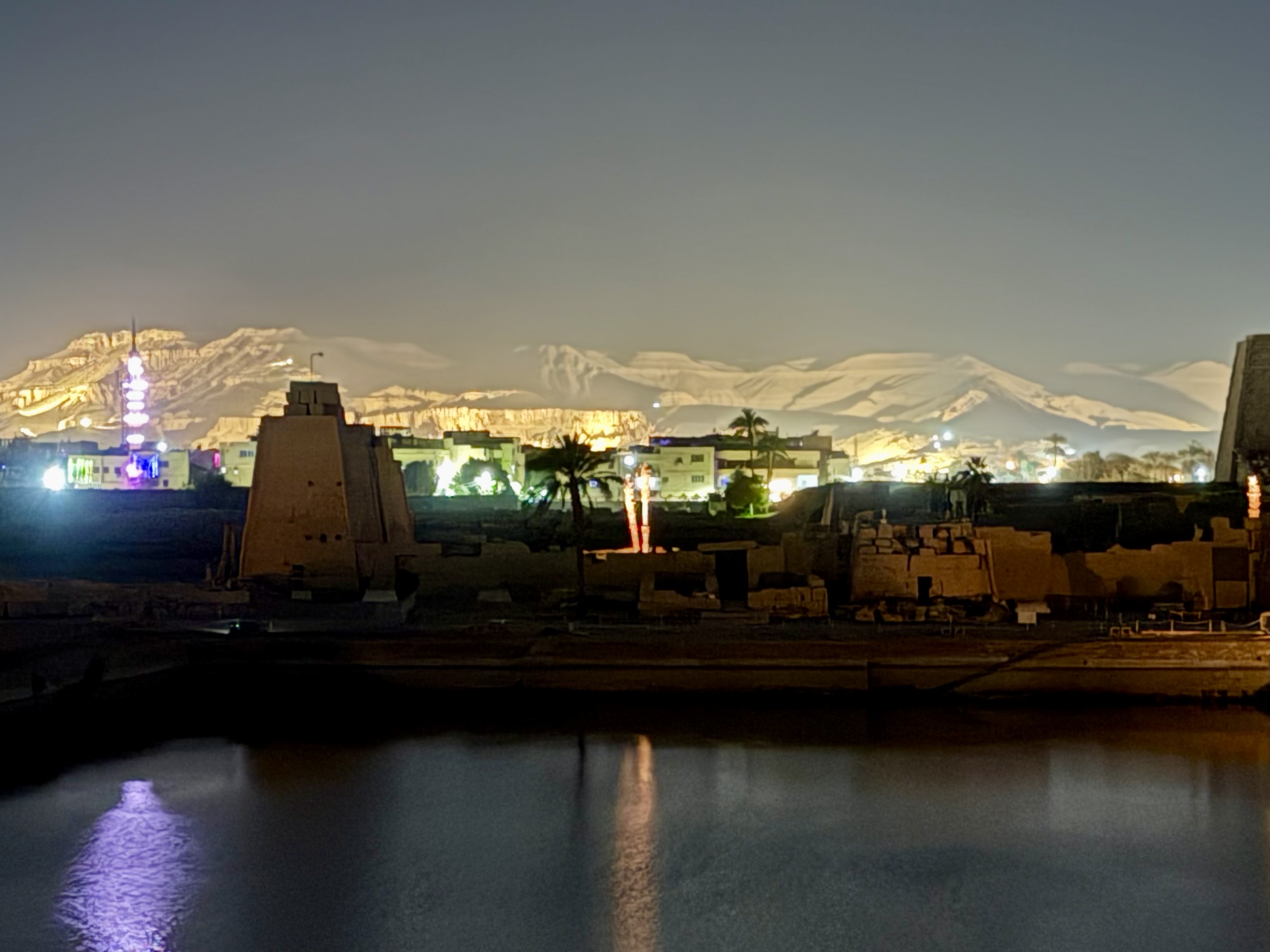
We continued walking through the complex, passing near the Sacred Lake, its dark water reflecting faint lights and stars. The atmosphere shifted from dramatic to almost peaceful, as if the temple itself were exhaling after centuries of ceremony.
Throughout the evening, one temple attendant kept appearing beside us at exactly the right moments, quietly guiding my husband and me toward better vantage points. When we reached the stone seating area overlooking the lake and toward the West Bank, he insisted we move again, directing us to seats in the upper left corner where he promised the best view.
We went along, exchanging a knowing glance, convinced this would end with the expected request for a tip. In true Egyptian fashion, we assumed there was a plan behind the kindness. But this time, there was none. He simply nodded, smiled, and disappeared back into the crowd.
From our seats, projections illuminated temple walls while narration continued, recounting the rise of Thebes as Egypt’s religious capital and the legacy of rulers like Seti I and Ramses II, whose additions transformed Karnak into the largest religious complex ever built in the ancient world.
Hearing the story again after walking the temple earlier that day changed everything. The layout suddenly made sense. The alignment of courtyards, pylons, and sanctuaries felt intentional rather than overwhelming. Light and sound connected history to place in a way guidebooks never could.
As the final lights faded and the temple returned slowly to darkness, Karnak felt less like something we had visited and more like something we had briefly stepped inside.
We returned to the ship quiet and tired, the kind of exhaustion that comes from absorbing too much wonder in a single day.
Tomorrow would begin before sunrise with a hot air balloon ride over Luxor’s West Bank, followed by the Valley of the Kings and the Temple of Queen Hatshepsut. We had learned that the East Bank represented life and ritual, while the West Bank symbolized death and the journey into eternity.
Ancient Egypt was no longer just history. It was becoming an experience layered moment by moment.
And somehow, the adventure was only beginning.
Sunrise Above Ancient Egypt – A Hot Air Balloon Over Luxor
The alarm rang at 4:00 a.m., a time that should never exist on vacation unless something extraordinary is waiting on the other side of it. We intentionally set it early so we could hit snooze at least once and still manage to get dressed and downstairs in time to meet our driver without causing an international incident.
Waiting for us in reception were small breakfast bags prepared by the ship, filled with fruit, pastries, sandwiches, and bottles of water. Practical, thoughtful, and exactly what two barely awake travelers needed before floating thousands of feet above ancient Egypt.
Ironically, this adventure had been my husband’s idea. When our guide Alaa mentioned the hot air balloon as an optional excursion earlier in the week, I immediately thought back to Cappadocia, where I had flown solo because his fear of heights wouldn’t allow him to even consider it. After hearing me rave about that experience ever since, he decided this time he had to try.
Even while not feeling well, he was determined.
A van collected us in the darkness and drove us toward the Nile. At the riverbank we boarded a small motorboat to cross to the West Bank, the air cool and quiet except for the gentle hum of the engine. A kind Egyptian man moved through the boat offering coffee, which at that hour felt less like a luxury and more like survival.
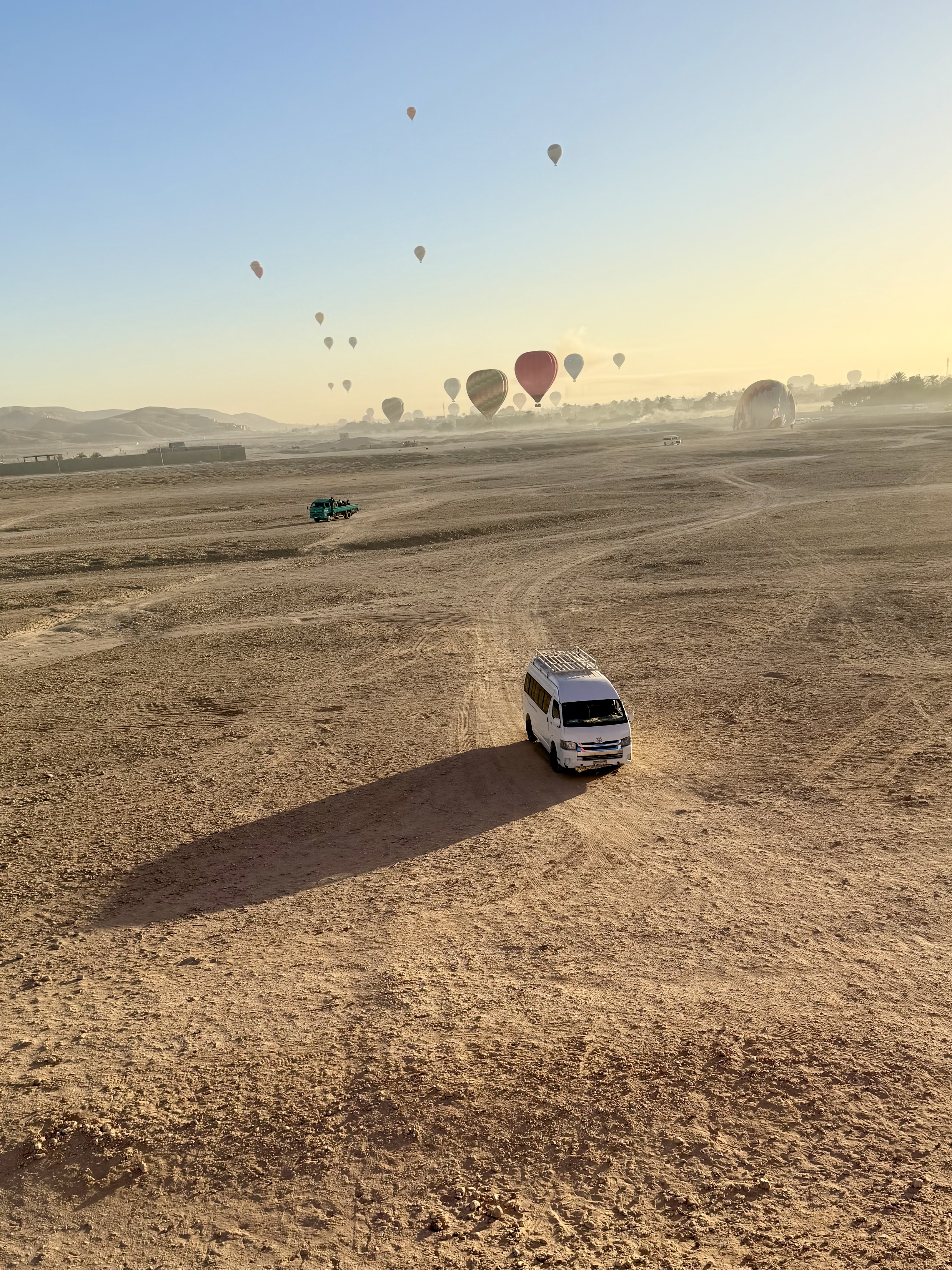
On the opposite shore we transferred into another van and drove deeper into the desert. As dawn slowly approached, enormous shapes began appearing ahead of us. Hot air balloons lay stretched across the rocky ground like sleeping giants while crews worked quickly around them. Flames blasted upward, filling the balloons with bursts of firelight that illuminated the desert in glowing shades of orange and gold.
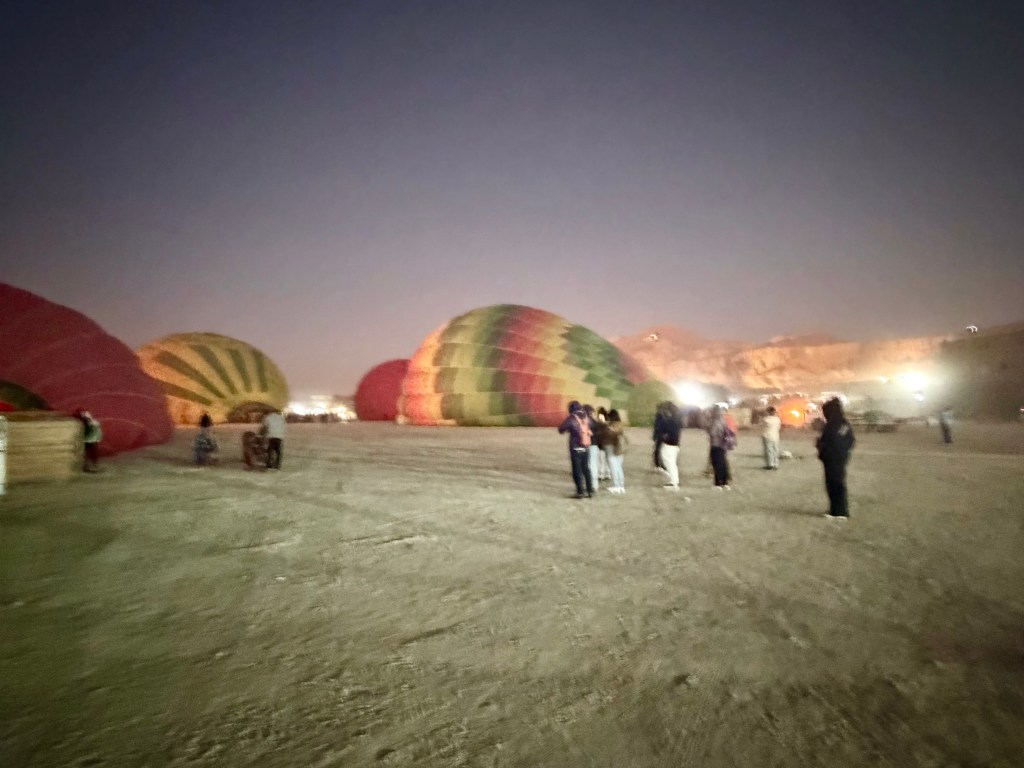
My husband still looked questionable, somewhere between bravery and reconsideration. For days he had been convinced something serious was wrong, only later realizing he was suffering from severe jet lag after crossing ten time zones without sleeping on the plane or during our first nights in Cairo. But he showed up, climbed in, and committed.
We were assigned to an eight-section basket carrying thirty-two passengers plus our pilot. Following instructions, we placed our feet into footholds carved into the basket walls and climbed inside. The morning air was cold at first, but every roar of flame overhead sent waves of warmth cascading down around us.
Then, almost without noticing, the ground drifted away.
There was no dramatic lift, no sudden motion. One moment we were standing in the desert, the next we were floating above it.
For the next hour we sailed silently over Luxor’s West Bank.
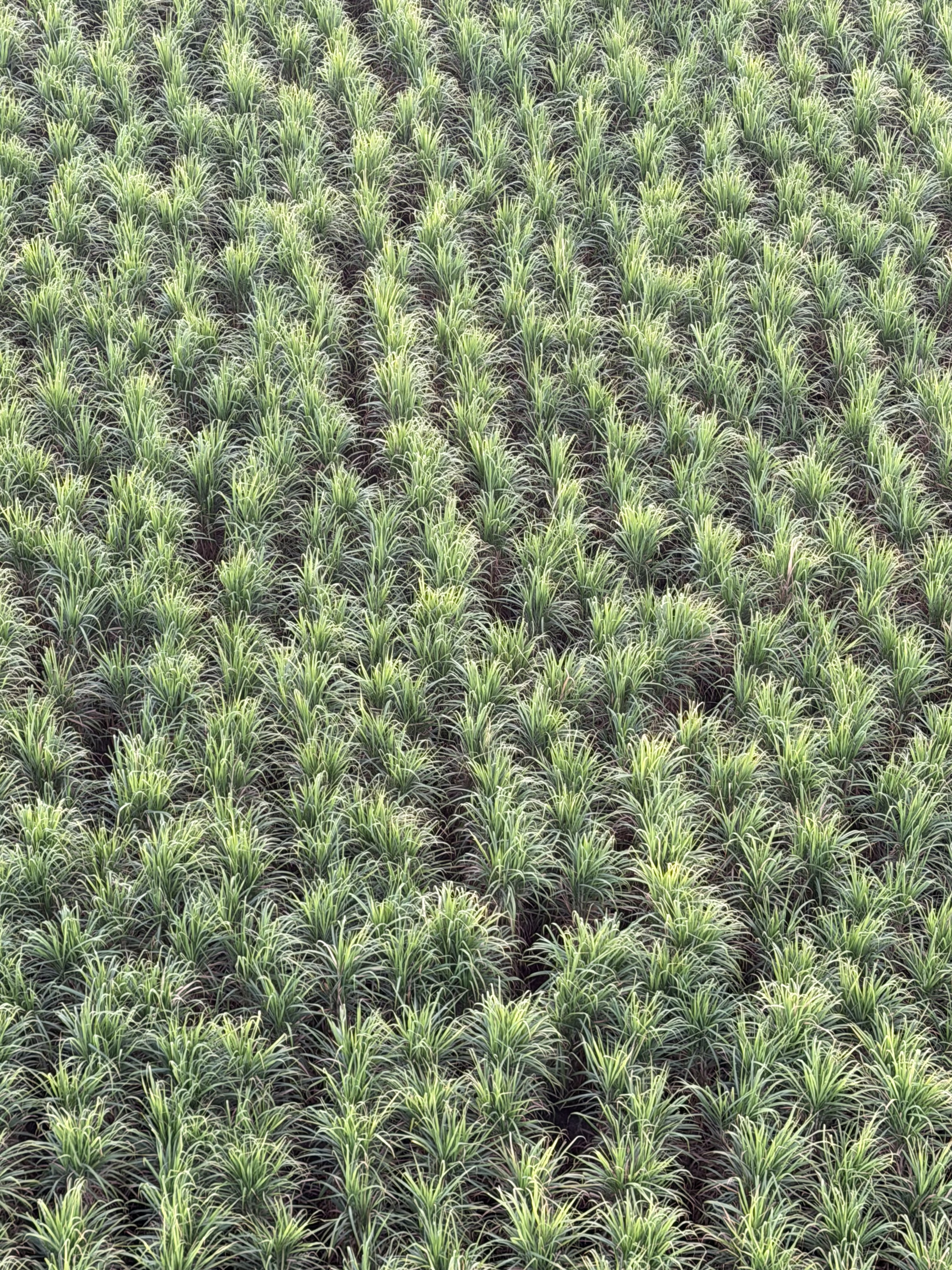
Below us stretched a landscape that felt ancient and untouched. Thin ribbons of vivid green farmland followed the Nile before abruptly ending where golden desert began. The contrast was stunning – life beside emptiness, fertility beside eternity – exactly why ancient Egyptians chose this western land as the realm of the dead.
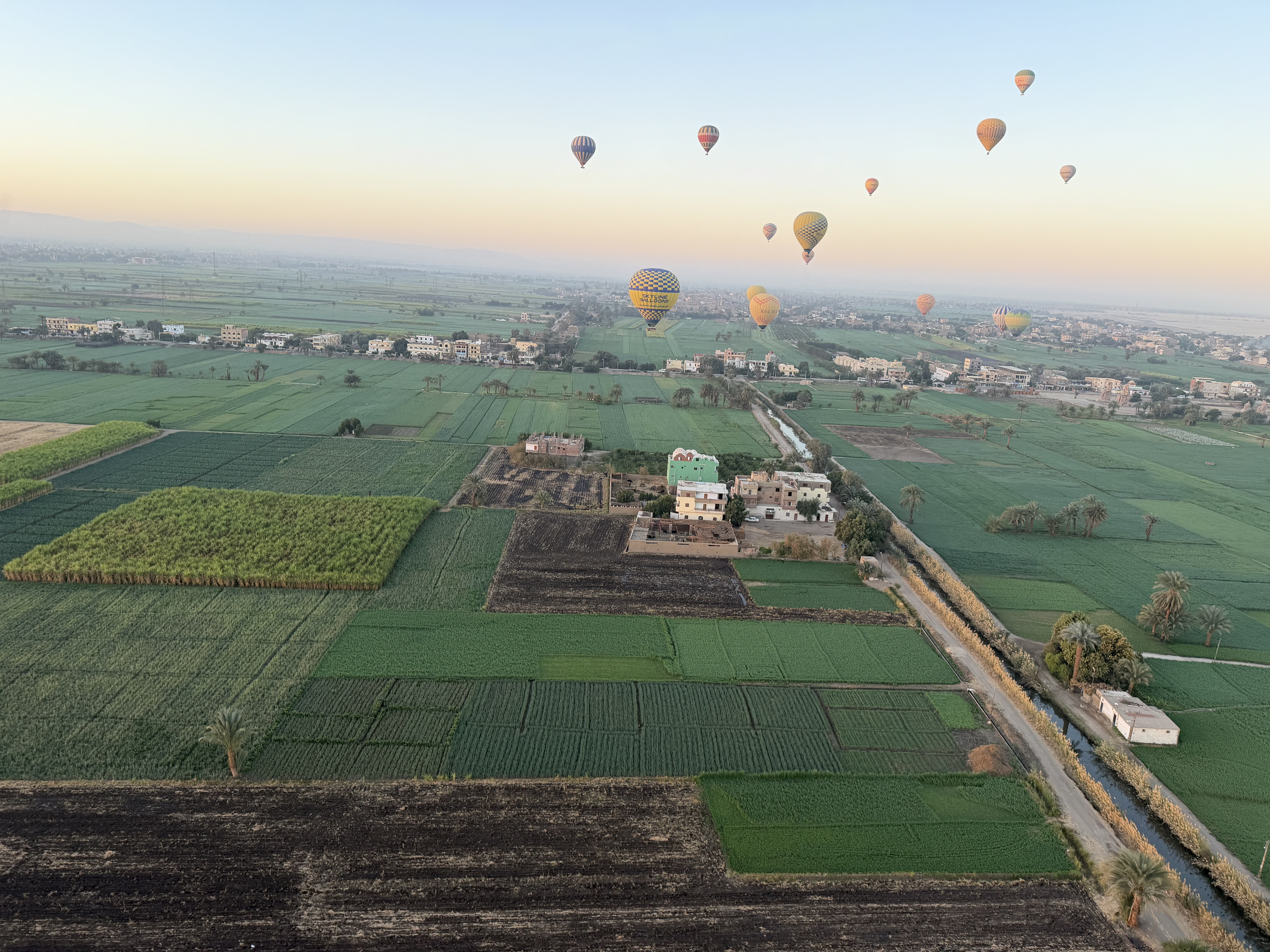
As the sun rose, the desert transformed color by the minute. Shadows stretched across the mountains, and dozens of balloons floated alongside us at different heights, creating a sky filled with slow-moving color.
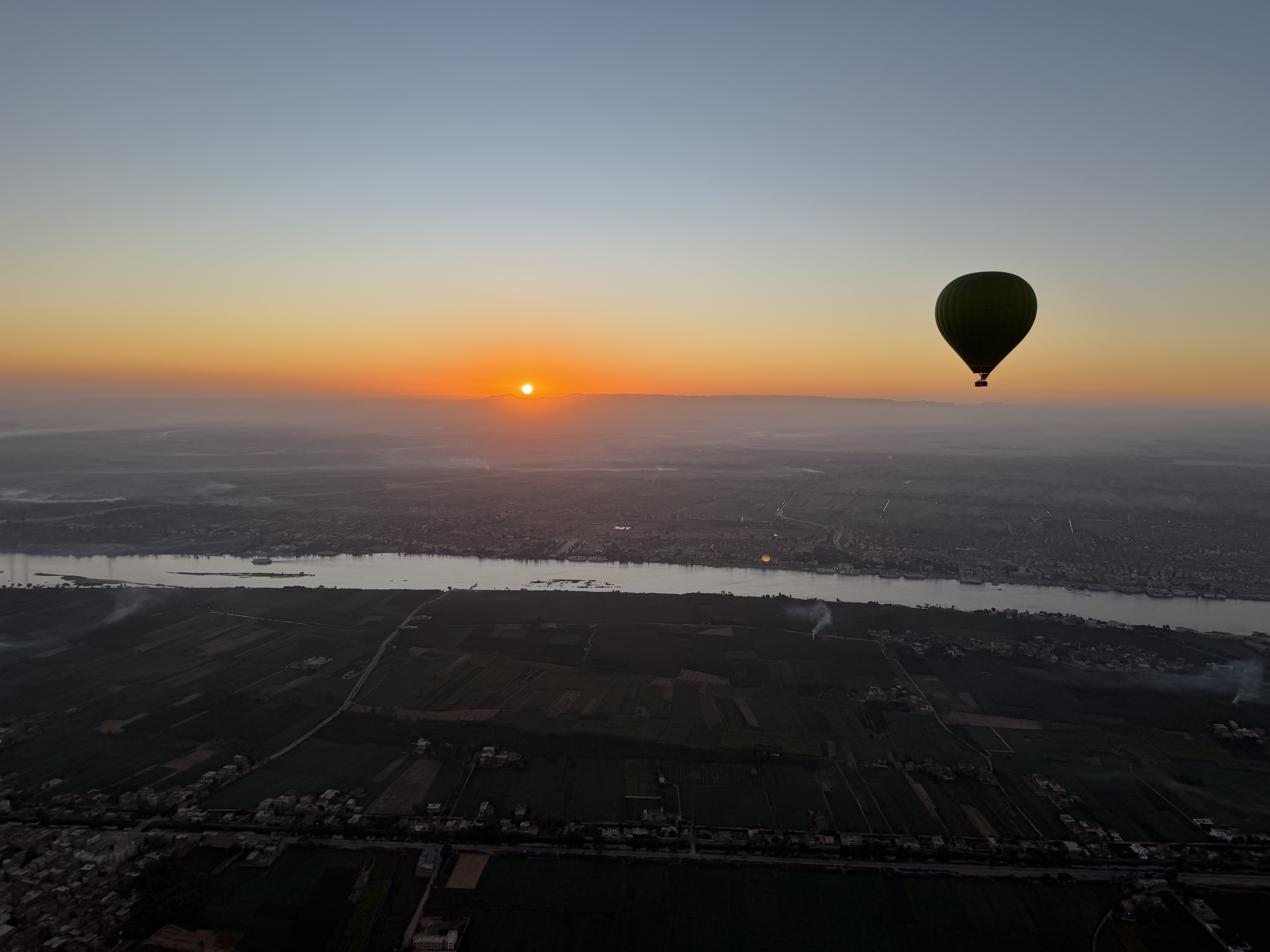
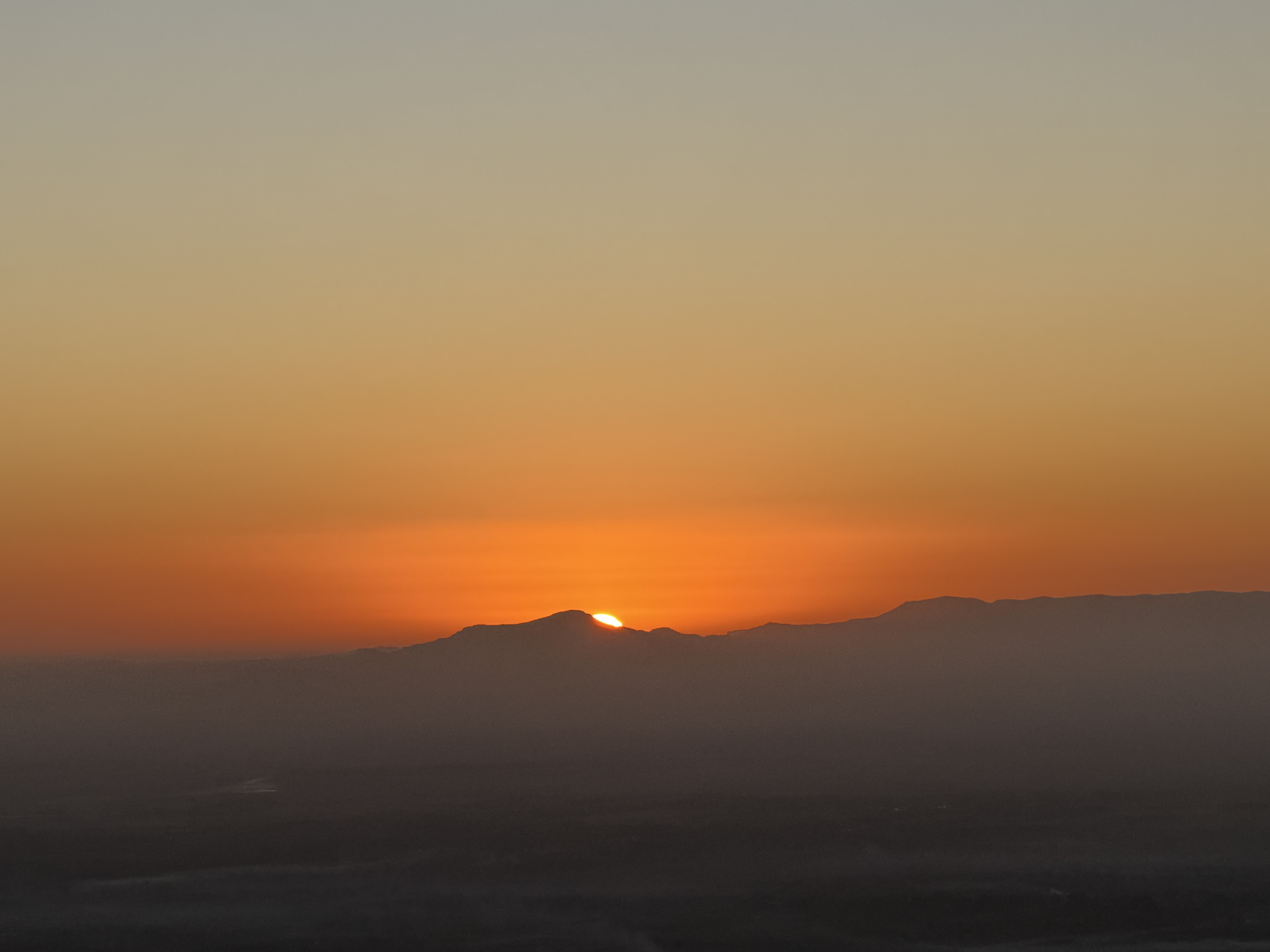
At one point our pilot decided he wanted to be the highest balloon in the sky. He fired the burner again and again, each blast louder than the last, lifting us steadily upward. Soon we were looking down at the rounded tops of other balloons drifting below us. With obvious pride, he turned and declared that we were officially the highest.
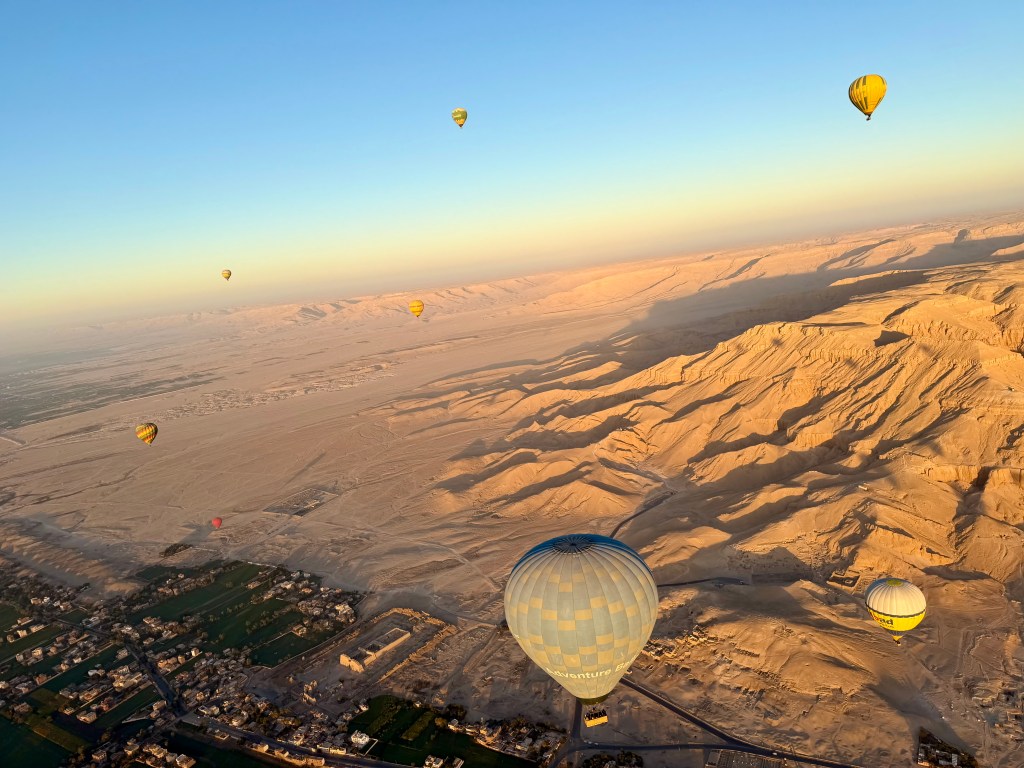
My husband loved that story afterward, but in the moment he coped differently. Rather than looking outward at just how high we had climbed, he turned inward, focusing on the people in the basket and blocking out the height entirely. Meanwhile, I did exactly the opposite, leaning over the edge, taking in every sweeping view and snapping photos nonstop, determined to capture every second of sunrise unfolding across ancient Egypt.
From our elevated vantage point we could clearly see the Valley of the Kings etched into the mountains below, entrances nearly invisible unless you knew where to look. Nearby stood the Temple of Queen Hatshepsut, its terraces blending seamlessly into the cliffs behind it, appearing less like a building and more like part of the mountain itself.
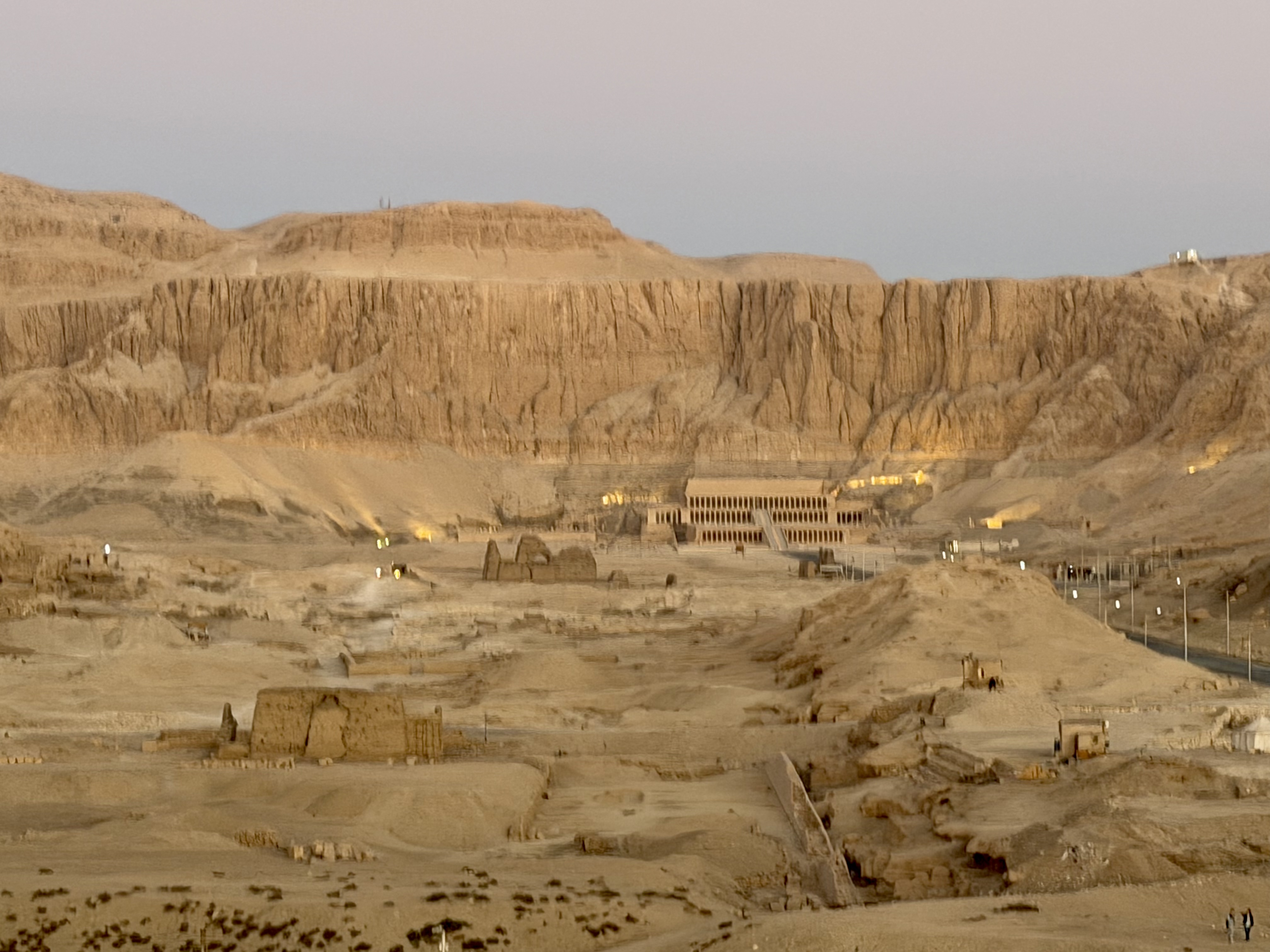
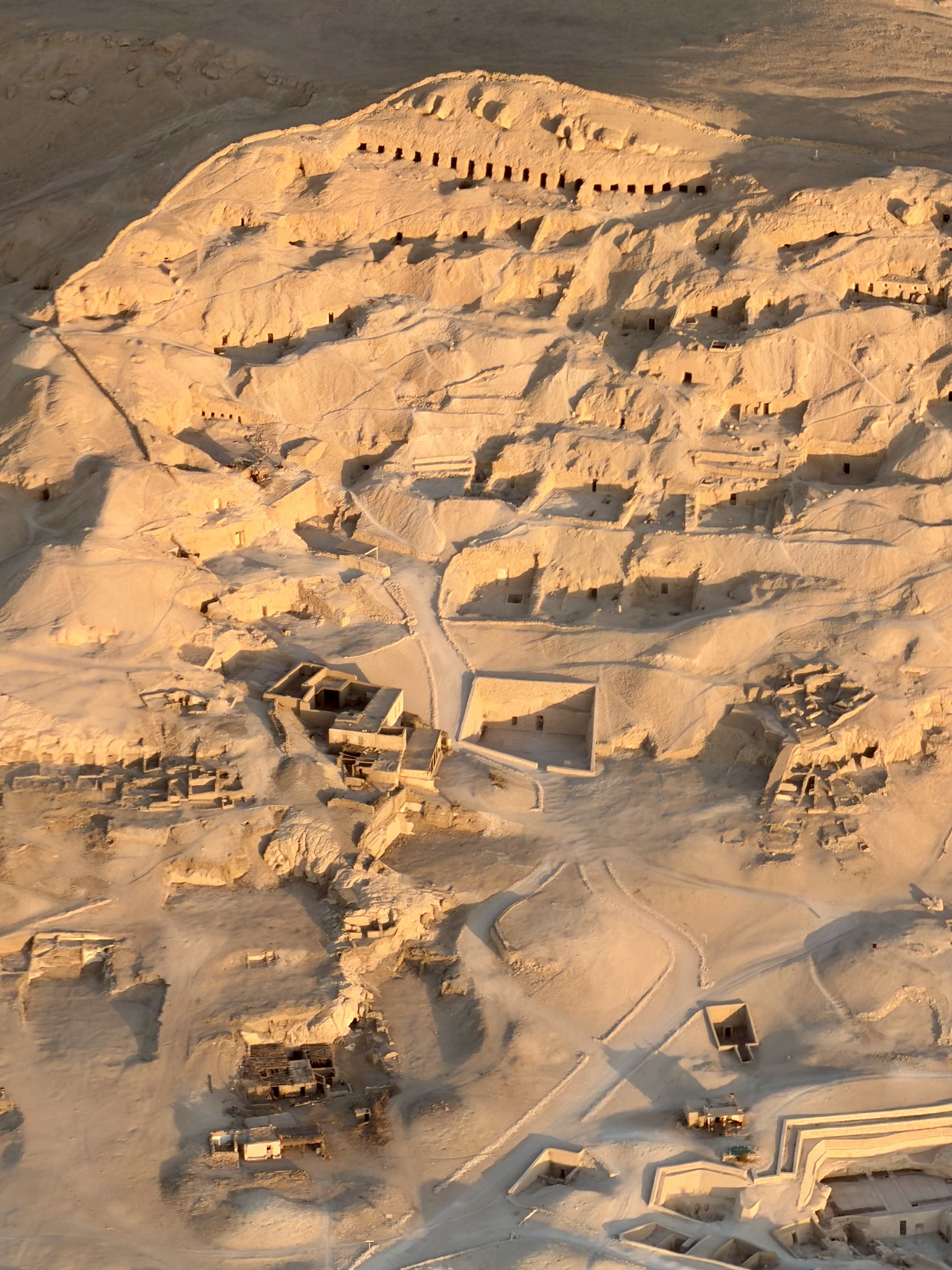
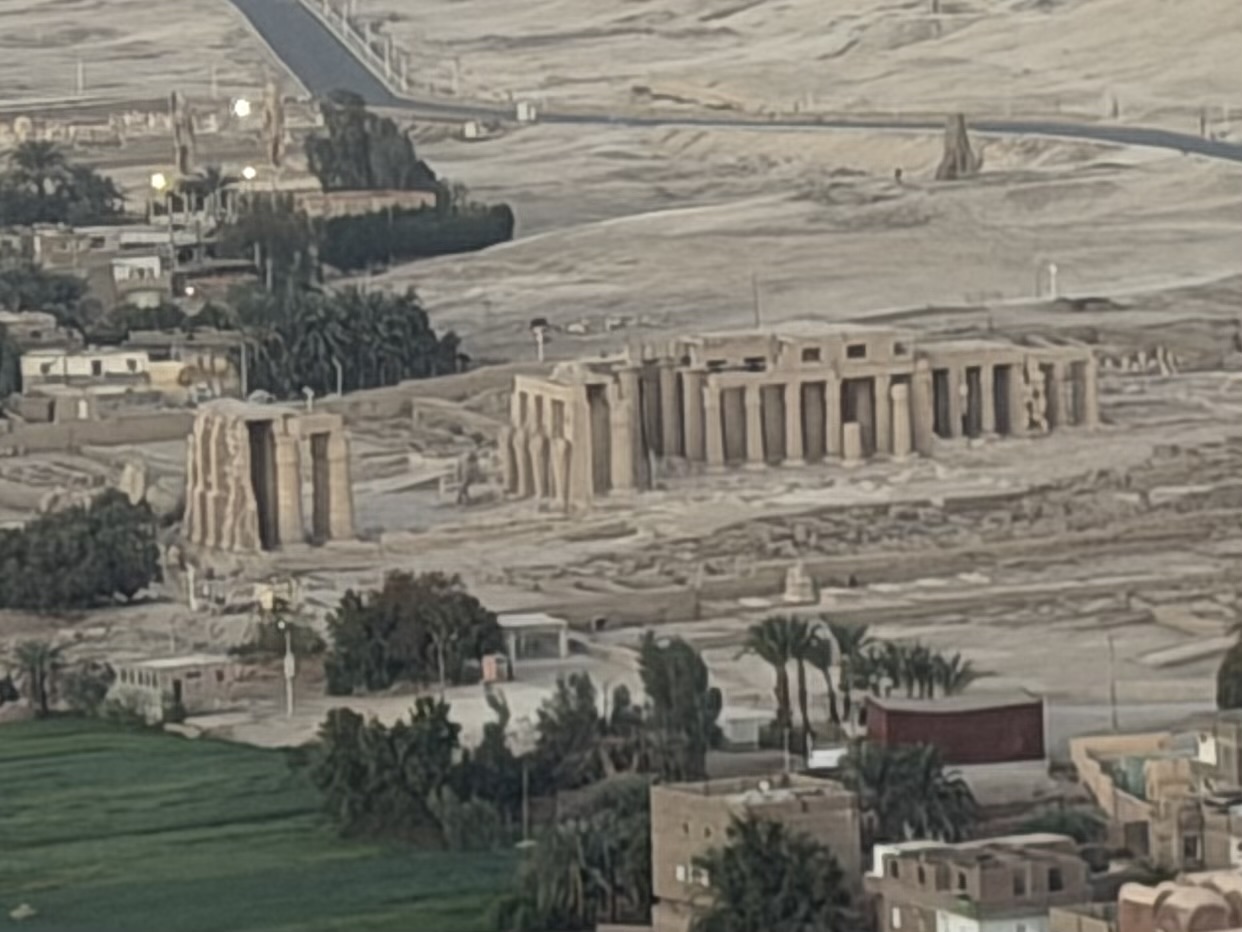
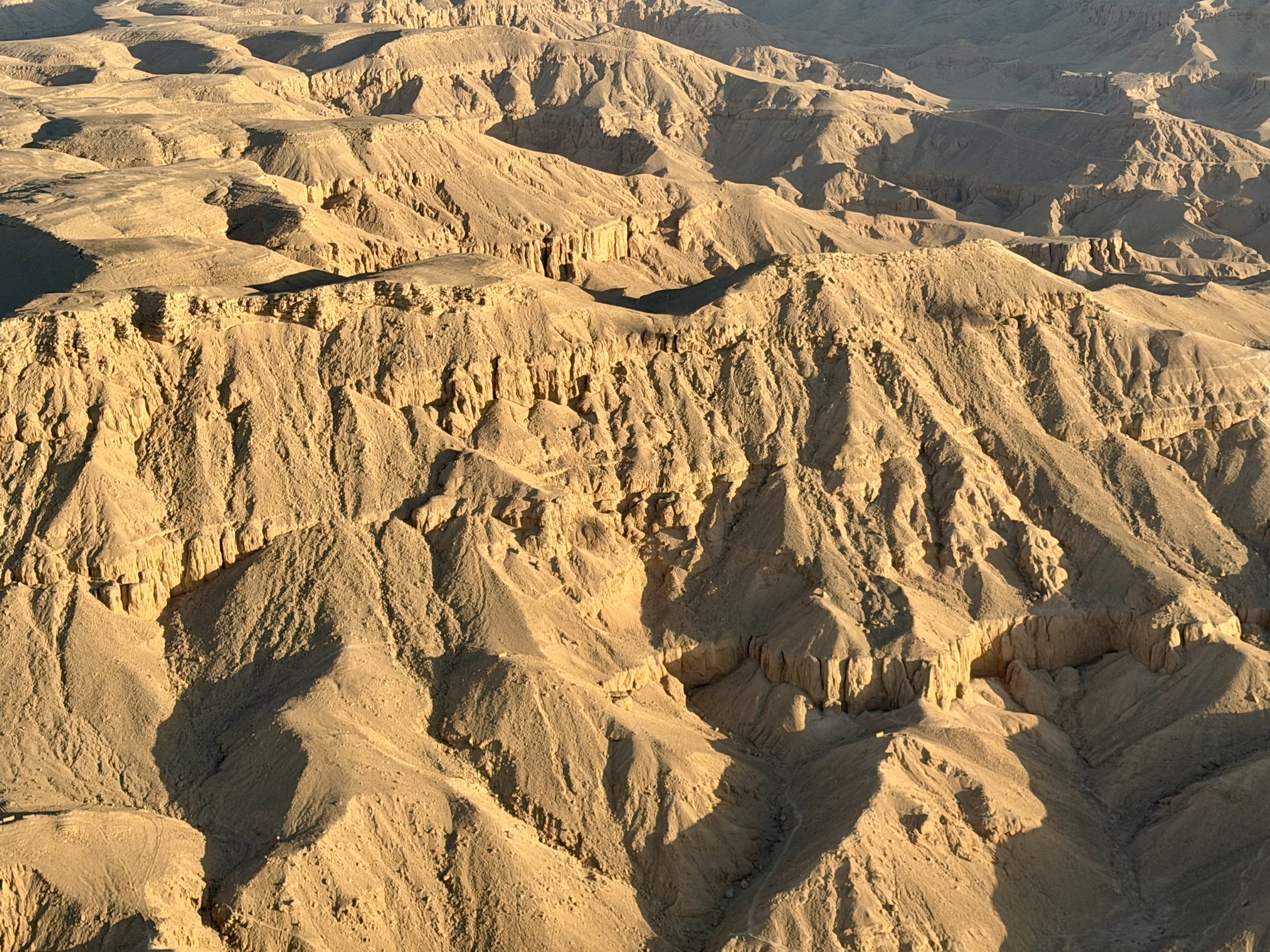
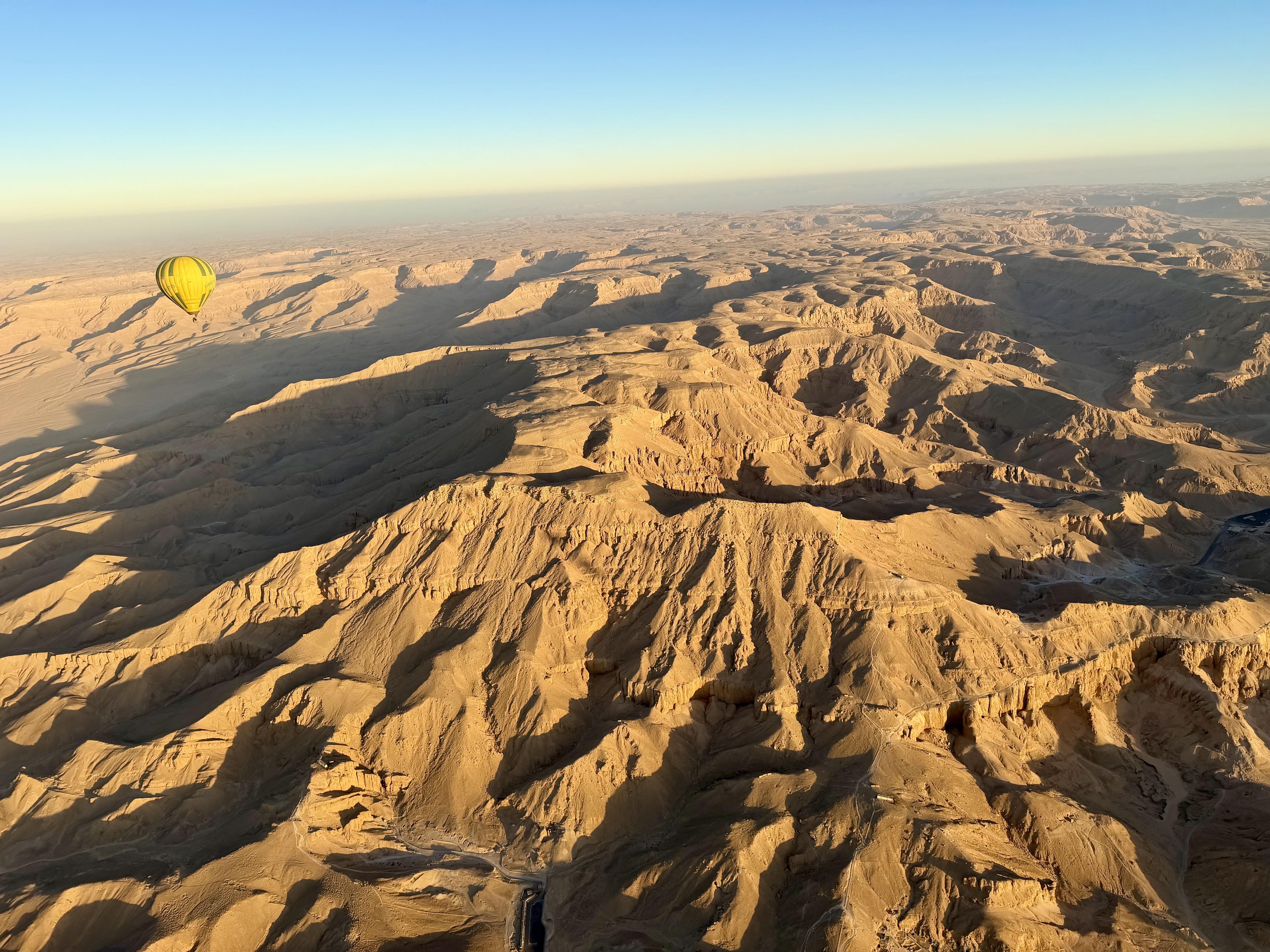
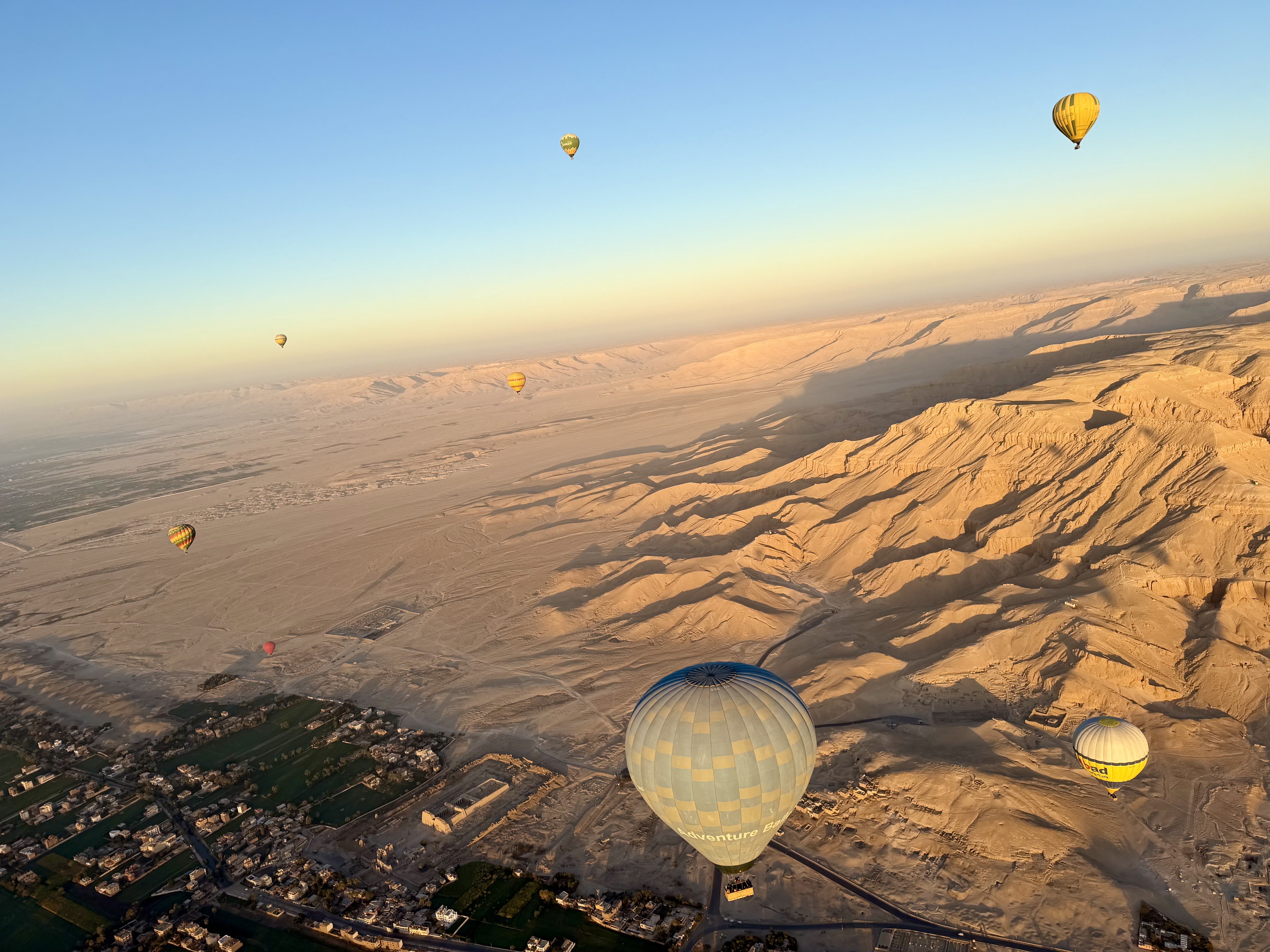
The silence was what struck me most. Aside from the occasional roar of flame, there was only stillness. No traffic. No crowds. Just wind and history beneath us.
Eventually the pilot began our descent, the desert slowly rising to meet us.
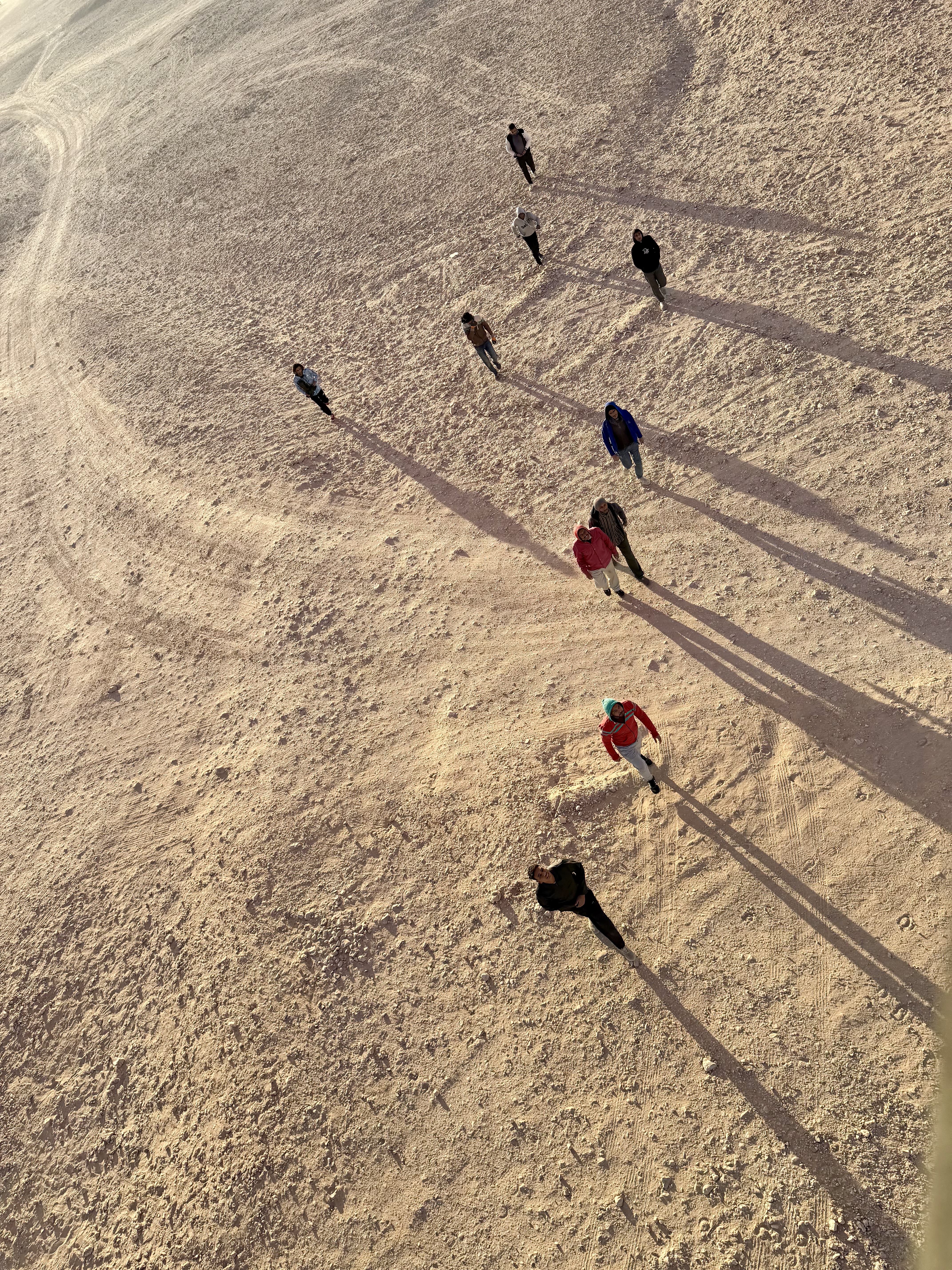
As we drifted lower, details came into focus – children riding donkeys toward us across the rocky terrain, ground crews positioning themselves with practiced precision, and the vast openness of the West Bank stretching endlessly in every direction. The landing area was dry, rugged land scattered with what looked like fragments of broken pottery everywhere, as if pieces of ancient civilization were simply part of the landscape.
The basket skimmed closer to the ground, and our pilot turned with a grin and announced we were about to experience an Egyptian landing.
None of us knew exactly what that meant.
A moment later, we did.
The basket touched down, bounced slightly, dragged gently across the rocky earth, and tilted just enough to remind us we were landing a giant balloon in the middle of the desert. Crew members jogged alongside, grabbing ropes and steadying us as we came to a stop.
Our pilot laughed and said,
“That was an Egyptian landing!”
And honestly, it was remarkably smooth. After floating for an hour above ancient Egypt, the slightly bumpy touchdown felt more exciting than alarming, and everyone burst into laughter, equal parts relief and exhilaration.
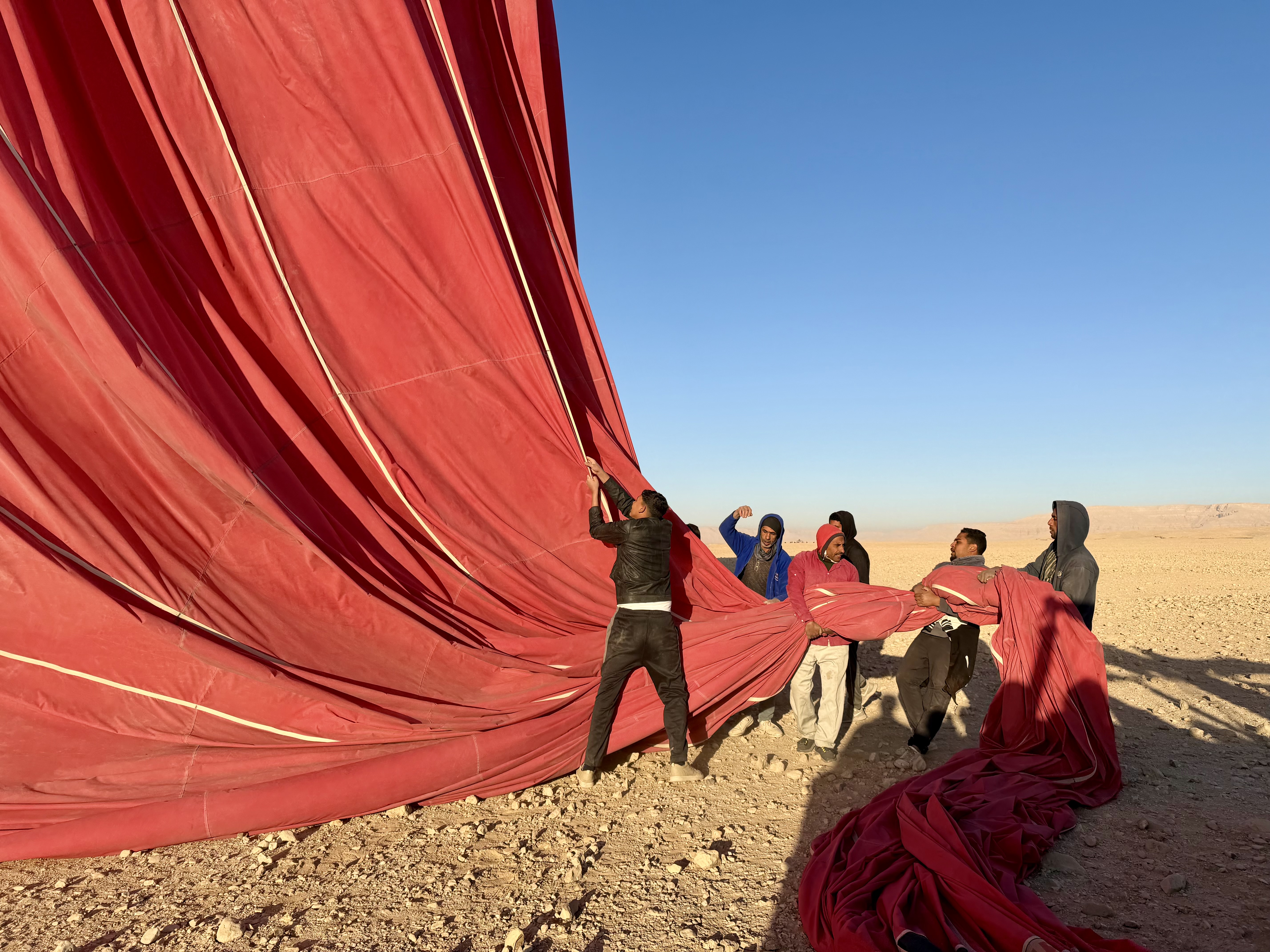
Within minutes, an experienced team surrounded the balloon, expertly pulling and folding the enormous fabric as it slowly collapsed across the desert floor, transforming from a towering aircraft back into yards of colorful cloth.
After climbing out, we searched for our ride – easy enough once we spotted the van proudly labeled Crazy Van. A name like that makes remembering your transportation refreshingly simple.
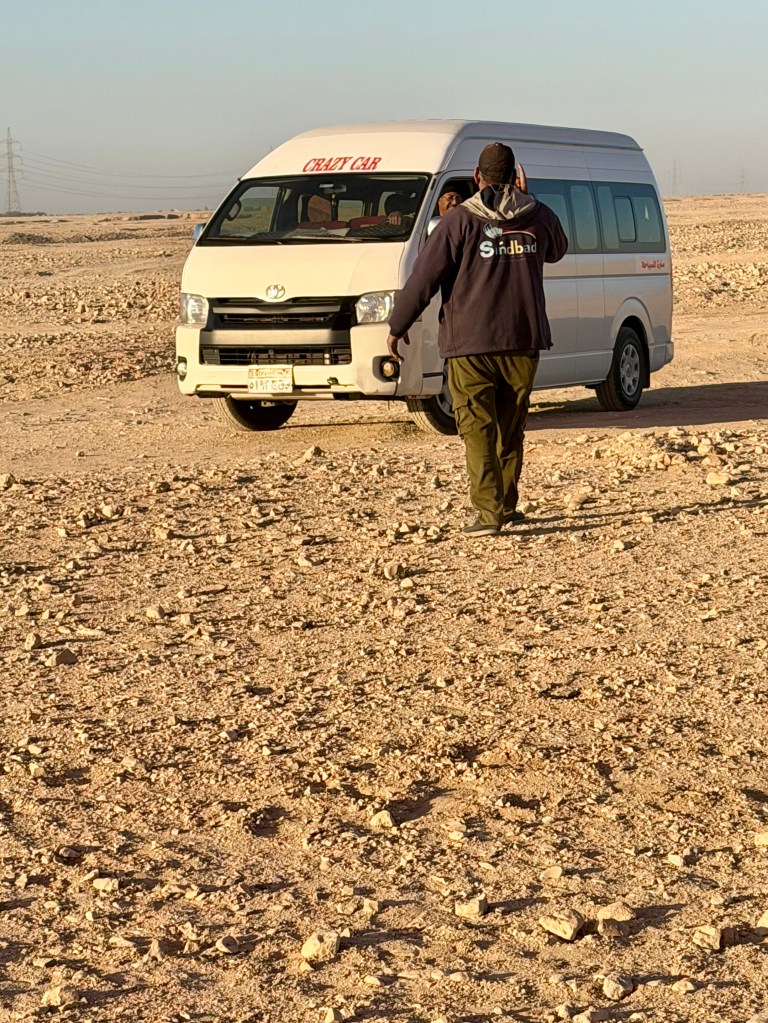
We climbed inside, laughing, slightly stunned, and still processing what we had just experienced.
The drive brought us to a small local coffee shop where we waited for Alaa and what had already begun to feel like our Egyptian family to meet us for the day’s adventures across Luxor’s West Bank.
And just like that, before most people had even finished breakfast, we had already watched the sun rise over one of the most extraordinary landscapes on earth.
Sunrise, Kings, and Living Traditions
A Day on Luxor’s West Bank
Our morning did not begin with breakfast or even an alarm clock. It began floating silently above ancient Egypt in a hot air balloon as the sun rose over the Nile and the desert mountains beyond. By the time our feet touched the ground again and we climbed into what our crew jokingly called the “Crazy Van,” we had already lived an entire experience before most people started their day.
We were dropped outside a small roadside coffee shop to wait for Alaa and the rest of our Egyptian “family.” Still half floating mentally somewhere above Luxor, we were pointed toward a restroom outside where an adolescent boy stood quietly holding a roll of toilet paper. The arrangement required no explanation. If you needed to use the restroom, a small bill would also be required. Egypt quickly teaches you the importance of carrying small cash.
Coffee revived us just enough when we spotted Alaa waving from across the street. We crossed over to meet him and found ourselves standing before two enormous figures rising from the earth itself.
The Colossi of Memnon.
The Colossi of Memnon
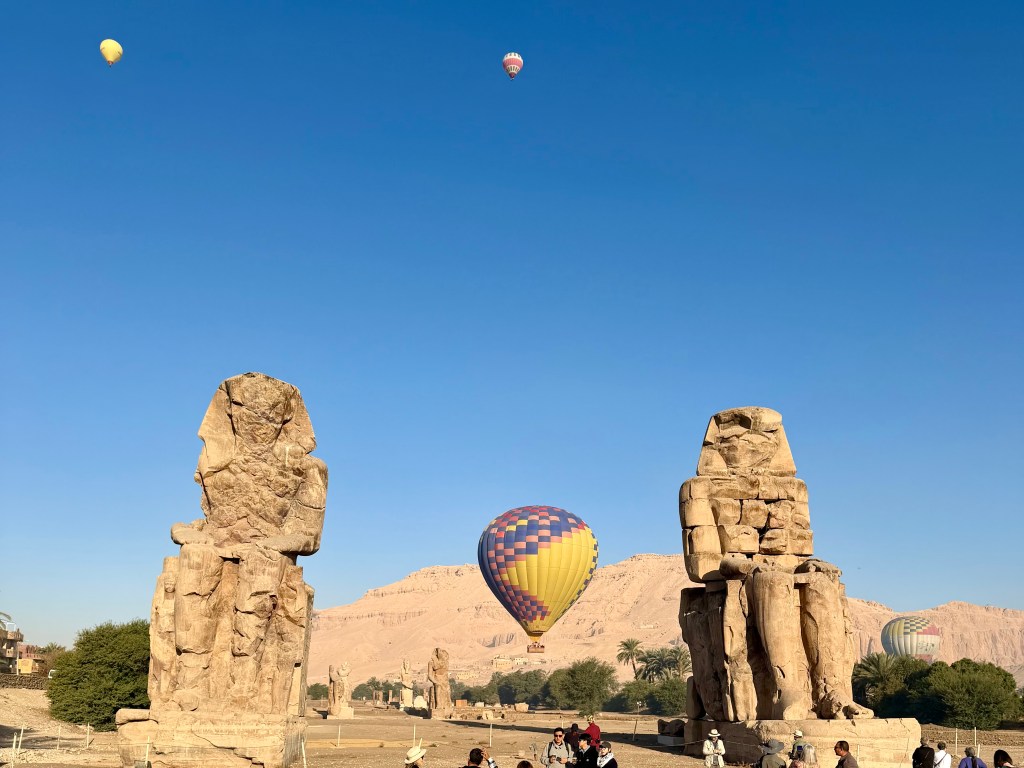
The twin statues stand nearly sixty feet tall, carved from single blocks of quartzite sandstone more than 3,400 years ago. They depict Pharaoh Amenhotep III and once guarded the entrance to his vast mortuary temple, now mostly lost to floods and earthquakes.
Up close, their scale feels almost unreal. Weathered faces gaze calmly across the Nile Valley, unchanged despite millennia of wind and sand.
Alaa explained that ancient Greek travelers believed one statue “sang” at sunrise after an earthquake cracked the stone, producing sounds as temperatures shifted each morning. Visitors once traveled great distances hoping to hear it, making this one of history’s earliest tourist attractions.
Behind the statues, hot air balloons drifted across the sky, including one hanging low between them, giving us a perfect photo and a surreal reminder that only hours earlier we had been floating above this same landscape.
From here, we drove toward the pale limestone mountains ahead.
The Valley of the Kings awaited.
Entering the Valley of the Kings
The transition from farmland to desert happens quickly. Green disappears, replaced by silence and stone. The mountains rise bare and imposing, hiding the royal tombs of Egypt’s New Kingdom pharaohs.
Beginning around 1550 BCE, kings abandoned pyramids and instead carved their tombs deep into these cliffs, believing secrecy would protect their bodies and souls for eternity.
From the outside, entrances appear modest. Inside, color returns to life.
Tomb of Ramses IV
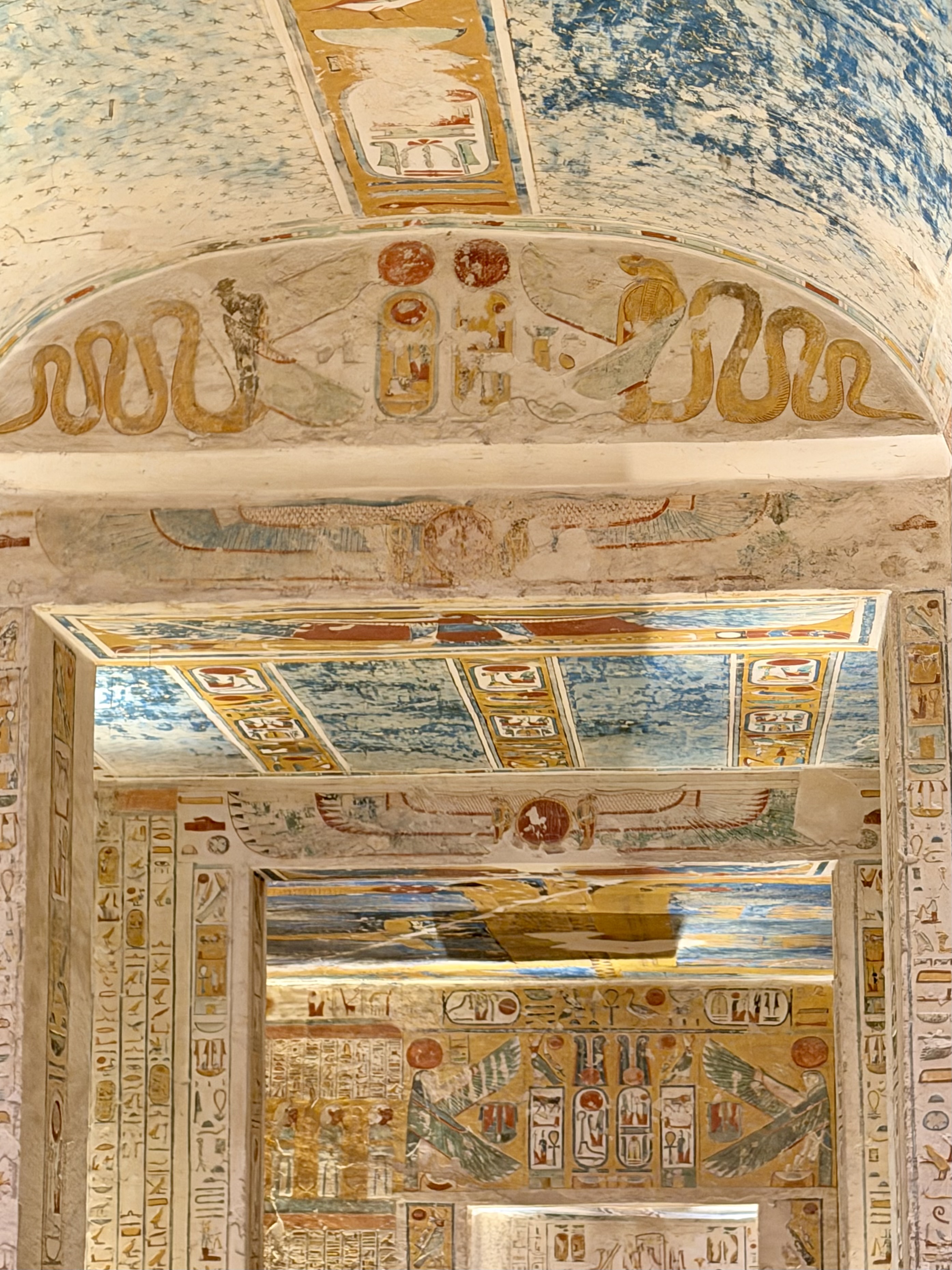
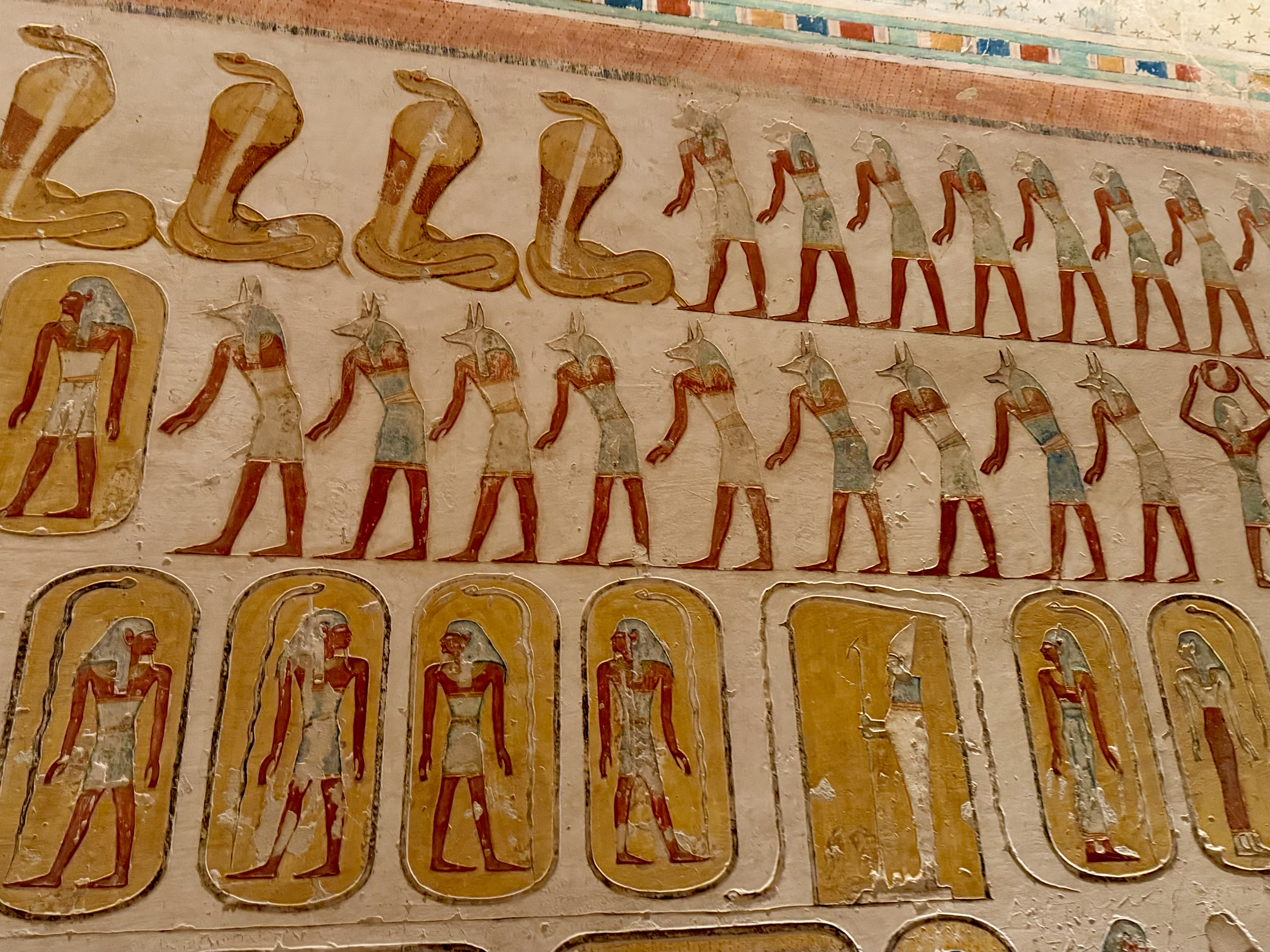
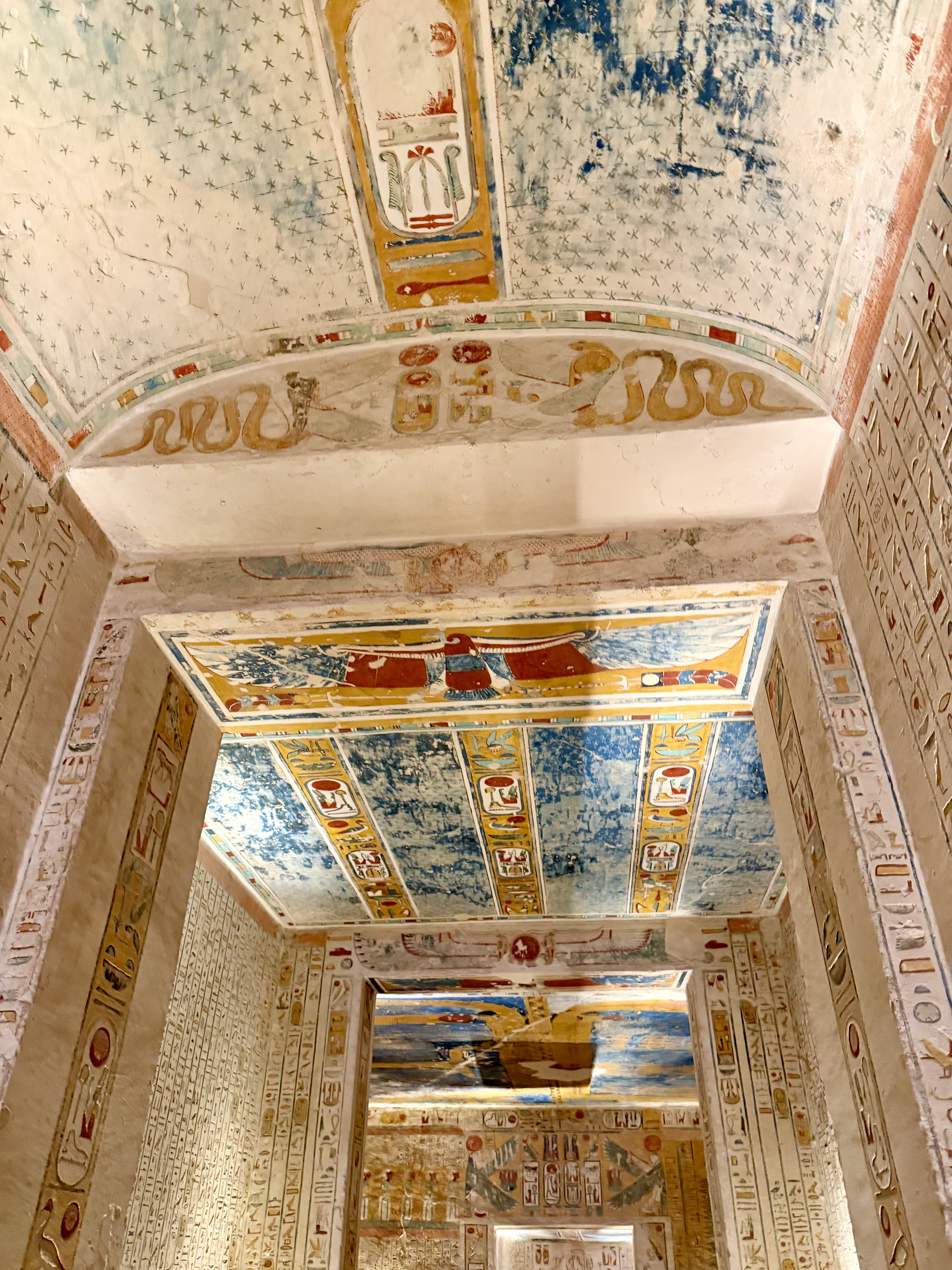
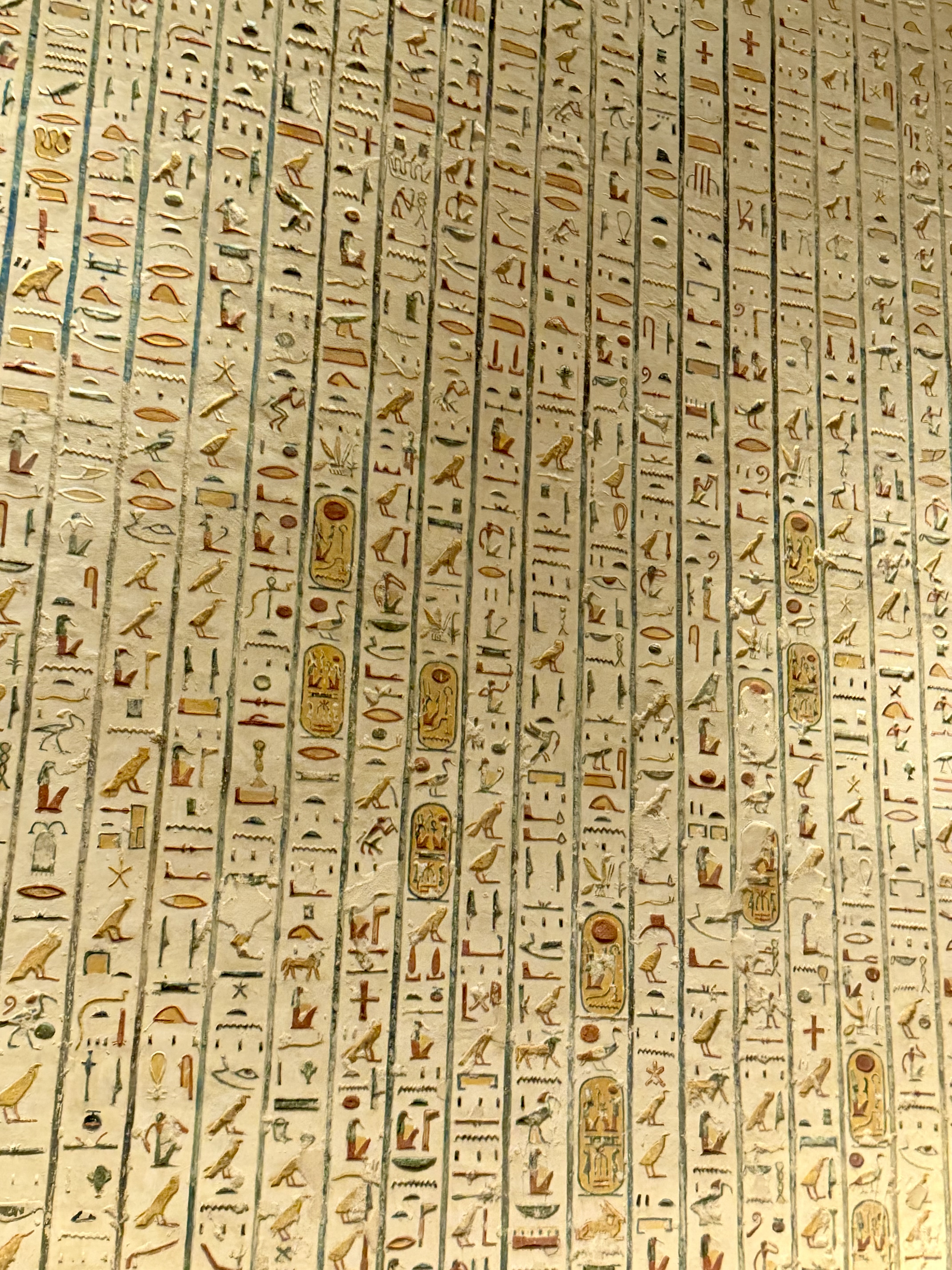
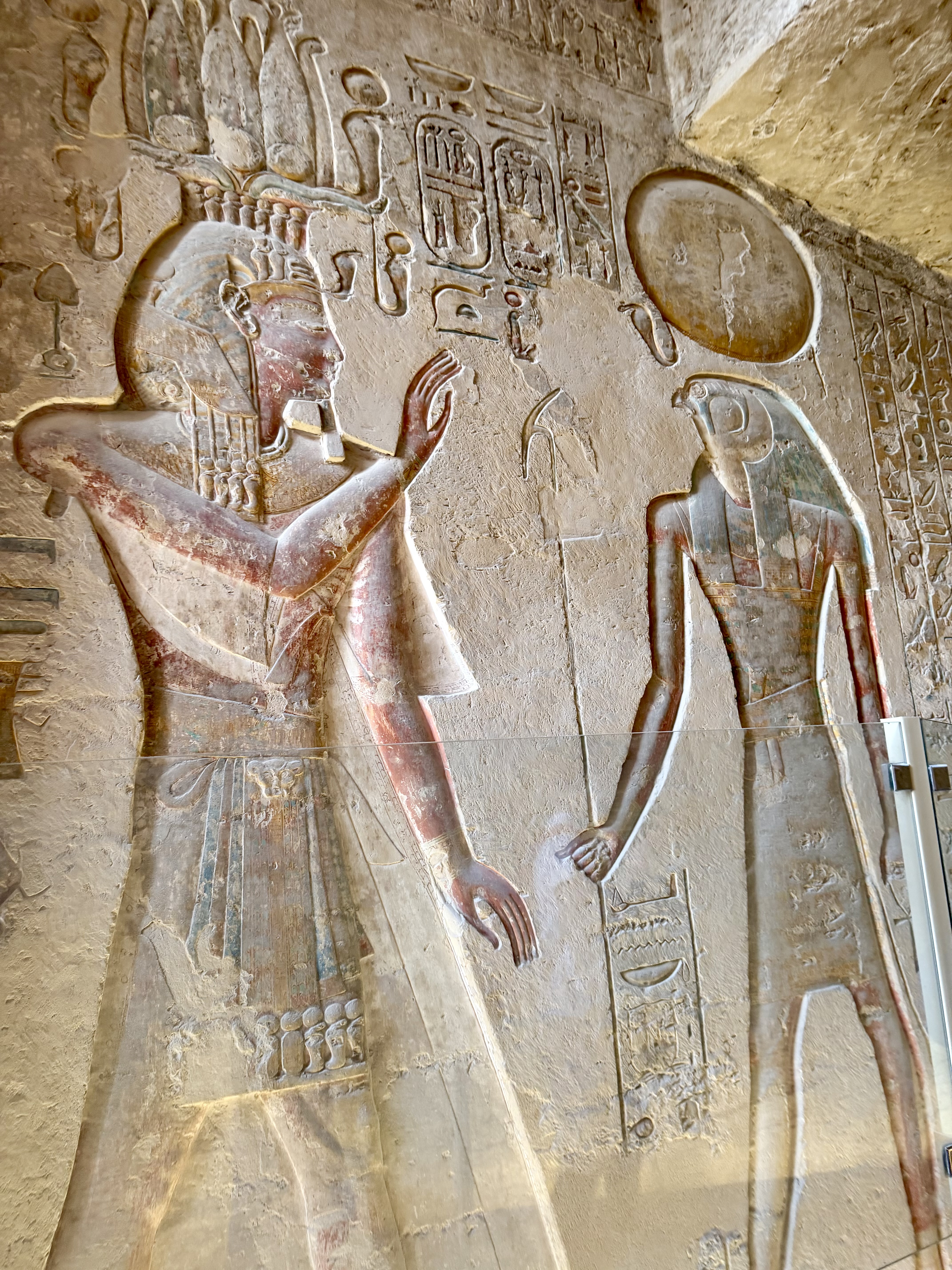
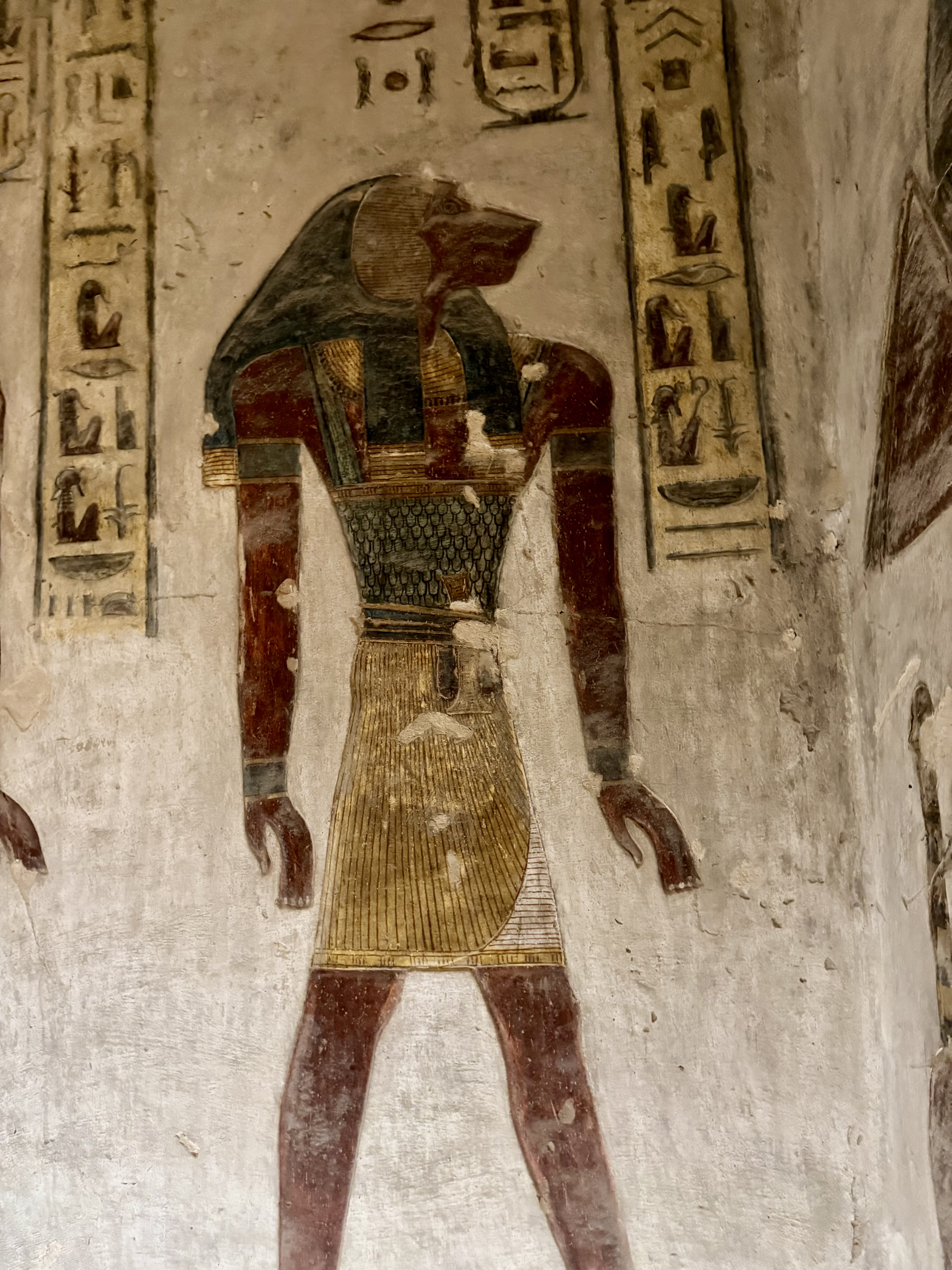
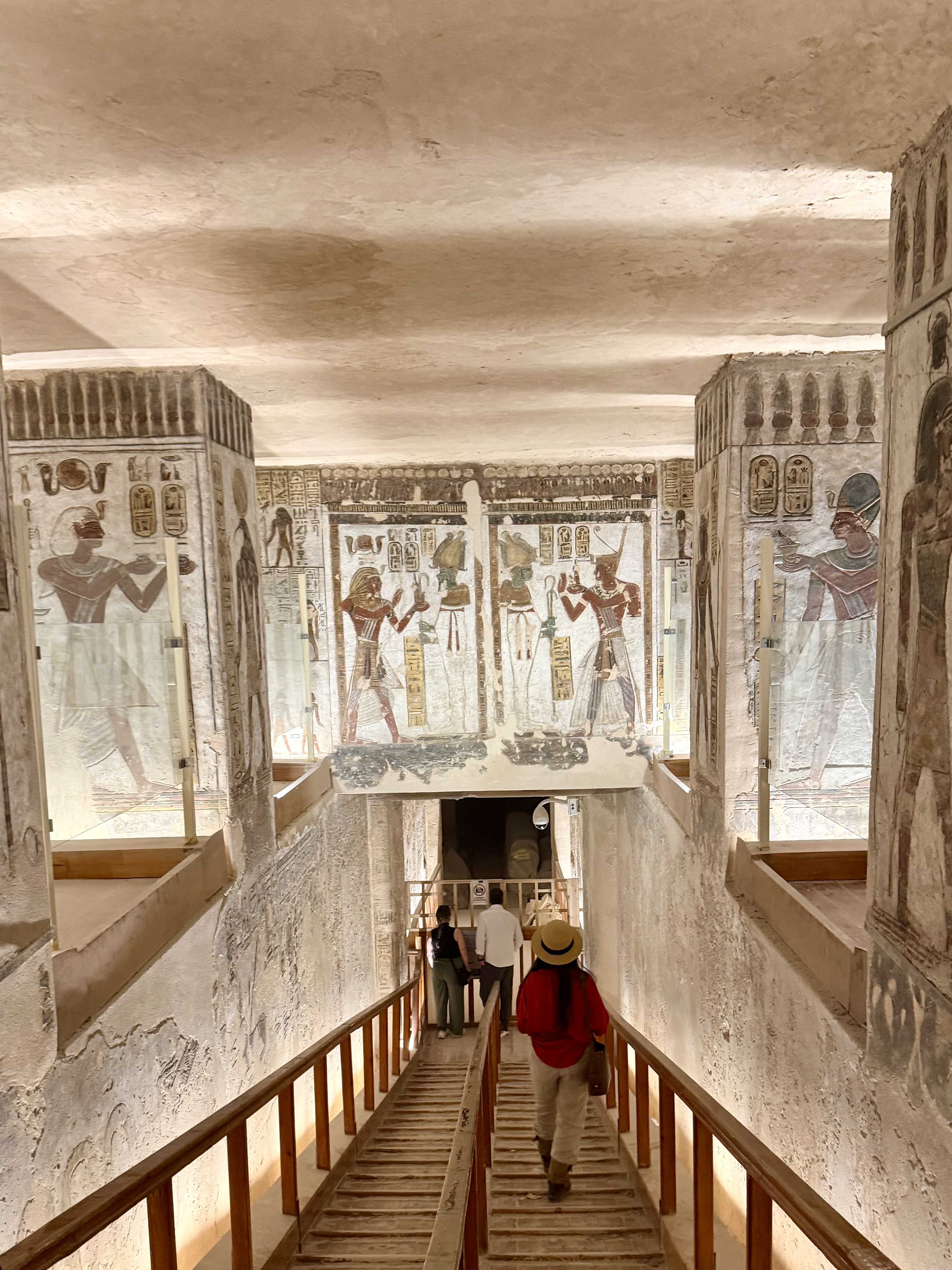
Our first tomb immediately overwhelmed the senses. The walls of Ramses IV’s tomb remain astonishingly vibrant, covered in richly colored scenes guiding the king through the afterlife.
Ramses IV emphasized religious devotion during his reign, and his tomb reflects sacred texts describing the sun god Ra’s nightly journey through the underworld. Figures of gods line the corridors while ceilings painted with celestial imagery represent rebirth beneath a cosmic sky.
It felt less like entering ruins and more like stepping into a preserved story.
Tomb of Tutankhamun
Meeting King Tut
Tutankhamun’s tomb feels different immediately. Smaller, quieter, more intimate.
He became pharaoh at around nine years old and died as a teenager, likely around nineteen. His reign was brief, yet his fame became unmatched when archaeologist Howard Carter discovered his tomb nearly intact in 1922.
The painted walls glow with warm yellow scenes welcoming the young king into eternity.
And then there he is.
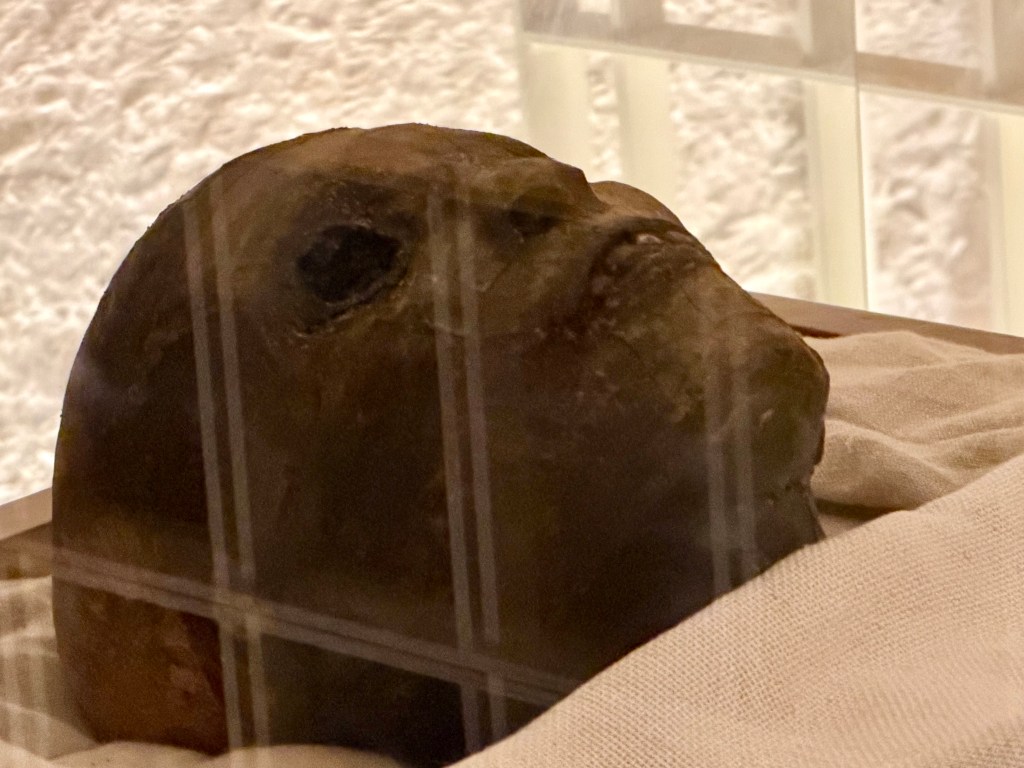
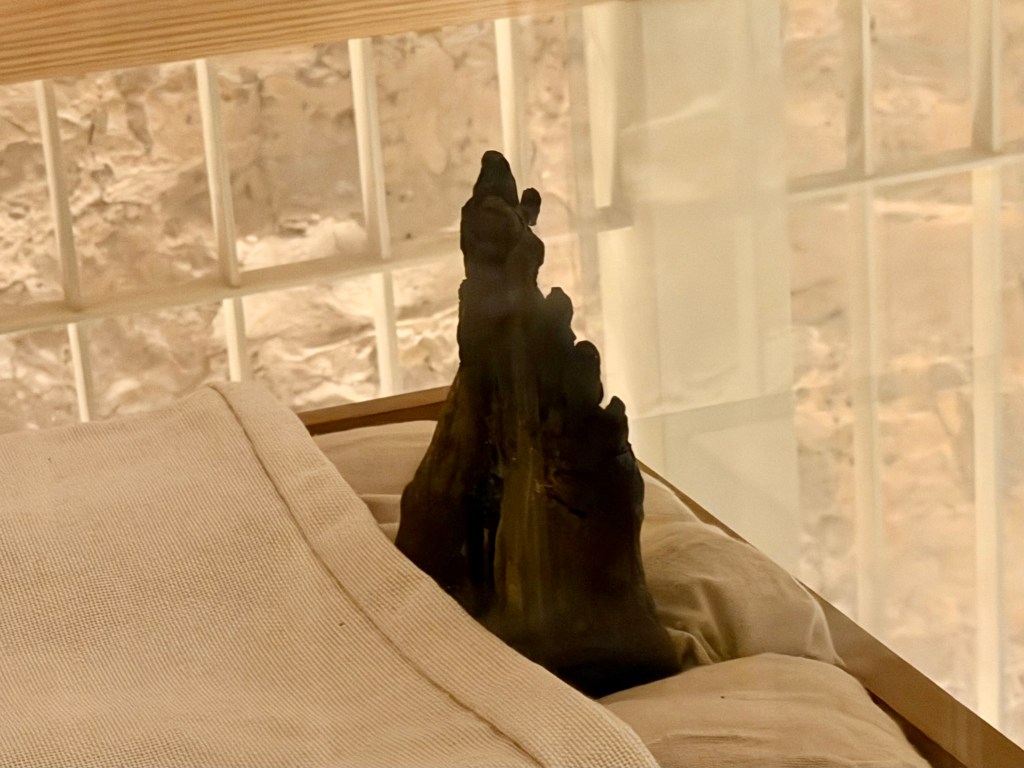
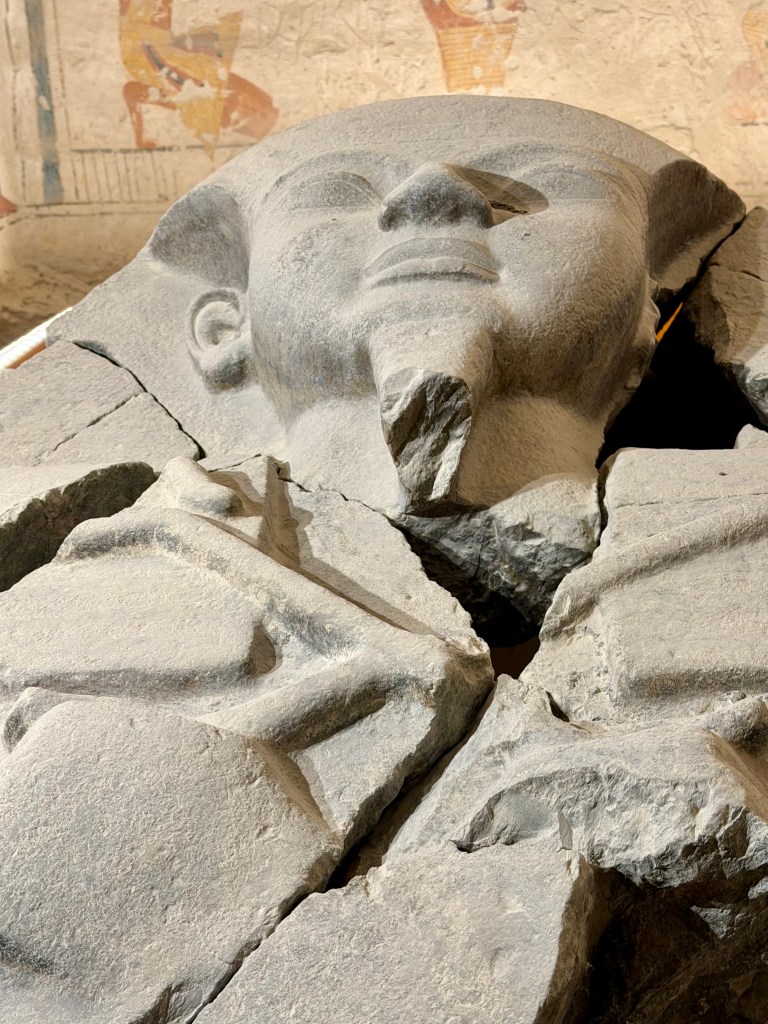
King Tut himself remains inside the tomb. His mummified body rests within a protective enclosure, only his head and feet visible.
Seeing him changes the experience entirely. He is no longer the golden mask behind museum glass but a real young ruler whose life ended early yet whose story endured across millennia.
The room felt quiet in a way that encouraged reflection rather than conversation.
Tomb of Ramses V and Ramses VI
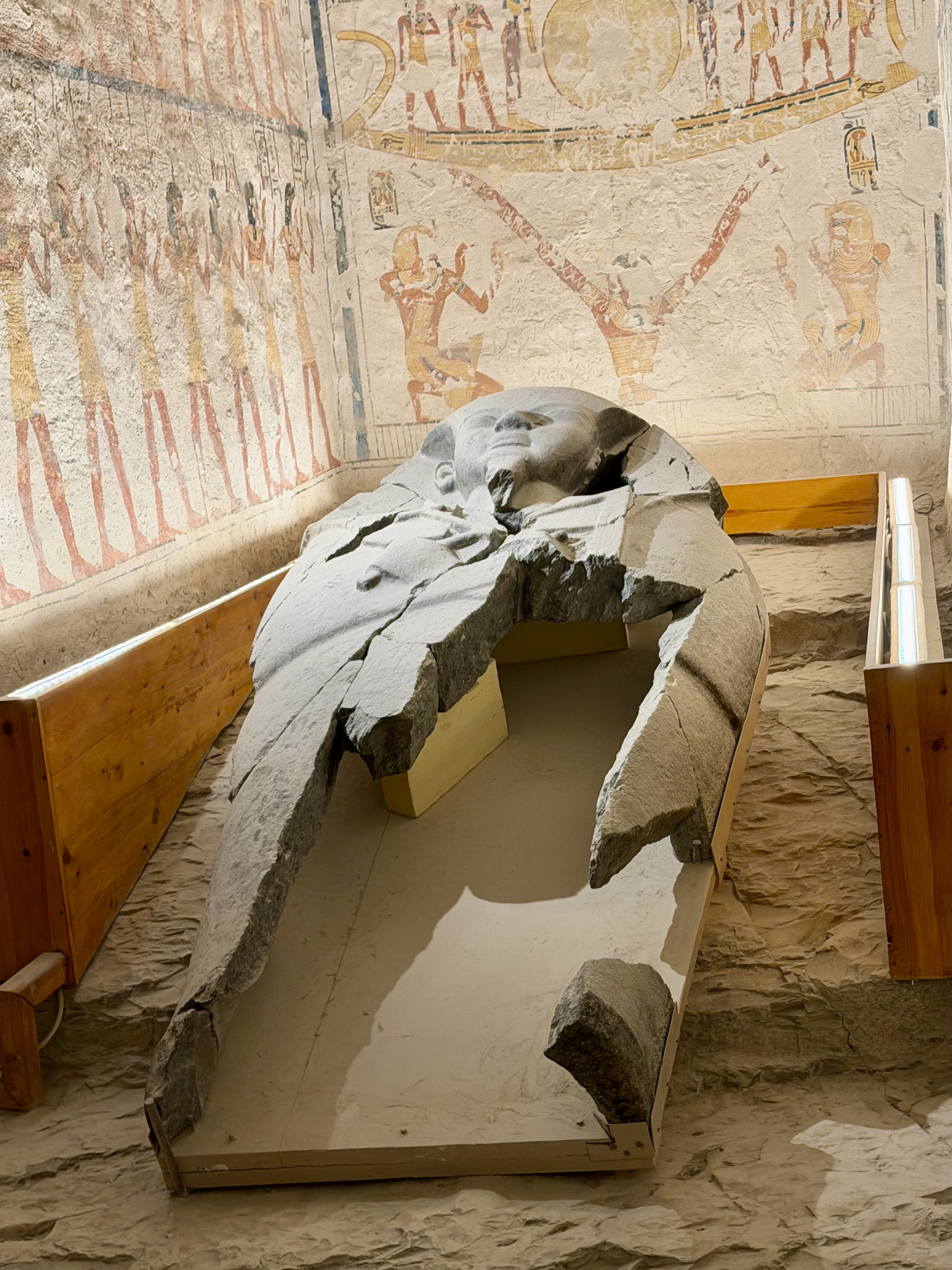
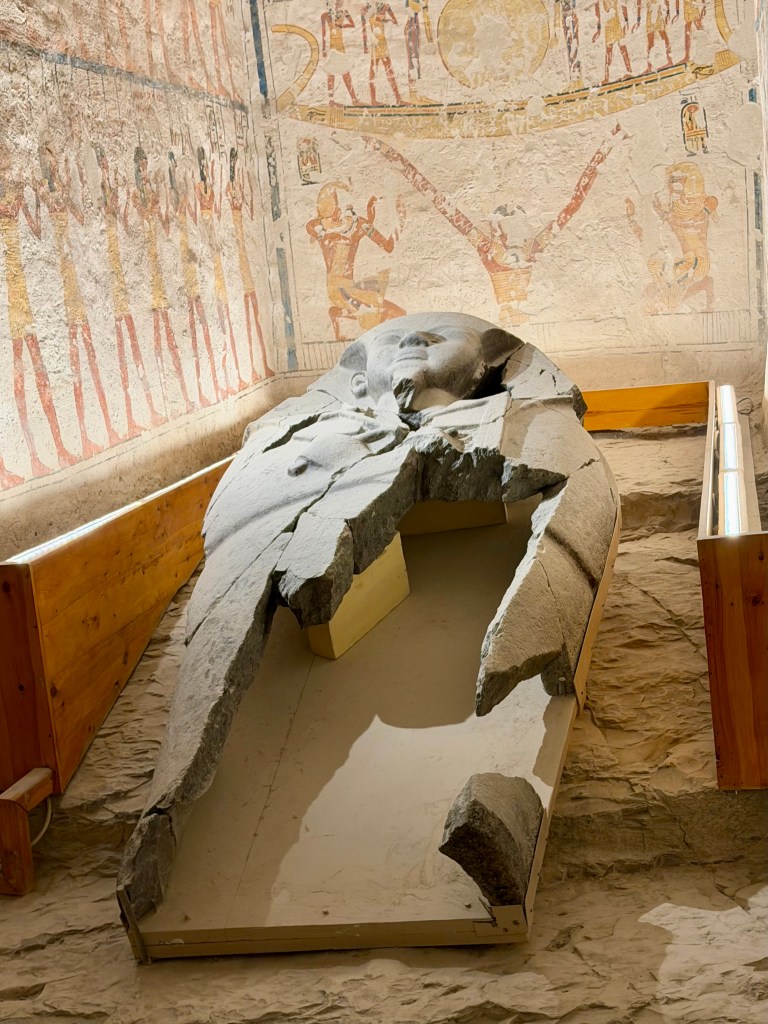
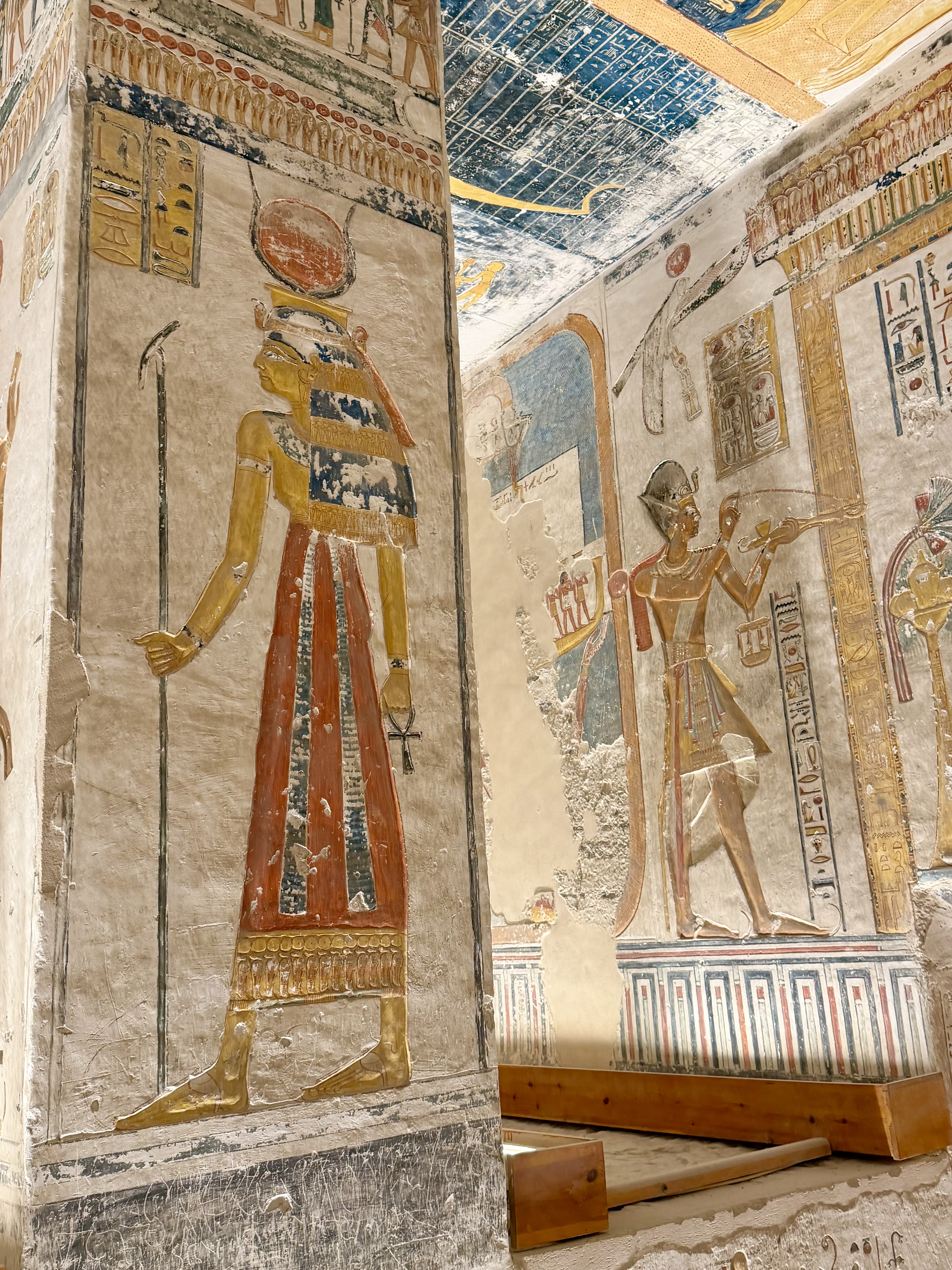
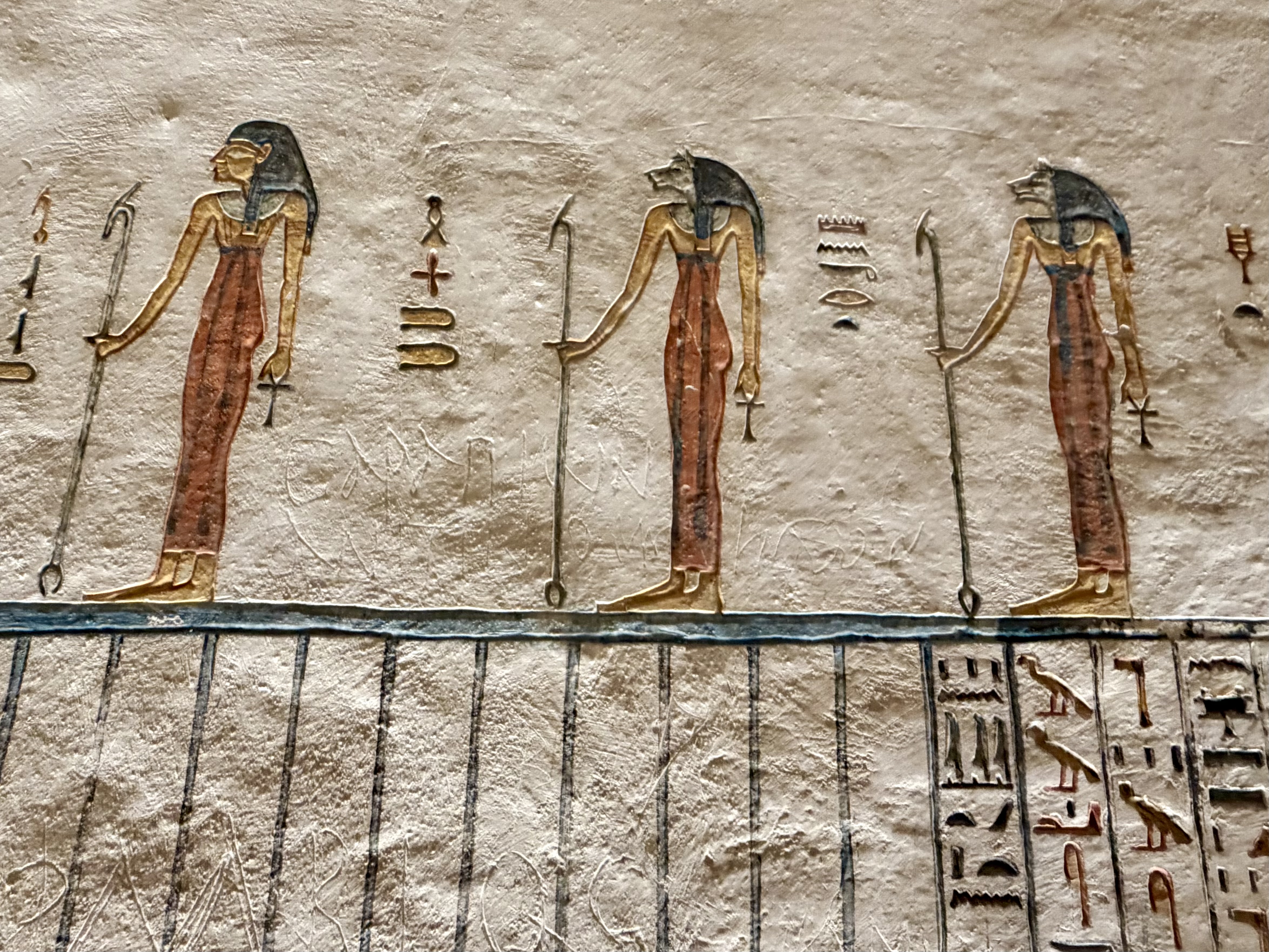
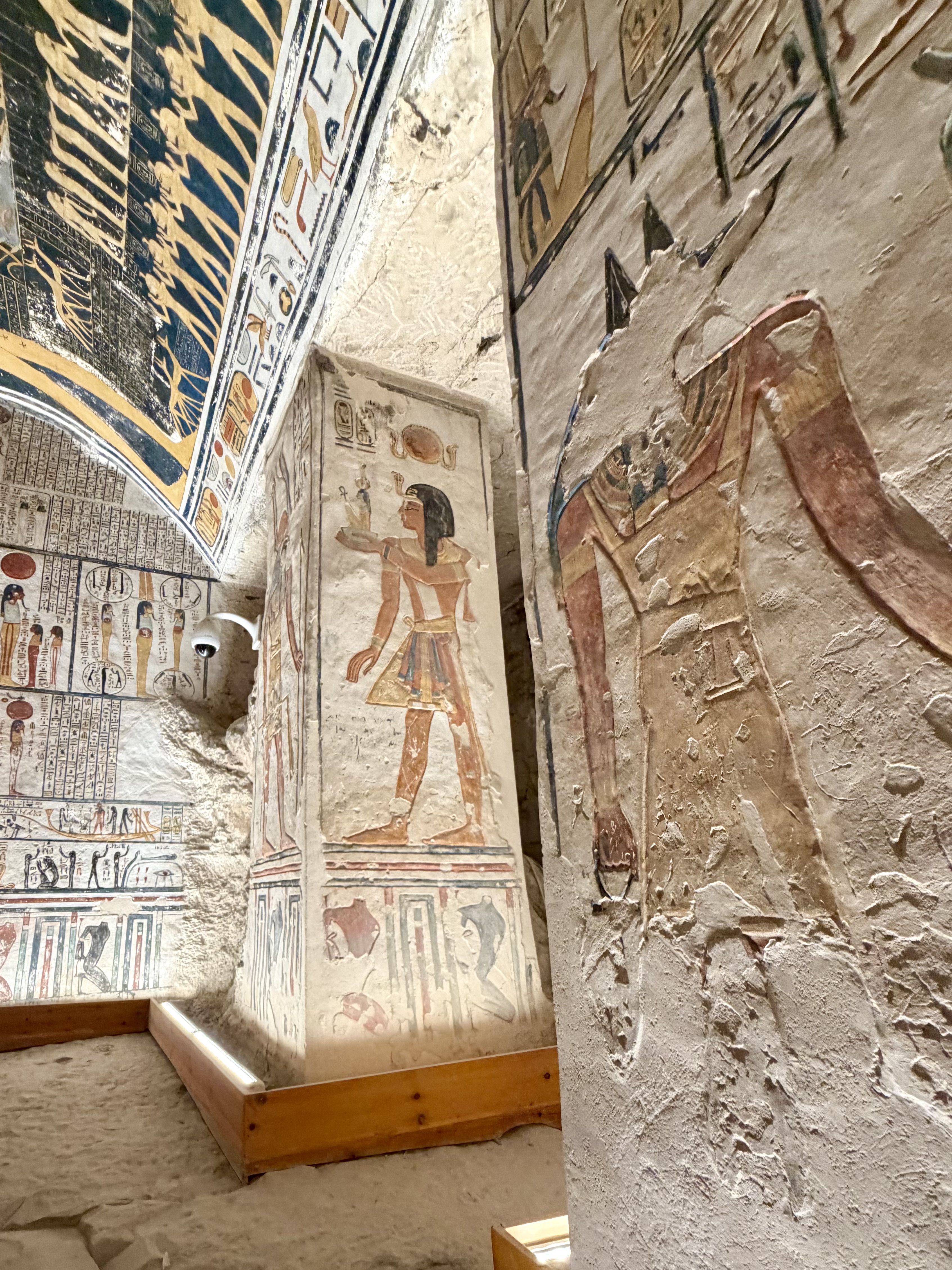
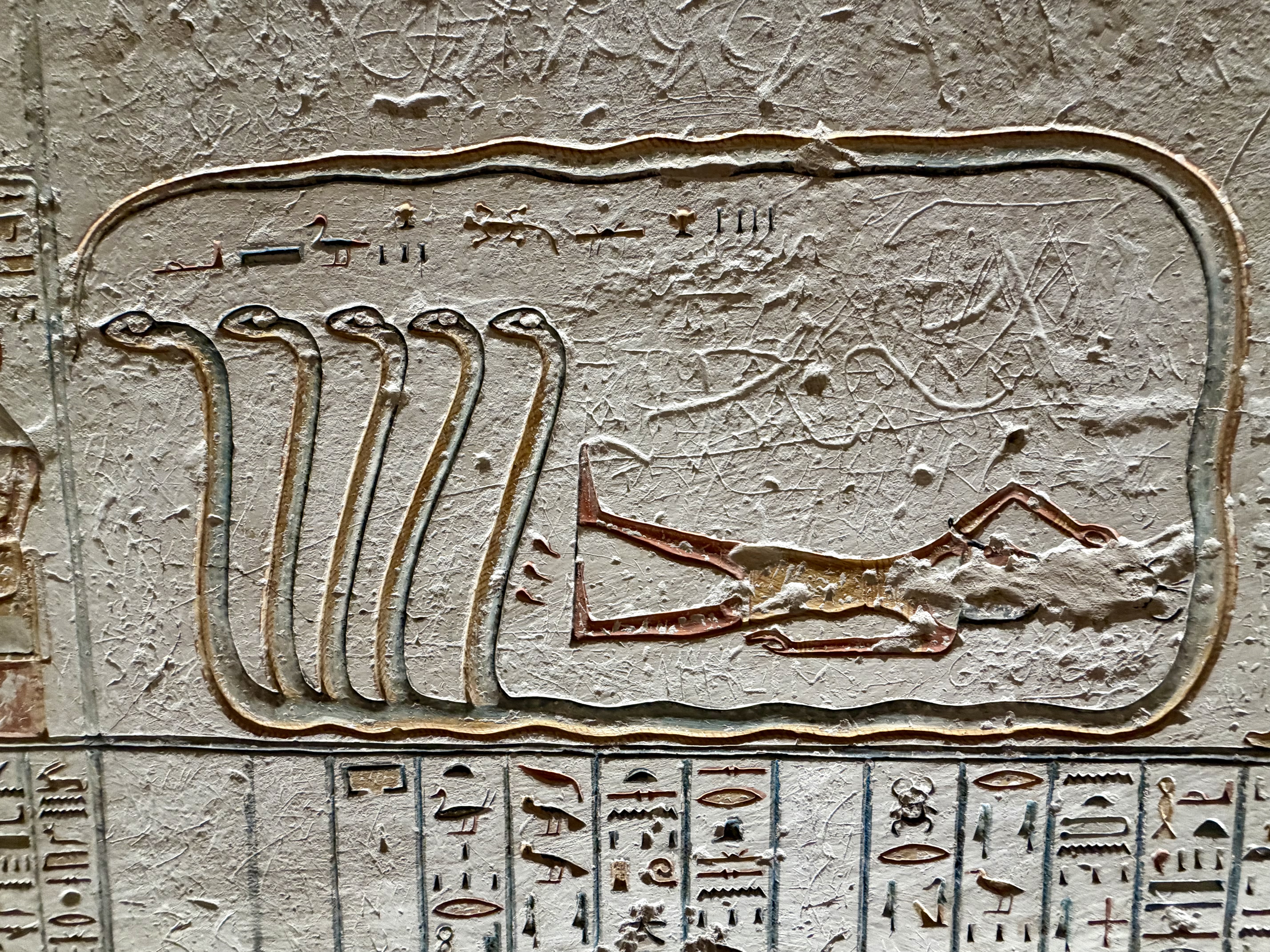
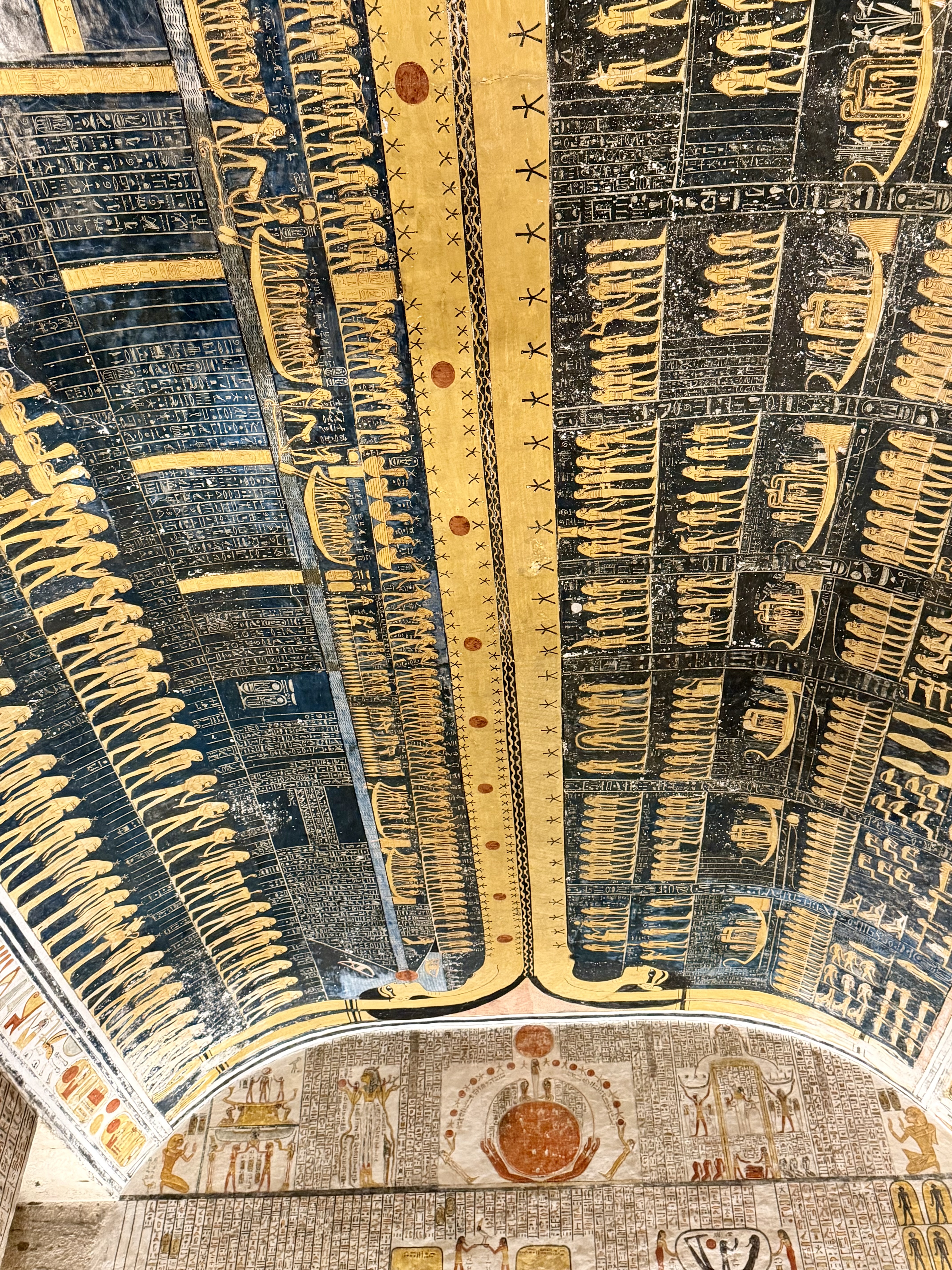
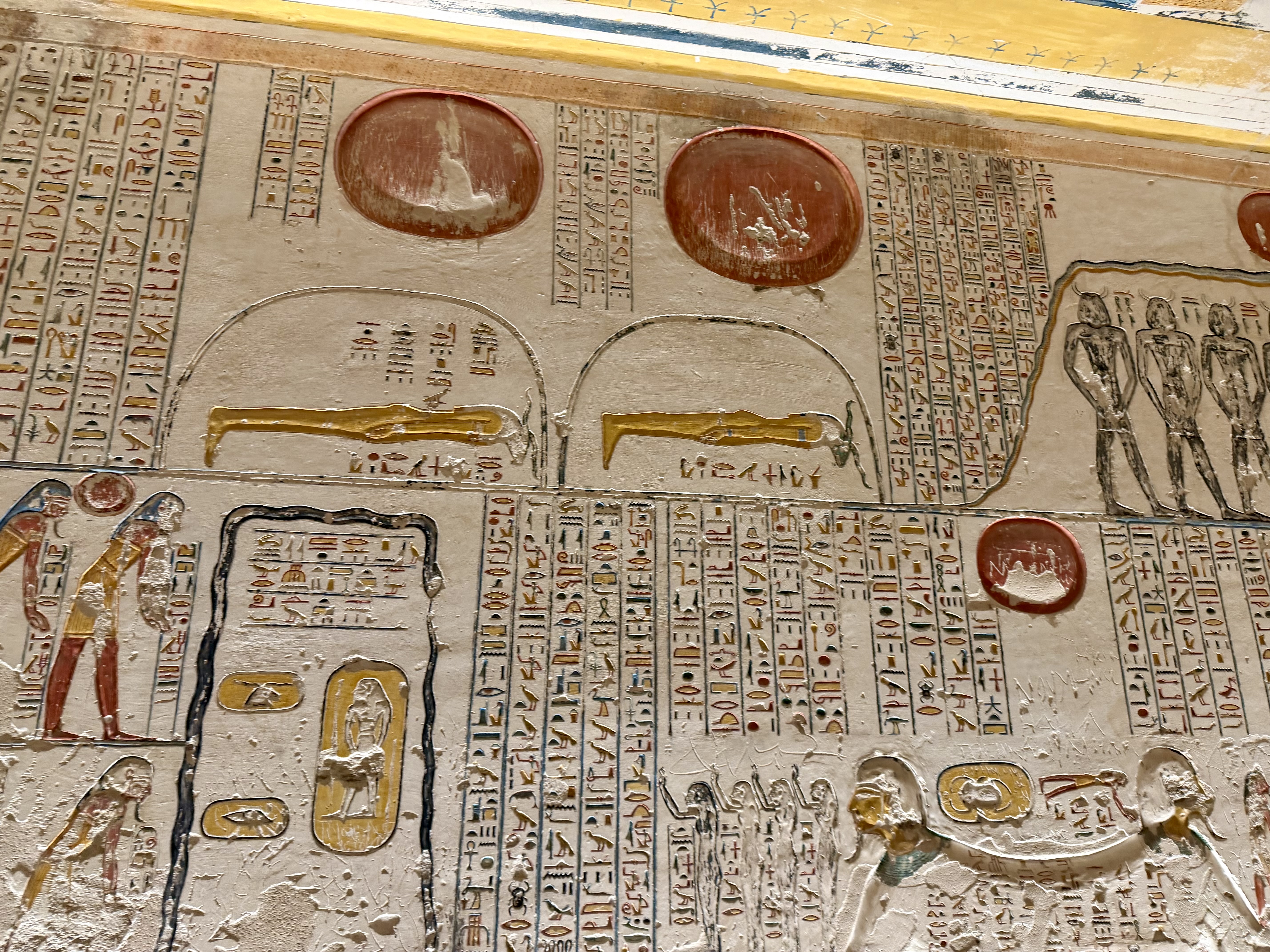
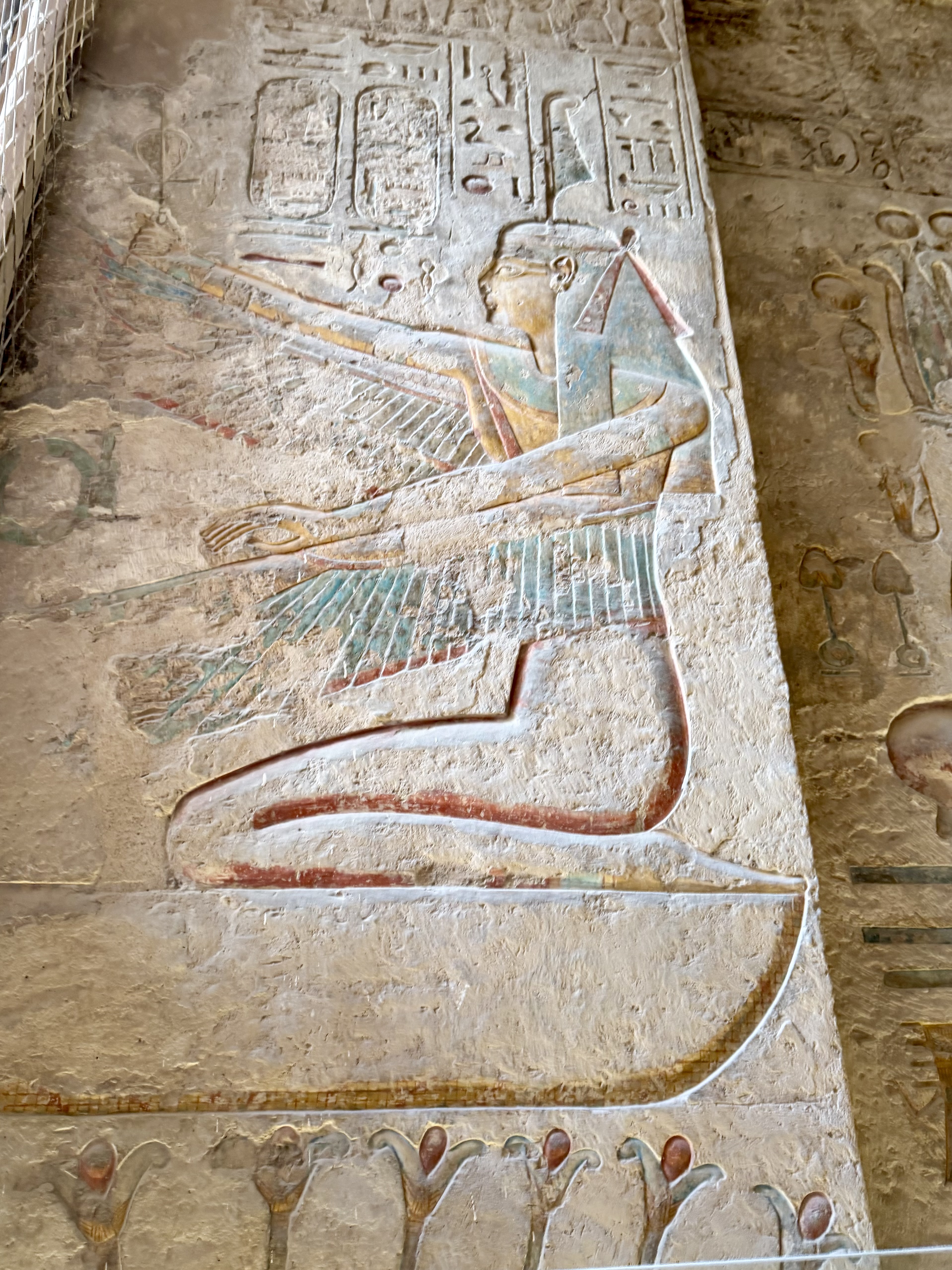
This shared tomb is expansive and visually dramatic. Ceilings covered in astronomical imagery stretch overhead, deep blue skies filled with stars mapping the heavens.
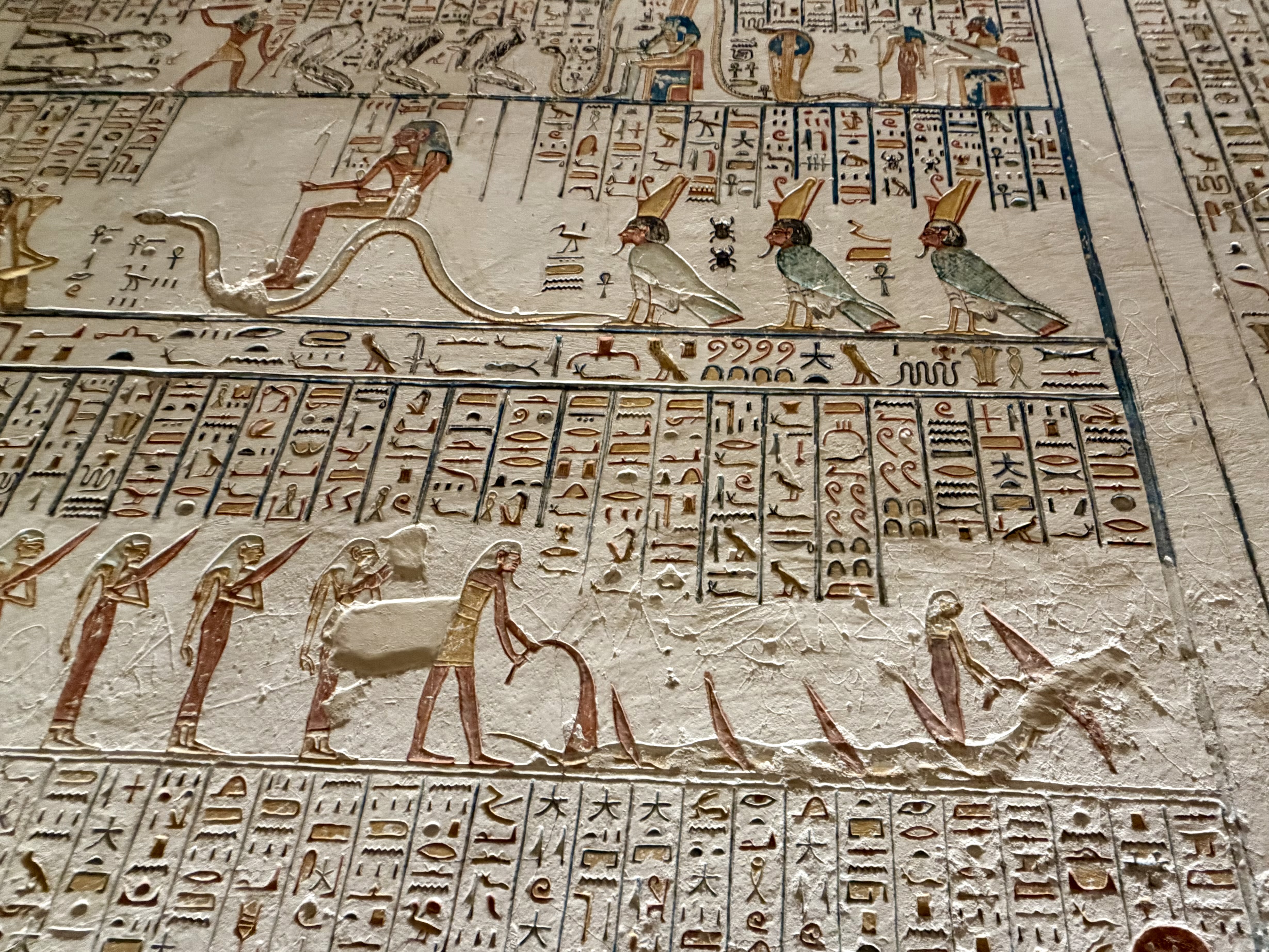
Scenes from sacred funerary texts describe the sun god’s journey through darkness toward rebirth. Standing beneath those painted ceilings felt like standing inside an ancient universe.
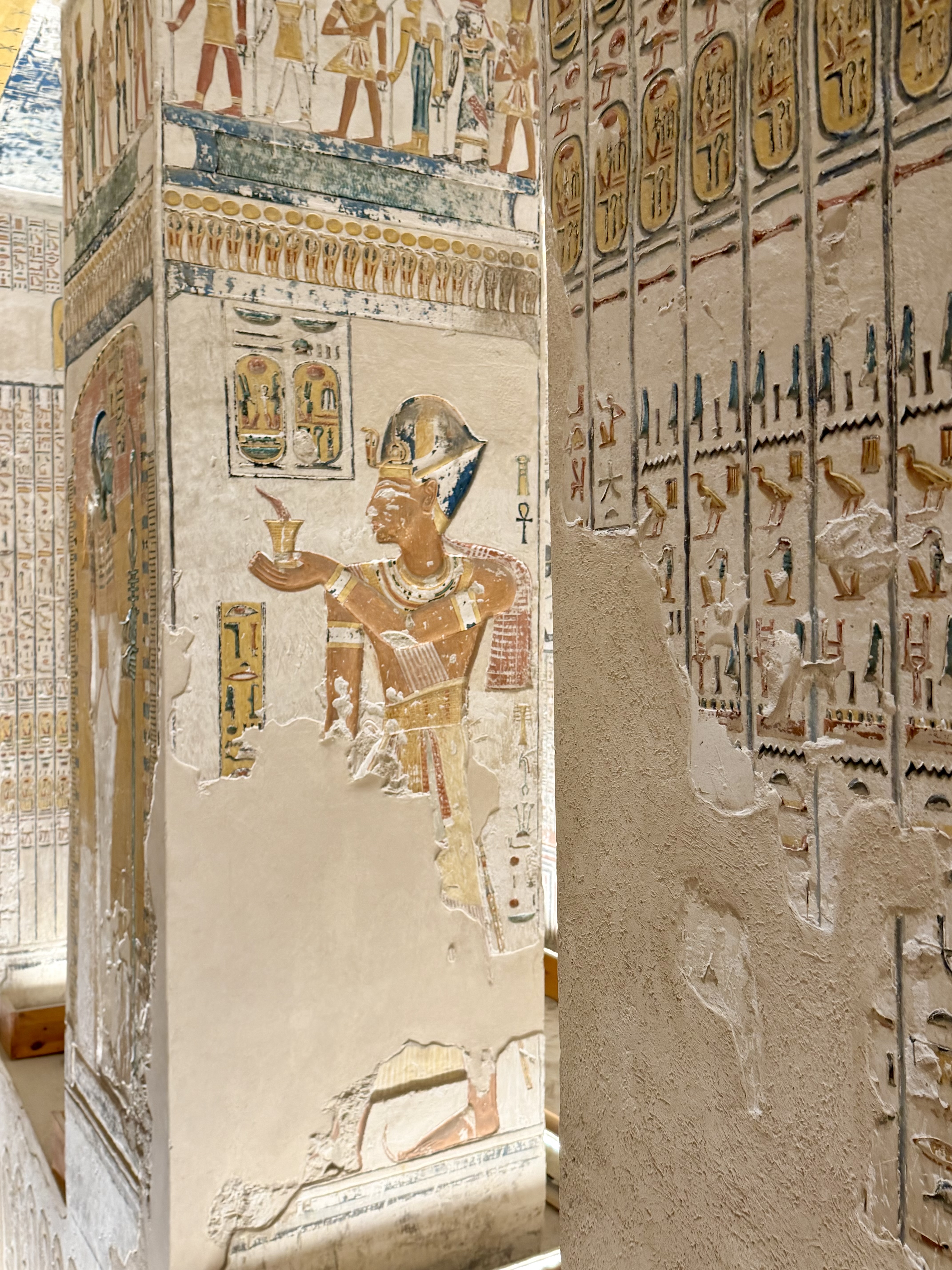
Tomb of Merenptah
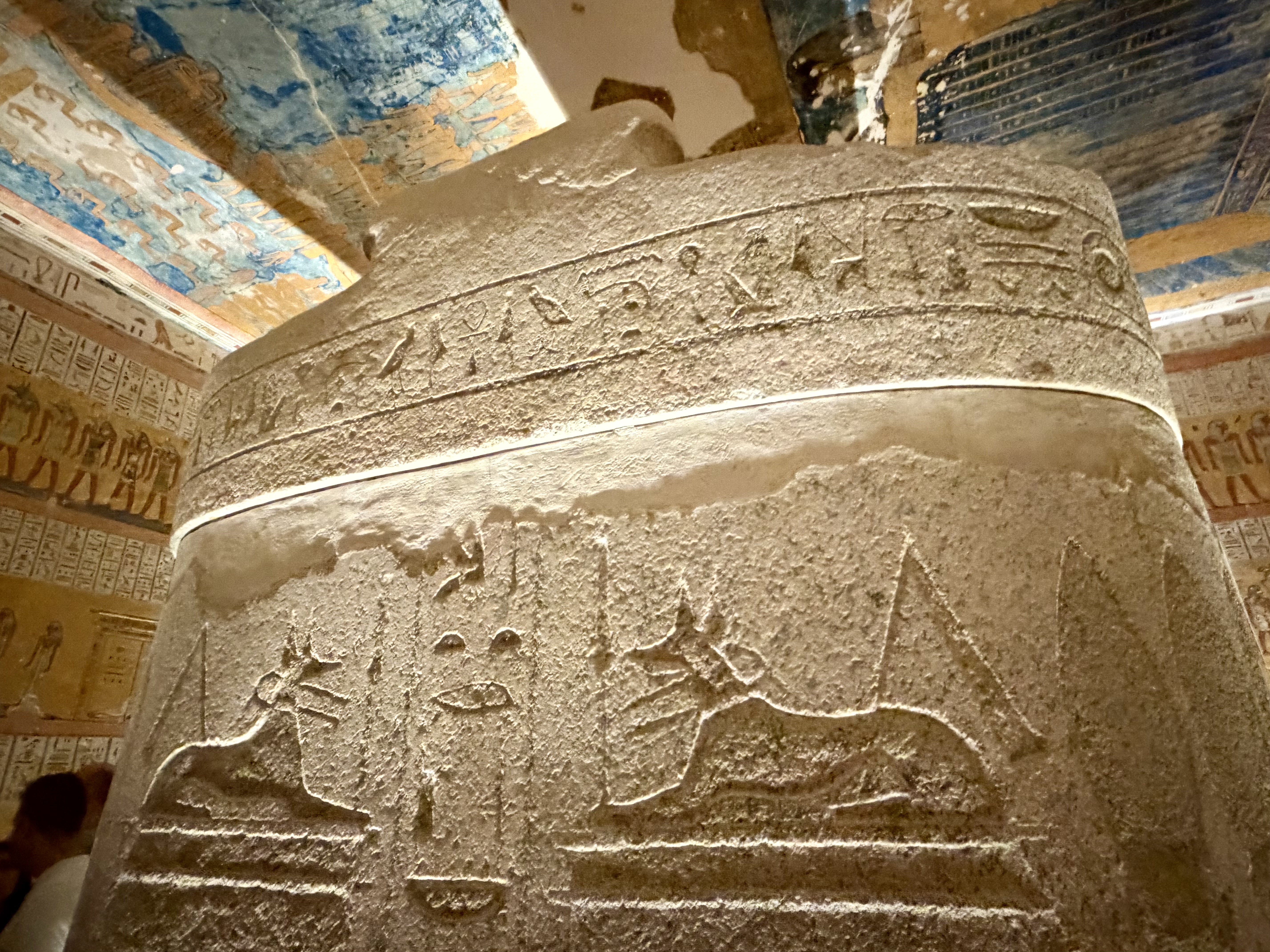
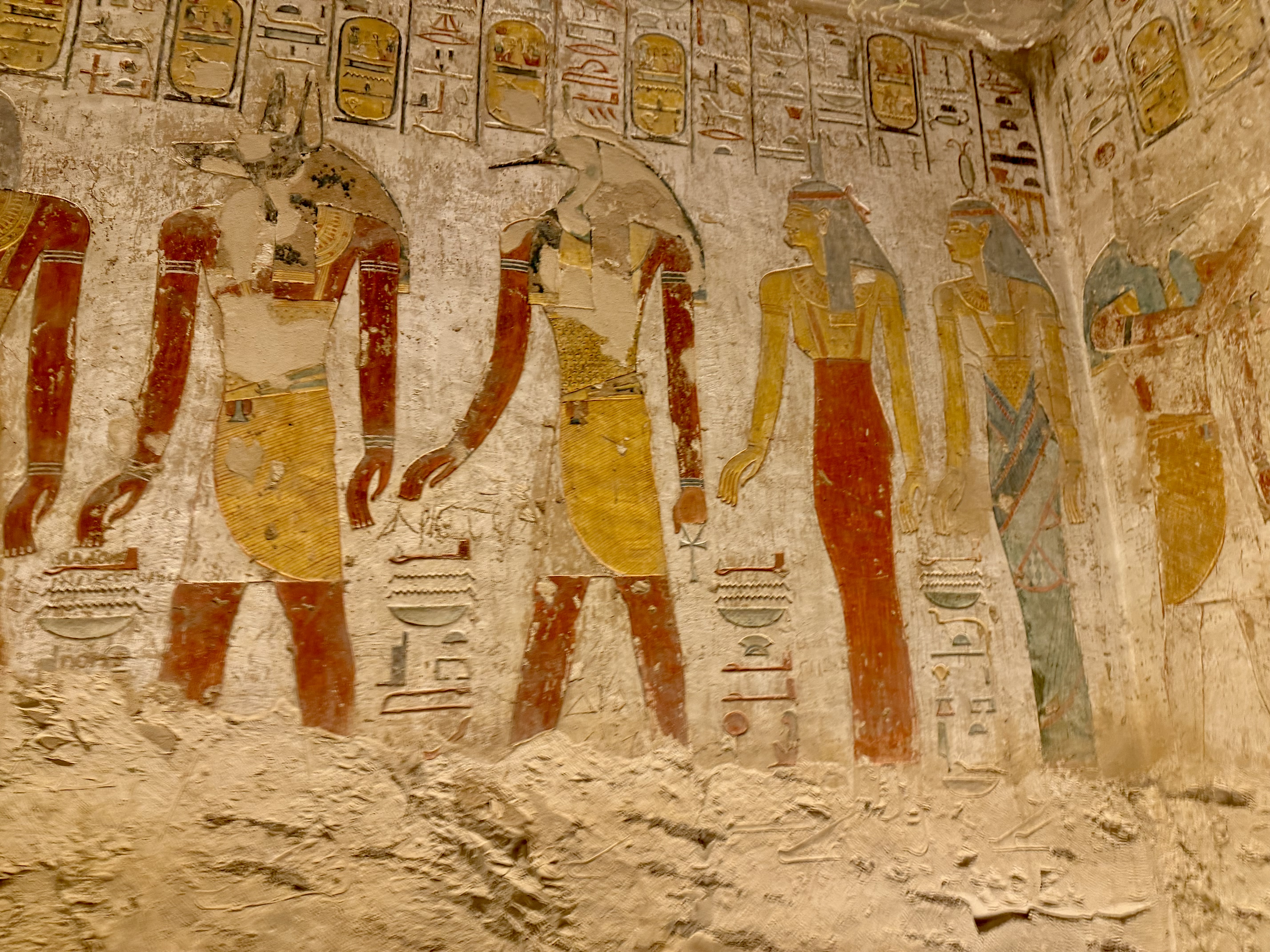
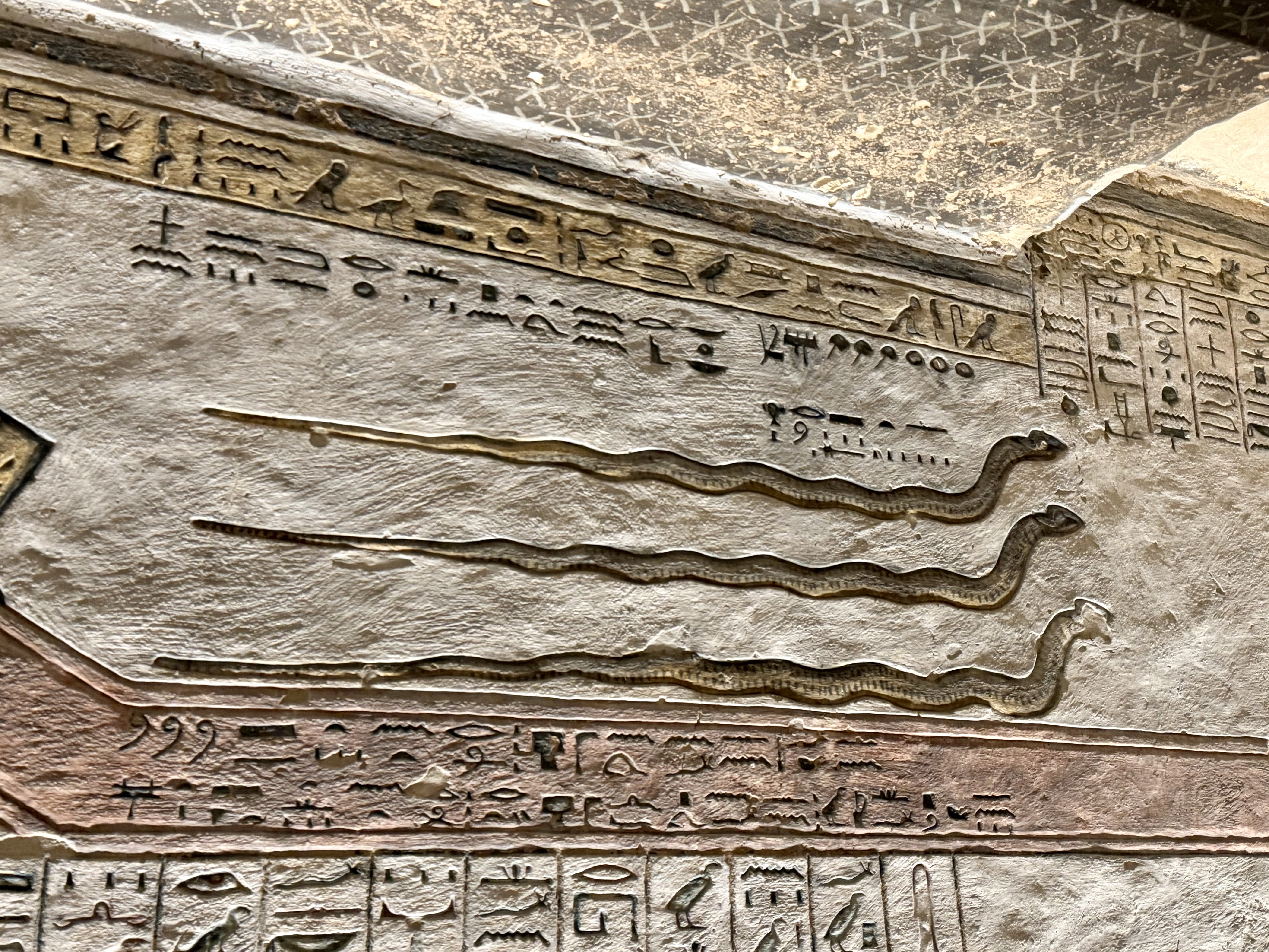
Merenptah, son of Ramses II, constructed one of the deepest tombs in the valley. Long descending corridors symbolically guide visitors deeper into the underworld.
Massive nested sarcophagi once protected the king here, layer upon layer intended to preserve eternity itself. The depth creates a powerful sense of descent both physically and spiritually.
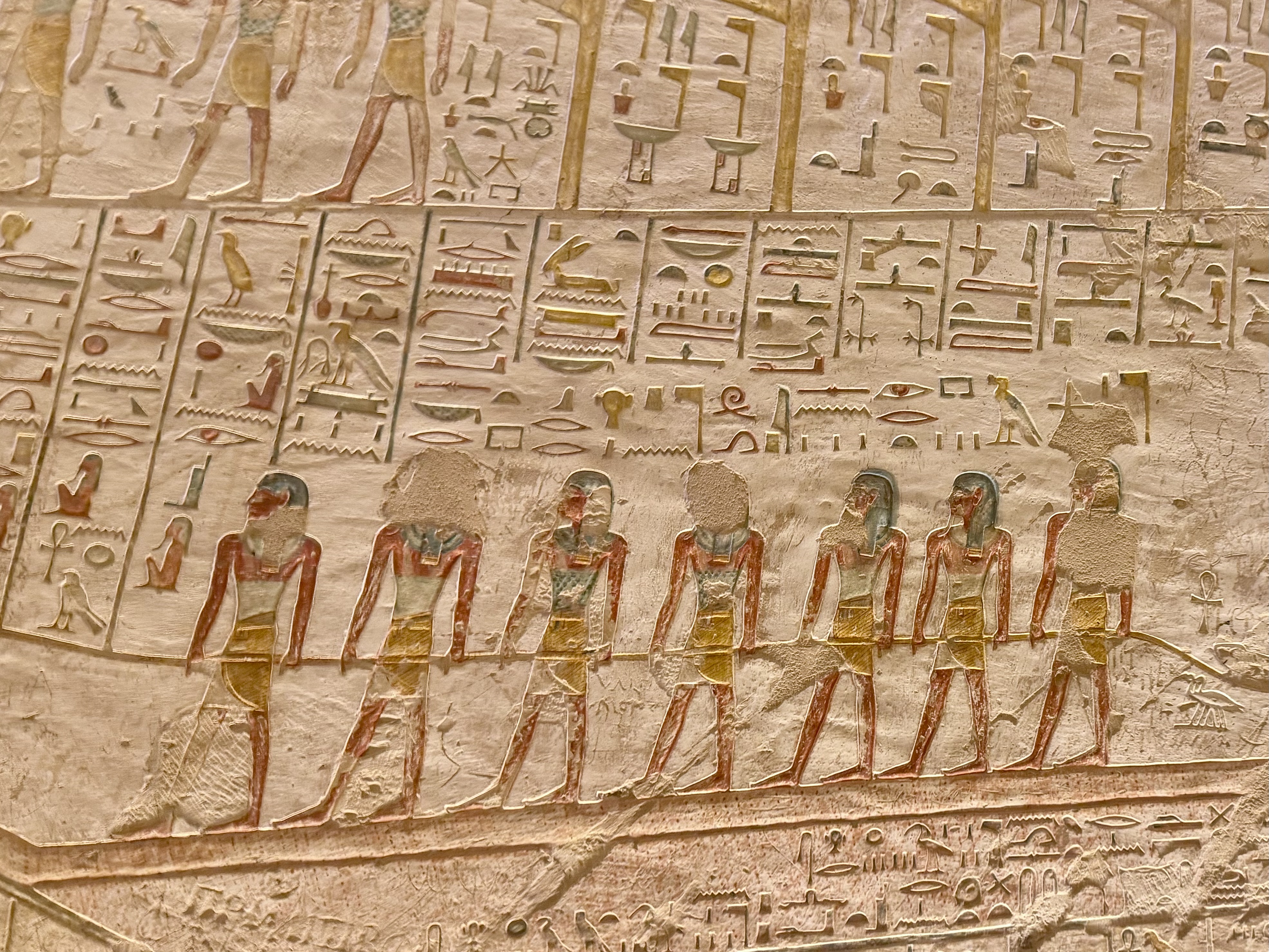
Tomb of Ramses III
The tomb of Ramses III includes scenes depicting musicians, offerings, and aspects of daily life alongside religious imagery. His reign marked one of the final strong periods of the New Kingdom, and the artwork suggests an afterlife that continued familiar comforts as well as divine protection.
By the time we emerged into sunlight again, the brightness felt almost startling after hours underground.
Leaving the Valley
A small golf cart carried us back across the valley floor. My husband and I sat in the last row facing backward, watching the mountains slowly recede behind us. The tomb entrances disappeared into the cliffs until they blended completely into the rock.
It felt like saying goodbye to the kings.
We met Alaa again and climbed back into our van, trading hidden chambers beneath the mountains for something entirely different rising ahead.
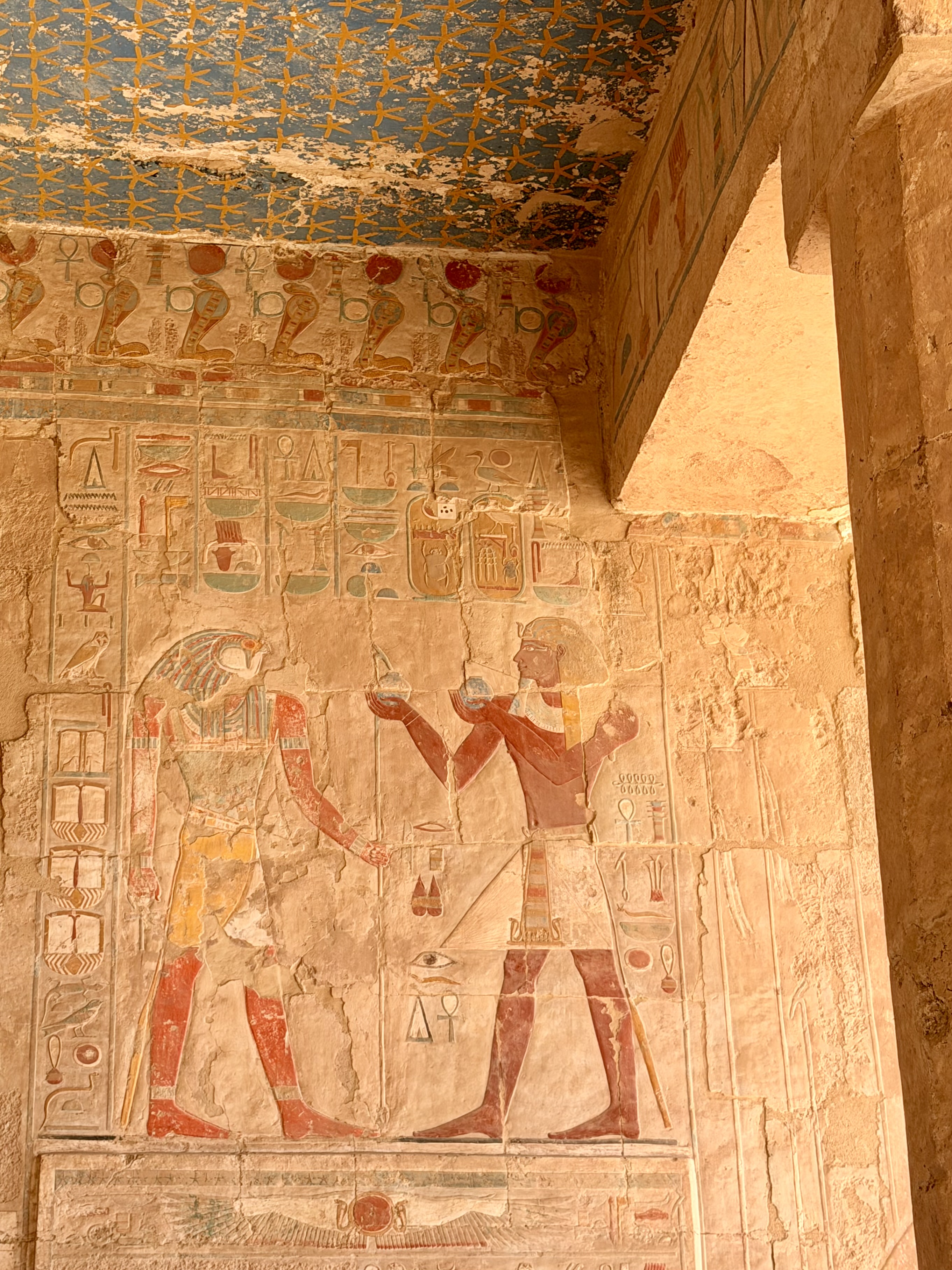
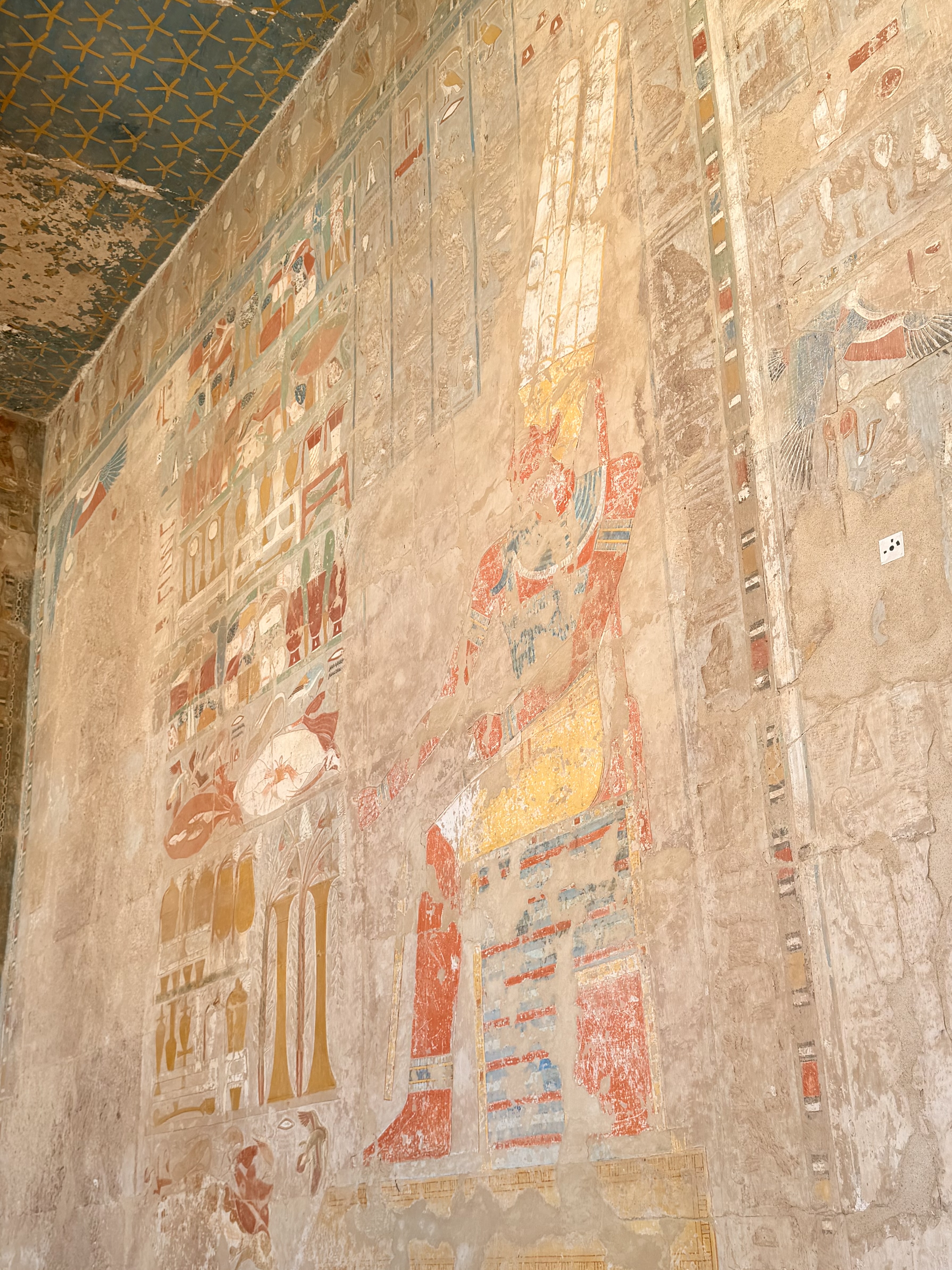
Temple of Queen Hatshepsut
Where the tombs hide, the Temple of Hatshepsut announces itself boldly.
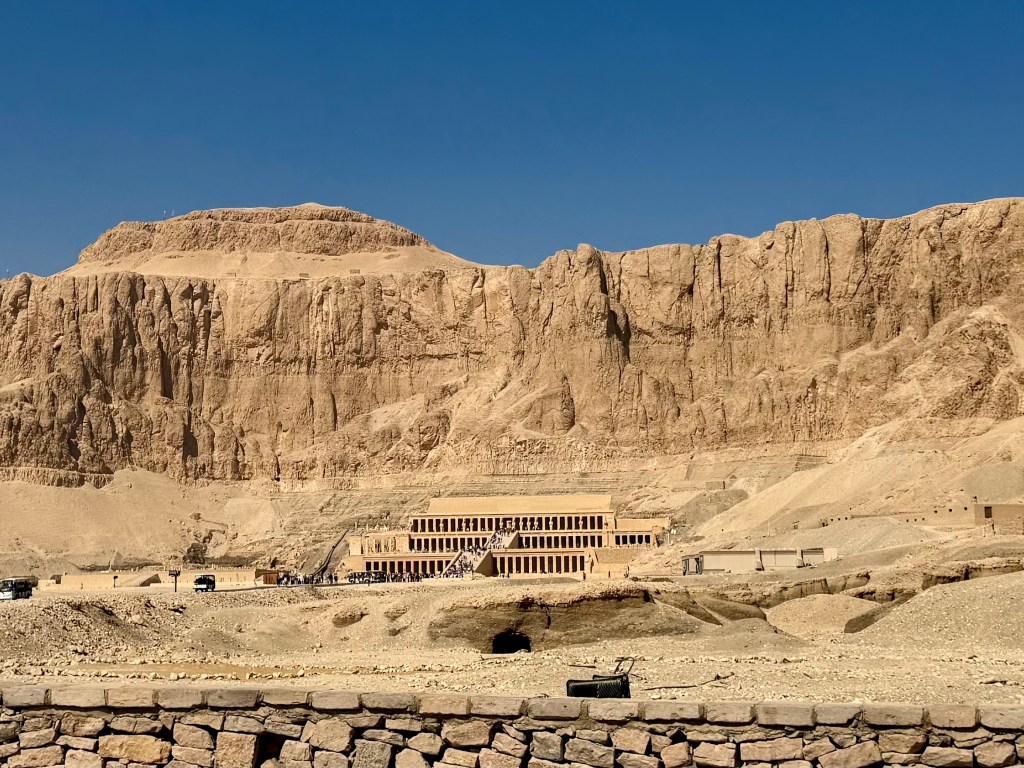
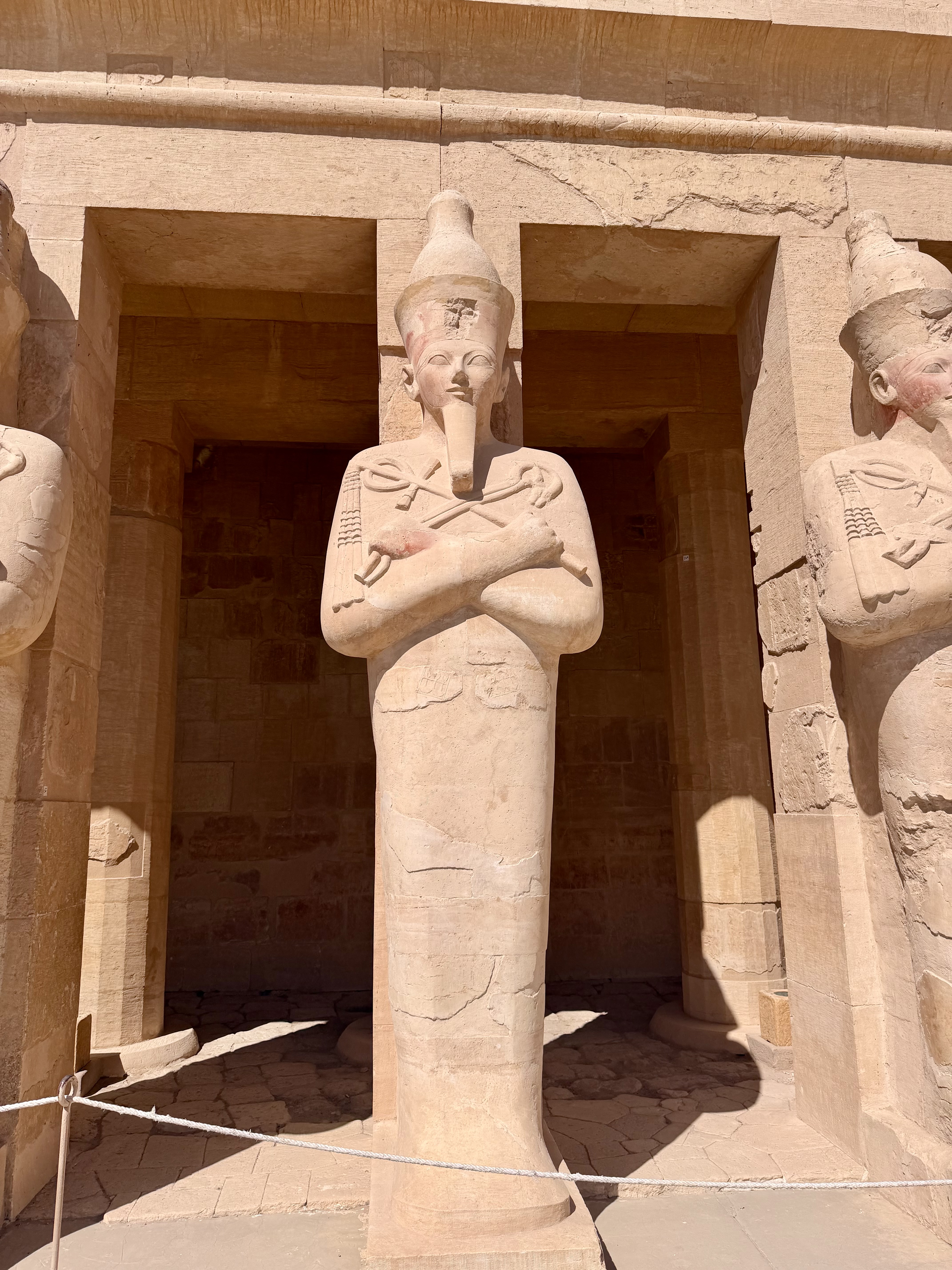
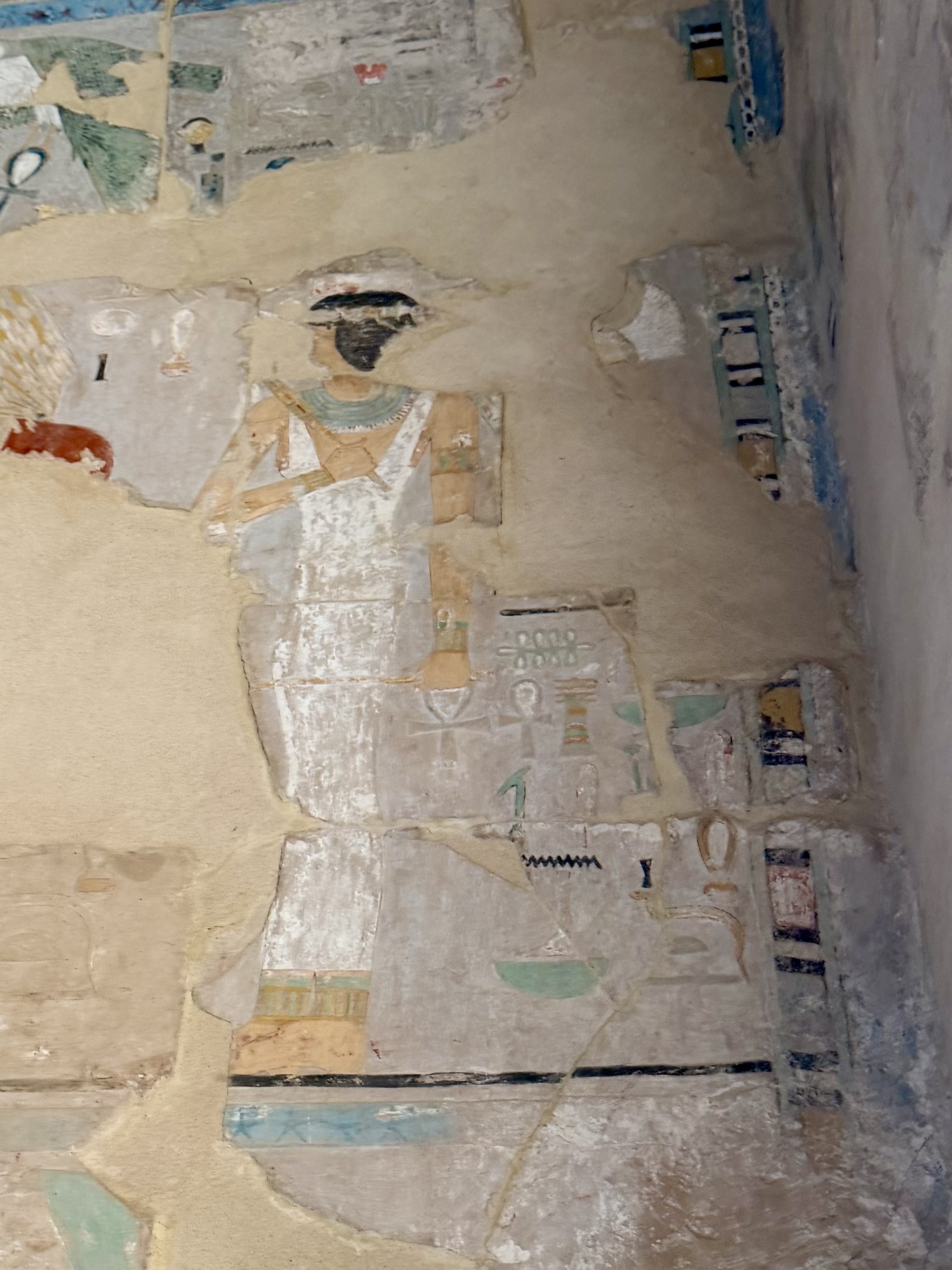
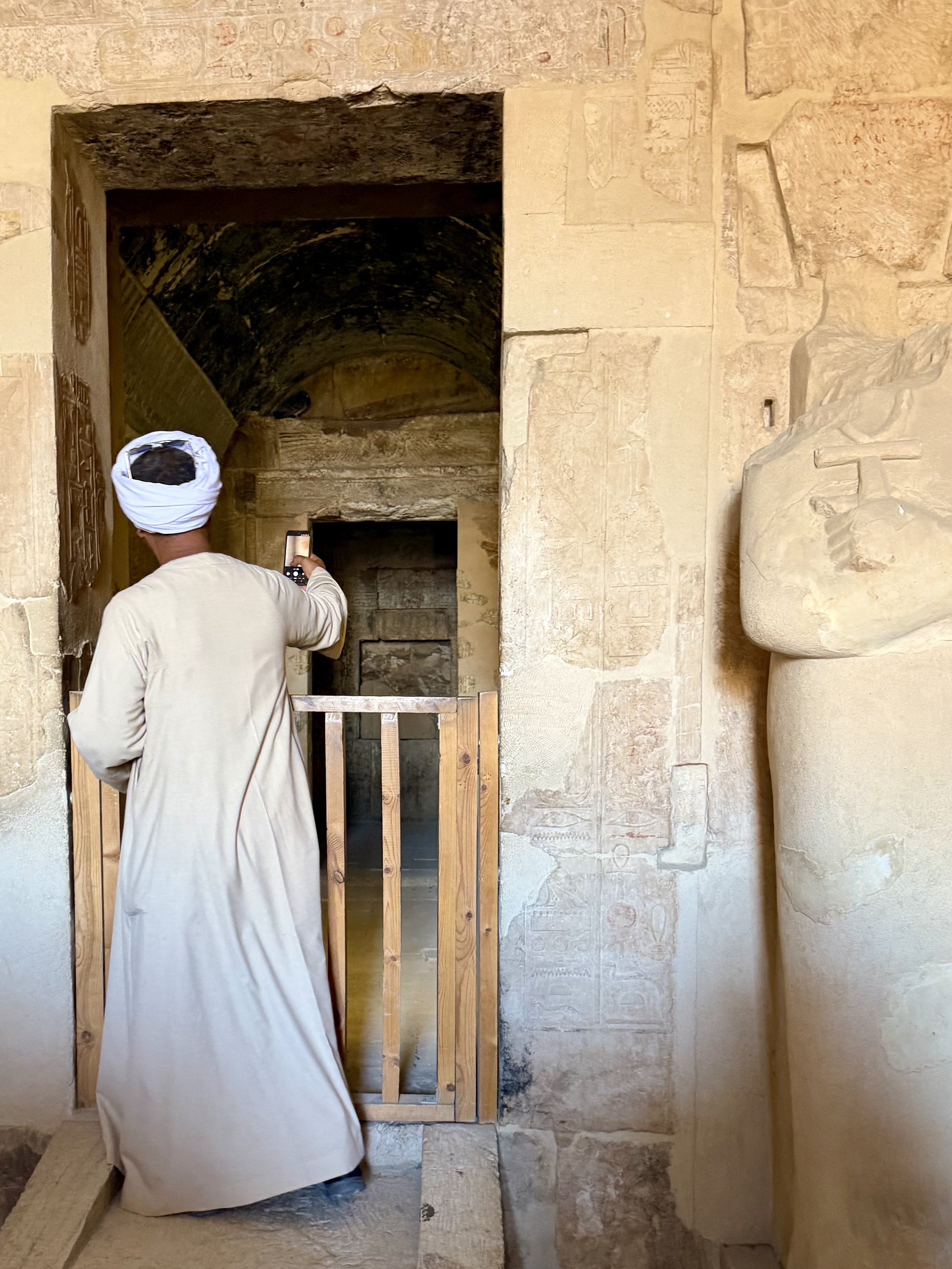
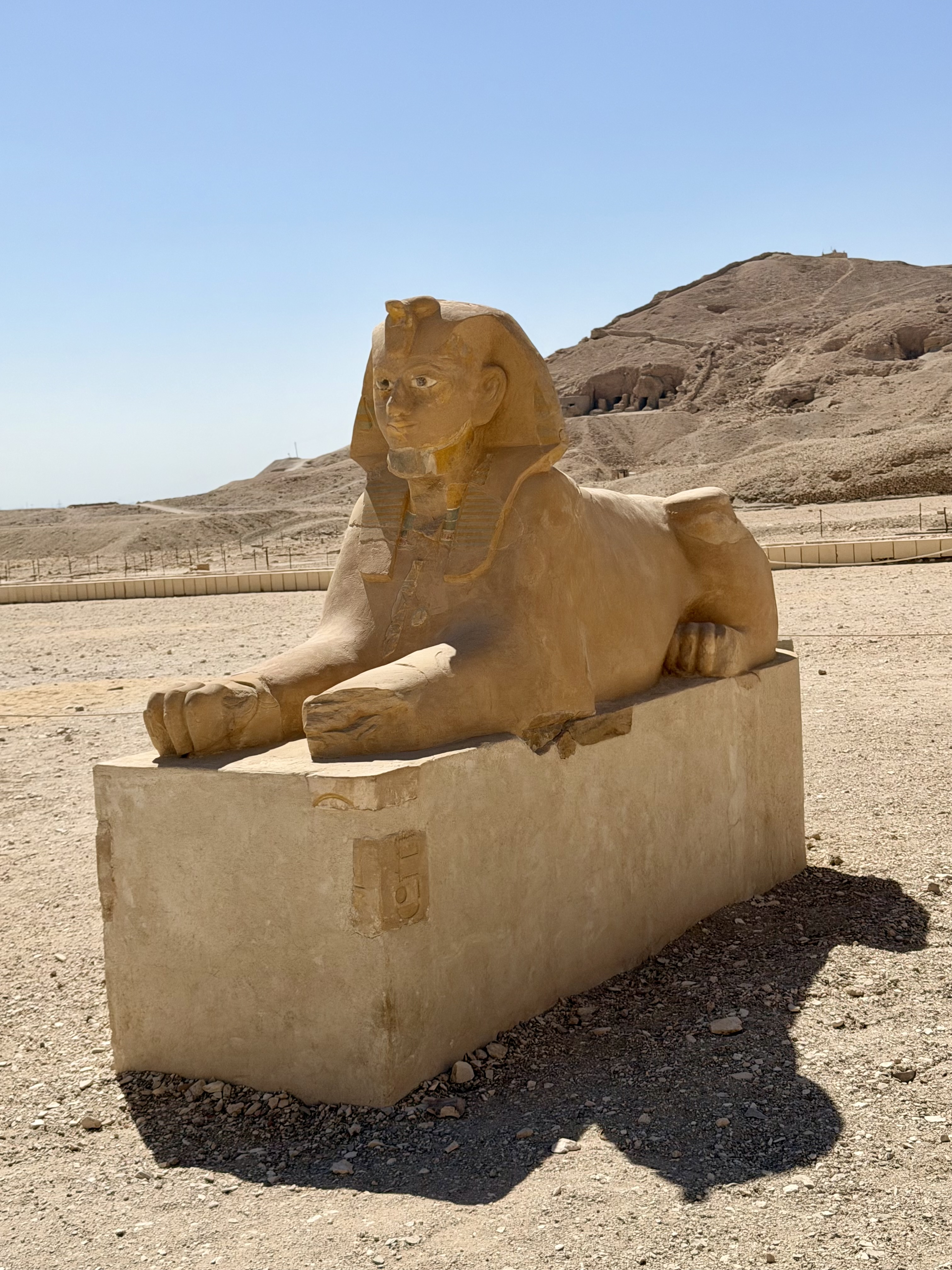
Built into limestone cliffs at Deir el-Bahari, the temple unfolds in elegant terraces connected by long ramps, perfectly aligned with the natural landscape.
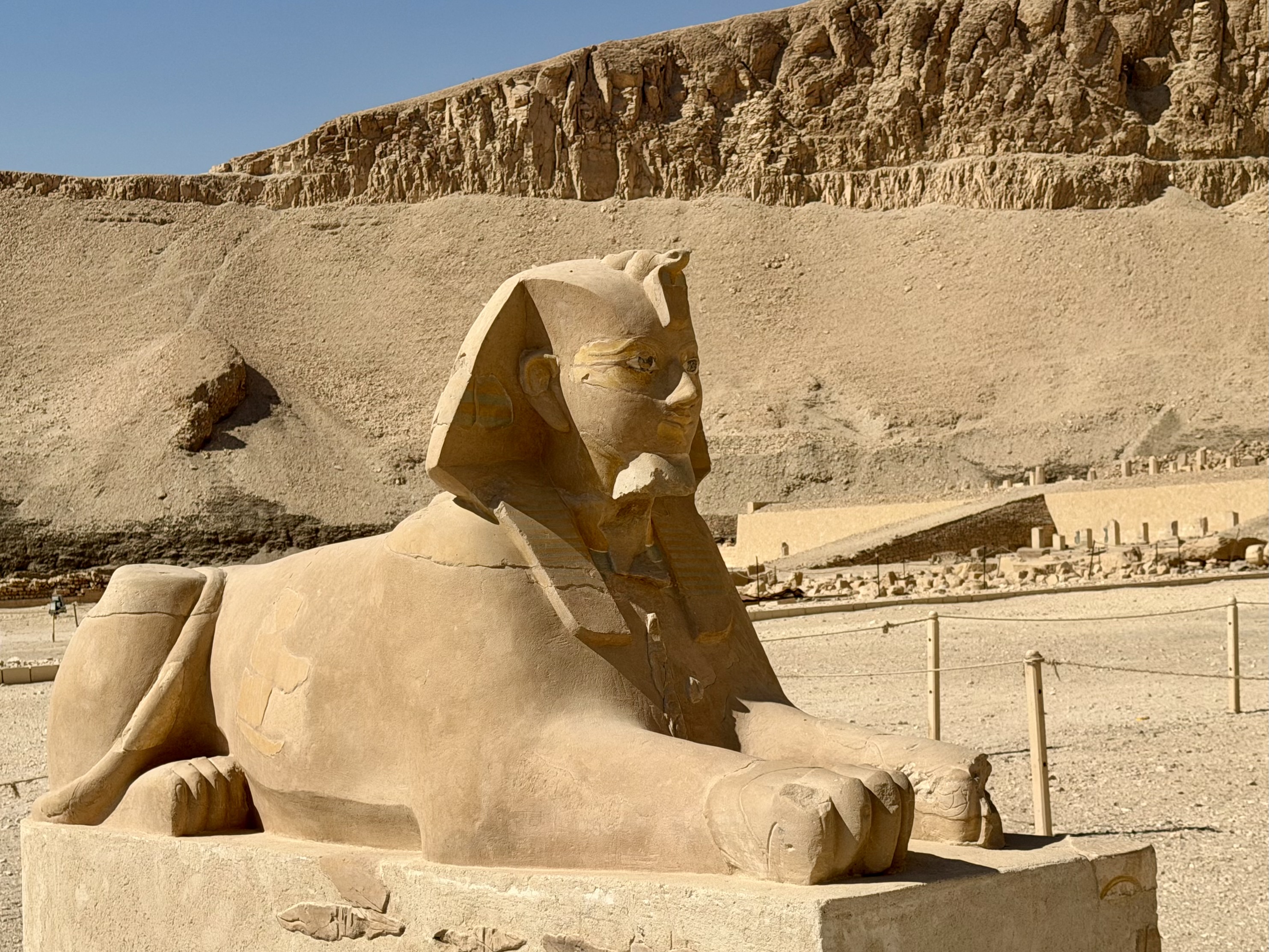
Hatshepsut was one of Egypt’s most successful rulers and one of its few female pharaohs. After marrying her half-brother Thutmose II and initially ruling as regent, she assumed full kingship, adopting traditional symbols of pharaoh including the ceremonial beard and royal kilt as expressions of authority rather than disguise.
Her reign brought prosperity, trade expansion, and ambitious building projects.
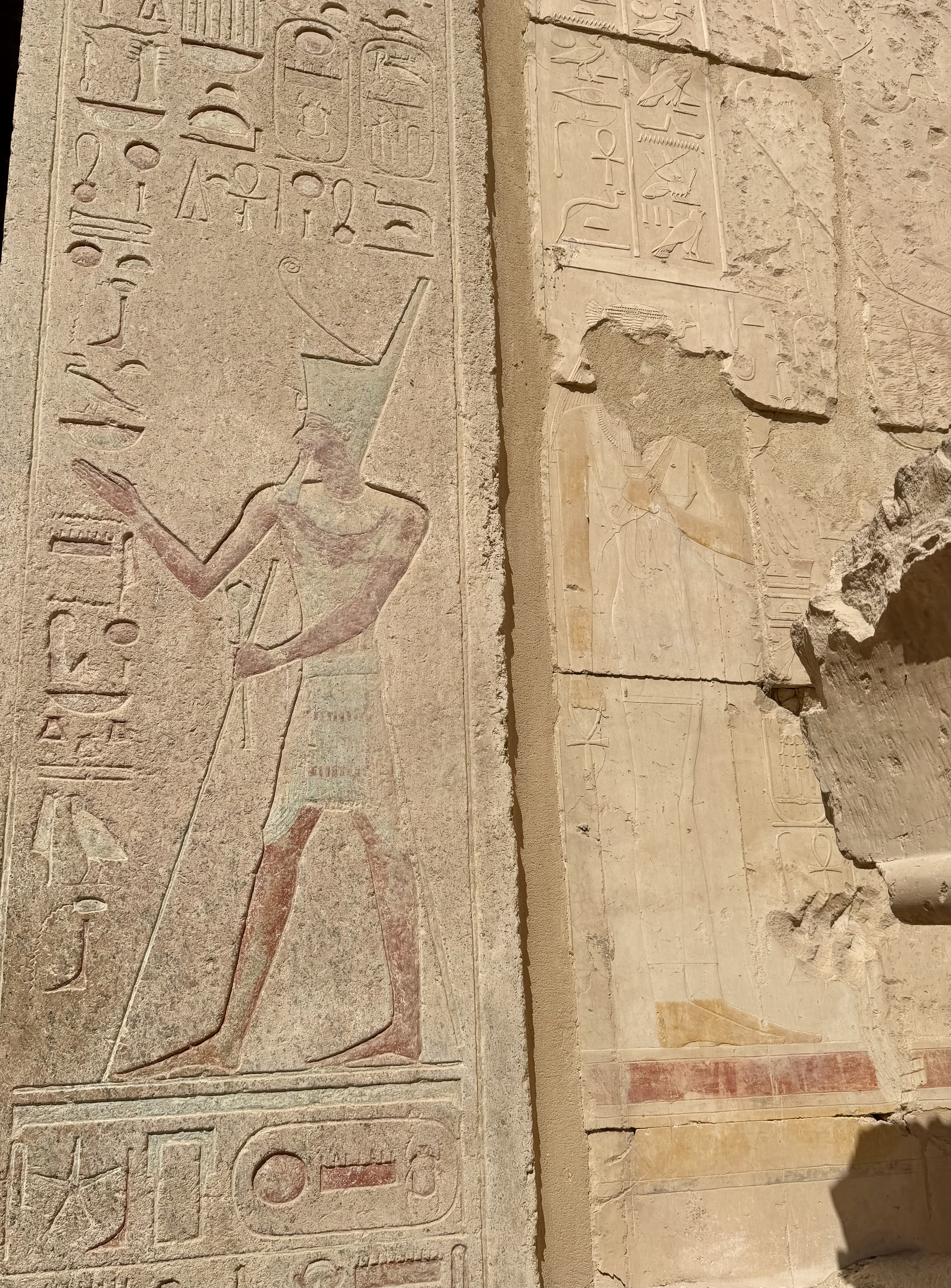
Walking through the terraces felt open and balanced after the enclosed tombs. Sunlight flooded the courtyards while relief carvings told stories of divine birth and successful expeditions.
Attempts by later rulers to erase her legacy ultimately failed. Her temple still stands as proof.
The Artisan Village
Our final stop brought us into a local artisan village where ancient craftsmanship continues today.
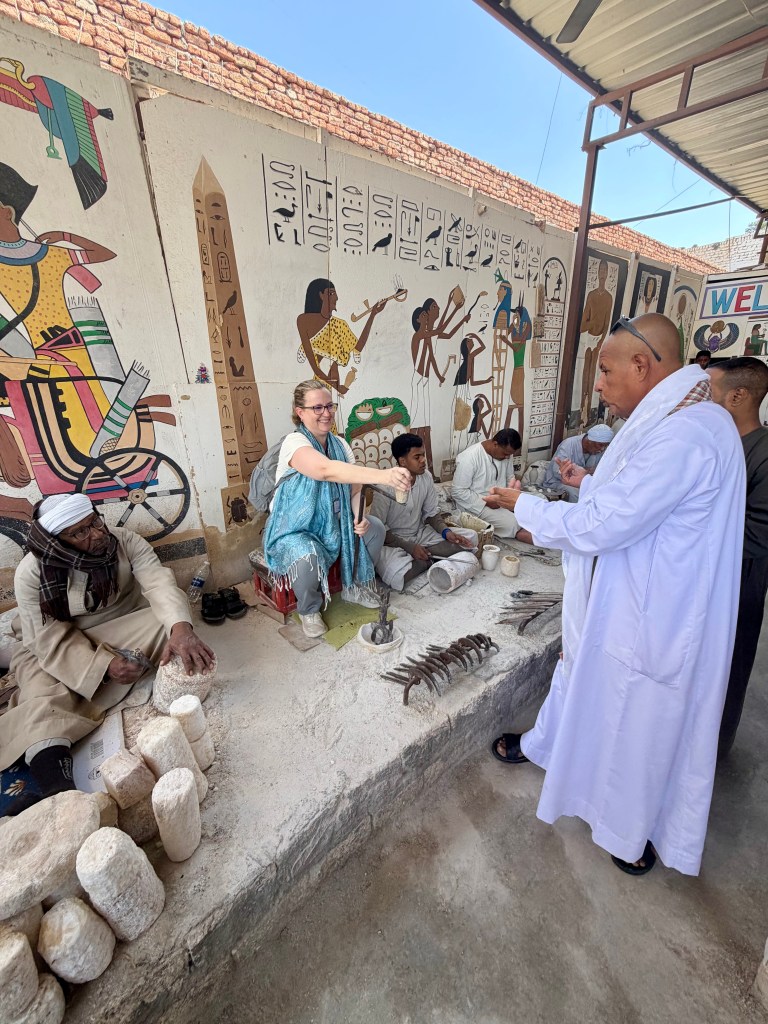
Inside the workshop, artisans demonstrated how alabaster and other stone are transformed into vases, sculptures, and candle holders using techniques passed down through generations. One artisan handed us two similar pieces and invited us to compare them. The machine-made version was noticeably heavier, dense and uniform. The handmade piece felt lighter, carefully shaped so light could pass through the stone itself.
Then they invited me to try.
Seated beside one of the craftsmen, I placed my hands on a shaping tool while the stone spun before me. Guided carefully, I pressed the instrument forward, attempting movements that clearly required years of skill. Around me, the artisans clapped and chanted encouragement, turning the moment into laughter and celebration. For a brief moment, I was not just observing Egyptian craftsmanship, I was part of it.
Afterward we moved into the showroom to choose pieces of our own.
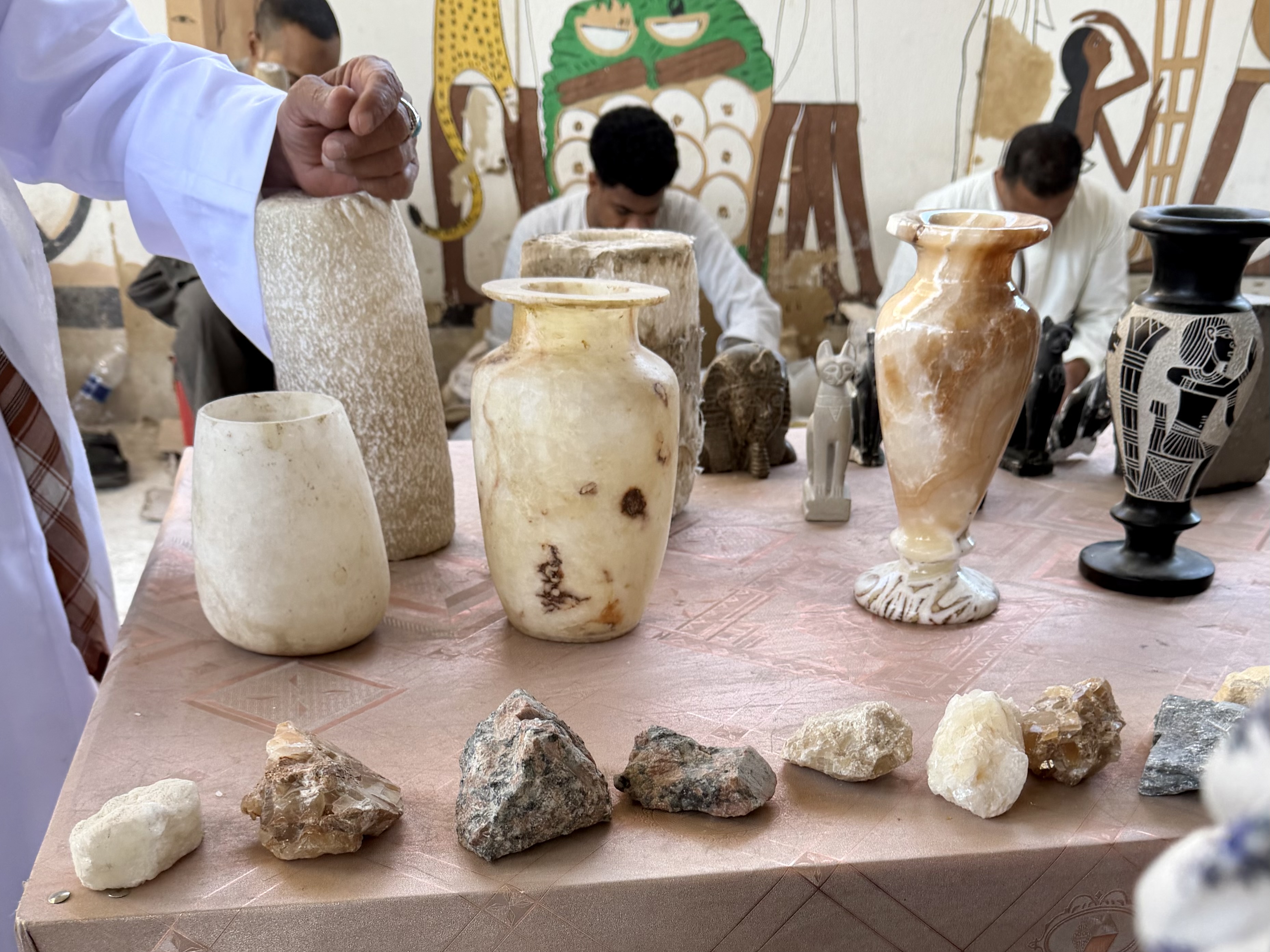
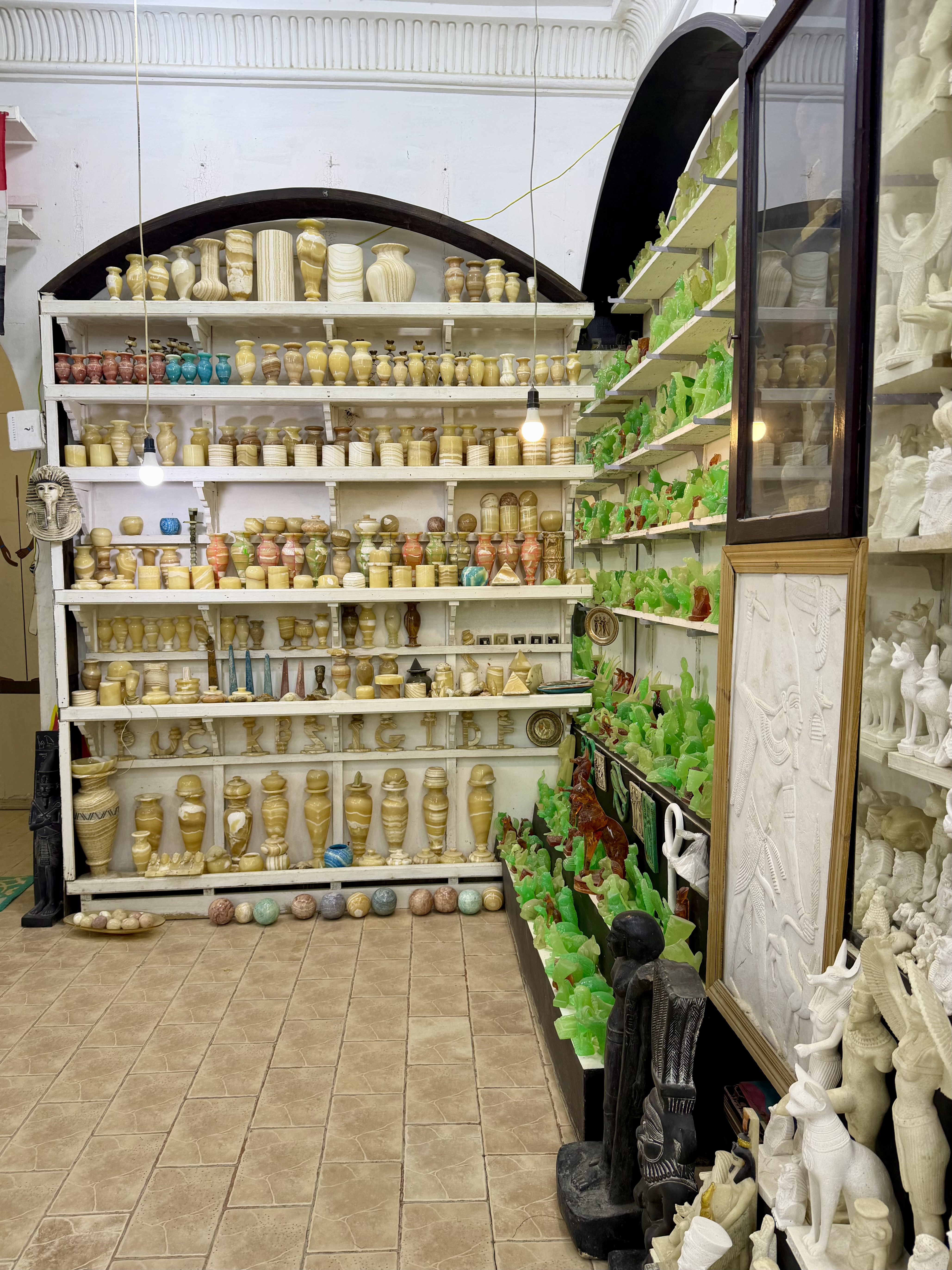
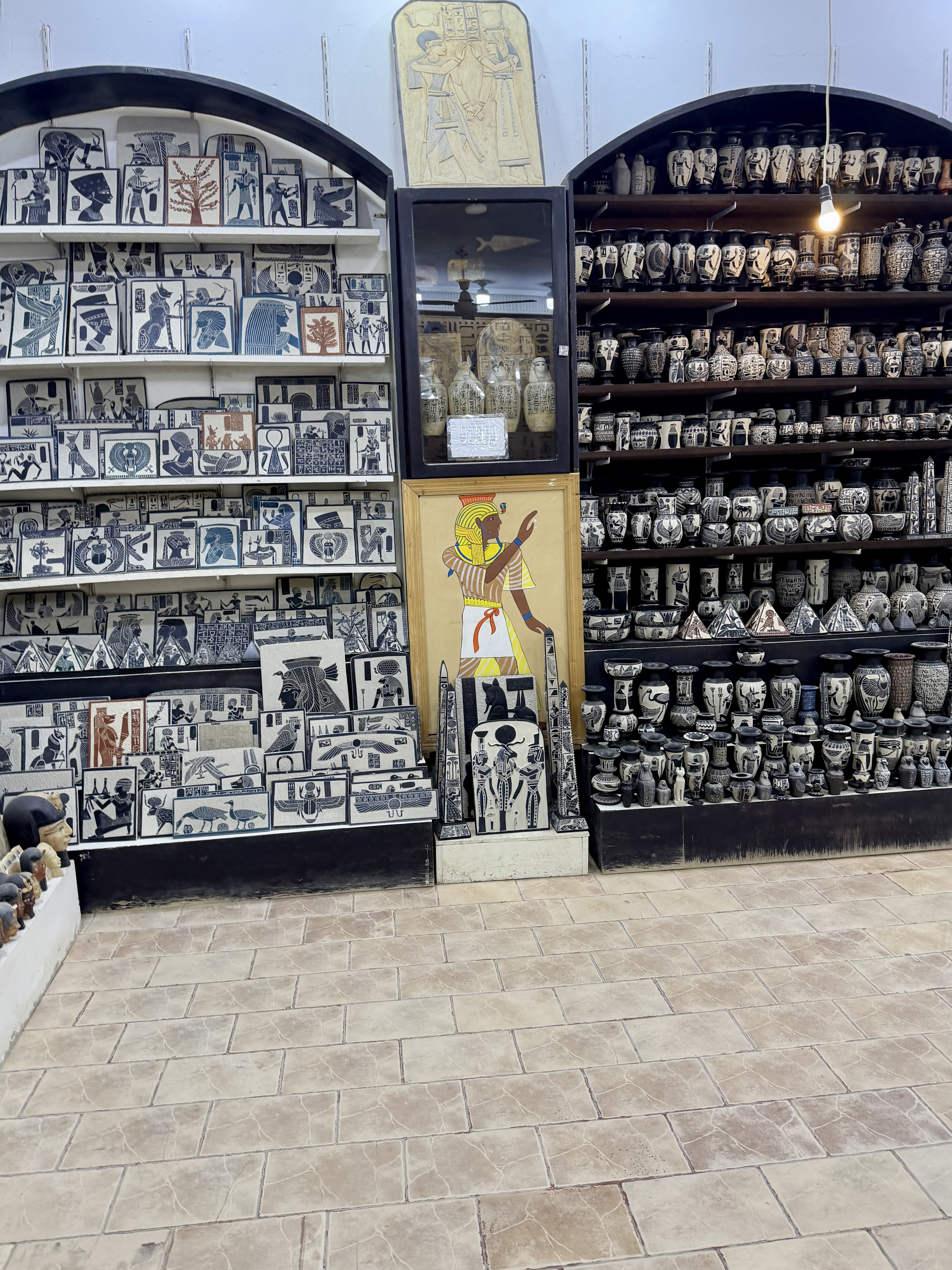
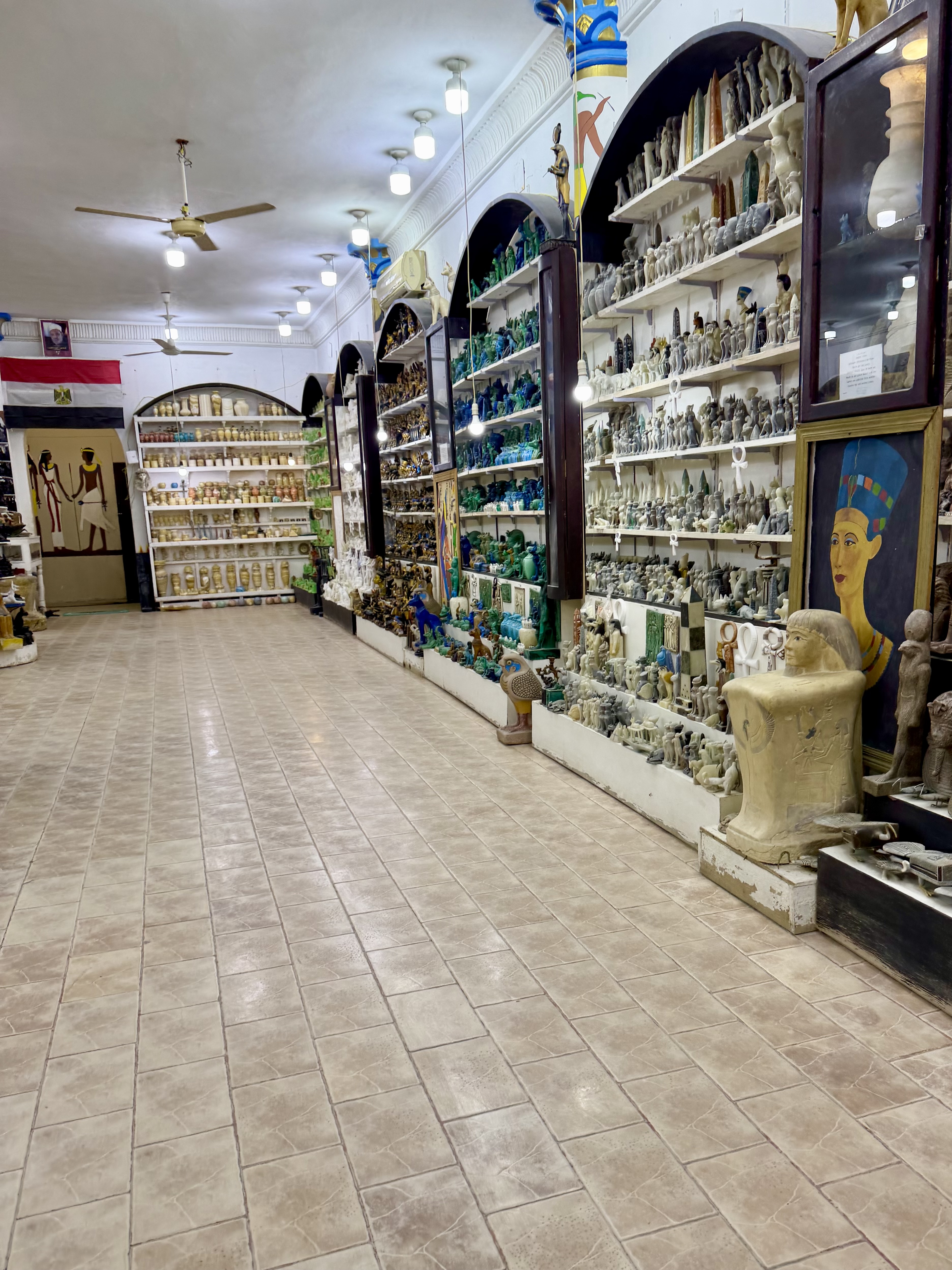
We selected a handmade alabaster candle holder, chosen specifically because when a candle is lit inside it glows warmly through the natural stone. Knowing it was hand carved made it even more meaningful. We also chose a black carved vase etched with Egyptian figures that immediately caught my eye.
When it came time to negotiate, my husband quickly called me over, clearly relieved to hand off the responsibility.
The owner opened with a price that already included what he described as a “30 percent discount because I like you.” I countered at fifty percent less. He laughed, lowered his number, and added a pyramid sculpture as a gift. After another round, we met somewhere in the middle.
I chose a black pyramid matching our vase. My husband admired a bright blue one nearby, and the owner immediately added that as well.
Then came an unexpected moment.
Alaa surprised all of us by purchasing six purple scarab beetles and presenting one to each member of our Egyptian tour family. In ancient Egypt, the scarab symbolized rebirth, protection, and renewal, associated with the rising sun and transformation.
It felt less like a souvenir and more like a shared symbol of the journey we were experiencing together.
As we drove back toward the ship, the desert slowly softened into farmland again. The day felt impossibly full, sunrise in the sky, kings beneath mountains, a powerful queen carved into cliffs, and living traditions carried forward by modern hands.
We returned not just tired, but deeply aware that Egypt was no longer something we were simply seeing.
It was something we were beginning to understand.
And tomorrow, the Nile would carry us forward to the next chapter.
 Click, Wander & Savor