Unlocking the Nile – From River Lock to Ancient Temples
Passing Through the Lock
Our evening began quietly, or so we thought.
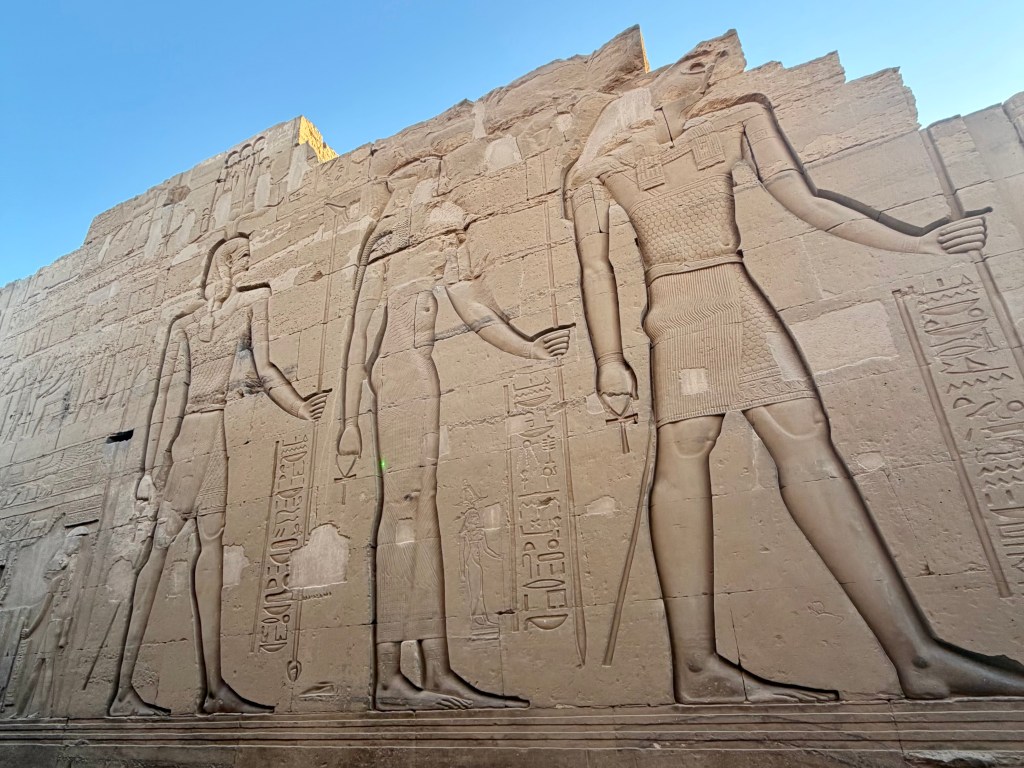
After dinner aboard the MS Salacia, word spread that we would soon pass through one of the Nile’s navigation locks. I did not fully understand what that meant until we stepped onto the deck and watched the massive concrete walls slowly rise around us.
It was nearly midnight.
Moonlight reflected off the water as our ship eased into a narrow chamber barely wider than the vessel itself. Other boats lined up behind us, their lights glowing softly against the dark riverbanks.
The gates closed with a deep mechanical echo.
For a moment everything felt still.
Then the water began to move.
Slowly, almost imperceptibly, the ship lifted upward as the chamber filled. Passengers leaned over railings in quiet fascination, watching ropes tighten and loosen while crew members guided the vessel with practiced precision.
There was no sunlight pouring in, only moonlight and the hum of machinery. The entire experience felt surreal, like floating inside a hidden corridor of the Nile.
When the upper gates finally opened, the river stretched ahead again, calm and endless.
We had quite literally unlocked the next chapter of our journey.

Morning Arrival in Edfu
By morning, the Nile had transformed again. Palm trees lined the banks, small villages appeared along the shoreline, and life unfolded at an entirely different pace than Cairo.
To reach Edfu Temple, we boarded horse-drawn carriages waiting along the dock. The ride itself felt like stepping into another century. Hooves echoed along dusty streets as we passed storefronts, schoolchildren, and locals beginning their day.
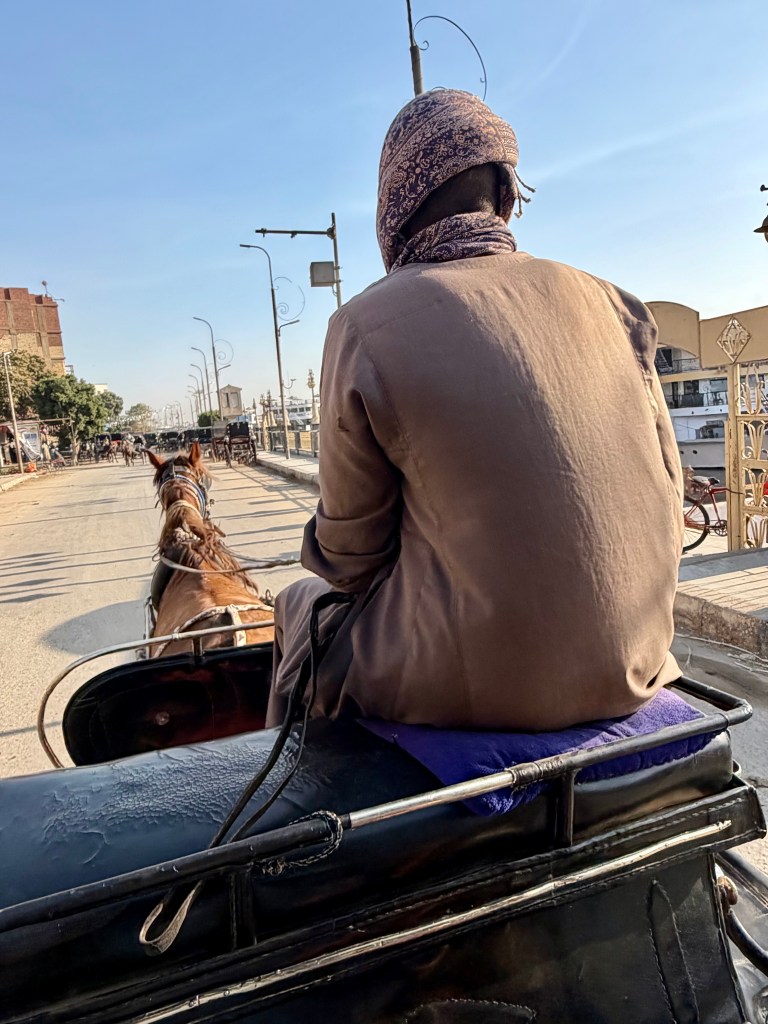
It was lively, chaotic, and completely authentic.
Then suddenly, rising ahead of us, stood one of the most remarkably preserved temples in all of Egypt.
Edfu Temple – The House of Horus
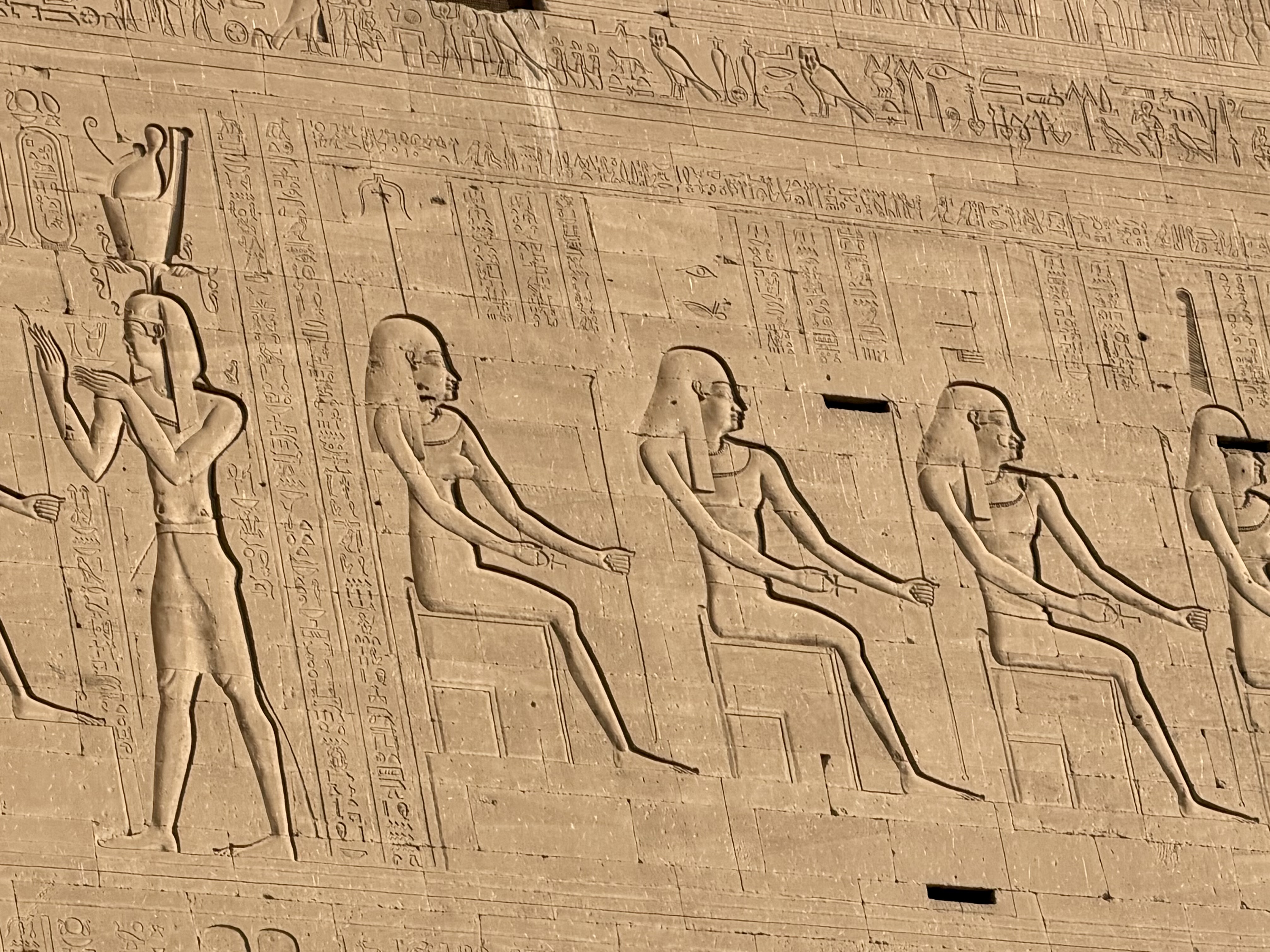
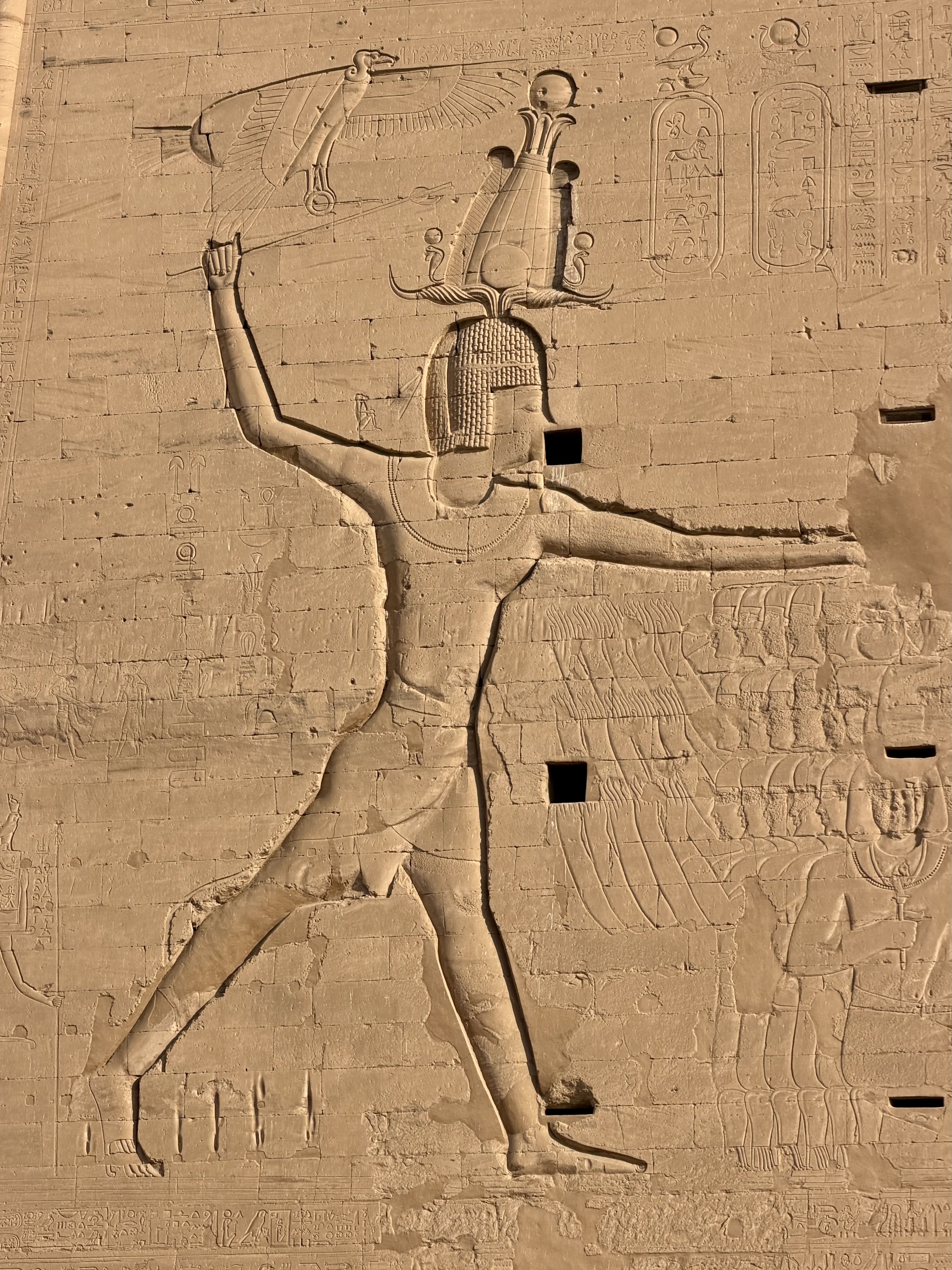
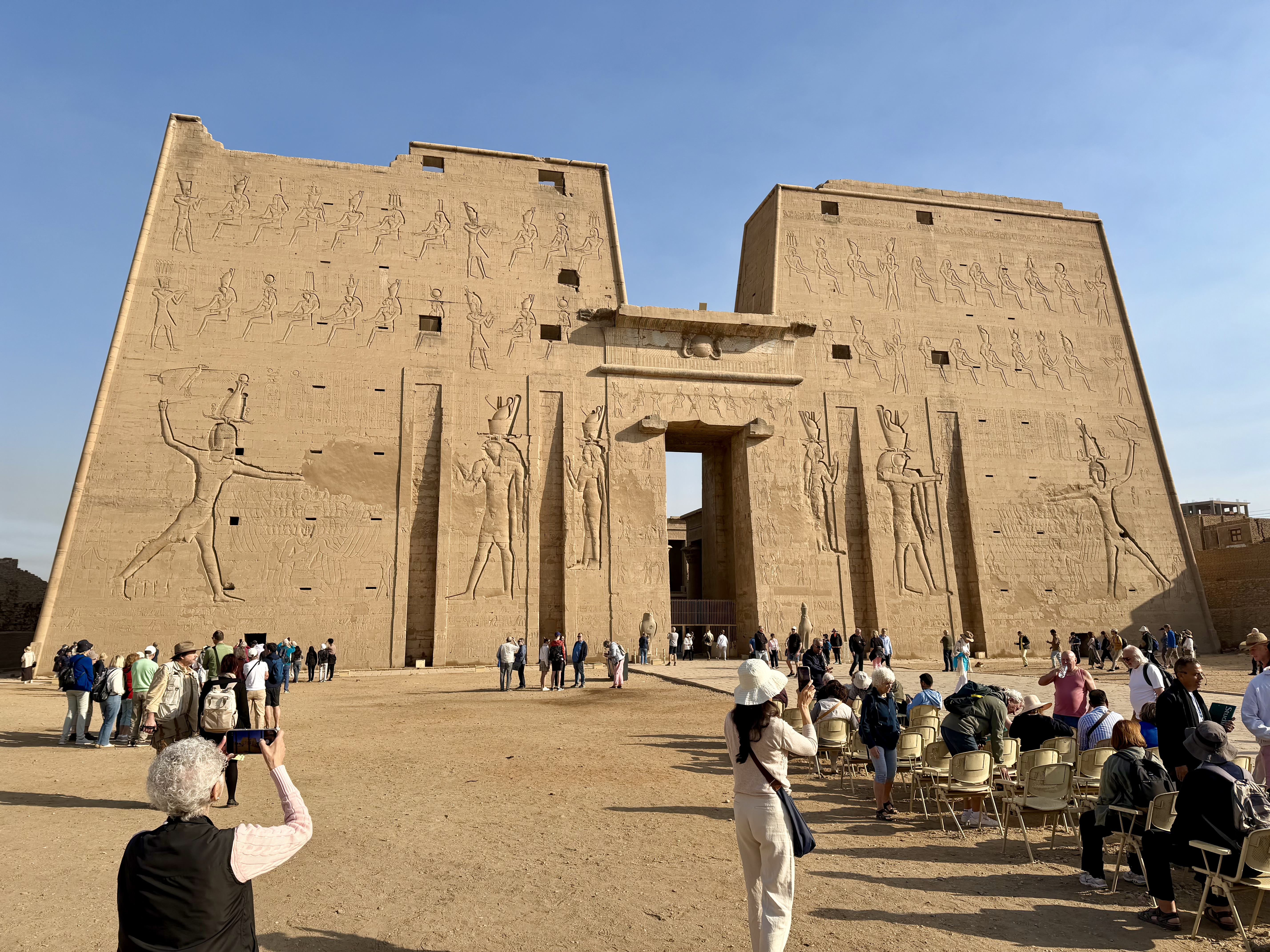
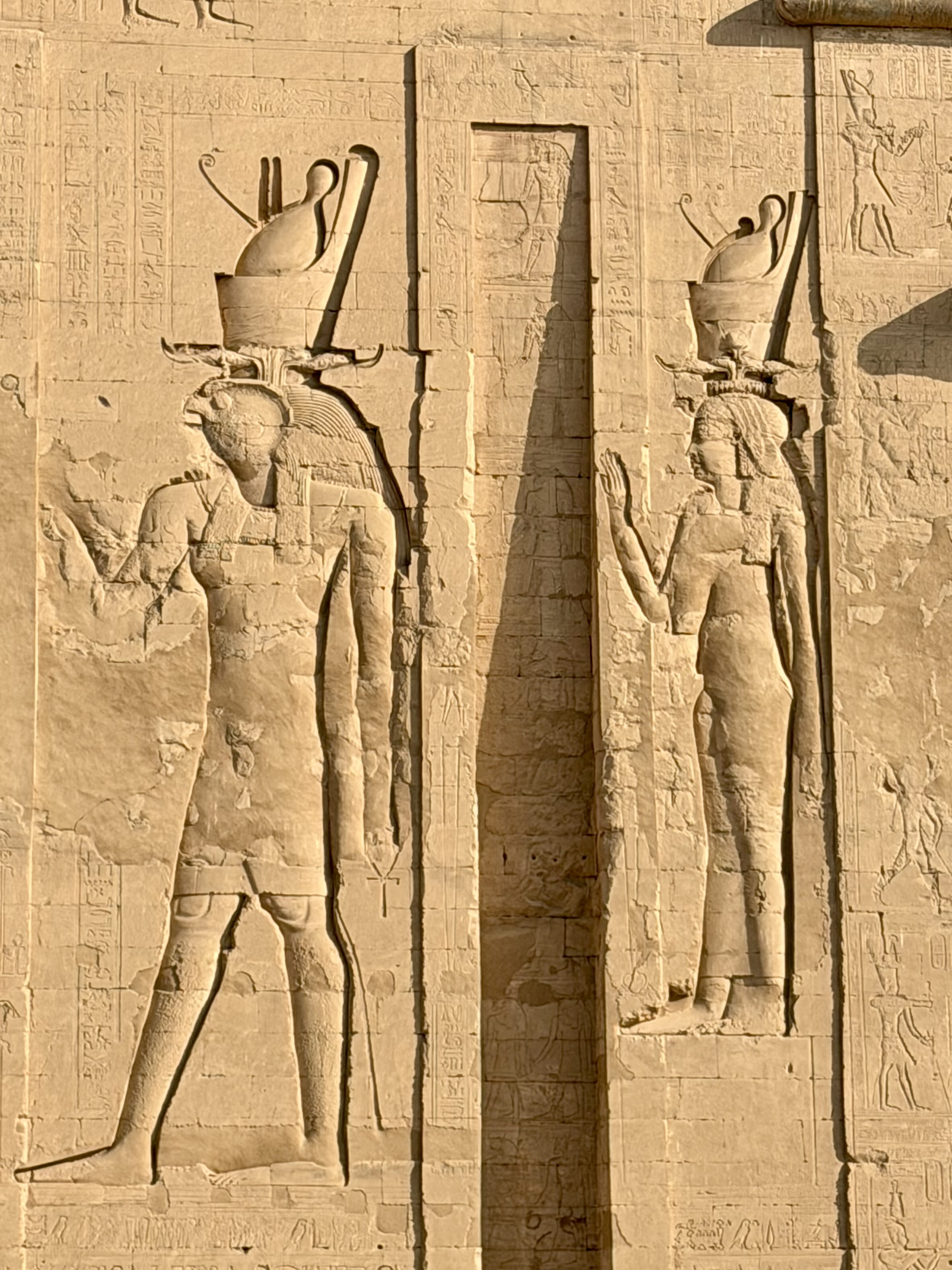
Dedicated to Horus, the falcon-headed god of kingship and protection, Edfu Temple is one of the best preserved ancient temples anywhere in the world.
Built during the Ptolemaic period between 237 and 57 BCE, the temple survived largely because it had been buried beneath desert sand for centuries, protecting its carvings from erosion and destruction.
Walking through its massive entrance pylons felt overwhelming in scale. Towering walls covered in carvings depicted pharaohs presenting offerings to the gods, reinforcing divine authority through ritual imagery.
Inside, corridors grew darker and cooler, guiding visitors toward increasingly sacred spaces.
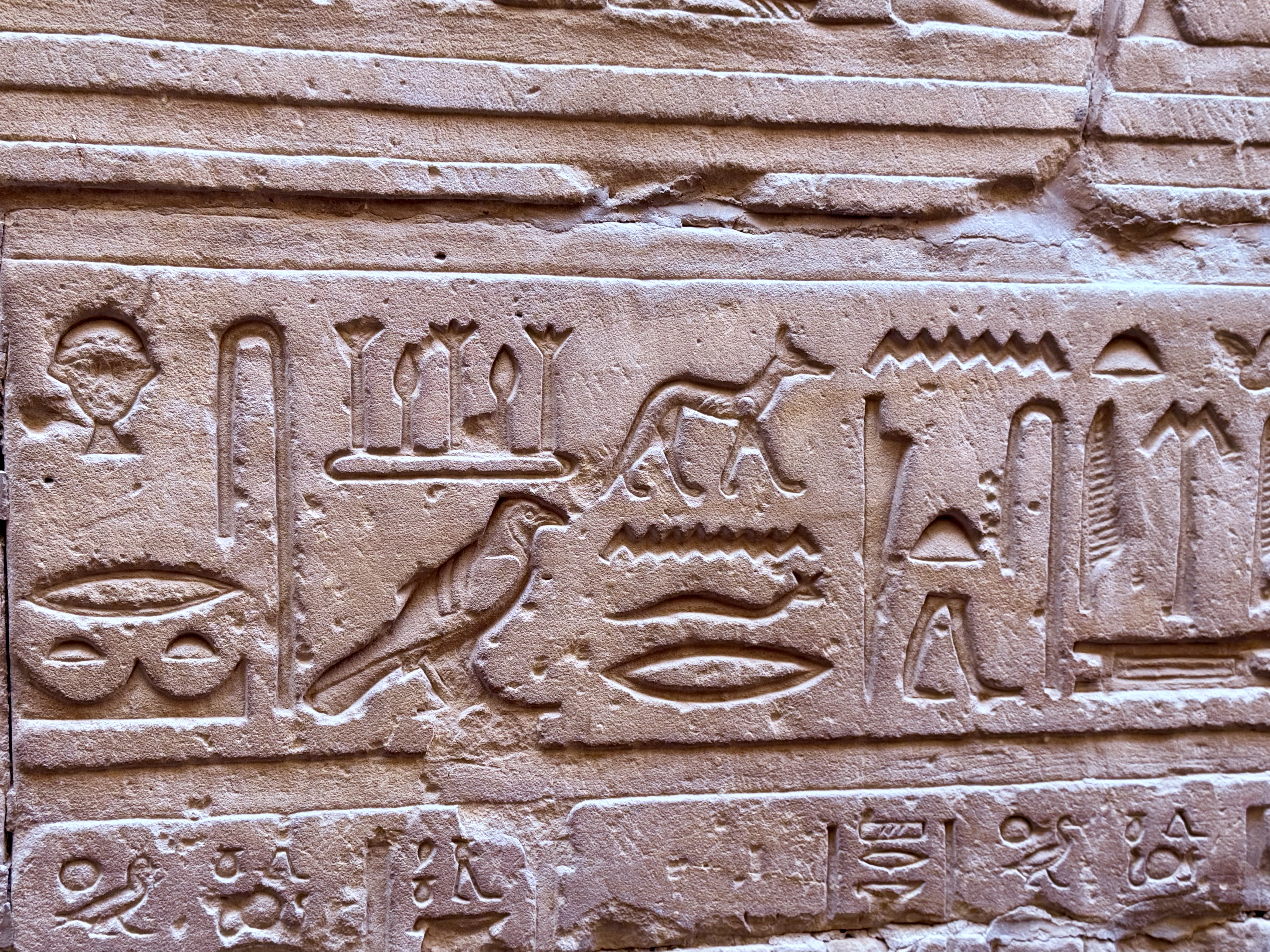
Every surface told a story.
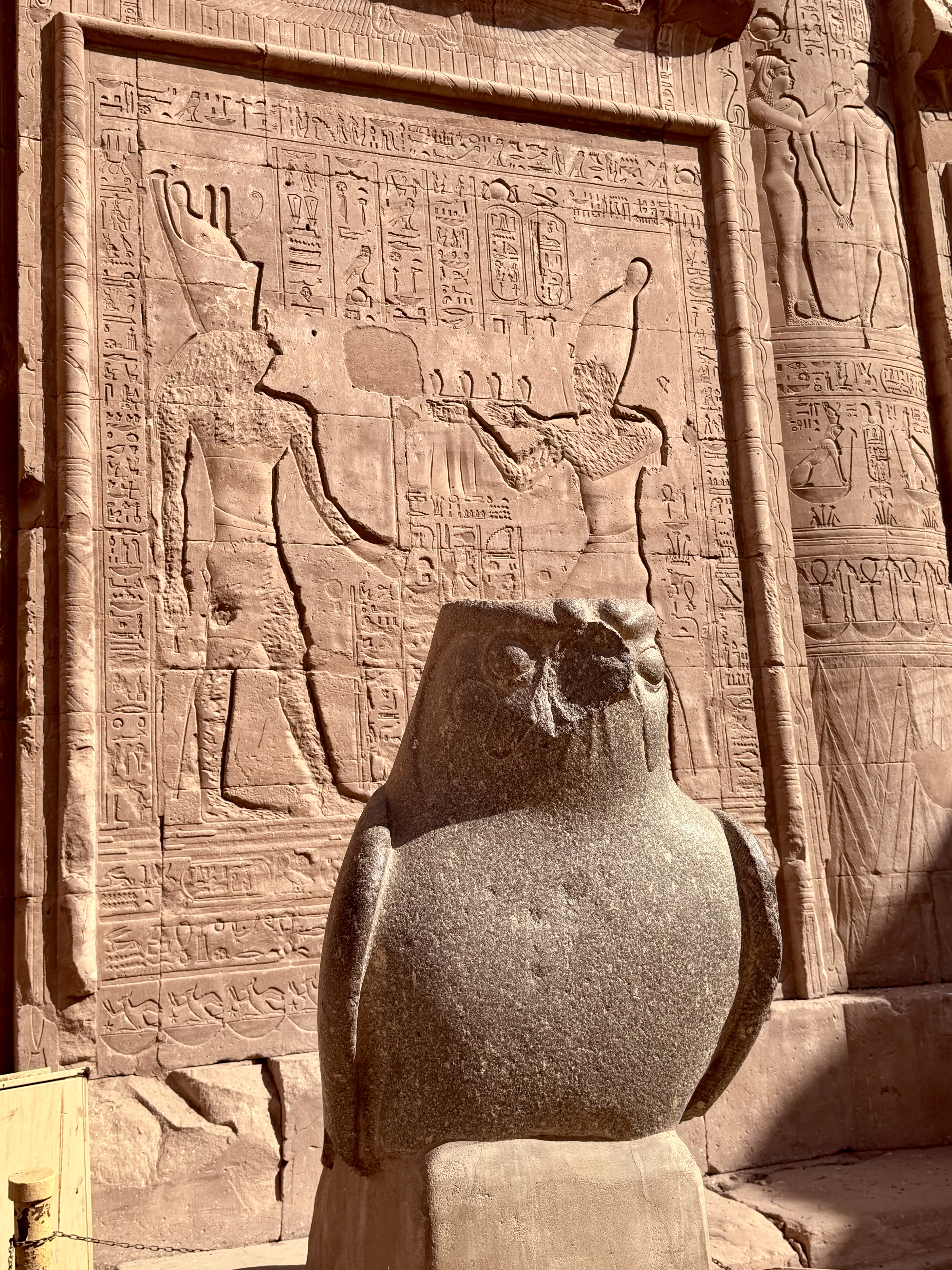
The Passage of Victory – Order Over Chaos
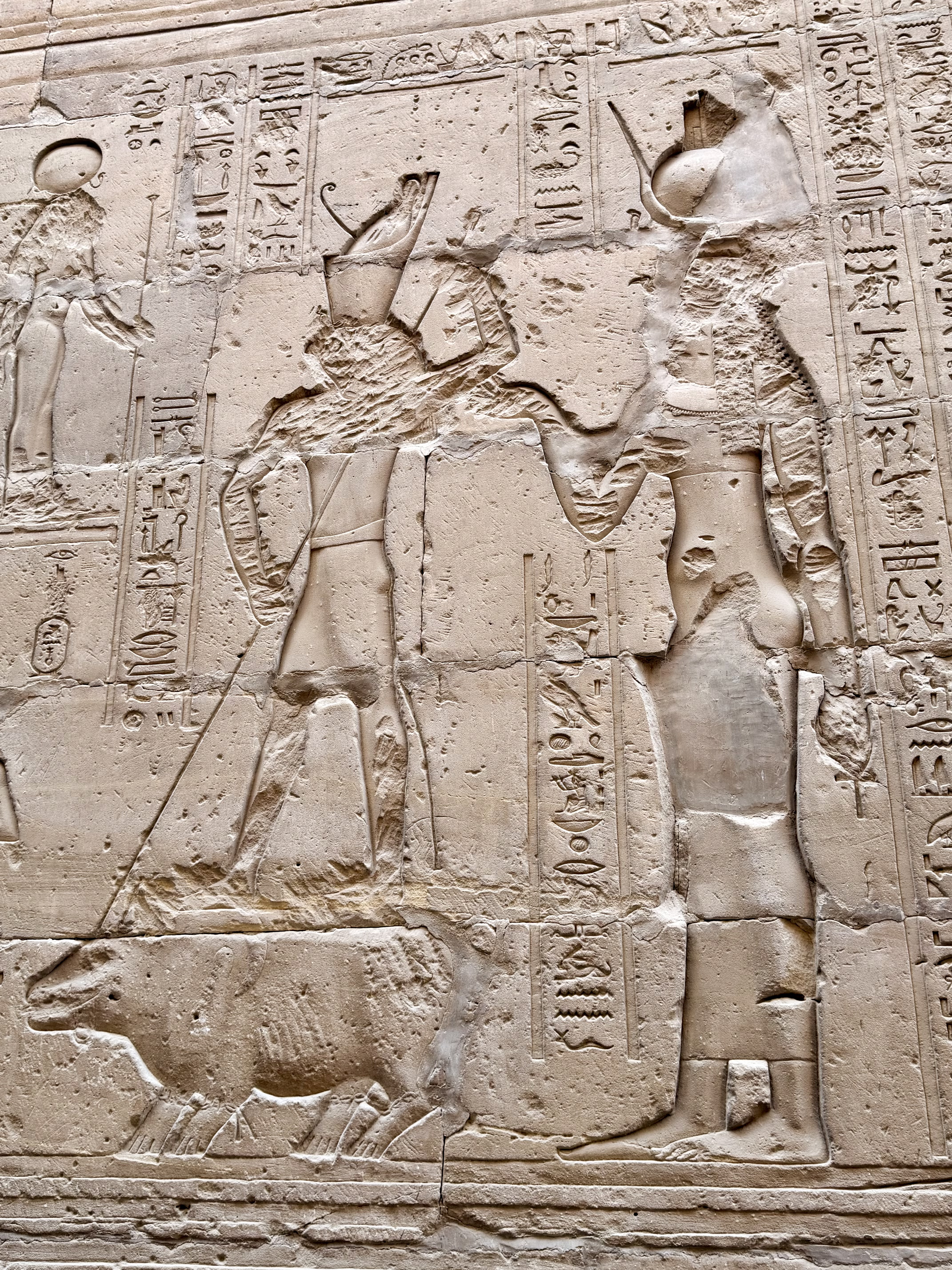
One of the most fascinating scenes appeared along a carved corridor often called the Passage of Victory.
Here, Horus is shown harpooning a hippopotamus.
At first glance it appears to depict a hunting scene, but Alaa explained its deeper meaning. The hippopotamus symbolized chaos and destructive forces threatening balance in the world. Horus striking it represented the triumph of order over disorder, stability over danger.
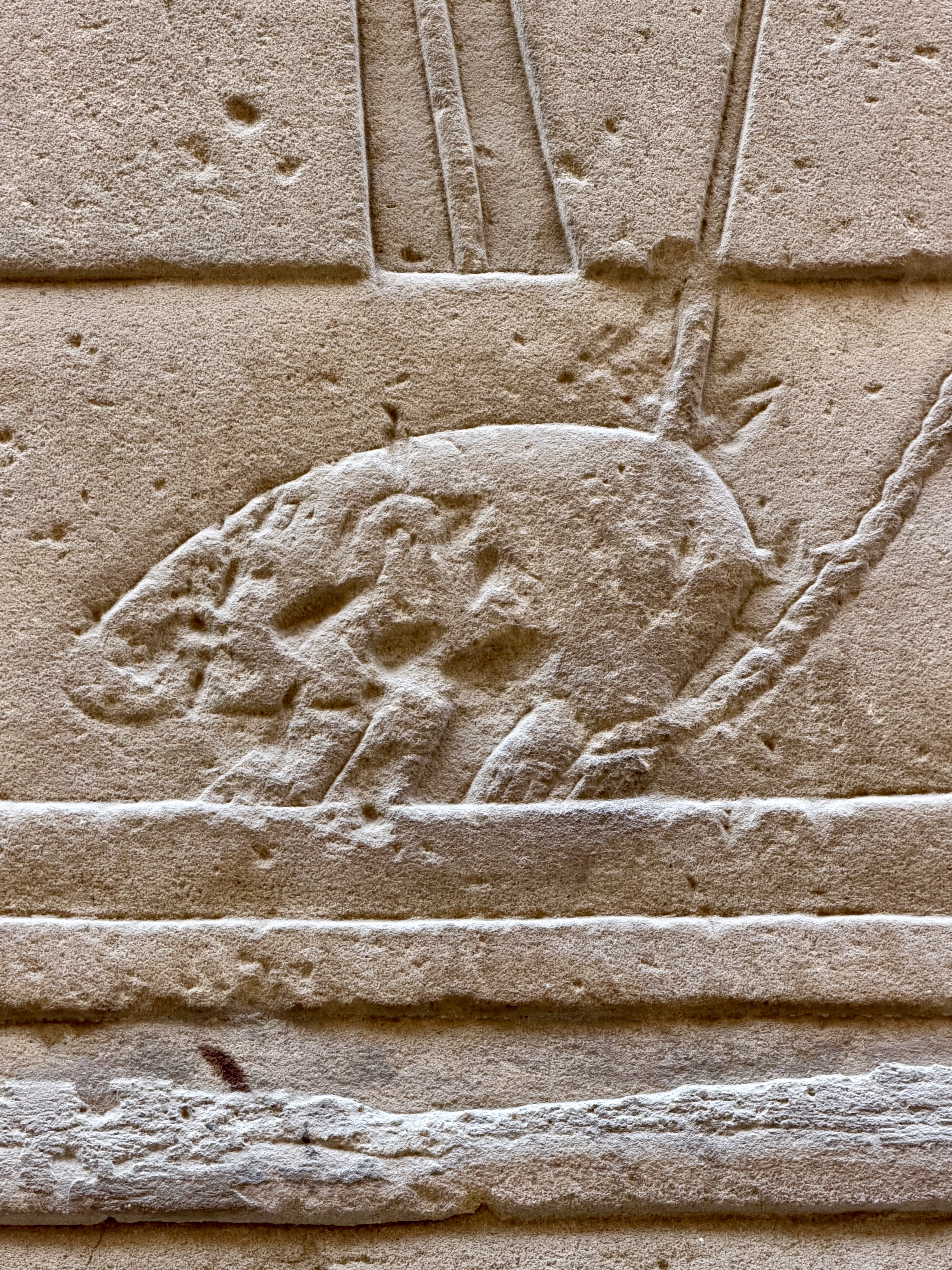
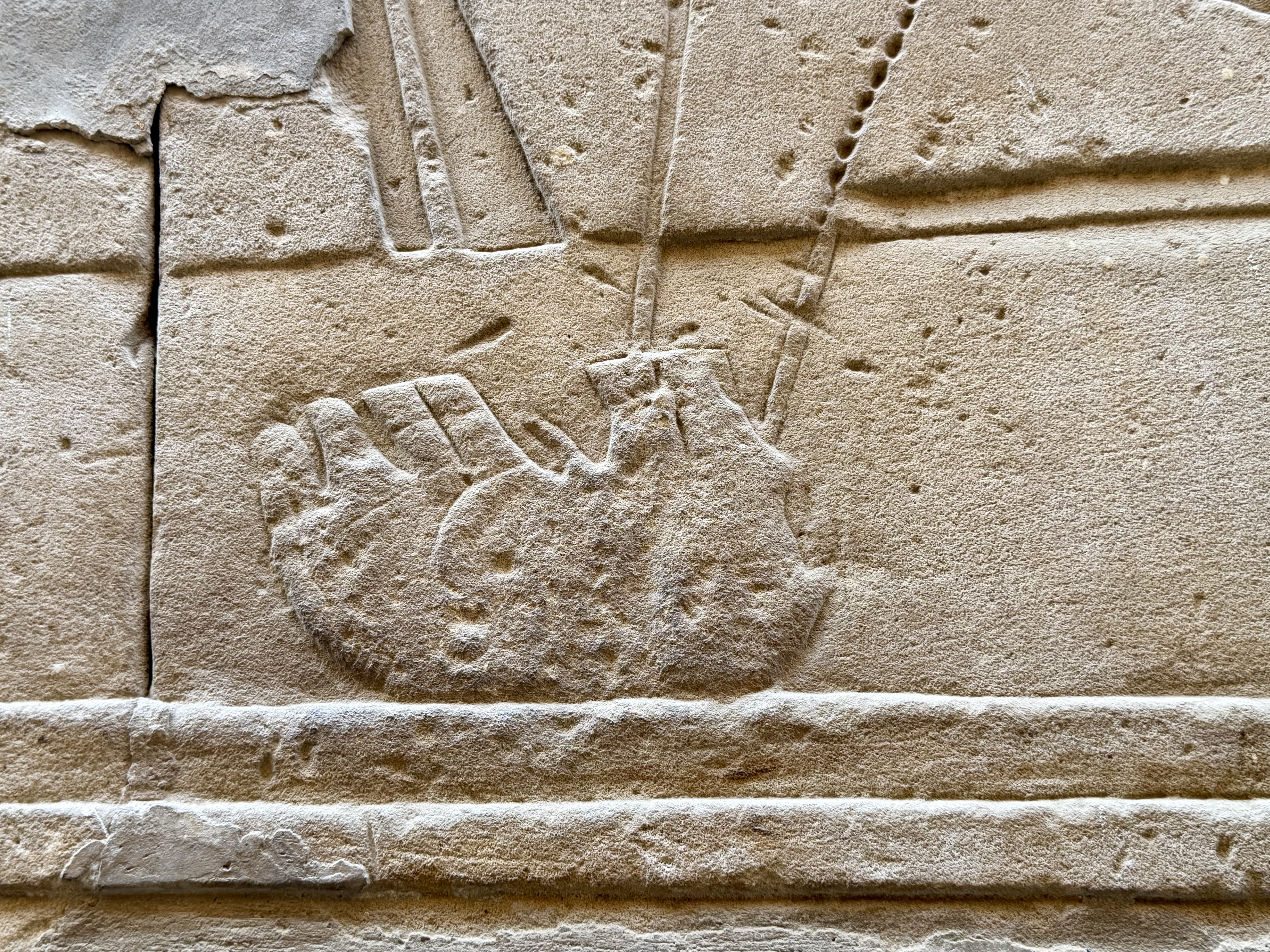
Ancient Egyptians believed maintaining cosmic balance required constant ritual action, and these carvings preserved that victory eternally in stone.
Standing there, surrounded by walls filled with symbolic storytelling, it became clear that temples were not simply religious structures. They were visual theology, history lessons, and political statements all at once.
Kom Ombo – A Temple Shared by Gods
Afternoon Arrival
We docked late.
Unlike daytime temple visits, Kom Ombo revealed itself slowly under artificial lights and moonlit sky. The temple stood elevated above the riverbank, glowing against the darkness like a stage set waiting for its actors.
Visiting at night changed everything. Without crowds or harsh sunlight, the stone seemed softer, shadows deeper, and the atmosphere almost sacred.
Egypt’s Only Double Temple
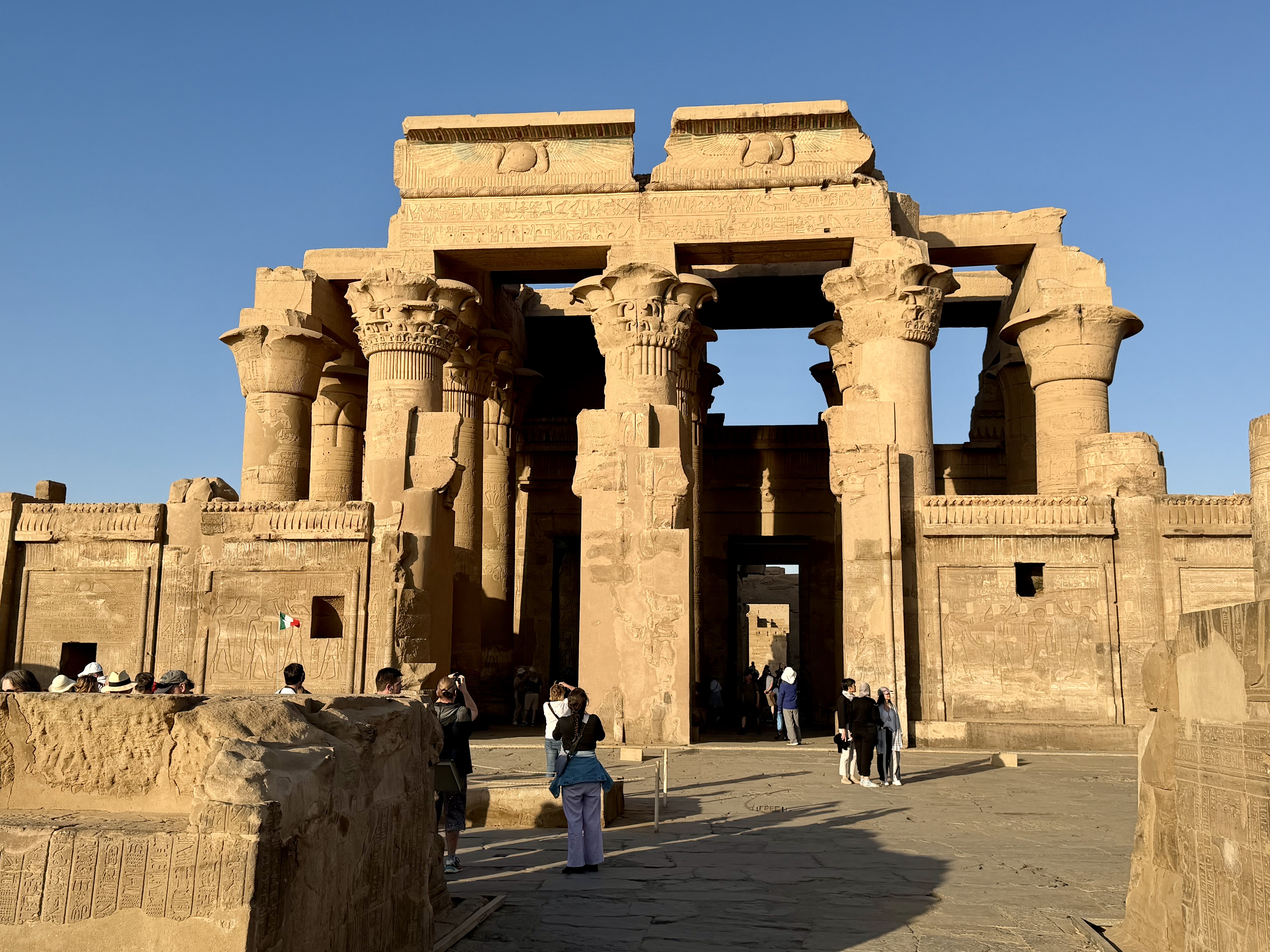
Kom Ombo is unique because it was designed as a perfectly symmetrical double temple.
One side honors Sobek, the crocodile god associated with fertility and the unpredictable power of the Nile.
The other honors Horus the Elder, protector and symbol of divine kingship.
Two entrances.
Two sanctuaries.
Two mirrored halves representing balance between opposing forces.
Built during the Ptolemaic era, the temple blends Greek rule with traditional Egyptian religious imagery, showing rulers performing rituals to legitimize their authority as pharaohs.
Walking through its corridors felt like moving through a carefully balanced universe carved in stone.
Stories Written Into the Walls
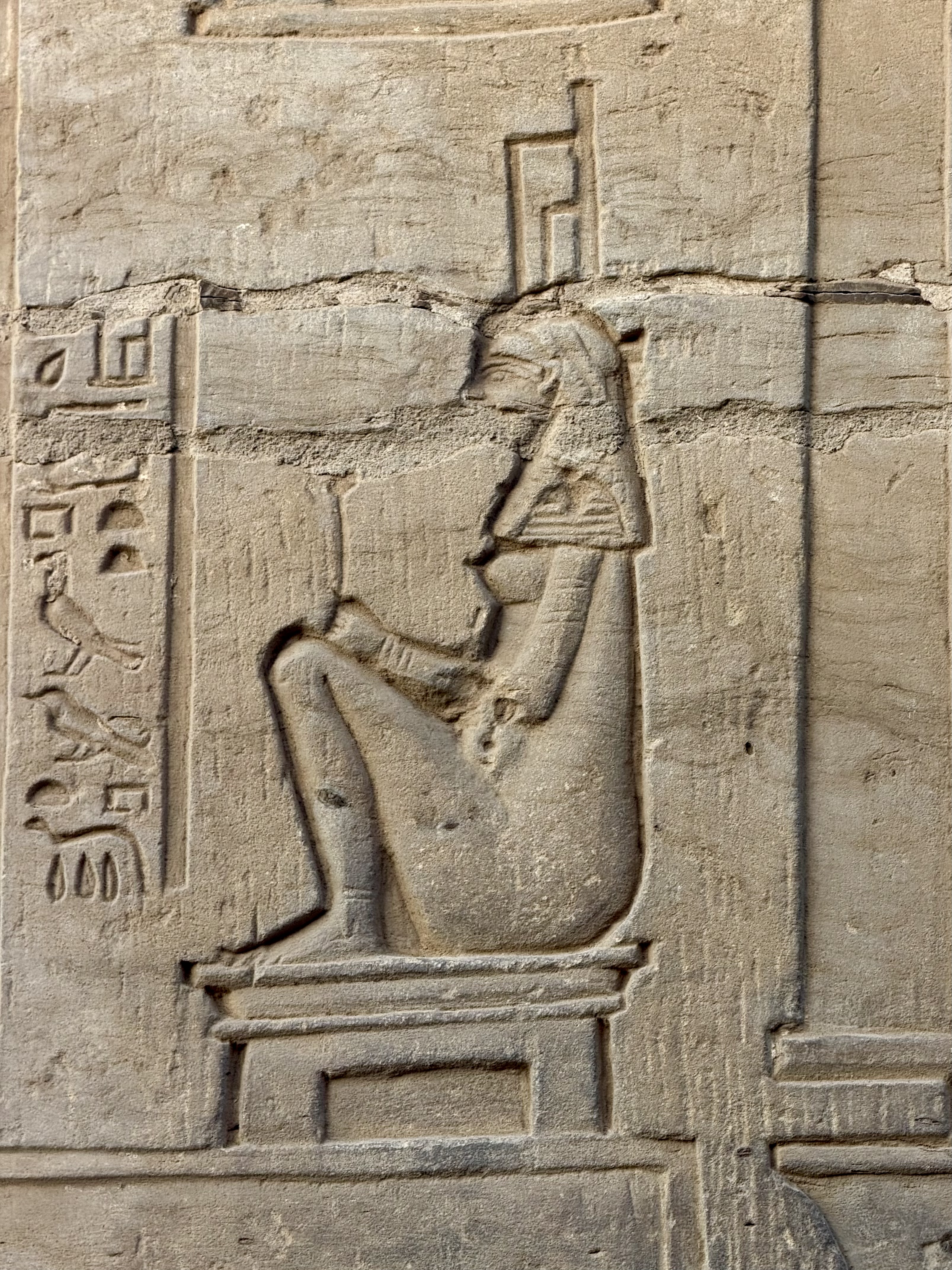
Temple walls illustrated ritual offerings, sacred ceremonies, and mythological battles meant to sustain harmony between gods and humanity.
Again, symbolism dominated everything.
Scenes were not decoration but active religious expressions believed to maintain cosmic order.
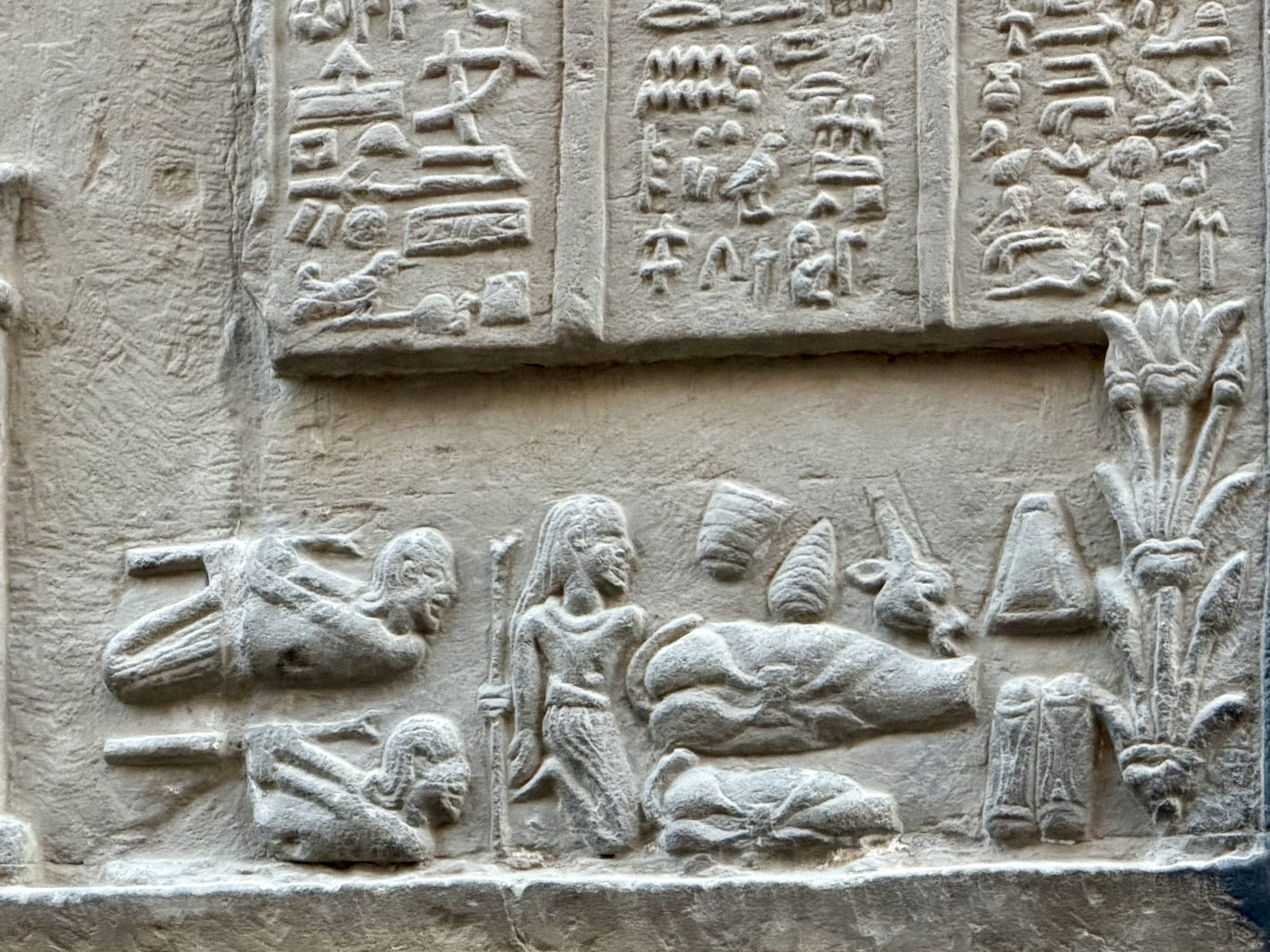
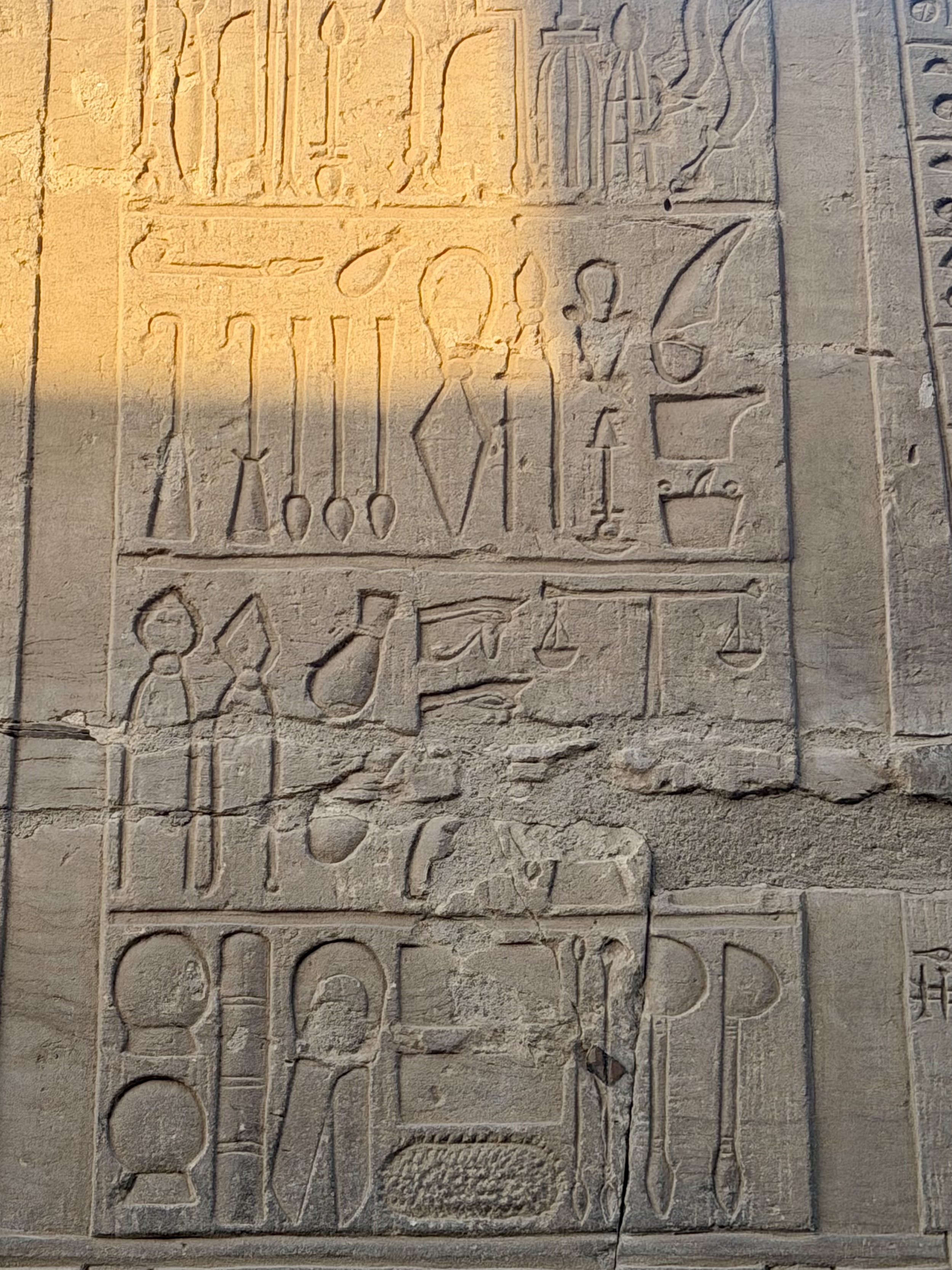
The Reliefs of Kom Ombo – Among Egypt’s Finest
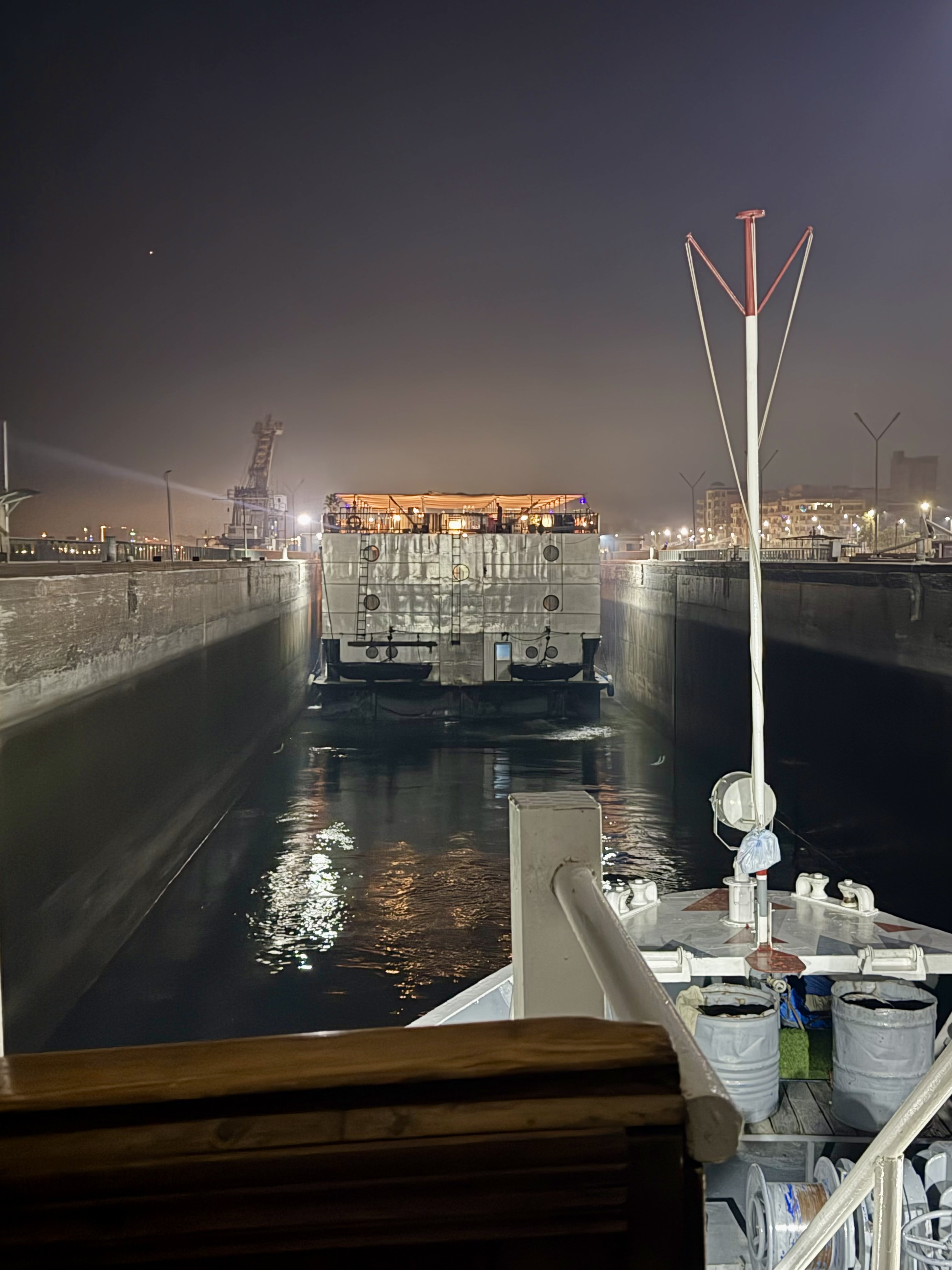
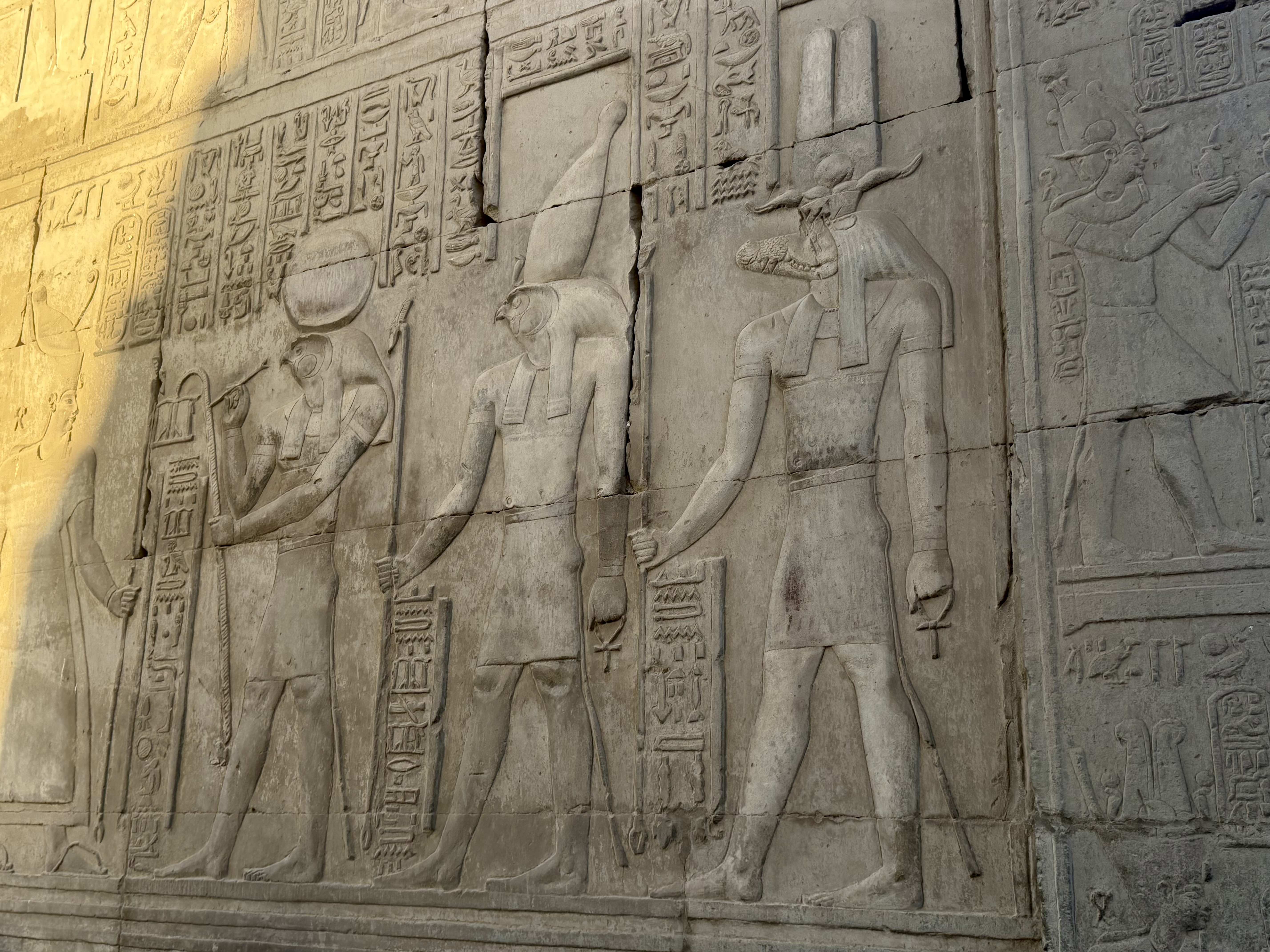
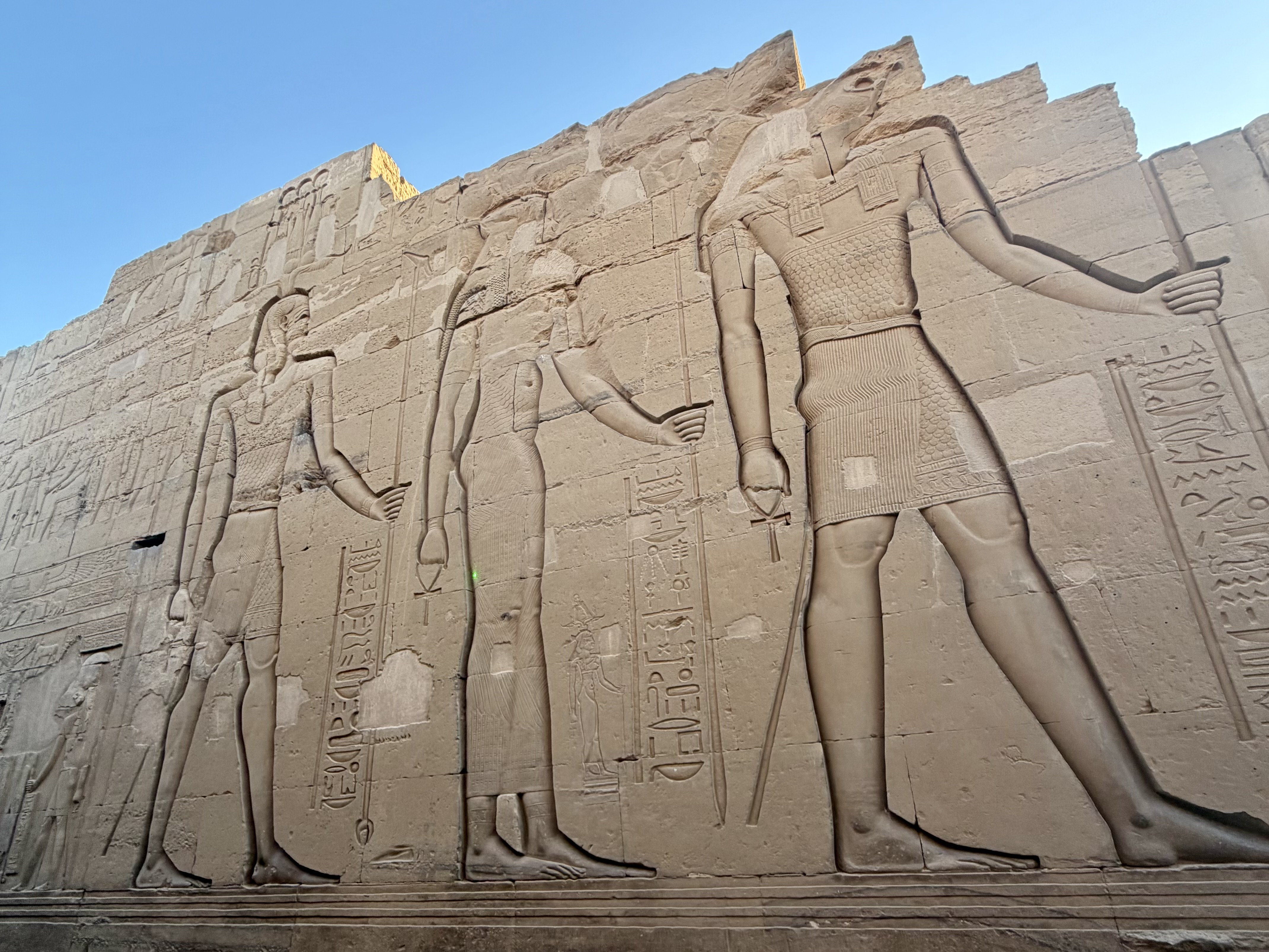
Some of the carvings at Kom Ombo are among the largest and best preserved reliefs in Egypt.
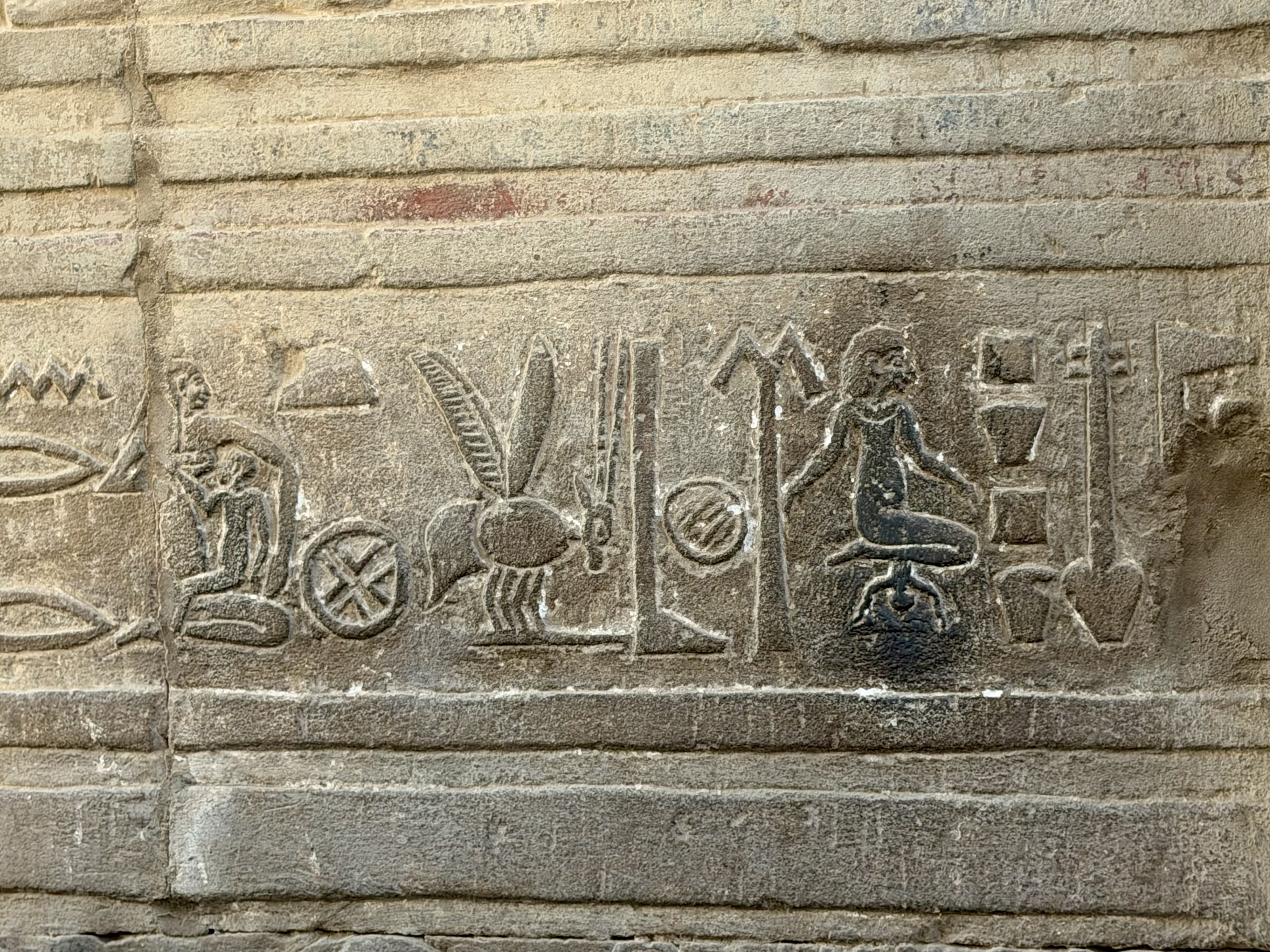
Massive figures tower along the walls, carved in raised relief so deeply that shadows bring them to life even under artificial light. Kings stand beside gods holding ankhs, symbols of life, while vertical hieroglyphic inscriptions record sacred prayers and royal titles.
Dating largely to the Ptolemaic period, these carvings show Greek rulers adopting full Egyptian iconography to align themselves with ancient traditions.
The precision is extraordinary.
Fingers remain distinct. Jewelry details are visible. Crowns and ceremonial garments retain sharp edges despite thousands of years of exposure.
Standing before them, the scale and craftsmanship felt almost impossible to comprehend.
These were not simply images.
They were eternal rituals carved so the gods would witness them forever.
Crocodiles and the Power of the Nile
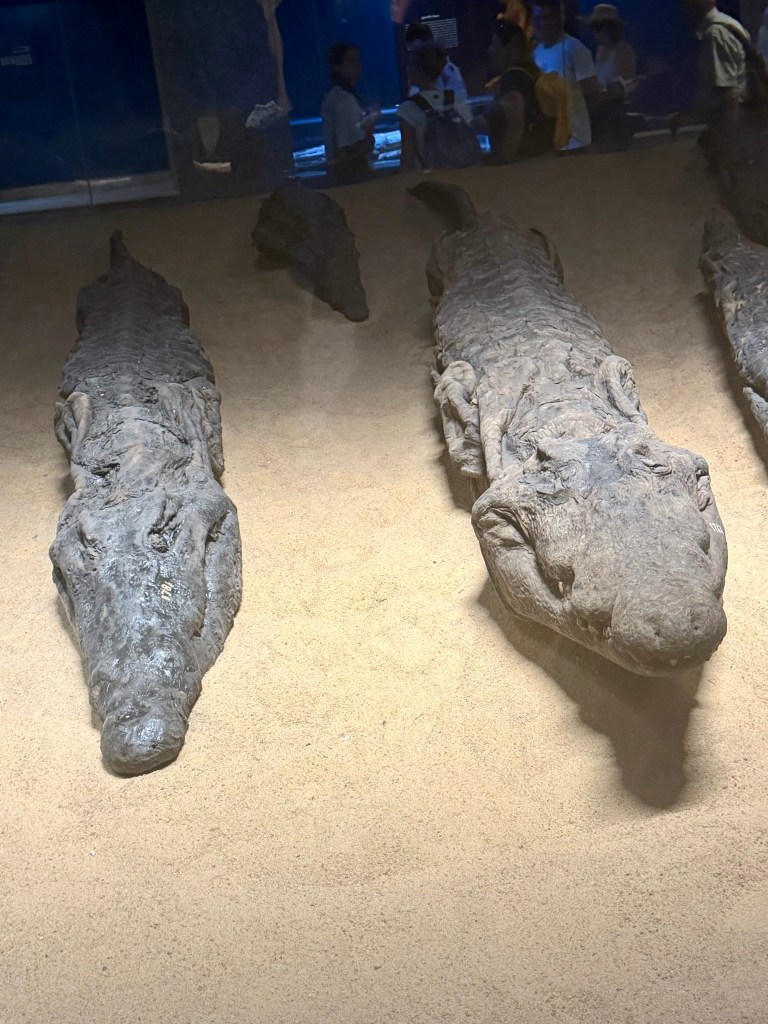
Nearby, a small museum displays mummified crocodiles discovered in the area, physical reminders of Sobek’s importance.
To ancient Egyptians, the Nile brought both life and danger. Worshipping Sobek acknowledged the river’s power while seeking protection from it.
Seeing the preserved animals made mythology suddenly tangible.
Faith here was rooted directly in daily survival.
An Egyptian Feast and an Unexpected Birthday Celebration
After our tour of Kom Ombo, we returned to the ship just as the late afternoon heat began to soften. By now we had settled into a comfortable rhythm. Excursions, return to the boat, showers, a short rest, and then inevitably, around 7 p.m., our Egyptian “family” would somehow all arrive at dinner at nearly the same time without ever formally planning it.
That evening the dining room was set for a traditional Egyptian feast.
Platters began appearing almost immediately, colorful mezze spread across the table, small dishes meant for sharing and tasting rather than formal courses. There were fresh salads bright with herbs, warm flatbreads, rice dishes layered with spices, grilled meats, and vegetables cooked slowly until tender and deeply flavorful. The aromas alone felt celebratory.
Conversation flowed easily. We compared favorite moments from the day, laughed about the heat, and debated whose photos had turned out best.
Midway through dinner, one of the Australian women leaned toward me and quietly said she thought the staff kept staring at her.
I hadn’t noticed. Everyone had been attentive all week, so it didn’t immediately seem unusual. Still, she looked slightly suspicious, scanning the room as servers passed by smiling a little too knowingly.
We soon learned why.
As we finished dinner, several staff members appeared carrying a cake toward our table. Before we could fully process what was happening, they gently but decisively grabbed all of us women by the hands and led us to the front of the dining room.
Her friend had betrayed her in the best possible way, quietly telling the staff it was her birthday.
Music started. Staff clapped rhythmically as they sang Happy Birthday first in Egyptian Arabic, then in English, their voices echoing through the restaurant. We danced alongside them while she turned bright red, laughing and protesting at the same time. She clearly hated being the center of attention, which somehow made the moment even more perfect.
It was joyful, spontaneous, and completely sincere. No staged performance, just genuine celebration.
And as it turned out, this was only the warm up.
The Galabeya Party – When We Became the Entertainment
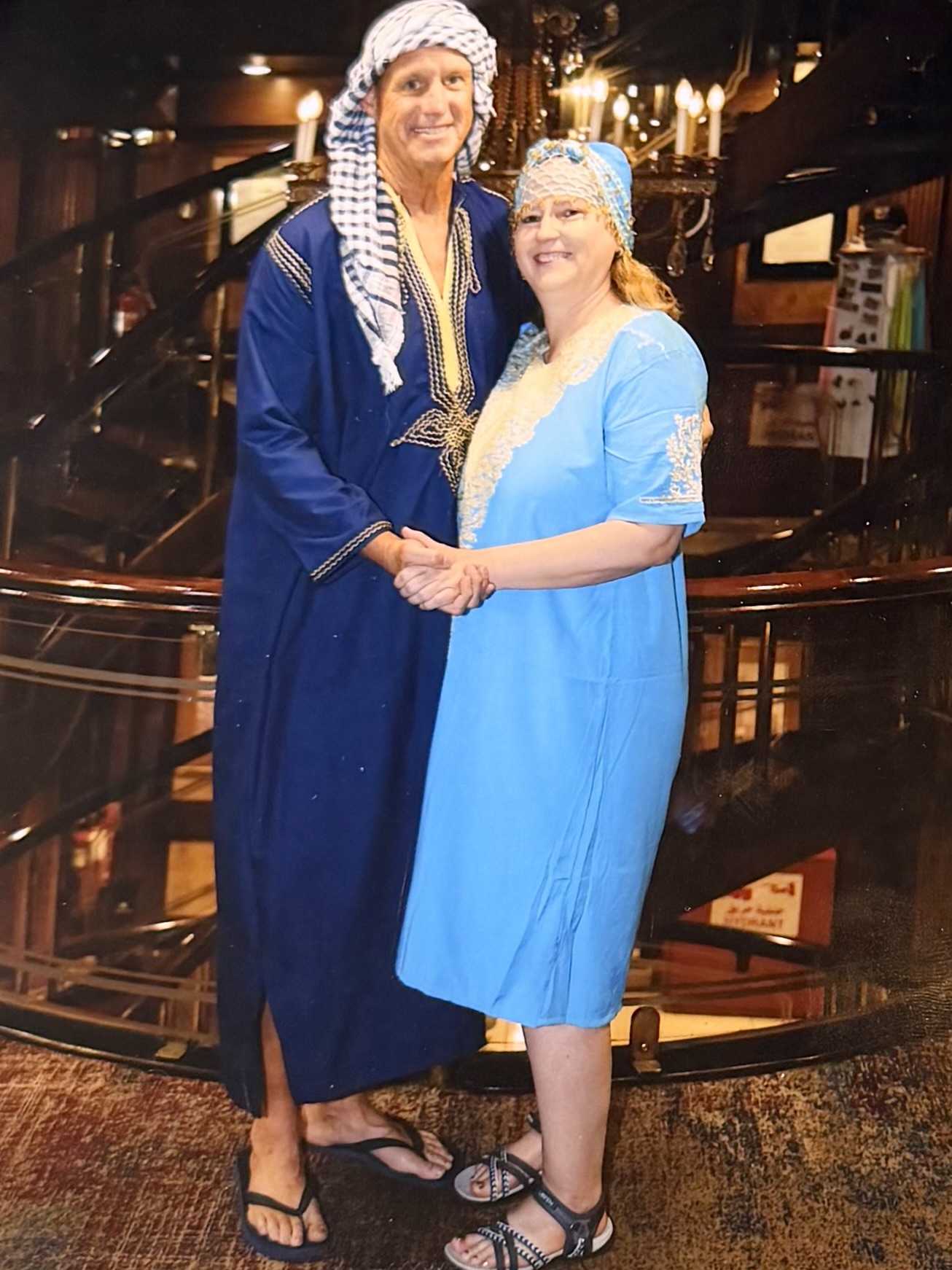
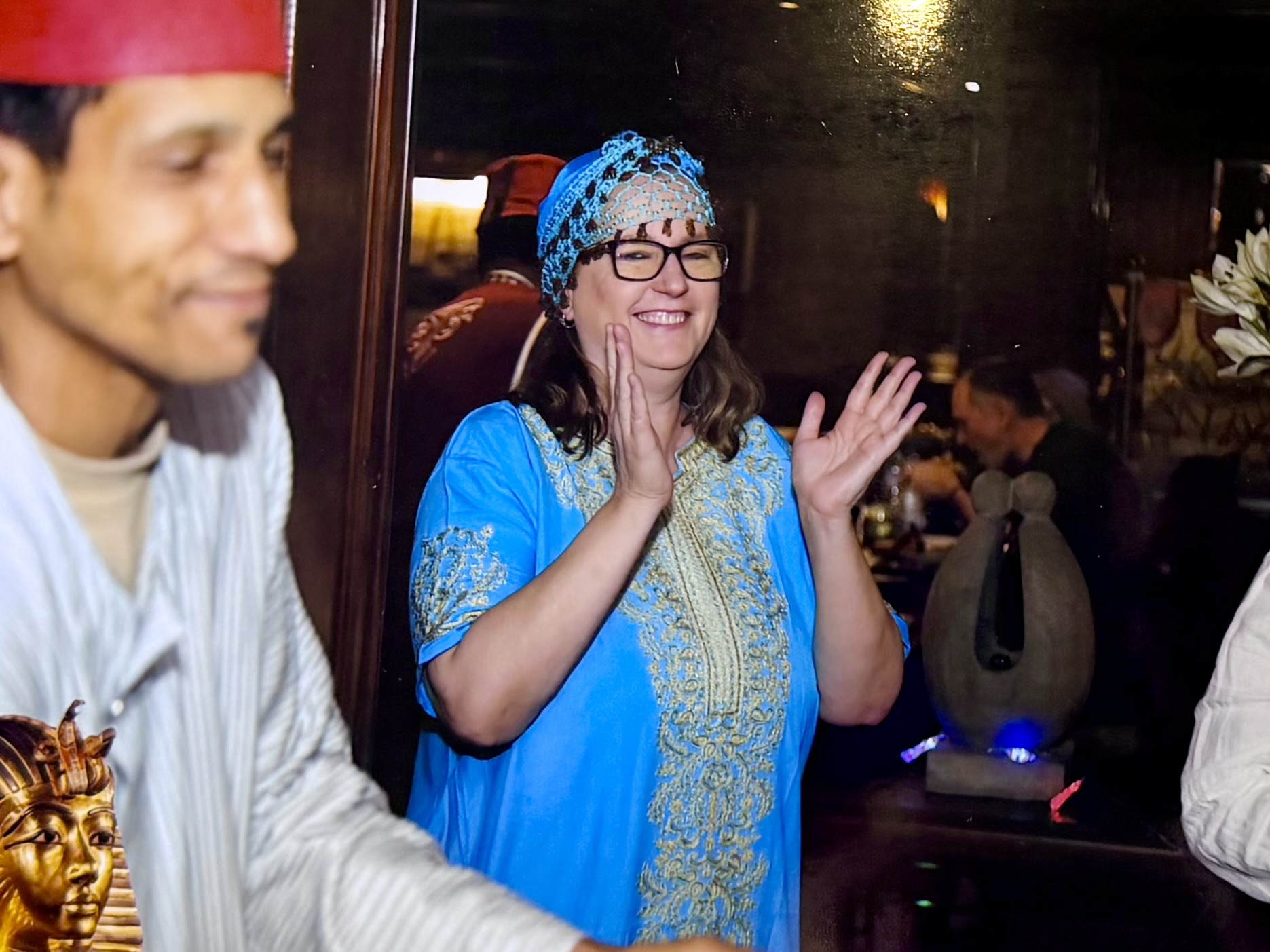
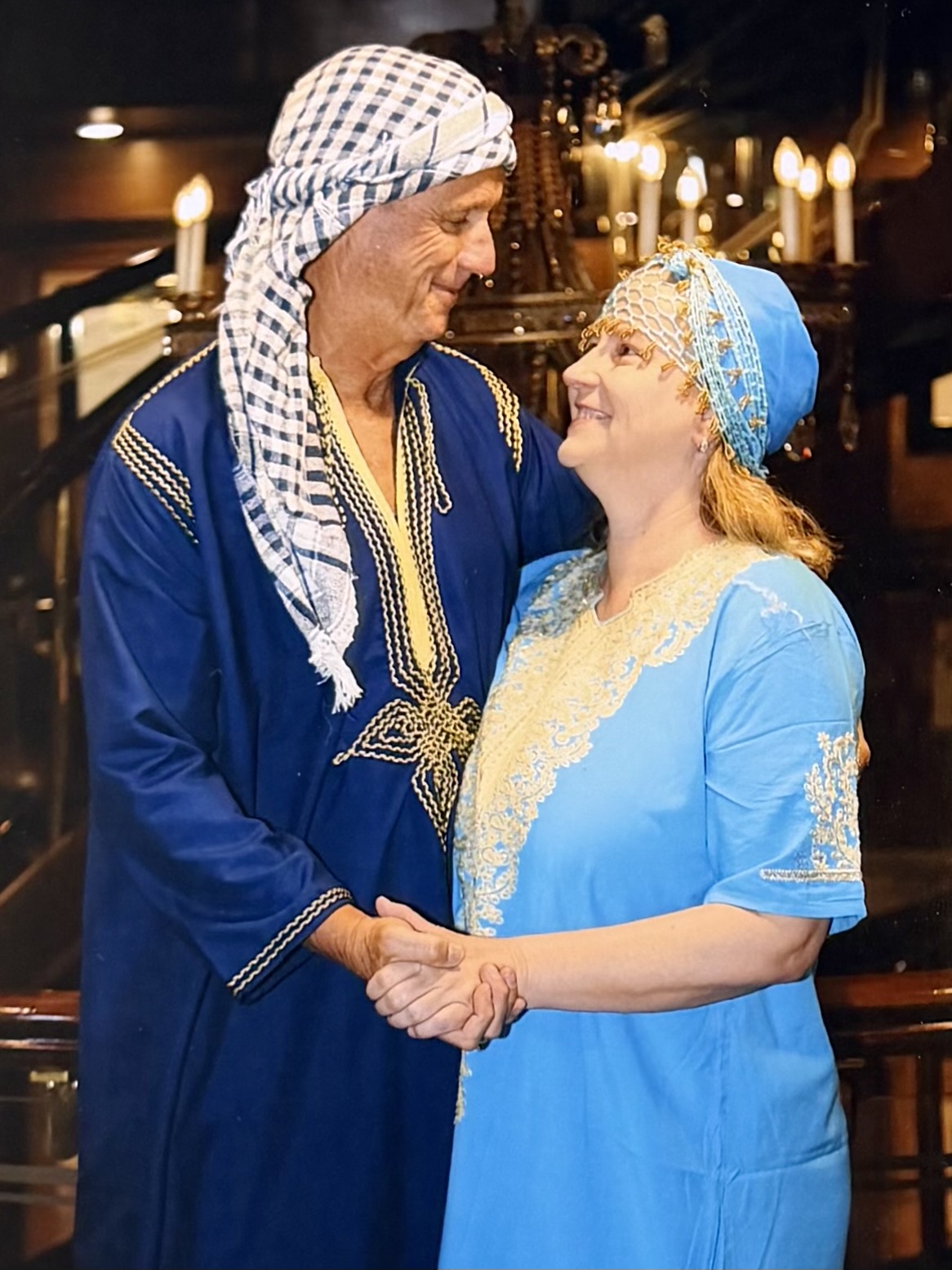
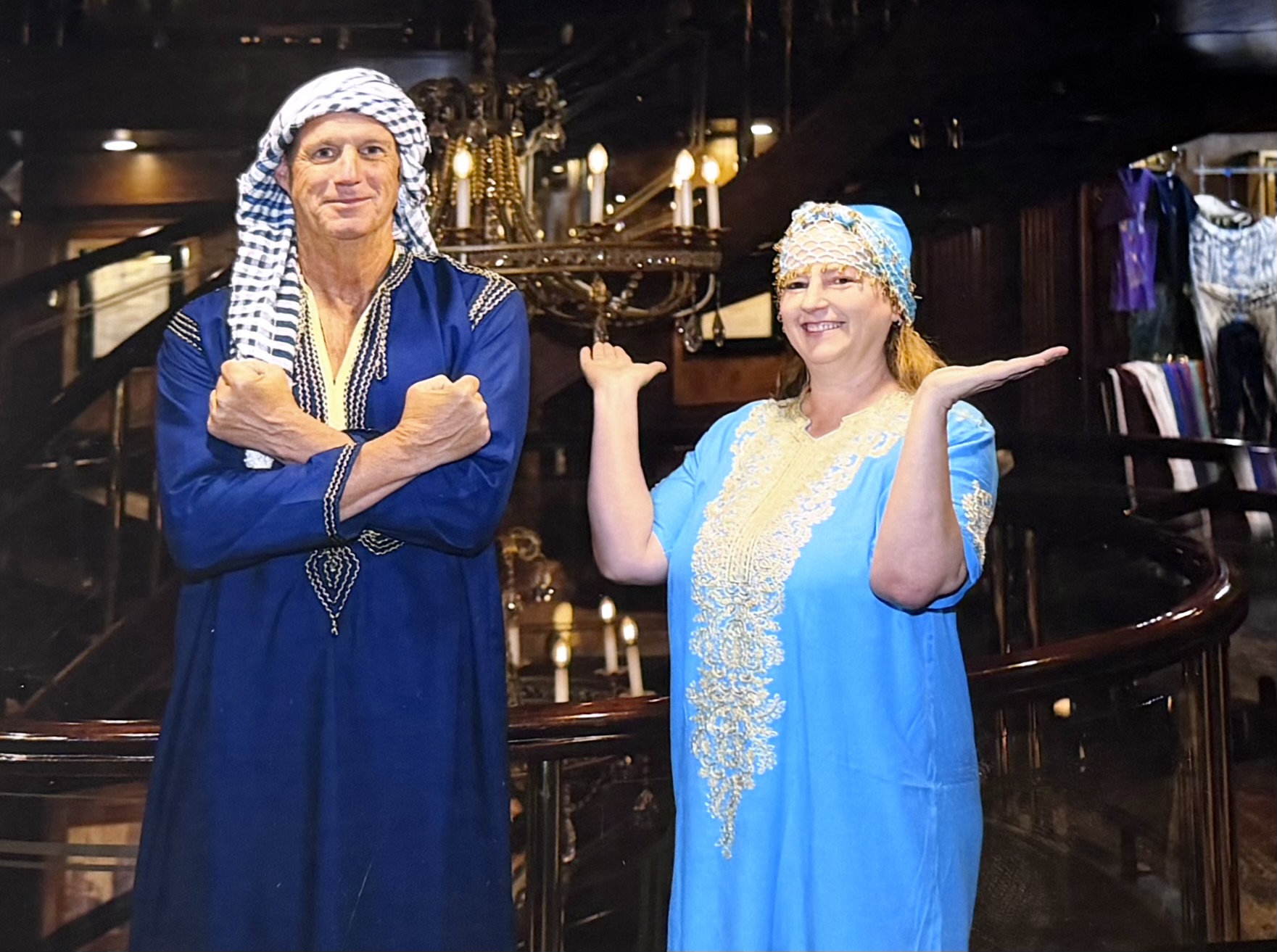
Later that evening we headed to the ship’s lounge for what was listed on the schedule as a “Galabeya Party.”
Earlier in the cruise we had purchased traditional galabeyas onboard, encouraged by the crew who assured us we would want them. A galabeya is a traditional Egyptian robe worn throughout the country, loose and comfortable, often brightly colored or embroidered.
I wore a flowing patterned galabeya in rich blues and gold tones that moved easily as I walked. My husband opted for a classic white version, paired with a traditional head covering the crew helped tie properly earlier that evening. For men, this style of headwear is commonly called a keffiyeh or ghutra, while women often wore decorative scarves or shawls styled more loosely.
We arrived early, along with our Australian friends, unsure of what to expect.
Belly dancers? A performance? Music to watch politely from our seats?
No.
We were the entertainment.
One of the crew members we had seen daily suddenly grabbed our hands and pulled us straight onto the dance floor. Within seconds we were holding hands in a circle, moving together as music filled the lounge.
One person at a time was pushed gently into the center to dance while the rest of us clapped and circled around them. Laughter replaced hesitation almost instantly.
My husband lasted exactly long enough to be polite before spotting his escape route and disappearing with impressive speed, leaving me fully committed to representing our household alone.
Soon Alaa joined us, smiling as he demonstrated traditional dance steps, encouraging everyone to loosen up and follow along. At one point we formed a long chain behind the lead dancer, weaving through the room before stopping and raising our arms so the last person could dance their way through the tunnel of hands.
It was chaotic, joyful, and completely unselfconscious.
Strangers from different countries, different lives, all laughing together in the middle of the Nile.
By the end of the evening, embarrassment had disappeared entirely, replaced by the simple realization that travel sometimes works best when you stop observing and start participating.
And somewhere between birthday songs, shared meals, and dancing in borrowed robes, our small cruise group had quietly become something more than fellow travelers.
We had become a family.
 Click, Wander & Savor