Cairo, Camels, and the Pyramids: Our First 24 Hours in Egypt
From airport chaos to ancient wonders, camel rides, papyrus art, and the stories behind Egypt’s greatest pharaohs.
Arrival in Cairo
Some arrivals feel routine. Others feel like stepping directly into history.
Getting to Cairo was not subtle. We arrived after a 13 hour flight to Istanbul, a 5 hour layover, and another 2 hour flight into Egypt. By the time we landed, exhaustion had fully settled in. I had barely slept, my eyes burned, and my internal clock had completely surrendered.
And yet, from the moment we entered the airport, everything moved with surprising ease.
Waiting for us was Ahmed, the manager from our travel company. He collected our passports, guided us straight to the visa line, spoke briefly in Egyptian Arabic with the official, and told us to pay $25 each.
Within minutes, our visas were stamped and placed neatly into our passports before he directed us toward customs where the lines were long, making us feel a bit discouraged in our desperation for a bed and sleep. Fortunately, Ahmed worked his magic, disappearing briefly to speak with someone behind a gate, before returning with a smile and saying, “Right this way.”
We followed Ahmed past the entire line and straight through customs.
Just like that, we were in Egypt.
First Impressions of Cairo at Night
Driving away from Cairo International Airport was my first surprise. The roads were smooth, honestly smoother than many at home. Streetlights illuminated wide highways as we passed a large military university where Ahmed explained that Egyptian men serve at least one year in the military.
Then came our introduction to Cairo driving.
“In Cairo,” Ahmed explained, “lanes are suggestions.”
Despite perfectly painted lines, traffic flowed freely. Cars merged confidently, horns beeped constantly but without anger, more like conversation. At times we straddled lanes while pedestrians crossed without crosswalks.
It looked chaotic, yet somehow it worked.
As we drove past illuminated landmarks, including the alabaster mosque where Ahmed and his wife took their wedding photos, he shared stories with quiet pride.
Then, as we entered Giza, he asked us to look up.
Through tired eyes we saw silhouettes against the night sky.
Pyramids.
Even in darkness, unmistakable.
Tomorrow we would stand beside them.
Settling In
At the Hilton Pyramids Golf Hotel, Ahmed reviewed our itinerary and introduced us to our first cultural lesson, tipping, or baksheesh. Small U.S. bills are preferred since they hold value more consistently than the Egyptian Pound.
Our plan for the next day:
- Breakfast.
- 8 am pickup.
- The Great Pyramids of Giza.
- Lunch.
- Local artisan workshops.
- The Grand Egyptian Museum.
Jet lag suddenly felt secondary to anticipation.
Breakfast and the Start of Day One
At breakfast the next morning, I made a rule. If it looked American, I skipped it.
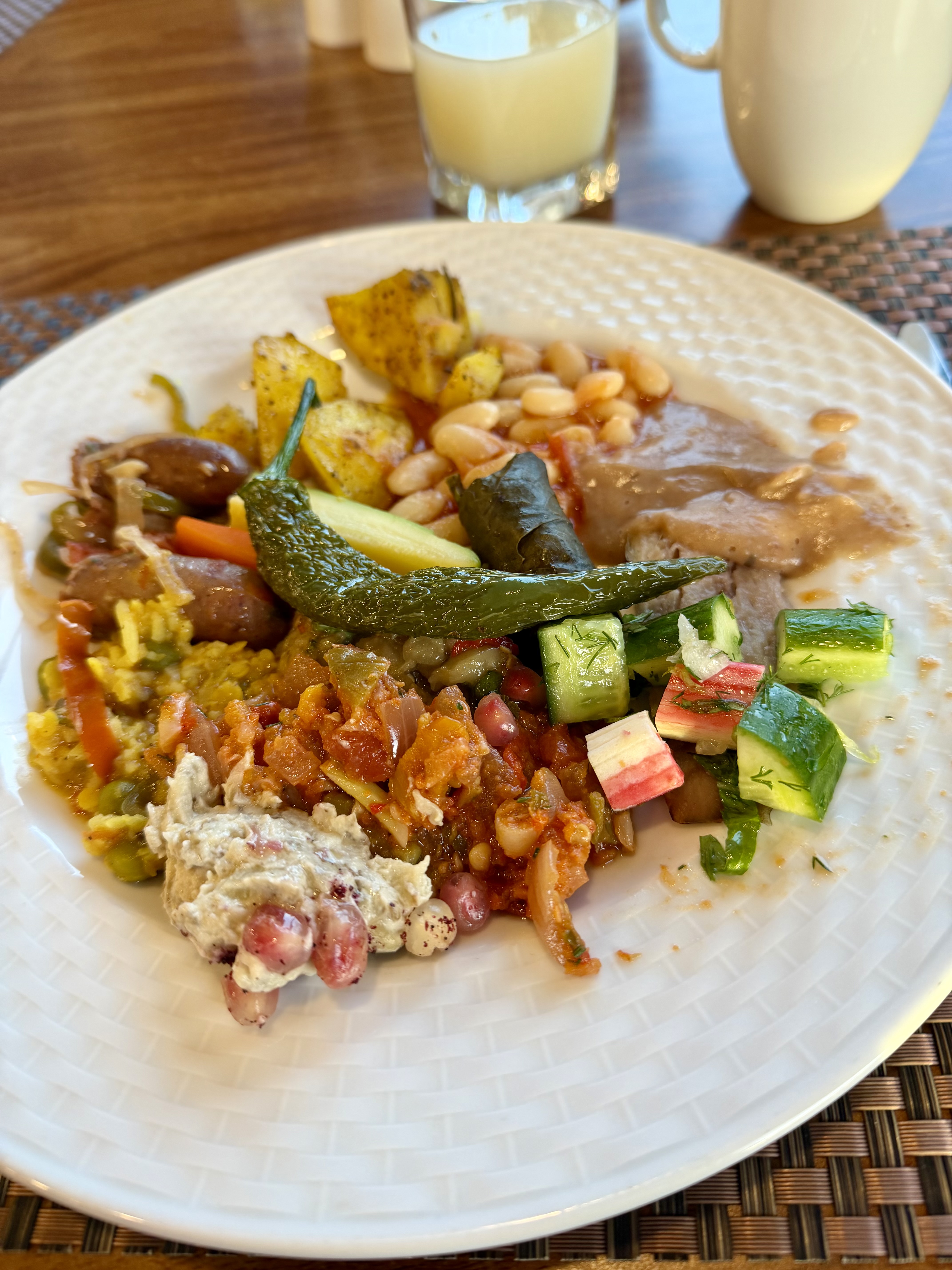
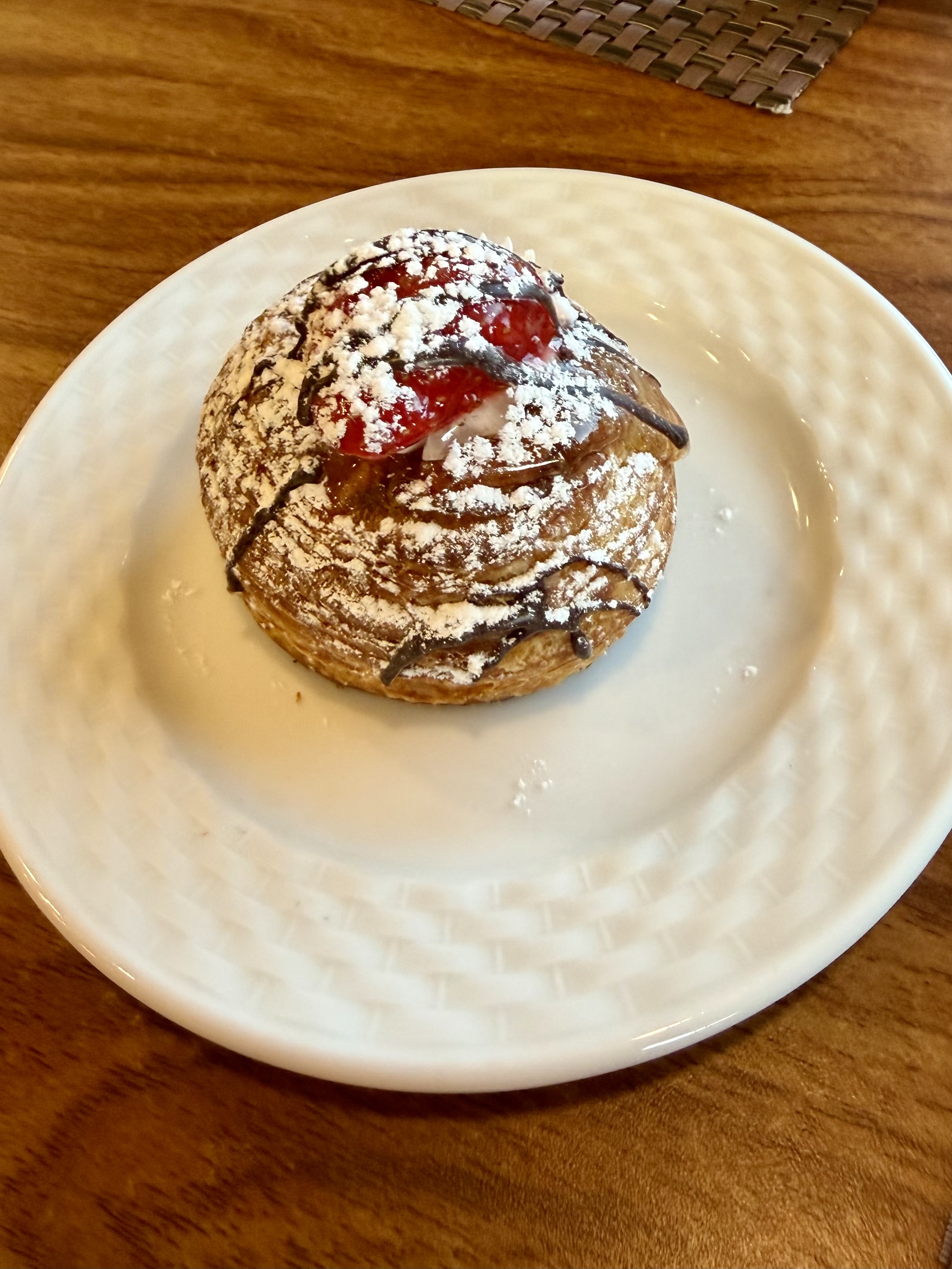
I chose unfamiliar dishes, fresh breads, vegetables, warm savory foods, determined to experience Egypt fully from the first moment.
At exactly 8 am, Sara, our guide, waited in the lobby beside a black Audi.
We were off to the pyramids.
The Great Pyramid of Khufu
Nothing prepares you for the scale.
Built around 2560 BC for Pharaoh Khufu, the Great Pyramid is the only remaining Wonder of the Ancient World. For nearly 4,000 years, it was the tallest structure humans had ever built.
Up close, limestone blocks tower beside you, many weighing several tons. Archaeologists believe construction took about 20 years using organized labor forces living nearby.
The pyramid’s shape symbolized rays of the sun, guiding the pharaoh’s ascent into the afterlife.
Standing beside it shifts your understanding of time. This monument was already ancient when Cleopatra lived.
Inside a Queen’s Pyramid
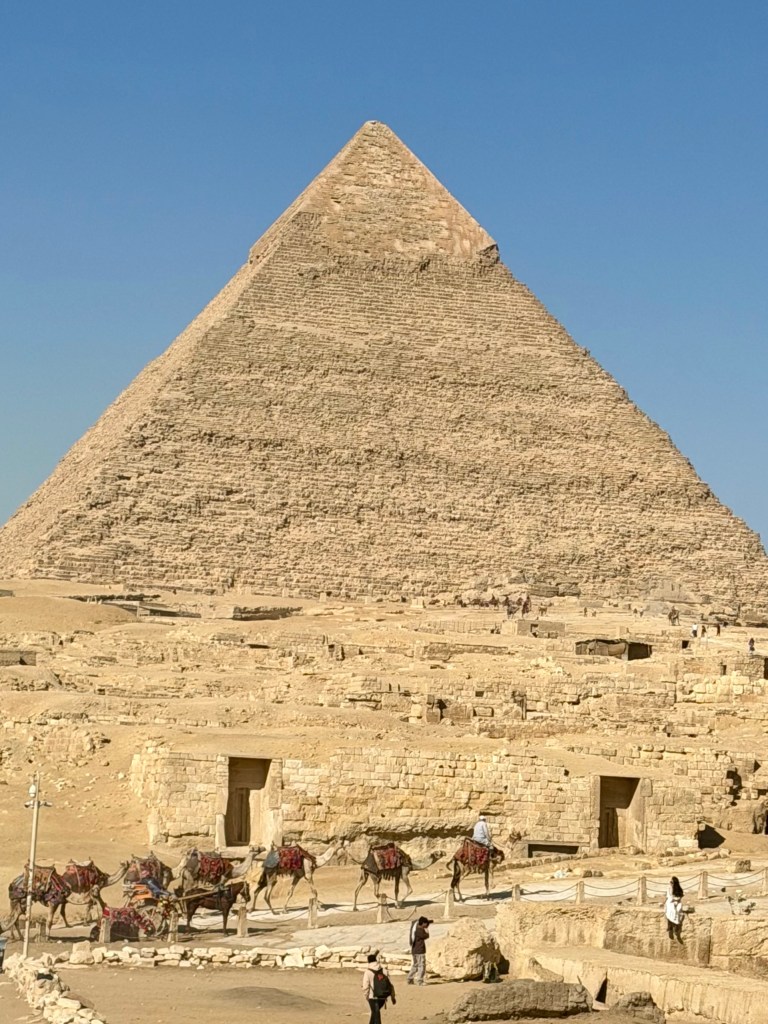
Nearby smaller pyramids were built for royal family members.
One was open to visitors, and I decided to go inside.
The tunnel quickly narrowed. Despite being only 5 foot 4, I had to bend forward immediately. My husband wisely remained outside, refusing to test his claustrophobia.
Inside felt warm and silent. Stone surrounded me in every direction, carved more than four millennia ago.
The chamber itself was simple, but the experience was unforgettable.
Climbing back into sunlight felt like returning to the present.
The Pyramids of Khafre and Menkaure
The Giza Plateau is an entire sacred complex.
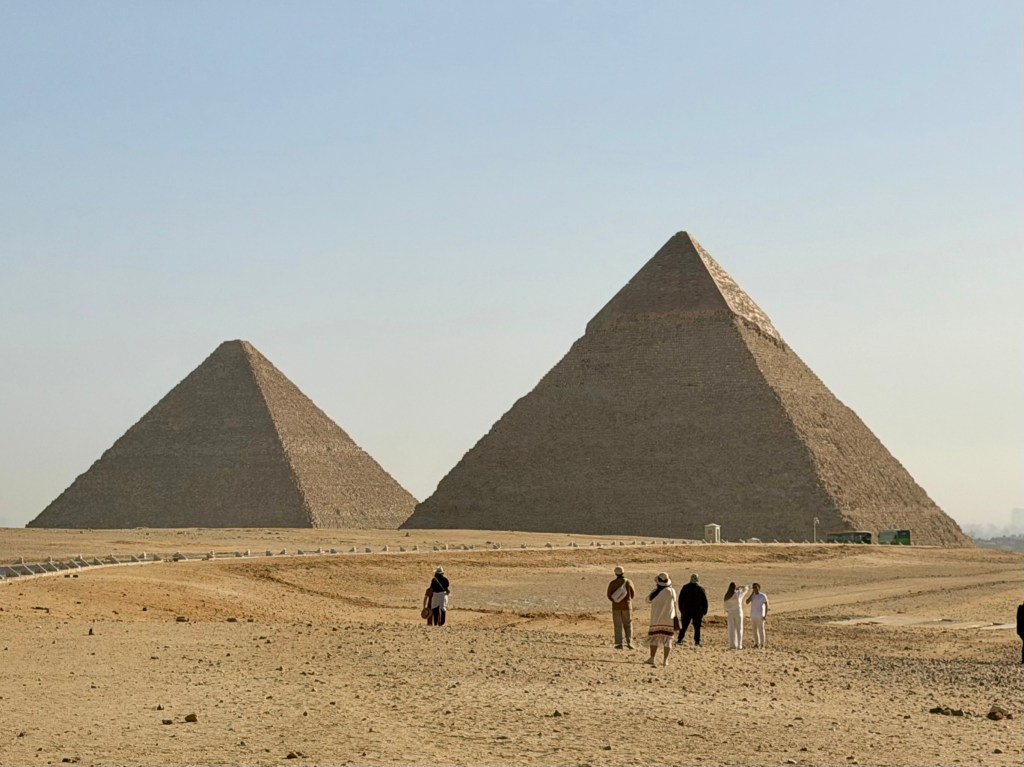
Khafre’s pyramid appears taller due to higher ground and still retains casing stones near its peak. Menkaure’s pyramid stands smaller but equally impressive nearby.
Satellite pyramids and ceremonial causeways reveal an ancient city built for eternity.
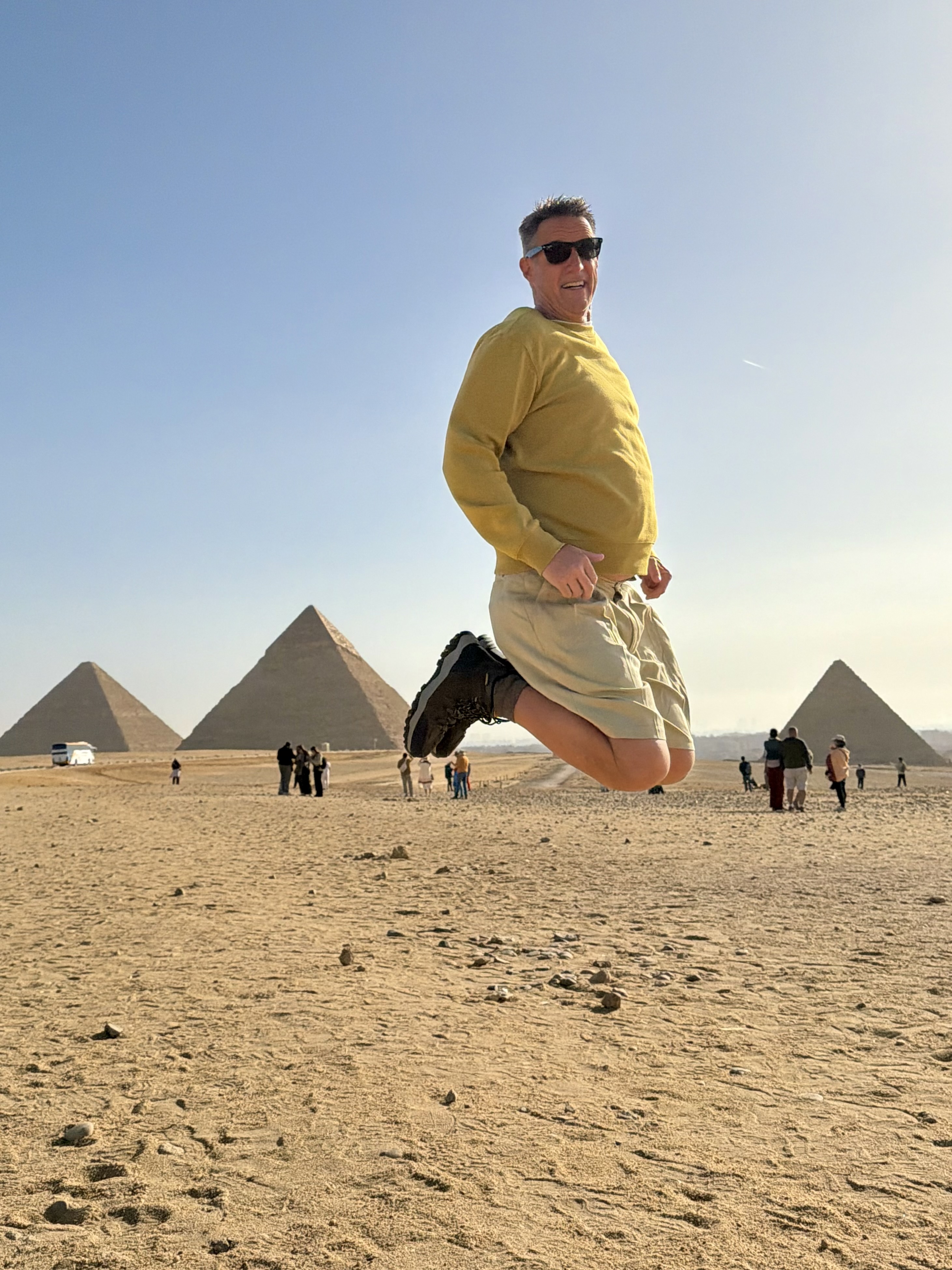
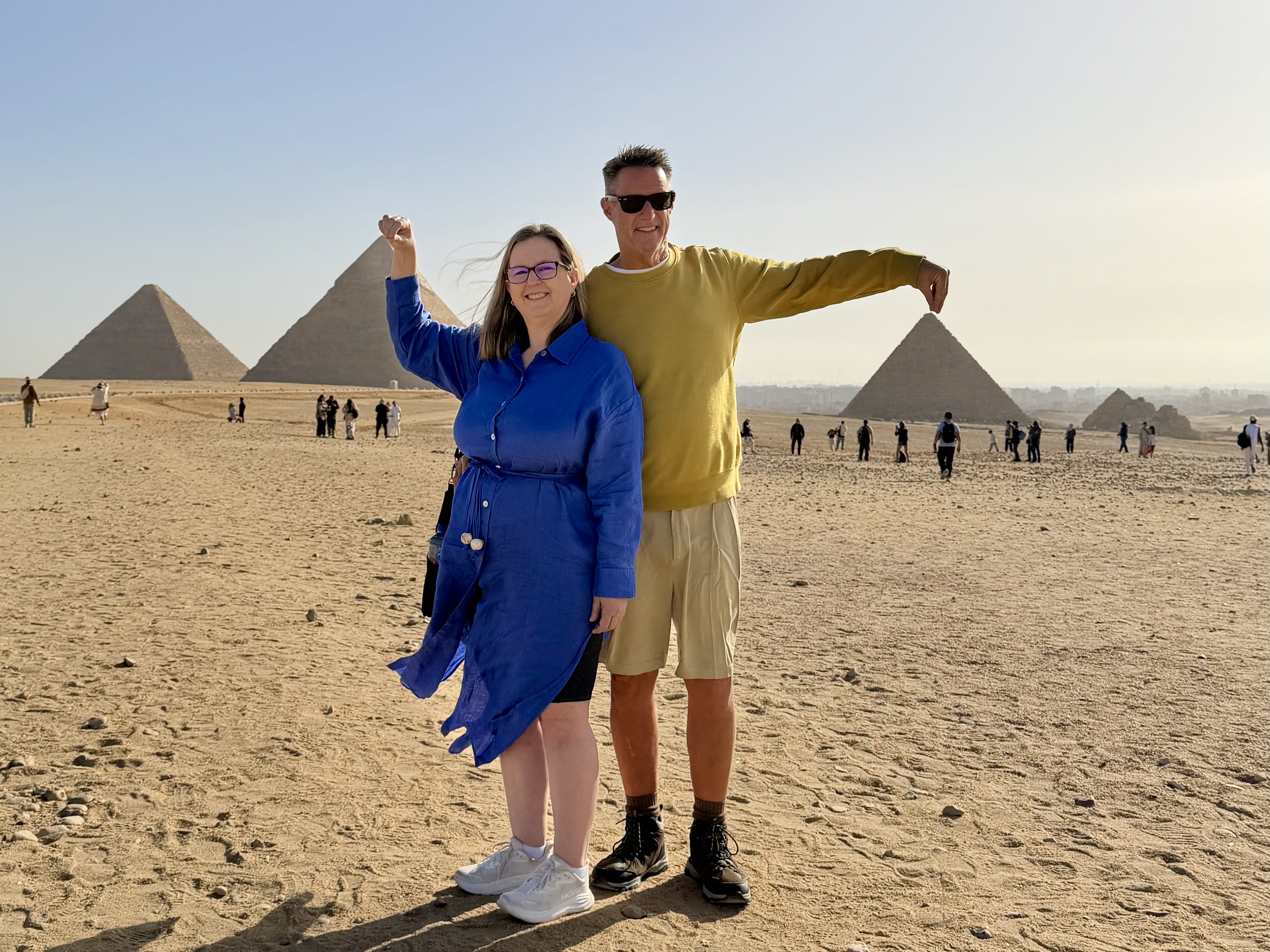
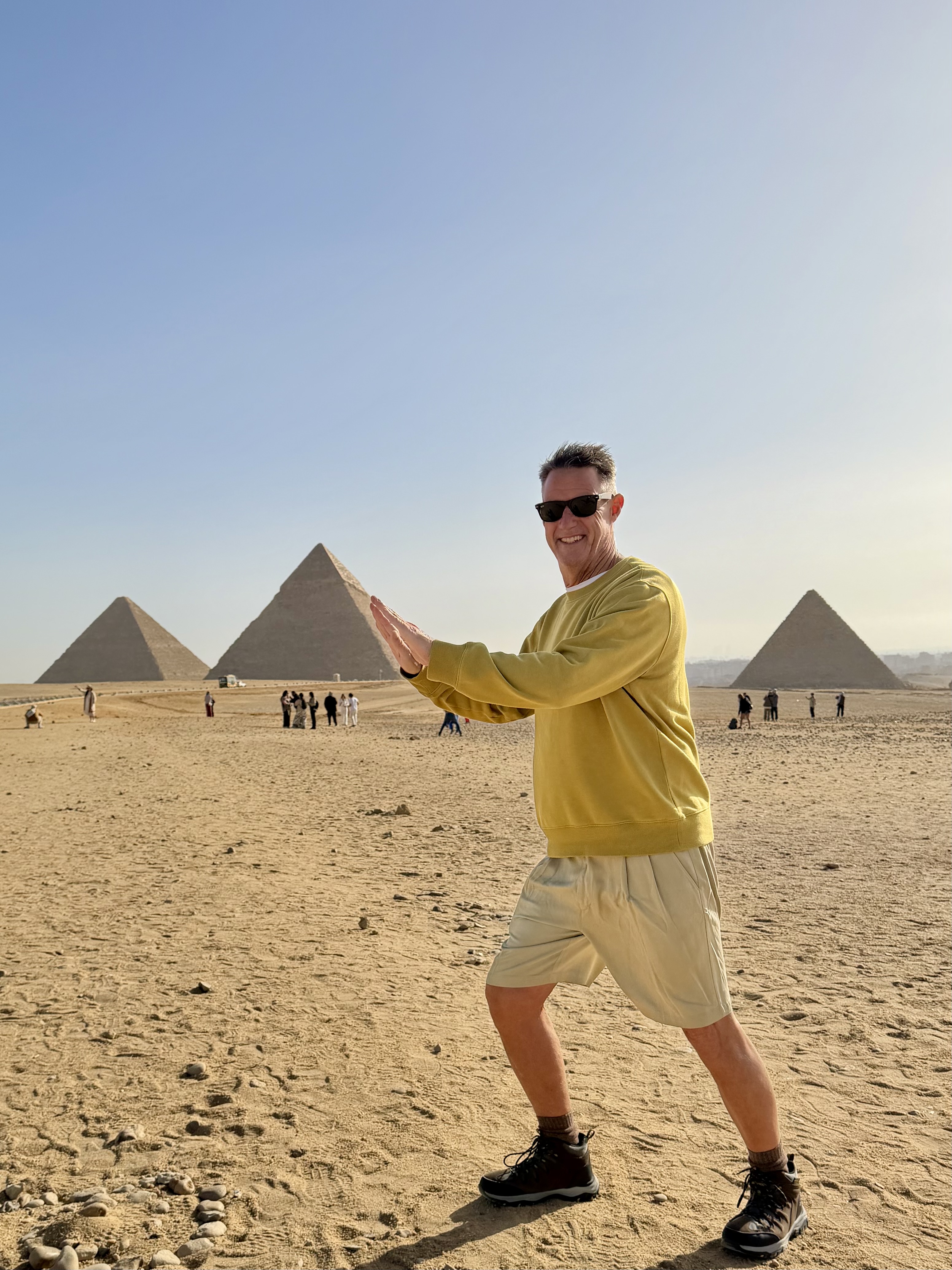
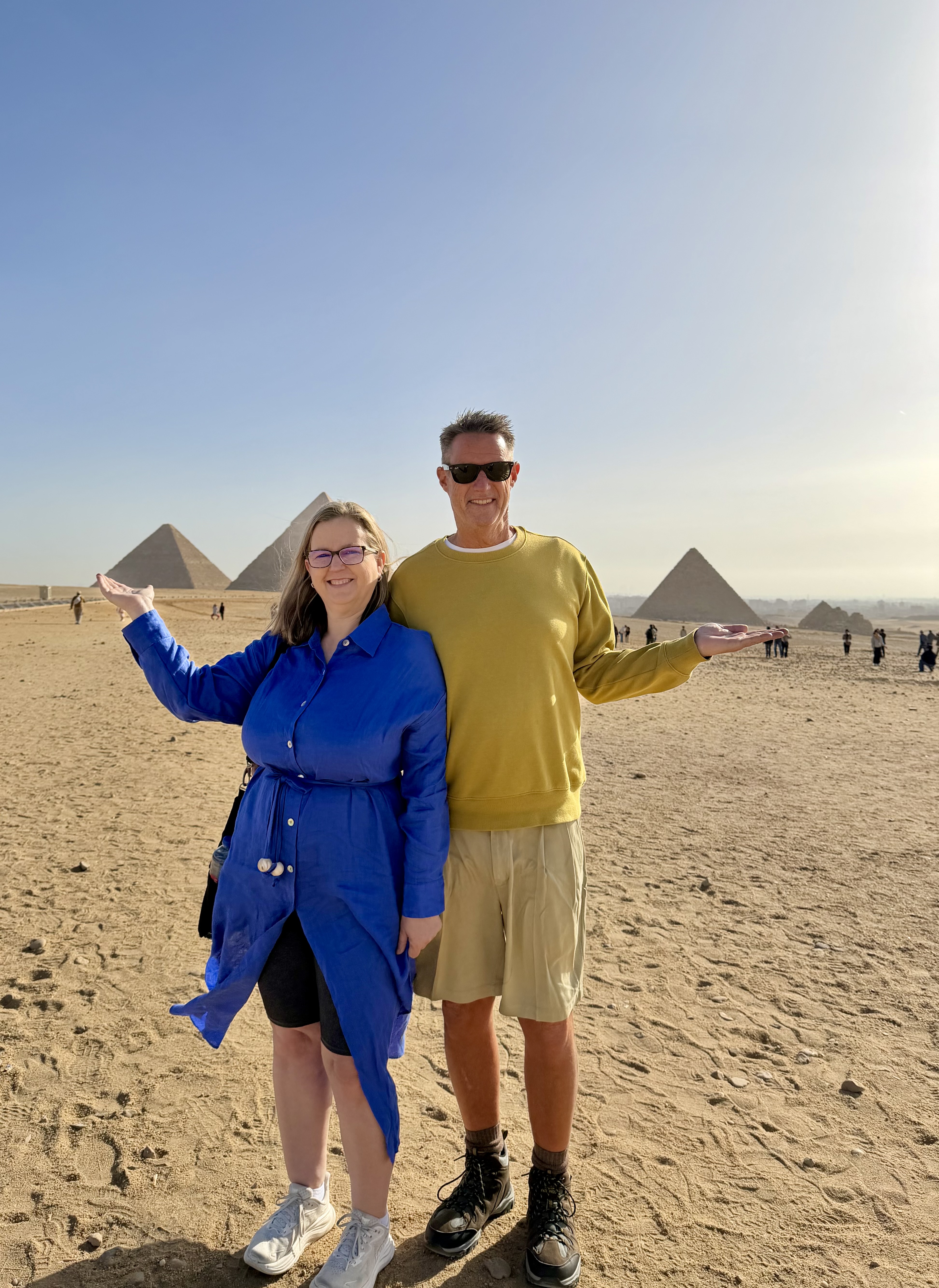
And yes, we joined generations of visitors attempting perspective photos, holding pyramids in our hands and laughing through multiple attempts.
Meeting the Sphinx
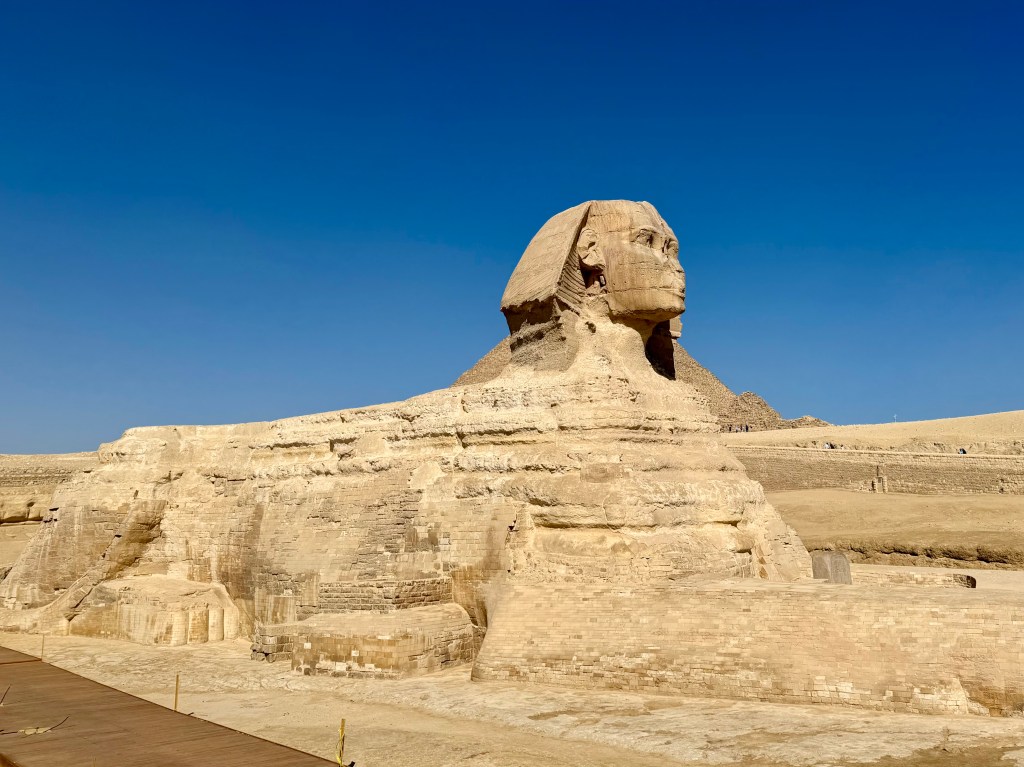
Carved from a single limestone outcrop, the Great Sphinx represents Pharaoh Khafre, combining the body of a lion with the head of a king.
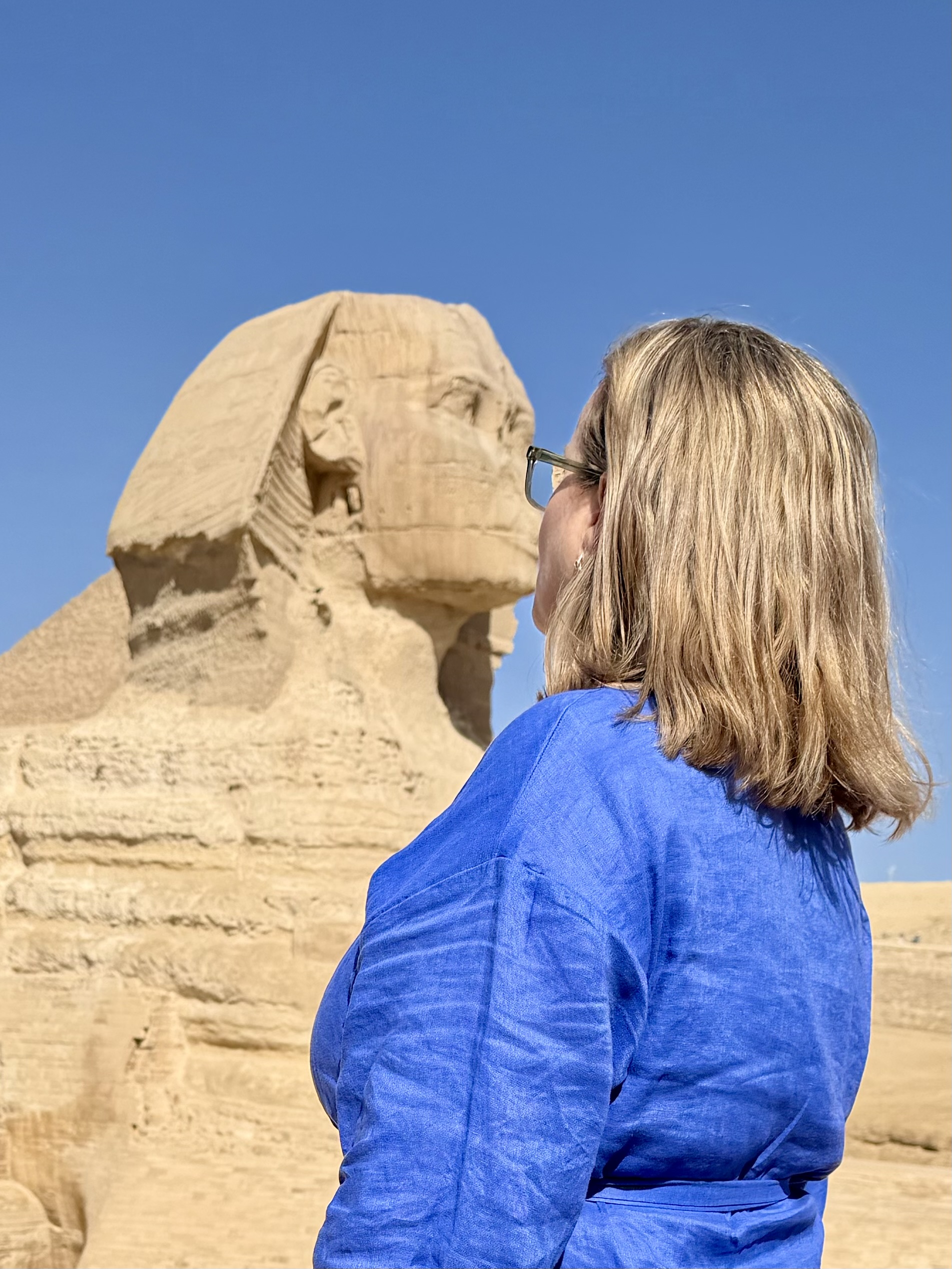
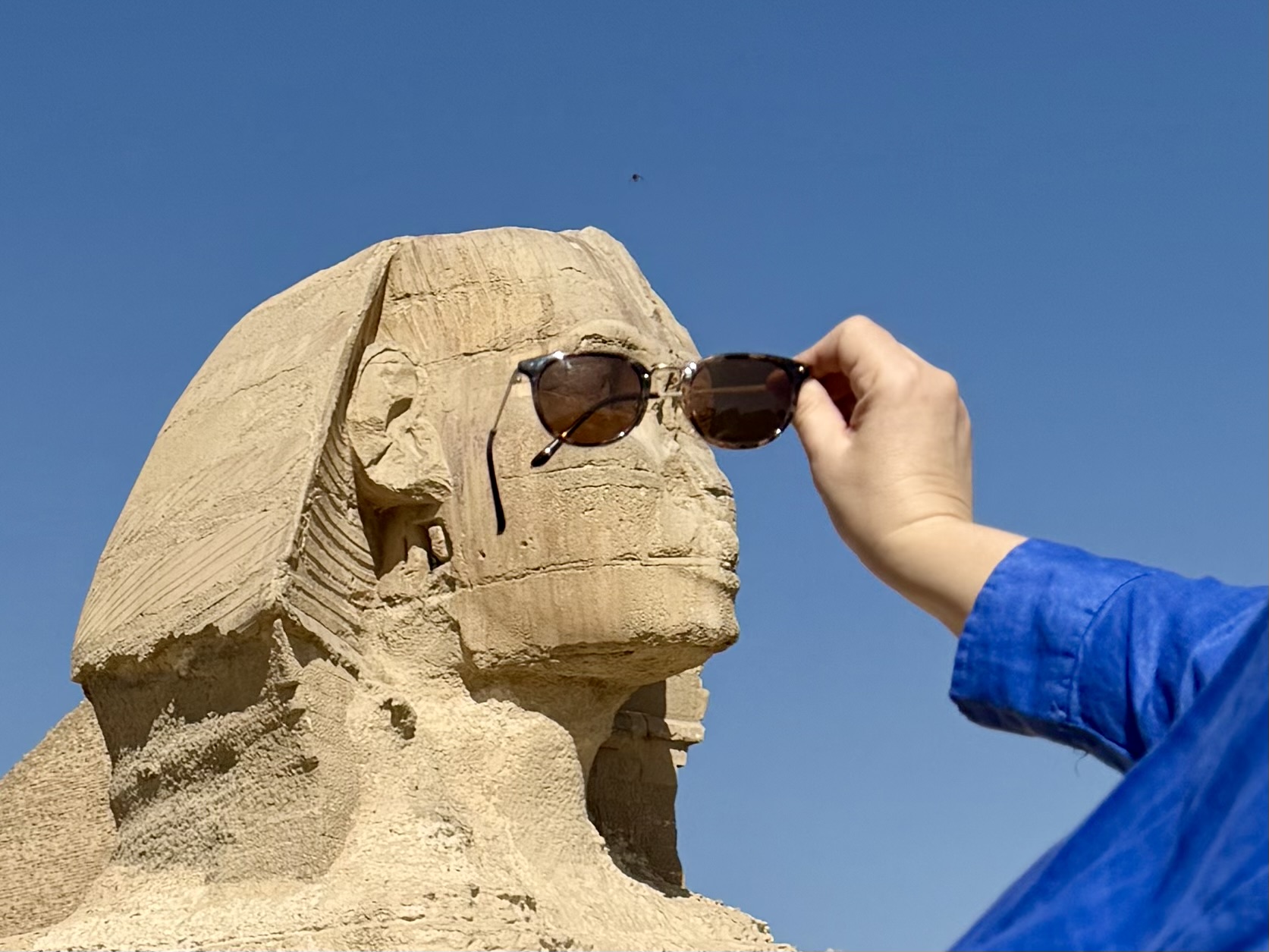
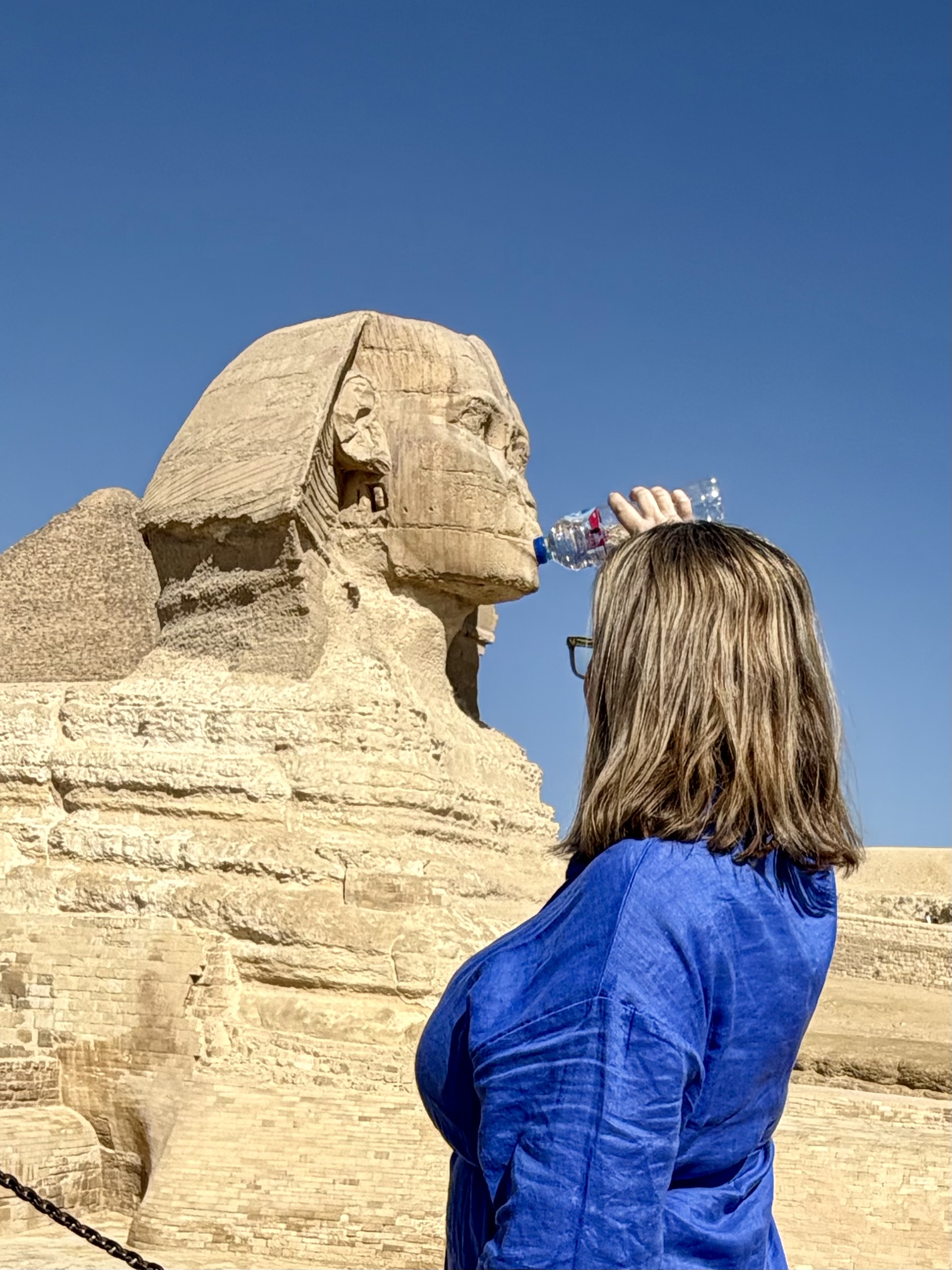
Sara instructed us in the required silly photos, kissing the Sphinx, giving him water, even adding sunglasses.
History and humor coexist beautifully here.
Lunch With a View
Lunch at EL&N London overlooking the pyramids felt surreal.
We began with creamy mushroom soup, rich and unexpectedly delicious. I ordered kofta with potatoes and rice, while my husband chose mushroom chicken.
Both dishes were comforting and flavorful, a perfect reset after a long morning wandering through ancient history beneath the desert sun.
The owner personally welcomed us, and vanilla rice pudding arrived to finish the meal.
After nearly 48 hours without sleep, my husband returned to the hotel to rest while I continued the adventure with Sara.
Camel Rides, Photographer Included
Sara asked if I wanted to ride a camel. Ahmed had arranged a photographer.
My husband gave me a look of pure exhaustion.
I said yes immediately.
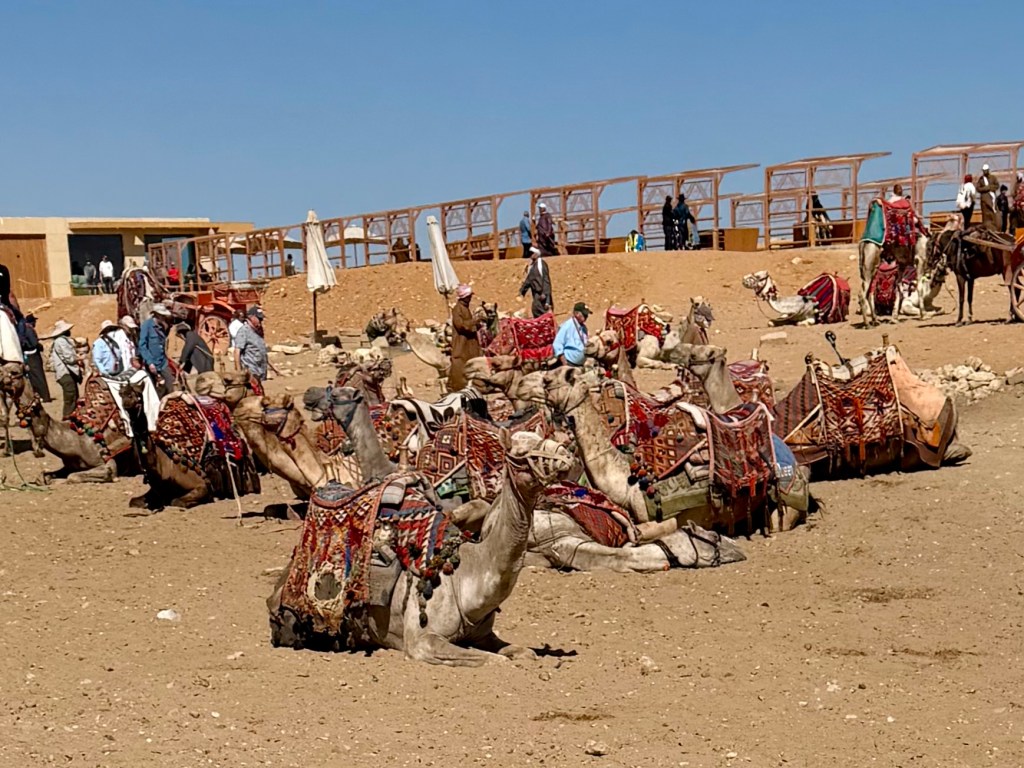
On the desert plateau, men in galabeyas and keffiyehs waited beside camels. Fires burned softly while tea was shared nearby.
I climbed onto a camel named Marnie. As she stood, front legs first then back legs, I suddenly realized just how tall camels really are.
The ride was bumpy at first, but soon I relaxed enough to let go with one hand for photos. At one point Marnie leaned down to nibble her leg, tipping me forward unexpectedly.
Touristy? Absolutely.
Worth it? Completely!
Papyrus, Negotiation, and Becoming “California”
At a papyrus workshop, I tried pounding papyrus strips myself before soaking them. After soaking, the strips were layered crisscross and pressed for days until natural sugars bonded them into paper.
I tore a wet sheet easily. A dried one would not budge.
I chose a hand painted Egyptian zodiac piece depicting twelve figures tied to deities and seasons, with Horus and goddesses representing time itself.
The owner quoted a price.
I countered 50 percent lower.
He smiled and said, “Kim, this is my family history.”
We laughed, negotiated again, and met in the middle.
After crossing a busy Egyptian street with Sara’s expert timing, I entered a jewelry shop where I became known as “California.”
I designed a cartouche featuring my name framed by a lotus for rebirth and the Eye of Horus for protection. While it was made, I was served Egyptian tea, hospitality offered whether you buy or not.
The Grand Egyptian Museum
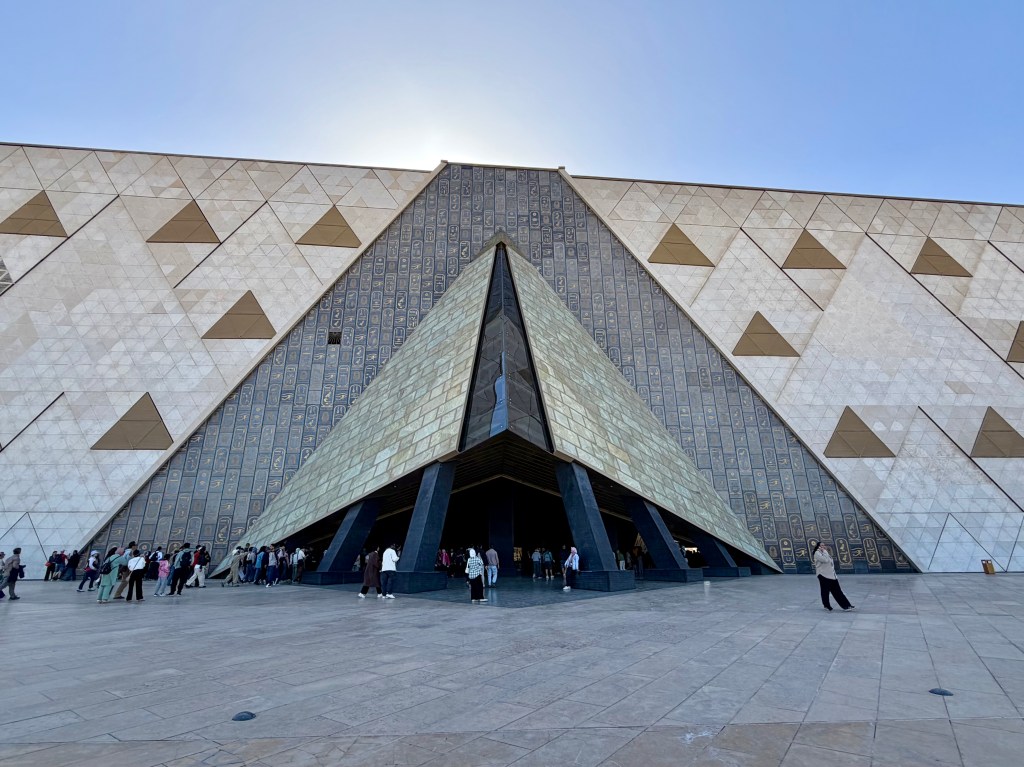
The museum announces itself immediately with the towering statue of Ramses II.
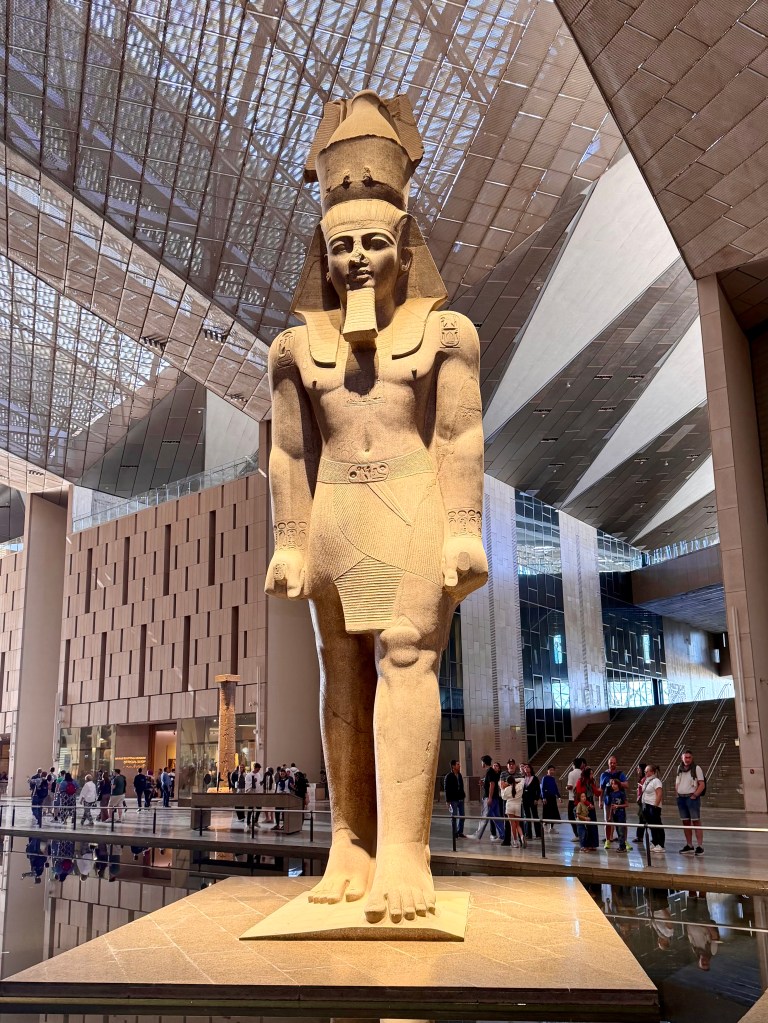
Sara described him not as a figure from history but as a personality. He ruled nearly 67 years, lived to about 92, had several wives including Queen Nefertari, and fathered more than 100 children.
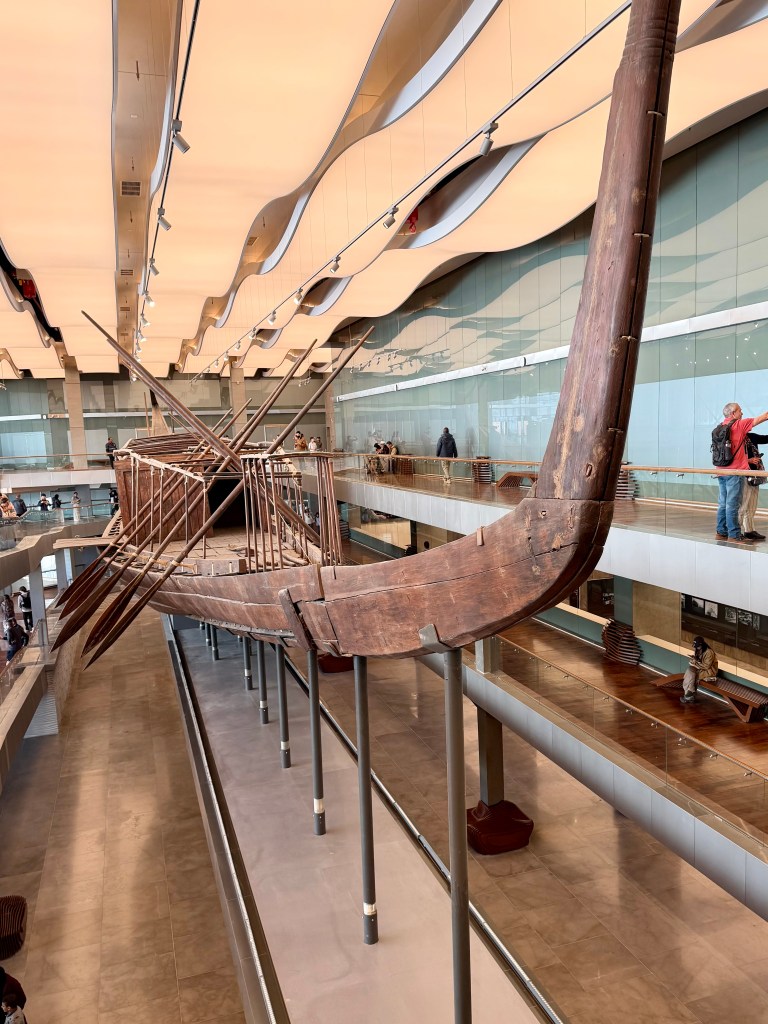
We saw a reconstructed solar boat meant to carry a pharaoh alongside the sun god Ra through the afterlife.
Sara’s favorite ruler was Queen Hatshepsut. Though pharaoh was traditionally male, she ruled fully as king after marrying her half brother Thutmose II to secure royal lineage. She wore the royal kilt and false beard not as disguise but as symbols of divine authority.
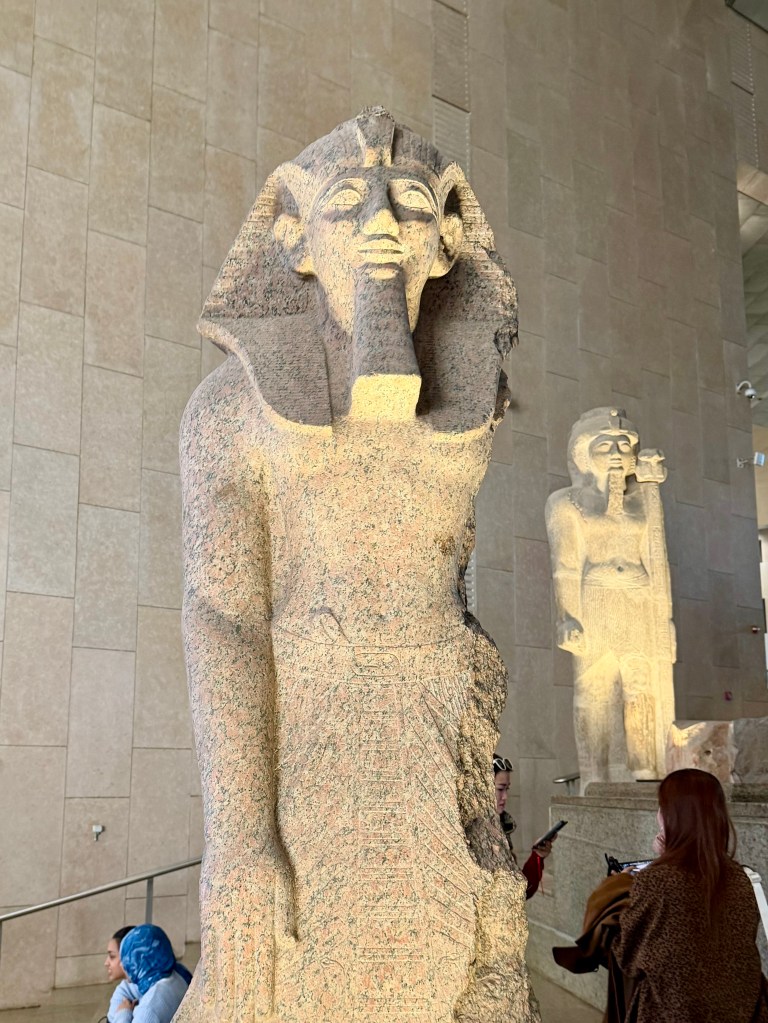
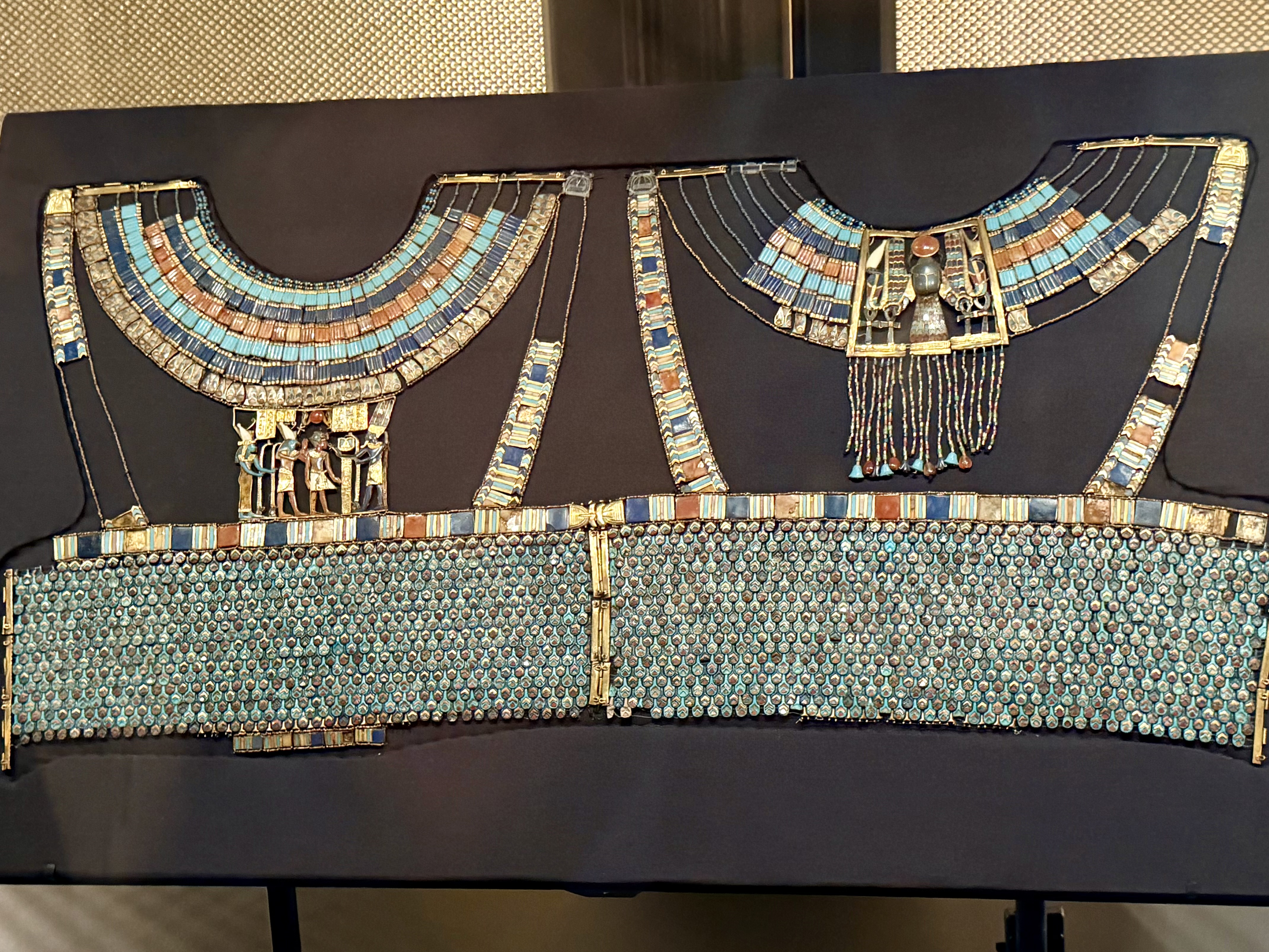
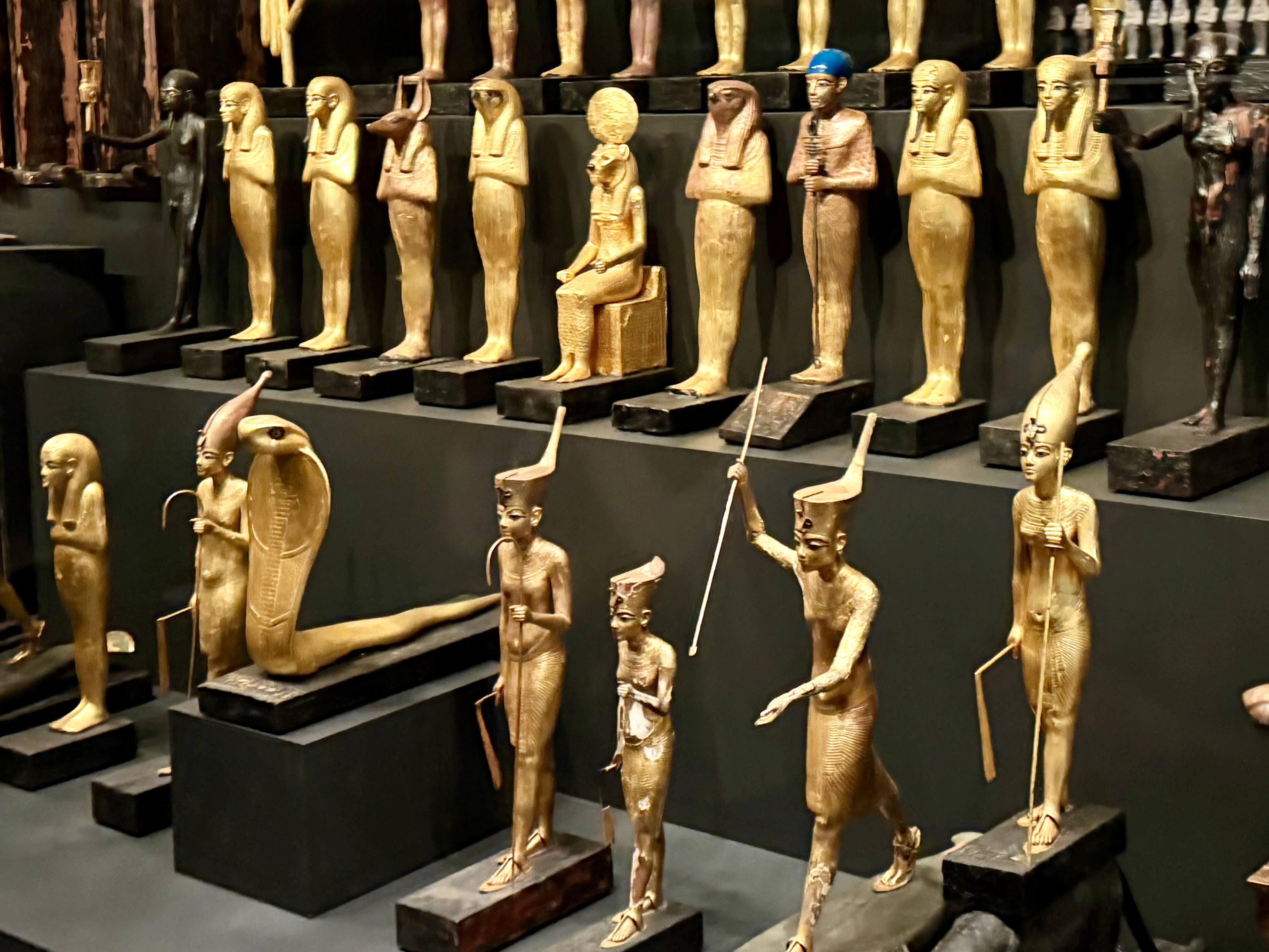
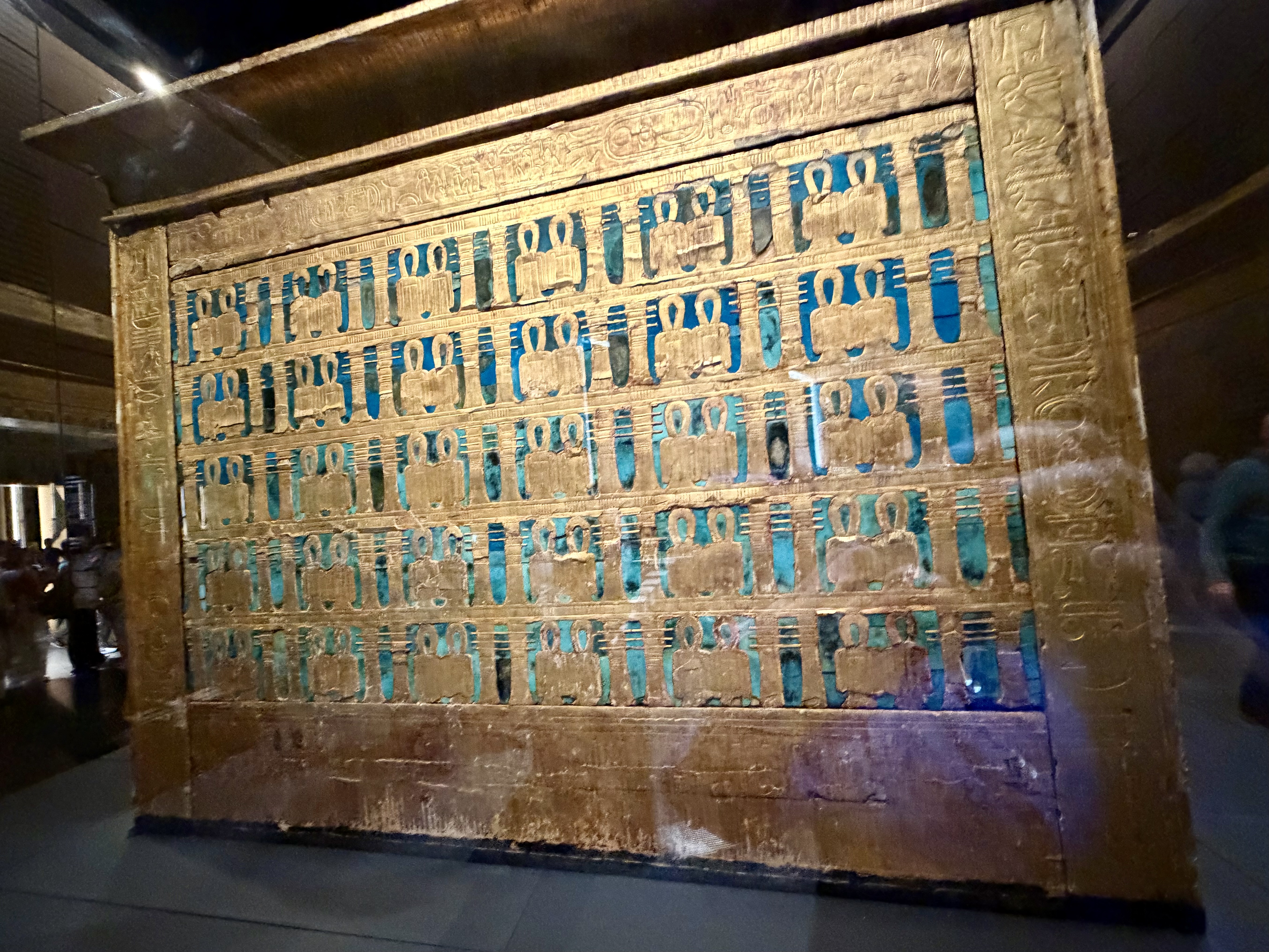
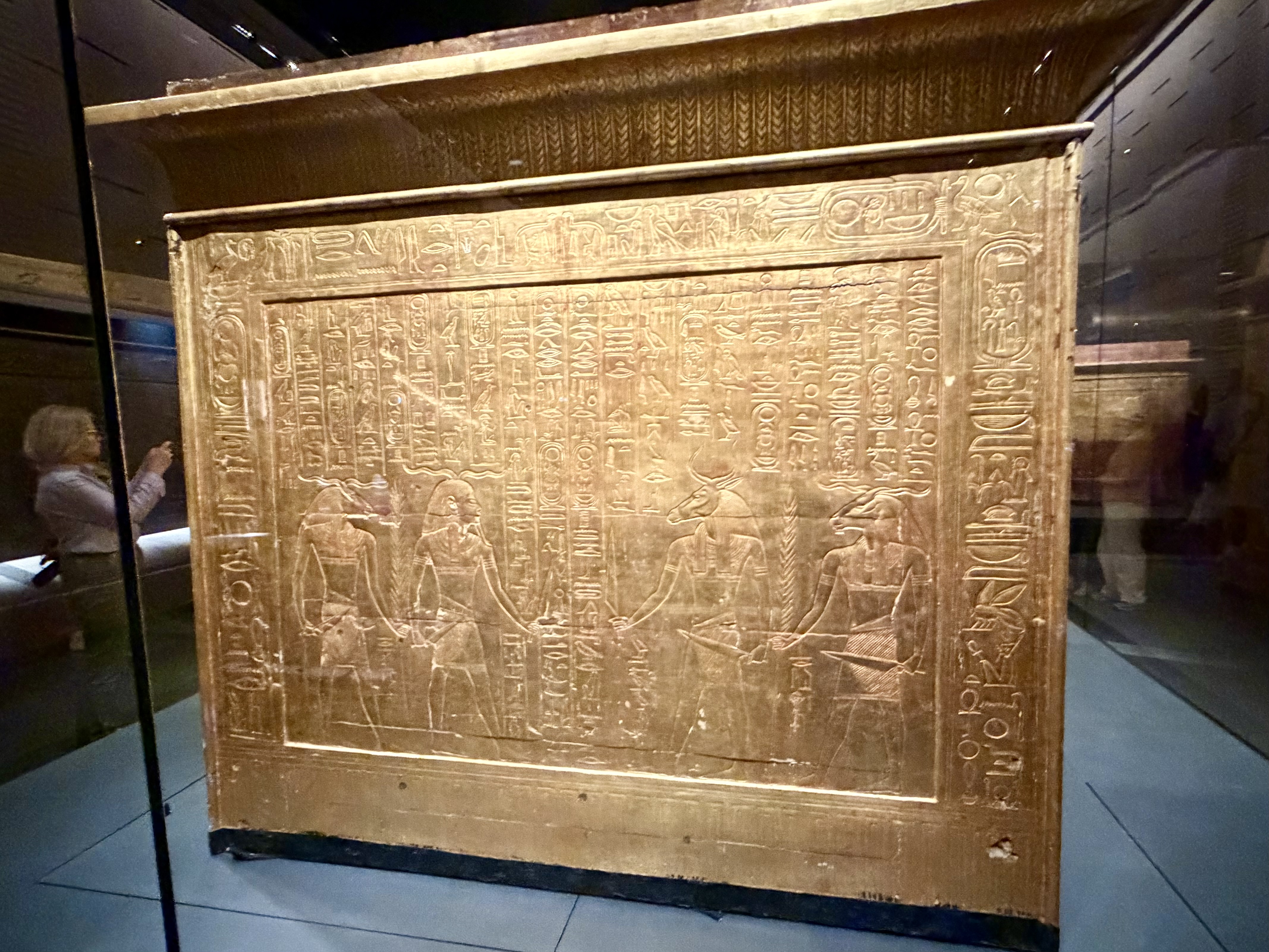
Then came King Tutankhamun.
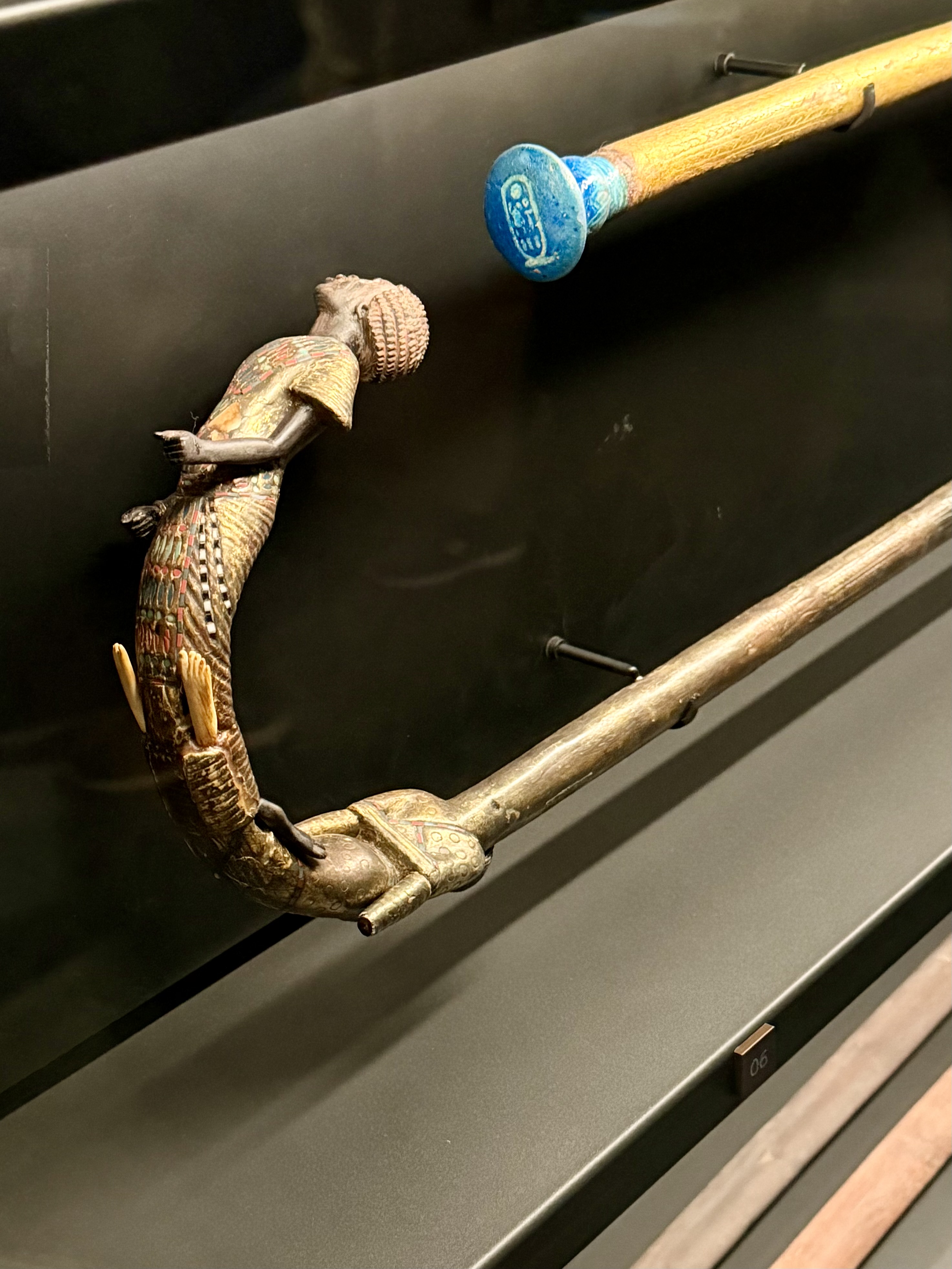
He became pharaoh at about nine years old and died as a teenager, possibly with leg issues suggested by walking sticks found in his tomb.
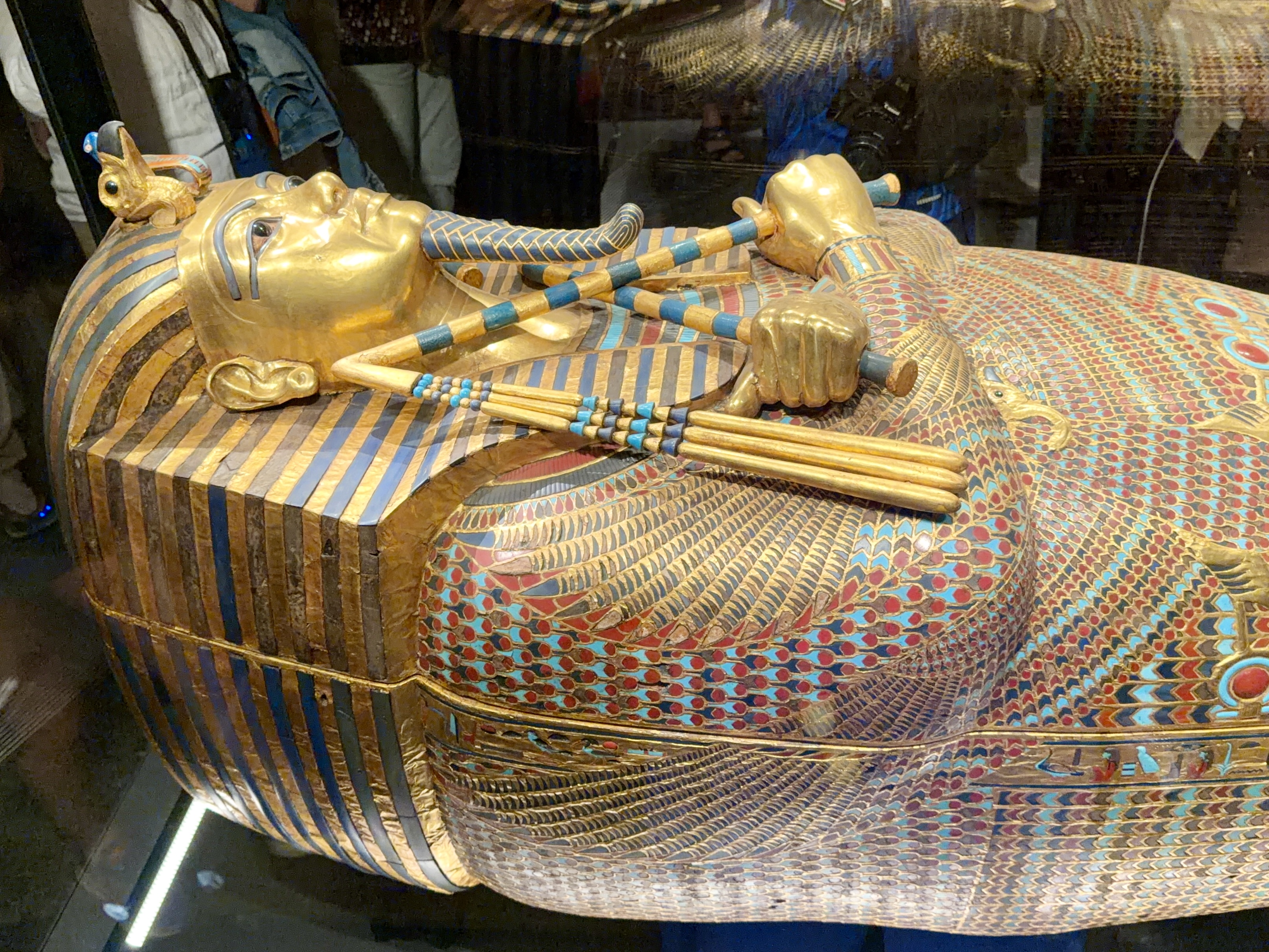
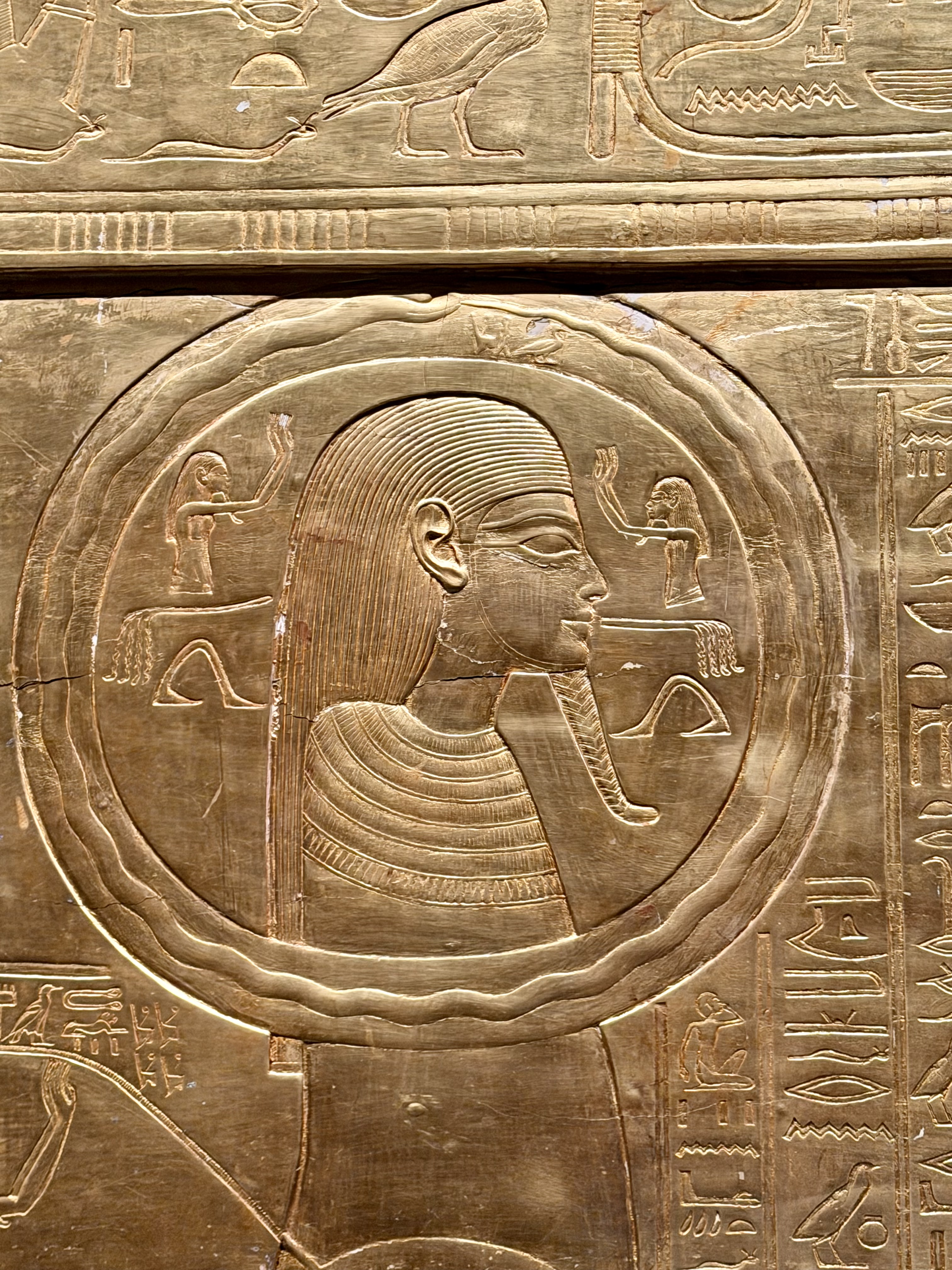
We viewed nested sarcophagi layered protectively around him, each more elaborate than the last.
And finally, the mask.
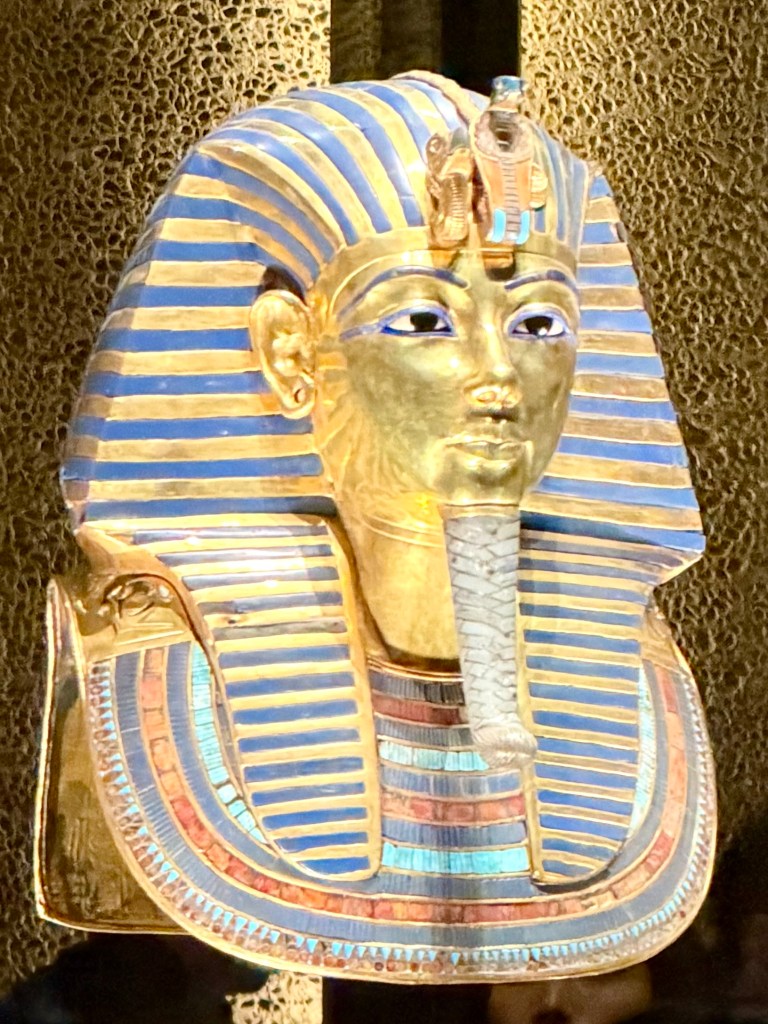
Smaller than expected yet astonishingly detailed, crafted of gold and inlaid materials so the gods would recognize him in eternity.
Standing before it felt unexpectedly emotional.
Leaving Cairo, Looking Ahead
That evening I returned to the hotel to find my husband still exhausted from travel. We shared a quiet dinner and prepared for an early flight.
In just one day, Egypt had already felt larger than imagination.
The next morning we would fly south to Luxor to board the MS Salacia and begin sailing the Nile River, following a path traveled for thousands of years.
If Cairo introduced us to Egypt’s grandeur, the Nile would introduce us to its rhythm.
And our adventure was only just beginning.
 Click, Wander & Savor