Gods, Granite, Nubian Colors, and Stories Along the Nile

Leaving Some of the Family Behind
We set off early the next morning, though our travel family felt noticeably smaller.
Sometime around midnight, Alan and Louise from Pennsylvania had quietly departed the ship for a 3.5 hour drive south to Abu Simbel. Louise, at seventy-eight years old, had her heart set on witnessing one of Egypt’s most extraordinary engineered phenomena. Twice each year, sunlight travels deep into the sanctuary of Abu Simbel, illuminating statues of Ptah, Amun-Ra, Ramesses II, and Ra-Horakhty in perfect alignment.
It is a triumph of ancient astronomy and architecture.
Alaa told us gently that while Abu Simbel is magnificent, he personally would not recommend the overnight journey. The long drive, exhaustion, and crowds often overshadow the moment itself.
Still, adventure belongs to the person who chooses it.
While they chased sunrise across the desert, the rest of us began discovering Aswan in a quieter way.
The Unfinished Obelisk

Our morning began in an ancient granite quarry where something enormous remained unfinished.
The Unfinished Obelisk lies exactly where ancient workers abandoned it more than 3,000 years ago, still attached to the bedrock.
Seeing it completely changed my understanding of Egyptian engineering.
Obelisks were carved from single pieces of granite, not assembled. Workers used pounding stones made of harder rock, repeatedly striking grooves into the stone until the monument emerged from the earth itself. Once freed, the massive structure would be transported along the Nile and raised upright using ramps, ropes, and human coordination that still feels almost impossible to comprehend.
This one cracked during carving.
Rather than repair it, the workers simply walked away.
Standing beside it, you can see tool marks frozen in time, evidence of both ambition and limitation.
From quarries like this came the obelisks now scattered across the world. The Washington Monument echoes their form. Ancient Egyptian obelisks still stand in Rome, Paris, London, and Istanbul’s Hippodrome, carried far from the Nile yet rooted in Aswan’s granite.
Here, history feels unfinished in the best possible way.
Crossing the Nile to Philae
Next, we boarded a small boat bound for the Temple of Philae.
Before departure, Alaa explained that Nubian vendors were permitted to board briefly to show handmade goods. This tradition supports local communities displaced decades ago when rising waters from the Aswan High Dam flooded ancestral Nubian lands.
Soon colorful fabrics appeared, lifted into the breeze as vendors balanced gracefully between conversation and commerce. Their energy felt warm rather than aggressive, more cultural exchange than sales pitch.
The Nile widened around us as Philae slowly appeared ahead.

The Temple of Philae: Island of Isis
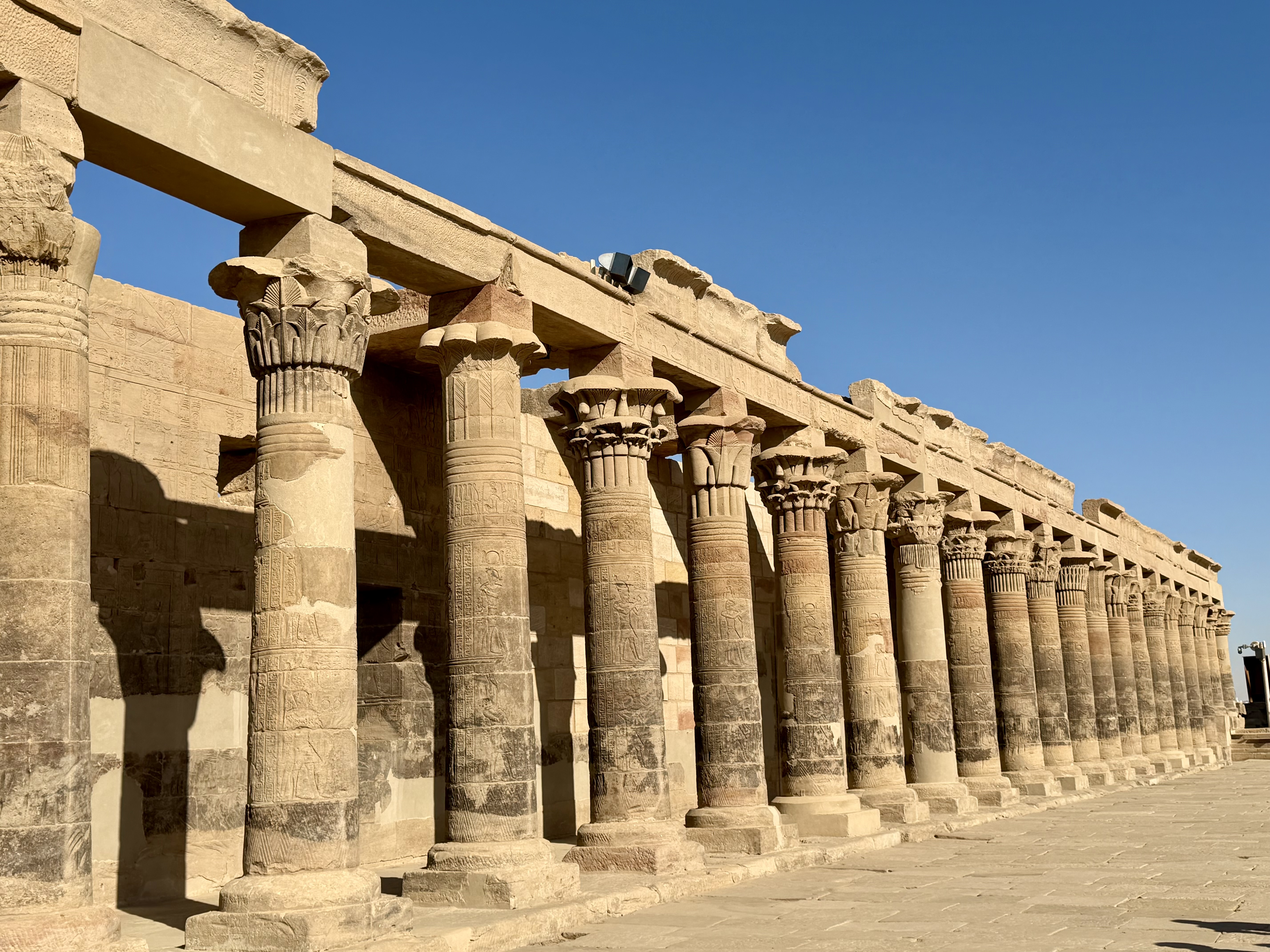
The Temple of Philae sits on Agilkia Island, relocated stone by stone during a UNESCO rescue project after the original island was submerged.
Without that effort, this temple would now lie underwater.
Dedicated to Isis, goddess of magic, motherhood, and resurrection, Philae remained an active religious center long after many Egyptian temples faded from use.
Walking through its pylons felt intimate compared to the overwhelming scale of Karnak.
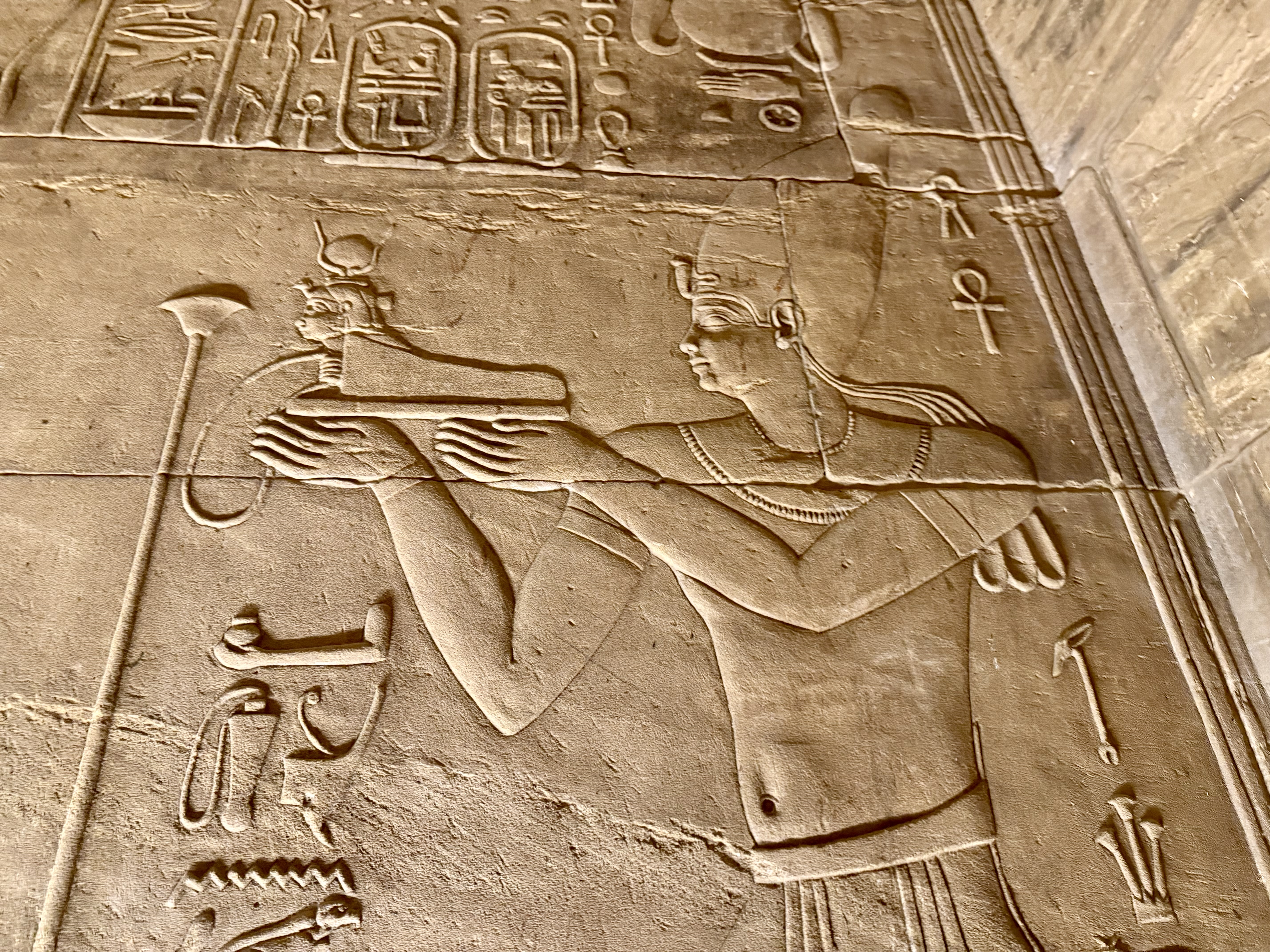
Reliefs show Isis reviving Osiris and protecting her son Horus. Greek and Roman rulers appear carved as Egyptian pharaohs, adopting traditional imagery to legitimize their rule.
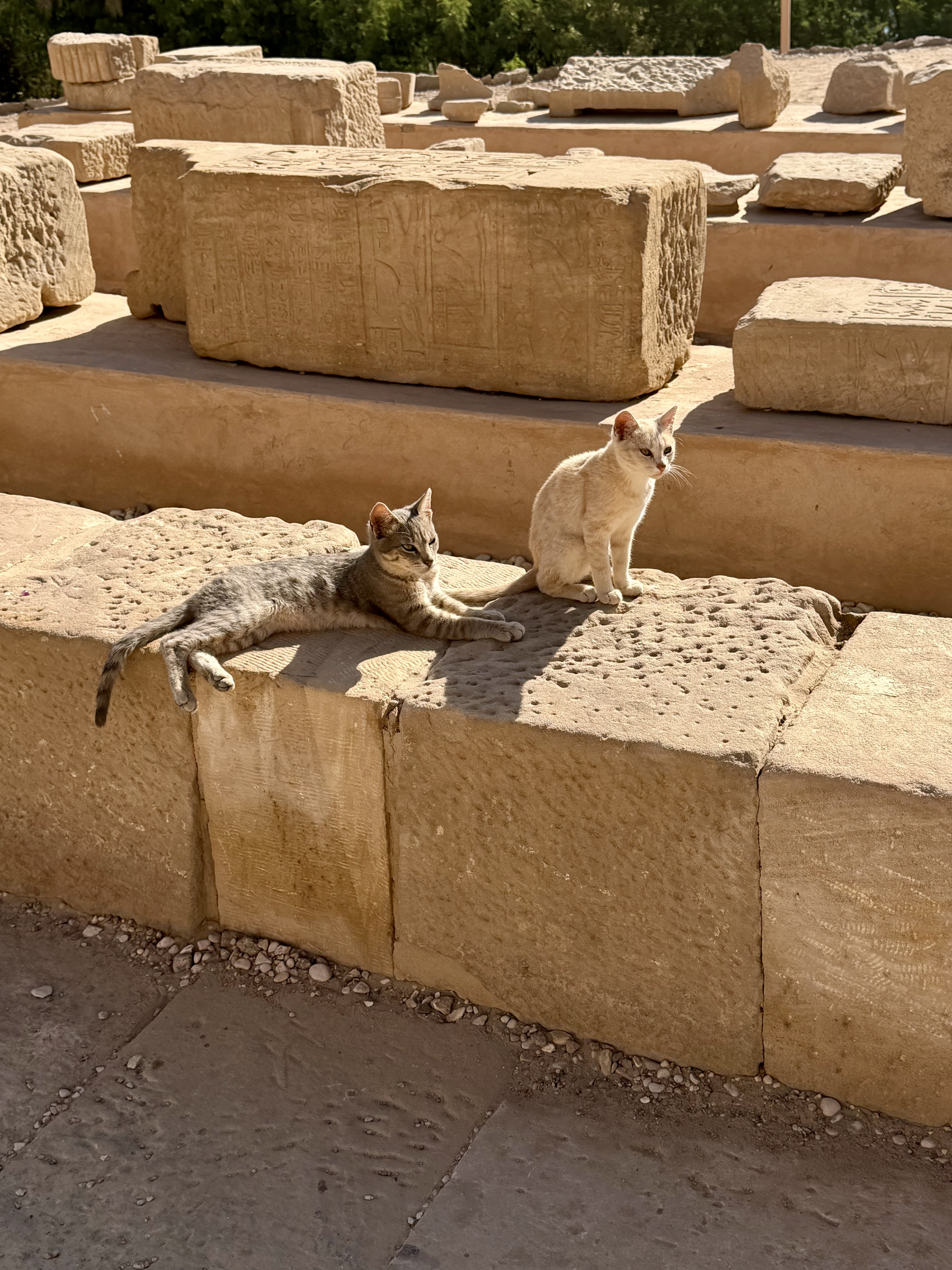
Columns crowned with floral capitals framed views of sky and water. Cats lounged comfortably among ancient stones as if they had always belonged there.
The temple felt peaceful rather than imposing. Sacred without needing to prove it.




Aromatherapy and a Case of Mistaken Identity
After Philae, we stopped at an aromatherapy shop.
As we entered, my husband leaned over and whispered that he thought we had somehow been taken to a bar. Shelves of glowing glass bottles in every imaginable color lined the walls like an elaborate cocktail display.
I informed him we were about to sample lavender, not vodka.
We were seated and offered tea while a young woman named Dina introduced us to oils and lotions rooted in traditional remedies. She demonstrated each patiently, placing drops onto our hands so we could smell and feel the differences.
I immediately loved Nubian Lavender, softer and more complex than any lavender I had known.
We purchased massage oil and a bergamot blend recommended for skin irritation. My husband, who had forgotten his medication at home, was developing what he referred to as “the itchies,” making this stop unexpectedly practical.

Sailing Into Nubian Life
After lunch and a short rest, we regrouped at 4 p.m. for an afternoon excursion. My husband stayed behind to recharge, but Alan and Louise had returned from Abu Simbel glowing with accomplishment and joined us once again.
We boarded a smaller boat able to navigate areas where cruise ships cannot go.
The Nile transformed around us.
Golden Sahara dunes sloped toward deep blue water. Palm trees appeared improbably between desert ridges. Small islands dotted the river, alive with birds and vegetation.

Herons stood motionless on rocks while smaller birds skimmed the water’s surface.
At one point, smoke rose from a desert encampment where camels rested beside low shelters at the edge of the sand.

Then came a moment none of us expected.
A young Nubian boy paddled furiously toward us on a small board. With determination and perfect timing, he caught the boat, grabbed the side with one hand, and rode alongside us laughing and singing.
No performance. No expectation.
Just joy shared on the river.
The Spice King
Alaa led us into a Nubian village and introduced us to a man he proudly called the Spice King.
The moment we stepped inside, the air changed.
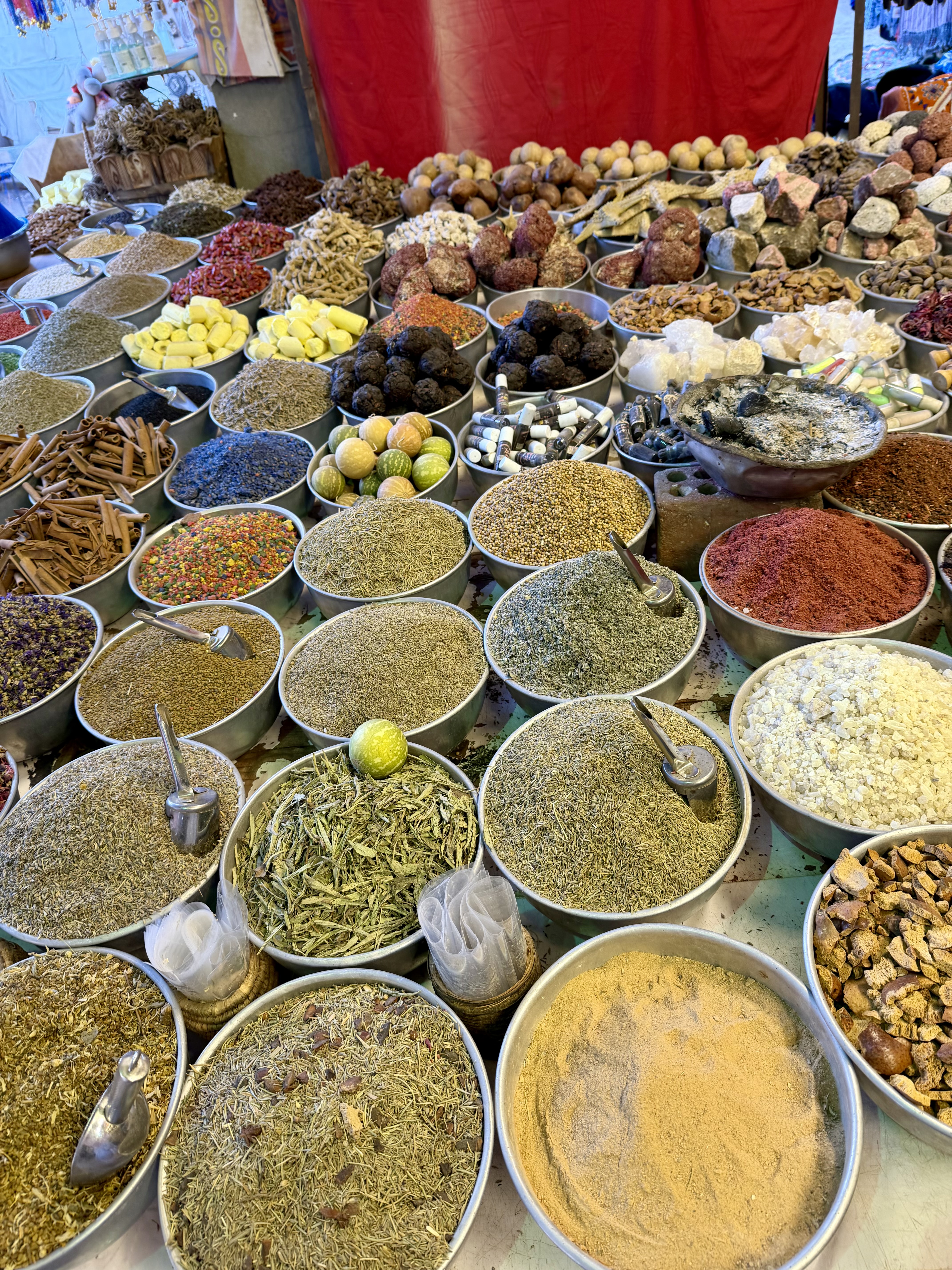
Large metal bowls and woven baskets filled the space from floor to ceiling, each overflowing with spices, teas, herbs, and dried flowers. The colors alone felt overwhelming. Deep reds of hibiscus petals. Golden turmeric piled into perfect cones. Earthy greens of dried mint and sage. Cinnamon sticks stacked like small bundles of firewood. Seeds, roots, resins, and powders formed a mosaic of texture and scent.
The fragrances layered over one another. Sweet, smoky, floral, citrus, and warm spice all mingled together until the entire shop felt alive.
He invited us to smell everything.
Hands moved from bowl to bowl as he crushed leaves between fingers, releasing bursts of aroma into the air. Some blends were meant for tea, others for cooking, others for health. Remedies for digestion, sleep, energy, and immunity passed across the counter alongside stories handed down through generations.
Nothing felt rushed.
This was knowledge preserved through experience rather than packaging.
I purchased a fragrant curry blend and delicate saffron threads, imagining future dinners suddenly connected to this small shop along the Nile.
The Spice King smiled knowingly, as if he understood that travelers rarely leave Egypt empty-handed.

Inside a Nubian Home
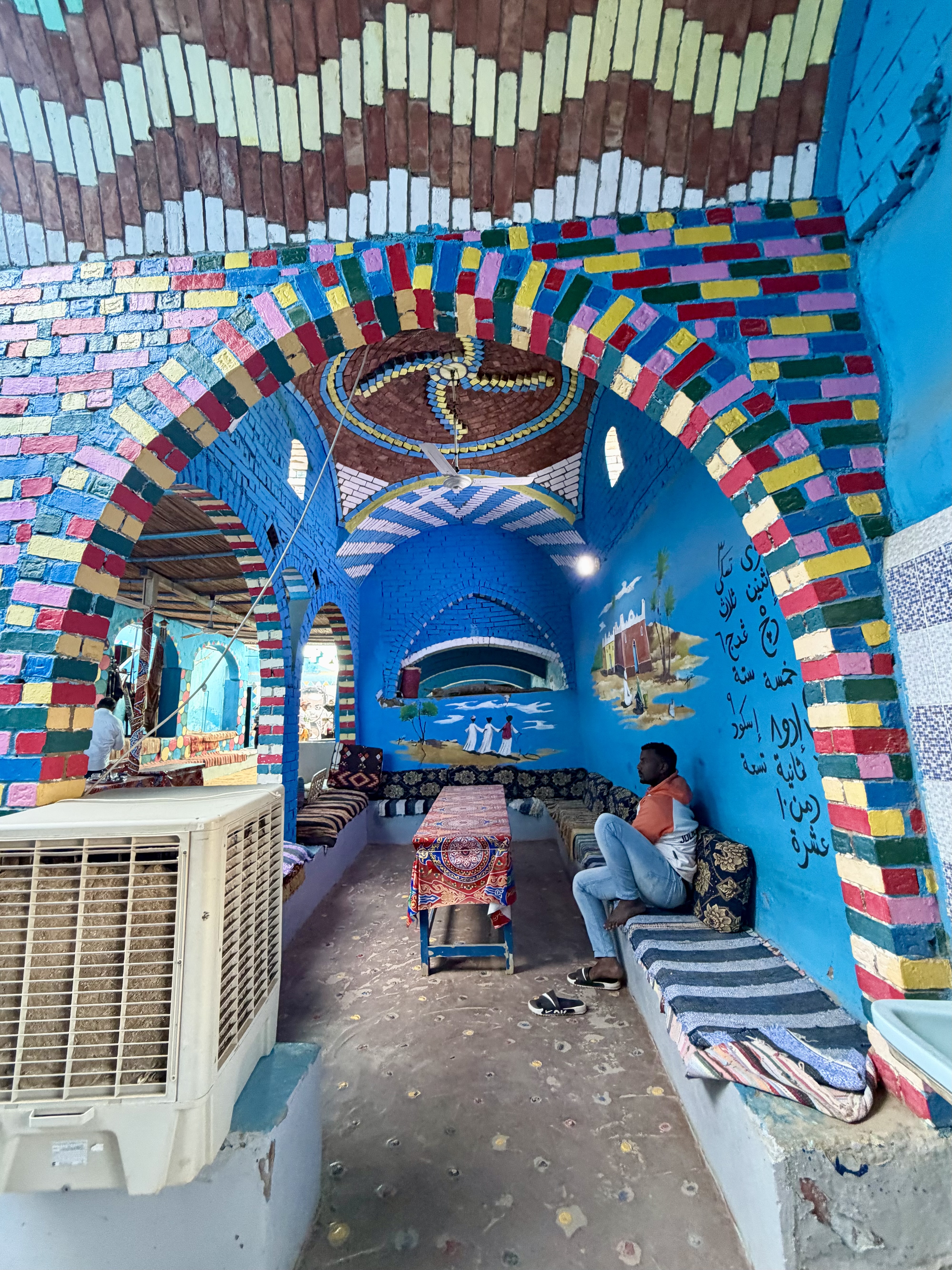
We continued to a traditional Nubian house where we were welcomed with tea and invited to explore freely.
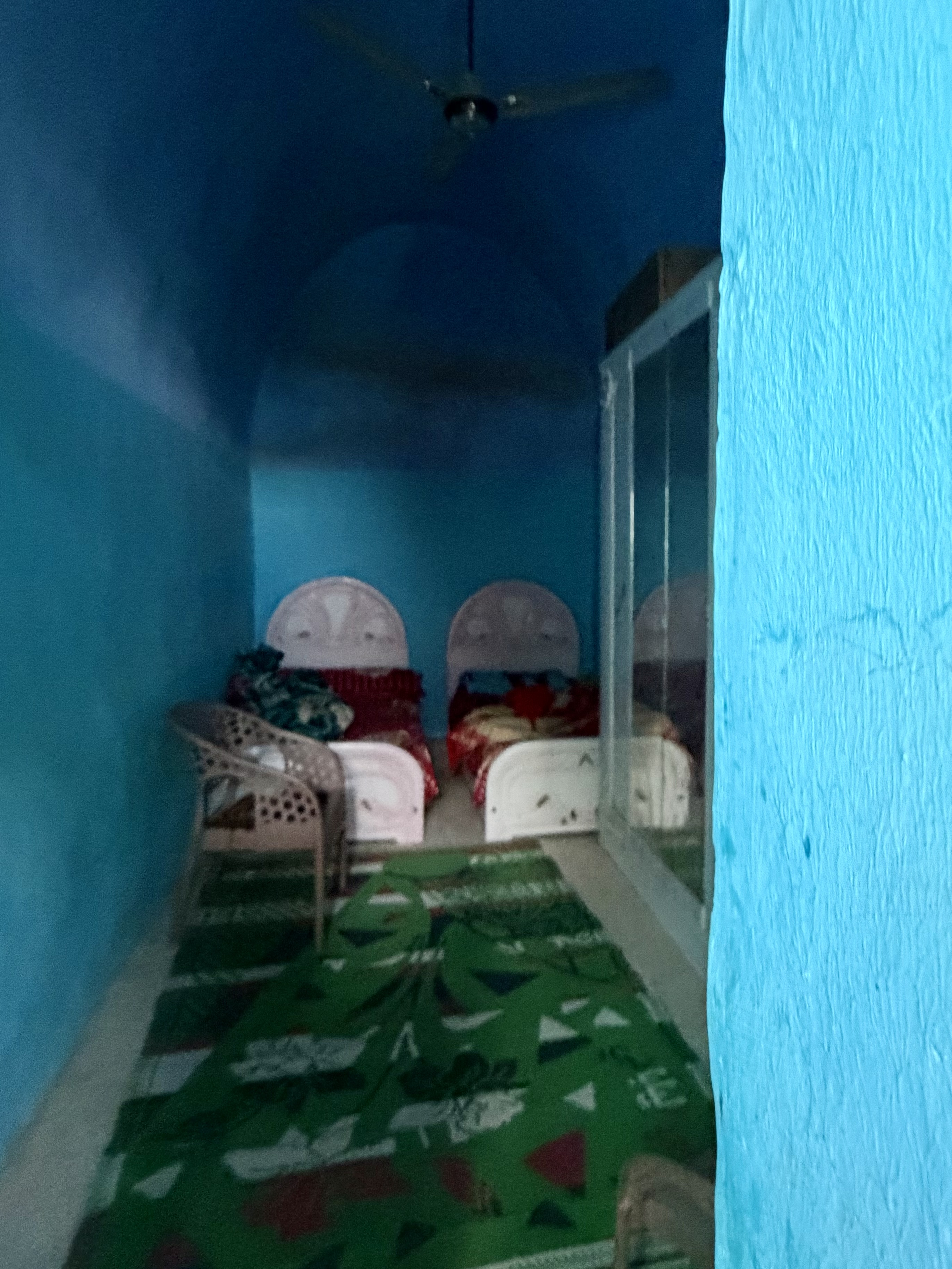
Walls were painted brilliant shades of blue with geometric patterns and murals. Seating lined the rooms, encouraging gathering and conversation rather than separation.
Color was everywhere. Doors, ceilings, and archways felt joyful and intentional.
I realized how little I had known about Nubian culture before arriving, yet how immediately comfortable it felt.
Hospitality here was effortless.




Stories Along the River
On the return journey, Alaa pointed toward the Old Cataract Hotel, famous as the place where Agatha Christie stayed while writing and drawing inspiration for Death on the Nile.
Watching the river slide past in golden afternoon light, the connection felt obvious.
The Nile invites storytelling.
As we passed botanical gardens, small islands, and quiet stretches of desert meeting water, the day settled into memory.
Aswan felt different from everywhere else we had visited.
Less overwhelming than Cairo. Less monumental than Luxor.
More human.
Here, history lived not only in temples and stone, but in spices, laughter, color, and the rhythm of everyday life along the river that has sustained civilization for thousands of years.