From Pula to Split – The Tiny Plane and the Islands Below
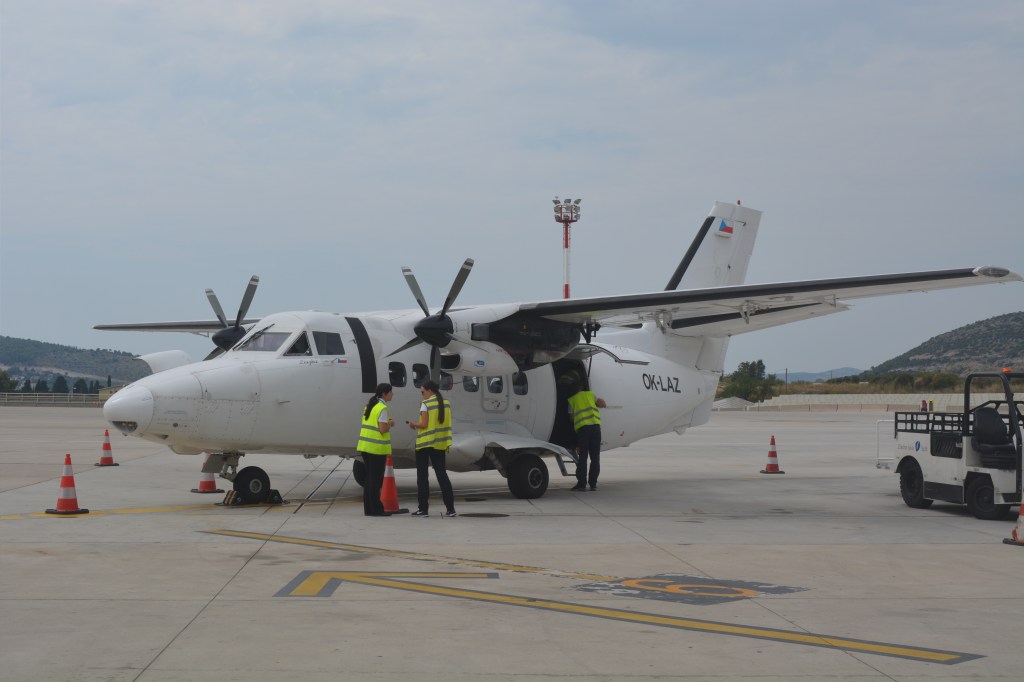
We left Pula on what might be the smallest commercial plane I’ve ever flown — a twin-prop Czech-built LET L-410, operated by Trade Air. My 6’3” husband could barely stand upright inside, ducking his head as we climbed aboard with just a handful of other passengers. There was no jet bridge, of course – just a short walk across the tarmac under the Adriatic sun, our luggage being loaded by hand as we snapped photos of the stubby little plane that would carry us down the coast.
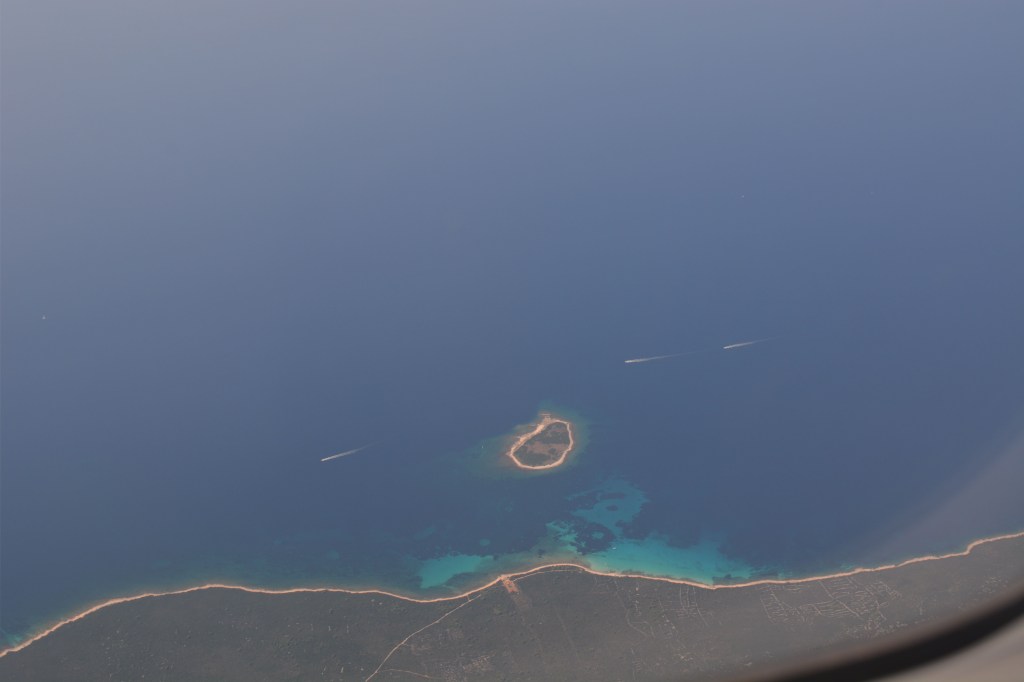
Once in the air, the views were spectacular. The flight hugged Croatia’s Dalmatian coastline, revealing a scatter of emerald islands floating in turquoise and deep sapphire waters. From above, we could see tiny islets rimmed with golden sand — one even perfectly circular, like a natural halo in the sea. The pilot stayed low enough that we could pick out boats slicing through the water and the faint grid of olive groves and stone walls below.
It was one of those short flights where you barely reach cruising altitude before beginning the descent, but the views made it unforgettable – a living map of Croatia’s coastal magic unfolding beneath us.
Arriving in Split – A Maze of Alleys and Cats
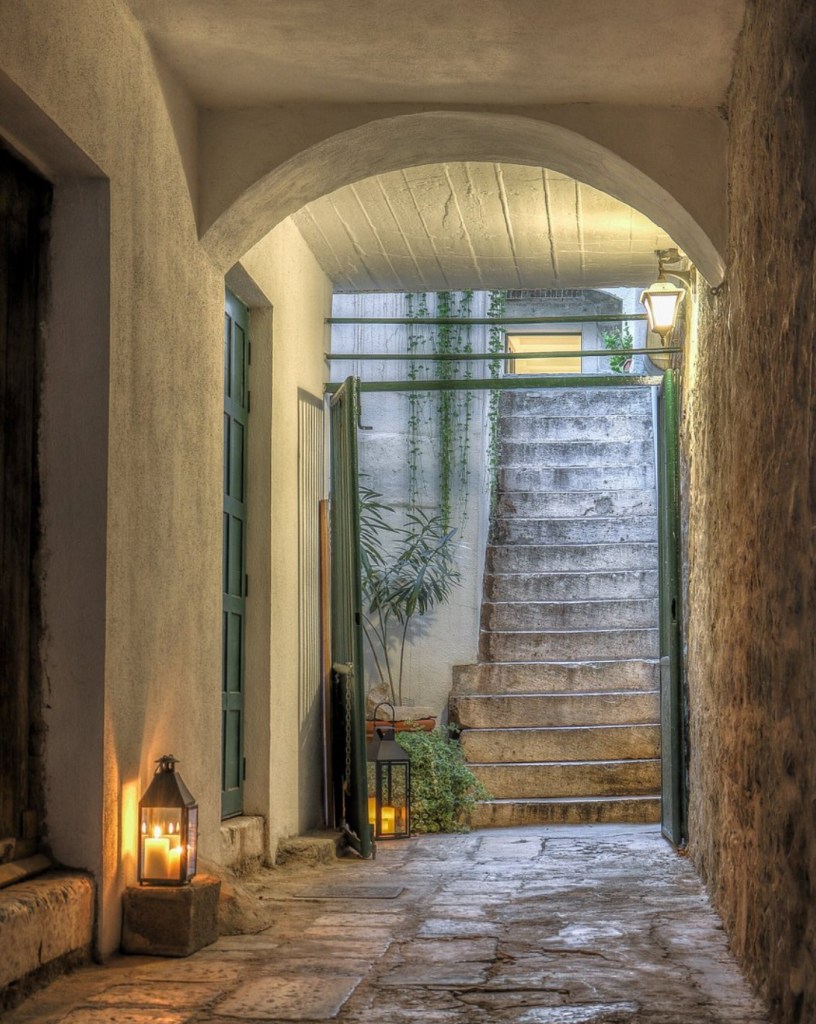
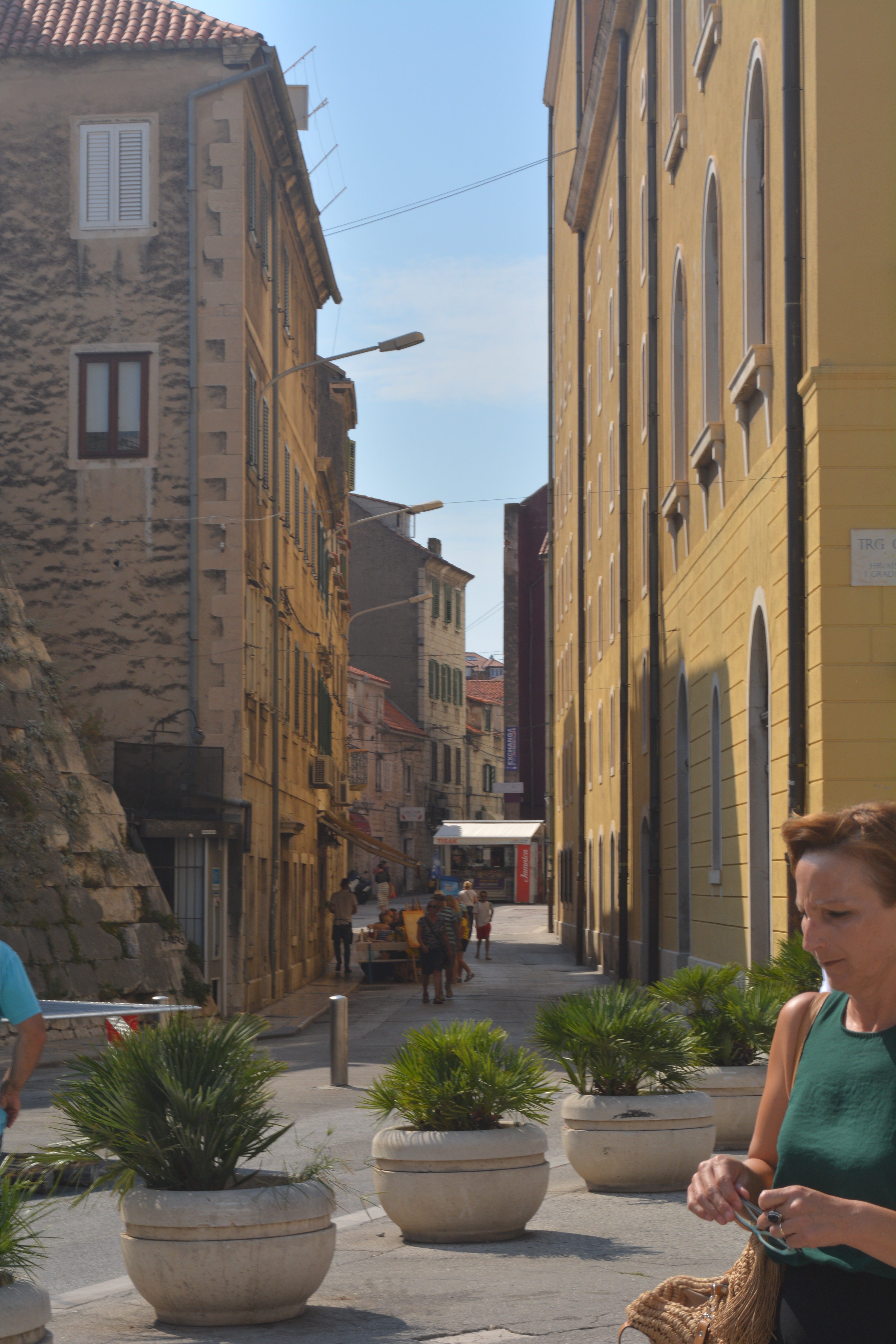
Landing in Split, we grabbed our bags right off the tarmac and caught a taxi toward Old Town. As we approached the historic center, the driver stopped and called our hotel – cars couldn’t go any farther. A few minutes later, someone appeared on foot to escort us through narrow, cobbled alleyways that twisted between stone buildings and centuries-old walls.
We followed, dragging our suitcases past tiny cafés and shuttered windows, until we reached a small park where cats lounged lazily in the shade. That’s when I knew we were close – our guesthouse, Lanterna Rooms, was tucked just up a short flight of stairs to the right of the cats.
Lanterna Rooms is a charming little find inside Split’s Old Town — just five private rooms in a centuries-old stone building with modern touches and an unbeatable location near Diocletian’s Palace. There’s no grand lobby, just a simple wooden door, kind hosts, and the feeling of staying in a quiet local home woven into the fabric of the city’s history.
We dropped our bags, freshened up, and opened the window to the sound of church bells echoing through the narrow streets. Then we set out on foot to explore – ready to get lost in the maze of Split’s Old Town, where history and daily life blend effortlessly within the palace walls.
Walking Through History: Diocletian’s Palace
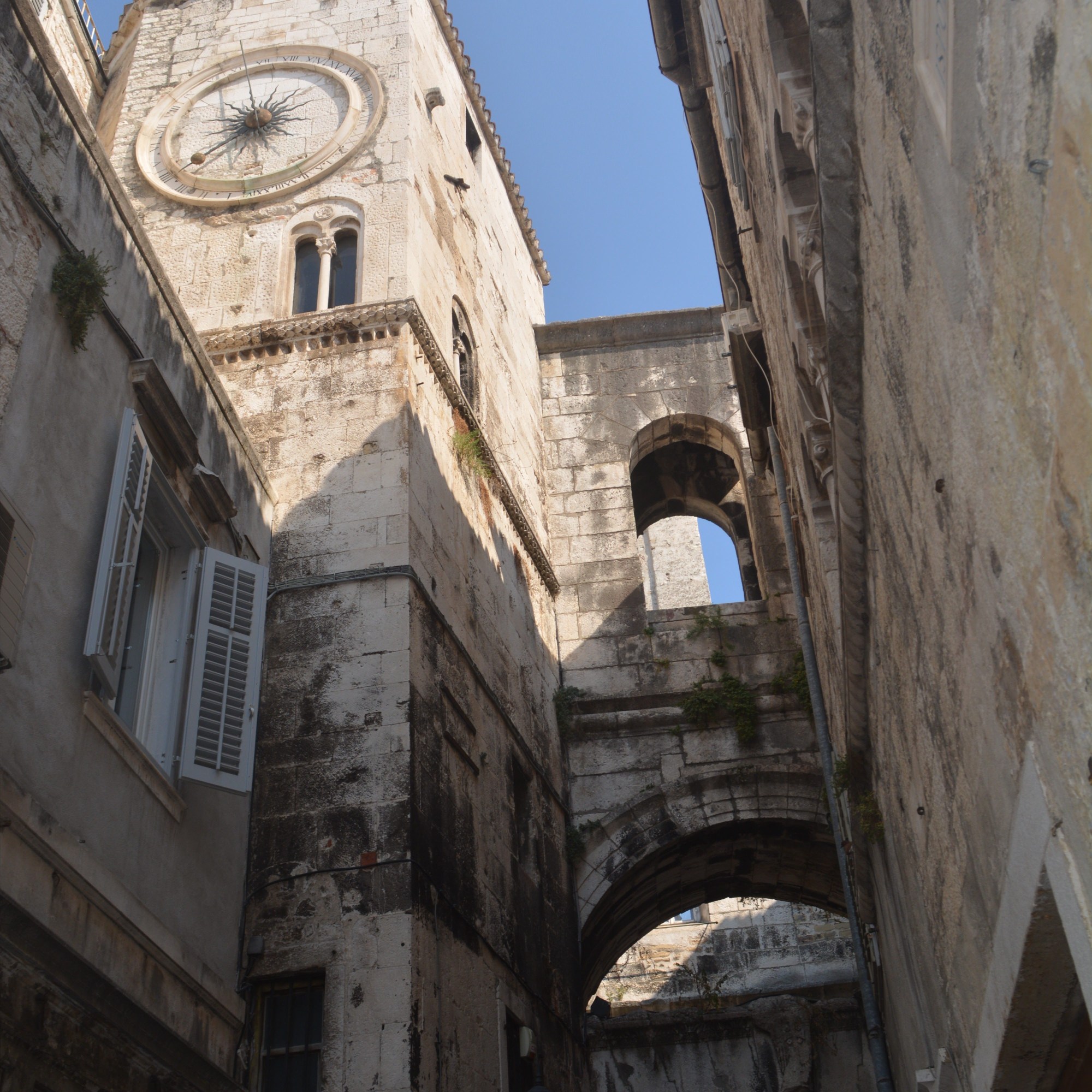
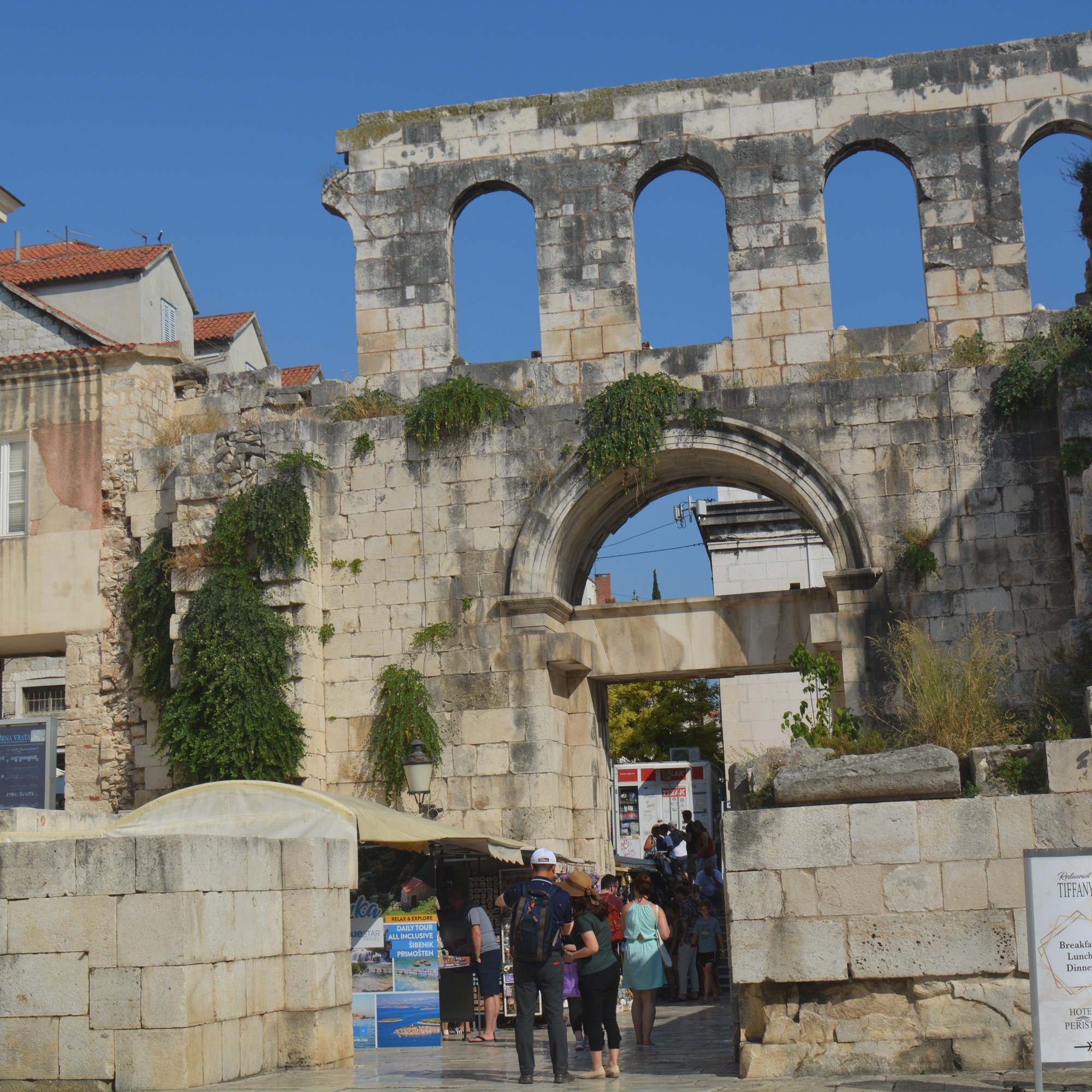
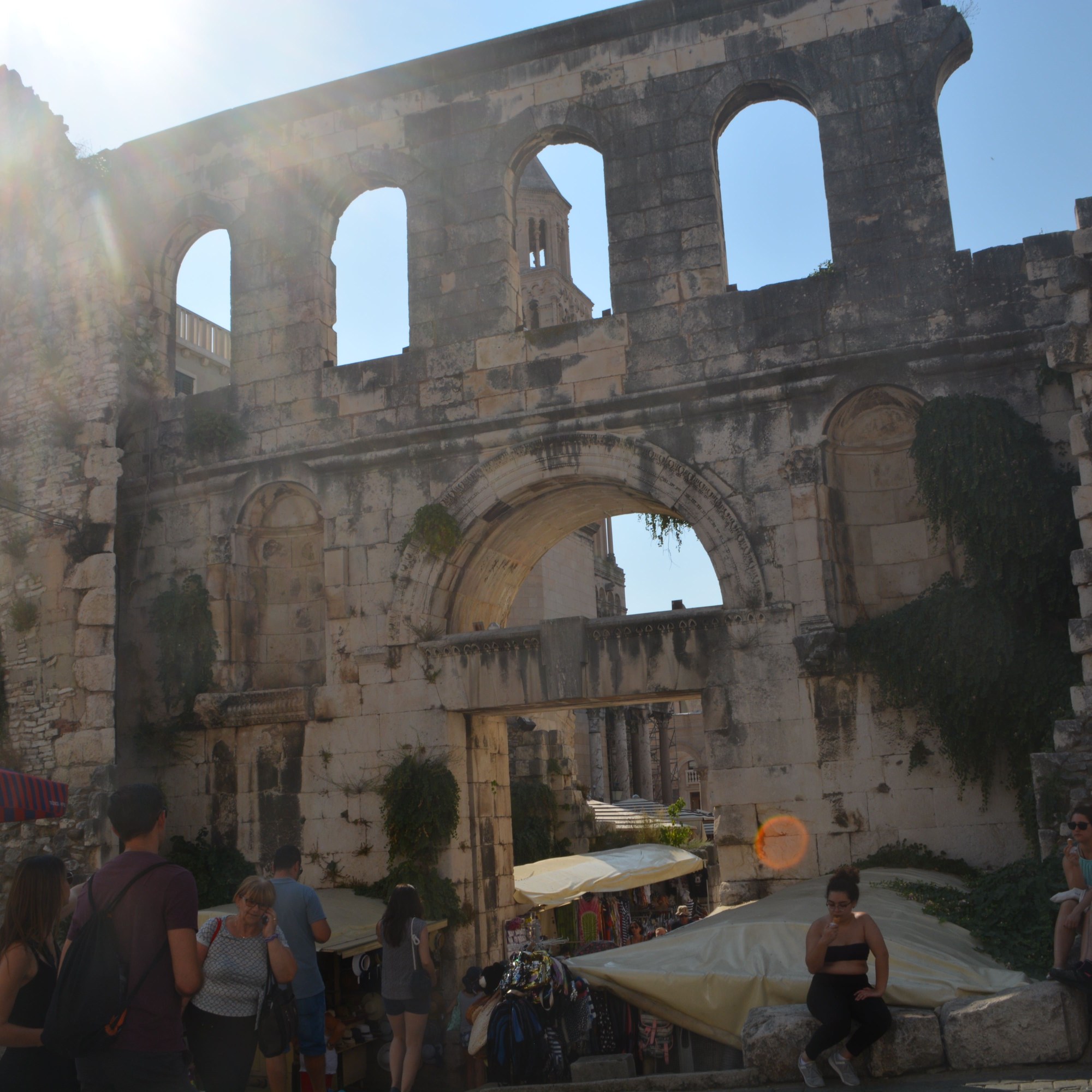
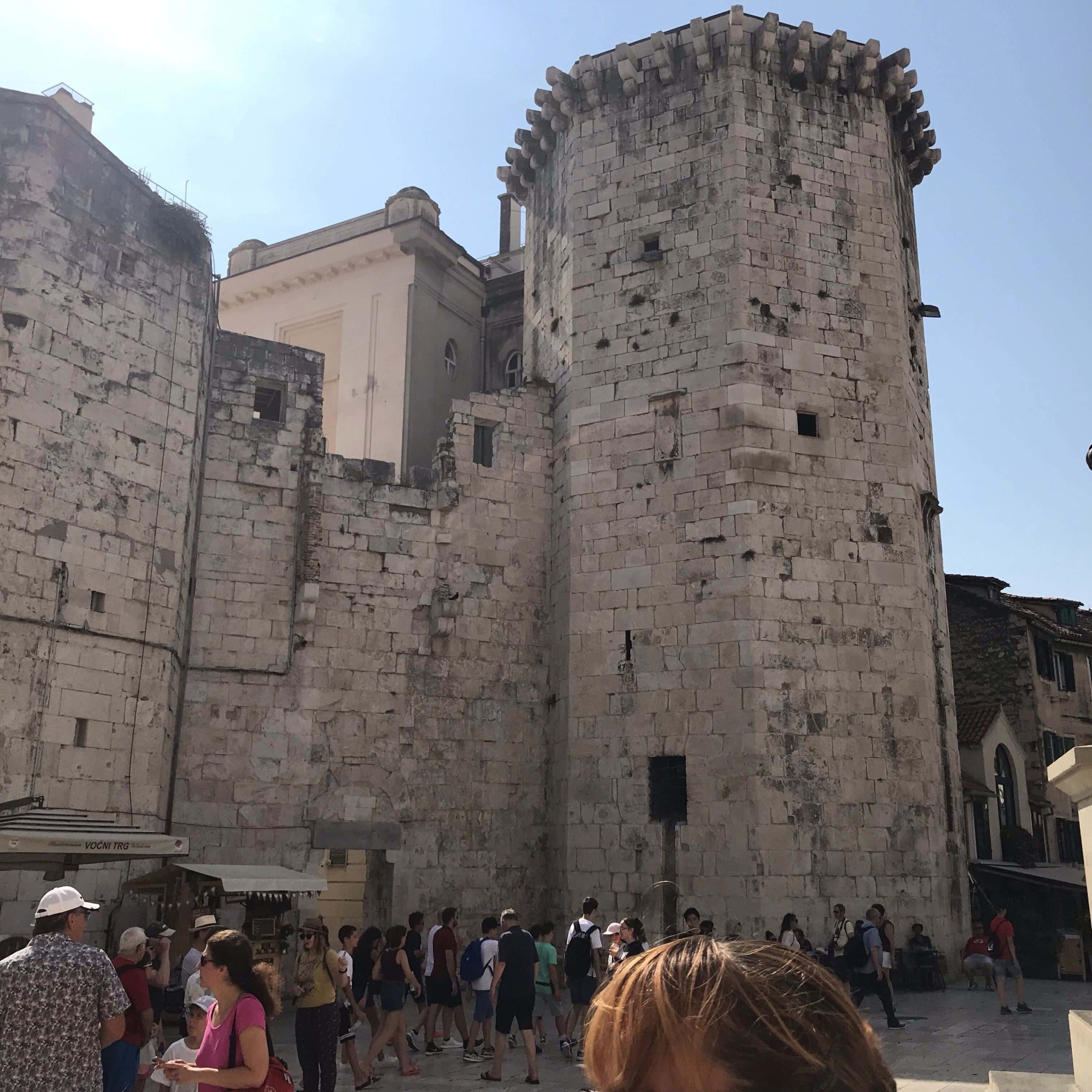
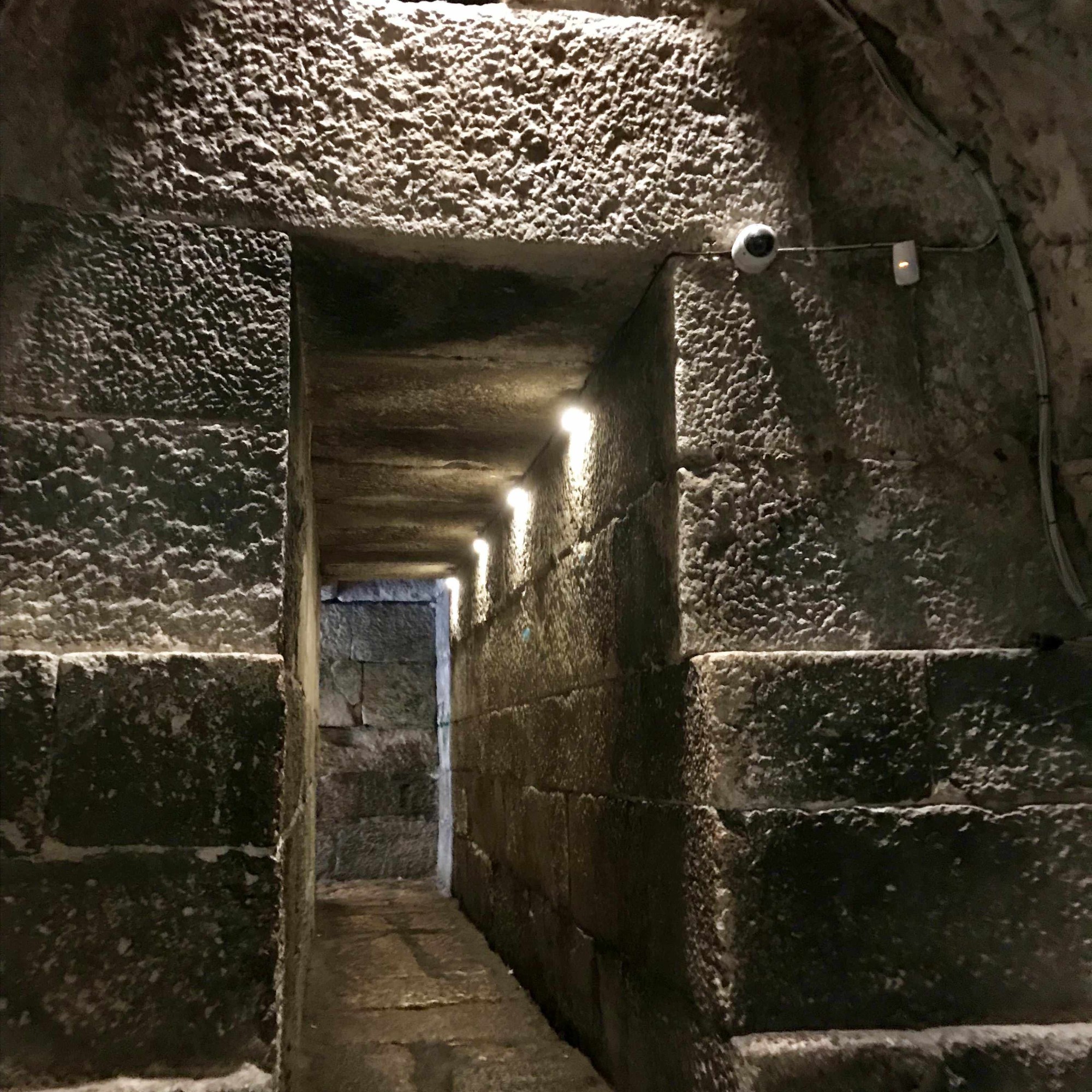
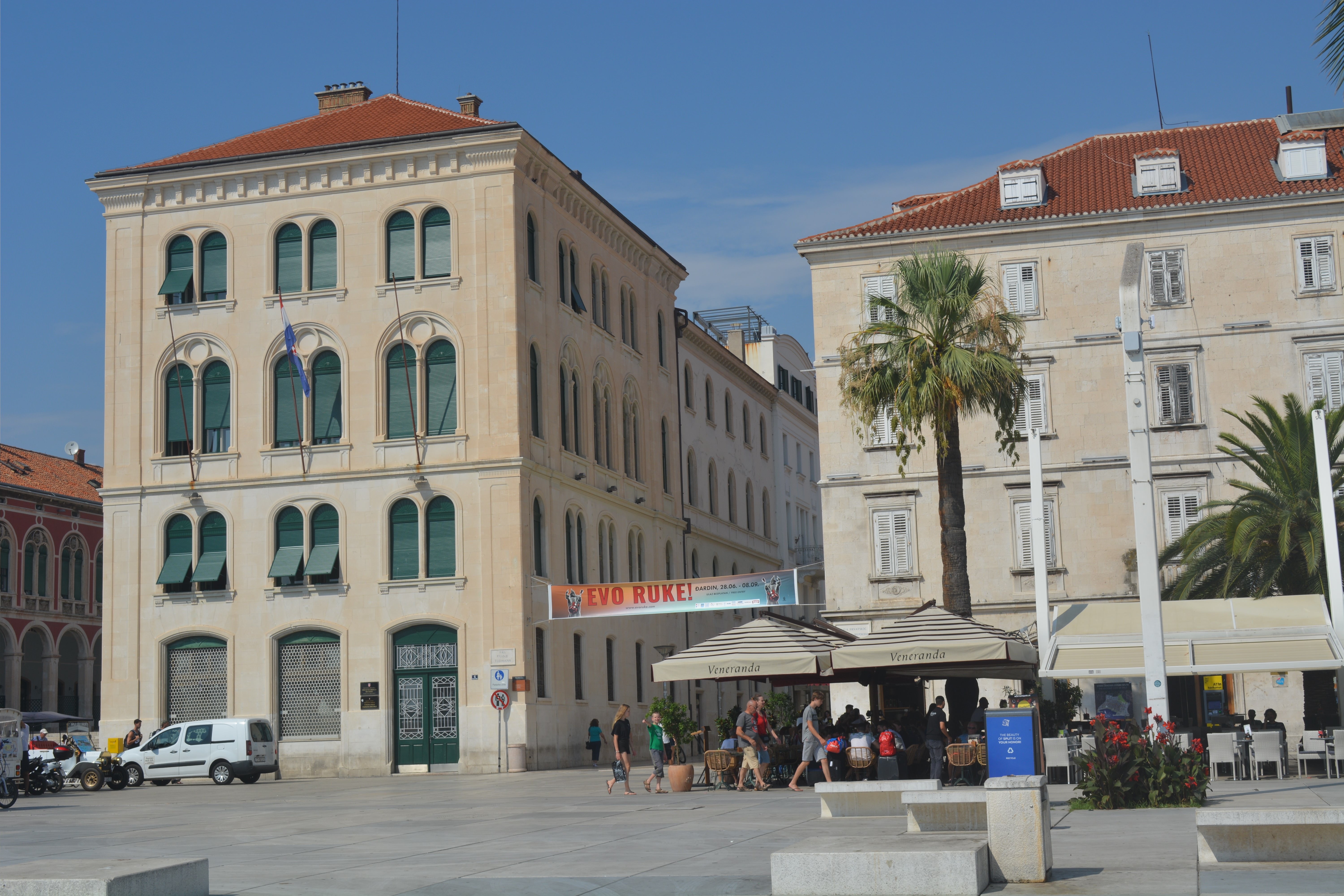
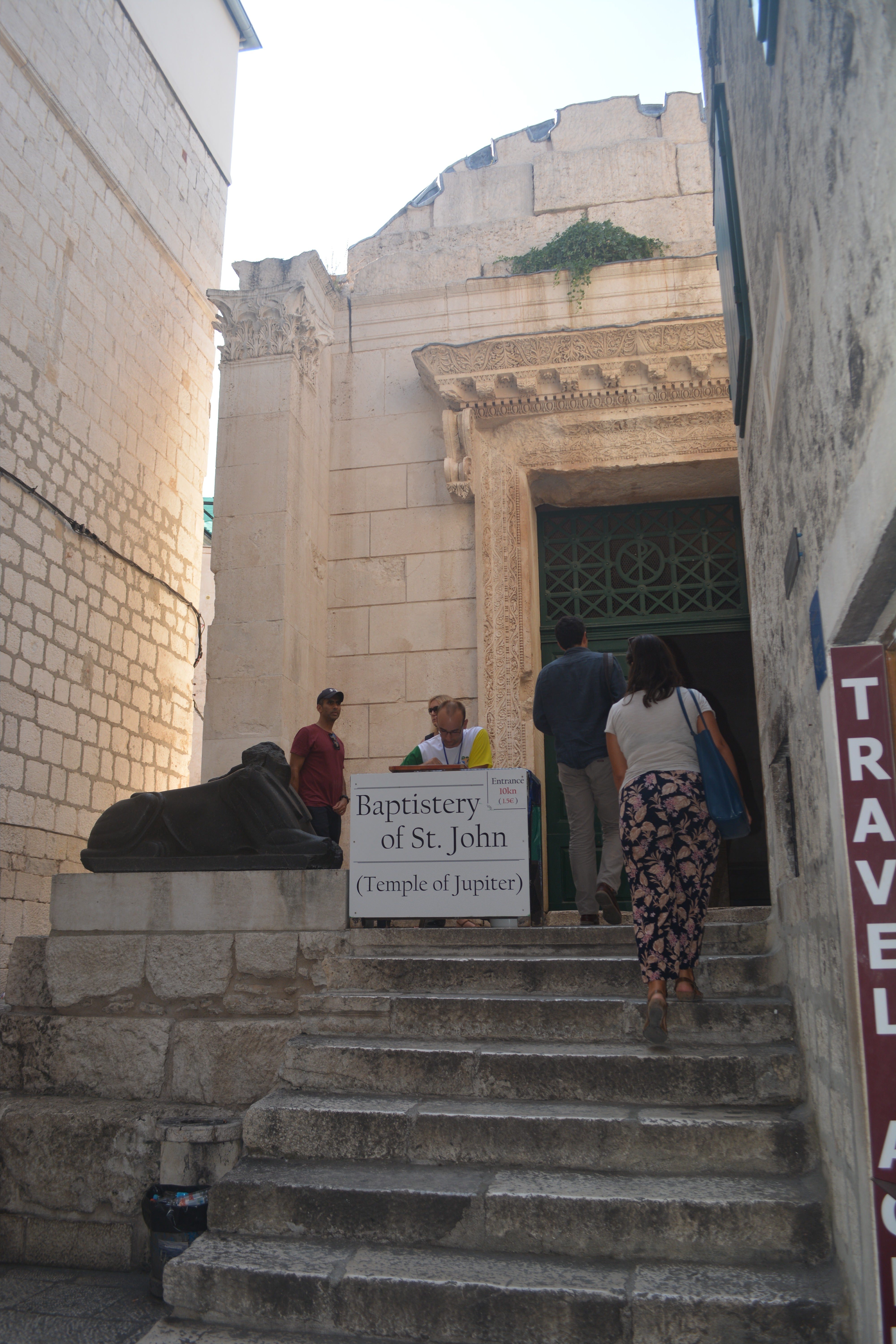
Split’s heart beats inside Diocletian’s Palace, built in the 4th century by the Roman emperor who planned to retire here – proof that even rulers crave a good ocean view. Today, it’s a living city within walls: cafés tucked between marble columns, laundry fluttering over 1,700-year-old stones.
We wandered through the subterranean cellars, where Game of Thrones filmed its dragon scenes. Cool, shadowy, and echoing with history, they mirrored the emperor’s chambers above. Somewhere between the gift shops and the vaulted ceilings, I felt time bend – or maybe that was just my legs from all the stairs.
The Cathedral of St. Domnius and His Tomb
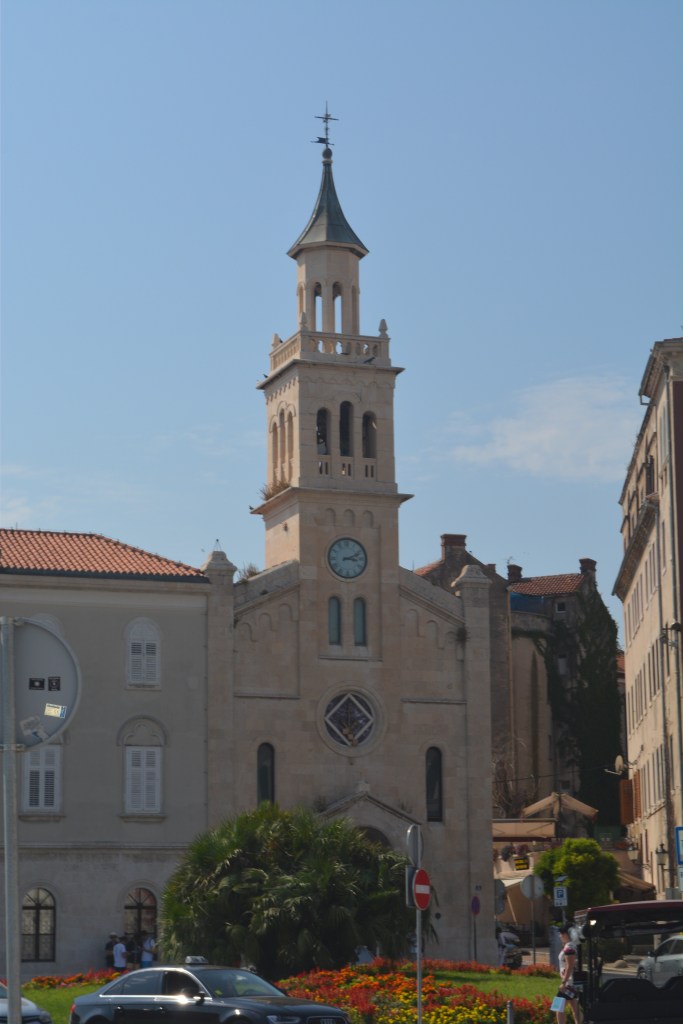
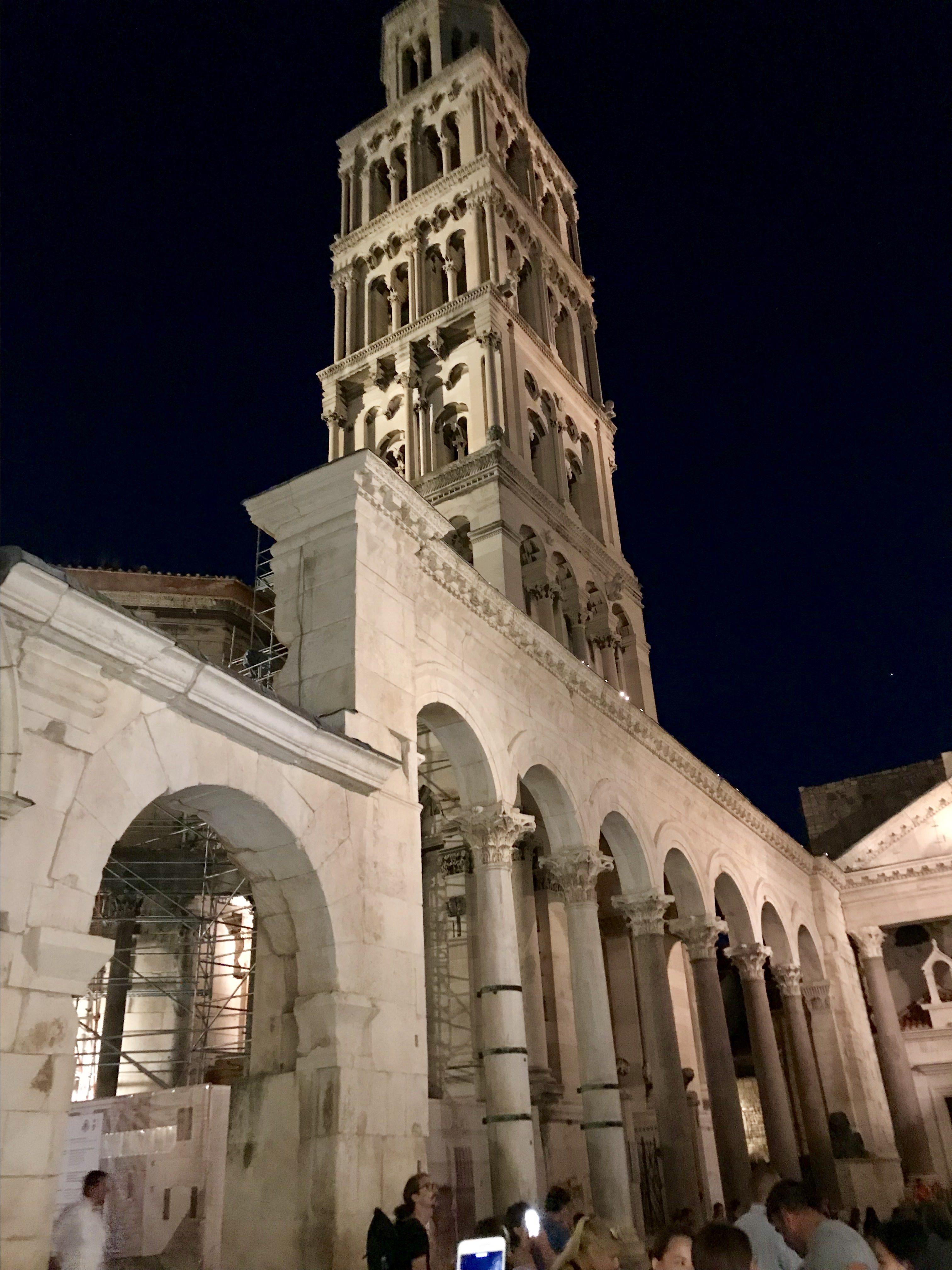
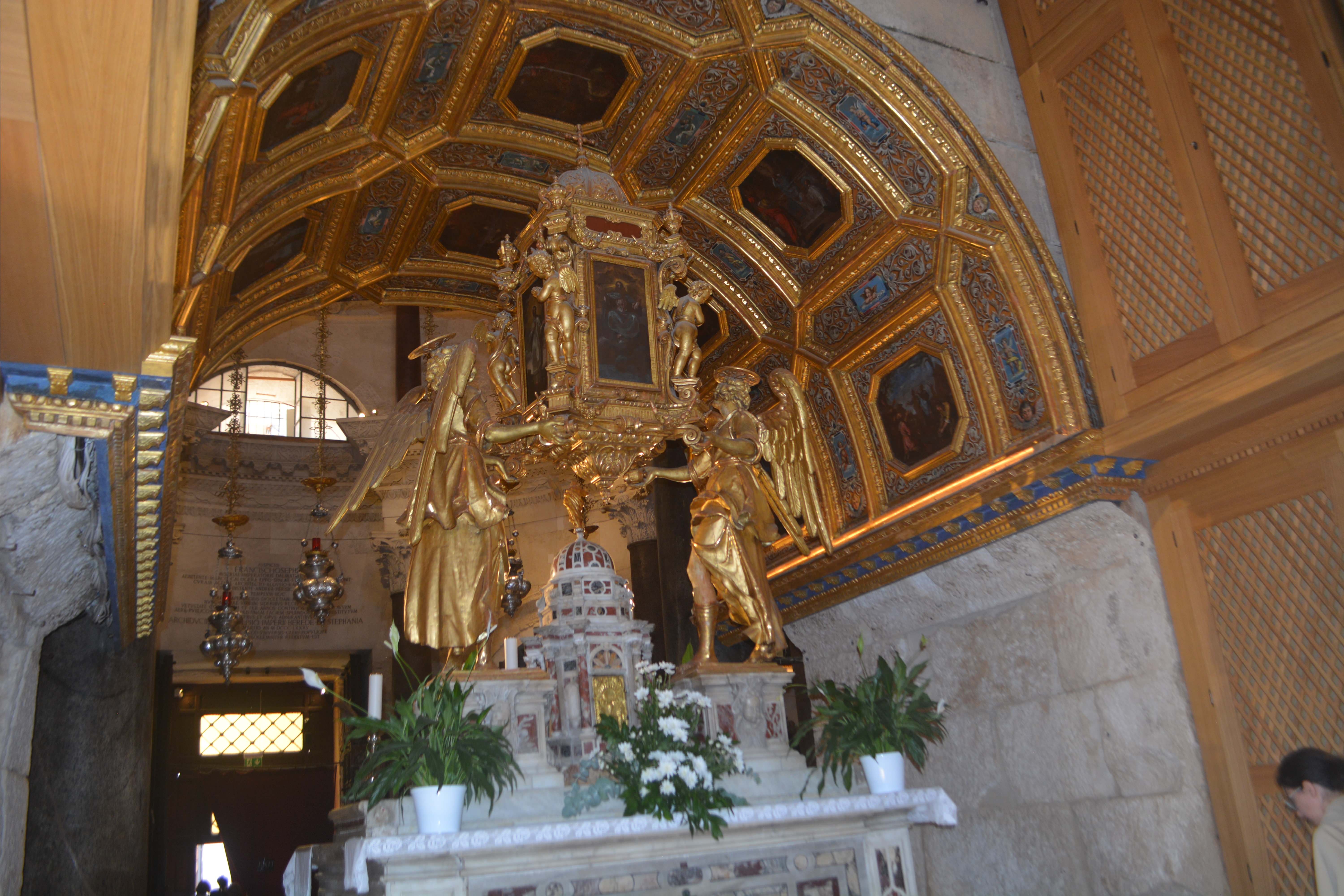
At the center of it all rises the Cathedral of St. Domnius (Sveti Duje), a masterpiece that began its life as Diocletian’s mausoleum before history had a sense of irony. The emperor who persecuted Christians now rests in the shadow of a cathedral dedicated to one of his martyrs.
The cathedral itself is small but breathtaking – a blend of Roman structure, medieval additions, and Baroque details. Carved columns line the octagonal chamber, and sunlight streams through narrow windows, catching gold leaf and incense smoke.
Descending into the Tomb of St. Domnius feels like entering the heart of Split’s faith. Beneath the marble altar lies the relics of the city’s patron saint, believed to have been executed during Diocletian’s rule. It’s humbling, quiet, and somehow comforting – a reminder that resilience runs deep here.
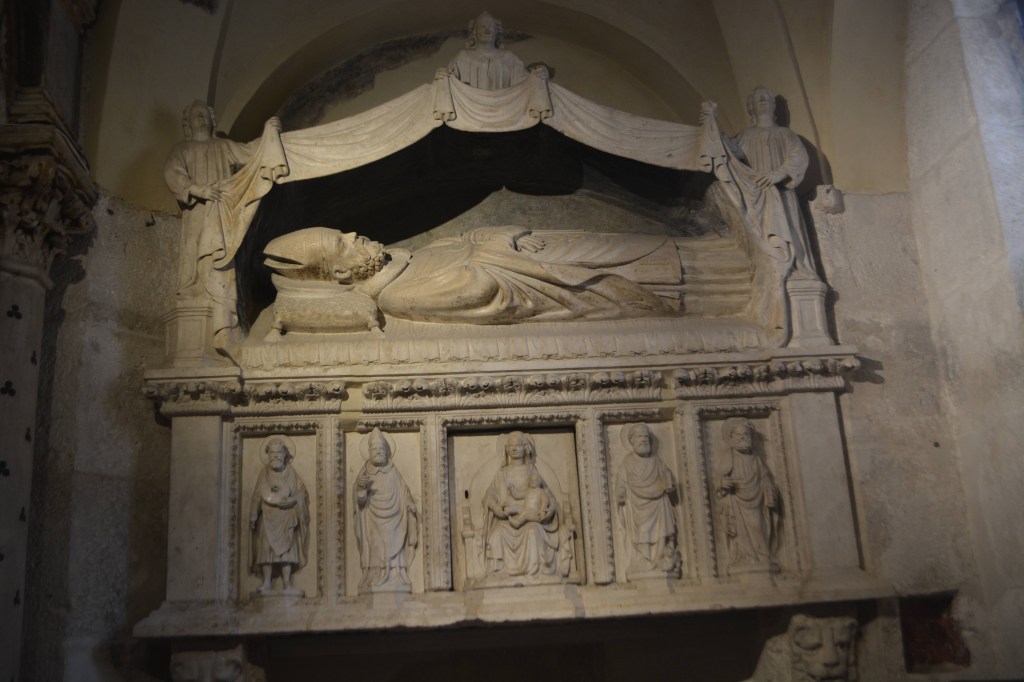
We stood in silence for a while, the kind of silence that only history can command. My husband shifted slightly beside me, hand still on his side. “Maybe I shouldn’t have carried your camera,” he whispered. I nodded solemnly. “For St. Duje, at least you made the climb.”
The Bell Tower – Split’s Best View with a Side of Vertigo
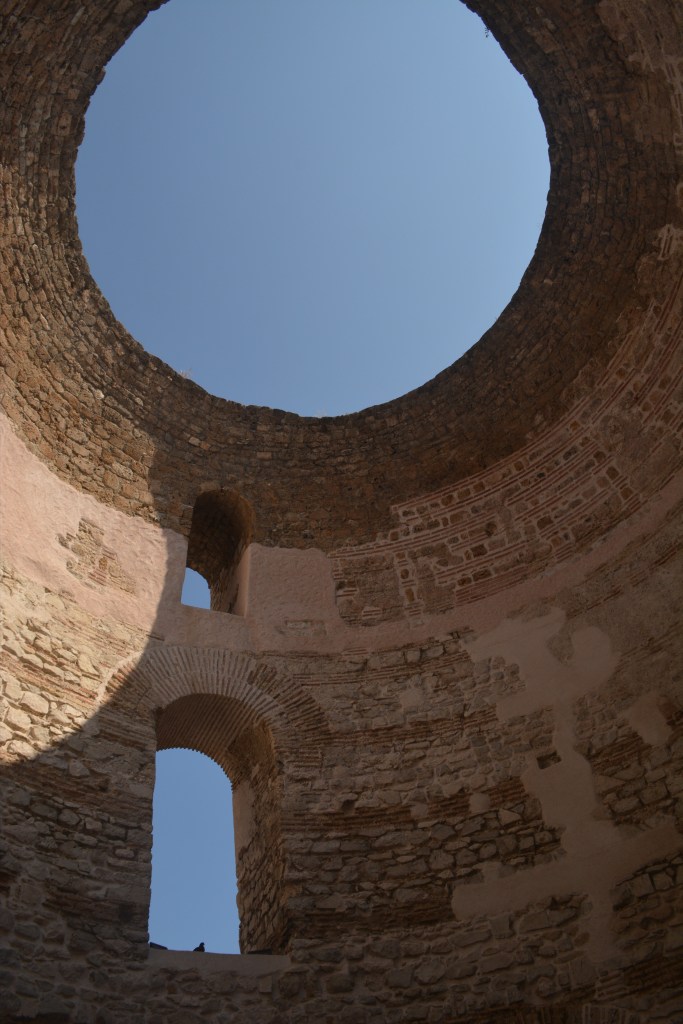
Of course, I couldn’t resist climbing the bell tower, which rises proudly over Split’s skyline. Its narrow stone steps spiral upward, each landing revealing a new angle of red rooftops and the turquoise sea beyond.
The view from the top is worth every heartbeat – Diocletian’s Palace below, the harbor gleaming, and ferries dotting the Adriatic like confetti.
Marjan Hill – Beauty, Sweat, and the Backpack Trade-Off
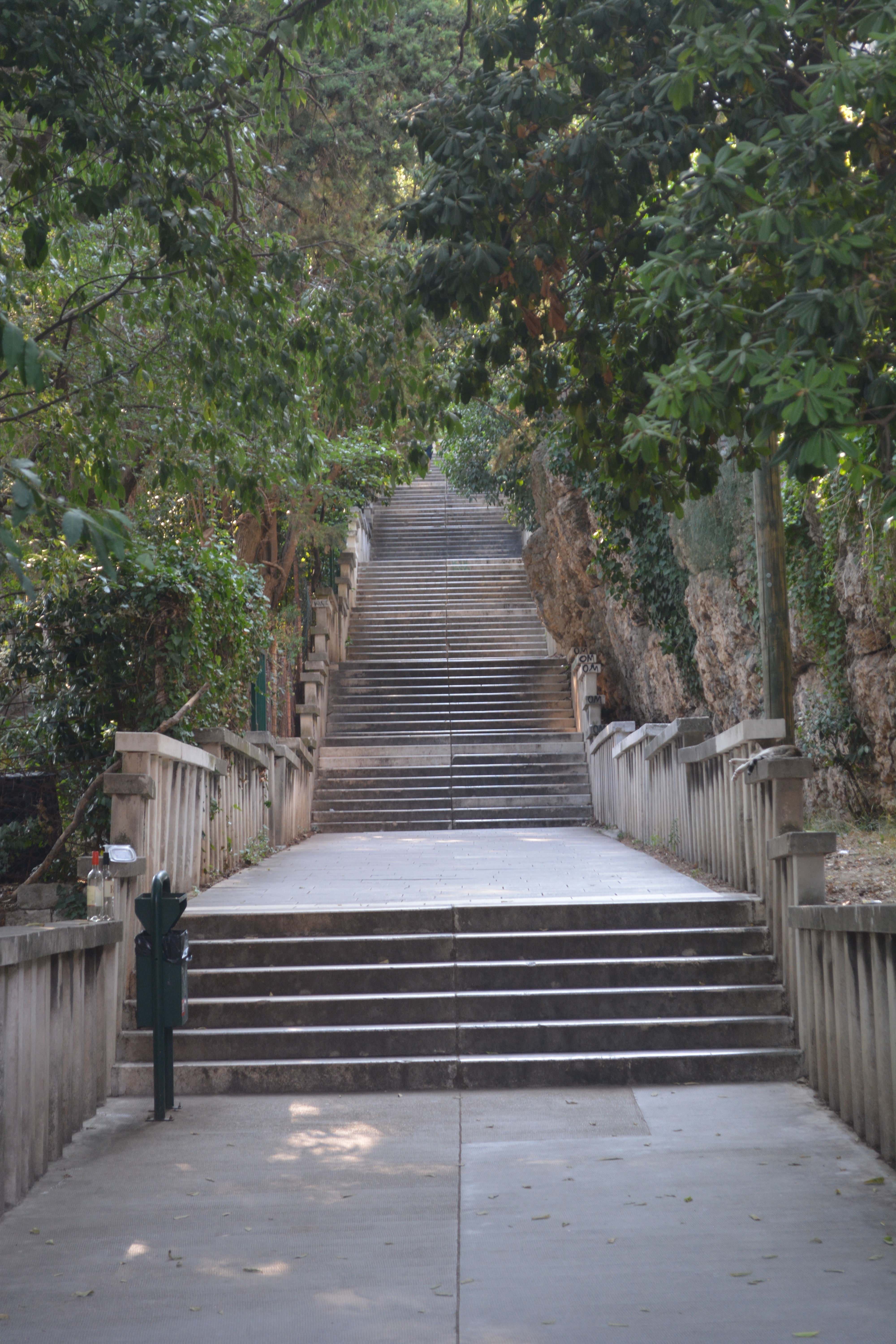
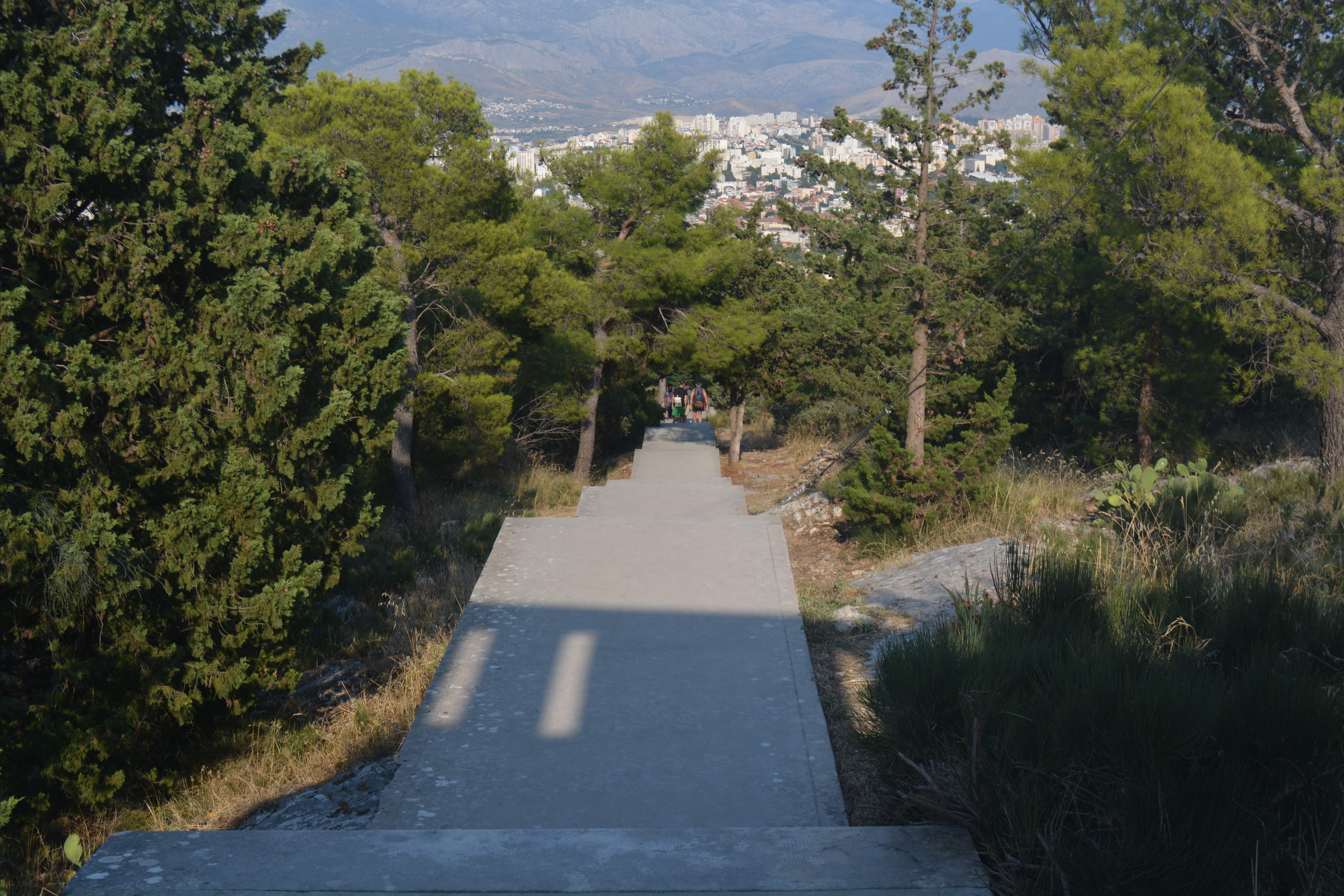
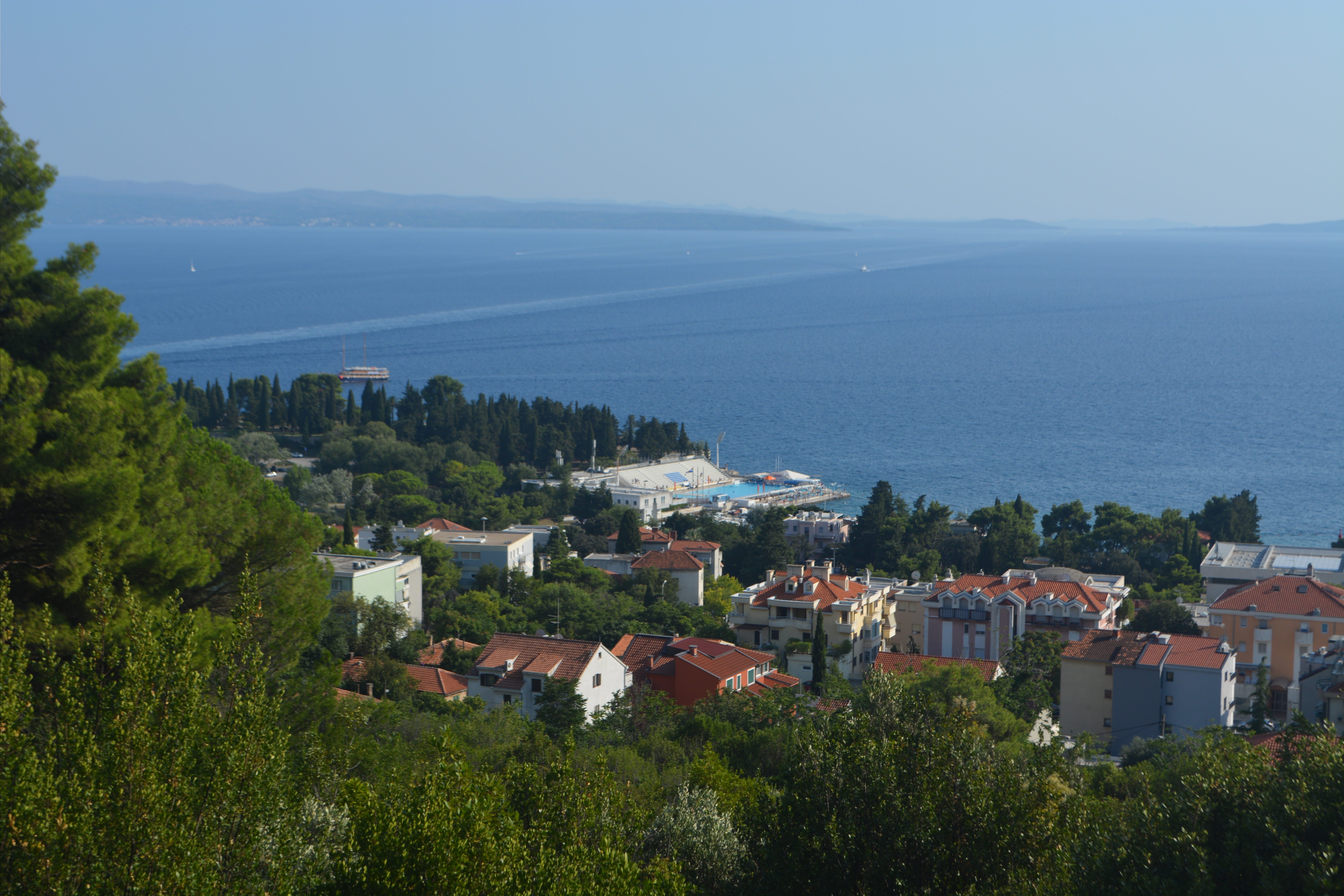
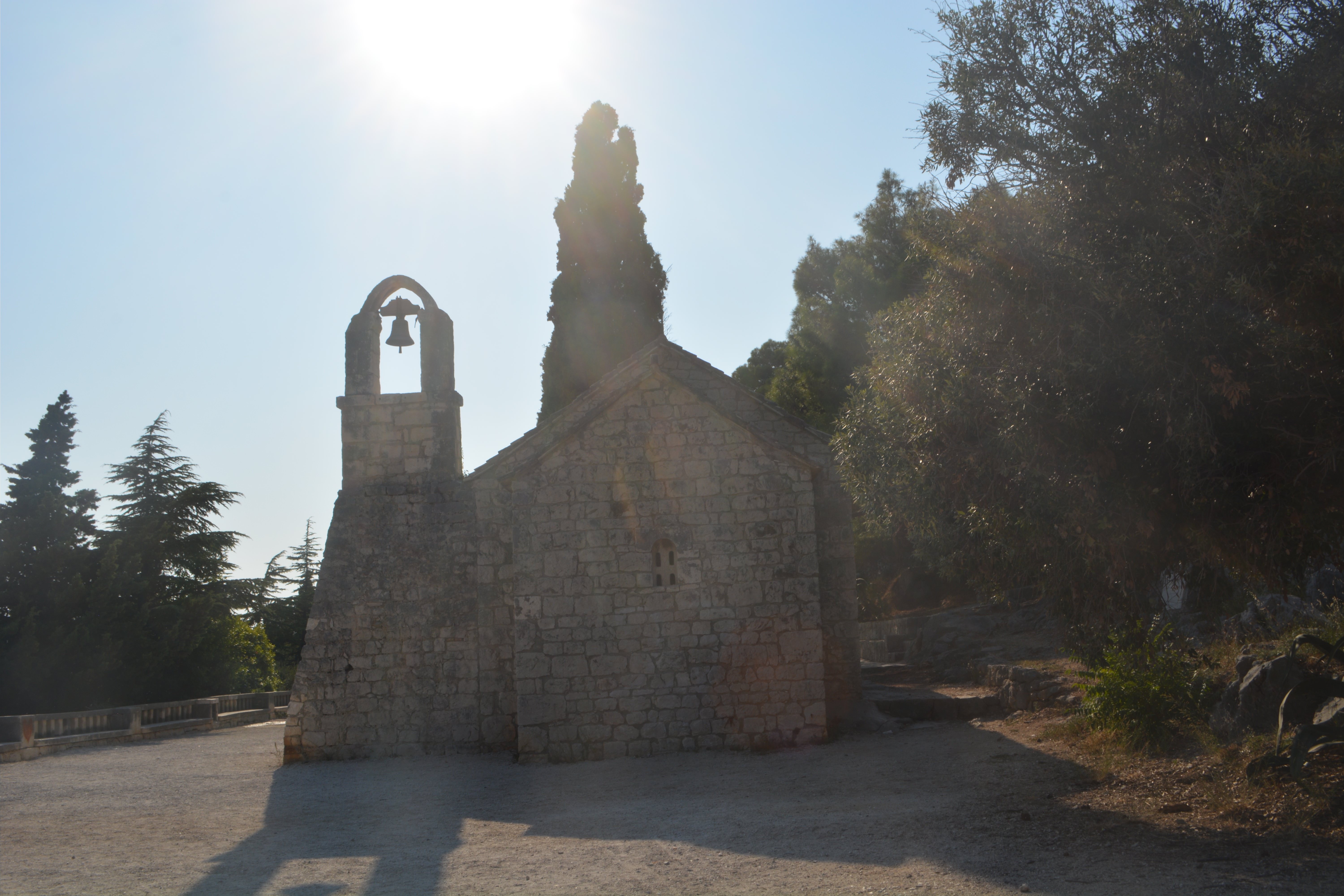
For one last panorama, we hiked Marjan Hill, a pine-covered escape rising over Split. Along the path, tiny chapels appeared out of the rocks like blessings for weary travelers. By the time we reached the top, I was melting, and the backpack (which had somehow gained 20 pounds since morning) made another hand-off.
My husband grimaced, hand to his side. “We really need to stop carrying bricks,” he muttered. I laughed. (Cue foreshadowing music.)
We lingered at the viewpoint, overlooking the city and the scattering of islands off the coast – more than a thousand in Croatia, though only about 50 are inhabited. The sight alone was enough to inspire our next adventure: a 5-Island speedboat tour.
☀️ We’d booked it through Viator with a local company, Blue Cave Tours, who promised caves, coves, and donkeys – how could we say no?
Check out my Dalmatian Island Exploration post if you’re interested in learning more!
🐾 The Cats Who Marked Our Way Home
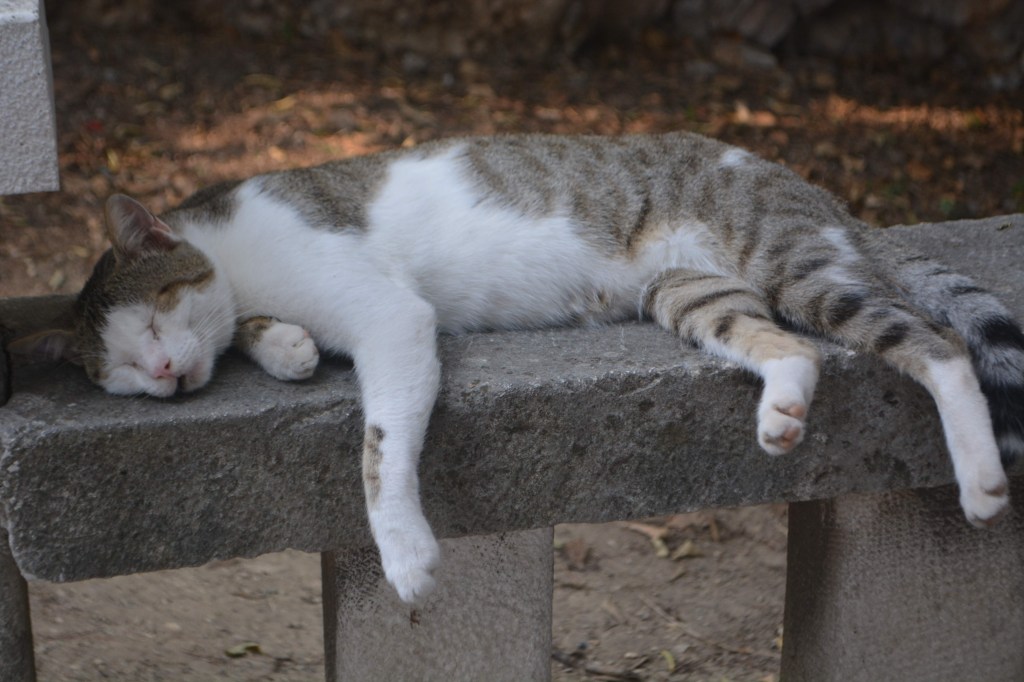
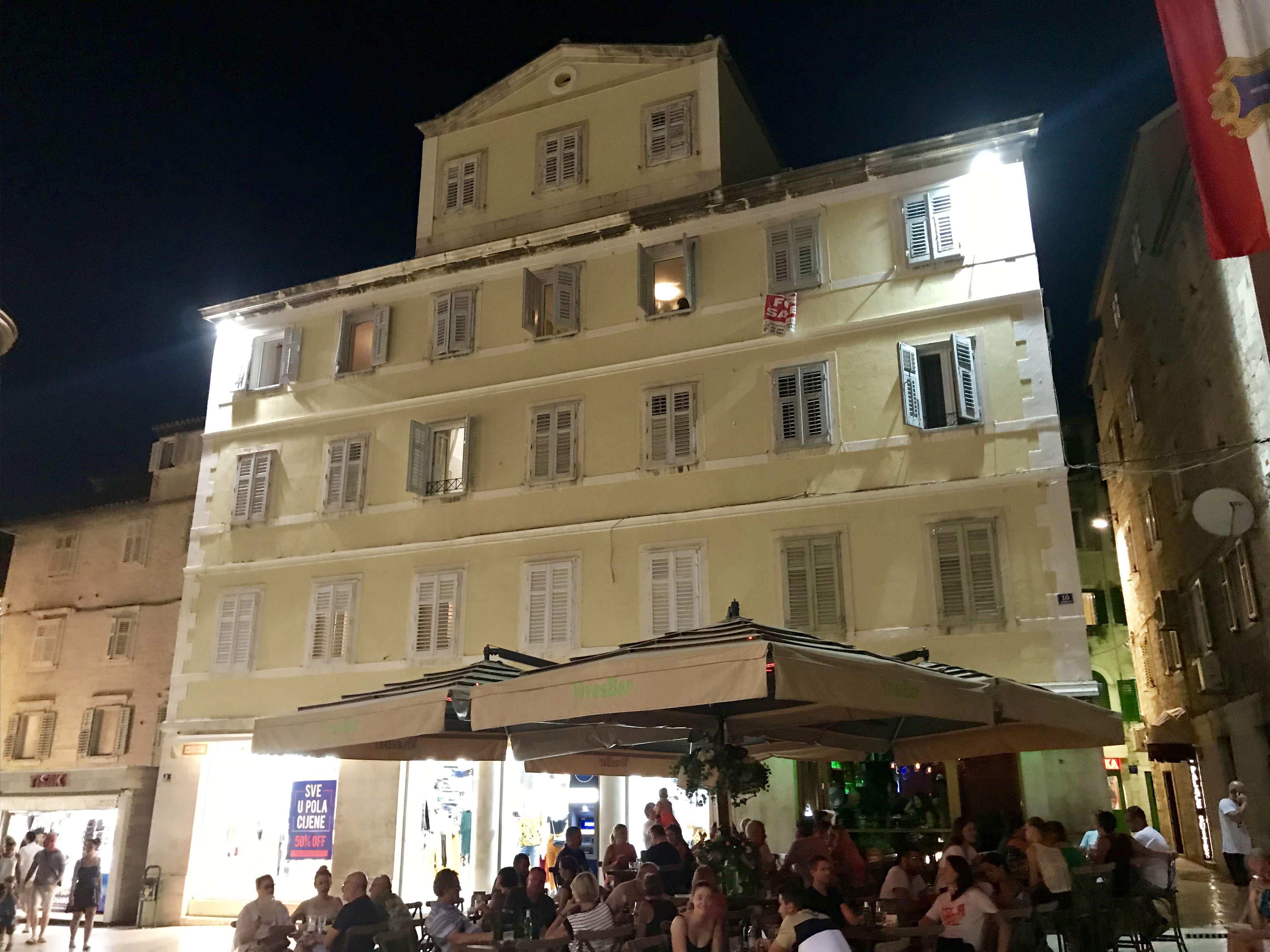
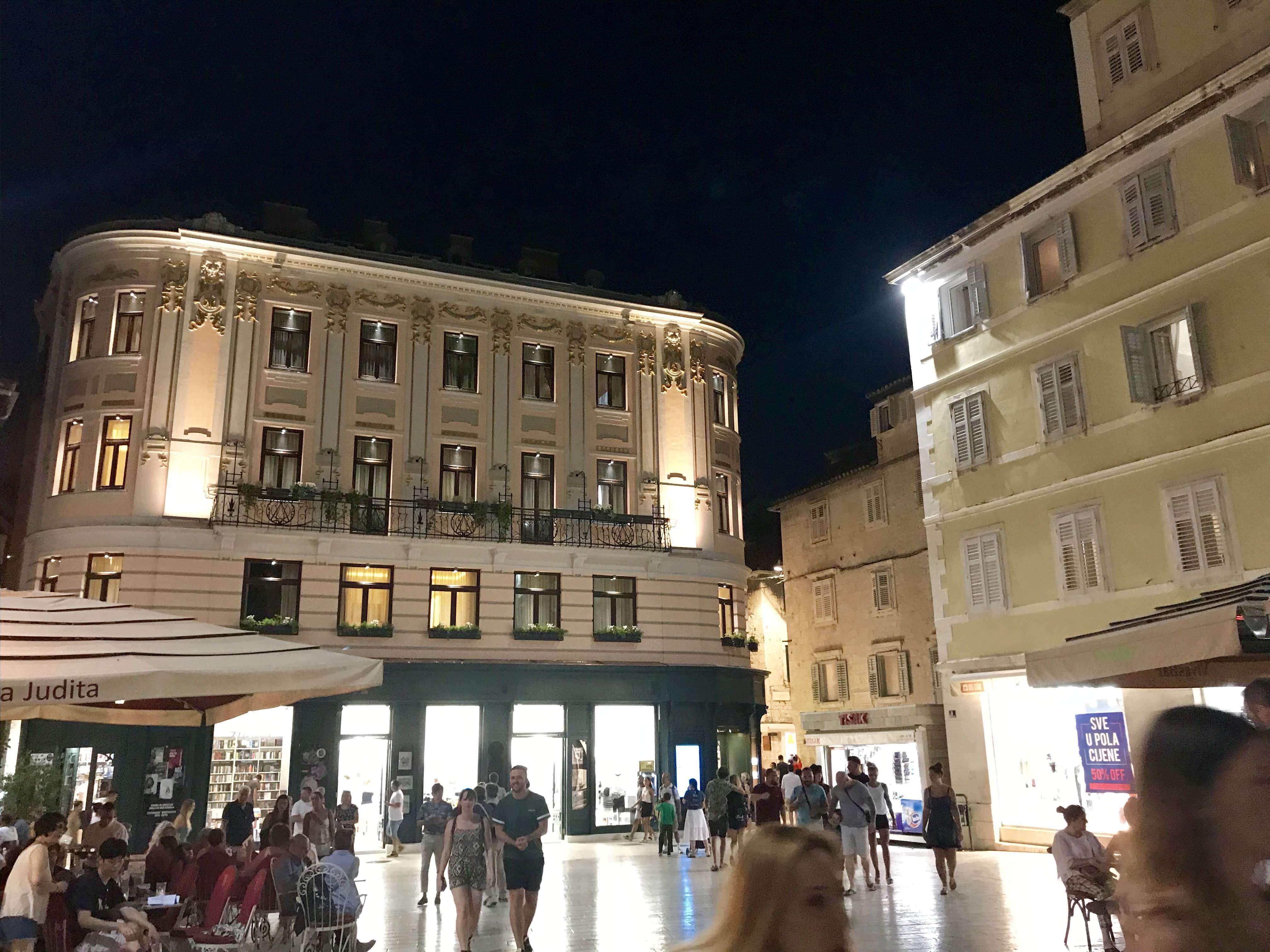
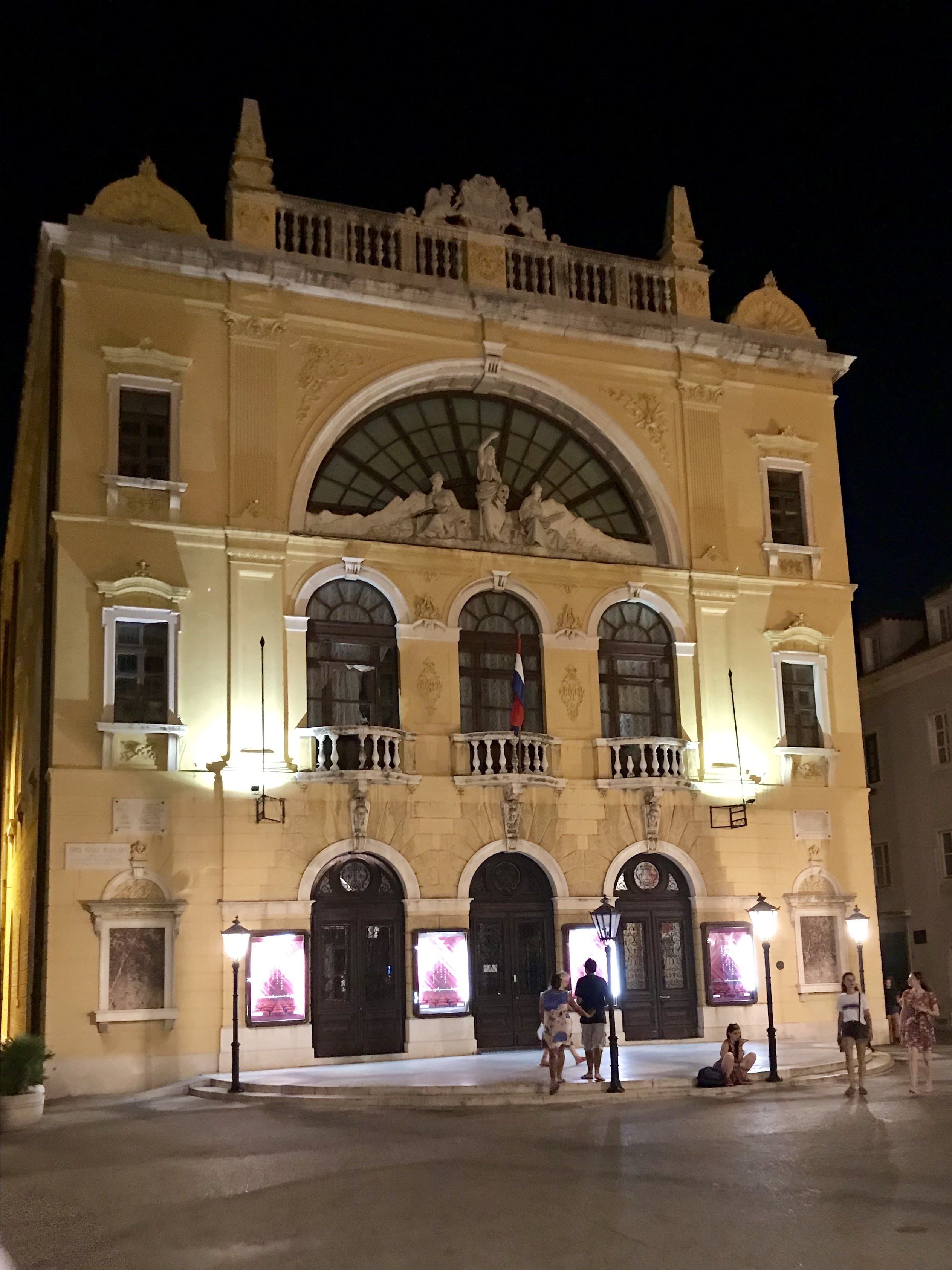
By the end of each day, the streets of Split took on that soft evening glow – music spilling from courtyards, the scent of grilled fish in the air. And somehow, we never got lost.
We learned to navigate by the most reliable landmark in the city: the cats.
Just outside Diocletian’s Square was a small park that served as a feline commune – a handful of cats lounging on benches and low walls like they owned the place (they probably did). We quickly learned that when we saw the “cat park,” our staircase was just to the right.
Each night, as we turned that corner, the cats lifted their heads lazily, watching us climb – guardians of the stone steps leading home.
On the Road Again
Our time in Split ended too soon. The next morning, we met our private driver for the journey south to Dubrovnik – a scenic drive that hugs the coastline in a series of dramatic curves and dazzling views.
The route briefly crosses into Bosnia and Herzegovina at the seaside town of Neum, the country’s only stretch of coastline, before re-entering Croatia. It’s a fascinating border quirk – one moment you’re in Croatia, the next your GPS is confused and your phone thinks you’re roaming internationally.
The drive was stunning – cliffs plunging into teal waters, olive groves cascading down hillsides, and tiny fishing villages tucked into hidden bays. Somewhere along the way, I spotted another fortress on a distant hill and insisted, “We have to climb that!” My husband gave me a look that could only be described as equal parts devotion and dread. (Little did we know this would become a running theme – Dubrovnik, Kotor, Montenegro – each with a new fortress and, eventually, a diagnosis involving not one, not two, but three hernias.)
Dubrovnik awaited – the “Pearl of the Adriatic,” with its marble streets and walled majesty – but Split had already claimed a piece of our hearts.
Between its sunlit stones, lazy cats, ancient echoes, and my husband’s early acts of physical heroism, Split was where our Croatian adventure truly began.
 Click, Wander & Savor