🇭🇷 Pula, Croatia — The Vacation I Accidentally Won
It started with a school fundraiser. My youngest’s high school was holding an online auction, and as I scrolled through items — gift baskets, tutoring sessions, and the usual assortment of “experiences” — one thing caught my eye:
One week in an apartment in Pula, Croatia.
Croatia! I knew it was somewhere in Eastern Europe, but that was about it. But this sounded like a much needed adventure, so I turned to my husband and said, “If I win this … we’re going to Croatia.”
I entered a single bid, then a second – and then watched the clock tick down like it was the Super Bowl. Heart racing, palms sweating, completely over-invested in a country I knew absolutely nothing about.
And when that little “Auction Closed – You Won!” message popped up, I cheered loud enough to scare the dogs.
From “Where Even is Pula?” to a Two-Week Adnenture
Once the excitement settled (and reality hit), I started researching. It turns out Pula sits at the southern tip of Croatia’s Istrian Peninsula, facing the Adriatic Sea – the kind of blue that deserves its own Crayola color.
That one-week apartment stay quickly turned into a two-week trip. I built an itinerary, plotted routes, booked day trips, and convinced myself I could pronounce ćevapi (spoiler: I couldn’t).
We flew into Pula, picked up a rental car, and immediately discovered a national pastime: roundabouts.
“In 900 feet, at the roundabout, take the second exit.”
“In 300 feet, at the roundabout, take the second exit.”
Repeat. Forever …
Eventually, we arrived in Pješčana Uvala, a quiet seaside village just south of Pula. Our apartment perched on a hill above the sea, tucked over the home of a wonderful older lady whose daughter lives in our town in the U.S. and has kids at our school.
From the balcony, we could see the water glimmering through pine trees. Just down the hill sat a tiny local market — the kind where everyone greets each other by name — and up the hill, a bakery we wouldn’t discover until our very last day.
Life by the Adriatic
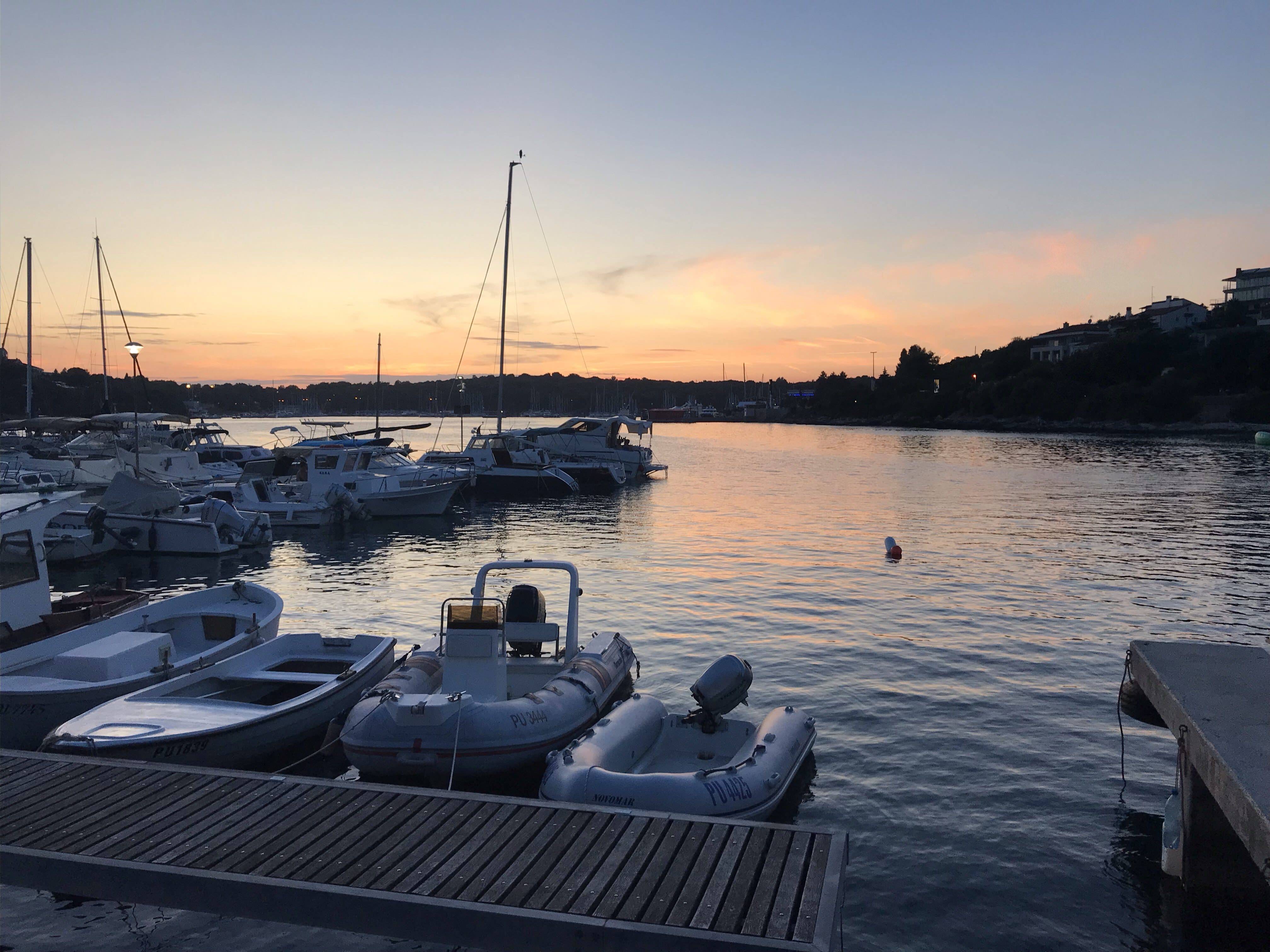
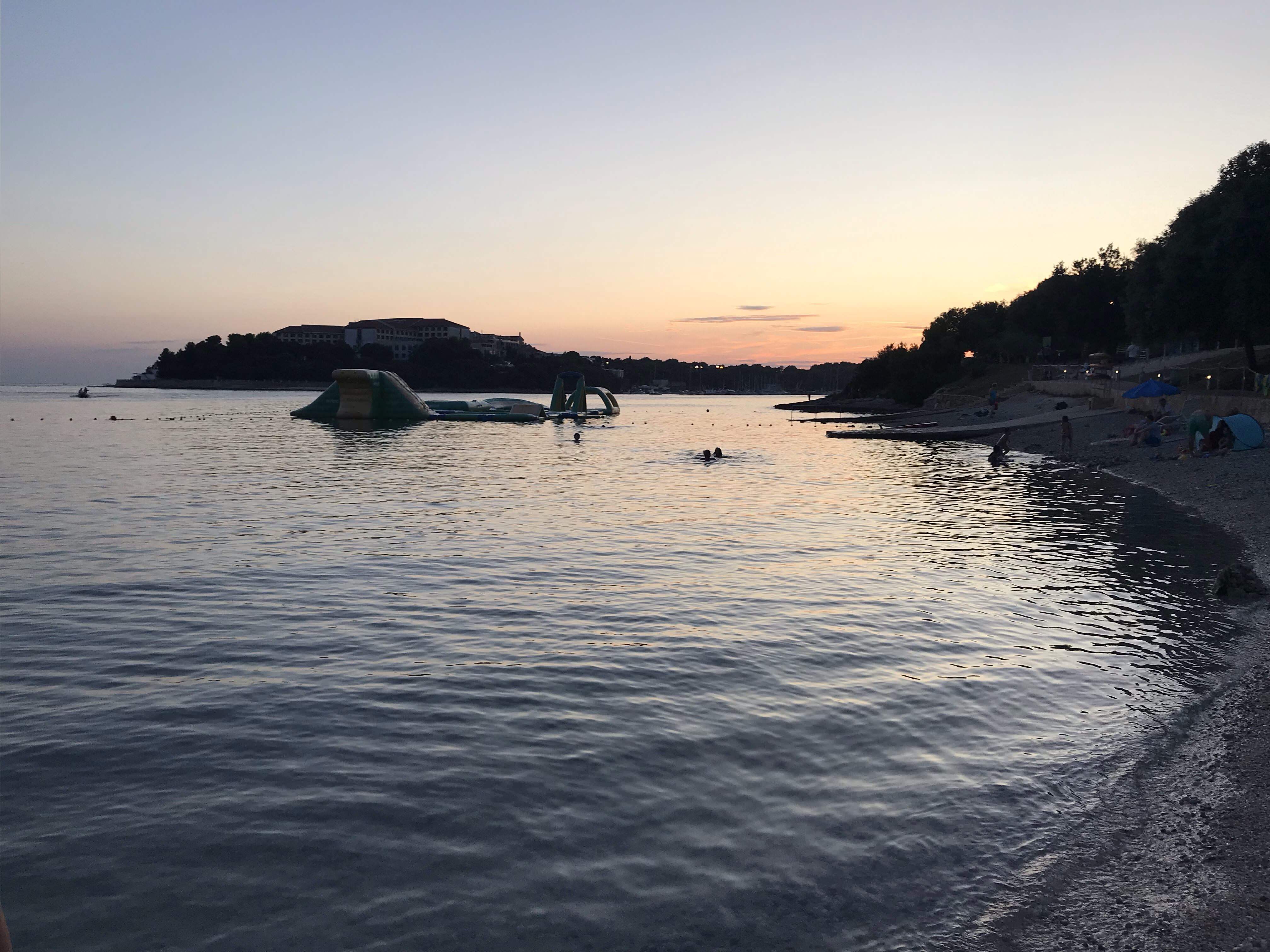
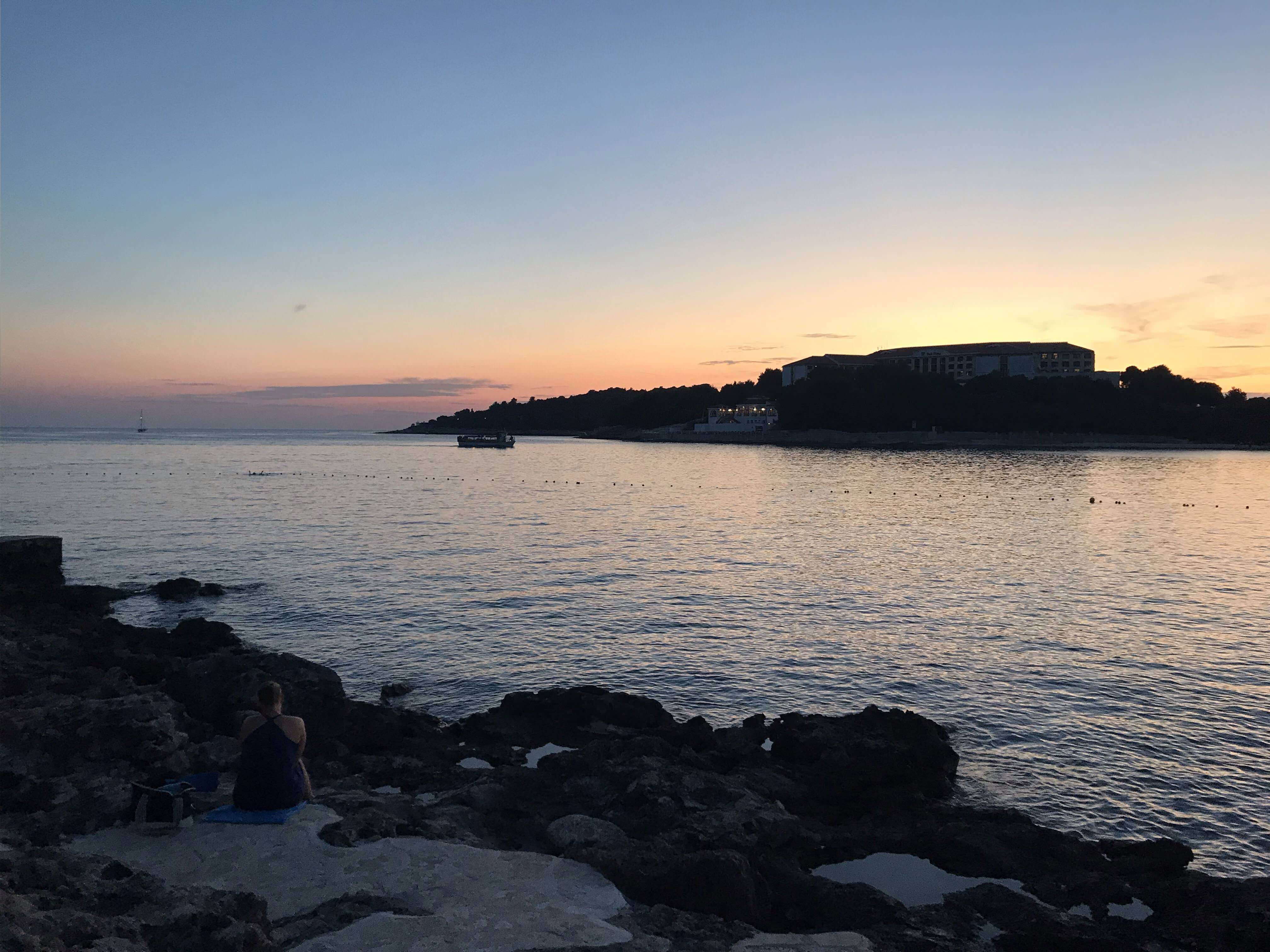
The Adriatic Sea is saltier than most, which makes it extra buoyant. Floating felt effortless, like nature’s version of a pool float.
A short walk downhill led to the small local beach near Restaurant Skuža, where locals sipped espresso under umbrellas while kids lined up for pedal boats moored along the sand. We swam here nearly every day, slipping into the clear turquoise water between sips of Aperol Spritz. One night we returned for dinner at Skuža — the seafood and pasta were incredible, though it took a minute to adjust to the ever-present haze of cigarette smoke (a very European touch).
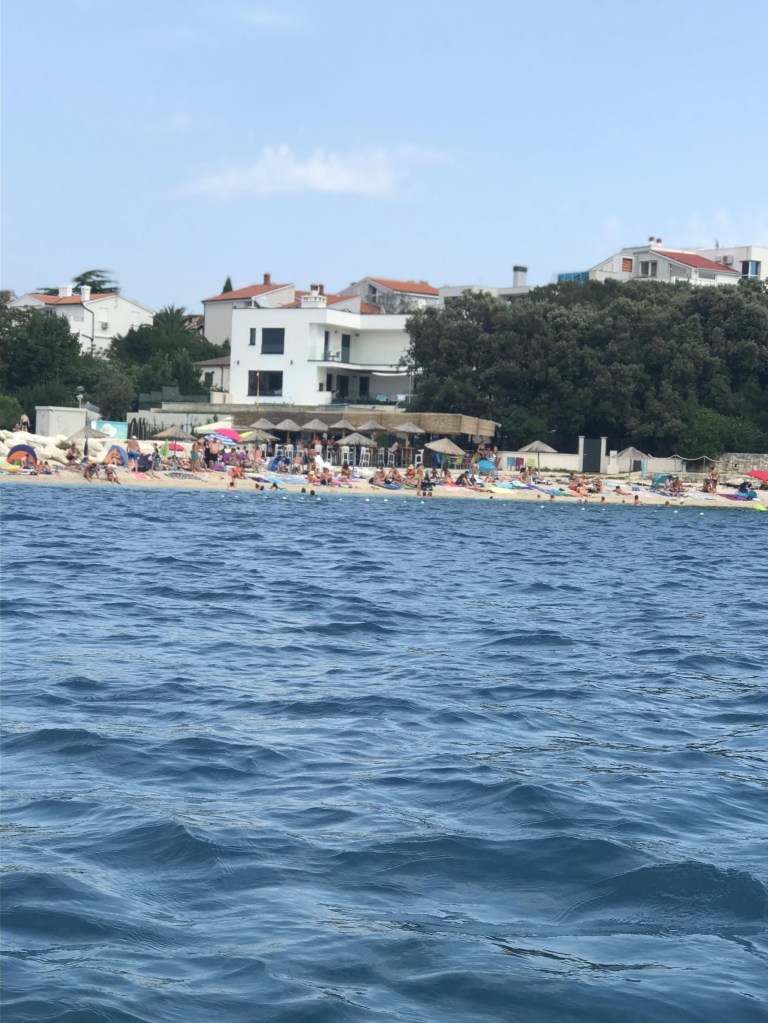
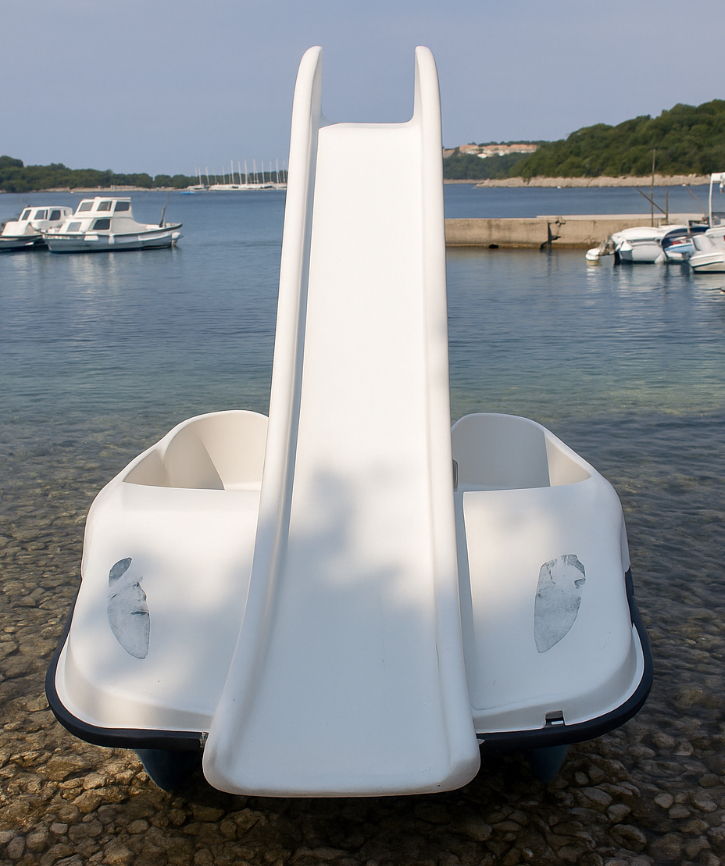
One sunny morning, we rented a white pedal boat with a built-in slide (because who can resist that?) and pedaled across the shimmering bay to Fratarski Otok, the small island visible from shore. There we found a single café, a scattering of picnic tables beneath pine trees, and — unexpectedly — an old stone chapel and a few rustic buildings with faded shutters and a fig tree winding up their walls.
Later I learned the island, also called Otok Veruda, was once used as a fisherman’s retreat and summer camp for locals. The simple buildings served the little chapel beside them, where families would row over for Sunday mass or picnics. Today they sit quiet, the stone warmed by the sun, the air filled with pine and sea salt — like time stood still.
Lunch on the Island
At the island café, we ordered what everyone else seemed to be eating: a plate piled with small grilled sausages, bright red pepper relish, slivers of raw onion, and thick slices of white bread.
It was ćevapi – pronounced “cheh-vah-pee”, a Balkan favorite made from minced beef and lamb, grilled until crisp outside and tender within. The red side was ajvar, a roasted-pepper spread that’s smoky, sweet, and slightly tangy.
My oldest daughter had spent part of the previous summer in Bosnia with her boyfriend’s family, so she knew exactly what to do. She laughed as she coached me:
“Okay, Mom. Tear off some bread, grab a couple of the sausages, add onions, a scoop of ajvar, and eat it all together.”
It was messy, delicious, and perfect – the bread soaking up the juices, the ajvar adding a sweet-smoky kick, everything tasting like sunshine and simplicity.


After lunch, we wandered past the chapel and those sun-washed buildings, their plaster peeling and shutters faded, before finding a shady cove to wade in. The air smelled of pine sap and grilled meat, and the water shimmered like glass.
That’s when it happened – my moment of bad timing. I hopped on my husband’s back for a playful piggyback ride, and he stepped squarely on a sea urchin.
Cue the “ouch” heard across the island. He tried to laugh it off, insisting he was fine, while the girls and I alternated between sympathy and laughter. Don’t worry – he recovered somewhat quickly with the help of aspirin and loads of extra attention and sympathy.
Later, when the sting had faded and the sun dipped lower, we climbed back into our white pedal boat. Halfway across the bay, my husband paused, grinning at the slide.
“Should we?”
Moments later, there we were – me in my late forties, him in his mid-fifties – taking turns climbing up and plunging into the turquoise water, laughing like kids. Our daughters raced us back to the boat, trying to beat us for another go. The air was filled with splashes, squeals, and sunlight.
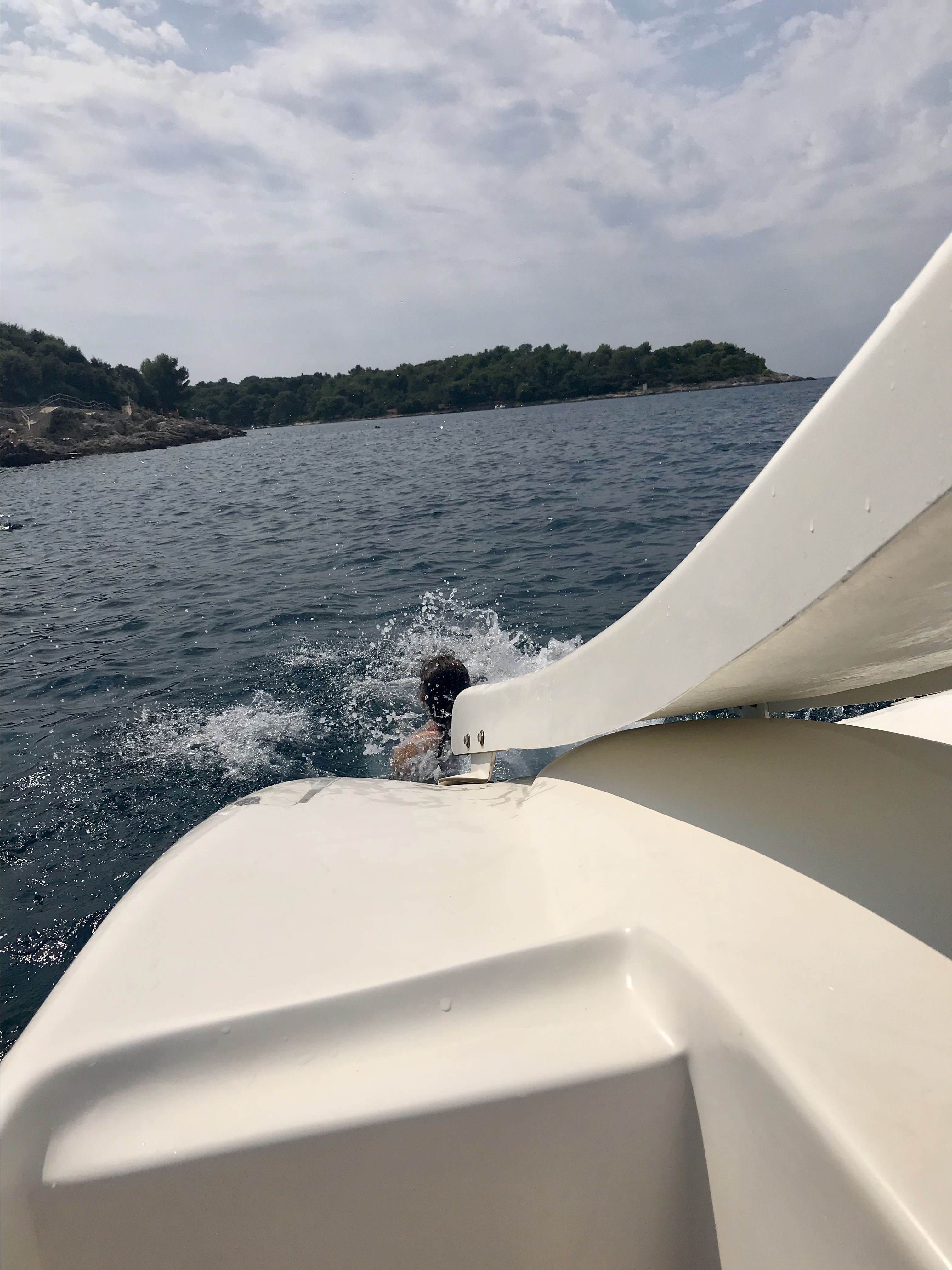
It was the perfect end to a perfect island day – the kind of joy that sticks like salt on your skin and laughter in your chest.
Daily Life in the Village
Back on the mainland, we settled into an easy rhythm. We didn’t eat out every night – the market down the hill had everything we needed for breakfast and light dinners. Our host, the kindhearted woman downstairs, became part of our week. She was there each day, offering smiles, advice, and once – a small bowl of fresh figs from her tree.
I had no idea I even liked figs, but as I bit into one and the juice dripped down my hand and chin … yum. Sweet, earthy, sun-warmed perfection.
Later that week she stopped by again – it was her son’s birthday, and she was preparing his favorite: sardines grilled in her outdoor stone oven. She invited us -my husband, our two teenage girls, and me – to join the celebration.
We were touched, and a bit embarrassed, but couldn’t say no. She served the sardines straight from the flame, golden and fragrant. My husband, unsure how to navigate the tiny bones, dove right in – crunching through before she chuckled, took his fork, and gently demonstrated how to separate the meat. It was such a simple, human moment – a grandmother’s kindness crossing languages.
Exploring Pula — Markets, History & the Roman Heart of Istria
One morning we decided to spend the day exploring Pula, the largest city in Istria and the historical anchor of the region. The drive from our apartment in Pješčana Uvala took only ten minutes, but it felt like stepping through centuries – from quiet coastal life into the layered pulse of a Roman port city that’s been thriving since the 10th century BC.
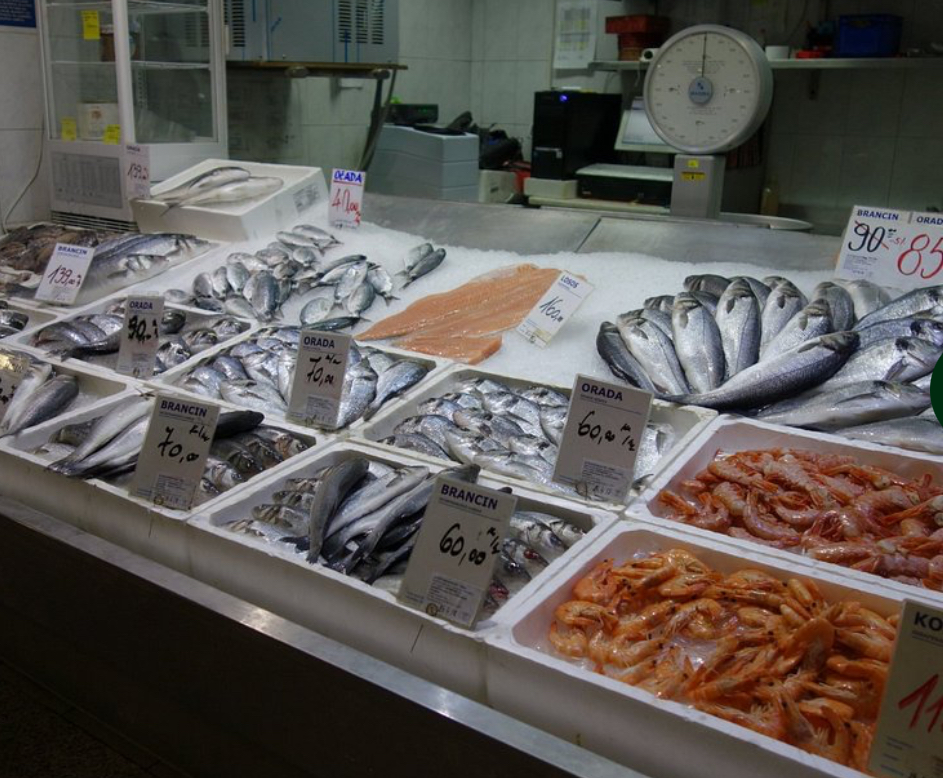
Our first stop was the Pula Fish Market, a lively, echoing hall filled with the hum of morning chatter and the metallic scent of salt and ice. Rows of glistening fish – brancin (sea bass), orada (gilthead bream), shrimp, and slabs of pink salmon – were displayed with handwritten price tags and the rhythm of vendors calling out to locals. The building itself, with its high arched ceilings and wrought-iron framework, dates back to 1903 and was designed by Austrian architects during the Austro-Hungarian Empire – proof that even a fish market here carries a bit of grandeur.
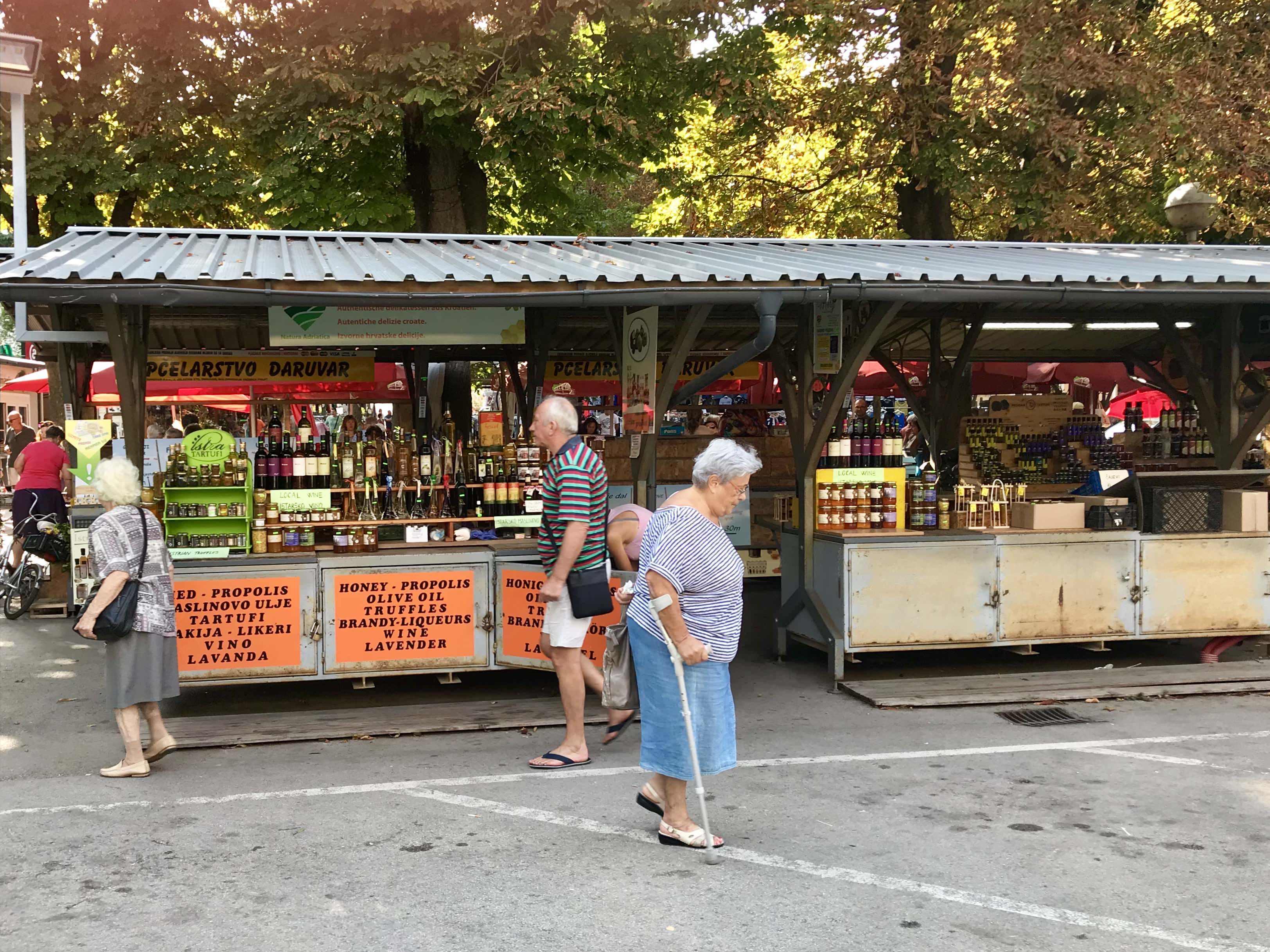
Outside, sunlight poured over the green market, where rows of wooden stalls overflowed with figs, tomatoes, herbs, honey, and the region’s golden pride – Istrian olive oil. One woman offered me a small plastic cup of her family’s fresh-pressed oil to sample, drizzled over a torn piece of bread. It was peppery and smooth, almost spicy – liquid sunshine bottled straight from the groves that blanket this peninsula. We bought a small bottle to bring home, the label handwritten, still warm from sitting in the sun.
From the market, we wandered through Pula’s narrow streets, where stone facades and Roman arches whisper history with every turn. Laundry flapped from second-story balconies, scooters zipped past, and the smell of espresso mingled with sea air. Around one corner, the massive Pula Arena suddenly rose before us – an ancient Roman amphitheater so astonishingly intact it looks like a film set waiting for its actors.
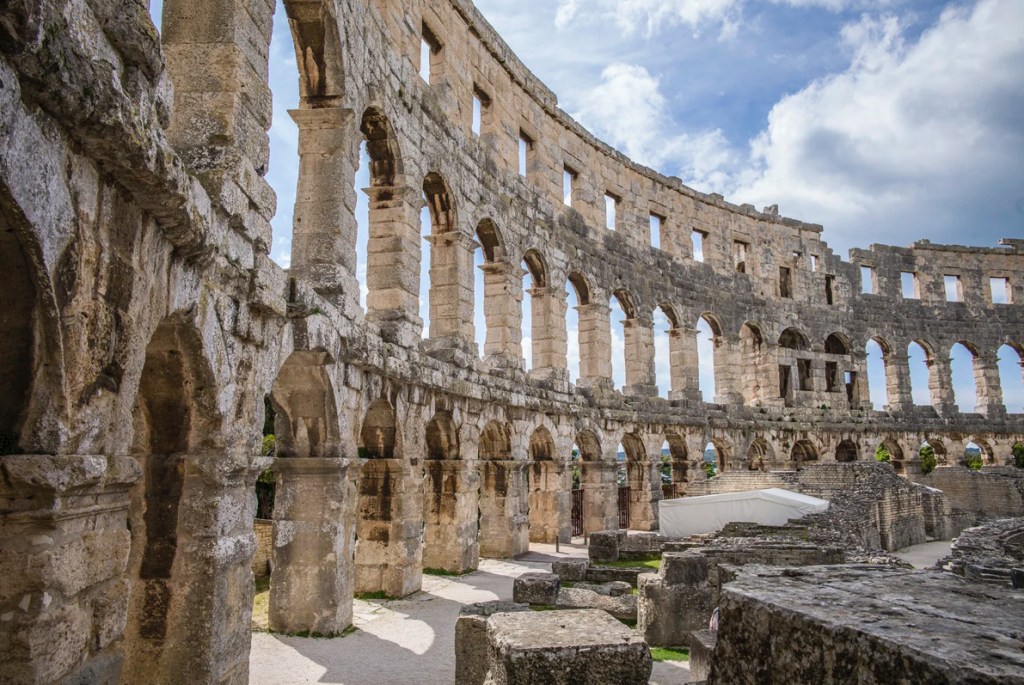
Built in the 1st century AD during the reign of Emperor Vespasian (the same emperor who commissioned the Colosseum in Rome), the Arena is one of the six largest surviving Roman amphitheaters in the world — and the only one with all four side towers still standing. Its limestone arches glow gold in the afternoon light, and inside you can almost hear the roar of 20,000 spectators who once filled the seats for gladiatorial games.
Unlike Rome’s Colosseum, though, the Pula Arena feels quiet, almost personal. You can wander freely among the stone tiers, touch the walls, and imagine the centuries it’s endured — wars, empires, earthquakes, and tourists like us marveling in awe. Standing there brought back flashes of our trip to Italy, but without the crowds or selfie sticks — just the echo of footsteps on ancient stone and the Adriatic breeze winding through the arches.
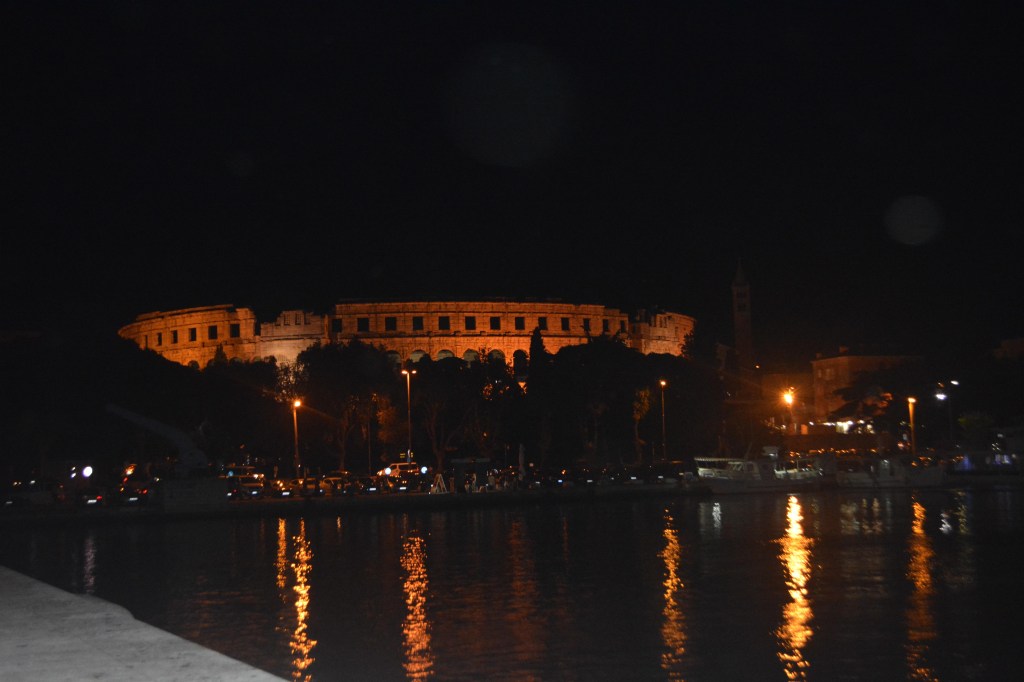
Even beyond the Arena, reminders of Rome remain scattered throughout Pula – the Arch of the Sergii, the Temple of Augustus, and fragments of ancient roads tucked between modern cafes. History here isn’t cordoned off behind velvet ropes; it’s lived in, layered, and still breathing.
By afternoon, we returned to the market for gelato and one more wander through the outdoor stalls before heading back to Pješčana Uvala — a bag of fresh figs and that little bottle of olive oil in hand, the smell of the sea following us all the way home.
Kayaking the Sea Caves – Our Pula Outdoor Adventure
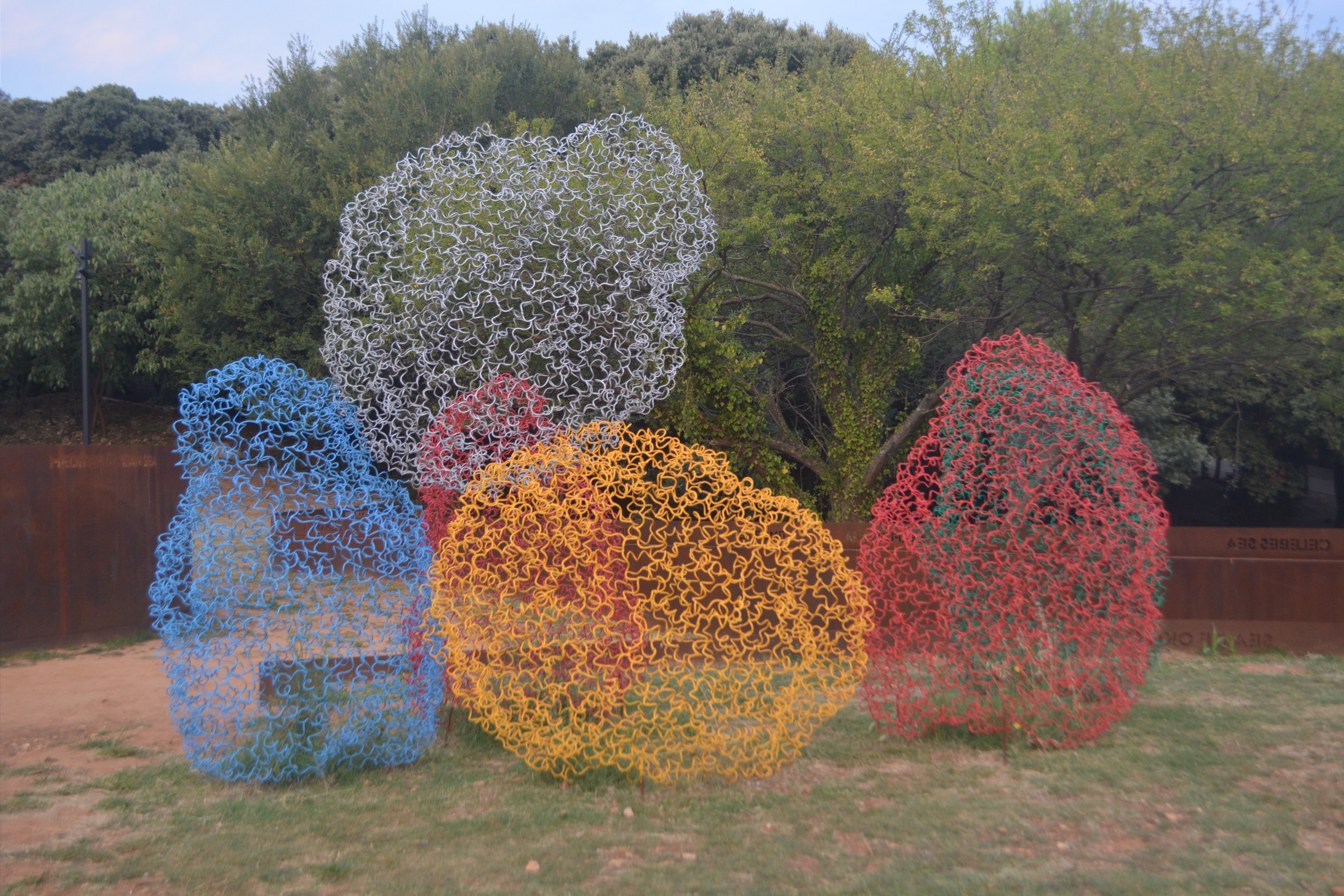
That morning began at the Verudela Art Park, a creative corner of Pula tucked among pine trees and overlooking the Adriatic. We arrived early for our kayak tour and wandered through the open-air exhibits – colorful wire sculptures resembling coral formations, and that unforgettable turquoise brain perched atop pink legs. It’s quirky, modern, and somehow perfectly fitting for the easygoing coastal vibe. The only sounds were cicadas in the trees and waves breaking gently below.

From there, we walked down toward Valovine Beach, where the team from Pula Outdoor waited with bright red and yellow kayaks ready to launch. The sea was impossibly clear — a gradient of aquamarine fading into deep blue — and limestone cliffs framed the bay. My husband and I paired up in one kayak, our teenage daughters in another. I sat in the back to steer, as did my oldest daughter, and within minutes it was clear who had drawn the short straw.
My husband, a SoCal surfer who thrives on rhythm but not coordination, was happily splashing away at his own pace. On open water I could adjust to his improvisational style, but steering into a cave required precision. Eventually, diplomacy gave way to honesty:
“Please stop paddling before I beat you with this paddle.”
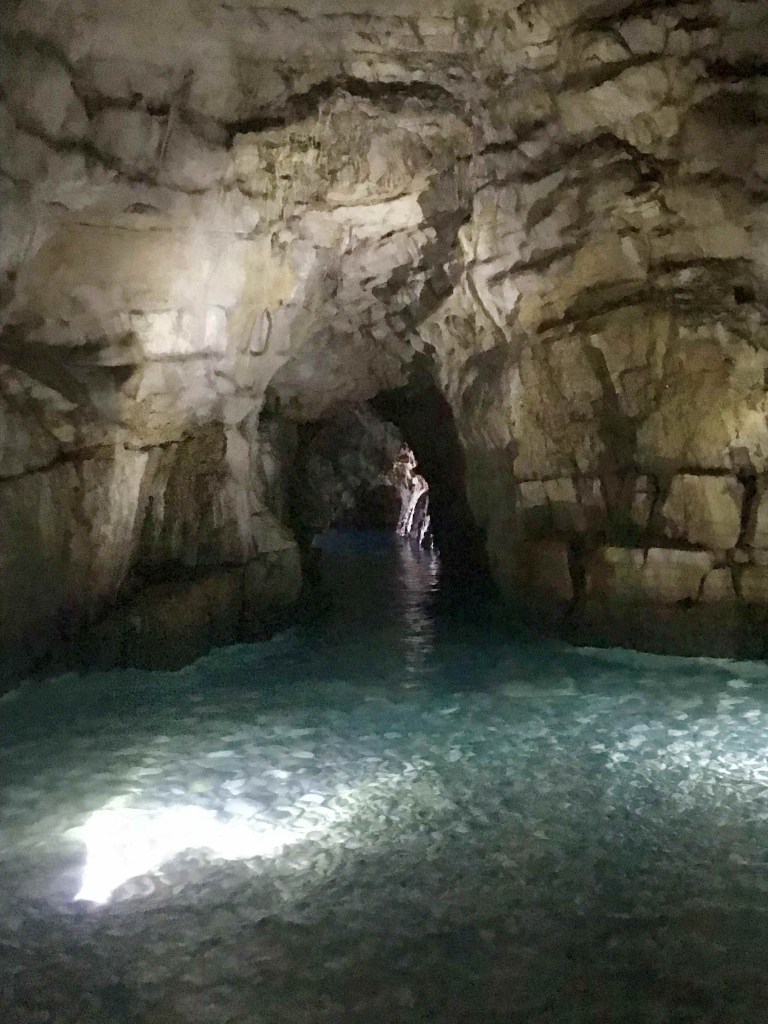
Once inside the Blue Cave, everything quieted. The air cooled instantly, the light dimmed, and the water glowed an ethereal turquoise from the sun filtering through cracks in the limestone above. The ceiling arched low in places, echoing every small drip and paddle stroke. We maneuvered through the narrow passage until the cave opened into a still, hidden pool – peaceful, blue, and otherworldly.
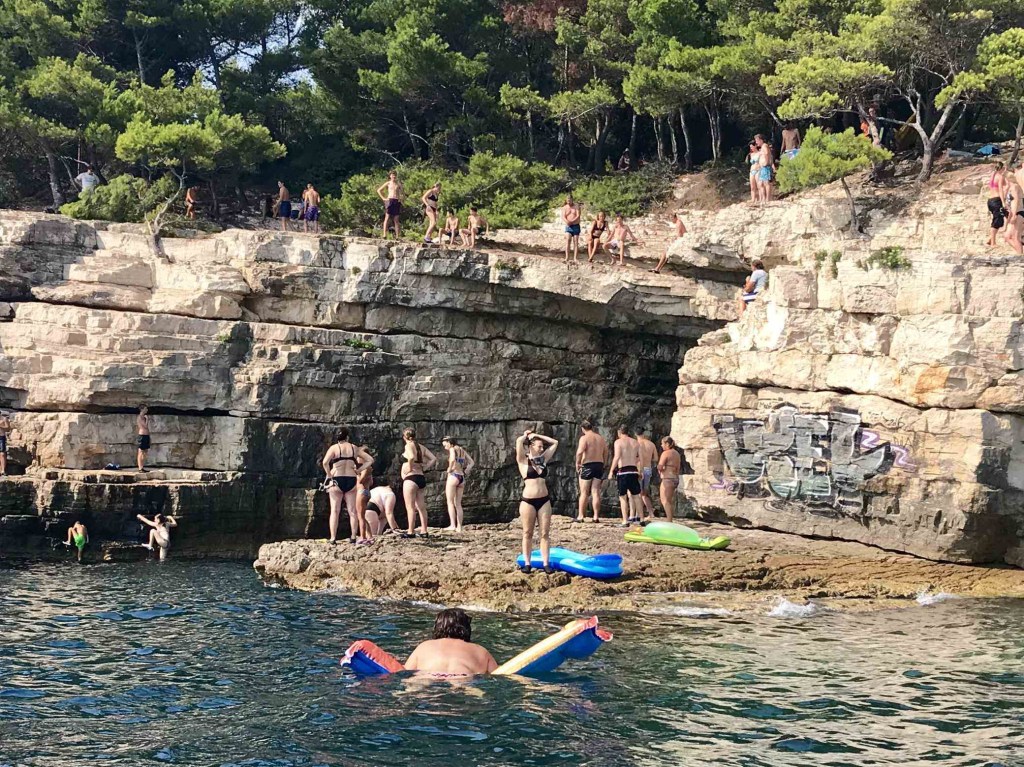
After exploring inside, we paddled back toward the entrance and pulled up just outside the cave where tide pools dotted the rocks and cliffs rose sharply above the waterline. This was the spot for the next challenge: cliff jumping.
Our guide climbed up first, GoPro in hand, and called out, “Who’s next?” My oldest daughter — brave, adventurous, and completely unbothered — volunteered immediately, leaping before I could even get my camera ready. Then came my youngest. Normally the cautious one, she surprised everyone by shouting, “Anyone else?” and stepping forward to jump. She surfaced beaming, proud and exhilarated.
We spent the next hour snorkeling in the calm shallows nearby, spotting small fish, crabs, and sea urchins clinging to the rocks. My daughter gently held one in her palm, fascinated by its perfect symmetry. The water shimmered around us, sunlight rippling through the surface – the Adriatic’s clarity made everything feel magnified and alive.
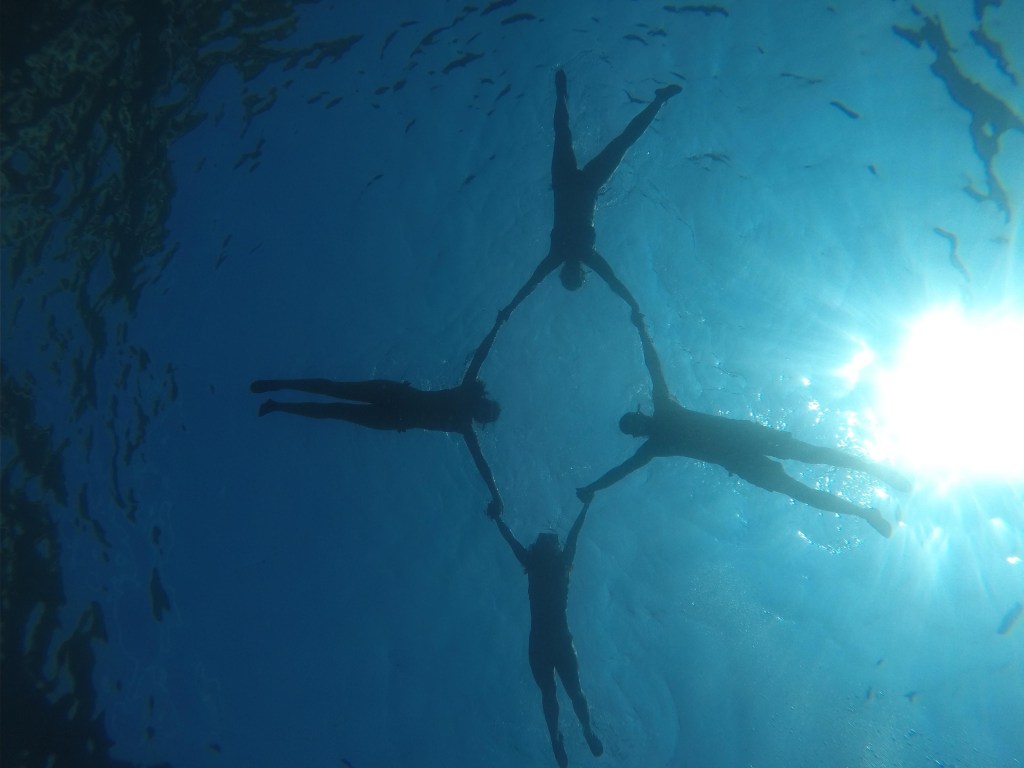
Before heading back, we floated together and tried a family photo underwater — all four of us forming a circle, holding hands, suspended weightless in the blue. The GoPro caught it perfectly: four silhouettes, one bright sunbeam, a quiet moment of togetherness after a day that had been equal parts chaos and magic.
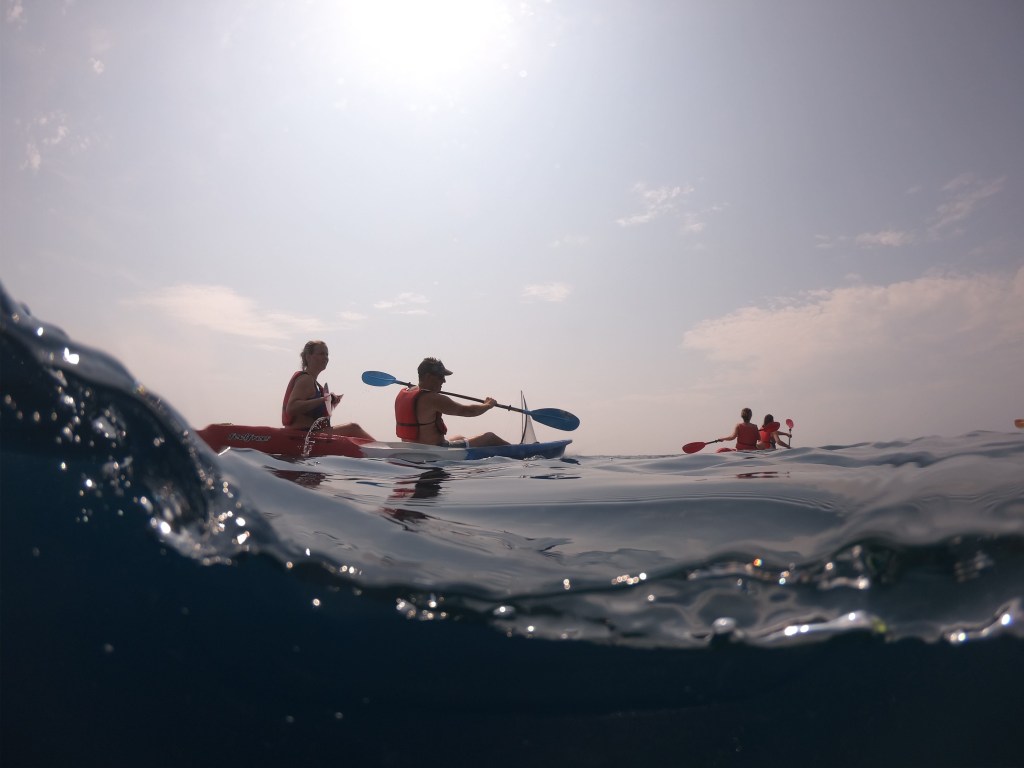
The paddle back to Valovine felt easy – salt drying on our skin, the horizon soft and endless, and a small white sailboat gliding past in the distance. Art, adrenaline, and laughter – a day that somehow captured every side of Pula’s charm.
After the Girls Flew Home
At the end of the first week, our daughters flew home together — the older for her summer internship, the younger for high-school activities before the new year. The house felt suddenly quiet.
That evening we wandered hand-in-hand to Lanterna, a romantic restaurant overlooking the water, and lingered over wine and seafood as the sun sank into the Adriatic. I ordered the octopus, something I’d had before but never like this – tender, kissed with olive oil and char, unforgettable.
The next morning, with no schedule to rush, we finally noticed the bakery up the hill, Bakery Backerei – “Klas” – how we’d missed it all week, I’ll never know. Inside were trays of golden pastries labeled lisnato s marmeladom. I chose the strawberry one – lisnato s jagodom – its flaky crust scattering crumbs across my lap with the first bite. Warm, buttery, sticky-sweet jam oozed from the center as the smell of sugar and dough filled the tiny shop.
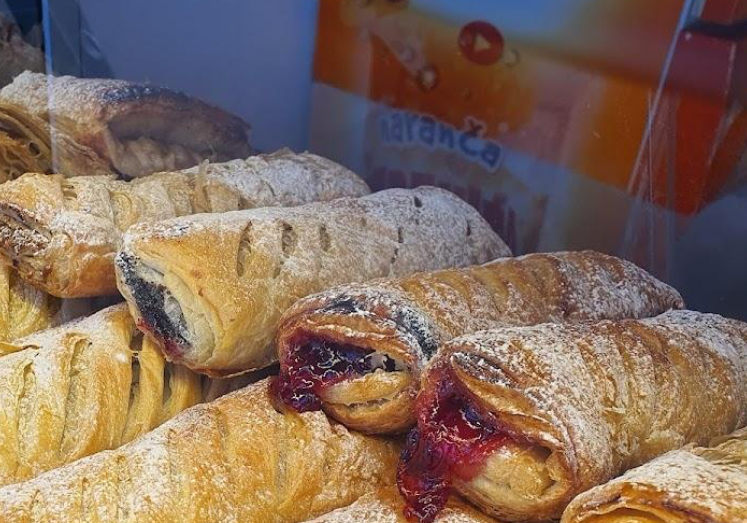
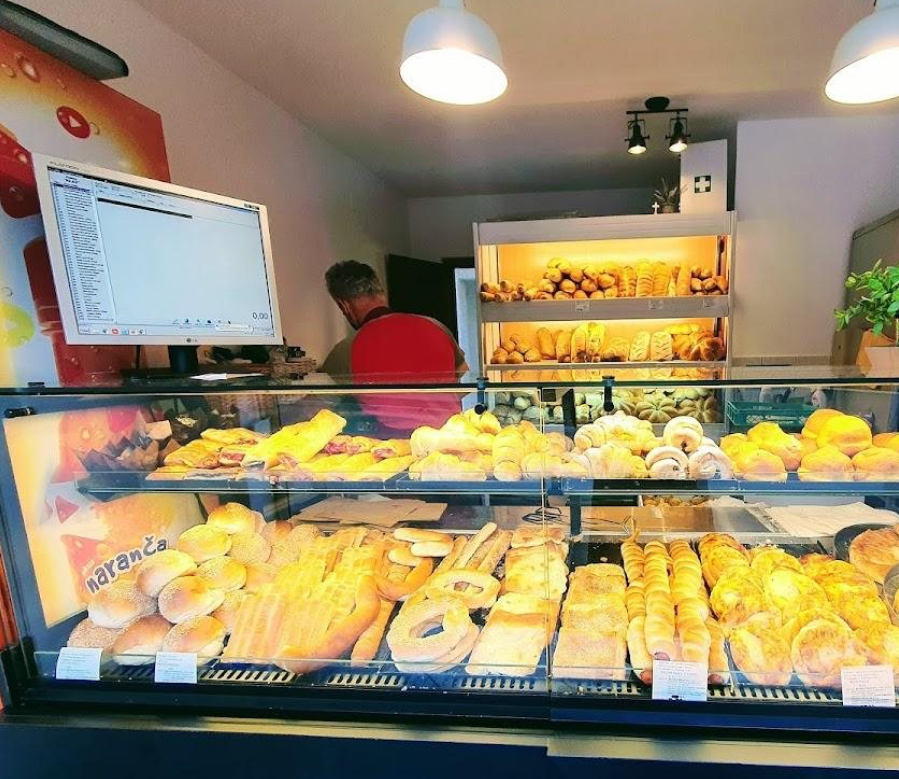
It was simple, perfect, and pure Croatia – the taste of a place you never planned to fall in love with, but absolutely did. As we hopped into our rental car one last time to go to the airport for our flight to Split, we were exhilarated by thoughts of what the next lags of our Croatian travel would bring.
 Click, Wander & Savor